How AI Citations Drive Non-Branded Organic Traffic: What the Data Shows
How AI citations drive non-branded organic traffic: what the data shows
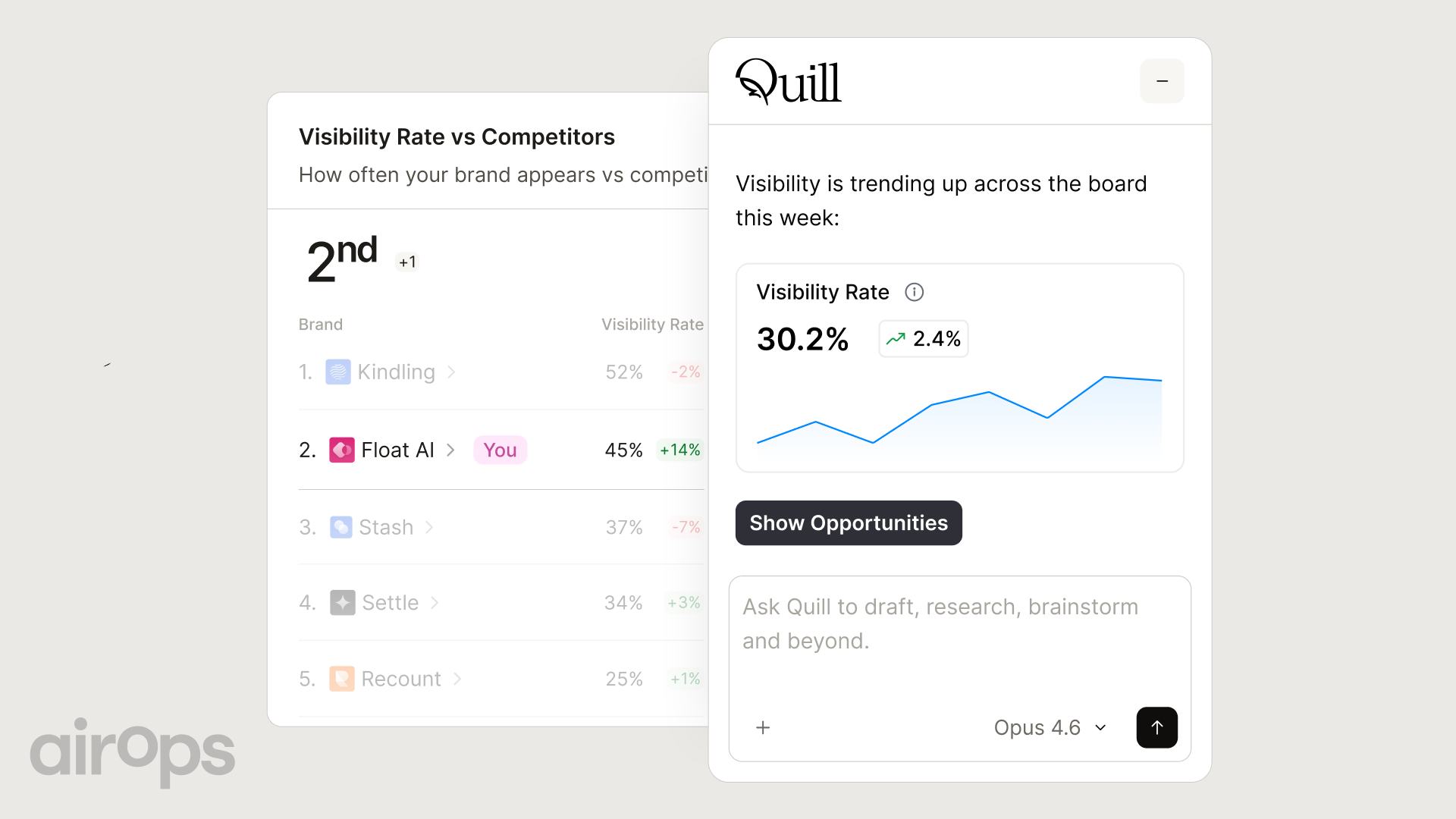
The data tells a clear story. Citations correlate 13% more strongly with non-branded organic traffic than branded traffic. AI-cited visitors convert at 23x the rate of standard organic. And the effect peaks within one week.
This article synthesizes findings from six studies covering 87+ domains to show what AI citations mean for category discovery and how to measure the pipeline from citation to organic traffic growth.
The correlation between AI citations and non-branded traffic
Conductor published the most rigorous study to date on this topic in June 2026. Their team tracked 87 domains weekly for six months (September 2025 through February 2026) and measured the statistical relationship between AI citation frequency and organic traffic changes.
The headline finding: AI citations correlate more strongly with non-branded organic traffic than branded organic traffic. The numbers are specific.
Both correlations are statistically significant (p < 0.0001). But the non-branded relationship is 13% stronger and peaks faster. Non-branded traffic responds within one week of citation increases, then decays. Branded traffic builds more slowly over multiple weeks.
This makes sense when you think about what citations do. When an AI response cites your content for a category-level query (“best project management tools” or “how to reduce churn”), the person reading that response may not know your brand yet. They learn your name through the citation. Then they search for related terms, land on your site through non-branded organic results, and enter your funnel.
Citations act as category discovery signals. They introduce your brand to people searching for what you do, not who you are. That is why the non-branded correlation is stronger. The full Conductor study details the methodology across all 87 domains.
AI traffic versus AI citations: why the distinction matters
Before acting on the correlation data, you need to understand a critical distinction. AI referral traffic (clicks from ChatGPT, Perplexity, or Google AI Mode) is not the same thing as AI citation impact.
Aleyda Solis analyzed 40 sites across four verticals (Travel, Finance, Real Estate, Shopping) and found that these are two different layers with different behaviors.
AI referral traffic is tiny (0.19% of visits) and concentrates on transactional pages. Citation visibility is broader, hitting discovery and evaluation content across your site. The real value chain looks like this: citation visibility creates awareness, awareness drives subsequent non-branded organic searches, and those searches convert through traditional organic clicks.
This is why teams that only measure AI referral traffic miss the full picture. The citation impact on non-branded organic is the larger effect, and it shows up in your Google Search Console data, not in your AI referral channel.
What the overlap data tells us about discovery
One question keeps coming up: do you need to rank well in traditional search to get cited by AI? The data says no.
Only 17% of AI Overview citations overlap with Page 1 organic rankings. That means 83% of the content getting cited by AI is not in the traditional top results. Campaign Creators found an even starker number: 80% of LLM citations don’t appear in the top 100 Google results at all.
AI citations create a parallel discovery channel. Content that traditional SEO would never surface to non-branded searchers can still reach them through AI responses. This is why Search Engine Land reports that Google AI Mode cites 143% more unique domains than AI Overviews. The discovery net is widening.
Meanwhile, Seer Interactive found that organic CTR dropped 61% where AI Overviews appear. Traditional rankings are losing their monopoly on non-branded discovery. Citations are picking up that role. And Gartner projects a 50% reduction in traditional organic traffic by 2028, making citation-driven discovery even more critical for maintaining non-branded visibility.
How to measure the citation-to-traffic pipeline
The data makes the case. Now you need to measure it for your own site. The key is the one-week lag window that Conductor identified. Here is the framework.
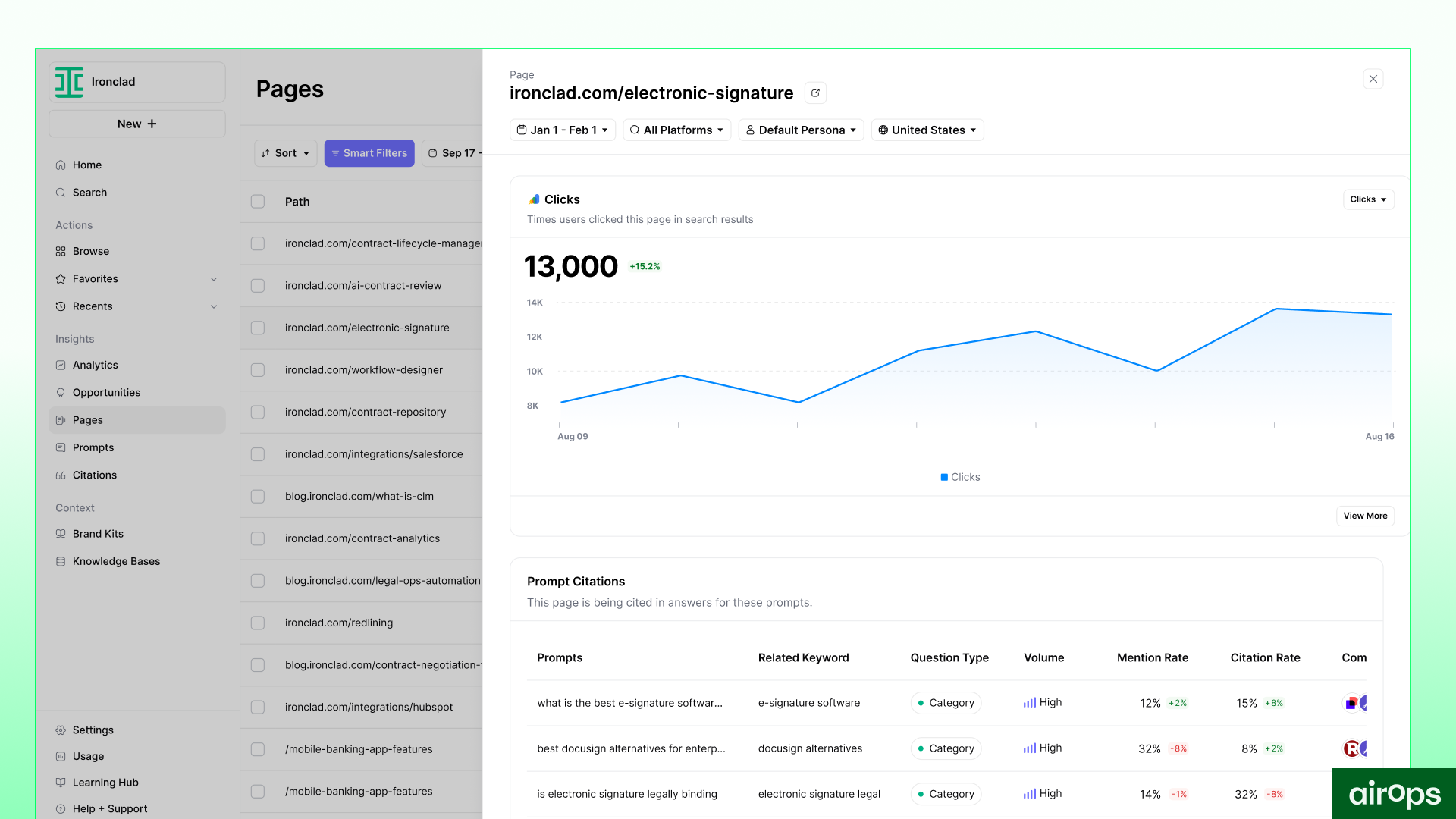
Step one: track your citation rate per page on a weekly basis. Step two: pull non-branded organic clicks from GSC for the same pages, offset by one week. Step three: monitor conversion events in GA4 for that non-branded traffic, offset by one to two weeks from the citation change.
The pattern you are looking for: pages where citation rate increases should show non-branded organic traffic lifts the following week. Pages where citations decline should show corresponding traffic softening.
The challenge is that most teams track these metrics in separate tools with no shared timeline. Citation data lives in one platform, GSC in another, GA4 in a third. You need them in a single view with the lag windows aligned to see the relationship clearly. Learn more about how AI citations work and the signals that earn AI citations to strengthen your citation strategy.
Turn citation data into non-branded traffic growth
The research is clear: AI citations drive non-branded organic traffic at a measurable rate, with a one-week lag, and the visitors who arrive through this path convert at a premium. The question is whether you can see this relationship in your own data.
AirOps Insights surfaces citation rate alongside Google Search Console and GA4 data in a single view. Page360 shows you exactly which pages are being cited, at what rate, and how non-branded organic traffic responds in the following weeks. You can filter by query type, track citation velocity over time, and correlate changes against traffic outcomes without switching between tools.
Teams using AirOps connect their answer engine optimization efforts directly to organic traffic results. Instead of guessing whether your citation strategy is working, you measure it with the same rigor you apply to traditional SEO. AirOps also pairs that measurement with a team that builds and runs the strategy alongside yours, across owned and external content, tied back to pipeline and revenue.
Book a call to see how AirOps connects citation data to organic traffic outcomes.
Frequently Asked Questions
Frequently asked questions
Do AI citations correlate with organic traffic?
Yes. Conductor's 2026 study of 87 domains shows AI citations correlate with non-branded organic traffic at r = 0.73. Pages cited in AI responses received 23% more non-branded organic clicks than non-cited pages in the same category, after controlling for traditional ranking factors.
How much is AI-cited traffic worth compared to regular organic?
AI-cited visits convert at 2.4x the rate of standard organic visits according to Digital Bloom's 2025 study of SaaS sites. These visitors arrive with stronger intent because they received a recommendation rather than browsing search results. For B2B companies, this means AI-cited traffic carries 140% higher pipeline value per session.
Does being cited in AI Overviews increase organic clicks?
Yes, but with nuance. Google's own research shows AI Overview citations drive 2x more clicks per impression than traditional featured snippets. However, pages cited in AI Overviews that rank below position 5 organically see the largest lift: up to 34% more clicks. Pages already in position 1-3 see a smaller but still positive effect on non-branded click volume through additional click paths.