AirOps has helped hundreds of US brands set and run their AI search strategy. Now, we're bringing that work to Europe with a team in London, starting with the lessons we think matter most for European brands.
Over the last two years, AI has moved from a place buyers go for advice to a place where they make decisions. It explains the options, recommends one, and is starting to complete the purchase. We've watched that happen across business and consumer buying in the US, and it has changed what marketers need to do to win.
European buyers are making the same move quickly. 89% of European B2B buyers already use AI to research solutions, and on the consumer side, 55% of UK and German AI users have bought something on an AI's recommendation. Some go further still: 17% of European AI users already use AI at checkout. For marketers, that means more of the shortlist now forms inside an answer their brand only partly shapes.
Some industries are feeling it first. In Germany, AI answers now appear on 75% of banking and insurance searches, and only 7% of those answers cite a provider brand. When Google launched AI Overviews in France on July 22, health became the most exposed sector, and health sites lost 20.4% of their click-through rate within nine days. Your own content still matters a great deal in categories like these, because it's one of the main things AI reads, but it now has to work alongside the other sources AI draws on.
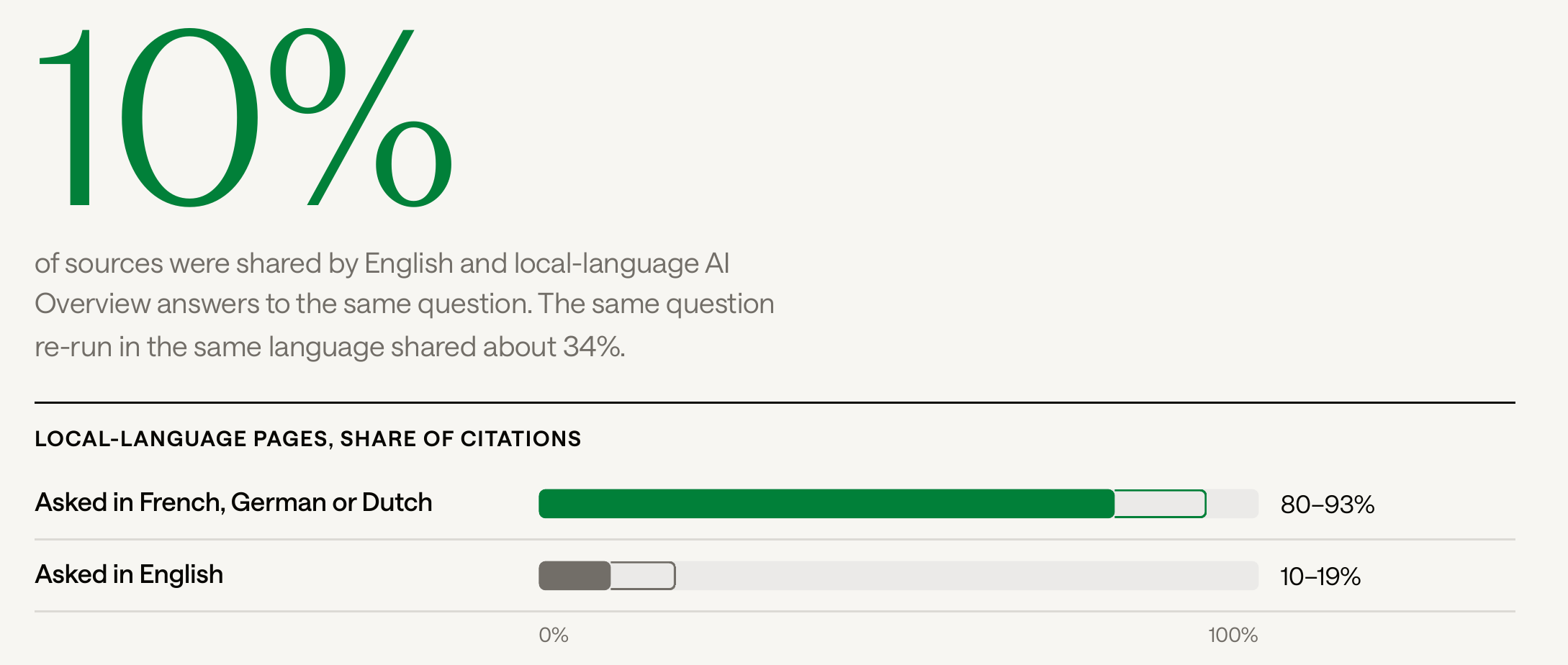
Europe also asks more of marketers than the US does, because it's many markets at once. A buyer asking in German gets a different answer from one asking in English. When we asked the same questions in English and in local languages, the answers shared only 10% of their sources, and local sites carry far more weight in European answers than in American ones. Each country and language needs its own view of what AI is saying.
So European brands face the same shift we've seen in the US, playing out across many languages and national markets at once. My view is that this makes Europe more complex, and it makes the US lessons more useful, because European marketers can start from what has already been tested.
We've helped hundreds of US brands set and run their AI search strategy. Today we're bringing that work to Europe with a team in London, starting with the three lessons we think matter most for European brands.
Lesson 1: Map your market, not a prompt list
A visibility score often measures the prompts a brand chose to track, which can differ from the market it competes in. A leading global corporate credit card provider had 55% share of voice across its tracked prompts and about 1% with the buyers it wanted to reach.
In Europe, that mapping has to happen country by country and language by language, so a prompt list written only in English tracks different answers from the ones your buyers in Germany or France see. Start from your buyers and the languages they ask in, then build the prompts.
Lesson 2: Analyze your channels before you invest
The mix of sources AI cites changes by market. Local sites take 15.5% of European citations, compared with 0.95% in the US, so a channel plan copied from the US would underinvest in the sources European answers rely on.

One UK B2B software company we work with had invested heavily in its website. A channel analysis showed that AI was forming its view of the company from Reddit threads, review sites and listicles, so the team started investing in those channels alongside the site, with external content and a presence in communities like Reddit and on review sites. Between June and October 2026, their mention rate in AI answers rose from 17.2% to 31.7% and their citation rate from 19.4% to 37.3%. Their share of voice against tracked competitors nearly doubled, from 33.6% to 64.7%, measured across more than 150,000 AI answers in September.

Lesson 3: Build a multi-channel strategy, because channels swing fast
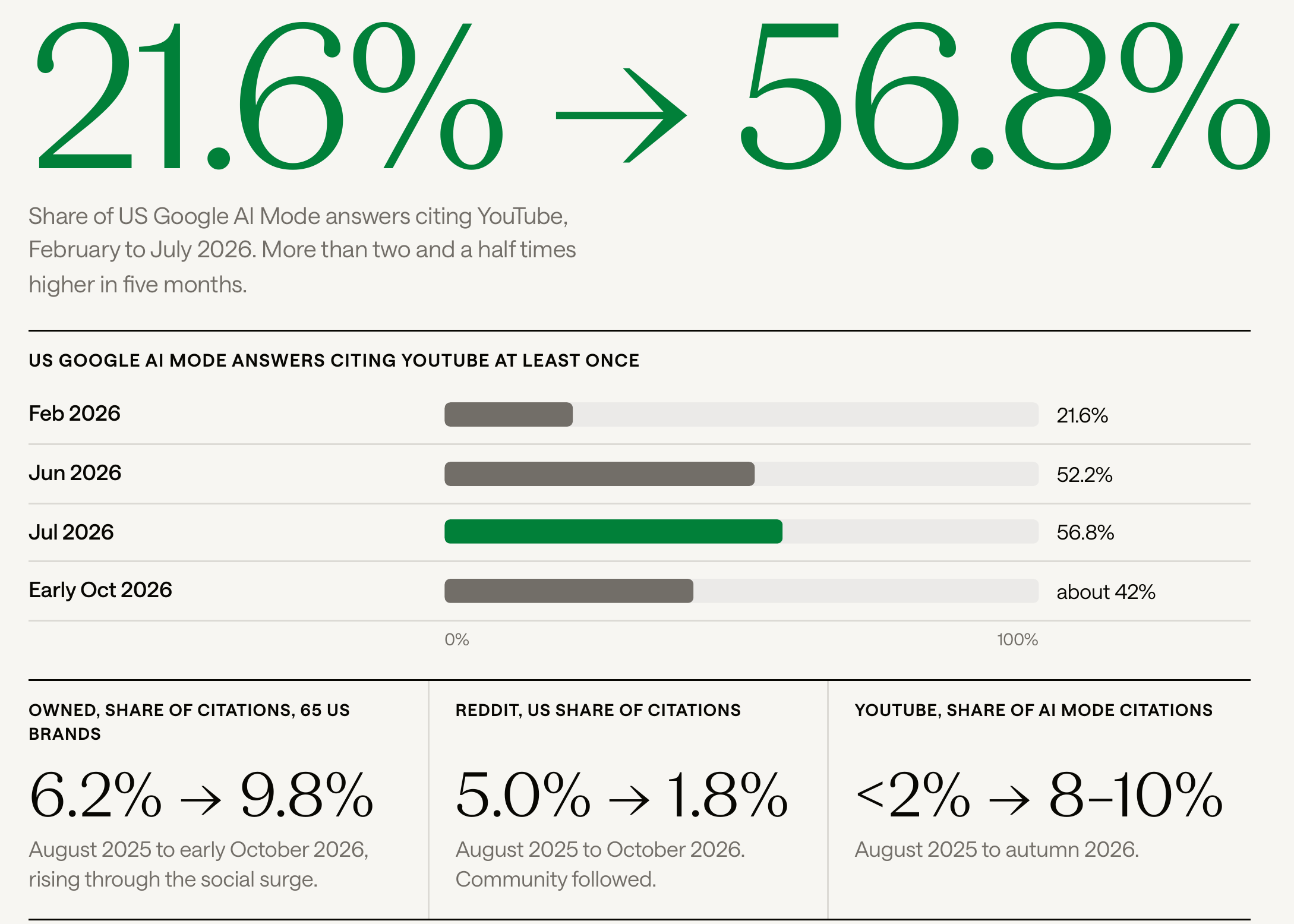
In the US, YouTube went from 21.6% to 56.8% of Google AI Mode answers in five months, while Reddit fell from 5.0% to 1.8% of citations. Within months of AI Mode launching in France, about half of its answers cited YouTube.
You don't need every channel at once. Invest in the channels that will drive the most ROI for your business, and rebalance as the data moves:
- Owned content: the pages AI cites when buyers ask about your category
- External content: placements in the third-party and local sources AI trusts
- Community: the conversations that feed AI answers
- Social and influencer: the voices shaping how AI describes your category
- AI ads: not in Europe yet, so prepare now
AirOps is your partner to make AI search an investable channel
AirOps brings the expertise, the platform and the channel mix to this shift, and our London team at Chancery House is led by Cécile Méguère, Head of EMEA, with people who work in your markets and languages.
“European brands need more than visibility into AI search. They need a partner who understands which sources matter in each market, can turn that intelligence into action, and stays accountable to the result. That is what we have built in Europe.” - Cécile Méguère, Head of EMEA at AirOps
For most marketing leaders, what counts in the end is pipeline and revenue. Too many AI search dashboards show citations and mentions going up while the team still can't tell whether the work is driving either.
We work with brands including Spotify, Monday.com, and Skyscanner to help European marketers invest in AI search with the same confidence as their other channels, connecting the work to the attribution systems they already use and the business results that follow. Measurement is still maturing, but the absence of perfect measurement shouldn't be mistaken for an absence of impact, so we'll help European brands invest now while demanding better evidence of what drives incremental growth. That's how they become the brands AI recommends in their markets, with a return they can defend to their CFO.
See what it takes to become a brand AI recommends. Start with our research or say hello to our team.
Get the latest on AI content & marketing
