For serious marketing teams, tracking AI search visibility is table stakes. They have a prompt set, they're pulling data, and they're watching how they show up across ChatGPT, Perplexity, and Gemini.
The next question every one of those teams hits is harder: are these actually the right prompts?
Volume, intent, coverage gaps, first-party signals from your own customer conversations. That layer of intelligence is what separates a prompt set you built once and hope is still covering the right ground from one that's genuinely comprehensive, prioritized, and kept current as the landscape shifts.
Prompt Discovery is the system that gets you there.
What it does
Prompt Discovery builds and maintains a comprehensive map of what people are asking AI about your brand, your category, and your competitors. It pulls from four intent sources:
- Third-party panel data from millions of real ChatGPT, Perplexity, and Google AI users
- SERP People Also Ask patterns that show related intent across traditional search
- Search intent data that captures keyword-level signals at the category level
- First-party conversations from Gong, Zendesk, Intercom, and other voice-of-customer sources via MCP
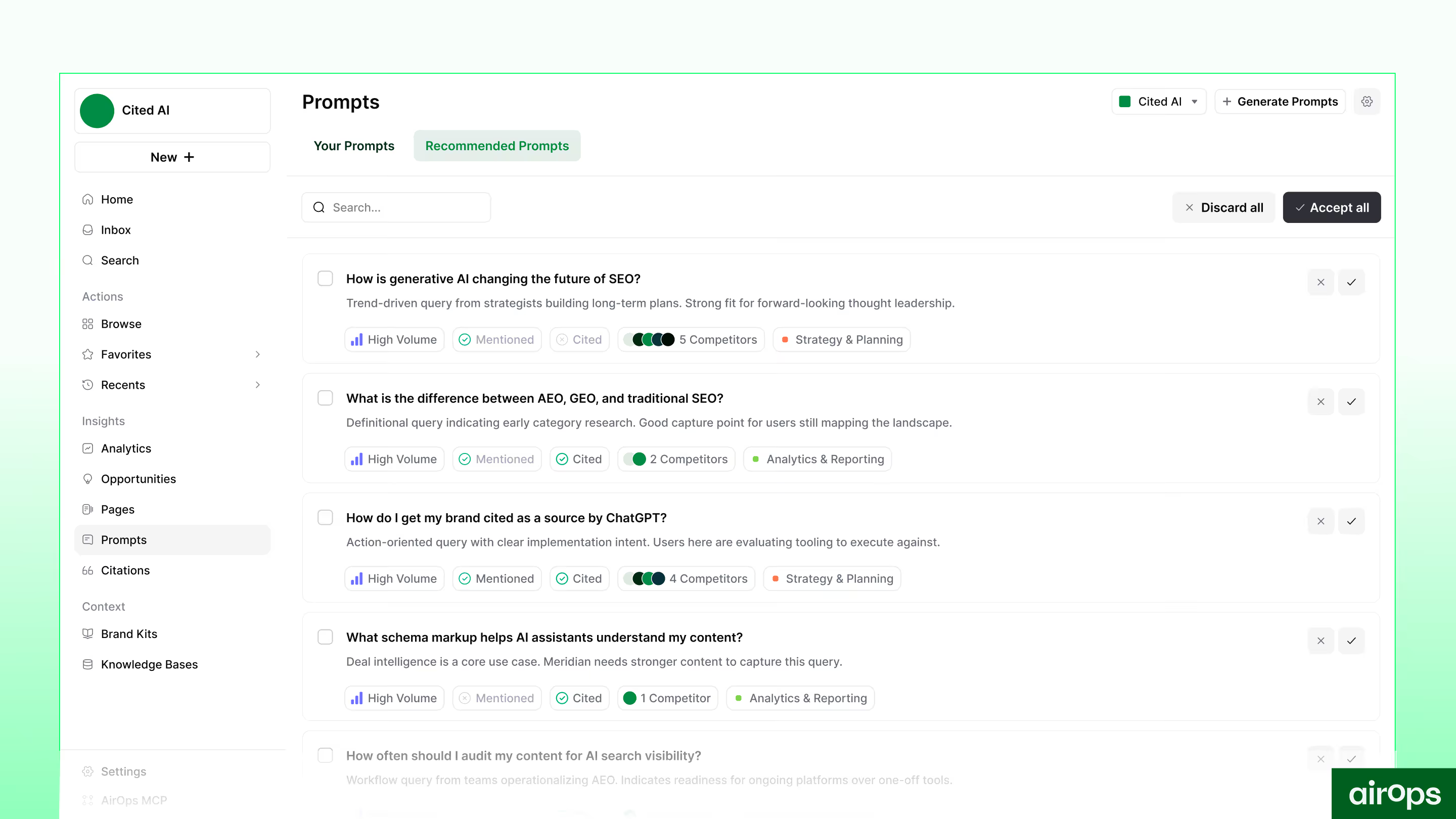
Those sources are clustered semantically and surfaced with volume estimates and intent signals, so your team isn't just looking at a list of prompts. You're seeing which ones have real traction, which are informational vs. commercial, and which represent categories you're not yet covering at all.
The three things it actually solves
1. You stop guessing what to track.
The question we hear most is some version of: "How do I know what else I should be tracking?" With Prompt Discovery, there's a clear methodology behind it. Four sources, each capturing a different slice of real buyer intent, and the coverage is visible so you can see exactly where the gaps are.
2. You know what to prioritize.
Not all prompts are equal. Volume estimates and intent signals turn prompt selection from a gut-feel exercise into something you can defend. A prompt with strong commercial intent and rising volume is a different investment decision than a high-volume informational prompt you're already winning. That distinction matters when you're deciding where to create content, run outreach, or focus a refresh cycle.
3. Your prompt universe stays current without manual work.
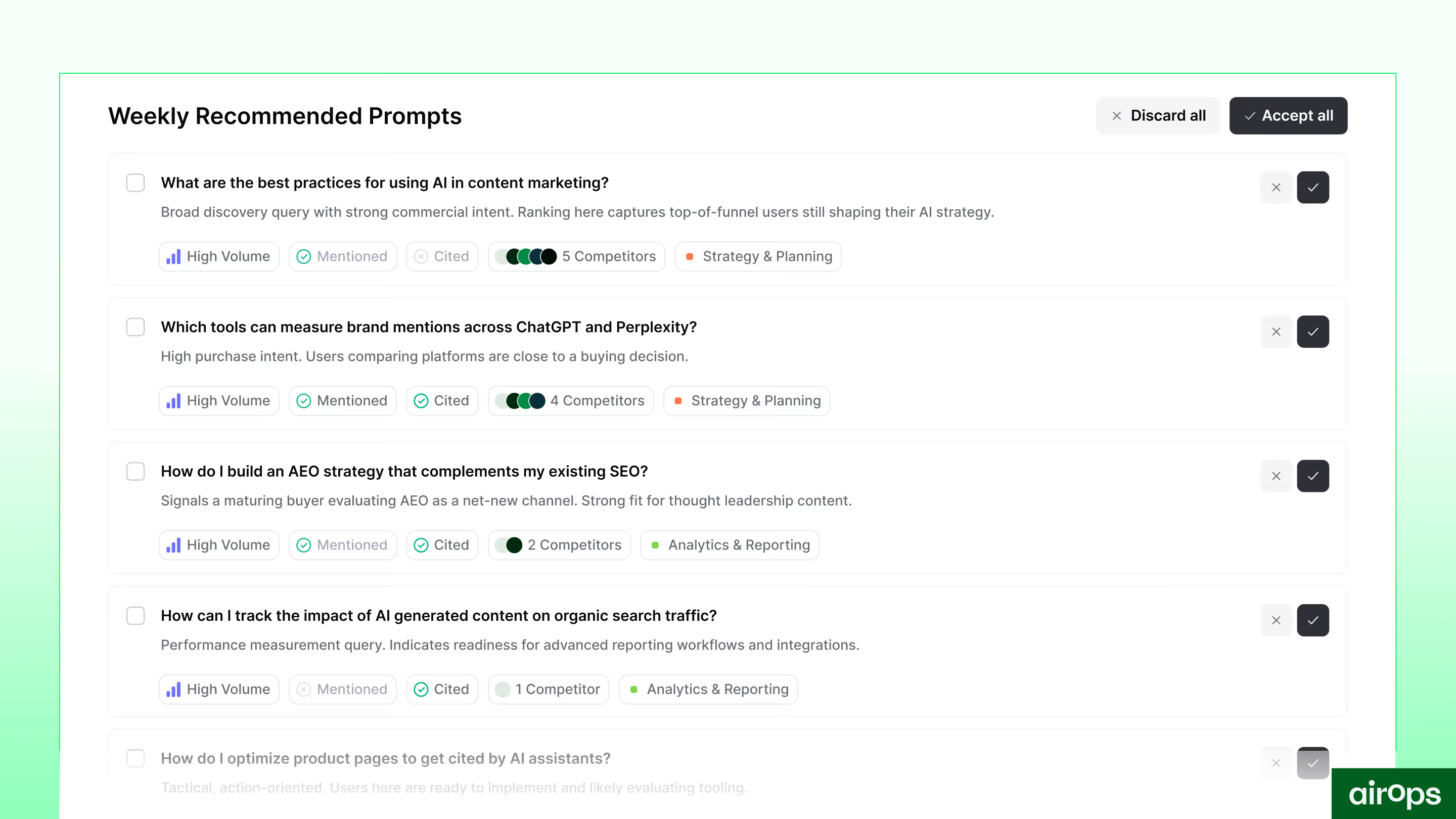
This is the piece most teams don't have at all. Prompt Discovery includes a weekly inbox that surfaces emerging prompts for lightweight review. Accept or reject, and your universe adapts as intent shifts. No manual audit. No "someone needs to run this process" conversation. It just runs.
Connecting your first-party data
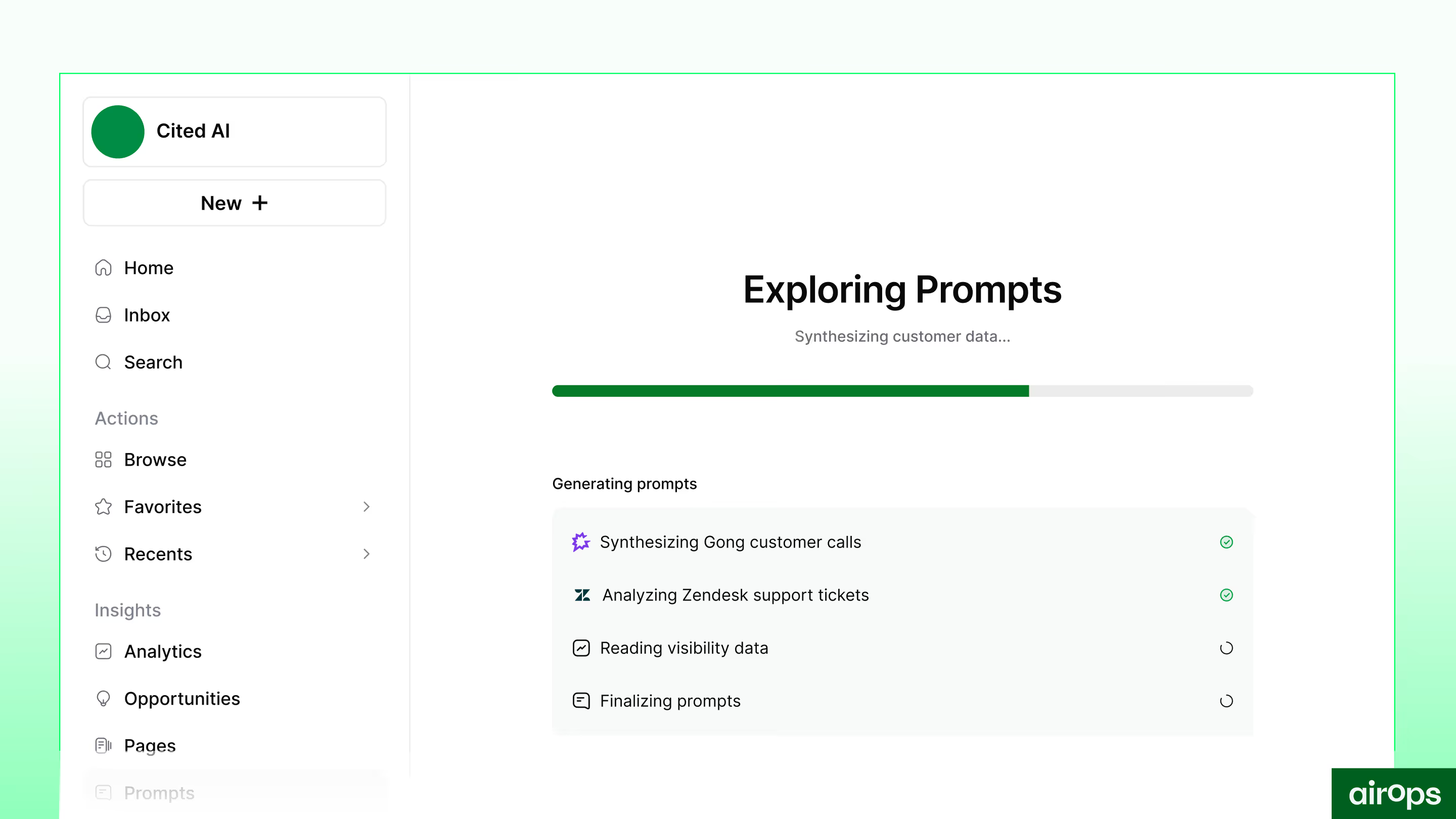
The customer questions that live in your Gong calls and Zendesk tickets are some of the highest-signal data you have. They're your actual buyers, in their own words, asking the things that matter to them in a real conversation.
Until now, that data has had nowhere to go in an AI search tracking context.
With Prompt Mining via MCP, you can connect Claude or ChatGPT to your voice-of-customer sources, extract the questions your buyers ask, and send them into AirOps for tracking automatically. You can run this on a recurring basis so new questions flow in as they emerge. Third-party sources give you breadth. Your first-party data gives you precision: the exact language tied to deals in your pipeline.
What this looks like in practice
A few scenarios where teams are already finding this useful:
New category coverage. You've been tracking prompts for your core use case. Prompt Discovery surfaces a cluster of emerging questions in an adjacent category where your product is a natural fit. Volume is growing. You don't have content for it yet, and neither do your competitors. You add it to tracking, create two pages, and get ahead of the narrative before it hardens.
Closing the voice of customer gap. Your sales team keeps hearing a specific objection on discovery calls, something about implementation complexity. It's not showing up in your keyword tools because it doesn't map cleanly to search behavior. But it's in your Gong data. Prompt Mining surfaces it, it enters your tracking universe, and now you can measure how AI is answering that question and whether your content is shaping the response.
Confident prioritization. You have 300 prompts in your workspace. Some are performing well. Others you're not sure about. Volume estimates show that 40 of them drive the majority of real intent signals in your category. That's where you focus the next content cycle.
Available now
Prompt Discovery is live for all AirOps workspaces. Prompt volume estimates and on-demand prompt generation are available immediately. The weekly prompts inbox is rolling out now. Prompt Mining via MCP is available through the Add Prompts MCP tool, which you can connect to Gong, Zendesk, Intercom, or any other source where customer questions live.
If you're already on AirOps, you'll see it in your workspace.
If you want help setting up Prompt Mining against your first-party sources, book time with our team and we'll walk you through it.
Book a demo.
Get the latest on AI content & marketing
