- Vibe had a strong onsite Answer Engine Optimization (AEO) program, but third-party sources were still shaping AI answers in favor of larger competitors.
- AirOps identified the offsite sources influencing Vibe's priority topics and managed the research, publisher relationships, and follow-up required to improve its presence.
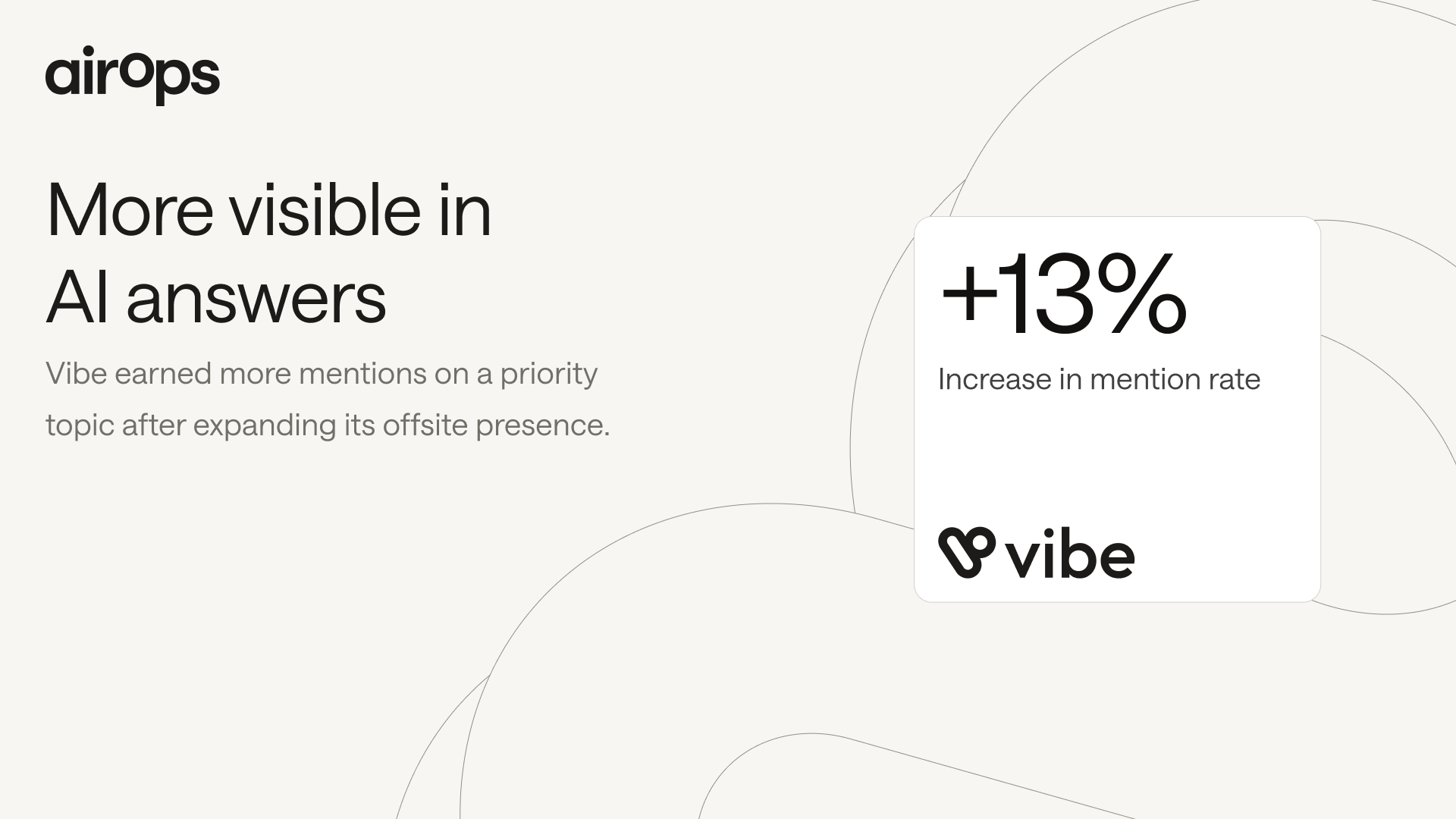
- Vibe's brand mention rate on its focus topic increased 13.3% relative to the period before launch.
- The mention-rate gap between Vibe and the category's largest player narrowed from approximately 22 percentage points to 11.
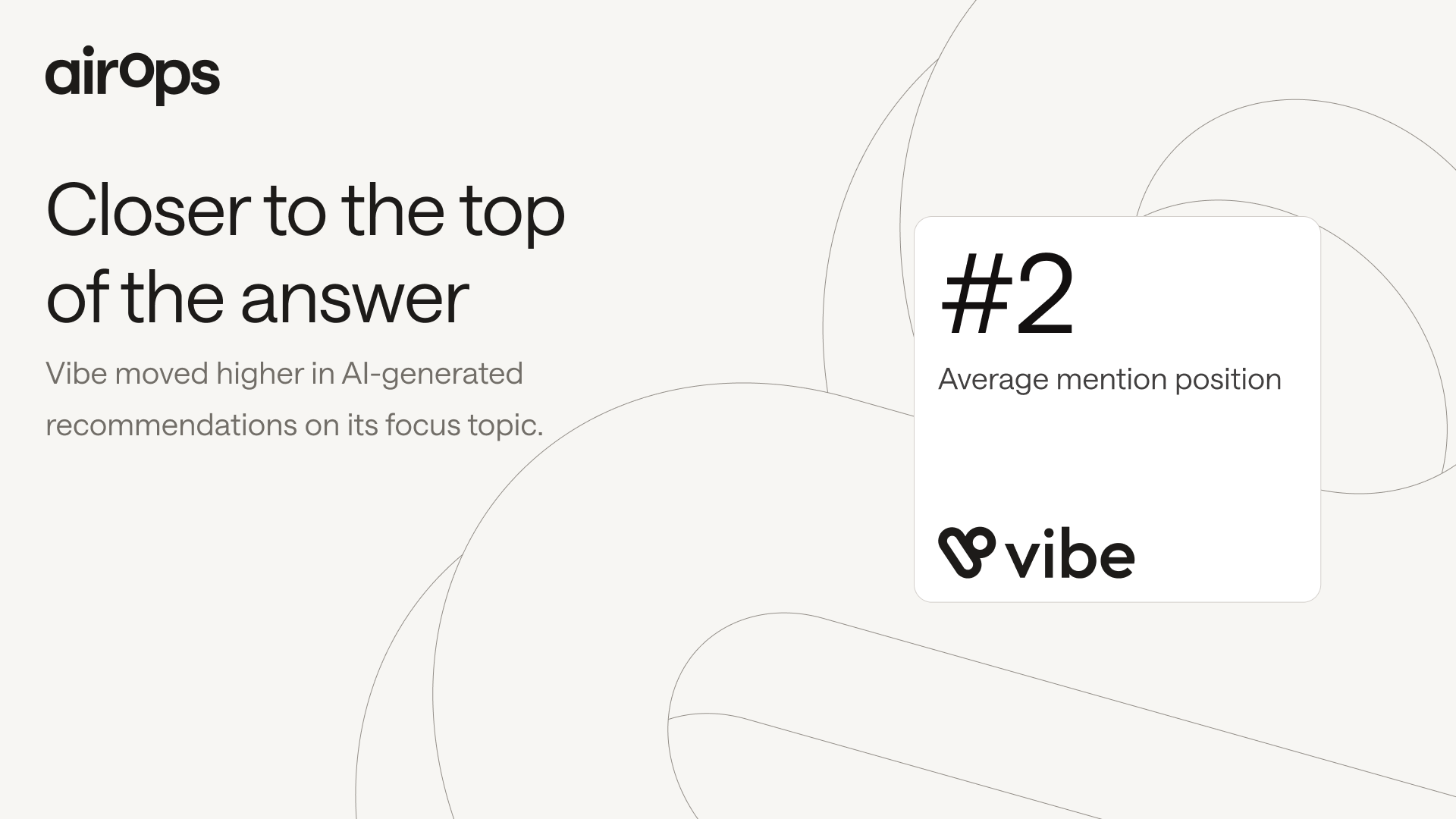
- Vibe's average mention position improved from 2.16 to 2.07, meaning the brand appeared closer to the top of AI-generated recommendations.
Meet Vibe
Vibe is a streaming TV ad platform built for performance marketers. Its campaigns reach an identity graph of more than 120 million households.
Vibe makes Connected TV (CTV) work like a performance channel, with the targeting and measurement marketers expect from search and social. The company reached $165M ARR in under two years, with 12,000+ brands served on the platform.
Georgette Gallagher owns SEO and AEO at Vibe. Her remit spans content, measurement, and the offsite work that influences whether Vibe appears when someone asks an AI platform which solution to use.
Vibe had the onsite foundation. It needed offsite authority.
Vibe's onsite AEO program was already producing results.
"We had a good handle on onsite," Georgette says. "We knew which topics mattered, we were producing against them, and we could see it working in our own citations."
That foundation mattered, but onsite content could address only part of the opportunity. Answer engines draw from sources far beyond a brand's own website, making offsite and external content authority an essential part of a complete AI search strategy.
"Answer engines mostly aren't citing you about you," she says. "They're citing third parties, and the sources shaping the answers we cared about weren't ours."
Publishing more onsite content alone could not close that gap. Vibe needed to understand which third-party sources were influencing its priority AI answers, where the brand was missing or underrepresented, and how to earn greater visibility in those sources.
Closing the gap would require ongoing research, publisher relationships, coordination, and persistent follow-up. Vibe's lean content team did not have the hours to build and operate that program alone.
Choosing a partner before the playbook was settled
Vibe already used AirOps for analytics, so Georgette knew the product and had seen how the team approached AI search through its research and webinars. But offsite AEO was still an emerging discipline. There was no established playbook or long history of case studies to evaluate.
"Buying a proven process wasn't in the cards, so I had to bet on judgment," she says. AirOps had demonstrated that judgment on the product side. Bringing in its dedicated offsite team was a natural extension of that relationship.
Building Vibe's presence beyond its own site
AirOps identified the third-party sources influencing Vibe's priority topics, determined where the brand was missing or underrepresented, and managed the publisher outreach and follow-up required to improve that coverage.
The work brought Vibe's product strengths and customer proof into more of the independent sources feeding responses. AirOps also reported on the results clearly, giving Georgette the information she needed to guide the strategy without taking on the day-to-day execution.
The work started showing up in the answers
The change was gradual rather than dramatic. Vibe already had a strong product and substantial social proof, but those signals were missing from many of the third-party sources informing AI answers.
"I could see exactly how AirOps work impacted answers from other sources,” Georgette said.
Vibe was appearing more frequently, closing the mention-rate gap with the category leader, and earning a stronger position when it was included in AI answers.
Results
- 13.3% relative lift in brand mention rate on Vibe's focus topic compared with the period before launch
- Competitive gap cut roughly in half, with the mention-rate difference between Vibe and the category's largest player falling from approximately 22 percentage points to 11
- Average mention position improved from 2.16 to 2.07, moving Vibe closer to the top of AI-generated recommendations
AirOps is a valuable extension of the team
Vibe is now represented in more of the independent sources influencing AI answers about its category.
"What changed is that we're now in the sources that shape the answers, not just in our own content," Georgette says.
Just as importantly, Vibe gained offsite execution without creating another program for its lean content team to manage. AirOps owns the research, relationships, follow-up, and reporting, while Georgette retains control of the strategy.
"That's rare," she says. "Most vendor relationships end with the work back on my desk. This one didn't."
Get the latest on AI content & marketing
