- Your content fails to get cited because AI engines cannot retrieve it, extract it, or match it to the question being asked.
- Retrieval rank determines citation: a page at position 1 is cited 58% of the time versus 14% at position 10.
- Domain authority and backlinks show no positive correlation with AI citation rates.
- Content freshness has a sweet spot of 30 to 89 days, and pages older than two years drop to about 27.5% citation rate.
- GEO requires new metrics (citation rate, mention rate, sentiment) alongside traditional SEO tracking.
Your content is getting passed over by AI search engines for one of three reasons: the AI cannot retrieve it, the content does not match the question structure, or the page adds nothing new to what the model already knows. Generative engine optimization (GEO) is the practice of structuring and distributing content so AI search engines like ChatGPT, Gemini, and Perplexity cite your brand in their answers. Partners like AirOps track citation rate across ChatGPT, Gemini, and Perplexity. The stakes are growing fast: AI search query volume grew 340% year over year, and 64.82% of Google searches end without a click. Traditional SEO tactics alone will not win this channel.
This guide covers the 10 most common GEO mistakes teams make when optimizing for AI search citations. Each section explains the mistake, why it hurts your visibility, and how to fix it.
Mistake 1: treating GEO as separate from SEO
Many teams build GEO strategies from scratch, assuming AI search requires an entirely new playbook. Google's 2026 guidance confirms that optimizing for generative AI search is still SEO. The fundamentals of quality content, clear structure, and crawlability remain the foundation. What changes is how you measure success and which signals you prioritize.
GEO adds new priorities on top of SEO. You still need to rank well in traditional search, but you also need content that AI engines can extract and cite directly. Treating these as competing strategies wastes resources.
- Audit your existing SEO content for extractability before creating net-new GEO pages.
- Apply GEO structure (clear headings, direct answers, schema) to your highest-traffic SEO content first.
- Measure both organic rankings and AI citation rate for the same pages.
What actually drives an AI citation
AI engines retrieve many pages but cite only a few. Understanding the factors that determine citation helps you avoid wasting effort on tactics that do not move the needle. AirOps research analyzing 16,851 prompts and 353,799 retrieved pages reveals clear patterns.
Retrieval rank is the strongest predictor. A page at position 1 in retrieval is cited 58% of the time versus 14% at position 10. After position 10, citation rates flatten near zero. Heading match also matters: pages whose headings match the question are cited 41% of the time versus 29% for weak matches.
Mistake 2: publishing content AI cannot extract
AI engines scan pages during retrieval and extract content that can answer the query directly. Content buried in JavaScript, hidden behind tabs, or lacking clear structure often gets skipped. 58% of pages are never cited in any query they appear for because they fail the extraction test.
Your page might rank in retrieval but still miss every citation opportunity. The fix is structural: ensure the answer appears in plain HTML, within the first 500 words, and under a heading that matches the question.
- Place your most important answer in the first paragraph under a relevant H2.
- Avoid hiding content behind JavaScript toggles, accordions, or infinite scroll.
- Use semantic HTML: proper heading hierarchy, lists, and tables for data.
- Test your pages with JavaScript disabled to confirm content is visible to crawlers.
Mistake 3: writing for keywords instead of the question
SEO trained teams to optimize for keyword density and variations. GEO rewards pages that answer the exact question the user is asking. AI engines run fan-out queries, breaking a single prompt into multiple sub-questions. Your page needs to match those specific questions, not a cluster of related keywords.
The heading match data proves this: pages with headings that mirror the query get cited 41% of the time versus 29% for weak matches. Write your H2s as the questions your audience actually asks.
- Research the exact questions your audience types into ChatGPT, Gemini, and Perplexity.
- Use those questions verbatim as H2 or H3 headings.
- Answer the question directly in the first sentence after the heading.
- Support the answer with specific data, examples, or steps.
Mistake 4: ignoring off-site mentions and citations
Most GEO strategies focus on on-site content. This misses the bigger picture. Third-party sites drive 85% of brand discovery in AI search. LLMs build consensus by comparing what your brand says with what others say about you. A strong on-site presence without off-site validation limits your citation potential.
Investing in off-site mentions is harder than publishing blog posts, but it compounds over time. Every credible third-party mention reinforces your authority to AI engines.
- Identify industry publications, review sites, and directories where your audience researches solutions.
- Pitch guest content, expert quotes, and data partnerships to build off-site mentions.
- Monitor where competitors get cited and target those same sources.
- Track off-site mention rate alongside on-site citation rate.
Mistake 5: skipping FAQ and Q&A structure
FAQ sections are among the highest-performing content formats for AI citation. FAQ page schema pages are cited 45.6% of the time. The format naturally aligns with how AI engines process queries: a question heading followed by a direct answer.
Teams skip FAQs because they seem basic or repetitive. This is a mistake. FAQs give AI engines exactly what they need: clear question-answer pairs that can be extracted and cited directly.
- Add an FAQ section to every pillar page and product page.
- Use the exact questions your customers and prospects ask in sales calls and support tickets.
- Keep answers concise: 2 to 4 sentences that directly address the question.
- Implement FAQ schema markup for every FAQ section.
Mistake 6: assuming schema is useless or a silver bullet
Yes, schema markup helps, but modestly. JSON-LD schema adds about 6.5 percentage points to citation rate. This is meaningful, not transformative. Teams either ignore schema entirely or invest heavily expecting dramatic results. The correct approach is somewhere in between.
Schema helps AI engines understand your content structure and entity relationships. It signals trustworthiness and organization. The lift is consistent across page types, making it worth the implementation effort.
- Implement JSON-LD schema on all key pages: articles, FAQs, products, organization info.
- Prioritize FAQ schema for question-answer content.
- Use Article schema with author and date markup for blog content.
- Validate schema with Google's Rich Results Test before publishing.
Mistake 8: publishing one giant ultimate guide
Longer is not better. The word-count sweet spot is 500 to 2,000 words, and pages over 5,000 words underperform. Massive ultimate guides dilute the specific answers AI engines need. The model retrieves a page for a specific question and struggles to extract a clean answer from 8,000 words of content.
Break broad topics into focused, structured pages. Each page should answer one primary question thoroughly rather than covering everything loosely.
- Audit existing long-form content and identify splitting opportunities.
- Target 500 to 2,000 words per page, with a single primary question answered.
- Link related pages together with contextual internal links.
- Use pillar-cluster architecture to cover broad topics without creating monolithic guides.
Mistake 9: letting your content go stale
Refresh competitive pages every 30 to 89 days. The freshness sweet spot is 30 to 89 days, and pages older than two years drop to about 27.5% citation rate. AI engines favor recent information because it signals accuracy and relevance. Stale content gets passed over even when it ranks well in retrieval.
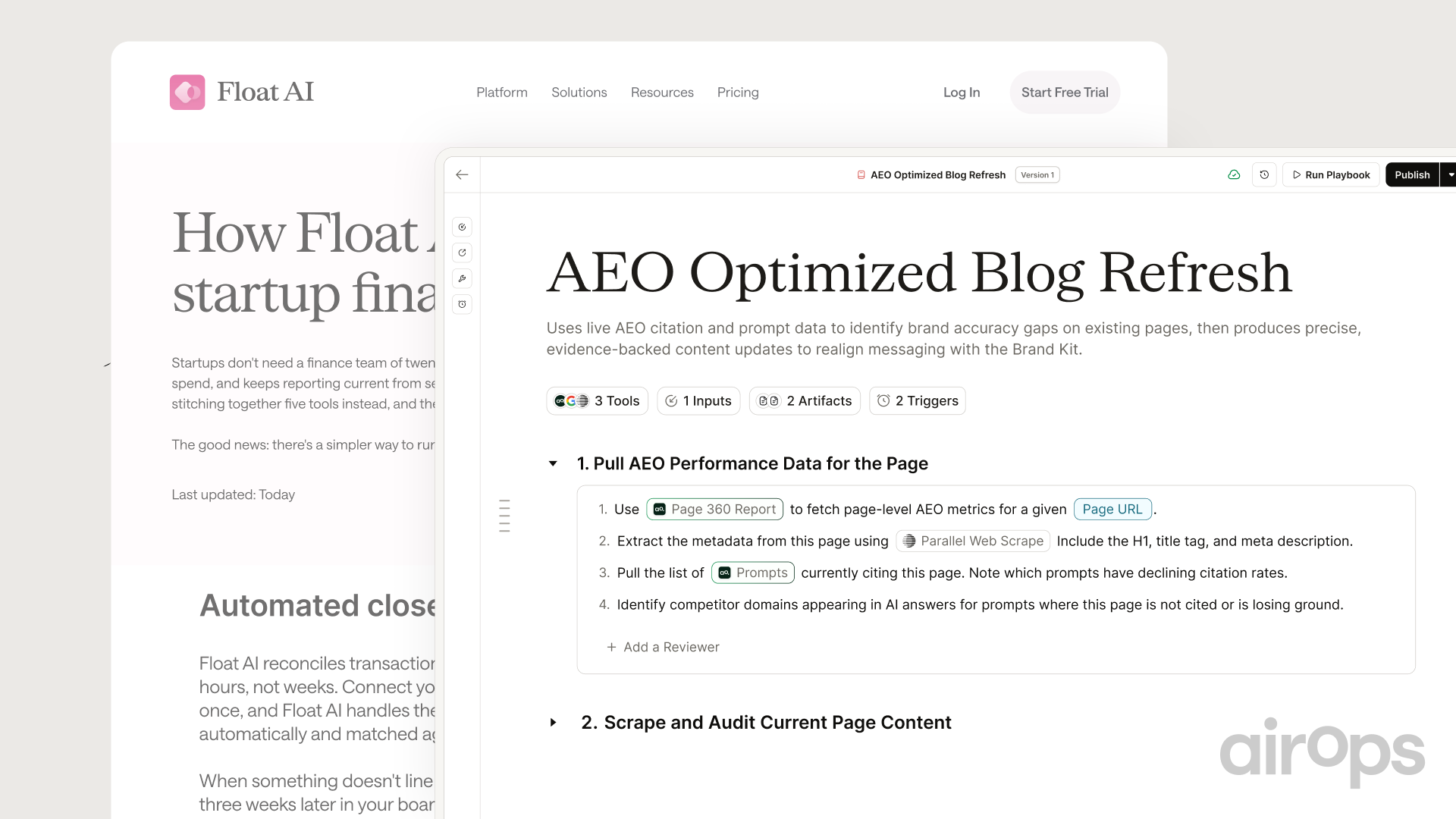
Content refresh is not optional for GEO. Build refresh cycles into your content operations, prioritizing pages with declining citation rates or high competitive value. See the content refresh strategy guide for a detailed framework.
- Track content age alongside citation rate to identify refresh candidates.
- Set calendar reminders for quarterly reviews of high-value content.
- Update stats, examples, and dates even when core content remains accurate.
- Prioritize refreshing pages that rank in retrieval but fail to get cited.
Mistake 10: not measuring GEO
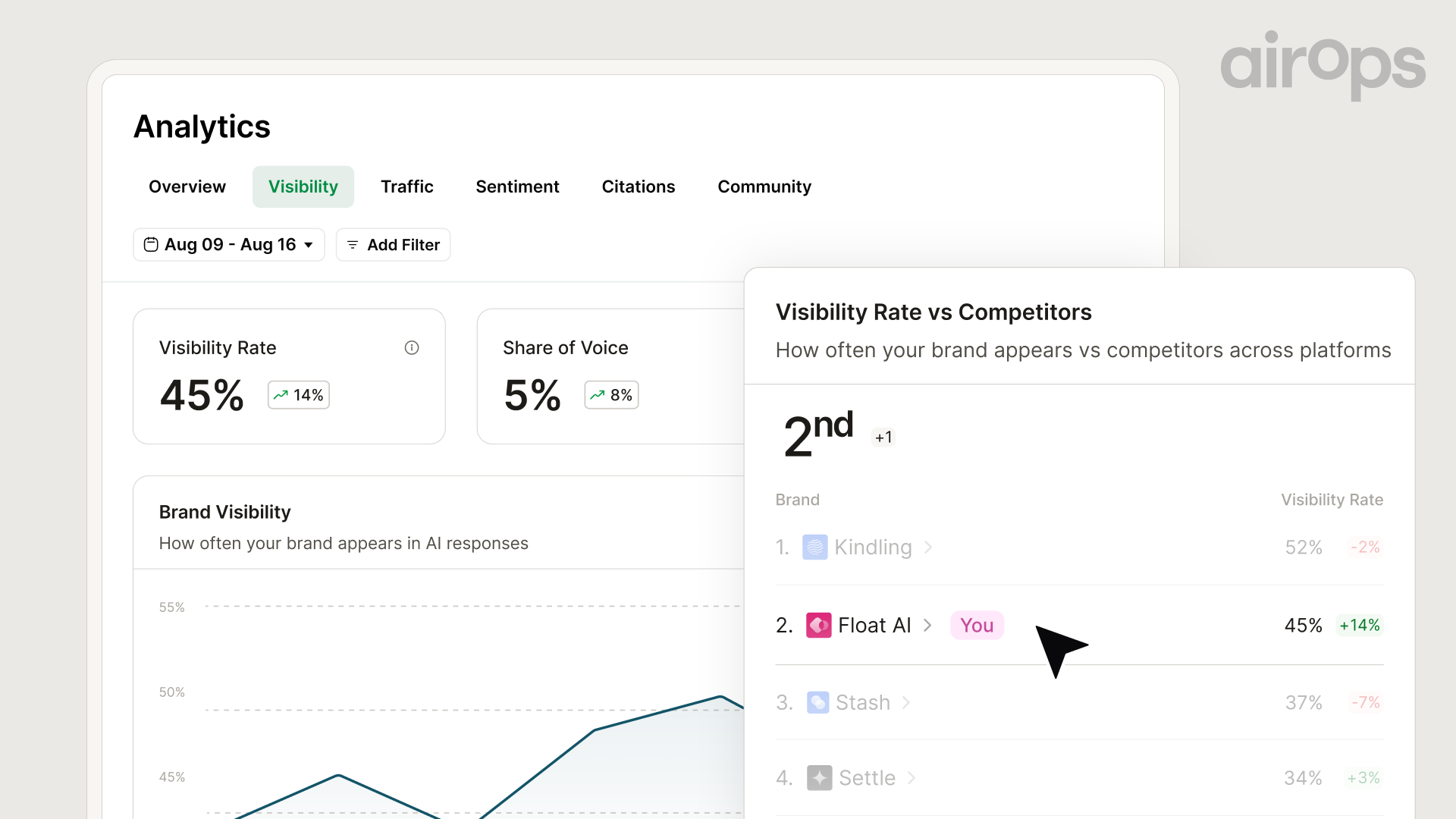
GEO metrics track citations, mentions, and sentiment, not rankings and clicks. Fewer than 10% of AI-cited sources rank in the top 10 organic results. Measuring GEO success with traditional SEO metrics misses the point entirely. You need visibility into how AI engines perceive and cite your brand.
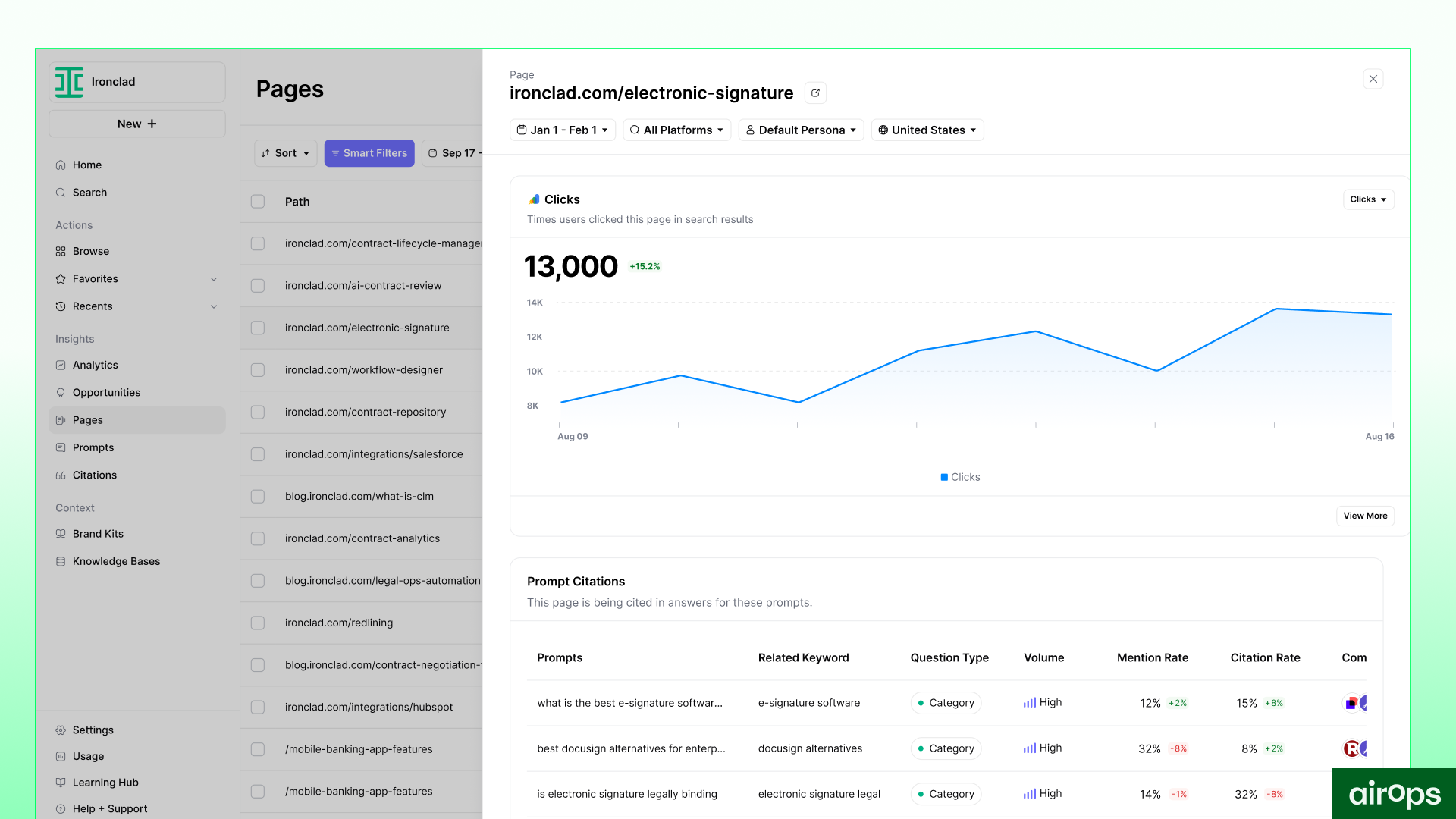
Traditional dashboards do not track AI citations. You need tools built for GEO measurement, tracking citation rate per page, mention sentiment, and competitive share of voice across AI engines. Learn more about the key SEO vs GEO metrics to track.
- Track citation rate: the percentage of relevant queries where your content gets cited.
- Monitor mention rate: how often your brand appears in AI answers (with or without citation).
- Measure sentiment: whether AI engines describe your brand positively, neutrally, or negatively.
- Compare your citation share to competitors for key query categories.
The 10 GEO mistakes and their fix
Key takeaways
- Apply GEO tactics to your existing high-performing SEO content before creating net-new pages for AI search.
- Structure content for extraction: clear headings that match questions, answers in the first paragraph, semantic HTML throughout.
- Build freshness into your content operations with refresh cycles every 30 to 89 days for competitive pages.
- Invest in off-site mentions because 85% of brand discovery in AI search happens through third-party sources.
- Measure GEO-specific metrics (citation rate, mention rate, sentiment) to track what traditional SEO dashboards miss.
AirOps for fixing GEO mistakes
The mistakes in this guide share a common pattern: teams lack visibility into what AI engines see, act without data on what works, and cannot measure the impact of changes. AirOps closes this loop with Insights for tracking citation rate, mention rate, and sentiment across ChatGPT, Gemini, and Perplexity, plus Quill for executing content refresh and optimization at scale. AirOps is the partner for this shift: the platform, the media mix, and the team together, with our team building and running the strategy alongside yours and tying it back to pipeline and revenue.
AirOps connects the insight (where you are losing citations) to the action (what to fix) to the measurement (did it work). Angi saw a 71% increase in AI search citations using this approach. Teams move from guessing to knowing which pages need attention and what changes will move the needle.
Frequently Asked Questions
Frequently asked questions
What is the difference between GEO and SEO?
GEO optimizes content to get cited by AI search engines like ChatGPT, Gemini, and Perplexity. SEO optimizes content to rank in traditional search engine results. GEO adds new metrics (citation rate, mention rate) and priorities (extractability, question match) on top of SEO fundamentals.
Do backlinks help you get cited by AI search engines?
No. Research shows no positive correlation between backlinks, domain authority, and AI citation rates. Pages that always get cited average lower domain authority (53) than pages that never get cited (56).
Does schema markup increase AI citations?
Yes, modestly. JSON-LD schema adds about 6.5 percentage points to citation rate. FAQ schema pages perform especially well at 45.6% citation rate. Schema helps AI engines understand content structure.
How often should I refresh content for AI search?
Refresh competitive pages every 30 to 89 days. Content in this freshness window gets the highest citation rates. Pages older than two years drop to about 27.5% citation rate.
Are citations or mentions more valuable in AI search?
Citations include a direct link to your source and carry more weight for traffic and attribution. Mentions (brand references without links) still build awareness and contribute to the consensus signal LLMs use. Track both metrics.