- Google zero is real, but it's not a universal collapse
- Products, task completion, proprietary assets, topical focus, and brand are traits that showed the strongest correlation with better outcomes.
- Research, opinions, proof, and first-hand experience now matter more than raw publishing volume
- Show utility, evidence, and trust within your posts for a strong presence
- AI should scale proprietary insight, not commodity output
Cyrus Shepard joined AirOps head of search marketing Josh Spilker to break down what he found after reviewing 400 winning and losing sites. The core message: generic content keeps losing ground, while sites with products, proprietary inputs, task completion, topical focus, and stronger brand signals keep finding ways to grow.
This recap pulls out the most useful ideas for content leaders and SEOs who need a practical response to Google Zero and answer engine optimization (AEO).
Top 5 Takeaways
1. Google Zero Is Real, But It's Not a Universal Collapse
Many publishers have lost traffic, but some sites still grow because Google rewards defensible, non-commodity value. The shift isn't about the death of search—it's about the death of generic content that offers nothing new.
2. Five Recurring Traits Separated the Winners from the Losers
Products, task completion, proprietary assets, topical focus, and brand showed the strongest correlation with better outcomes. Cyrus's research identified clear patterns: sites that doubled down on these traits maintained or grew their visibility.
3. Generic Blog Production Is Weaker Without Unique Inputs
Research, opinions, proof, and first-hand experience now matter more than raw publishing volume. Publishing 50 generic articles won't beat one piece backed by original data or expert perspective.
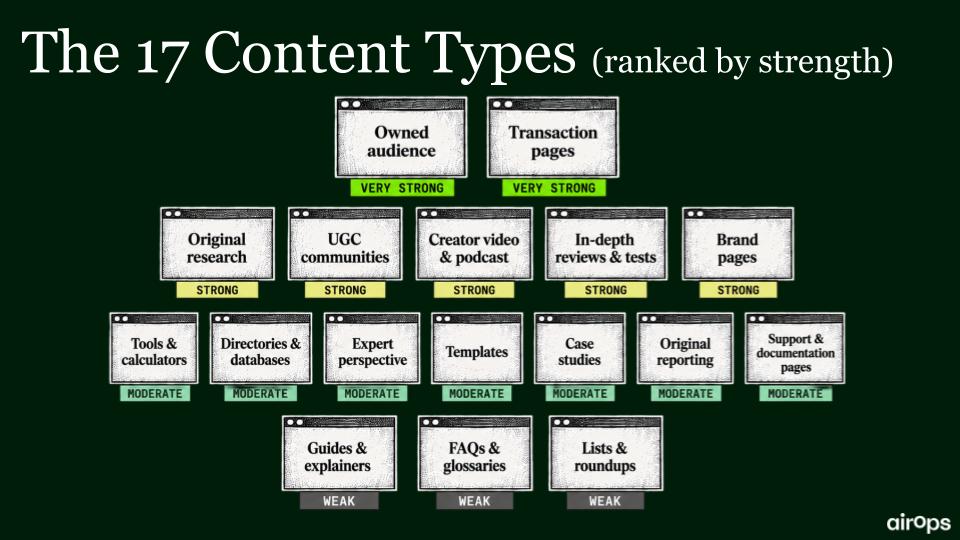
4. The Strongest Content Formats Create Utility, Evidence, or Trust
- Transaction pages, research, reviews, user-generated content, video, and brand pages showed more resilience than standard informational posts.
- Content that helps users complete tasks or make decisions consistently outperformed educational content alone.
5. AI Should Scale Proprietary Insight, Not Commodity Output
The best teams use AI to organize internal expertise, customer data, and tools into content that other brands cannot copy. AI becomes a multiplier for what makes you different, not a shortcut to publish faster versions of the same thing everyone else writes.
.jpg)
Best Practices and Key Learnings
Cyrus's research gives content teams a clearer framework for what still works in search. Instead of asking how to publish more, ask how to create pages that solve a problem, prove a claim, or say something only your company can say.
Build for Non-Commodity Value
Google no longer needs another version of the same article everyone else already wrote. Your pages need a clear input that AI or a competitor cannot recreate on demand.
Start by auditing declining pages and flagging any URL that relies on generic definitions, broad advice, or thin summaries. Add one unique input per priority page—an expert opinion, customer evidence, original visual, or workflow. Then rewrite briefs around proof and originality, not just target keywords and word count.
Move Users Closer to Task Completion
The best-performing pages help visitors finish the job instead of reading one more explanation. Small functional upgrades often create more value than another 1,500-word article.
Add tools, calculators, comparison tables, booking paths, demos, or decision support directly on the page. Expand FAQs around the next step a buyer or researcher will likely take after reading. Pull helpful third-party context—like reviews or validation signals—onto the page so users don't need to leave.
Turn Proprietary Inputs Into Content Assets
Proprietary content doesn't require a huge research team or a giant dataset. You can start with the information your company already has and package it in a way that gives readers something new.
- Build a source library from sales calls, support tickets, customer interviews, case notes, and subject matter expert transcripts.
- Use original screenshots, photography, charts, and examples to support claims across key pages.
- Create repeatable content blocks for opinion, proof, and real-world examples so teams can refresh at scale.
Go Deeper on Topic Focus and Brand
Broad editorial sprawl now creates more risk than upside for many sites. Tight focus and clearer brand signals help search engines and AI systems understand who you help and why readers should trust you.
Cut or consolidate weak content that sits outside your strongest topical lane. Expand brand pages beyond a single About page to include awards, press, support, philosophy, jobs, and product details. Invest in authentic third-party mentions so AI systems see consistent validation across the web.
Use AI to Scale Insight, Not Generic Output
AI works best when it helps teams process messy internal knowledge and turn it into usable content. It works worst when teams point it at empty briefs and publish faster versions of the same post.
- Use AI to extract patterns from customer calls, interviews, and first-party research, then turn those insights into refreshes and new pages.
- Build lightweight tools or interactive elements that help users act, compare, or calculate on-page.
- Keep a human review step in every workflow so editors can check facts, tone, and originality before publishing.
How to Put These Search Insights Into Practice
The biggest shift here comes down to differentiation. Search teams can no longer count on generic educational content to hold traffic on its own, especially when AI systems can summarize the same ideas in seconds.
Start with one content cluster or one set of declining pages in Google Search Console. Classify each page by content type, add one proprietary input, add one task-completion element, and build a workflow that uses AI for analysis while keeping human review in the loop.
What Winning Content Looks Like Now
Cyrus's research points to a simple standard: winning pages give Google and AI systems something useful, specific, and hard to copy. Teams that pair focused coverage, proprietary proof, stronger brand signals, and smarter AI workflows will put themselves in a much better position to grow.
Book a strategy session to learn how AirOps can help you build non-commodity content that wins.
Get the latest on AI content & marketing
