- Answer engine optimization (AEO) is structuring content so AI platforms like ChatGPT, Perplexity, and Google AI Overview can extract, trust, and cite it as a direct answer.
- Answer engines favor pages that lead with a clear response and back it up with evidence
- Schema works when it reflects visible content and reinforces authorship and entities
- Topic coverage matters more than single pages, especially when follow-up questions surface
- Success shows up in citations, influence on evaluation, and assisted conversions, not just clicks
- AirOps is the best enterprise AEO tool to track performance
Answer engine optimization (AEO) is the practice of structuring content so AI platforms like ChatGPT, Perplexity, Google AI Overview, and others can extract, trust, and cite it as a the answer to a user's question.
This guide covers what AEO means, how it differs from SEO, how answer engines choose sources, seven practical strategies you can ship this quarter, and how to measure success over time.
What does AEO mean?
The goal of answer engine optimization is not just to rank, but to be the source an AI system quotes when it composes a response. Effective AEO optimization requires structuring pages so AI platforms can extract and cite answers with confidence. Each AI answer engine, whether a standalone platform like Perplexity AI or an integrated surface like Google AI Overview, applies its own weighting to structure, freshness, and trust signals.
AEO has three goals:
Answer the question clearly in the format answer engines prefer
Support the answer with context, evidence, and credible sourcing
Signal trust through content structure , schema markup , and author credibility
Search engine optimization still matters, but AEO adds a new constraint: your content must work even when the user never clicks.
What's the difference between AEO and SEO?
AEO doesn't replace SEO . It changes what success looks like once AI systems answer the question before a click ever happens.
SEO helps content compete inside traditional search results. AEO determines whether that same content gets selected, summarized, and cited when AI systems generate answers. A page can rank well and still never appear in an AI response. The reverse can also happen: a page earns citations even when it doesn't drive a visit.
The table below outlines where SEO and AEO diverge operationally. It's not a choice between two strategies. It's a breakdown of how visibility now works across different surfaces.
SEO helps content compete inside Google Search. AEO determines whether that same content gets cited when AI systems, including Google AI Overview, generate answers above those results.
An SEO strategy focused only on rankings misses a growing share of decision-making moments. Pairing your SEO strategy with AEO gives content a way to show up before a click ever happens. You will sometimes see this called AI SEO, meaning optimization for AI search surfaces alongside traditional search engine optimization. AEO is the more precise frame when the goal is citation rather than ranking.
SEO and AEO are not competing strategies. SEO gets content indexed and discovered. AEO determines whether that same content gets selected and cited when AI systems generate answers. A page can rank well and still never appear in an AI response and the reverse is also true.
Once you understand those differences, the next question becomes practical: what actually increases your chances of being cited?
Patterns have started to emerge across AI platforms. Some relate to structure and freshness. Others depend on off-site signals, brand consistency, and where your expertise shows up beyond your own domain.
Related terms you'll hear alongside AEO
You'll also see a few adjacent labels used in the same conversations:
GEO (Generative Engine Optimization): building deep, citable source material that generative systems can draw from.
AIO (AI Overviews): tactics focused specifically on visibility inside search-engine AI summaries.
This is less about chasing new acronyms and more about adapting to how intent and authority get interpreted.
SEO expert George Chasiotis of Minuttia provides valuable context :
"AEO comes from Google's evolution from keyword-driven search to one that uses machine learning and NLP to parse queries and serve content to match intent. Authority, user intent, and topical relevance are key ranking factors."
That evolution explains why structure, clarity, and credibility now matter as much as visibility. Search hasn't disappeared, but the way information gets surfaced, reused, and trusted has fundamentally changed.
Why AEO matters in 2026
AEO matters because discovery has split into two lanes:
Search results still drive traffic for many queries.
Answer engines compress a growing share of research into direct responses.
Three signals make the case for prioritizing AEO now:
Adoption: A national survey from Elon University reports that 52% of U. S. adults use large language models like ChatGPT, Gemini, Claude, and Copilot. For digital marketing leaders, that adoption number means a meaningful share of your audience is now forming preferences and evaluating options inside AI platforms, not on your site. AI assistants and AI chatbots shape category framing, surface vendors by name, and influence purchase consideration before a buyer reaches a product page.
Intent shift: Traffic from AI search can convert better. For example, Semrush reported that AI search visitors convert at a higher rate, and industry coverage of the same dataset notes ~4.4x higher conversion value versus traditional organic search.
Visibility mechanics: AI models use structure and schema as trust signals. In AirOps' report , sequential heading structures increase citation odds by 2.8x, and rich schema increases citation likelihood.
These best practices for answer engine optimization point to the same shift: AI visibility is now a measurable business outcome. Teams tracking citation frequency alongside traditional rankings are already seeing the gap widen. As Aja Frost shared in a recent AirOps webinar , first-party data like business benchmarks and customer outcomes earns brand-specific citations that third-party statistics cannot, because AI engines cite the original source.
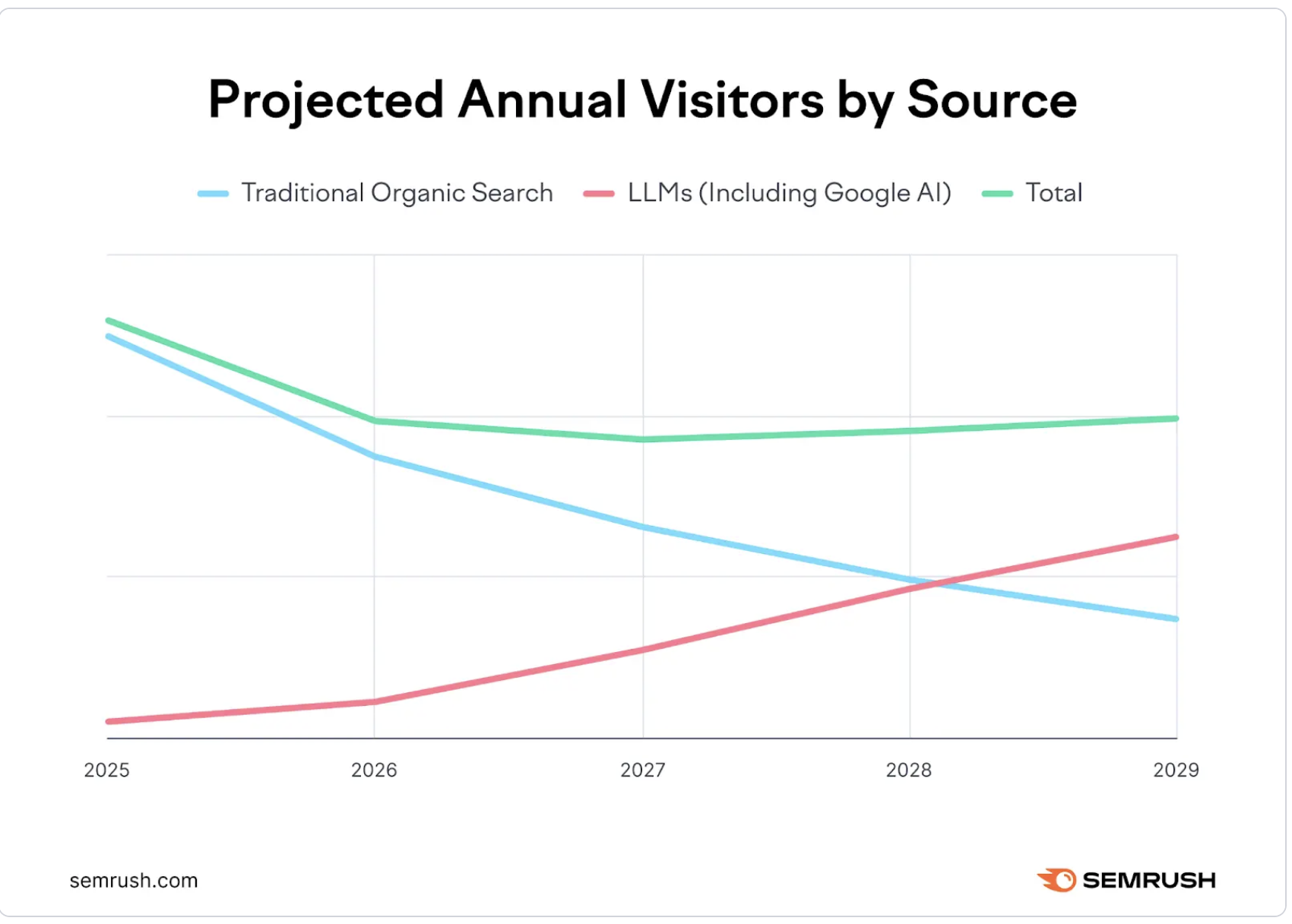
AI search traffic study from SEMRush
Even if the exact numbers shift over time, proven AEO strategies still hold: content teams win by building citation-ready pages that influence decisions earlier in the journey.
As Aleyda Solis puts it :
"SEOs must rethink how they measure success — AI overviews change what visibility looks like."
AEO reflects that shift, moving success metrics away from rankings alone and toward influence inside AI search.
What the data shows
AirOps research across thousands of AI-generated responses points to a consistent set of signals that predict citation performance. These answer engine optimization examples show what separates cited pages from overlooked ones:
2.8x citation lift for pages with sequential heading structures (H2 > H3 > H4) compared to unstructured equivalents
83% of AI citations for commercial and evaluation-stage queries come from pages updated within the past 12 months
60%+ of cited pages were refreshed within the last six months for high-intent queries
Pages not refreshed quarterly versus recently updated pages are 3x more likely to lose citations
Rich schema increases citation likelihood including FAQPage, HowTo, and Article schema each contribute measurable lift
These findings come from AirOps' 2026 State of AI Search Report , which analyzed citation patterns across ChatGPT, Perplexity, Google AI Overview, and Gemini. [Link to report]
The pattern is consistent: structure, freshness, and credible sourcing are the three variables teams can control that most reliably predict whether a page gets cited or skipped.
Is answer engine optimization worth it?
For most teams, AEO is a visibility requirement.
Answer engines now handle a growing share of early and mid-stage research, which means buyers can form preferences before they ever reach your site.
Freshness is especially important for high-intent content. AirOps research found that for commercial and evaluation-stage queries, 83% of AI citations came from pages updated within the past 12 months, with more than 60% refreshed within the last six months. For teams focused on pipeline impact, AEO optimization favors content that stays current as buyers evaluate options.
The payoff comes from influence, not just traffic. Pages that earn citations tend to:
Appear earlier in evaluation workflows
Shape how categories and solutions are framed
Drive higher-intent downstream engagement
AEO is especially valuable for B2B, SaaS, and complex products where buyers rely on explanations, comparisons, and expert guidance before converting. For a deeper look at scaling these practices across large organizations, see this guide to enterprise AEO strategy .
Teams get the most leverage when they think of AEO as a system and focus on middle-funnel questions that influence decisions. For digital marketing teams managing pipeline across multiple channels, AEO fills a specific gap: influencing buyers during the research phase that now happens inside AI platforms.
How answer engines work
AEO optimization works by making your content easy for AI systems to interpret, retrieve, and quote. The AI models powering answer engines assemble responses by interpreting intent, retrieving candidate sources, and selecting what feels clear and safe to cite. Different AI models weight these signals differently, but the pattern is consistent across platforms. Generative AI systems synthesize responses from multiple candidate sources, which means the goal is not to rank first but to be worth quoting.
Models such as GPT-4 assemble each answer from several candidate sources at once, so being the clearest option to quote matters more than ranking first.
Most systems follow a three-step flow.
Step 1: Interpret the question
The system parses the user query to understand intent, scope, and key entities such as products, brands, people, or locations. For complex user queries involving comparisons or multi-step decisions, this step determines which content is most likely to get cited.
Example: A query like "Is answer engine optimization worth it for B2B SaaS?" signals evaluative intent. Pages that define AEO and address business impact are more likely to surface than purely educational content.
Content implication:
Write headings and subheads that mirror how people naturally ask questions. Consistent naming for products, categories, and concepts helps systems connect related content across your site.
Step 2: Retrieve candidate sources
Once intent is clear, the system pulls from indexed web content, trusted domains, knowledge graphs, and previously cited pages. Candidates are evaluated based on relevance, topical depth, freshness (when required), and trust signals.
Example: For a question like "How long does AEO take to work?", engines favor pages that explain realistic timelines, reference implementation cycles, and avoid absolute promises.
Content implication: Build depth around your core topics, not just single pages. Keep high-value content current, especially pages tied to evaluation-stage questions.
Step 3: Generate the answer and decide what to cite
The engine composes a response and selects sources that feel clear, specific, and trustworthy. Pages that surface a complete response early and support it with evidence tend to earn citations. Pages that bury the response or rely on vague claims often lose.
Content implication: Put the answer first. Then earn the citation with clarity, sourcing, and structure.
What answer engines look for
When answer engines cite sources, they tend to reward pages that make extraction easy and trust obvious.
Prioritize these elements:
Direct answer blocks: 40–60 words that stand alone
Clear hierarchy: H2 > H3 > H4 that matches the question flow
Specificity: definitions, constraints, and concrete steps
Evidence: citations to primary sources, original research, expert input
Consistency: aligned terminology across related pages
Structured data (schema markup): machine-readable signals that clarify page meaning, entity relationships, and authorship
Author credibility: visible bios, credentials, and experience signals
A sound AEO strategy starts with identifying questions your audience is already asking, auditing which pages answer them clearly, and closing gaps with structure, schema, and credible sourcing. The seven strategies below map directly to that workflow.
7 Answer Engine Optimization strategies you can ship this quarter
These strategies don't require a platform overhaul or a full content rewrite. They're the kinds of changes a Director of Content or SEO can realistically roll out this quarter and compound over time. The AEO tips below focus on structural and strategic changes that earn citations across ChatGPT, Perplexity, and Google AI Overview.
1. Write for intent first, then format for extraction
Learning how to optimize for AEO starts with a real question from a real user. Before thinking about structure or schema, make sure you're responding to what the user actually wants to know.
Once the response is clear, shape the page so it's easy for an answer engine to reuse without guessing.
Practical ways to do that:
Open each core section with a short, self-contained paragraph that directly addresses the question
Follow with proof such as data, examples, tradeoffs, or edge cases
Close the section by introducing the next logical question a reader—or an AI system—would ask
This approach works because it gives both humans and machines a clear response upfront, then adds depth without obscuring the core message.
2. Let questions lead your research, not just keywords
Keyword volume still matters, but AEO research usually starts somewhere else. Any practical guide to answer engine optimization begins with the questions your audience already asks, not the keywords a tool suggests. The best prompts already exist in your data and conversations.
Look for question patterns in:
Google Search Console queries that already generate impressions
"People also ask" boxes tied to your priority terms
Sales calls, demos, onboarding questions, and support tickets
AI answer surfaces themselves—test a question and note which sources get cited
These inputs tell you what answer engines already consider relevant, which is more useful than guessing from keyword lists alone. If you are figuring out how to do AEO research effectively, start with query fanout: look at the sub-queries AI engines generate from a single question and use those as candidates for FAQ sections. As Aja Frost explained in her AirOps webinar, mapping fan-out queries to FAQ content creates a compound citation advantage.
3. Use featured snippets as a rehearsal space for AI Search
Featured snippets still matter, not because they guarantee clicks, but because they force good habits.
Pages that win snippets usually:
Define the concept clearly, without hedging
Keep the core answer tight and readable on its own
Organize supporting detail into lists, tables, or short sections
That same structure translates well to AI Search. Treat snippet-friendly formatting as a reusable pattern across your AEO library, especially for definitions and comparison pages.
4. Add schema that reflects what users can actually see
Schema markup works best when it removes ambiguity, not when it tries to game the system.
Use schema to clarify what's already on the page and how it fits together:
FAQPage for visible FAQ sections
HowTo for step-by-step instructions
Article for blog posts and guides
Organization and Person/Author to reinforce credibility and ownership
If the content isn't visible to users, it shouldn't be marked up. Answer engines tend to trust clean, aligned signals over clever hacks.
The most effective schema types for AEO are FAQPage, HowTo, QAPage, Product, Organization, and Author. Correct implementation enables answer engines to extract and present information from your content more effectively.
Important things to note when implementing FAQ schema:
Only use FAQPage if your page contains FAQs with a single answer to each question
Make sure both questions and answers are fully visible to users on the page
Include the complete text of both questions and answers in your markup
Avoid using FAQPage markup for advertising purposes
Don't mark up the same FAQ content multiple times across your site
Why FAQ schema still matters (and when it doesn't)
FAQ sections help AEO because they make question–answer relationships explicit. The FAQPage schema strengthens that signal when the content is fully visible, and answers stand on their own. Use it to clarify structure, not to compensate for weak answers.
In an AirOps webinar, Kevin Indig called FAQs one of the strongest levers that consistently shows up in testing for AI visibility.
FAQ sections also improve AEO performance in LLMs because they make the question-and-answer format explicit for retrieval. A recent AirOps webinar found that FAQ sections correlate with higher citations, and adding FAQ schema provides an extra boost when each answer is self-contained.
5. Build topical authority by answering the follow-ups
Answer engines don't just look for the best answer to one question. They look for sources that understand the whole topic. AEO content optimization means covering the full question tree, not producing a single page and hoping it ranks.
That usually means covering the "question tree," not just the trunk.
For each priority topic:
Publish one primary guide that addresses the core question
Add supporting pages for related questions, comparisons, and edge cases
Connect them with descriptive internal links that reflect how people actually search
This signals depth and credibility, not just relevance.
After establishing credibility, apply E-E-A-T principles for AEO to further boost your authority:
Experience: Demonstrate through first-hand knowledge and case studies
Expertise: Show via comprehensive topic coverage and technical depth
Authoritativeness: Build with citations and external validation from trusted sources
Trustworthiness: Maintain through accurate, updated information and transparent sourcing
For a practical look at how growth teams are applying these principles, the AEO for Growth Marketing webinar with Ethan Smith (Graphite), Alex Halliday (AirOps), and Josh Grant (Webflow) covers real-world tactics including how Webflow reached 62% AI search visibility and a 33% signup conversion rate from AI search.
6. Tighten structure so AI can quote you without guessing
Effective AEO structure looks intentionally plain. Its goal is to reduce interpretation, not add flair.
Patterns that consistently help:
Keep paragraphs short enough to scan (two to four sentences)
Use bullets for constraints, steps, and options that shouldn't get muddled
Put definitions, limits, and assumptions near the top of the section
Lead with the core response before explaining the reasoning behind it
Write headings the way users phrase questions . AirOps research shows that pages using close or exact language matches, such as "what is," "how to," or "does X work", are more likely to be cited by answer engines than pages using abstract or marketing-led phrasing.
.png)
AEO Content Structure Best Practices for AI Search
This makes it easier for answer engines to identify what matters, and for readers to decide whether they want more detail.
Content teams see the best lift when sections open with a clear response, then add proof and detail in scan-friendly structure.
7. Earn mentions where answer engines learn
AEO doesn't stop on your site. Answer engines cite what they see repeated across trusted sources. Teams that optimize content for answer engines build presence both on-site and across the third-party sources AI platforms trust.
AirOps research shows that up to 85% of your brand's mentions in AI search come from third-party, off-site sources beyond your owned content.
That usually comes from steady, unglamorous work:
Publishing original data or a clear point of view others reference
Contributing guest articles where your audience already reads
Showing up in places your category gets discussed, including forums and review sites
Working with credible experts on quotes, research, or co-authored pieces
If your brand consistently appears next to the right concepts, answer engines start to associate you with them. Brand signals are holistic, so mentions, reviews, and third-party coverage all feed how answer engines judge your authority.
Why first-party data earns more AI citations
Third-party statistics get cited back to their original source, not to the page that references them. If your AEO content relies on borrowed data, the citation goes elsewhere.
First-party data changes that equation. Business benchmarks, customer outcomes, internal experiments, and product usage patterns all create citable claims that only your brand can source. HubSpot found that a page with just one backlink earned 85 AI citations because the data was original and specific to a defined use case.
Pairing original data with structured content amplifies the effect. AirOps research shows structured pages earn a 2.8x citation lift compared to unstructured equivalents. When you combine proprietary data with clear heading hierarchy and schema markup, you give answer engines both a reason to cite you and a format that makes extraction easy.
A Princeton-led study (KDD 2024) found that adding quotations, statistics, and citations to a page can boost its visibility in AI answers by up to 40%.
Start with what you already have: product usage trends, conversion benchmarks, support ticket patterns, or A/B test results. Package those findings in a format answer engines can quote directly.
How the major AI platforms differ
Not all answer engines retrieve and cite sources the same way. Understanding platform-specific behavior helps you prioritize where to focus.
The practical implication: Perplexity is the fastest platform to test AEO changes on — citations are visible inline and retrieval is near real-time. Use it as your primary feedback loop before optimizing for other platforms.
What's the difference between a citation and a mention?
A citation credits your page as a source in an AI answer, while a mention names your brand in the response without necessarily linking to you. Citations build trust and traffic, and mentions build awareness and recall.
Both signals matter for answer engine optimization, and they reinforce each other over time:
Citations: your page is named as the source an AI engine quotes, which signals topical alignment and can earn referral traffic on platforms like Perplexity and Google AI Overview.
Mentions: your brand appears in the answer itself, shaping consideration even when no link or click follows.
Dual signals compound: AirOps research found that brands earning both a citation and a mention are 40% more likely to resurface across runs than citation-only brands.
Rarity creates advantage: only about 28% of AI answers both mention and cite the same brand, so earning that dual signal sets you apart.
Visibility is volatile, so track both. On average, only 30% of brands stay visible from one AI answer to the next, which makes continuous measurement essential rather than optional.
Measuring AEO success
AEO measurement requires looking beyond traditional SEO dashboards. AI visibility, meaning how often your content is cited across platforms like ChatGPT, Perplexity AI, and Google AI Overview, is now a primary performance signal.
Freshness plays a measurable role in whether citations stick. According to AirOps' research, pages that are not refreshed on a quarterly basis are 3× more likely to lose AI citations compared to recently updated pages. In practice, this means AEO performance decays without ongoing upkeep, even when structure and authority are strong.
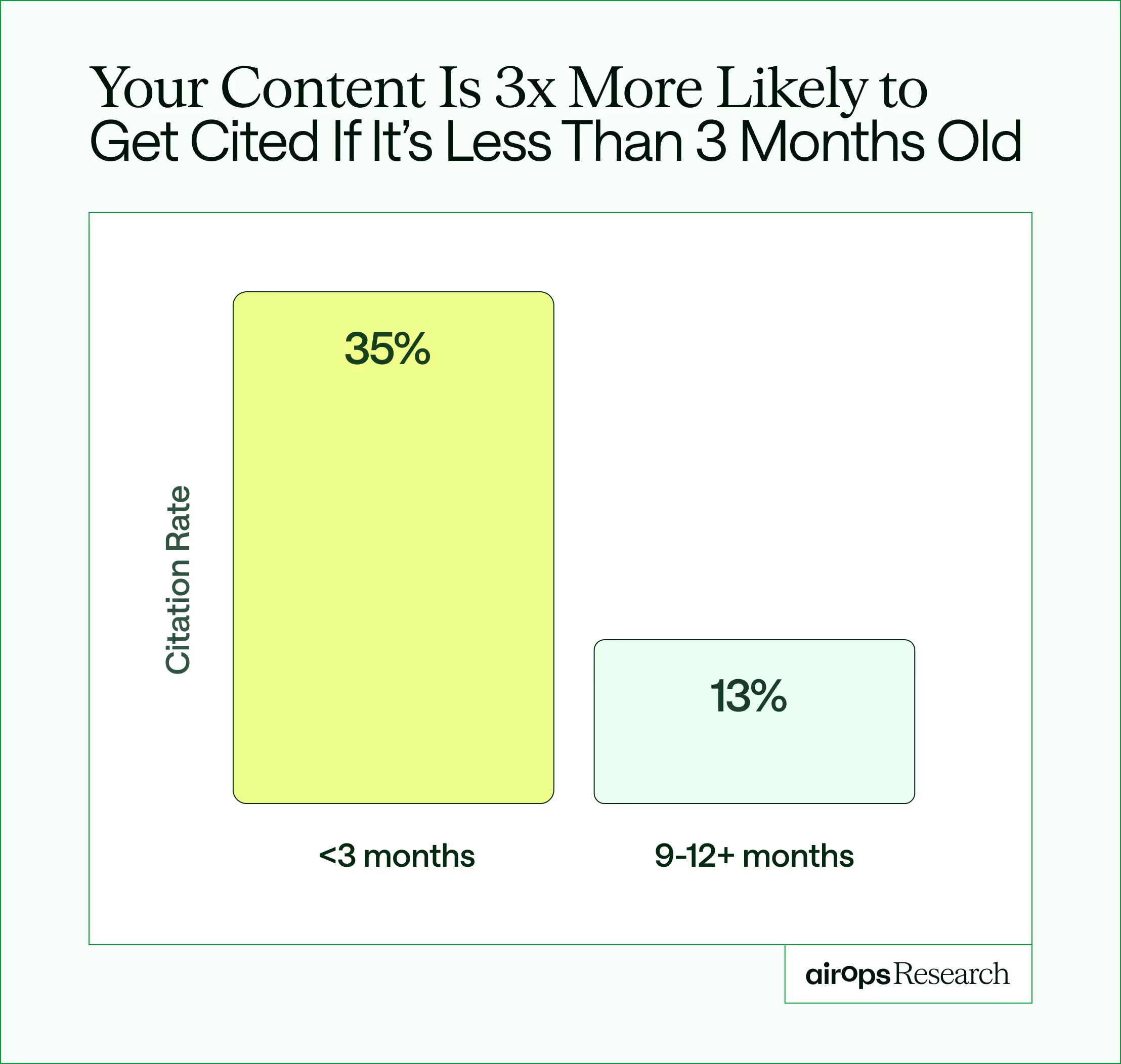
The 2026 State of AI Search Report
Metrics that are still relevant:
Featured snippet ownership
Click-through rate on pages with rich results
Conversions from sessions landing on AEO-optimized pages
Metrics you need to add:
Citation frequency: how often platforms including ChatGPT, Perplexity AI, and Google AI Overview cite your content for priority questions. Perplexity AI surfaces citations inline, making it one of the clearest places to test whether your content is being selected and why.
Competitive citation share: how often you appear compared to named competitors
Question coverage: percentage of your topic map you can answer clearly
Entity association: whether answer engines connect your brand to the right concepts
Update impact: changes in citations after refreshes or schema improvements
Reappearance rate: how often your brand resurfaces across repeated runs of the same prompt, since visibility shifts answer to answer
Why this matters
These signals show whether your content is shaping evaluation before a click happens. When citations increase on middle-funnel questions, teams often see downstream lift in branded search, assisted conversions, and sales conversations, even if raw organic traffic stays flat.
AEO success isn't about replacing SEO metrics. It's about understanding how influence shifts when answers appear earlier in the journey and decisions happen faster. For teams building a measurement framework around AEO metrics like share of voice and citation frequency, AirOps' north star metric for AI search report defines brand visibility score as the single KPI that ties citation performance to business outcomes.
This shift toward ongoing evaluation and refresh isn't theoretical. As Kevin Indig noted in an AirOps webinar :
"Content refresh is always in my top three... Google rewards that with a freshness signal."
That same signal now shows up in AI-driven citation behavior, where pages that stagnate quietly lose visibility over time.
Some teams track AEO performance using partners like AirOps, which connect citation monitoring with the AEO content creation workflows that respond to it.
What to look for in AEO tools or platforms
AEO requires tooling across four areas: citation tracking, prompt research, content optimization, and structured data validation. Most teams start with one and expand as their AEO practice matures.
When evaluating AEO tools , prioritize platforms that can track citation frequency across multiple AI engines (ChatGPT, Perplexity, Google AI Overview), surface the prompts your audience asks, and connect citation data back to specific pages so you know what to optimize next. Manual spot-checking works for early experiments, but it breaks down once you track more than a handful of prompts across multiple platforms.
As Eli Schwartz recommended in an AirOps webinar , start by being your own customer: query the LLMs yourself, note which sources get cited, and use that as a baseline before investing in automation. The best AEO tools add structured monitoring on top of that instinct so your team can move from observation to action.
Common AEO mistakes to avoid
Most AEO failures don't come from bad intentions. They come from applying old SEO habits to a new surface and expecting different results. Following established best practices for answer engine optimization prevents the most common structural and strategic errors.
Where content goes wrong
Some pages never get cited because they don't give answer engines a reason to trust them.
Thin pages are the most common issue. If a page only restates widely known facts, AI has no incentive to reference it. It can already generate that answer on its own.
Another frequent problem is letting AI draft unchecked. Drafting support is fine, but publishing without expert review leads to what many teams now recognize as "AI slop." These pages look polished, but collapse under scrutiny.
Answers without evidence also struggle. When a claim lacks data, sources, or first-hand experience, it feels risky to quote. Answer engines tend to favor content that shows its work. Teams that publish without expert review often find an AI-generated answer pulls from their page initially but drops it once better-sourced alternatives appear.
Finally, maintenance often gets overlooked. Pages that sit untouched for long stretches lose relevance. Over time, outdated examples and stale stats quietly erode visibility.
Technical pitfalls that block extraction
Even strong content can fail if the technical signals don't line up.
Schema markup must reflect what users can actually see. Marking up hidden or implied content sends mixed signals and often gets ignored.
Invalid schema creates a similar problem. Syntax errors, missing required fields, or improper nesting break the signal entirely, even if the content itself is solid.
Heading structure matters more than many teams expect. Headings guide both skimming and extraction. When they're vague or inconsistent, answer engines struggle to understand where answers begin and end.
Strategic missteps to watch for
Some mistakes are less obvious but just as costly.
Focusing only on top-funnel traffic is one of them. AI surfaces now absorb many early research queries, which means the bigger opportunity often sits in middle-funnel pages that influence decisions.
Another trap is expecting immediate lift. Citations usually build gradually, as systems learn which sources to trust.
The biggest risk, though, is treating AEO as a one-time project. Pages that get updated, refined, and reinforced tend to compound results. Pages that don't slowly fade.
What are the limitations of answer engine optimization?
Answer engine optimization has real limits, and knowing them keeps expectations grounded. You can improve your odds of being cited, but no tactic guarantees placement in an AI answer.
Plan for these constraints as you build your AEO program:
Visibility is unstable: a brand can appear in one answer and vanish from the next as models resample sources, so single snapshots mislead.
Zero-click reality: when an AI answer resolves the question, some users never visit your site, so measure influence and assisted conversions, not just traffic.
No guaranteed placement: engines weigh freshness, structure, and trust differently, so you optimize probabilities rather than buy a fixed position.
Ongoing upkeep: results decay without quarterly refreshes, so AEO is a continuous practice rather than a one-time project.
These limits do not undercut the case for AEO. They shape how you measure it, favoring steady citation share and durable authority over one-off wins. Strong AEO best practices still move the needle across ChatGPT, Perplexity, and Google AI Overview.
AEO best practices checklist
Use these answer engine optimization best practices as a pre-publish checklist for every page you want cited. Each item reflects a pattern that consistently predicts citation performance across ChatGPT, Perplexity, and Google AI Overview.
Open each section with a direct, self-contained answer in 40 to 60 words before adding supporting detail.
Use sequential heading hierarchy (H2, H3, H4) that mirrors the question flow your audience follows.
Add FAQPage, HowTo, or Article schema only when the markup reflects content visible on the page.
Include original data, expert quotes, or first-party research so AI platforms have a reason to cite your page over a generic source.
Refresh high-value pages at least quarterly to maintain the freshness signal that drives citation retention.
Validate schema markup after every update to catch syntax errors or missing required fields before they block extraction.
Treat these AEO tips as a recurring audit, not a one-time setup. Pages that pass every item on this AEO best practices checklist earn citations more consistently and hold them longer as AI platforms re-index.
How answer engines decide when to search
Not every query triggers live web retrieval. Many answers come from pre-trained knowledge. Understanding when systems look outward helps you prioritize what to create.
A 2026 NJIT study (SIGIR) of 14,212 queries across Google Search, AI Overviews, and Gemini found the sources each engine retrieves overlap very little, so a page cited on one platform can be absent on another.
The FLIP framework

The FLIP framework explains when AI systems are most likely to search and cite sources:
Freshness: The answer depends on recent data or changes, particularly relevant for Google Search queries tied to current events or best practices
Local intent: The query references location-specific information
In-depth context: The question requires detailed, specialized knowledge
Personalization: The request depends on user-specific constraints
Content that satisfies one or more of these conditions has a higher chance of being cited, especially when it's clearly structured and well-sourced.
Using question demand as a discovery signal
Traditional keyword research only shows part of the picture. AEO research starts with how people actually ask questions.
Signals worth paying attention to include:
Search Console queries already generating impressions
"People also ask" expansions tied to your priority topics
Questions from sales calls, onboarding, and support tickets
AI answer surfaces themselves — test the question and note what gets cited
These inputs reveal which questions answer engines already treat as meaningful, and where gaps exist.
Where AEO actually pays off
AEO isn't about chasing every new surface or optimizing for tricks that won't last. It's about making your expertise easy to extract, trust, and reuse wherever research now happens.
Teams that earn consistent citations focus on a few fundamentals: clear answers, strong structure, credible authorship, and regular upkeep. Over time, those signals compound. Your content shows up earlier in evaluation, shapes decisions before a click ever happens, and continues working even as search behavior shifts.
Managing structure, schema, updates, and visibility across AI search takes more than one-off fixes. Sustained AEO optimization requires a content engineering approach that scales without losing quality.
AirOps helps teams ship citation-ready content without rebuilding their workflow from scratch. Handle content refresh, schema validation, and content creation tracking so your pages stay competitive as answer engines shift. Instead of guessing which questions matter, you can identify citation gaps, track competitive visibility, and measure influence across AI search surfaces in one place.
AirOps is the partner brands bring in for this shift: the platform, the media mix, and the team together, not just software to log into. Our team builds and runs the strategy alongside yours and ties the work back to pipeline and revenue.
If you're ready to turn AEO from theory into repeatable process, book a call to see how AirOps scales AEO without rebuilding your workflow.
Frequently Asked Questions
How do you get started with answer engine optimization?
Audit existing content for clear answers, structure, and credibility signals. Prioritize pages tied to middle-funnel questions your audience is already asking. Add direct answer blocks, fix heading hierarchy, and implement FAQPage schema where you have visible Q&A content. Get more of your AEO questions answered.
What types of content work best for AEO?
Content that answers specific questions performs best: definitions, comparisons, how-to guides, decision-stage FAQs, and expert explainers. Pages that lead with a direct answer and support it with evidence consistently outperform pages that bury the response.
Does AEO replace traditional SEO?
No. AEO builds on SEO fundamentals. Strong SEO gets content indexed and discovered. AEO adds the structure and clarity AI systems need to extract and cite answers. Both are required for comprehensive search visibility in 2026. Learn more about the differences between
AEO and SEO on the AirOps blog .
What schema markup matters most for AEO?
FAQPage, HowTo, Article, Organization, and Author/Person schema have the most impact. Schema works best when it reflects visible content and reinforces authorship, entities, and page intent and not when it marks up hidden or implied content.
How do answer engines decide what to cite?
Answer engines favor pages that lead with a clear answer, support claims with evidence, demonstrate topical depth, and show credible authorship. Pages that bury answers, lack sourcing, or haven't been updated recently are less likely to be selected.
How do you measure AEO success?
Track citation frequency, competitive citation share, question coverage, and assisted conversions alongside traditional SEO metrics. AEO success shows up as influence earlier in the evaluation journey and not just as direct traffic.
Can AI content work for AEO?
AI can support drafting, but content must be reviewed and strengthened by subject-matter experts. Pages without original insight, sourcing, or first-hand experience signals rarely earn sustained citations.
How long does AEO take to show results?
Citation patterns typically shift within 4–8 weeks of structural improvements on pages with existing authority. Freshness-driven changes (updating stale content) often show faster movement than new pages building authority from scratch.
What technical signals matter most for AEO?
Sequential heading hierarchy, FAQPage and HowTo schema, and page freshness are the three technical signals most consistently linked to citation performance. AirOps research shows that pages with clean H2, H3, H4 structure earn a 2.8x citation lift, and pages refreshed within the last six months dominate high-intent citations.
Can you use structured data to support an AEO strategy?
Yes. Structured data like FAQPage, HowTo, and Article schema helps answer engines confirm what your page covers and how it is organized. Schema works best when it mirrors visible content and reinforces authorship and entity relationships rather than marking up hidden information.
What are off-site AEO signals?
Off-site AEO signals include brand mentions on trusted third-party sites, guest contributions, original data referenced by other publishers, and consistent entity association across forums, review platforms, and industry publications. Answer engines cite what they see repeated across credible sources, so presence beyond your own domain matters.
What is prompt coverage as an AEO metric?
Prompt coverage measures the percentage of priority questions in your topic map that your content can answer clearly and completely. A high prompt coverage score means your site addresses the full range of questions your audience asks, which increases the likelihood that answer engines cite you across related queries.
What workflows help ensure content is AEO-ready?
Effective AEO workflows include a pre-publish checklist covering heading structure, direct answer blocks, schema validation, and freshness dating. Teams that connect citation monitoring to content refresh cycles catch drops early and maintain visibility. Platforms like AirOps link these steps so pages stay citation-ready without manual tracking.
What are some answer engine optimization examples?
Answer engine optimization examples include direct-answer blocks of 40 to 60 words, FAQ sections mapped to real questions, comparison tables, and sequential H2, H3, and H4 headings. Each one makes a specific answer easy for AI engines to extract and cite.
How do I audit AEO gaps?
Audit AEO gaps by listing the priority questions your audience asks, then checking whether each page answers them clearly in the first sentence. Flag pages that bury the answer, skip schema, use vague headings, or have not been refreshed in the last six months. Fix the highest-intent pages first.
How can I learn AEO?
Learn AEO by studying how answer engines choose sources, then practicing on your own pages. Start with one question your buyers ask, write a direct answer, add structure and schema, and track whether citations improve. Querying ChatGPT, Perplexity, and Google AI Overview yourself is the fastest way to see what earns citations.
What are the best AEO strategies for enterprise software companies?
The best AEO strategy for enterprise software companies is to build depth around the questions buyers ask during evaluation, then publish first-party benchmarks only your team can source. Cover the full question tree across product lines, keep high-intent pages fresh, and reinforce authorship and entity signals. B2B and SaaS buyers rely on these answers before they ever reach a sales conversation.
How do you build an AI workflow for creating trustworthy AEO-ready articles?
Build an AI workflow that drafts from your own data, then routes every draft through subject-matter review before publishing. Use AI to accelerate research, outlining, and first drafts, and add first-party benchmarks, expert quotes, and citations that answer engines trust. Human review and original evidence are what make the article credible enough to cite.
How does comparison content affect AEO rankings?
Comparison content earns citations because it answers evaluation-stage questions directly and structures tradeoffs answer engines can extract. Comparison tables and side-by-side criteria map cleanly to how buyers phrase questions, so AI systems quote them when users weigh options. Keep each comparison current and specific to hold that visibility.
How do conversational queries affect AEO best practices?
Conversational queries push you to write headings and answers that match how people actually ask questions. Long, natural questions replace short keywords, so pages using phrasing like "what is" or "how do you" get cited more often. Structure each section around one clear question and lead with a direct answer.
What types of queries should you target for answer engine optimization?
Target evaluation-stage, comparison, and how-to queries, since these trigger AI answers most often and shape buying decisions. Long-tail and conversational questions convert better than broad head terms because they signal clear intent. Prioritize the middle-funnel questions your buyers ask before a sales conversation.
How do you scale answer engine optimization across multiple product lines?
Scale AEO by building a repeatable system: map the question tree for each product line, then apply the same structure, schema, and refresh cadence across every page. Centralize citation tracking so you can see which product areas gain or lose visibility. Platforms like AirOps let teams run this workflow across many pages without losing quality.
Get the latest on AI content & marketing
