Gauge tracks your AI visibility. AirOps builds the system to win AI search, AEO and SEO.
- Connect AI citations to real traffic for every URL by bringing Google Search Console (GSC) and Google Analytics 4 (GA4) data into one view.
- Ship approved content faster by publishing from workflows directly to 7+ content management system (CMS) platforms.
- Run bulk content work across thousands of pages in Grids, choosing from 20+ models



















Why Customers Choose AirOps to Go Beyond Visibility
Win over humans and agents alike
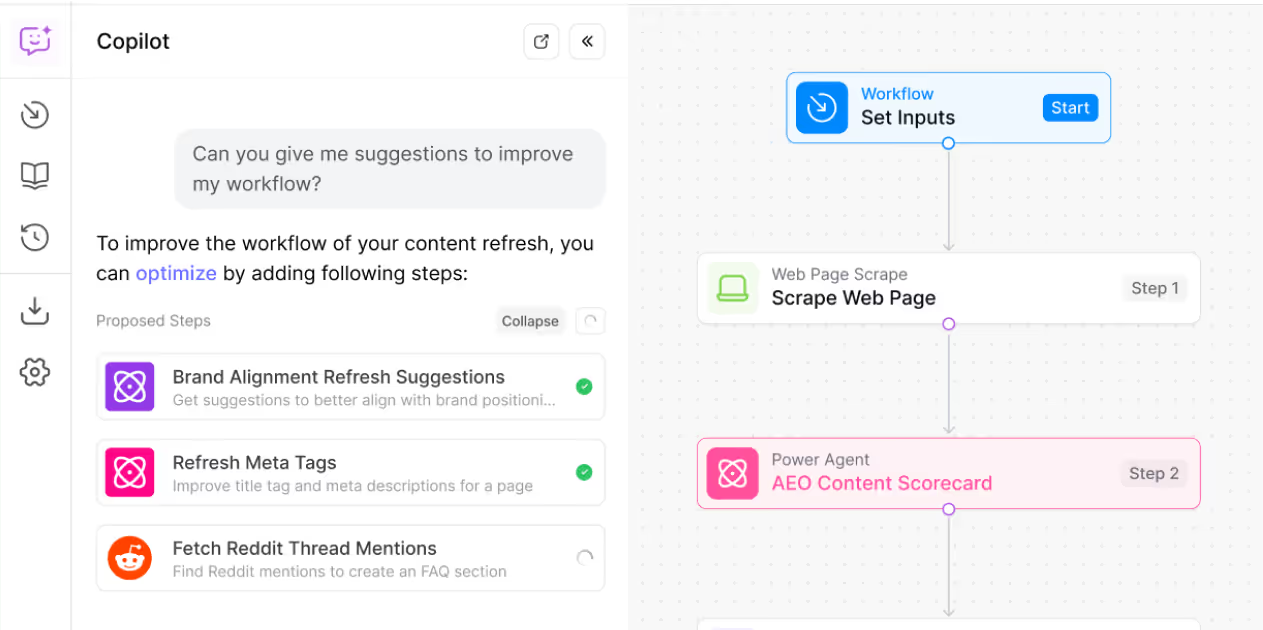
Fuel better content with Brand Kits
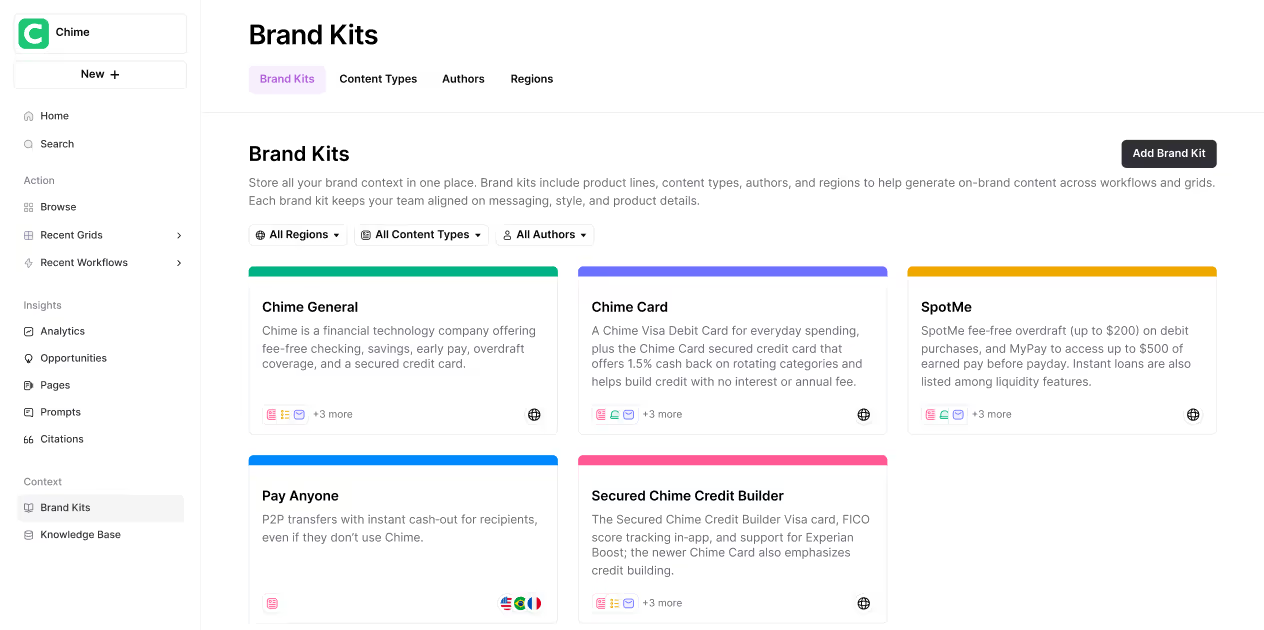
Content engineers, working alongside your team

What sets AirOps apart from Gauge
AirOps is an enterprise Answer Engine Optimization (AEO) platform and expert partner that helps content leaders turn AI search intelligence into governed action. While Gauge pairs visibility tracking with a fixed content pipeline, AirOps grounds every page in your Brand Kit and Knowledge Bases. Playbooks and Grids carry that standard across thousands of pages, and AirOps Analytics shows which updates moved citations and traffic. Your team gets one place to keep improving performance across AI search and SEO.

"We were able to focus our energy on the highest-value initiatives for the business in a matter of weeks."
SVP of Growth, Chime

“We set out to change the narrative around Sanity in AI search, not just show up more often. Staying the brand the models name most, and climbing in the categories that matter, is exactly the signal we were after, and we can see it happening week to week.”
Principal, Agentic Operations & Growth Marketing, Sanity
“If we wanted to 10x the growth we were starting to see, we needed a system that handled SEO, AEO, content production, all of it. AirOps was the first to actually deliver results.”
Head of Growth, Venn
Ready to Win
in AI Search
AirOps vs. Gauge
Which platform is right for your team?
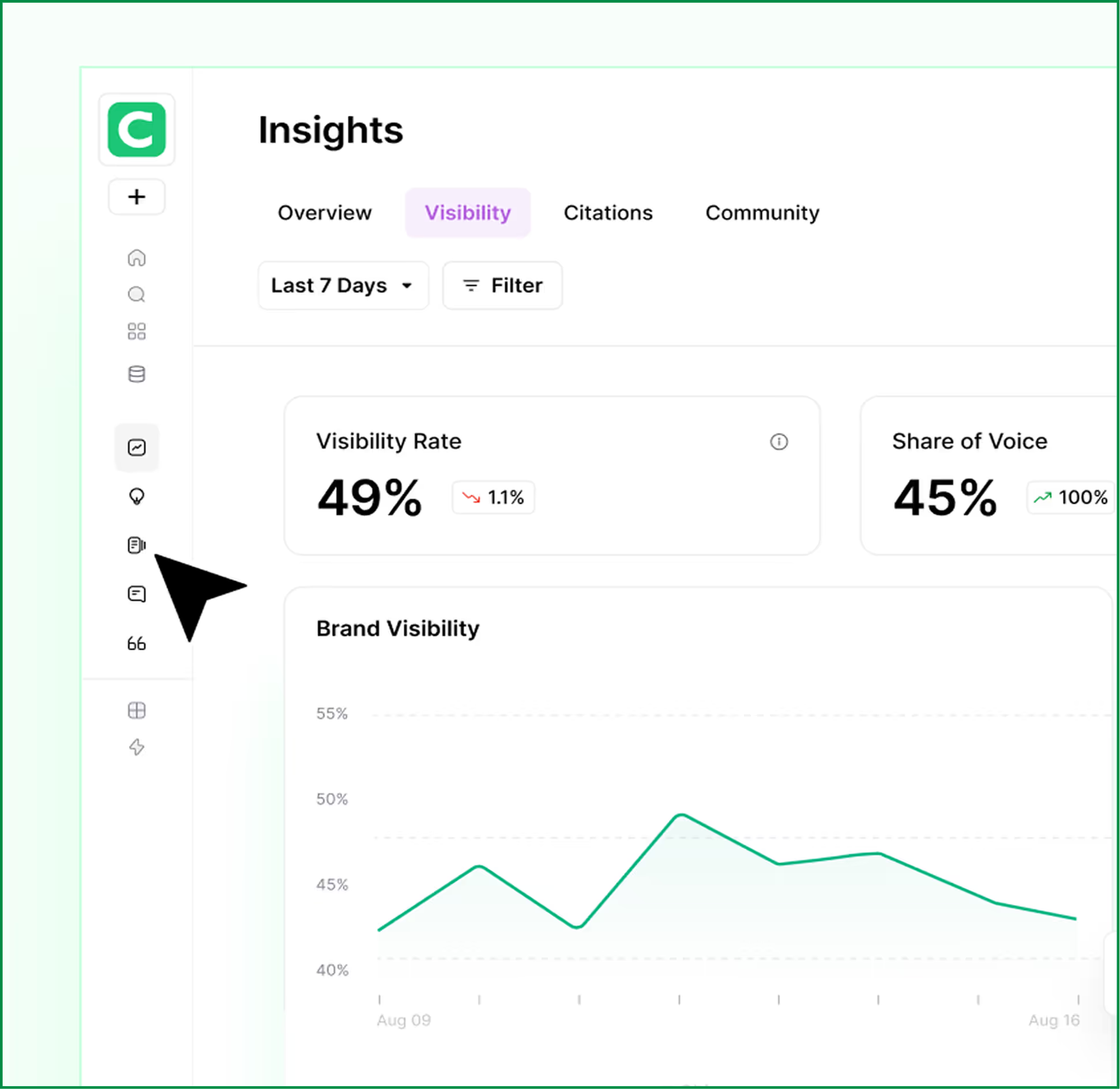
Track visibility across AI search
AirOps gives your team one prioritized view of AI search and SEO performance for every URL. Gauge tracks citations and fan-outs well, though it offers no unified per-URL view and limits sentiment to Enterprise. With real clicks and engagement next to AI citations on each page, you can see which refresh to prioritize and prove it worked.
Content creation, refresh & publishing workflows
Quill, AirOps' AI execution engine, runs your Playbooks across thousands of pages, while Gauge's fixed pipeline stops at 18 articles a month on Growth. Your team sets the strategy. Quill runs the execution.
Native integrations
AirOps connects your content stack from day one, with 30+ integrations that sync work to tools like Asana. Gauge publishes to 4 CMS platforms and draws SEO data from DataForSEO alone, so planning work stays in other tools. AirOps becomes the hub your team works from, pulling Semrush research into briefs and publishing straight to WordPress.
Email and live chat support
AirOps pairs hands-on strategists with built-in enablement, so your team keeps getting sharper as the program grows. Gauge offers email and Slack support on Growth and adds recurring strategy sessions on Enterprise. AirOps Enterprise teams get 1:1 expert onboarding and a dedicated account manager, while Cohort live training and the Champions community keep skills growing.

Frequently Asked Questions
Which is better: AirOps or Gauge?
Which is better: AirOps or Gauge?
AirOps is better for enterprise teams that need to win AI search at scale: tracking visibility across every major answer engine, governing brand quality, and turning AEO insights into content that earns citations. Gauge is better suited for smaller teams, especially developer-tool companies, that want fast agent-led tracking and a built-in article pipeline.
Gauge does strong work on query fan-out tracking and Reddit and YouTube citation insights. Its Growth plan stops at 18 articles a month, and brand context lives in Memory files.
AirOps grounds every page in a structured Brand Kit and Knowledge Bases, then runs Playbooks across thousands of pages. AirOps Analytics ties each change back to AI citations and real traffic.
What features does AirOps offer that Gauge does not?
What features does AirOps offer that Gauge does not?
AirOps offers several capabilities Gauge lacks:
Quill, AirOps' AI execution engine, for detecting gaps in Insights and running Playbooks end to end
AirOps Analytics for one per-URL view that joins AI citations with GSC and GA4 performance
Prompt Mining for pulling real customer questions from Gong, Zendesk, Intercom, and Slack into tracking
Grids for bulk content runs that move from review to publishing across thousands of pages
Brand Kit for structured governance across audiences, regions, product lines, content types, and writing rules
AirOps Model Context Protocol (MCP) server for bringing AirOps into Claude, Cursor, Codex, VS Code, and Windsurf
Offsite for prioritizing publishers by Influence Score and managing placements, plus a fully managed Offsite service
Copilot for conversational AI assistance inside AirOps workflows
Campaigns for coordinating owned content and external content work toward one goal
Closed-loop execution, with Content Publish Tracking tying each publish to later results
Can Gauge automate content fixes, or does it stop at recommendations?
Can Gauge automate content fixes, or does it stop at recommendations?
Gauge's Action Center ranks content opportunities by projected impact and runs a 14-day impact check. Its agent drafts articles through a fixed pipeline and publishes them to 4 CMS platforms. Refreshing hundreds of existing pages or publishing to WordPress takes work outside Gauge.
AirOps finds gaps in Insights and sends them into Playbooks that update pages across your library. Grids run those updates in bulk, with human review before content publishes to your CMS. Gauge shows you what needs fixing; AirOps builds the system that fixes it at scale.
How do AirOps workflows differ from Gauge's automation?
How do AirOps workflows differ from Gauge's automation?
Gauge automates content through a fixed pipeline, capped at 18 articles a month on Growth. Reusable Skills and scheduled tasks extend it, but Gauge has no visual workflow builder or bulk content runs.
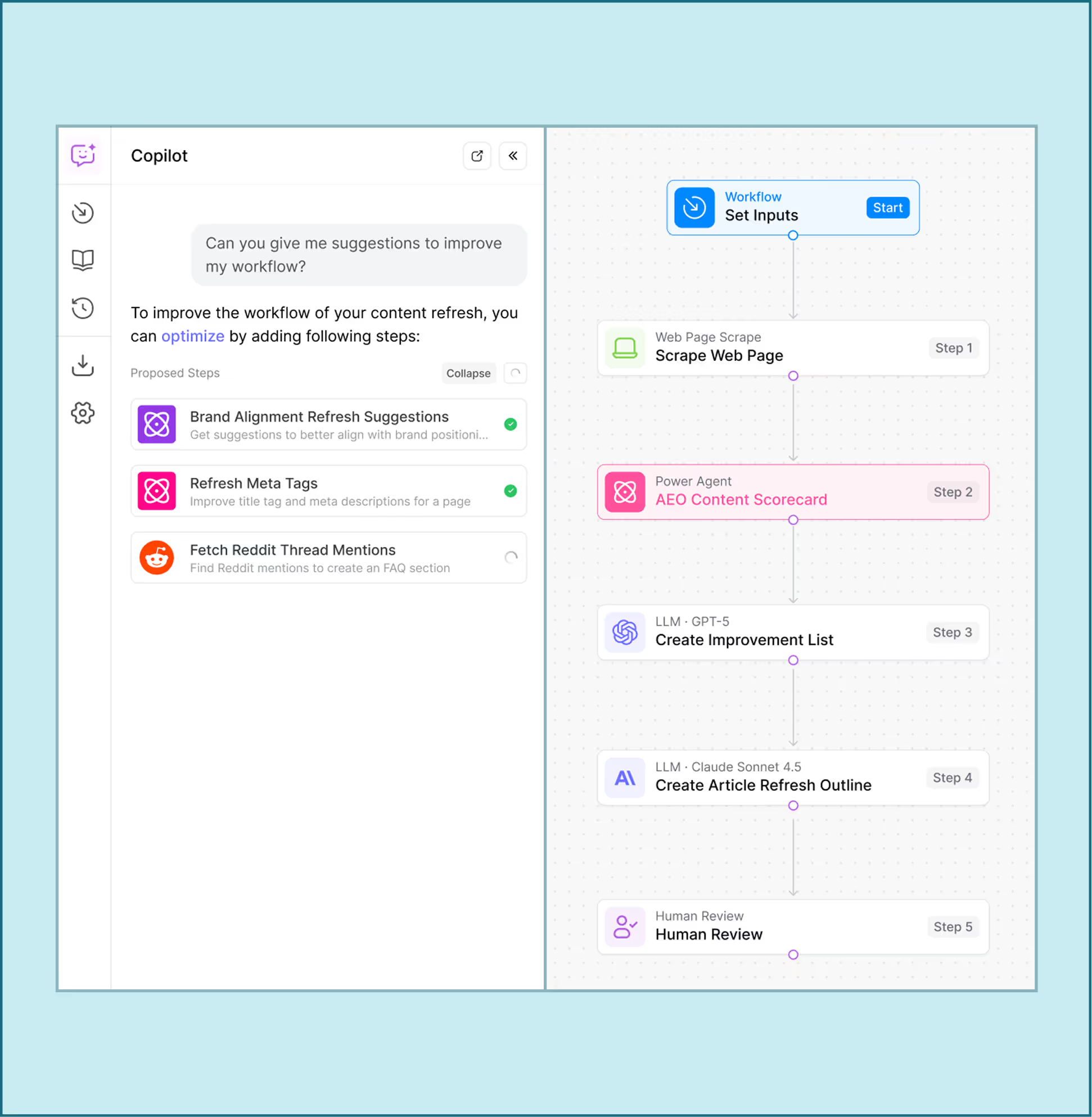
AirOps Workflows support conditional branching and human review gates before anything goes live. Grids then run those workflows in bulk, so one refresh pattern can cover thousands of pages. Each workflow connects to 30+ integrations and publishes directly to 7+ CMS platforms.
Quill can run the full sequence from a Playbook while your team approves the output. Asana grew ChatGPT citations 93% in two weeks with Quill.
How does AirOps track AI search visibility compared to Gauge?
How does AirOps track AI search visibility compared to Gauge?
Both platforms track ChatGPT, Perplexity, Gemini, Google AI Mode, Google AI Overviews, Claude, Grok, and Copilot. Gauge Growth covers 3 of them, and Gauge Enterprise covers 6.
Gauge pulls GA4 and GSC data next to its citation tracking, but it has no single view per URL. AirOps Analytics puts AI citations and real GSC clicks in one record for each URL. The same view adds GA4 engagement and content age, so freshness shows up beside performance.
For example, a page losing AI citations but gaining SEO traffic signals a different action than a page declining in both channels simultaneously. Content Publish Tracking then overlays each publish event on Insights charts, so you can measure lift after a refresh.
Can AirOps replace both Gauge and my content creation tools?
Can AirOps replace both Gauge and my content creation tools?
Partially. AirOps covers AI search tracking and content execution in one platform, so separate writing and publishing tools drop out of the stack. Live co-editing and approvals keep your editors in the same workspace.
Gauge stays strong in query fan-out tracking and Reddit and YouTube citation insights. Gauge Agents runs coding-agent evals for developer-tool companies, a use case AirOps does not cover.
Teams that keep Gauge can pull its data into AirOps through Gauge's API or MCP server, using API-call steps in AirOps Workflows. Teams using Gauge alone still need separate tools for WordPress publishing and project management sync.
What's the pricing difference between AirOps and Gauge?
What's the pricing difference between AirOps and Gauge?
Gauge Chat Growth costs $599 a month, billed month to month, with no free plan or trial. Growth includes 3 AI platforms and 18 articles a month. It allows 3 seats and leaves out sentiment analysis and exports.
Gauge Chat Enterprise uses custom pricing. Gauge Agents is billed separately, with its Pro plan at $499 a month.
AirOps pricing is quote-based and tied to your task volume. Pro includes unlimited seats and insights across 10+ answer engines. You can bring your own model API keys, and Enterprise pricing is custom.
AirOps Pro gives every editor and reviewer a seat, while Gauge Growth fits 3 people. Teams on Gauge still need separate tools to cover WordPress publishing and project management.
How hard is Gauge to operationalize day to day?
How hard is Gauge to operationalize day to day?
Gauge's agent-led interface moves fast for one marketer working through the Action Center. Scaling past that takes manual work, because Growth caps output at 18 articles a month and has no bulk content runs. Brand rules live in Memory files, and Growth limits collaboration to 3 seats.
Gauge excels at query fan-out tracking and offsite citation insights from Reddit and YouTube. AirOps excels at running the program, since Grids handle bulk work and AirOps Analytics measures each URL across AI search and SEO. Gauge tells you what to optimize; AirOps provides the infrastructure to execute at scale.
Can I use AirOps and Gauge together?
Can I use AirOps and Gauge together?
Yes. Teams can use Gauge as a research tool and data source while using AirOps as their execution engine.
Gauge offers a public API and an MCP server, and AirOps Workflows can call that API through an API-call step. That brings Gauge's fan-out data into the workflow that drafts and publishes the update. Your team skips the manual handoff between insight and published page.
What's the difference between Gauge Chat and Gauge Agents?
What's the difference between Gauge Chat and Gauge Agents?
Gauge Chat is Gauge's AI visibility and content product, with Growth at $599 a month. Gauge Agents is a separate product that runs coding-agent preference and agent-experience evals for developer-tool companies. It is billed separately, with a free tier and a Pro plan at $499 a month.
AirOps maps to Gauge Chat and does not offer a coding-agent eval product. Developer-tool companies that need agent evals can run Gauge Agents next to AirOps.