Claude powers the reasoning. AirOps turns it into ranking content.
- Connect Claude's intelligence to live AI citations, search performance, and web analytics through Page360, a unified view per URL combining Answer Engine Optimization (AEO) data with Google Search Console (GSC) clicks and Google Analytics 4 (GA4) engagement metrics
- Publish Claude-generated content directly to 7 CMS platforms with native field mapping and direct-publish workflows
- Scale Claude's reasoning across hundreds of content operations through Grid bulk execution and Quill, AirOps' autonomous content agent

Webflow 5xed content refresh velocity and increased visibility across Google and ChatGPT

Webflow 5xed content refresh velocity and increased visibility across Google and ChatGPT
Webflow 5xed content refresh velocity and increased visibility across Google and ChatGPT

Chime went from being recommended in 24 to 68 priority questions


George Bonaci VP of Growth, Ramp

Nicole Baer, CMO, Carta


50% cut in production costs, thanks to the elimination of external agencies and manual tasks.

Marcio Arnecke, CMO, Apollo















Why Customers Choose AirOps to Go Beyond Visibility
Watching trends while traffic slips away is not a winning strategy. Only AirOps gives you the system to produce quality content that earns citations.
and agents alike
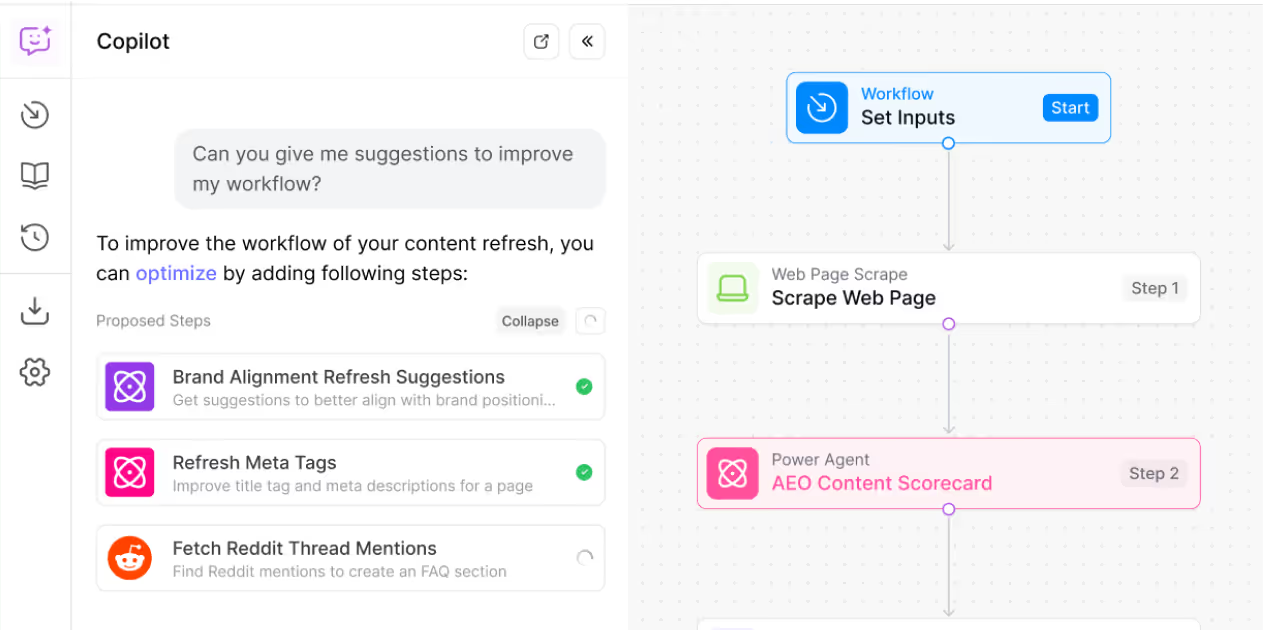
Get prime placement in AI Search by improving the structure, clarity, and quality of your content.
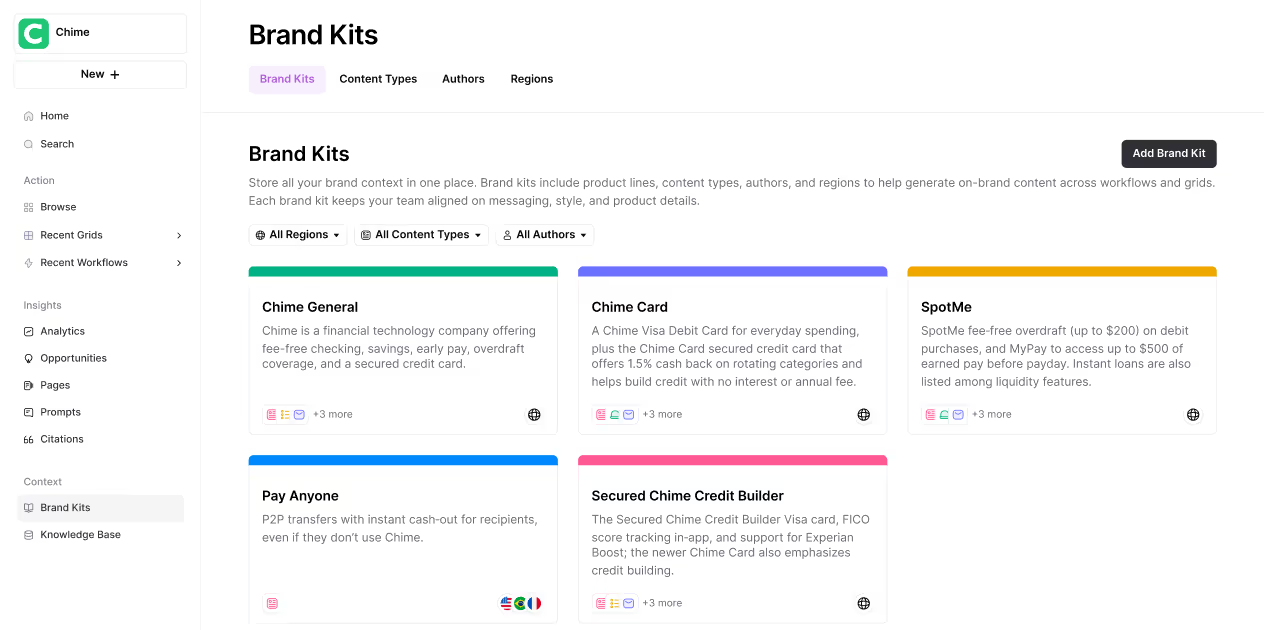
Brand Kits
Create content that sounds like your brand by weaving in your brand voice, personas, and expertise.
Our experts help brands like Carta and Rippling build workflows and train their teams to move faster with confidence.

What sets AirOps apart from Claude
AirOps is built to help content teams act on performance data, not just generate text. While Claude excels at reasoning and content generation, AirOps connects visibility tracking, content workflows, brand governance, and CMS publishing into a single system where your team moves from insight to published, measured content without switching tools. The platform ties every content action to AI search and SEO results so your team knows what shipped, what it moved, and what to prioritize next. Every improvement your team ships feeds back into the system, so performance compounds over time.

What our customers are saying
“AirOps is unlike any other AI tool we’ve seen. We’ve been able to drop our agency and focus on the highest value initiatives in weeks”

Nick Fairbain
VP Growth Marketing, Chime
“Our brand visibility score hit a high of 28% after we refreshed content. We saw a 56% increase in subscriptions in 30 days that corresponds to content engineered for agents."

George Bonaci
VP of Growth and Demand, Ramp
“With AirOps, we grew AI-attributed signups from 2% to over 10% in under a year with zero headcount growth. Just sharper workflows and faster loops.”

Josh Grant
VP of Growth, Webflow
AirOps vs. Claude
Which platform is right for your team?
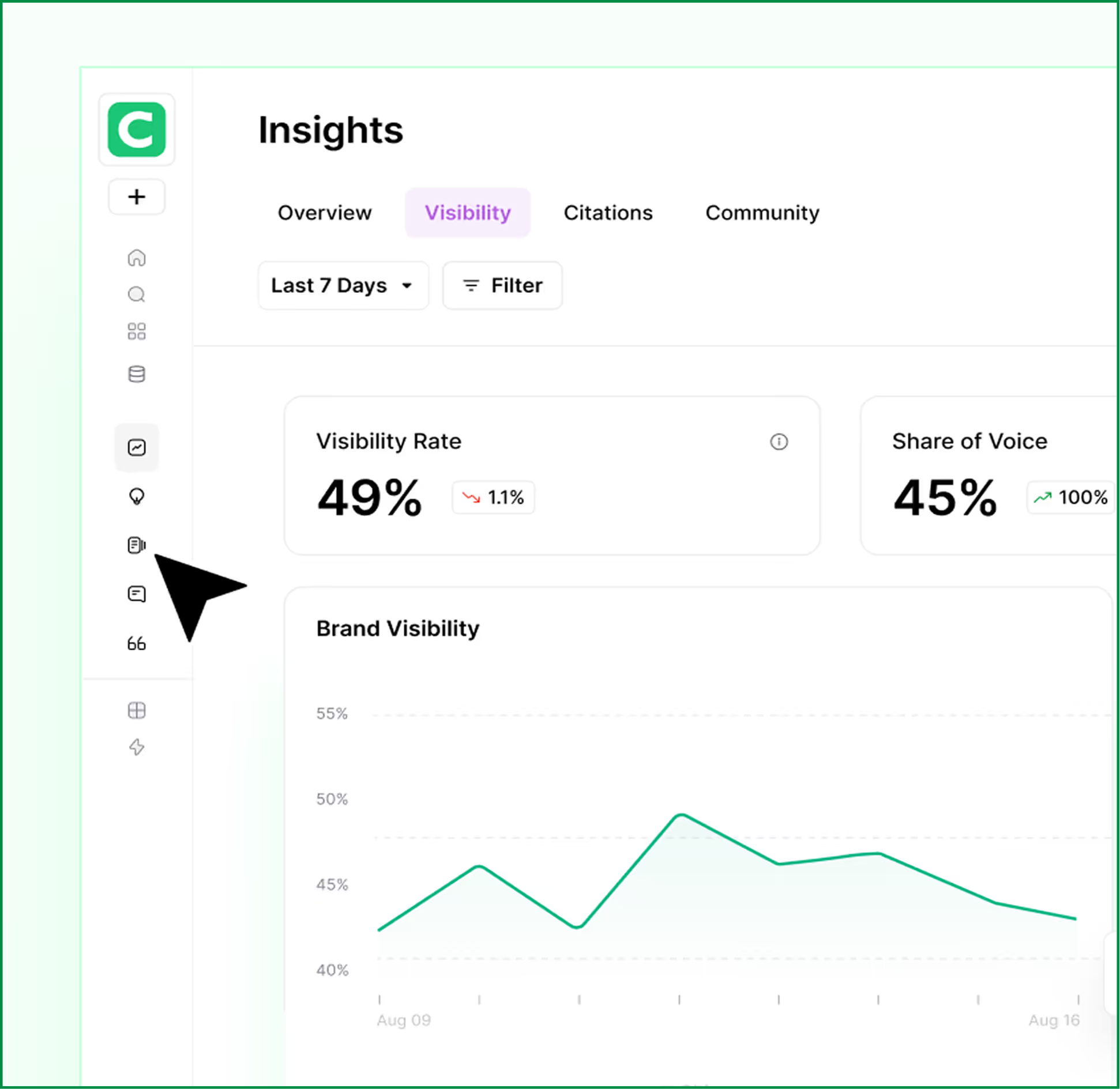
Track visibility across AI search
AirOps gives content teams a unified view of AI citations, search rankings, and web engagement per URL through Page360. Claude generates answers but cannot track how your brand appears across the 8 AI engines AirOps monitors (ChatGPT, Claude, Perplexity, Gemini, Google AI Mode, Google AI Overview, Grok, Microsoft Copilot). AirOps combines real GSC clicks with GA4 sessions and AI citation data so your team prioritizes based on performance signals, not estimates.
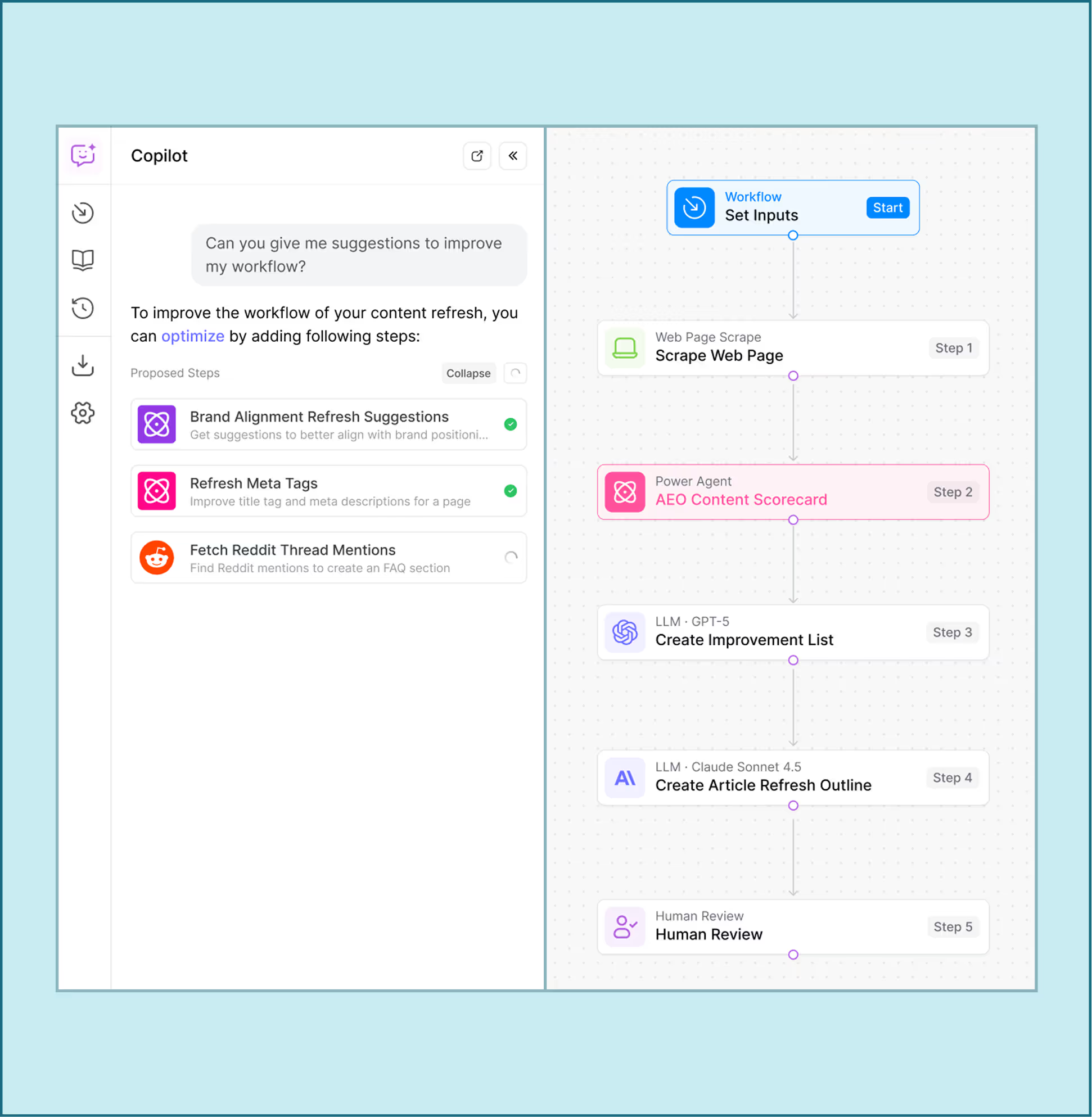
Content creation, refresh & publishing workflows
AirOps extends Claude's content generation into structured multi-step workflows with Grid bulk execution, Brand Kit governance, and direct CMS publishing across 7 platforms. Claude generates strong content through chat, and Claude Code enables custom automation for developers, but neither natively publishes content to your CMS.
Native integrations
AirOps connects your content stack from day one with 30+ native integrations spanning CMS platforms, SEO tools (Semrush, Ahrefs), analytics (GSC, GA4), and project management (Asana, ClickUp). Claude offers 400+ third-party connectors via MCP for productivity and developer workflows, though marketing-specific publishing pipelines require custom scripting. AirOps provides both native CMS publishing and MCP connectivity, and AirOps is itself available as a connector inside Claude.
SEVERAL CMS platforms
(Webflow, Contentful,
WordPress, Ghost,
and more)
Email and live chat support
AirOps pairs dedicated solution architects with live cohort training through AirOps University, so content teams build lasting platform proficiency rather than vendor dependency. Claude offers Anthropic Academy (17 self-paced courses) and enterprise customer success at certain spend thresholds. AirOps goes further with embedded Content Engineers, the Content Engineering Certification, and a fully managed Offsite service for third-party citation placement.
300+ Content Engineers
trained to date with AirOps University

How Chime Increased AI Search Citations 3x with AirOps
Frequently Asked Questions
AirOps vs Profound: Which is better?
How do AirOps and Claude work together?
AirOps includes Claude models (Opus, Sonnet) natively in its workflow engine and connects to Claude via MCP. Teams use Claude's reasoning for drafting, analysis, and content generation within AirOps workflows, while AirOps provides the visibility data (Page360), prioritization (Opportunities Engine), bulk execution (Grid), brand governance (Brand Kits), and CMS publishing that complete the content lifecycle.
For enterprises using Cowork and Claude Code, AirOps serves as the content-specific system of record that feeds Claude's agentic capabilities with market intelligence and publishing infrastructure.
What features does AirOps offer that Claude does not?
AirOps offers several capabilities Claude lacks:
Quill, AirOps' autonomous content agent, for running content creation, refresh, and optimization Campaigns based on detected performance gaps
Page360 unified view for combining AI citations, GSC clicks, and GA4 engagement into a single performance dashboard per URL
Prompt Discovery from four intent sources (third-party panel data, SERP People Also Ask, search intent data, and first-party customer conversations via Prompt Mining) for building a prioritized prompt universe
Grids for bulk operations across hundreds of content pieces with version history and real-time collaboration
Brand Kits for enforced brand governance with versioning, approval workflows, and AI-readable writing rules
Offsite for managing third-party publisher placements and growing AI brand citation share with full attribution
Query Fan-outs revealing the sub-queries AI engines run behind each prompt so teams can close content coverage gaps
Closed-loop execution connecting every content action to AI visibility and SEO outcomes in one system
Can Claude automate content creation and publishing, or does it stop at generating text?
Claude generates strong content through chat conversations and can connect to external tools via MCP connectors. Claude Code enables developers to build custom automation scripts. For content teams without engineering resources, turning Claude's output into a repeatable publishing workflow requires manual copy-paste or custom scripting for each CMS platform.
AirOps automates the full loop from identifying content gaps to generating brand-governed drafts to publishing directly to 7 CMS platforms. Grids let your team run these workflows across hundreds of pages simultaneously, and every published piece is tracked against AI visibility and SEO performance. Claude generates the text; AirOps builds the system that turns it into ranking content at scale.
How do AirOps workflows differ from Claude's automation capabilities?
Claude offers Dynamic Workflows and Routines for scheduling recurring tasks, and Claude Code supports custom automation for developers. These capabilities are powerful for individual productivity and technical workflows, but they require scripting knowledge and are not purpose-built for content operations or CMS publishing.
AirOps provides a visual Workflow Studio where content teams build multi-step pipelines with conditional branching, human-in-the-loop review checkpoints, code execution steps, and Brand Kit context baked into every run. Grids enable bulk execution across hundreds of rows with real-time collaboration and version history. AirOps Workflows connect to 30+ integrations and publish directly to 7 CMS platforms, so your team goes from content brief to live page without leaving the platform.
How does AirOps track AI search visibility compared to Claude?
AirOps monitors brand visibility across 8 AI engines: ChatGPT, Claude, Perplexity, Gemini, Google AI Mode, Google AI Overview, Grok, and Microsoft Copilot. Claude does not track AI search visibility at all. It is a general-purpose AI assistant, not a monitoring platform.
AirOps Page360 combines AI citation data with real GSC clicks, GA4 sessions, and content freshness signals into a single per-URL view. This unified approach lets your team see which pages are gaining AI citations and which are losing organic traffic, so you can prioritize the right action for each URL. A page losing AI citations but gaining SEO traffic signals a different action than a page declining in both channels simultaneously.
What's the pricing difference between AirOps and Claude?
Claude offers a Free plan at $0, Pro at $20/month, and Max tiers at $100 to $200/month for individual users. Team Standard costs $25/seat/month and Team Premium costs $125/seat/month, both with a 5 to 150 seat range. Enterprise pricing starts at $20/seat plus usage at API rates.
AirOps starts with a free Insights plan at $0/month. Solo, Pro, and Enterprise plans use task-based billing with custom pricing. Paid plans include unlimited seats, so your team scales without per-user cost increases.
The total cost comparison depends on what your team needs. Claude covers individual AI assistance at a competitive per-user price. AirOps combines AI visibility tracking, content workflows, brand governance, and CMS publishing in one platform, which can replace 3 to 4 separate tool subscriptions that a content operations team would otherwise maintain alongside Claude.
How hard is Claude to operationalize for a content team day to day?
Claude works well for individual content creation and research tasks. Scaling it across a content team introduces friction: each piece of content is a separate conversation, bulk operations require Claude Code or API scripting, CMS publishing depends on MCP connectors that need configuration per platform, and brand consistency relies on manually re-prompting style guidelines in every session.
Claude's strengths are real: world-class writing quality, massive context windows, and a near-zero learning curve for individual use. AirOps adds the operational infrastructure around those strengths with visual Workflow Studio, Grids for bulk execution, 7 native CMS integrations, Brand Kit governance that persists across every workflow run, and Page360 for unified performance tracking. Claude generates strong content one piece at a time. AirOps provides the system to publish and measure it across your entire content program.
Why would I use AirOps if I already use Claude?
Claude excels at reasoning, analysis, and content generation. AirOps adds what Claude was not designed to provide: live AI visibility tracking across 8 platforms, SEO and analytics integration (GSC, GA4), content opportunity prioritization, bulk execution across hundreds of pages, brand governance, and direct CMS publishing to 7 platforms.
AirOps makes Claude more effective for content teams by directing its intelligence with market data and automating the path from draft to published page.
Does AirOps use Claude's models?
Yes. AirOps integrates with Claude's models as one of 20+ LLM providers available across the platform. Your team can use Claude's reasoning capabilities inside AirOps Workflows, Grids, and Quill Campaigns while benefiting from Brand Kit governance, performance tracking, and CMS publishing that Claude alone does not provide.
AirOps also supports bring-your-own-API-key, so teams that already have Anthropic API access can use their existing Claude credits inside AirOps workflows. The platform is model-flexible by design, which means your team picks the best model for each task rather than being locked into a single provider.