Not all AI tools are created equal when it comes to writing and content creation. While platforms like ChatGPT offer impressive versatility and are excellent for general-purpose tasks, they often lack the specialized features required for crafting polished, optimized, and strategic content at scale.
A dedicated AI writing assistant built for content teams includes tailored workflows, SEO integrations, and content templates that general-purpose chatbots lack. Whether you're crafting detailed blog posts, email campaigns, or SEO-focused web pages, the right AI tool can save time, maintain quality, and help you scale effectively. If you are evaluating ChatGPT alternatives for writing, the tools below cover a range of specializations beyond general-purpose AI.
Below, we review the best AI content creation tools and AI powered writing tools that go beyond basic generation to offer workflow automation, content optimization, and brand consistency. The comparison table below shows how the best AI writing tools stack up by use case.
1. AirOps
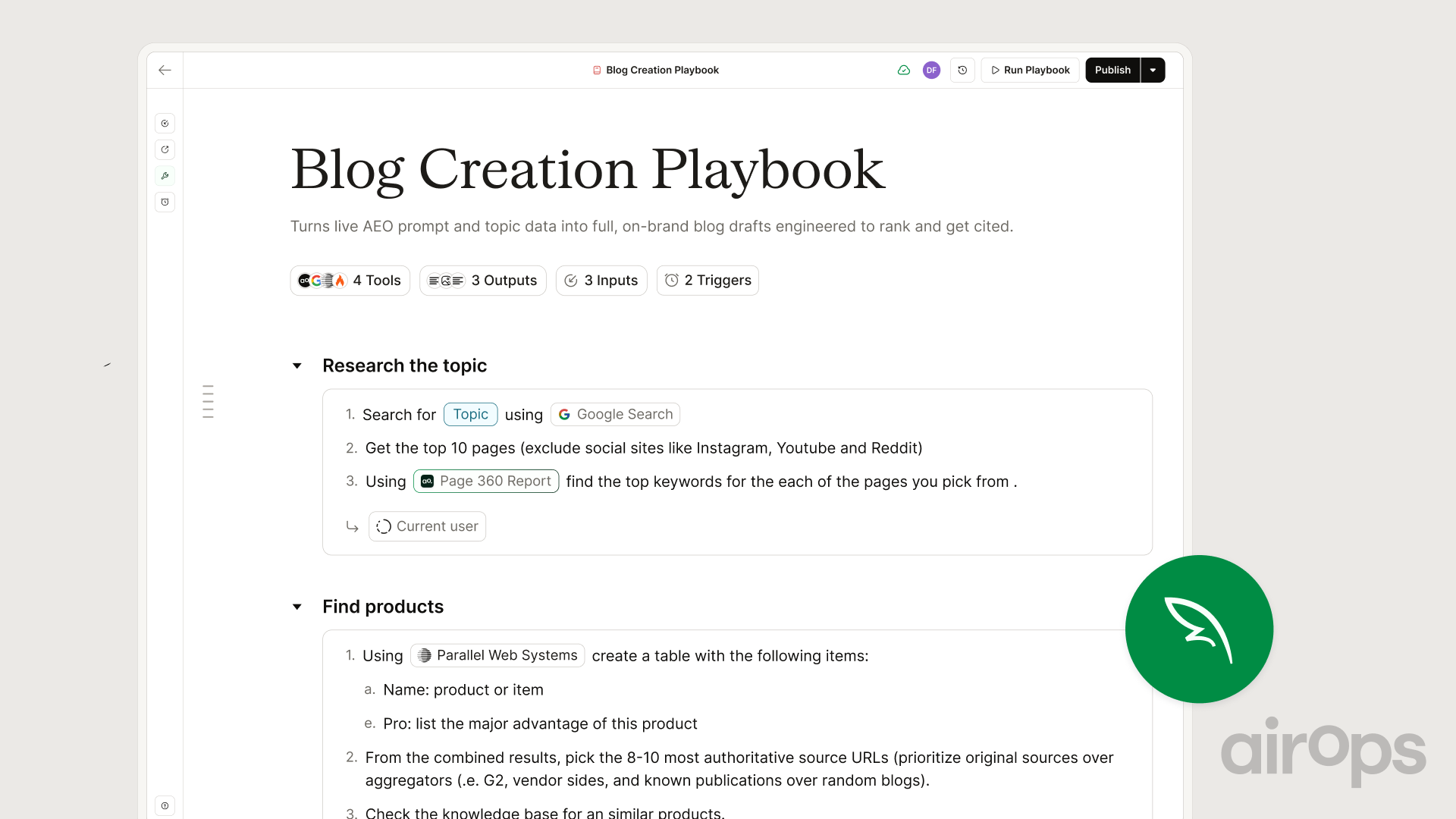
AirOps is a comprehensive growth platform for AI search and AEO that empowers businesses to streamline their content operations, offering tools that simplify and enhance every stage of the content creation process. Designed for scalability and precision, it enables teams to produce high-quality, tailored content efficiently while maintaining brand consistency.
AirOps supports businesses in achieving better visibility, engagement, and conversions by optimizing workflows and ensuring content aligns with strategic goals. Whether you're a small startup or a large enterprise, AirOps helps you elevate your content strategy, driving growth and measurable results across all platforms.
Here is why AirOps is one of the top AI content creation platforms in the market.
AirOps is more than an AI writing tool. It is a full content ops platform that connects AI generation with AI search, AEO, SEO data, brand kits, and publishing workflows. Teams that need to produce, optimize, and publish content from a single system use AirOps to replace fragmented toolchains.
AirOps is the platform, the media mix, and the team together, not just software to log into. Our team builds and runs your content strategy alongside your own, from strategy through execution.
Content Creation
AirOps transforms content creation with its human-centered, AI-driven approach, combining data accuracy and audience engagement. The platform integrates real-time data from Google Search and web scraping to ground content in factual, up-to-date information. With AirOps, businesses can create tailored, high-ranking content that maintains brand consistency at scale.
The platform also automates workflows, allowing users to produce researched long-form articles, dynamic visuals, and SEO-driven strategies. Whether it's crafting engaging blog posts or programmatically scaling content, AirOps ensures quality without compromise, delivering unique, impactful results for businesses.
Content Optimization
AirOps enhances content optimization with tools that upgrade on-page SEO and reader engagement. The platform employs advanced AI to refine readability, generate optimized alt text, and implement schema markup for better search engine rankings.
Automation plays a key role, transforming sporadic updates into consistent workflows. By integrating live research and premium SEO insights, AirOps provides actionable recommendations to boost technical SEO and enrich older content. These features empower businesses to climb search rankings and maintain a competitive edge.
Integration Capabilities
AirOps connects seamlessly with popular tools and platforms, enabling businesses to streamline their workflows with ease.
Some of the key integrations include:
CMS Support: Works with Webflow, Shopify, Strapi, and Contentful for direct content import, enhancement, and publishing.
SEO Tools: Access premium insights through integrations with Semrush and DataForSEO.
Content Enrichment: Source images via Getty or Unsplash and enhance contact data with Hunter.io.
These integrations enable smooth collaboration and efficiency, making AirOps an indispensable tool for content operations.
Custom AI Workflows
AirOps empowers users with Playbooks that automate even the most complex content operations. These pre-built and customizable automation sequences let businesses execute repeatable content tasks at scale, leveraging over 40 AI models for unparalleled functionality.
With multi-step automation and human review at every stage, AirOps ensures both scalability and precision. Quill, the AirOps AI agent, monitors content performance across AI search engines and triggers Playbooks automatically when refresh opportunities arise. Together, Playbooks and Quill amplify productivity and maintain high-quality standards for all outputs.
Quill, the AirOps AI agent, monitors your content performance across AI search engines and executes refresh workflows automatically. Daisie switched from manual AI writing tools to AirOps and scaled to hundreds of SEO-optimized posts per month within six weeks. Book a demo to see how AirOps fits your content workflow.
2. Copy.ai
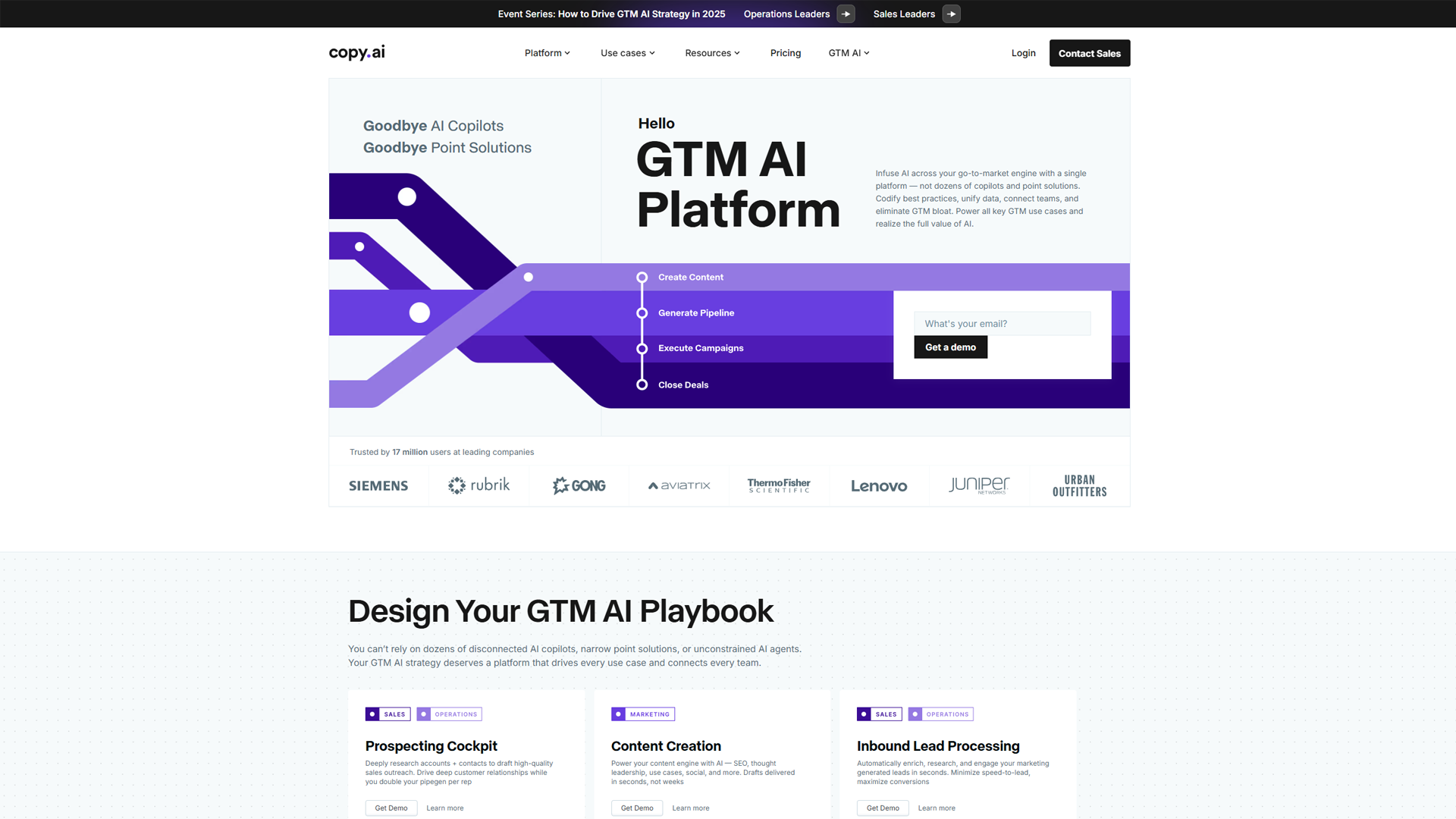
Copy.ai is one of the most popular AI copywriting tools, built to help you create compelling, SEO-optimized content quickly. This tool offers a wide range of templates for various content types, such as blog posts, social media updates, product descriptions, and more.
Diverse Content Templates: Copy.ai provides a vast library of templates tailored to specific content types and industries, making it easy for you to find the perfect starting point for your writing projects.
Built-in SEO Optimization: With Copy.ai's built-in SEO features, you can ensure that your content is optimized for search engines, helping you attract more organic traffic to your website.
Customizable Tone and Style: Copy.ai allows you to customize the tone and style of your generated content, ensuring that it aligns with your brand's voice and resonates with your target audience.
Copy.ai's user-friendly interface and extensive template library make it an excellent choice for content creators looking to streamline their writing process and produce high-quality, SEO-friendly content consistently.
3. Writesonic

Writesonic is an AI-powered writing tool that helps you create engaging, conversion-focused content for various marketing channels. This platform offers a suite of features designed to simplify and accelerate your content creation process.
AI Article Writer: Writesonic's AI writer can generate well-structured, SEO-optimized articles on any topic, saving you time and effort in the content creation process.
Landing Page Generator: With Writesonic's landing page generator, you can create compelling, high-converting landing pages in minutes, without the need for extensive copywriting or design skills.
Product Description Generator: Writesonic's product description generator helps you create engaging, persuasive product descriptions that highlight the key features and benefits of your offerings.
By leveraging Writesonic's AI-powered tools, you can create content that not only ranks well in search engines but also drives conversions and engages your target audience effectively.
4. Jasper
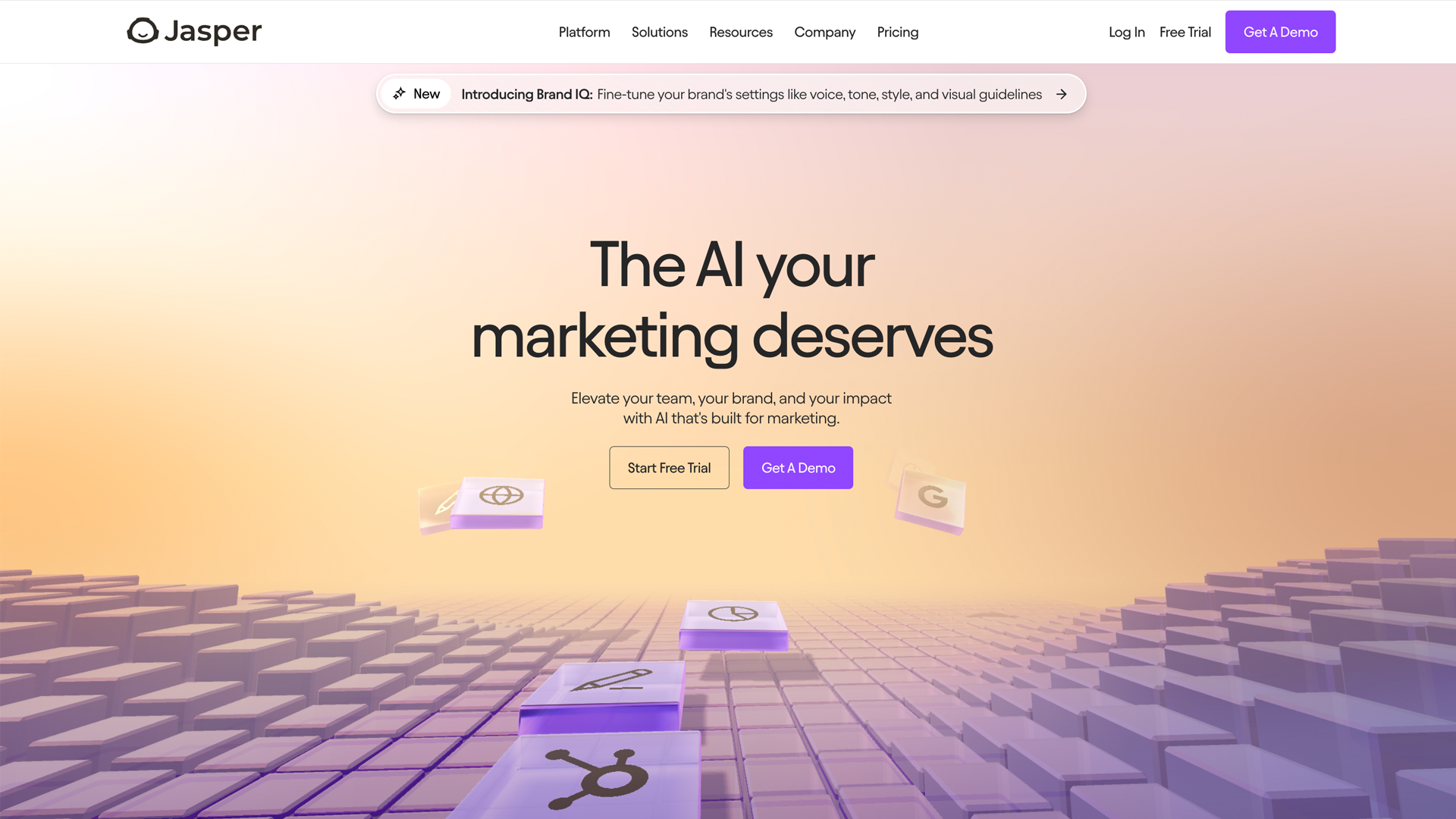
Jasper, another top-rated AI writing tool, helps you create high-quality content tailored to your specific needs. With its vast library of templates and customizable options, you can generate blog posts, social media updates, ad copy, and more in minutes.
Jasper's AI algorithms are trained on top-performing content, ensuring that the output is optimized for engagement and conversions. The platform also offers a plagiarism checker and SEO optimization features, helping you create original, search engine-friendly content.
Customizable Templates: Jasper offers a wide range of templates for various content types, which you can easily customize to match your brand's voice and style.
Collaboration Tools: With Jasper's collaboration features, you can work seamlessly with your team to create, edit, and approve content, streamlining your content creation process.
Content Optimization: Jasper's AI algorithms analyze your content and provide suggestions for improvement, helping you create more engaging and effective content.
5. Rytr
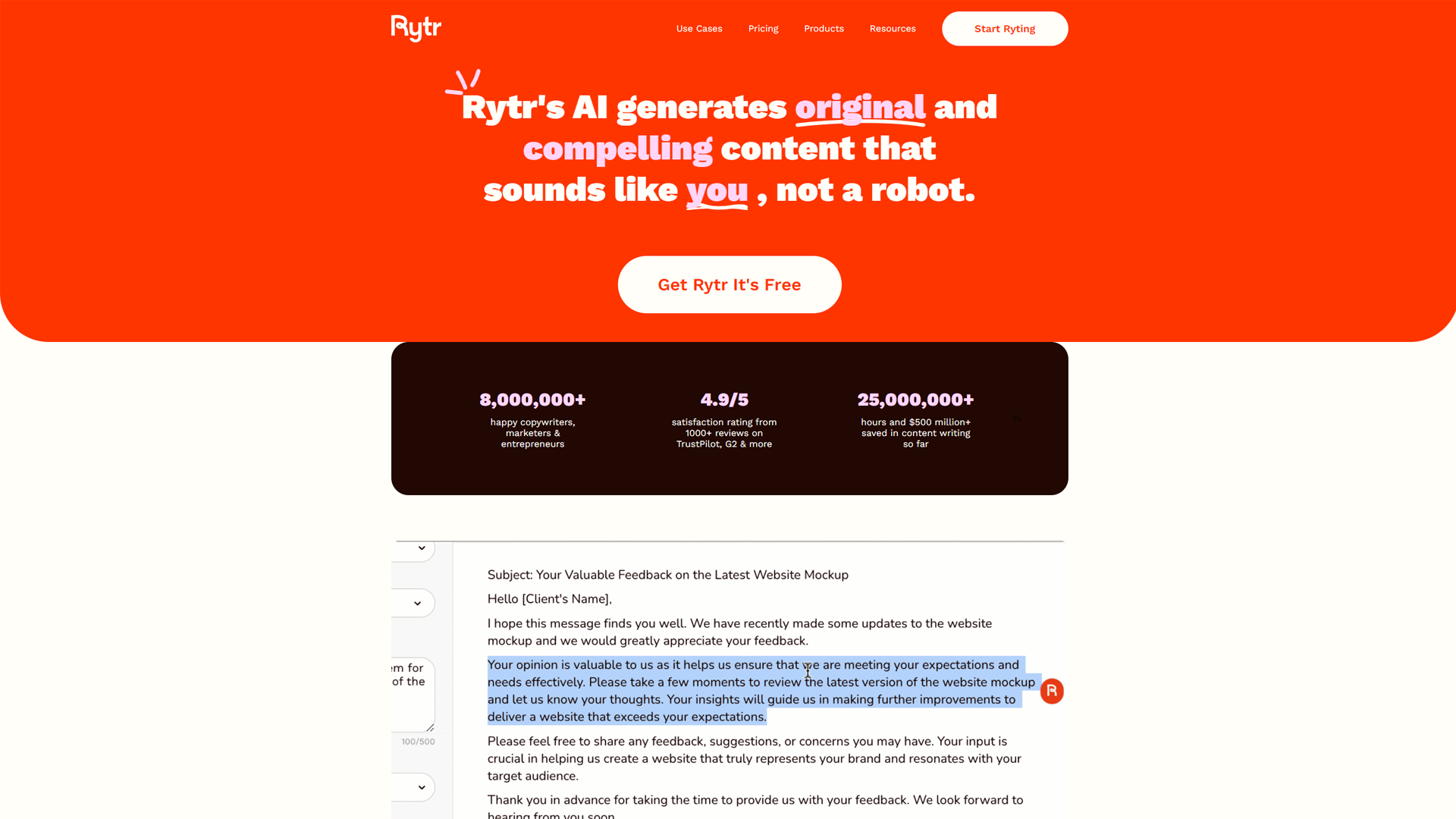
Rytr is an AI-powered writing assistant that helps you create high-quality content in a fraction of the time. With its intuitive interface and powerful features, Rytr makes it easy for you to generate blog posts, product descriptions, social media updates, and more.
Customizable Templates: Rytr offers a wide selection of templates for various content types, which you can easily customize to match your brand's voice and style.
Content Optimization: Rytr analyzes your content and provides suggestions for improving its readability, engagement, and SEO performance.
Collaboration Features: Rytr's collaboration tools allow you to work seamlessly with your team to create, edit, and approve content, streamlining your workflow.
With Rytr, you can streamline your content creation process and produce high-quality content more efficiently. The platform supports multiple languages, making it an excellent choice for businesses with a global audience.
6. Peppertype.ai
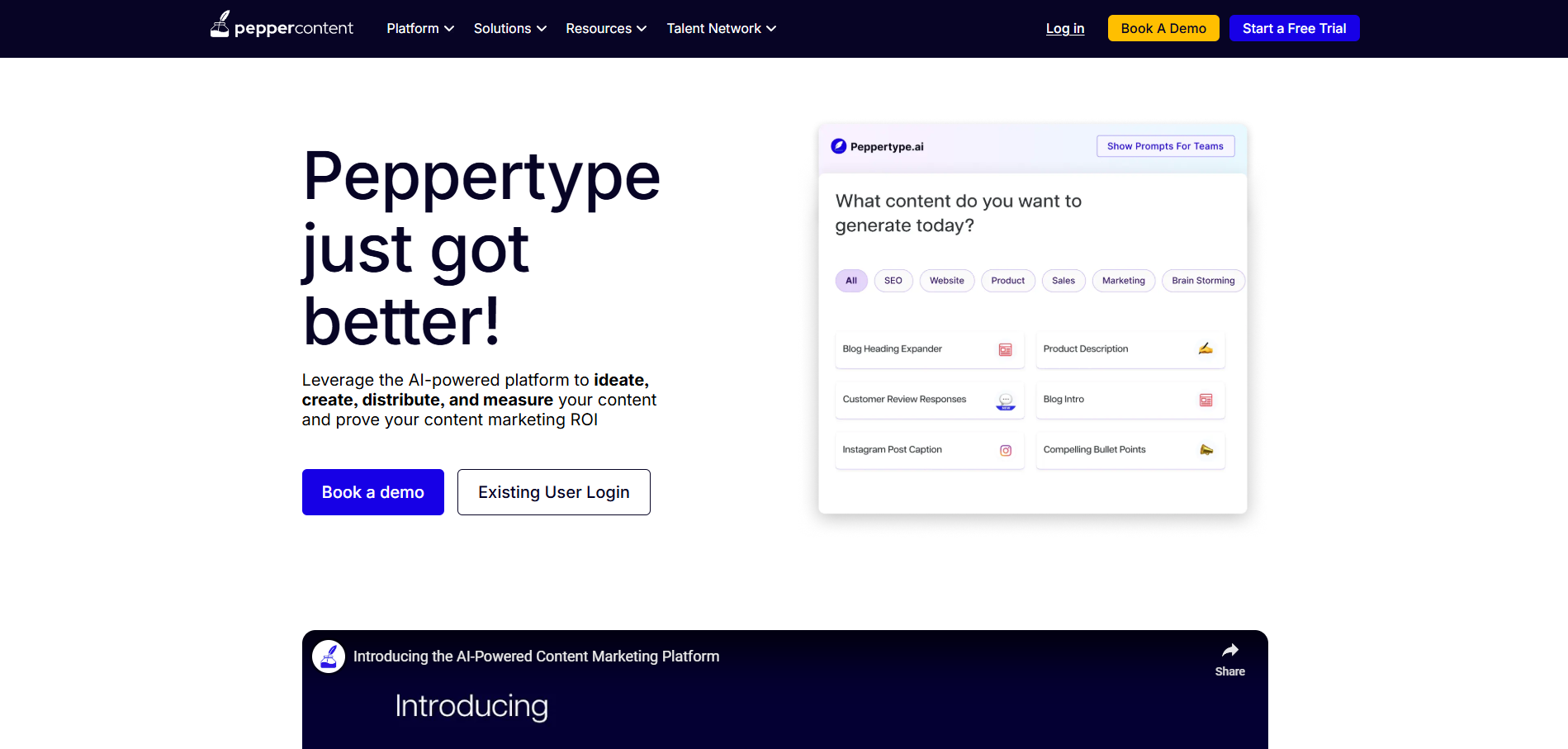
Peppertype.ai is an AI-powered content creation platform that focuses on helping you create engaging, conversion-focused content. With its suite of tools, you can generate blog posts, product descriptions, ad copy, and more, all optimized for your target audience.
Peppertype.ai's AI algorithms are trained on a vast dataset of high-performing content, ensuring that the output is engaging and effective. The platform also offers real-time collaboration features, allowing you to work seamlessly with your team to create and refine your content.
Audience Insights: Peppertype.ai analyzes your target audience and provides insights into their preferences and behavior, helping you create content that resonates with them.
Multi-Language Support: With Peppertype.ai, you can create content in multiple languages, making it easier to reach a global audience.
Content Performance Tracking: The platform offers built-in analytics tools that help you track the performance of your content, allowing you to make data-driven decisions and optimize your content strategy.
7. Frase.io
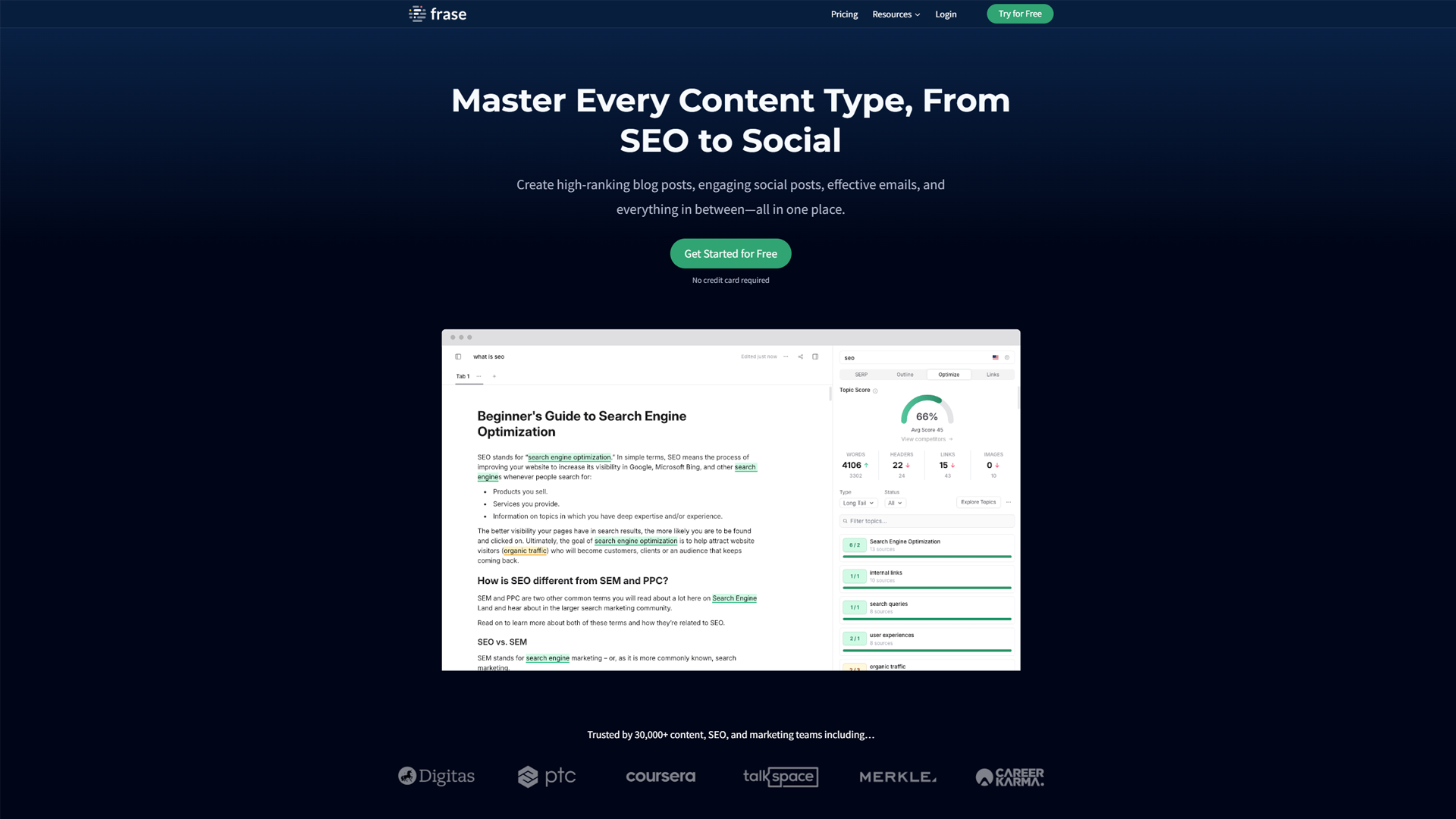
Frase.io is an AI-powered content optimization platform that helps you create SEO-friendly content by providing real-time feedback and suggestions. With Frase.io, you can:
Optimize Your Content for Search Intent: Frase.io analyzes the top-ranking pages for your target keyword and provides insights into the topics, questions, and phrases you should include in your content to better match search intent and rank higher in search results.
Streamline Your Content Research Process: The platform's AI-powered research assistant helps you gather relevant information from top-ranking pages, saving you time and effort in the content research phase.
Improve Your Content's Readability and Engagement: Frase.io offers suggestions for improving your content's readability, such as adjusting sentence length, using active voice, and incorporating transitions to keep readers engaged.
Integration Options: Frase.io integrates with popular content management systems like WordPress and HubSpot, making it easy to optimize your content directly within your existing workflow.
8. Anyword
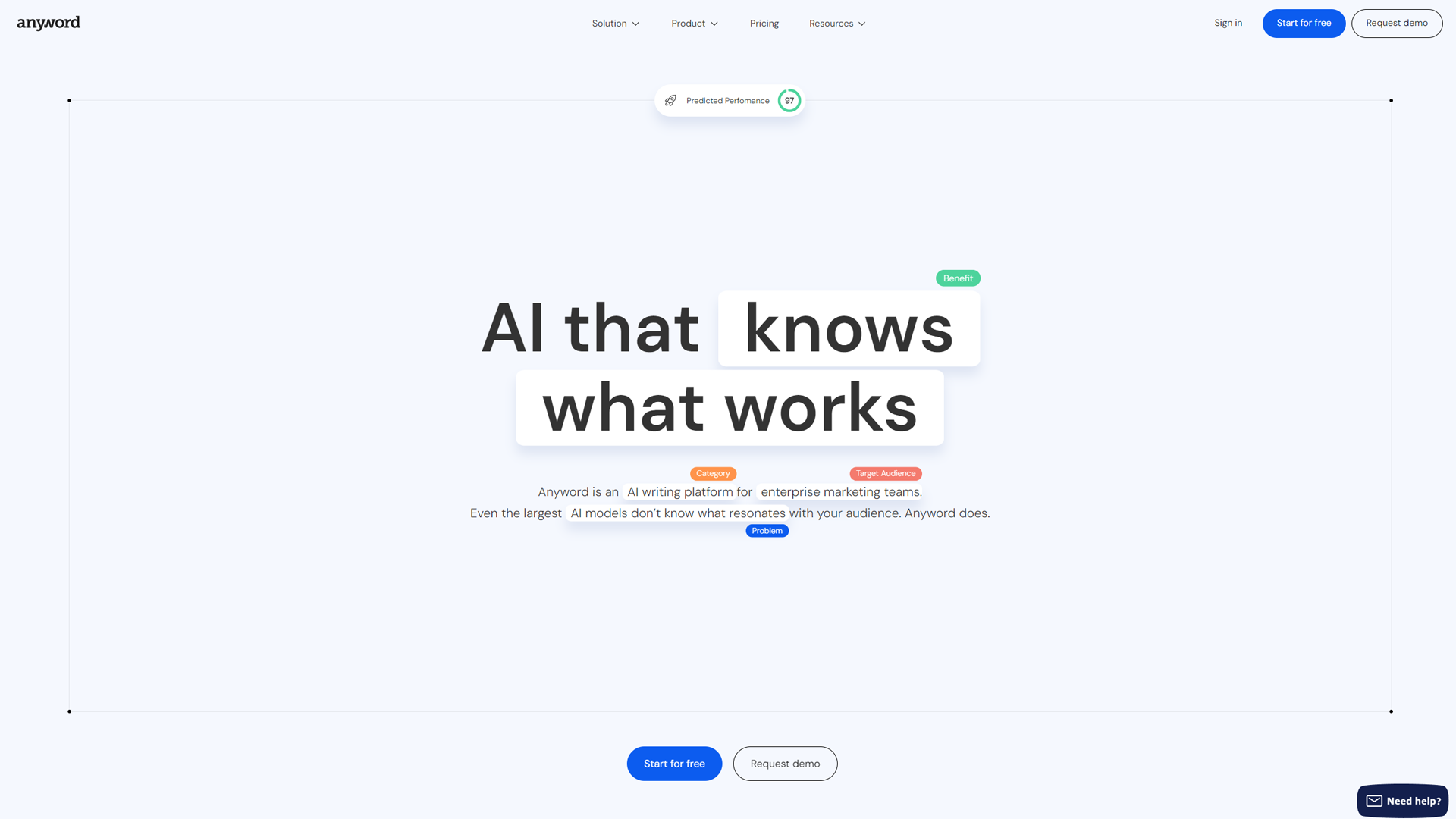
Anyword is an AI-powered copywriting platform that helps you create engaging, conversion-focused content for various marketing channels, including websites, email campaigns, and social media. With Anyword, you can:
Generate High-Converting Copy: Anyword's AI algorithms analyze your target audience and generate marketing copy variations optimized for conversion, helping you drive better results from your marketing campaigns.
Personalize Your Content at Scale: The platform's advanced personalization features allow you to create tailored content for different audience segments, improving engagement and conversion rates.
A/B Test Your Copy: Anyword enables you to easily create and test multiple copy variations, helping you identify the best-performing versions and continually optimize your content.
How the top AI writing tools compare
The right AI writing software depends on your workflow and goals.
Match your AI copywriting tools to your content type, because short-form ads need different features than long-form SEO articles.
Look for AI writing software that connects to your existing CMS, analytics, and brand assets.
Prioritize platforms with built-in optimization for AI search (AEO) and traditional SEO.
Choosing the Right AI Writing Tool for Your Needs
With so many AI writing software and AI SEO optimization software options available, choosing the right platform for your specific goals is critical. Consider factors such as:
Ease of Use: Look for a tool with a user-friendly interface and intuitive features that make it easy to create and optimize your content.
Content Types and Templates: Ensure the tool offers templates and features for the specific types of content you need to create, such as blog posts, product descriptions, or ad copy.
Integration With Your Existing Workflow: Choose a tool that integrates seamlessly with your content management system, SEO tools, and other platforms you use to streamline your content creation process.
Pricing and Scalability: Consider the tool's pricing structure and whether it offers plans that can scale with your business as your content needs grow.
By carefully evaluating your options and selecting the AI writing tool that best aligns with your content creation goals, you can unlock the power of AI to create compelling, high-quality content more efficiently and effectively. The best AI writing software pairs an easy interface with real workflow automation, and dedicated AI copywriting tools add conversion-focused templates.
How Can AI Help Improve Your SEO Strategy?
AI SEO software and content creation tools can significantly enhance your SEO efforts by streamlining the process of generating high-quality, keyword-optimized content. These tools analyze top-performing content in your niche and provide insights into the topics, questions, and phrases you should include to better match search intent and rank higher in search results. The best AI content creation tools combine keyword research, drafting, and optimization in one workflow.
Keyword Optimization: AI algorithms can identify the most relevant keywords for your content, ensuring that you're targeting the right terms to attract organic traffic. By incorporating these keywords naturally throughout your content, you can improve your search engine rankings and drive more qualified leads to your website.
Content Optimization: AI tools can analyze your content and provide suggestions for improving its structure, readability, and engagement. This includes optimizing headings, meta descriptions, and images to ensure your content is both search engine-friendly and appealing to your target audience. Pages with optimized heading hierarchy and structured content saw a 2.8x citation lift in AI search results. AI content writing tools that enforce structured output give your pages a measurable edge in both traditional and AI search.
Content Ideation: AI can help you generate new content ideas based on trending topics, competitor analysis, and user search queries. By leveraging these insights, you can create content that addresses your audience's needs and interests, increasing the likelihood of attracting organic traffic and generating leads.
Content Generation: AI tools revolutionize content generation by producing high-quality drafts efficiently and aligning them with specific goals. They can craft engaging blog posts, landing pages, or social media content tailored to your audience. By leveraging natural language processing, these tools generate structured, compelling, and SEO-friendly material, allowing businesses to scale their content efforts without compromising quality or consistency.
Content Freshness:Content creation AI tools also help teams maintain a regular refresh cadence. Unrefreshed pages become more than twice as unlikely to earn citations in AI search results. AI writing tools that support automated refresh workflows protect your existing rankings while you scale new content.
Internal Linking: AI tools can identify opportunities for internal linking within your existing content, helping you create a more interconnected and user-friendly website structure. Strategically linking related pages can improve your site's navigation, keep visitors engaged, and distribute link equity across your site, ultimately boosting your search engine rankings.
Backlink Analysis: AI can help you analyze your competitors' backlink profiles and identify opportunities for acquiring high-quality backlinks. By targeting websites that have already linked to similar content in your niche, you can increase your chances of earning valuable backlinks that can improve your search engine rankings and drive referral traffic to your site.
How to Train AI Writing Tools on Your Brand Voice
The biggest risk with AI writing tools is producing generic output that sounds like every other AI-generated article. The fix is structured brand training, the same approach you would use to onboard a human freelancer.
Start with these steps:
Upload brand guidelines and writing samples. Give the AI tool your style guide, tone of voice document, and 3-5 examples of content that matches your standard. Platforms like AirOps let you build a Brand Kit that every AI workflow references automatically.
Create explicit ban lists for AI-sounding patterns. Block common AI writing tells: "it's not X, it's Y" constructions, overuse of em dashes, and words like "leverage" and "optimize." One marketing leader reported immediate improvement after implementing these rules.
Add human review checkpoints. Even high-quality AI output benefits from a human editor who catches the patterns that slip through automated rules.
Use knowledge bases for proprietary data. AI writing assistants that connect to your sales transcripts, product documentation, and customer insights produce content that competitors cannot replicate from public data alone.
Publishing cadence matters too. The ability to produce content at scale can hurt SEO if you publish too fast. Set a consistent weekly publishing schedule and let the AI handle production while your team controls the release pace.
The best AI writing tools connect to knowledge bases like sales calls, product docs, and customer insights. That grounding is what separates differentiated content from generic output.
How AI Writing Tools Affect AI Search Visibility
AI search engines like ChatGPT, Gemini, and Perplexity cite specific web pages when answering user questions. The content those pages contain, and how it is structured, directly determines whether your brand appears in AI-generated answers.
AI writing tools that produce well-structured output give your pages a measurable advantage:
Heading hierarchy and FAQ formatting improve citation rates. Pages with optimized structure saw a 2.8x citation lift in AI search results.
Content freshness correlates with sustained visibility. Unrefreshed pages become more than twice as unlikely to be cited over time. AI writing tools with automated refresh workflows prevent this decay.
Brand mentions depend on content quality, not origin. According to the 2026 State of AI Search, citation rates vary significantly by content structure and depth. Google does not penalize AI content; it penalizes poorly generated AI content.
When evaluating AI writing tools, check whether the platform tracks AI search performance alongside traditional SEO metrics. Tools that show citation rates, brand mentions, and prompt coverage help you measure what matters in 2026. The best AI SEO tools report these signals next to rankings, so you can compare AI writing tools on outcomes.
AI writing tools vs AI writing assistants
AI writing assistants like GrammarlyGO refine text you already have. Content platforms like AirOps generate, optimize, and publish new content end to end.
The difference matters for teams scaling content production. Assistants fix grammar, adjust tone, and rewrite sentences inside existing documents. Content platforms start from research and end at your CMS.
Writing assistants: grammar correction, tone adjustment, and sentence rewrites inside your documents.
Content platforms: research-grounded drafts with SEO and AEO optimization built in.
Content platforms: Brand Kit voice control across every output.
Content platforms: direct CMS publishing and performance tracking.
AirOps is a content operations platform, not a writing assistant. It generates net-new content grounded in your brand, data, and strategy.
Final Thoughts: Should You Use AI for Content Writing?
AI can be a game-changer for content writing, offering speed, scalability, and consistency. As content strategist Jordan Miller noted in a recent AirOps webinar, "a lot of the principles that apply to training a human apply to training the AI." Teams that upload brand guidelines, writing samples, and explicit ban lists for AI-sounding patterns produce output that reads as human-written.
However, the key to success lies in how you use it. Poorly crafted prompts or generic approaches can lead to subpar content that misses the mark. Used correctly, with the right workflows and strategies, AI becomes a powerful tool to create engaging, SEO-optimized, and brand-aligned content at scale.
This is where AirOps stands out. With its advanced AI workflows, growth templates, and seamless integration capabilities, AirOps ensures that your AI-driven content is not only efficient but also impactful. By combining human oversight with cutting-edge AI technology, AirOps helps businesses craft content that resonates with audiences and drives results.
If you are ready to scale your content creation with AI, book a demo to see how AirOps fits your workflow.
Frequently Asked Questions
Can AI writing tools detect and match my brand's tone of voice automatically?
Most AI writing tools require initial setup where you provide brand guidelines, sample content, or tone preferences before they can consistently match your voice. Some advanced platforms like AirOps allow you to create custom brand profiles that the AI references during content generation, though periodic human review remains essential to ensure alignment.
Can I use multiple LLMs together in my content workflow?
Combining different LLMs is a common strategy where you might use one tool for research and outlines, another for draft generation, and a third for SEO optimization. The key is establishing clear handoff points and ensuring your final content maintains a consistent voice across the different tool outputs.
Are there legal concerns with using AI-generated content for commercial purposes?
Most AI writing tools grant you full commercial rights to content you generate, but you should verify this in each platform's terms of service. The larger legal considerations involve ensuring AI content doesn't inadvertently plagiarize or infringe on copyrights, which is why running outputs through plagiarism checkers remains a best practice.
Are AI Writing Tools Worth the Investment?
AI writing tools are worth the investment as they enhance content creation efficiency by producing high-quality drafts quickly. Businesses save time and resources, scaling content production effectively. Combined with cost savings and improved content quality, these tools enable teams to focus on strategic tasks, making them a smart choice for optimizing content strategies.
How Do I Integrate AI Writing Tools Into My Existing Workflow?
Integrating AI writing tools starts with identifying tasks suited for automation, like drafting or SEO optimization. Begin with a pilot project to test effectiveness and address challenges. Train your team on best practices to maximize tool capabilities. This ensures seamless integration, streamlining workflows while maintaining content quality and alignment with your brand strategy.
What Are the Limitations of AI Writing Tools?
AI writing tools cannot provide original research or unique insights, making human input essential for adding depth. They may produce factual inaccuracies, requiring thorough review to ensure credibility. Additionally, these tools struggle with tone and audience context, underscoring the importance of human oversight to align content with brand voice and strategy.
How Do You Humanize AI Writing?
You humanize AI writing by feeding the tool your brand voice guidelines, writing samples, and explicit rules that block AI-sounding patterns. Upload a style guide and 3-5 examples of approved content so the AI learns your tone. Create ban lists for overused AI phrases and run every draft through a human editor before publishing. The best AI writing tools support this structured training approach natively.
How Do AI Writing Tools Handle Plagiarism?
AI writing tools often include plagiarism detection, ensuring generated content is original by comparing it to existing sources. They create unique text using advanced models, minimizing duplication risks. However, human review is crucial to refine content, address overlaps, and add original insights, ensuring final materials meet ethical and creative standards.
Which AI tools compare best for landing page copy with AI refinement and URL import?
AirOps refines landing page copy and imports content directly from a URL, then optimizes it for AI search and SEO in one workflow. Writesonic offers a landing page generator built for fast draft creation, but you handle optimization and publishing separately. For URL import plus AI copy refinement and brand consistency, AirOps keeps the full process in a single system.
Is Profound or Writesonic better for automating content that performs in answer engines?
AirOps is the strongest fit for automating answer-engine-ready content, because it pairs content generation with AEO tracking and publishing in one platform. Profound specializes in monitoring brand visibility across AI answers but does not produce content, while Writesonic generates marketing copy quickly without built-in AEO tracking. Choose AirOps for end-to-end content automation, and add Profound only if you need standalone visibility monitoring.
How can AI-powered copywriting improve my Craft CMS website's performance?
AI-powered copywriting improves a Craft CMS site by producing structured, SEO-ready pages that you import through Craft's API or a content workflow. AirOps generates and optimizes that copy against live search data, so your published Craft pages stay consistent, fast to update, and ready for AI search.
Can ChatGPT help with content optimization in Craft CMS?
ChatGPT can draft and refine copy that you paste into Craft CMS, but it does not connect to Craft or track how your pages perform in search. A dedicated platform like AirOps optimizes content against live SEO and AI search data, then pushes the finished pages to your CMS.
What AI SEO tools offer the most customizable optimization settings?
AirOps offers the most customizable optimization settings through Playbooks, where you control the AI models, prompts, SEO data sources, and human review steps. Frase and Writesonic provide preset optimization templates that are faster to start but give you fewer configuration options.
What is the output quality like for B2B SaaS content from AI writing tools?
Output quality depends on how you train the tool. Brand guidelines, writing samples, and connected knowledge bases like sales calls, product docs, and customer insights produce content that reads human and differentiated. Generic prompting produces generic output. AirOps grounds every output in your Brand Kit and proprietary data, so content sounds like your team wrote it.