What Google's Universal Commerce Protocol means for marketing leaders - and what to do about it
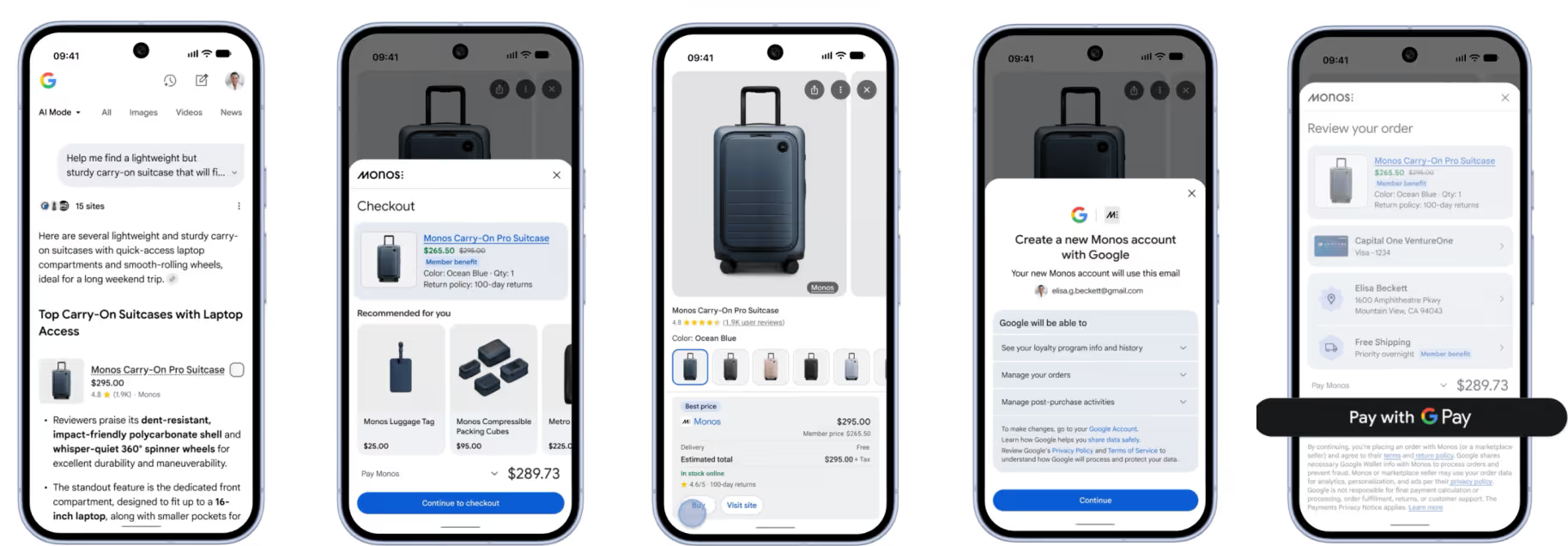
I. Google Is Shifting The Checkout Experience
Google just told every brand in America: the checkout is shifting from your owned properties, and transactions are shifting upstream.
That's the real meaning of the Universal Commerce Protocol (UCP), announced at NRF 2026 this year.
For two decades, the dominant model of the internet looked like this: earn attention through search and social, capture it on owned properties, measure it with analytics, and convert it through checkout flows.
That model is now being rewritten.
The primary interface for discovery, decision-making, and now transactions is no longer a tab within the browser. It’s an AI Search chat interface.
We’re entering a phase where agent-powered experiences are stacking on top of the web we know today. The web still holds the raw materials (content, inventory, pricing, availability, policies) but the experience layer is increasingly handled elsewhere.
Under The Hood: What Does UCP Actually Do?

Google's UCP (Universal Commerce Protocol) is an open standard that allows AI agents, assistants, and commerce systems to speak a shared language across the entire shopping lifecycle: discovery, decision-making, checkout, and post-purchase support.
Instead of building bespoke integrations for every assistant or agent, brands can integrate once at a centralized location. UCP is designed to power native checkout inside chat interfaces like AI Mode in Search and Gemini. The user can research, decide, and transact without ever leaving the interface they started in.
Google co-developed UCP with Shopify, Etsy, Wayfair, Target, and Walmart, and is endorsed by additional partners across payments and retail.
This follows OpenAI's announcement of their Agentic Commerce Protocol earlier this year, which now reaches 700+ million weekly ChatGPT users. The general trend is unmistakable: the chat experience and generative response is eating more and more of the traditional funnel - much of which used to live on owned properties, owned domains, and was served by the CMS.
Here's what matters most: brands remain the merchant of record and retain full customer data ownership. Meta reversed course on native checkout in 2025 after merchants resisted losing customer relationships, a key learning for Google and OpenAI.
II. From Plugins to Payments In Three Years
This shift didn't happen overnight. It unfolded in phases.
In early 2023, chat interfaces gained the ability to call external tools when OpenAI introduced plugins. Vertical-specific shopping experiences followed, with companies like Redfin and Zillow launching directly inside ChatGPT.
By 2025, the pace accelerated. ChatGPT Agent mode and other improvements formalized multi-step behavior. Entire products began running inside chat interfaces, with Canva and Replit launching apps within ChatGPT. The transactional (money) layer started to take shape when Google announced the Agent Payments Protocol.
And now, in January 2026, Google launches UCP. A shared protocol spanning discovery, checkout, and support.
We already watched informational queries get answered without clicks. Now we're watching commercial intent get fulfilled without websites.
III. The Ad Inventory Problem (and the Bigger Point)
In classic search, inefficiency is a feature: more steps, more pages, more impressions.
There’s been ongoing industry discussion that major platforms have incentives to preserve or expand ad inventory by keeping users in monetizable flows longer. The exact mechanism matters less than the direction:
AI shopping collapses steps. It compresses browsing, comparison, and evaluation into fewer interactions. In a world where AI search engines make things far more efficient for the buyer, the inventory available to advertisers can shrink massively.
That’s why the importance of informing and educating agents becomes much more important, not as a trendy tactic, but as a structural response to a smaller attention surface area.
For CMOs who have been focused on traditional SEO and paid search, this is yet another example of AI search engines and generative search experiences reaching further and further down the funnel.
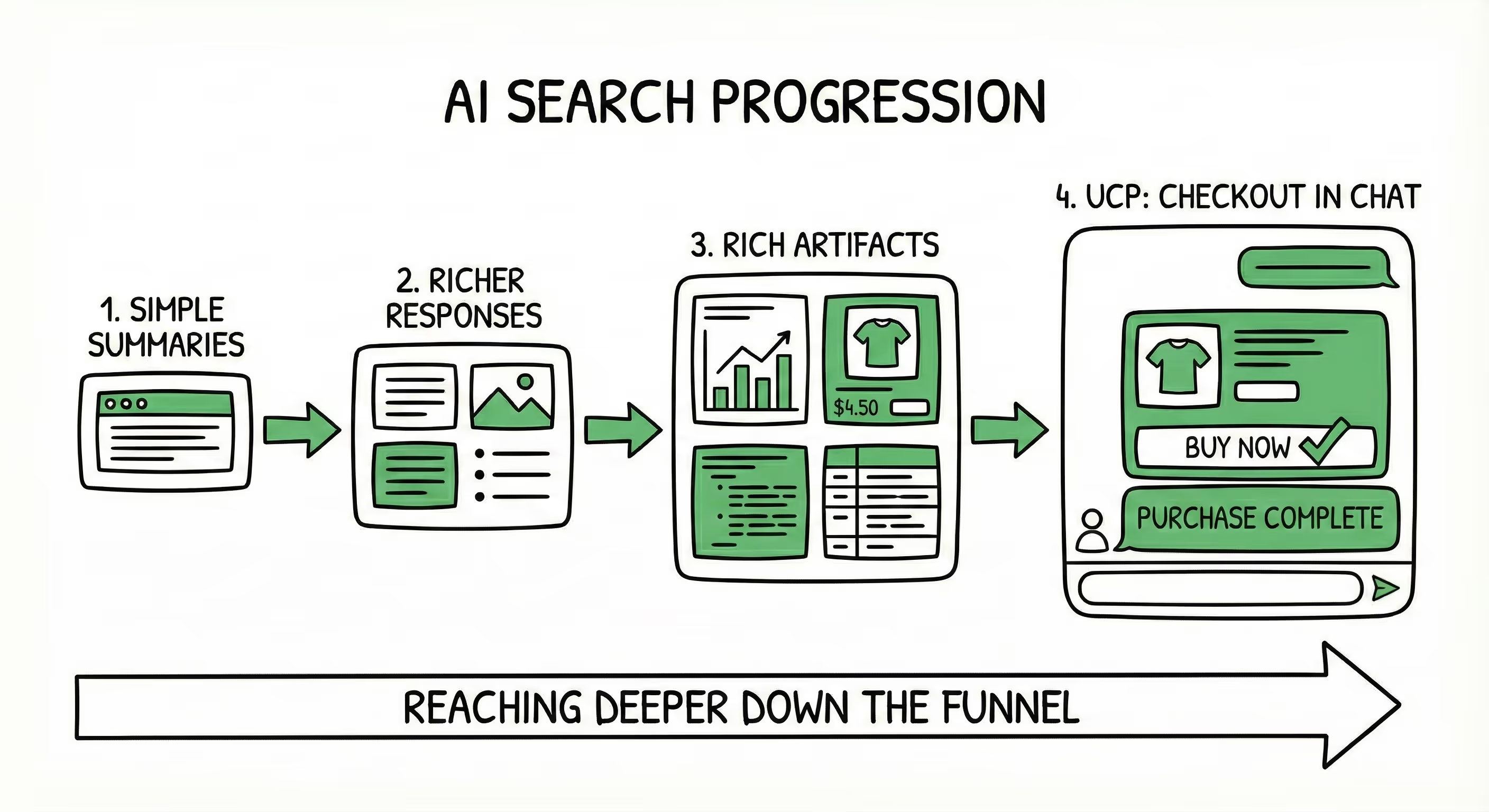
The progression has been steady:
- First, simple AI search summaries
- Then, richer responses
- Now, AI search experiences that generate rich summary artifacts
- And with UCP: the ability to complete entire checkouts inside the chat experience
One byproduct of agents shopping for you is that it becomes incredibly efficient. The perfect curated shopping experience and information presentation can be created for a user instantly.
If a buyer goes from looking at 10-100 product pages down to just one curated page, brands must ensure they not only have the best product at the best price, but also provide rich, detailed content to the agent so it can accurately represent the customer's needs.
IV. The Paradox: More AI Traffic, Fewer Pages, Harder Measurement
Early data shows the paradox in action: Adobe published that AI-driven U.S. e-commerce traffic is up 758% year-over-year in November 2025 and shopping-related AI searches grew 4,700% from July 2024 to July 2025. The traffic is exploding, but it's hitting fewer pages and consolidating around agent-curated recommendations.
The Implication
Prepare for shrinking surface area to market on, and the increasing need to treat the agent as a first-party consumer that needs to be persuaded and educated on your product.
This shift also creates an obvious analytics challenge. Tracking user behavior and funnel metrics on owned properties is much easier than tracking within a highly variable generative experience that’s personalized to each user.
So what do you do?
You evolve measurement from page-centric to readiness and outcomes.
Practical proxy metrics to start using now
- Offer/Feed health: coverage, freshness, error rate, attribute completeness (price, availability, shipping speed, returns)
- Content “agent usability”: scannable spec tables, clear policies, comparison-friendly summaries, FAQs, citations / evidence
- Visibility signals: impressions and referrals from AI surfaces (where available), branded search lift, assisted conversion shifts
- Down-funnel quality: conversion rate, return rate, support contact rate, NPS/CSAT correlated with AI-sourced sessions
- Merchant trust signals: review velocity, review depth, policy clarity, shipping reliability
Zooming out: in a world where the generative response is going through so much improvement and enrichment, CMOs should see these as additional opportunities to reach and win the customer, not reasons to panic or over-pivot.
V. Consumer Trust in AI Purchases Will Take Time to Change
Current research validates this caution: while 70% of consumers have used AI for shopping research, only 13% feel comfortable letting AI complete a purchase. Among those who've actually purchased via AI? Just 10%. The trust funnel, not the technology, is the limiting factor. Consumers still want to “touch the paint of the merchant.” And because trust is still emotional, brand equity becomes a performance lever: when the agent has multiple “good enough” options, it will often recommend (and the buyer will often choose) the name they already recognize and trust.
This is going to take time to bake for multiple reasons:
- Technology maturation: The technology itself needs time to mature
- Consumer behavior change: Consumers are not yet used to purchasing things in-stream
For some lower investment purchases, buying inside ChatGPT is fine. But for higher investment purchases, customers still want to visit the website, read reviews, and go deeper.
What agents are likely to overweight as trust inputs
If trust is the bottleneck, it helps to be explicit about the signals an agent can actually evaluate at scale:
- Policies that answer edge cases (returns, warranty, cancellations, substitutions)
- Review depth (not just star ratings, use cases, drawbacks, fit guidance)
- Third-party corroboration (credible mentions, expert reviews, standards/compliance)
- Shipping reliability (speed, cost clarity, geographic constraints)
- Service responsiveness (support availability, resolution timelines, self-serve clarity)
- Evidence of product-market fit (who it’s for, who it’s not for, comparisons, tradeoffs)
One of the most interesting things about UCP is the ability for personalized offers to be presented to the user, with the agent exercising discretion in when to present these offers. This is a powerful example of how both the brand and end consumer can win: agents give buyers massive information synthesis capabilities while also being able to market and promote products on behalf of brands.
VI. New Era of Search — Quality Content at the Center
The core thesis that an emphasis on quality content (information-gain content that truly answers business questions) is critically important has now been validated beyond what we ever appreciated at the beginning.
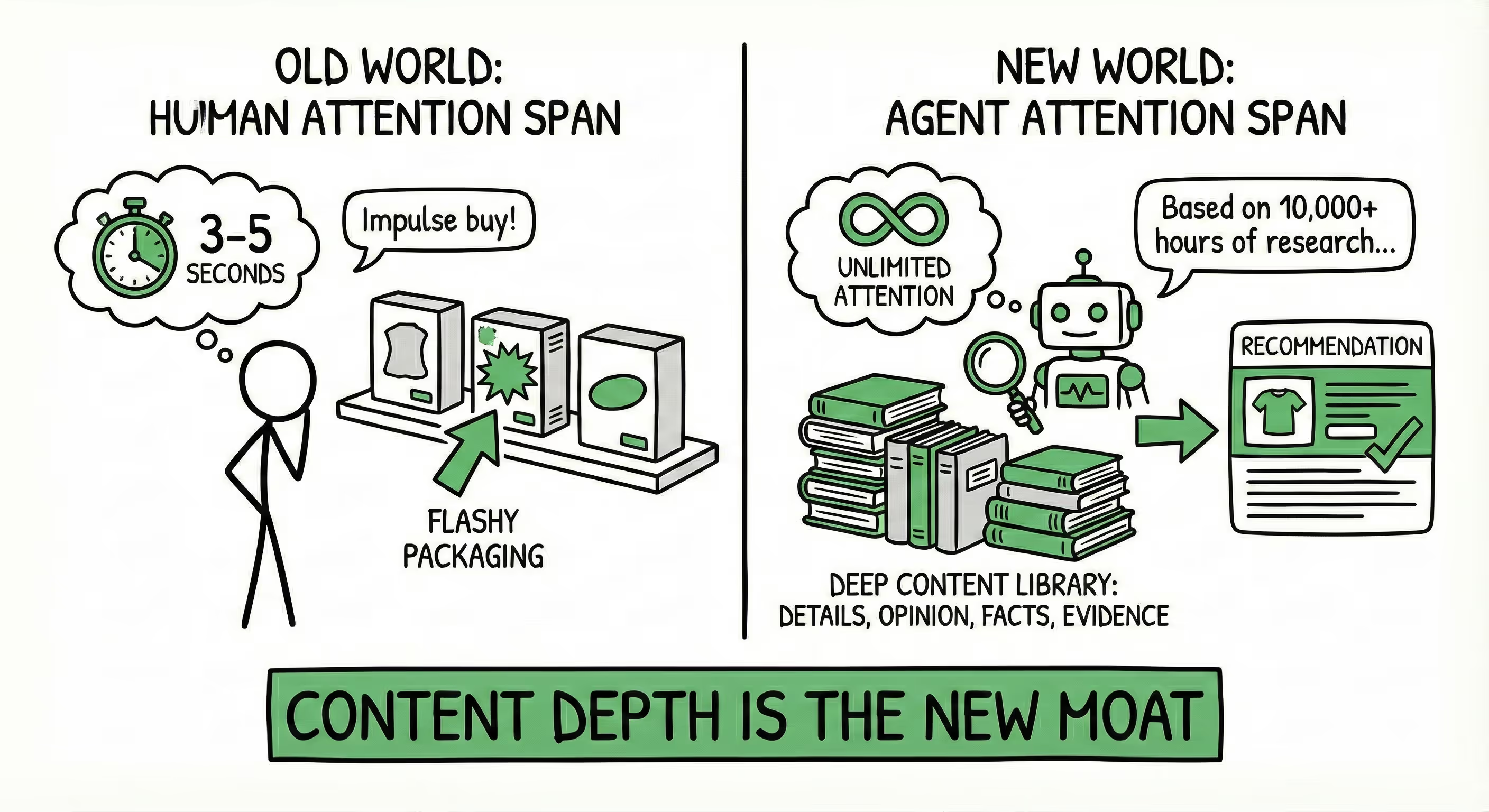
Agents are going to deeply understand the buyer: their needs, preferences, lifestyle, priorities, and look to find products that match. You now have an incredibly sophisticated intermediary looking for evidence that a particular product or brand is the best option for a specific customer.
- In the old world: consumers made impulse purchases based on packaging, with a 3 to 5 second attention span to evaluate a product.
- In the new world: agents have unlimited attention span to understand available products and make recommendations.
This means that quality, in-depth content is a core driver of visibility, and therefore a core driver of purchasing pipeline.
What “Quality” Really Means
When we say “quality,” we mean content that directly addresses:
- Details about the product
- Opinion and perspective
- Supporting facts and evidence
Agents will take the average consumer from having seconds to evaluate a low-price-point product to many tens of hours of synthesized research, which shines a light on all community conversation, content, and opinion around products.
VII. Build Content Systems That Learn & Adapt
Content Engineering, the role we at AirOps are bringing to our customers’ teams at companies like Carta, Ramp, Rippling and L’Oreal, is becoming increasingly in focus as agent attention spans go deeper than ever to give users quality generative responses.
This isn't about finding the right vendor or implementing the right tactic. It's about building organizational capability to learn and adapt continuously.
Without building content systems, it's impossible to get sufficient knowledge from inside the company's systems, customers, and expert team members to the models - to give them the detail and depth they need to confidently understand your product and space.
A simple Agentic Commerce Readiness model (0–3)
- 0: Crawlable, not legible: basic PDPs, thin specs, inconsistent policies, stale feeds
- 1: Structured and complete: schema + feed completeness + clear shipping/returns/warranty + review capture
- 2: Evidence-rich: comparison pages, category “why” pages, fit guidance, tradeoffs, third-party corroboration
- 3: System-driven: automated freshness, UGC ingestion, ongoing experimentation loops, and measurement tied to revenue + trust outcomes
Brands are looking to solve this by seeking out a single missing solution - or seeing the trend as a single step to take. Instead, they need to be rethinking how they work, learn, and organize themselves. The operating model needs to evolve.
The Content Engineering Opportunity
Content Engineering can be used to build effective systems at scale, including:
- Enrich product descriptions with rich qualitative feedback on products, feature information, advice, and use case details
- Keep content fresh - given the value models place on fresh content, content systems can keep information up to date at the product or category level
- Prepare content for multiple surfaces - both commerce feeds and web-based serving
This is just one example that underscores why the only way to tackle the increasingly long tail of agent content needs is to build Content Engineering systems.
The companies that win will have the strongest foundations for AI Search: structured data and workflows that produce the content agents can actually use and cite.
VIII. The Monday Morning Question Your Team Must Answer
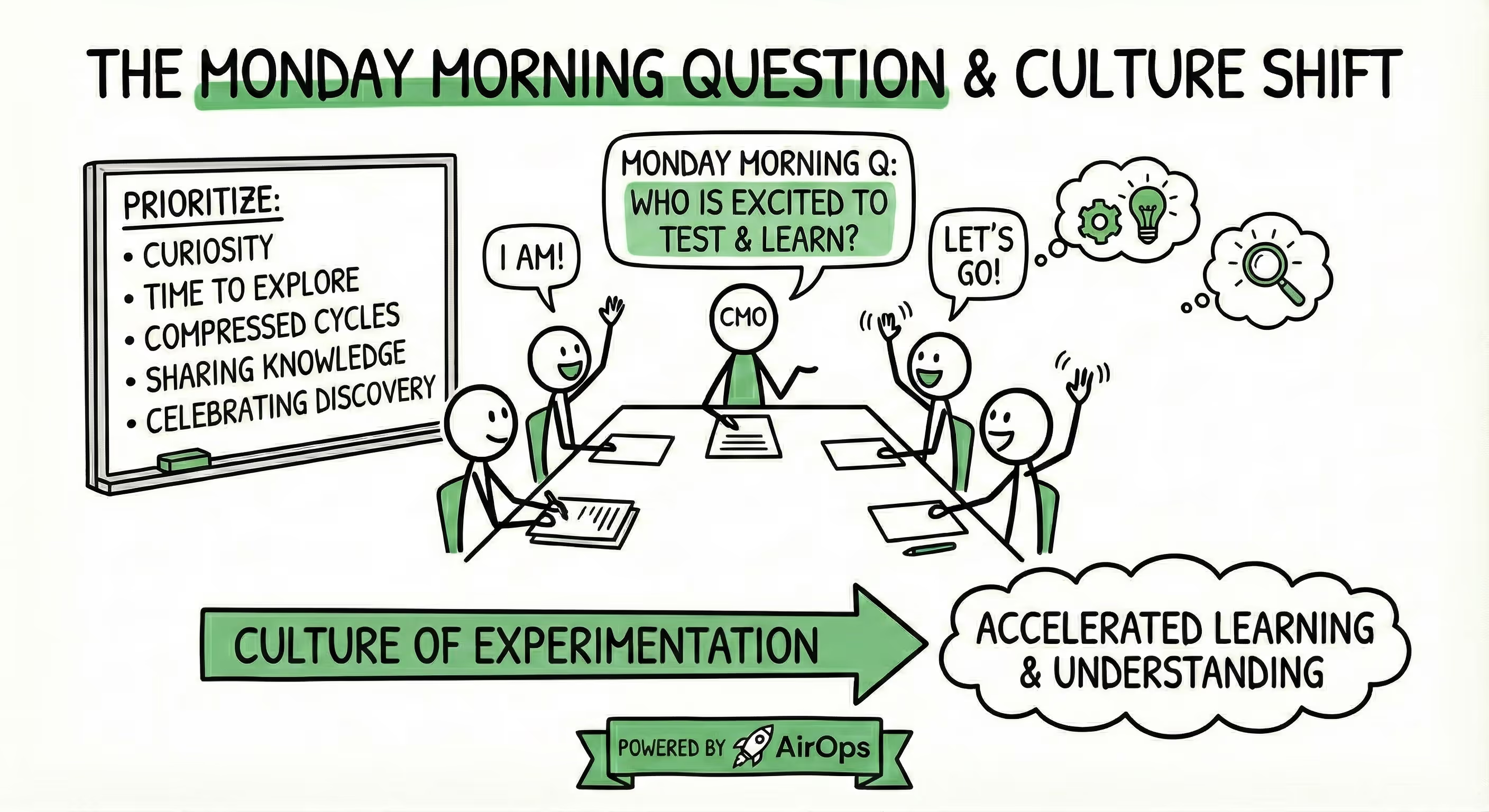
The first thing a CMO should ask their team on Monday morning is: "Who on the team is excited to test this stuff and learn about it?"
Building a culture of testing, learning, and sharing across knowledge work - including marketing - is critical right now. We all need to be energetic students of this moment because nobody knows everything.
Often, even the people who create these technologies don't know how they're going to play out. It's such a complicated confluence of factors that drives real behavior and outcomes.
The only way to make real progress is to build a culture that celebrates and prioritizes:
- Learning and curiosity
- Carving out time to use these technologies and explore them
- Compressed learning cycles
- Sharing of knowledge
- Celebrating discovery
People often look for a single tool to buy or a single tactic to implement. But this is really about a shift in culture. The rate and velocity of change has never been higher. The only way to survive and be durable is to have a culture that prizes these qualities.
Talk to Us
AI search isn’t a one-time shift from links to chat. It’s a steady march toward agent-led discovery, evaluation, and checkout.
The winners will be the brands that stay legible and trustworthy as the interface keeps changing.
AirOps helps teams build the systems (not slide decks) that turn product truth, customer insight, and expertise into content agents can use, trust, and recommend.
If you’re exploring agentic commerce, or ready to operationalize Content Engineering at scale, we’d love to talk.
Get in touch, and we’ll map a practical first 30 days based on your catalog, categories, and constraints.
Frequently Asked Questions
How do I implement Google's Universal Commerce Protocol on my Shopify store?
To implement UCP on Shopify, you'll need to access Shopify's native UCP integration through your admin panel, as Shopify co-developed the protocol with Google. Enable the UCP connector in your sales channels, ensure your product feeds are complete with accurate pricing, inventory, and shipping data, then verify your merchant credentials through Google Merchant Center.
Will AI shopping assistants replace traditional product comparison websites?
AI shopping assistants are compressing the comparison process rather than fully replacing dedicated comparison sites. While agents can synthesize information from multiple sources instantly, comparison websites that provide unique testing data, expert reviews, and structured specifications will remain valuable as primary sources that agents cite and reference in their recommendations.
How do small businesses compete with major retailers in AI-powered search results?
Small businesses can compete by focusing on niche expertise, detailed product knowledge, and authentic customer reviews that larger retailers often lack. AI agents prioritize evidence-rich content over brand size, so businesses that thoroughly document use cases, provide clear policies, and demonstrate deep product expertise can outperform larger competitors in specific query contexts.
What happens to my customer data when purchases occur through ChatGPT or Google AI?
With both UCP and OpenAI's Agentic Commerce Protocol, brands remain the merchant of record and retain full customer data ownership. This was a deliberate design choice after Meta reversed course on native checkout in 2025 when merchants resisted losing customer relationships, ensuring you maintain direct customer relationships even when transactions occur within AI interfaces.
Get the latest on AI content & marketing
