GEO Metrics and KPIs to Track
- Buyers ask AI before they visit your site, so GEO metrics now decide who gets discovered.
- Track six KPIs across three tiers: visibility, engagement, and business impact.
- Benchmark AI share of voice against named competitors on a fixed prompt set.
- Include off-site sources, since 85% of brand mentions live on third-party pages.
- Report a baseline and its delta, and tie GEO metrics to pipeline.
Buyers now ask AI before they visit your site. They type a question into ChatGPT, Gemini, or Perplexity, read the answer, and move on. Ranking first no longer guarantees the click. What matters is whether AI cites your pages and names your brand in the answer.
That shift is why generative engine optimization (GEO) metrics matter, and why your old scorecard falls short. Google AI Overviews reached 2 billion monthly users by mid-2025. Many of those answers resolve without a single click to your site.
Leadership feels the change and asks new questions. They want to know if your brand appears when AI answers, not only where you rank in blue links. This guide covers the GEO metrics worth tracking, how to benchmark AI share of voice, and how to report results to executives.
Partners like AirOps track citation rate, mention rate, and share of voice across ChatGPT, Gemini, and Perplexity. You get one view of how AI describes your brand. AirOps is the partner brands bring in for this shift: the platform, the media mix, and the team together, tied back to pipeline and revenue.
Why GEO metrics work differently from SEO metrics
AI answers get rebuilt on every query. Your visibility rises and falls between prompts, so one snapshot misleads you. Search engine optimization (SEO) rewards a stable ranked position. GEO rewards being the source AI trusts enough to quote.
The unit of measurement changes too. In SEO you count rankings and clicks. In GEO you count citations, mentions, and share of the answer.
Here is a concrete example. You run the same buyer prompt in ChatGPT on Monday and again on Thursday. Monday cites your comparison page and names your brand first. Thursday cites a review site and drops you entirely. Your ranking never changed. Your presence in the answer did.
- Position is not fixed. A page can be cited in one answer and dropped from the next.
- Clicks undercount value. AI often names your brand without sending traffic.
- Off-site sources carry weight. Third-party pages feed the answer as much as your own.
The data backs this up. About 60% of AI Overview citations come from URLs that do not rank in the top 20 organic results. And only 30% of brands stay visible across back-to-back AI answers.
What GEO metrics should you track?
Track six key performance indicators (KPIs) across three tiers: visibility, engagement, and business impact. These are the key metrics for measuring GEO success. Visibility shows if AI sees you. Engagement shows how well it represents you. Business impact shows what that presence drives.
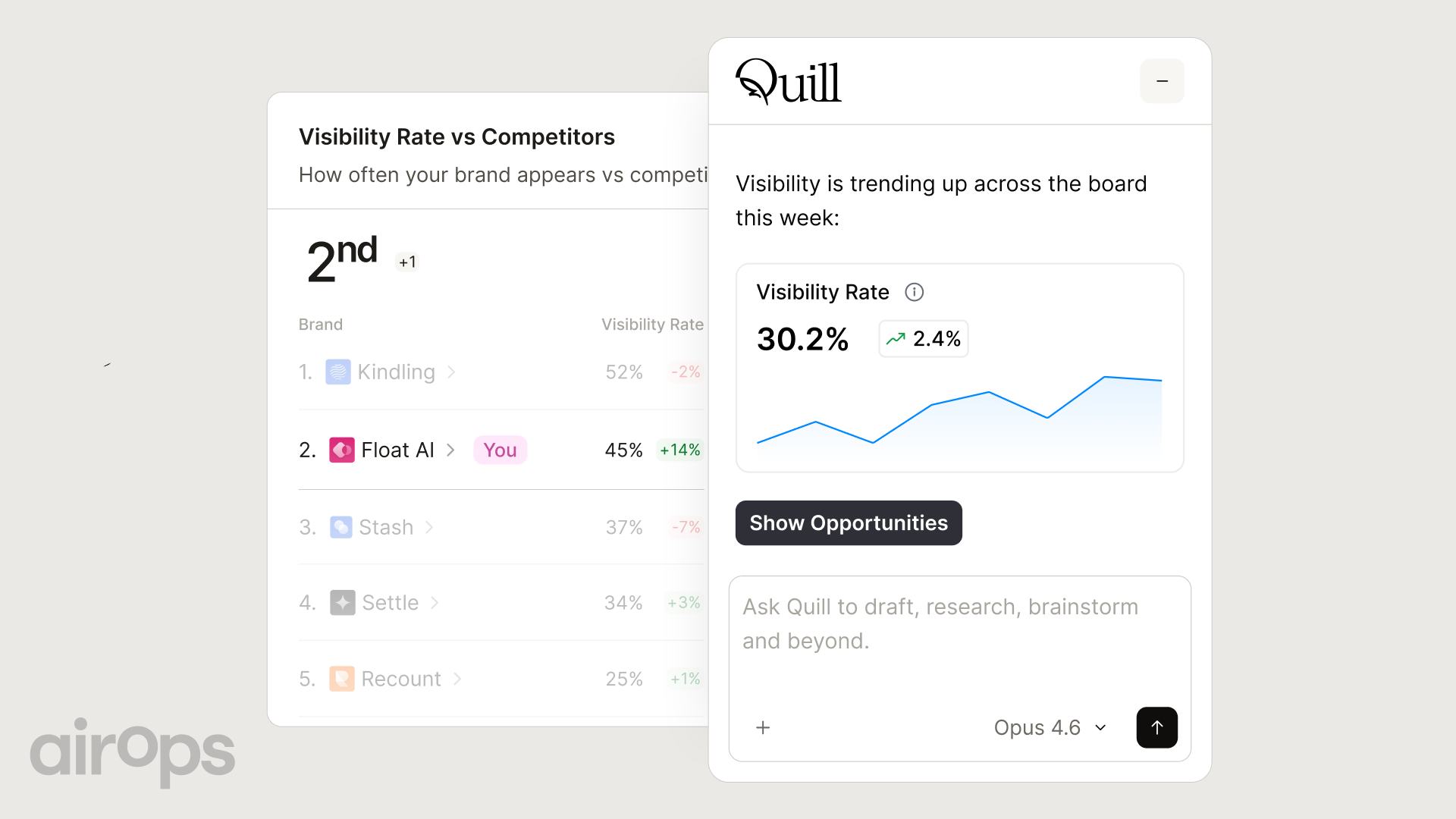
Read these tiers together. A high citation share with flat pipeline tells you to check intent and page experience. Strong AI citation share without mentions means AI uses your data but omits your name.
Set targets so the numbers mean something. Use these starting benchmarks, then adjust to your category.
- Aim for prompt coverage of 90% or higher across your tested prompt set.
- Target a bottom-funnel brand mention rate near 30% to 40%, per a practical GEO framework.
- Push for both a citation and a mention on your high-intent prompts.
Pairing matters more than either signal alone. Brands that earn both a mention and a citation are 40% more likely to resurface in later answers. Yet only 28% of AI answers carry both today.
Citation quality deserves a closer look. A late, neutral mention buried under three competitors moves few buyers. An early citation with positive sentiment shapes the whole answer. Weight your reporting toward position and sentiment, not raw counts.
AI referral traffic closes the tier. Tag visits from ChatGPT, Gemini, and Perplexity as their own channel in your analytics. Small volume today still signals which answers send buyers who convert.
AirOps Insights surfaces these signals in one view. You track citation share, brand mention rate, and prompt coverage without stitching tools together.
How do you report GEO metrics to executive stakeholders?
Report three things leadership cares about: where you stand versus competitors, what changed and why, and what it drove. Skip the raw dashboards. Lead with the story those numbers tell.
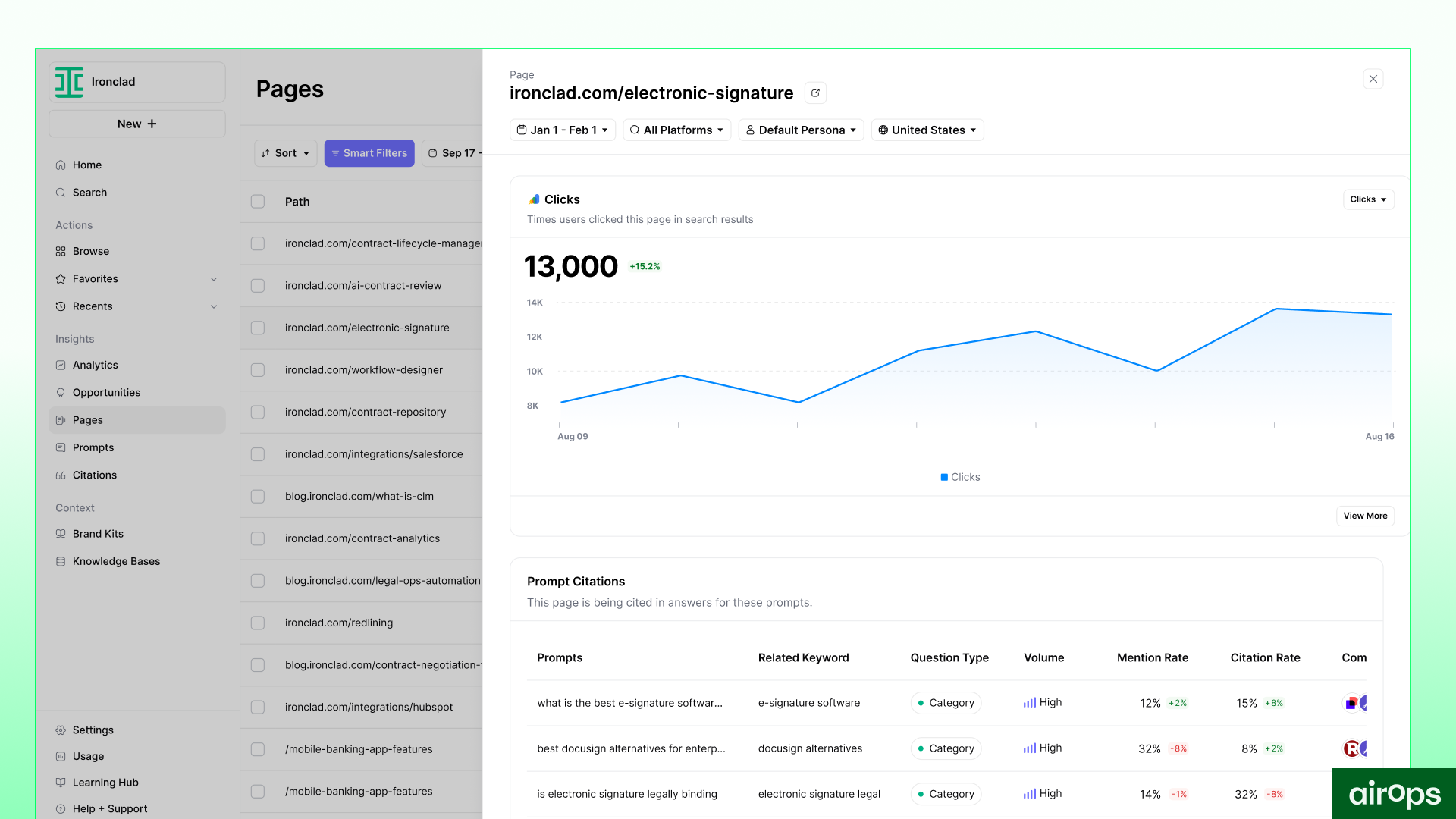
The metrics that track the success of a GEO campaign roll up to four executive questions. Anchor every answer to a baseline, then show the delta. A single number means little. A trend against last month proves momentum.
How do you connect GEO metrics to revenue?
Model AI-assisted pipeline instead of forcing a last-click story. Segment traffic in Google Analytics 4 (GA4) by AI source, then pair it with self-reported attribution from forms and sales calls. That combination shows the influence AI search creates before the final click.
Be honest about the model. AI discovery often starts the journey, then hands off to branded search or a direct visit. See the business case for AEO for how teams frame that value.
- Set a baseline in month one, then report every metric as a delta.
- Match cadence to the metric: weekly for trends, monthly for pipeline.
- Cut vanity metrics that move without changing pipeline or coverage.
Baseline-then-delta framing keeps the conversation honest. Report 'share of voice rose from 38% to 45% since last month,' not 'share of voice is 45%.' The movement is the proof, and it points to the work that earned it.
Freshness protects your reporting too. Pages you do not update quarterly are 3x more likely to lose citations, so a rising trend can reverse fast.
GEO measurement mistakes to avoid
These patterns show up often when teams start measuring GEO.
- Trusting one snapshot. AI answers shift, so a single pull hides the real trend.
- Tracking only owned-domain citations. That ignores the 85% of mentions living off-site.
- Skipping a fixed prompt set. Without it, your numbers are not comparable week to week.
- Reporting visibility with no revenue tie. Leadership discounts metrics that never reach pipeline.
- Letting cited pages go stale. Pages not refreshed annually lose over 50% of citation likelihood.
Key takeaways
- Measure citations, mentions, and answer share, because rankings no longer capture AI visibility.
- Benchmark AI share of voice against named competitors on a fixed prompt set.
- Include off-site sources, since most brand discovery happens on pages you do not own.
- Report a baseline and its delta, and tie every metric to pipeline.
- Refresh cited pages on a schedule to hold the visibility you earn.
Frequently Asked Questions
Frequently asked questions
What KPIs should you track to measure GEO success?
Track AI citation share, brand mention rate, prompt coverage, citation quality, AI referral traffic, and pipeline impact. Together they cover visibility, engagement, and business results.
What is AI share of voice and how do you benchmark it?
It is the share of answers on your prompt set where AI cites or names you. Benchmark it against named competitors across ChatGPT, Gemini, and Perplexity.
How do you report GEO metrics to executive stakeholders?
Lead with competitive standing, trend, and pipeline influence. Anchor each number to a baseline and report the delta on a set cadence.
How often should you measure GEO?
Match the cadence to the question you are answering:
- Weekly for citation and mention rate trends.
- Monthly for share of voice and pipeline.
- Quarterly for prompt coverage gaps.
Can you connect GEO metrics to revenue?
Yes. Segment AI referral traffic in GA4 and add self-reported attribution, then report influenced pipeline rather than last-click revenue.
AirOps for GEO measurement and reporting
Tracking the KPI stack and reporting it to leadership is the loop AirOps runs. Insights surfaces citation and mention signals. Page360 ties them to your Google Search Console (GSC) and GA4 data. Every action then reports back against the metrics you set out to move, so insight turns into action and action into measurement. Asana nearly doubled its AI citations with Quill. See how AirOps measures and reports GEO performance.