- Answer engine optimization ROI becomes measurable when citation tracking and pipeline influence replace traffic-only reporting
- AI citation share and brand mention frequency reveal category authority that traditional dashboards miss
- Structured refresh cycles turn one-time AI audits into sustained visibility growth across priority queries
- Integrating AEO into existing SEO systems unlocks compounding returns across rankings, citations, and conversions
- A defined 12-month roadmap transforms AEO from a tactical experiment into a scalable, revenue-aligned infrastructure
- AEO tools like AirOps layer AI citation tracking on top of GSC performance data, giving AEO investment cases the same rigor as existing SEO reporting.
Some early adopters to AEO are seeing real movement: stronger AI visibility, clearer pipeline influence, and more qualified demand. A few report triple-digit growth in AI-sourced leads in under 90 days.
Others are noticing something more subtle but just as important: traffic influenced by answer engines converts at higher rates than traditional search.
But anecdotes don't unlock budget.
Marketing leaders need more than screenshots and trendlines. They need defensible numbers. They need a way to show that answer engine optimization ROI connects to revenue, not just visibility. And they need a system that turns AEO from an experiment into something leadership can confidently invest in.
This guide walks through how to:
Measure AEO ROI in financial terms
Connect citation share to pipeline influence
Turn audits into structured refresh cycles
Build a repeatable visibility engine across product lines
Map a 12-month roadmap leadership can fund
If you're responsible for organic growth, brand authority, or overall pipeline performance, this is how AEO becomes predictable, reportable, and scalable.
What is answer engine optimization?
Answer engine optimization (AEO) focuses on making your content the source AI systems cite when responding to user queries.
As AI search reshapes how buyers discover and evaluate solutions, AEO gives marketing teams a structured approach to earning visibility inside the answers that influence purchase decisions.
Traditional SEO focuses on rankings and clicks. AEO focuses on citations and influence inside AI answers.
When someone asks ChatGPT, Perplexity, or Google AI Overviews a question, the system synthesizes sources it considers authoritative and trustworthy. If your content appears inside that synthesis, your brand earns visibility, even without a click.
Why answer engine optimization ROI matters for marketing leaders
The hardest part of AEO isn't writing the content. It's proving the impact.
Most dashboards track what's easy to measure:
Impressions
Clicks
Conversions
What they miss is what happens before the click.
They don't show:
When your brand is cited inside an AI response
When you're mentioned alongside competitors
When a buyer sees your name in ChatGPT or Perplexity and searches for you directly
A buyer might ask Perplexity about your category, see your brand referenced, and later run a branded search. That influence never appears in a traditional last-click model.
For marketing leaders under pressure to justify spend, closing that blind spot is the real business case for AEO.
The KPIs that earn leadership buy-in: citation rate across priority queries, share of voice versus competitors, AI-influenced pipeline contribution, and branded search lift from AI visibility.
In a recent AirOps webinar, Aleyda Solis emphasized that AI search changes how success should be measured:
"The metrics that we use and the goals that we pursue might be different because a high share of user engagement might not necessarily end up in direct traffic as it did with traditional search." — Aleyda Solis
AI visibility often influences decisions without generating a click. If your reporting model only captures sessions and conversions, you miss early-stage influence.
Answer engine optimization ROI depends on recognizing and measuring that invisible influence.
How AEO differs from traditional SEO and why that matters for ROI
The difference between SEO and AEO goes beyond tactics. It changes how visibility works.
SEO optimizes for placement on a results page. AEO focuses on earning citations inside AI-generated answers. That shift changes what you measure, how you structure content, and how you think about attribution.
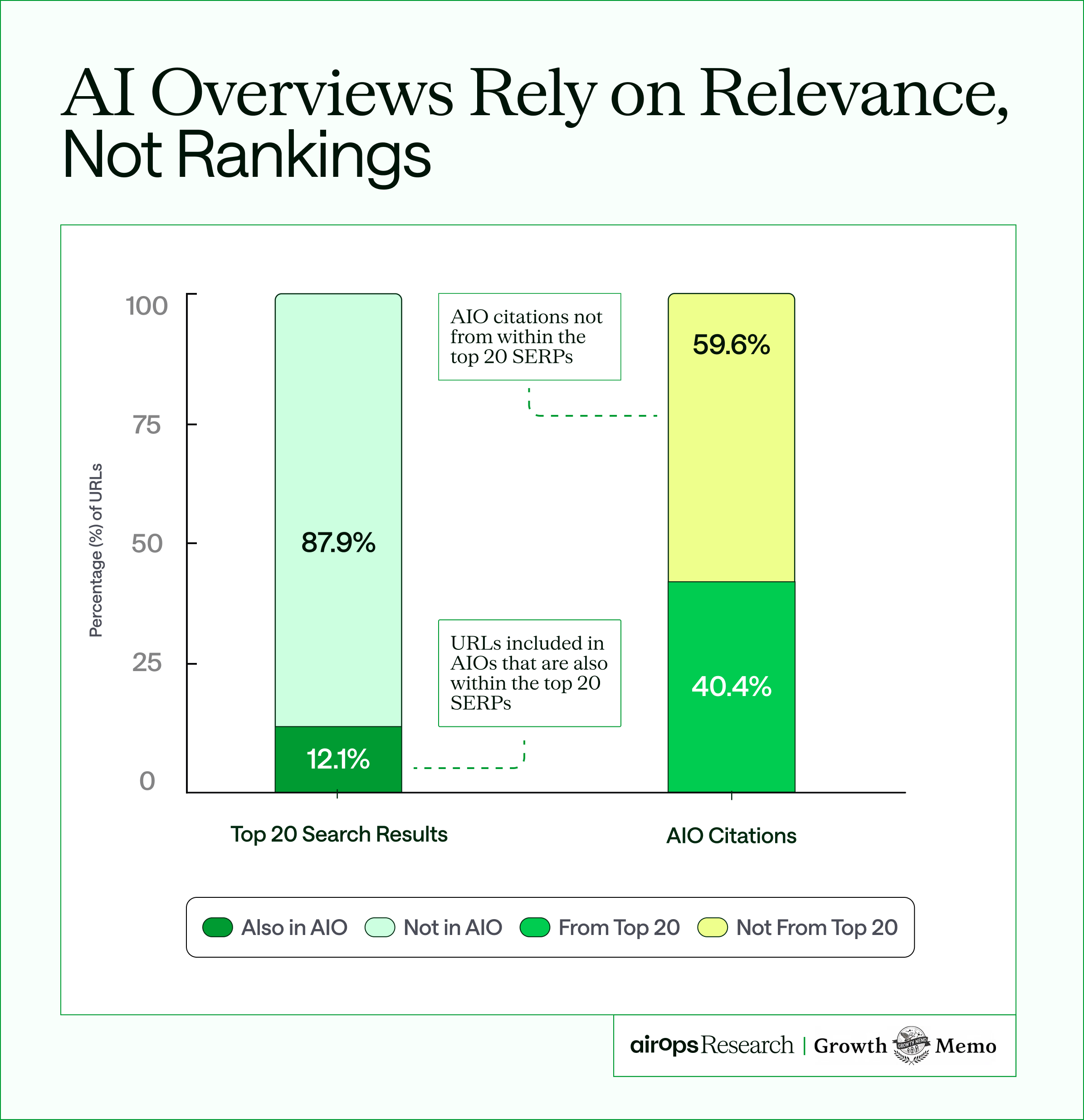
A page can rank first and never appear in an AI response. At the same time, a source that's cited frequently inside AI answers may not hold a top organic position.
Research shows a strong correlation between overall search visibility and AI mentions, so SEO still provides the foundation. But AEO optimization prioritizes different signals: structured clarity, explicit authority, and active citation monitoring. Traditional SEO does not target these elements directly.
When ROI conversations happen, that distinction matters. Rankings measure placement. Citations measure influence.
What a scalable answer engine optimization system actually looks like
This is where many teams get stuck. This is where many teams get stuck.
They treat AEO like a checklist:
Add schema
Rewrite FAQs
Run a few prompts in ChatGPT
That approach creates short-term lifts, but it doesn't hold.
According to AirOps research, only 30% of brands remain visible from one AI response to the next, and just 20% stay visible across five consecutive runs. AI visibility shifts quickly. Without monitoring and structured updates, citation gains fade as fast as they appear.
Scalable AEO requires infrastructure. It's not about isolated optimizations. It's about building a system that keeps working as query patterns evolve.
Here's what that system includes.
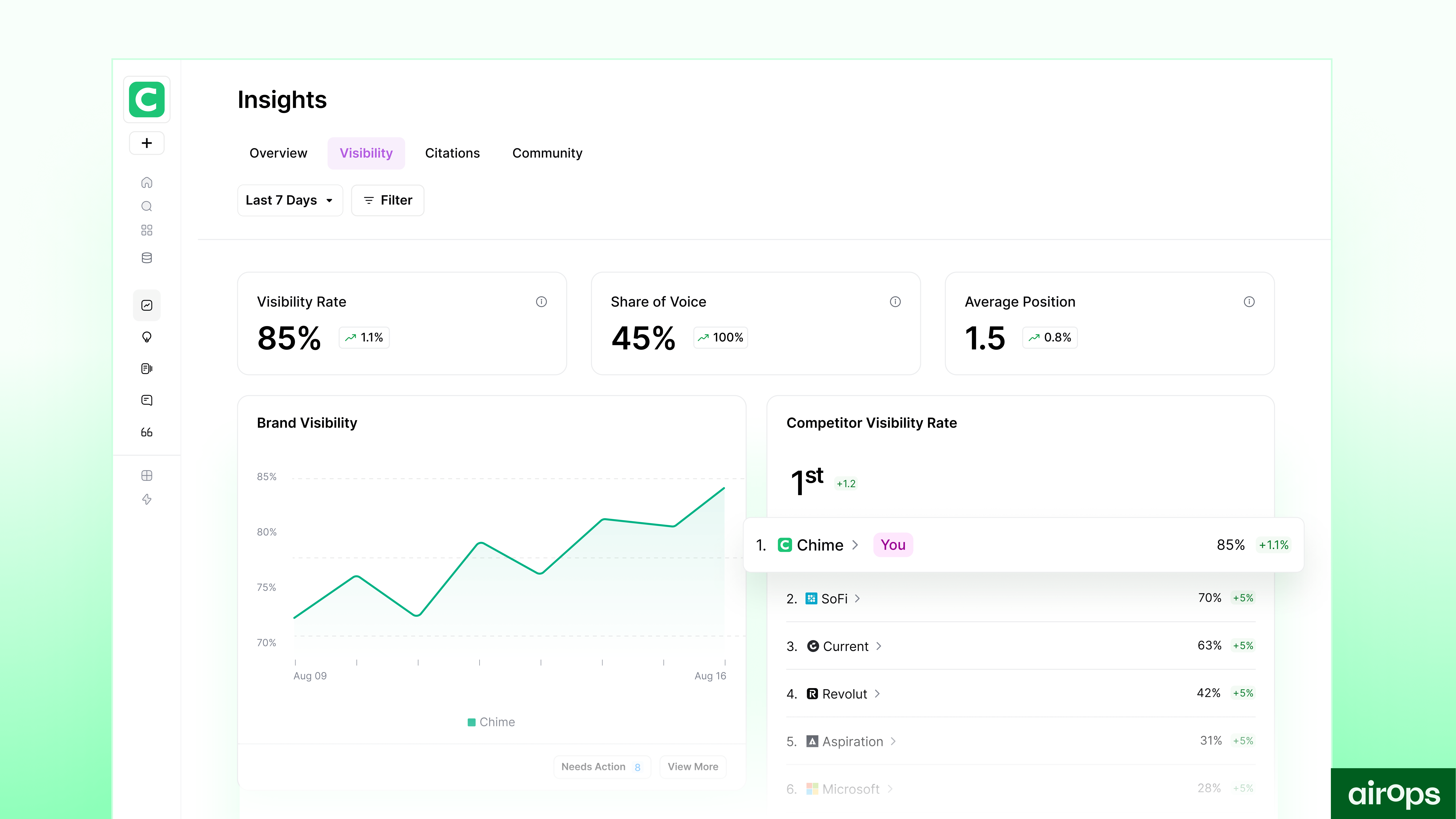
1. AI visibility monitoring that replaces guesswork
You don't rely on scattered screenshots or one-off prompt testing. You track citation frequency, share of voice, and competitive presence across answer engines.
That visibility needs to connect back to priority categories and revenue-driving queries. Otherwise, it's just data without direction.
Manual testing doesn't scale across product lines or expanding keyword sets. AirOps centralizes AI visibility data across ChatGPT, Perplexity, and AI Overviews, showing where you're cited, where competitors dominate, and where gaps exist.
2. Content architecture built for citation
Structure becomes a standard instead of an afterthought.
Formatting, Q&A clarity, sourcing, and answer placement are consistent across pages so AI systems can parse and extract cleanly. That consistency compounds over time.
3. Prioritization tied to revenue
Not every query deserves equal attention.
High-intent searches tied to product lines and pipeline influence move to the top of the list. This becomes even more important for commercial queries.
AirOps research found that 83% of AI citations for high-intent, commercial searches came from pages updated within the last 12 months. More than 60% came from pages refreshed within six months. When revenue is involved, freshness becomes a competitive lever.
4. Refresh as an operating rhythm
AI systems favor current, authoritative content. Treating updates as a reactive fix limits growth.
Instead, refresh cycles become part of the operating model. Quarterly reviews, structured improvements, and ongoing citation monitoring protect gains and prevent visibility decay.
When AEO is operationalized this way, it becomes a repeatable growth engine rather than a temporary experiment.
How to measure AEO ROI
Answer engine optimization needs a reporting model that ties AI visibility to revenue outcomes. Instead of separating metrics and attribution into isolated dashboards, think of AEO measurement as four connected levels.
1. Visibility: citation share and brand presence
Start with the simplest question: how often are you showing up?
AI citation volume measures how often answer engines reference your content for priority queries. Share of voice compares your citation frequency against competitors. If you hold 30% citation share for "best project management software" while a competitor holds 50%, the gap is visible immediately.
Brand mentions matter alongside citations. Mentions build familiarity and improve stability. Brands earning both citations and brand mentions are 40% more likely to resurface across multiple AI runs than citation-only brands. Tracking both gives you a clearer view of durable visibility rather than one-off wins.
2. Traffic: referral signals from answer engines
Some AI platforms include source links in their responses. When users click through, those visits appear in analytics with identifiable parameters.
Volumes may not match traditional search, but intent is often stronger. The AI system has already synthesized options and filtered noise before the visitor arrives.
3. Quality: conversion impact from AI-influenced visitors
Not all traffic carries the same weight.
Segment AI-sourced leads and compare close rates, average deal size, and sales velocity against other channels. Many teams discover that AI-influenced leads move faster because trust starts forming before the first click.
4. Attribution: connecting visibility to revenue
This is where AEO ROI becomes defensible.
Bridge visibility and revenue with practical steps:
Apply UTM parameters where AI platforms allow source tracking
Tag leads in your CRM when they reference AI assistants
Add "AI tools" as a response option in "How did you hear about us?" forms
Use multi-touch attribution models that credit early-stage influence
First-touch and last-touch models often miss AEO impact because AI citations frequently appear early in the buyer journey.
When these four levels work together, answer engine optimization moves from a conceptual benefit to a measurable growth channel.
Most teams see initial citation movement within 60 to 90 days of structured optimization. Sustained share-of-voice gains typically require two to three quarters of consistent execution. AEO compounds over time, so early investment in measurement infrastructure pays off well beyond the first reporting cycle.
How to turn content audits into sustained AI visibility growth
Most AI visibility audits fail for a simple reason: they stop.
A team runs diagnostics, identifies gaps, updates a handful of pages, and then moves on. Visibility improves briefly and then decays.
Audits should launch a recurring engine.
Begin with structured visibility mapping. Run priority queries across ChatGPT, Perplexity, and AI Overviews. Document where you appear, how often you're cited, and which competitors dominate. Look for patterns in the types of sources AI systems favor.
Then trace those patterns back to structural causes. Citation gaps often reveal weak topical authority, thin coverage depth, unclear formatting, outdated data, or missing schema.
Next, prioritize based on business value. Tie AI visibility opportunities directly to high-intent keywords, core positioning categories, and high-ACV product lines. That shift turns an audit into a roadmap rather than a checklist.
Freshness directly protects citation share. According to AirOps research, pages not updated quarterly are 3× more likely to lose AI citations compared to recently refreshed pages.
Teams investing in AEO are already seeing measurable gains from structured refresh programs.
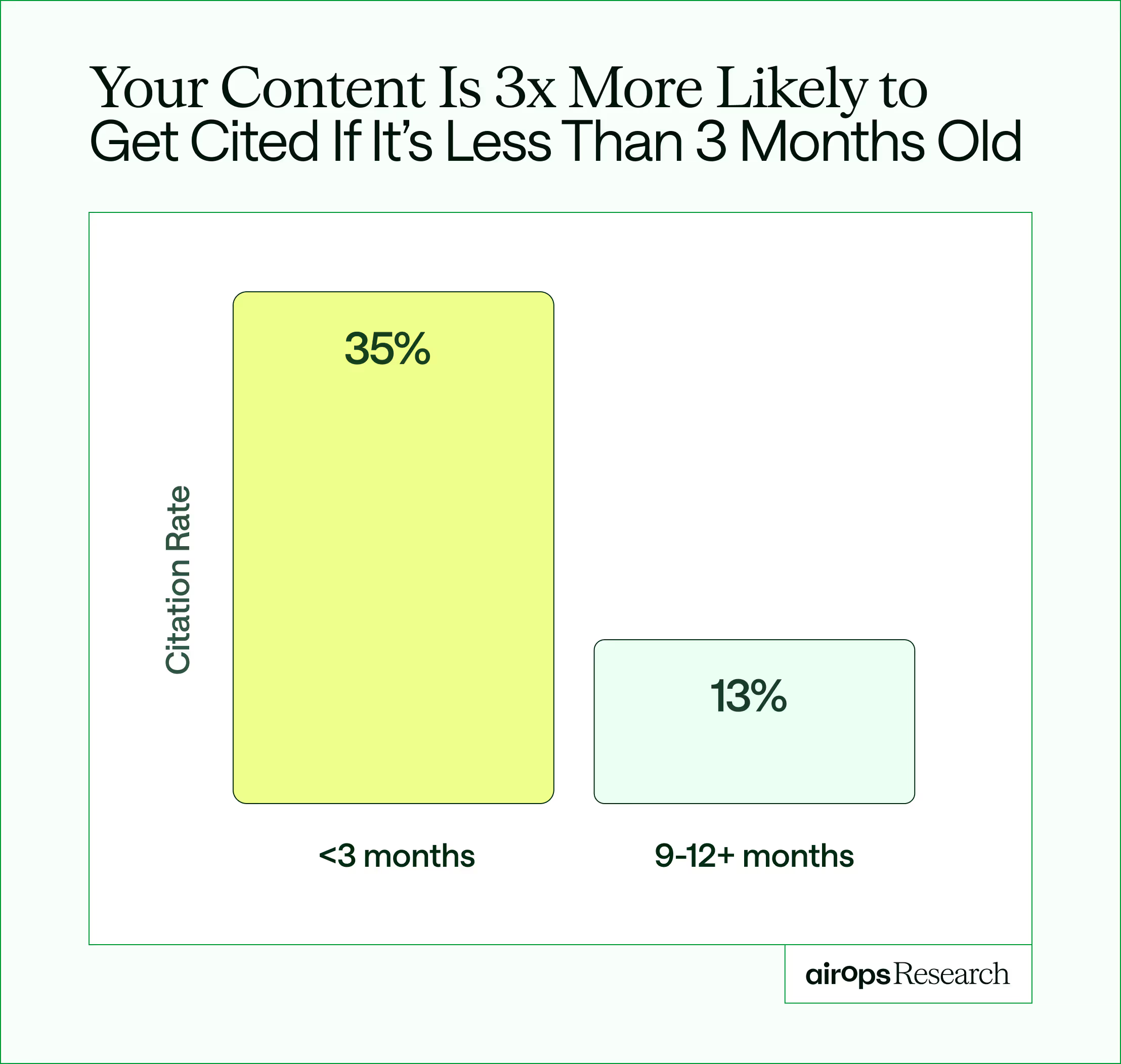
Operationalizing refresh at scale requires more than a spreadsheet. High-performing teams use structured workflows to identify stale pages, flag citation declines, and trigger updates tied to revenue-driving themes.
AirOps' content refresh workflows connect AI visibility signals directly to execution. When citation share drops or competitors gain ground, teams can initiate structured updates in the same system, strengthening summaries, reinforcing entity signals, and deepening topical authority without rebuilding processes from scratch.
How to calculate your AEO return on investment
Once your AEO measurement framework is in place, calculating ROI becomes straightforward.
Start with your total investment: content production, monitoring tools, technical implementation, and workflow time. Then measure incremental citation growth and AI-influenced pipeline across priority queries. Apply multi-touch attribution to revenue influenced by AI visibility, especially for early-stage interactions.
From there, use the standard formula:
(Gain from AEO − Cost of AEO) ÷ Cost of AEO × 100
"Gain" may include directly attributed revenue, influenced pipeline value, or weighted brand lift depending on reporting maturity.
When visibility, attribution, and refresh cycles are aligned, AEO ROI becomes trackable rather than theoretical.
Tools like AirOps layer AI citation tracking on top of GSC performance data, giving AEO investment cases the same rigor as existing SEO reporting.
How to track AEO performance with the right tools
Tracking AEO performance requires different tools and a different mindset than traditional SEO reporting.
Standard analytics platforms capture clicks and sessions. They miss what happens inside AI-generated answers. To measure AEO performance metrics effectively, you need tooling that tracks citation frequency, brand mentions, share of voice, and sentiment across AI providers.
Focus on three core capabilities:
Citation monitoring across ChatGPT, Perplexity, Gemini, and AI Overviews
Competitive share of voice so you know where you stand relative to alternatives
Trend tracking that surfaces directional movement, not one-time snapshots
That last point is critical for AEO ROI monitoring. As Aja Frost, Head of AEO Strategy at HubSpot, puts it:
"The question we should be asking is not, did we show up today? It's, are we showing up more over time?" Aja Frost, HubSpot
AirOps research shows that roughly 50% of cited pages turn over every month. Point-in-time snapshots mislead more than they inform. Build your AEO dashboard around week-over-week and month-over-month trends instead.
AirOps Page360 unifies AI citation data with Google Search Console and GA4 metrics in a single view. Smart Filters surface pages losing AI visibility, gaining citation share, or showing conversion lift from AI-referred traffic. Teams spend less time stitching dashboards and more time acting on signals that connect to pipeline.
How to build a repeatable AEO framework
A framework defines what matters. Operationalization determines whether it actually runs inside daily workflows.
A repeatable AEO framework ties authority themes directly to revenue priorities, sets defined AI share-of-voice targets by category, standardizes content structure to improve citation probability, and connects reporting across rankings, citations, and pipeline influence. That connected reporting is what turns an AEO investment business case from theoretical to defensible.
Structure is not cosmetic. Pages with clean formatting and schema markup show 2.8× higher citation rates than poorly structured pages. Structure directly affects extractability inside answer engines.
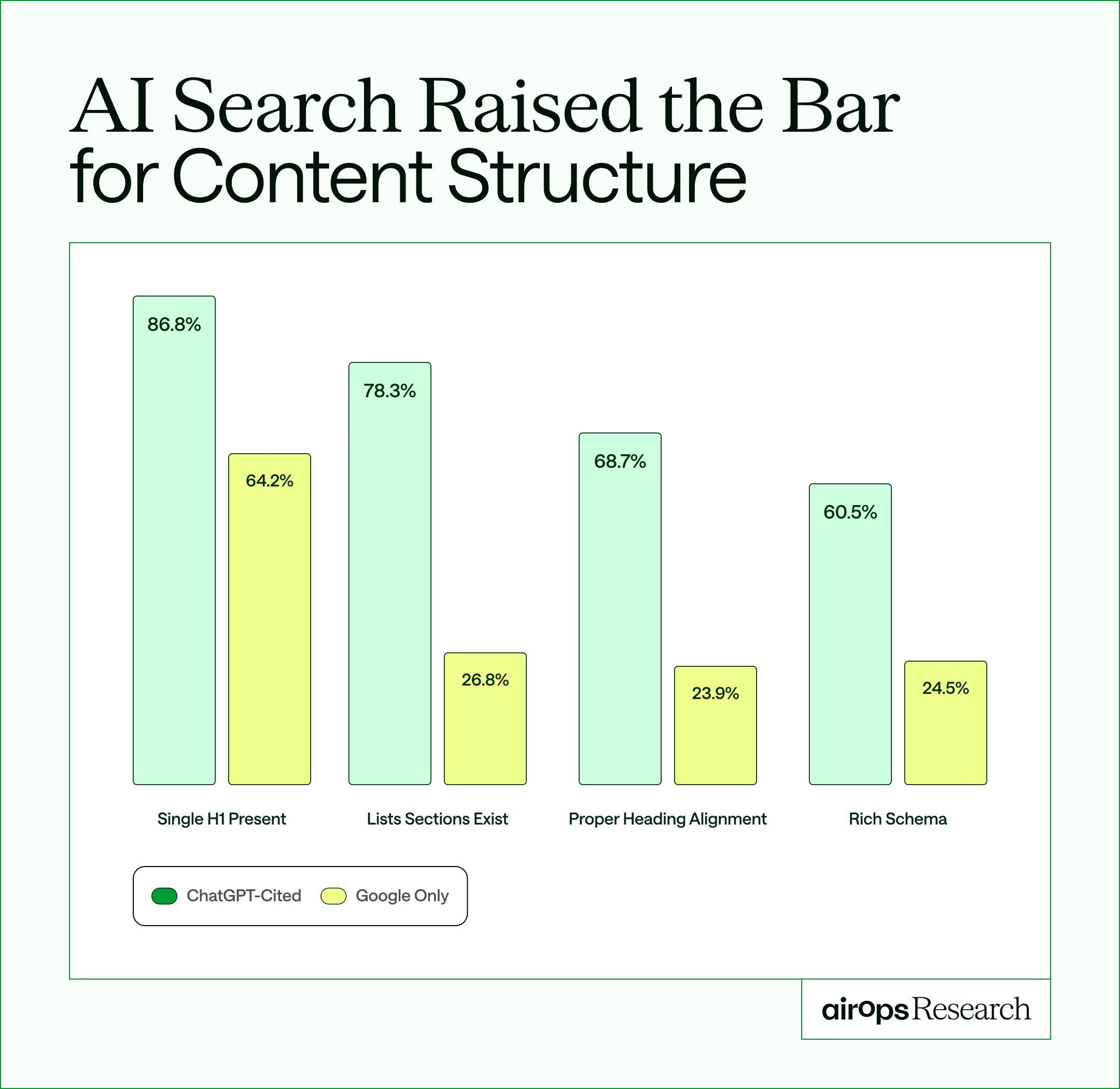
Integrated reporting is equally important. When leadership reviews rankings, citation growth, and influenced pipeline together, AEO shifts from an experiment to a performance lever.
This is where fragmented tools start to slow teams down. SEO dashboards track rankings. Analytics platforms show traffic. AI prompt testing lives somewhere else.
AirOps unifies those signals inside a single Grid-based workspace, connecting citation data, rankings, and content performance in one unified workspace.

When visibility, structure, and reporting sit in the same system, the framework becomes executable rather than theoretical.
How to operationalize AEO inside an existing SEO strategy
AEO strengthens SEO rather than replacing it. The goal is to upgrade existing workflows so AI visibility becomes part of normal execution.
In practice, that means adjusting how briefs, audits, and reporting function:
Content briefs incorporate AI visibility intent, citation opportunity analysis, and structured summary sections.
Technical audits validate schema, confirm crawlable static HTML, and ensure a clear content hierarchy.
Reporting expands to include citation volume, brand mention frequency, and share-of-voice trends alongside rankings and traffic.
The goal is integration, not reinvention.
Operationalizing AEO ultimately means embedding AI visibility checks into briefs, enforcing structured templates through shared knowledge bases, and routing updates through repeatable workflows rather than ad hoc edits.
AirOps supports this shift by connecting AI visibility data directly to structured execution workflows grounded in first-party knowledge and governance rules. Teams generate content with stronger guardrails and greater citation durability without increasing process friction.
Operational requirements
Scaling AEO requires alignment across ownership and reporting.
AI visibility metrics should appear alongside rankings and traffic in leadership reviews. Executive visibility prevents AEO from remaining tactical.
SEO and content teams also need shared visibility targets. When KPIs diverge, friction grows. When goals align, accountability strengthens.
Most importantly, shift away from campaign-based thinking. Answer engines reward accumulated authority over time. That accumulation only happens when refresh, structure, and monitoring become part of a continuous operating rhythm rather than isolated pushes.
Building a 12-month AEO roadmap
AEO expansion works best in phases, building authority, structure, and coverage in sequence.
Quarter 1 focuses on baselining and authority mapping.
Run a full AI visibility audit, benchmark competitors, and map share of voice across product categories.
Quarter 2 strengthens the foundation.
Standardize templates, roll out schema consistently, and refresh high-priority commercial pages where revenue impact is highest.
Quarter 3 expands authority clusters.
Build new topical clusters, extend into adjacent revenue categories, and increase monitoring automation across product portfolios.
Quarter 4 reinforces gains.
Refresh high-citation pages, close share-of-voice gaps in priority categories, and consolidate underperforming assets that dilute authority.
By year-end, AEO should operate across product categories with shared standards and centralized visibility reporting.
What to expect in your first year of AEO investment
AEO delivers compounding returns, not overnight wins. Setting realistic expectations with leadership protects investment and builds long-term support.
In the first 90 days, expect to establish baselines: map citation share by category, identify competitive gaps, and run initial content optimizations on high-priority pages. Early signals include citation rate improvements for refreshed pages and increased brand mention frequency.
Between months four and six, optimized content starts earning consistent citations. Teams that focus on a specific topic cluster first often see measurable lift before expanding. Descript saw 35% traffic growth by focusing AEO efforts on their core product categories.
By months seven through twelve, compounding effects take hold. Citation share gains stabilize across multiple product categories. AI-referred traffic begins contributing meaningfully to pipeline. Teams with structured refresh cycles report citation durability improvements of 2 to 3x compared to static content.
The critical insight for first-year AEO ROI: AI search visibility compounds over time when backed by consistent execution. AI monthly sessions now represent 56% the size of traditional search worldwide, according to HubSpot research. That share keeps growing. Teams that build the system early compound their advantage as the channel scales.
Start with one topic cluster, measure the lift, and use those results to expand the investment case. Data from a focused experiment often proves more persuasive than any forecast.
Turning AEO into measurable growth
Answer engine optimization ROI becomes measurable when execution becomes structured.
The brands seeing sustained gains in AI visibility do not chase isolated wins. They define authority themes clearly, structure content for extractability, monitor citation share consistently, and align visibility efforts with revenue priorities.
When those pieces connect, citation growth becomes predictable rather than volatile.
This is where a partner like AirOps fits.
AEO only scales when monitoring, prioritization, and execution operate in the same environment. AirOps connects those signals: tracking performance across AI search, identifying citation gaps by category, routing insights into structured refresh workflows, and measuring impact continuously. AirOps brings the platform, the media mix, and a hands-on team together to build and run this work alongside yours, tied back to pipeline and revenue growth.
Strategy, execution, and measurement function as one loop instead of separate tools.
Answer engine optimization scales when visibility becomes engineered rather than improvised.
Book a demo to see how AirOps helps teams turn AI visibility into sustained, measurable growth.
Get the latest on AI content & marketing
