How Asana Reached New Global Markets and Nearly 2x'd AI Citations with Quill
Asana is the work management platform used by millions of teams worldwide to coordinate projects, processes, and goals. Their global organic growth team is one of the first to build with AirOps Quill: running localized content refreshes across four languages simultaneously, with more markets ramping for Q2.
Quill has become a core part of how the team operates at global scale. The lift came within 2 weeks of publishing, and are already compounding.
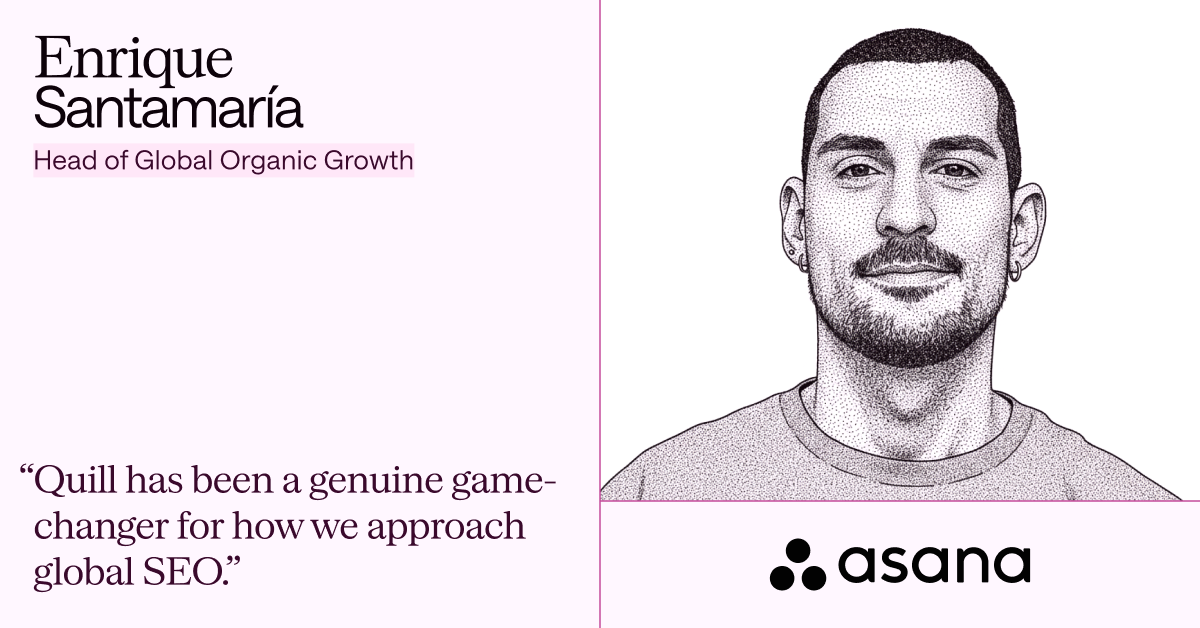
"Quill has been a genuine game-changer for how we approach global SEO," said Enrique Santamaría, Head of Global Organic Growth at Asana. "It gives you granular control over the output without the complexity you'd expect: powerful but surprisingly approachable."
Reaching markets that were previously impossible to serve
Before Quill, Asana's team was manually refreshing 20-30 pages per month across international markets, and that was already stretching the team thin. With Playbooks running across French, Japanese, German, and Spanish, the team now covers roughly 800% more ground: finally reaching markets they couldn't staff for before.
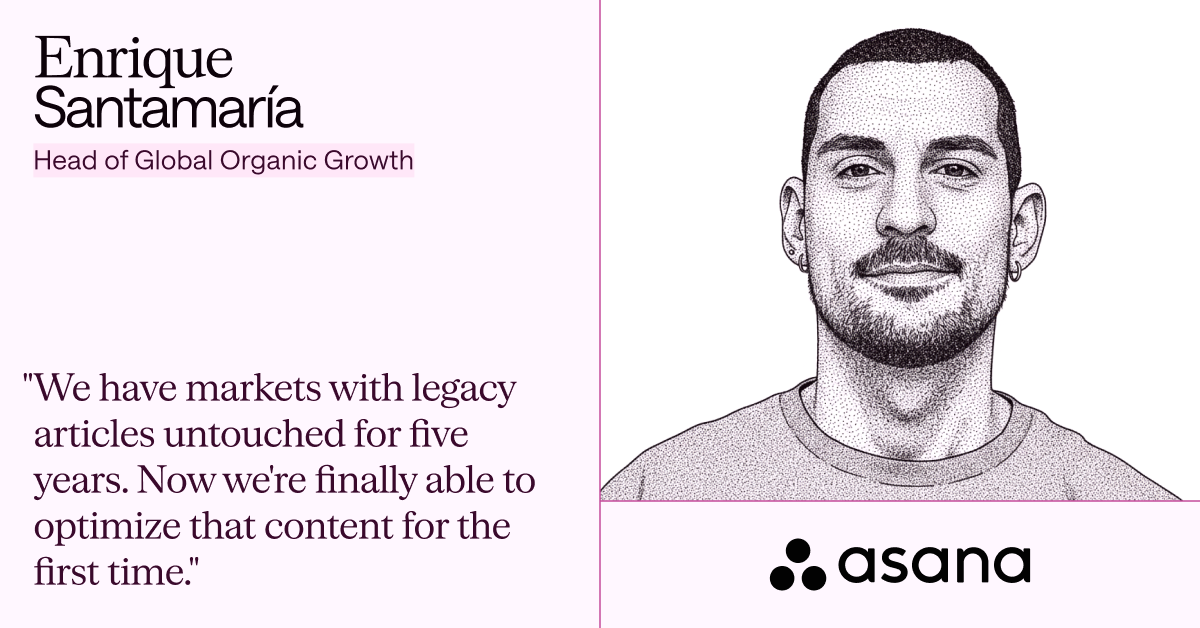
"We have markets with legacy articles that haven't been touched in five years, because we never had the SEO copywriters to cover them," Enrique said. "Now we're finally able to optimize that content for the first time."
That frees the team to focus on insight and strategy instead of manual authoring: the work humans should be doing anyway.
The speed matters for a specific reason. AirOps research on content freshness and AI visibility found that pages not updated in over a year are more than 2x as likely to lose AI citations. In SaaS, the freshness window is especially narrow: content needs to be updated within three months to maintain competitive visibility. For Asana, with legacy articles across T2 and T3 markets untouched for five years, every month of inaction was compounding the gap.
Better quality at 50% lower LLM cost per run
Asana's previous Workflows consumed, on average, 2x more tasks than Playbooks: each task an LLM call, each call costing money. The output still needed heavy cleanup. With Playbooks, task consumption saw a 70% reduction in LLM spend per content piece, with output that's cleaner and closer to publish-ready.
"The quality is vastly superior," Enrique said. "We've eliminated stubborn intro and H2 redundancies, data placement is much more strategic, and articles are now complete. That sounds like a low bar, but it was actually a recurring issue before."
The feedback loop reinforced the quality gains. Quill knows when to act on its own and when to pause for input. When Enrique flagged structural issues or content mapping bugs, the team ran A/B tests within hours.
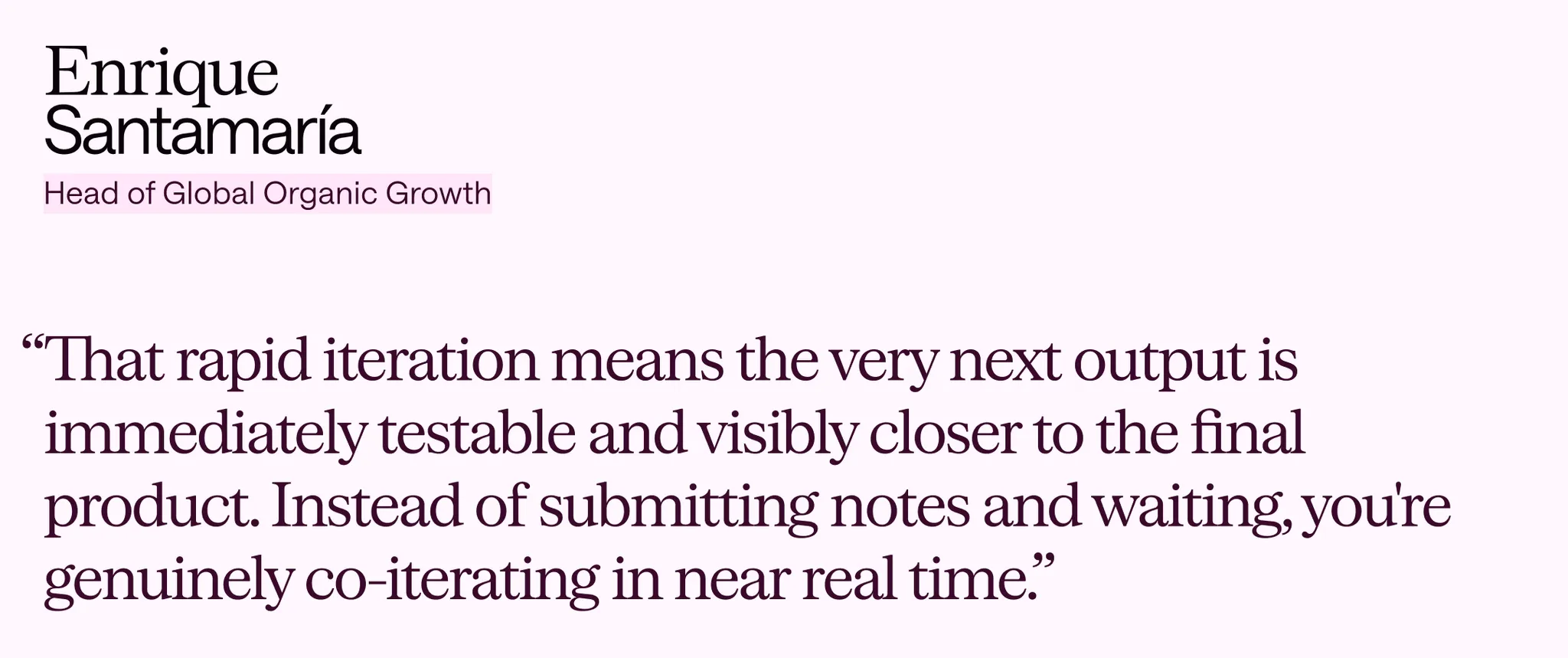
"That rapid iteration means the very next output is immediately testable and visibly closer to the final product," he said. "Instead of submitting notes and waiting, you're genuinely co-iterating in near real time."
Citation count nearly doubled, with 58% of tracked prompts going from zero to cited
The early citation data backs this up.
Across 200+ articles refreshed through Playbooks, AirOps analytics reveal that Asana's AI citation count increased by 71% and citation rate by 16%. First-mention rate (appearing first in AI answers) jumped 18%.
58% of tracked search prompts went from zero Asana presence to active citation after the refreshed content went live. Those 232 articles drove 58% of all Asana brand citations in the measurement window.
The lift showed up across AI engines:
- ChatGPT citations rose 93%
- Google AI Overviews rose 42%
- Google AI Mode rose 11%
Across 72% of all tracked prompts, citation rates moved meaningfully.
These numbers are directional: the measurement window is 33 days post-publish, and AEO indexing has lag. The trajectory is clear, and it will compound as more markets come online.
From translation to real localization
For years, Asana's international content strategy relied heavily on translating from English. That gets coverage, but not localization. With Quill and a human-in-the-loop model, the team built an engine that accounts for local customer needs, regional narratives, and market-specific pain points.
"With Quill, we've built an engine that takes into account local customer needs, regional narratives, and market-specific pain points," Enrique said. "That's a fundamentally different content operation."
The next frontiers are video, audio, and email. And the role of the team hasn't changed: it's sharpened.
"We're not replacing human oversight," Enrique said. "We're making it sharper and 800% faster."

Ready for an AI agent that actually moves your metrics? Meet Quill.
Get the latest on AI content & marketing
