Organic search used to have one scoreboard: traffic. You ranked, you won clicks, you grew pipeline.
But in 2026, that's not the whole game anymore. More and more discovery is happening inside AI answers, not on your website.
AirOps explored these patterns with AI visibility, drawing on shared experience scaling AI-driven content programs.
In this AirOps webinar, SEO consultant Gaetano DiNardi and creator of MarketingAdvice.io joined us to break down what's changing, what matters now, and how content and SEO teams should rethink measurement when the buyer journey starts inside Google AI Overviews and LLMs.
The big theme: traffic still matters, but it's no longer the only scoreboard.
Top 5 Takeaways
- Traffic Is No Longer the Only Scoreboard. Organic performance now requires tying clicks together with AI visibility, brand mentions, and citations.
- Mentions and Citations Are Distinct Signals. Citations reflect ranking and retrieval, while mentions signal brand recommendation and authority.
- Money Prompts Matter More Than Volume. Track high-intent, grounded prompts that influence evaluation, not generic informational queries.
- AI Answers Are Volatile and Always Changing. Visibility must be monitored continuously as AI Overviews and LLM responses shift week to week.
- Barbecue Content Creates Real Differentiation. Original insights and strong points of view help brands stand out when top-of-funnel clicks disappear.
The "Traffic Era" Isn't Over, But It's Not Enough
A lot of SEO teams are stuck in a measurement model that assumes one simple flow: Search to click to session to conversion.
And while that flow still exists, Gaetano's point was that it's no longer the full picture. AI-driven search changes what "visibility" even means.
Today, a brand can be:
- influencing decisions without getting the click
- getting recommended without being cited
- appearing in answers without ranking #1
This creates a new reality for content leaders: you can be "winning" without the traffic chart proving it.
That's why the modern scoreboard includes more than clicks alone. As Gaetano put it:
"So you have now traffic, you have brand recommendations, you have citations… all those are the leading indicators."
Mentions vs. Citations: Two Signals, Two Jobs
One of the most important parts of the conversation was the distinction between citations and mentions, and why treating them as the same thing leads to bad strategy.
Citations are the moments where AI answers pull from your content and reference you as a source. They are closer to classic SEO value:
- ranking and retrieval
- grounded sourcing
- visibility you can trace back to a URL
Mentions are when your brand shows up in the answer even if there's no link. That's not retrieval. That's positioning.
Mentions are the signal that you're becoming:
- a default option
- a known entity in the category
- the brand people associate with the solution
But the work required to earn mentions is different. Gaetano emphasized that mentions are harder to "game," because they're driven by real positioning:
"To get brand mentions requires real marketing work… the LLM URL citation, yes, this is more hackable."
In other words: citations are how you get included. Mentions are how you get chosen.
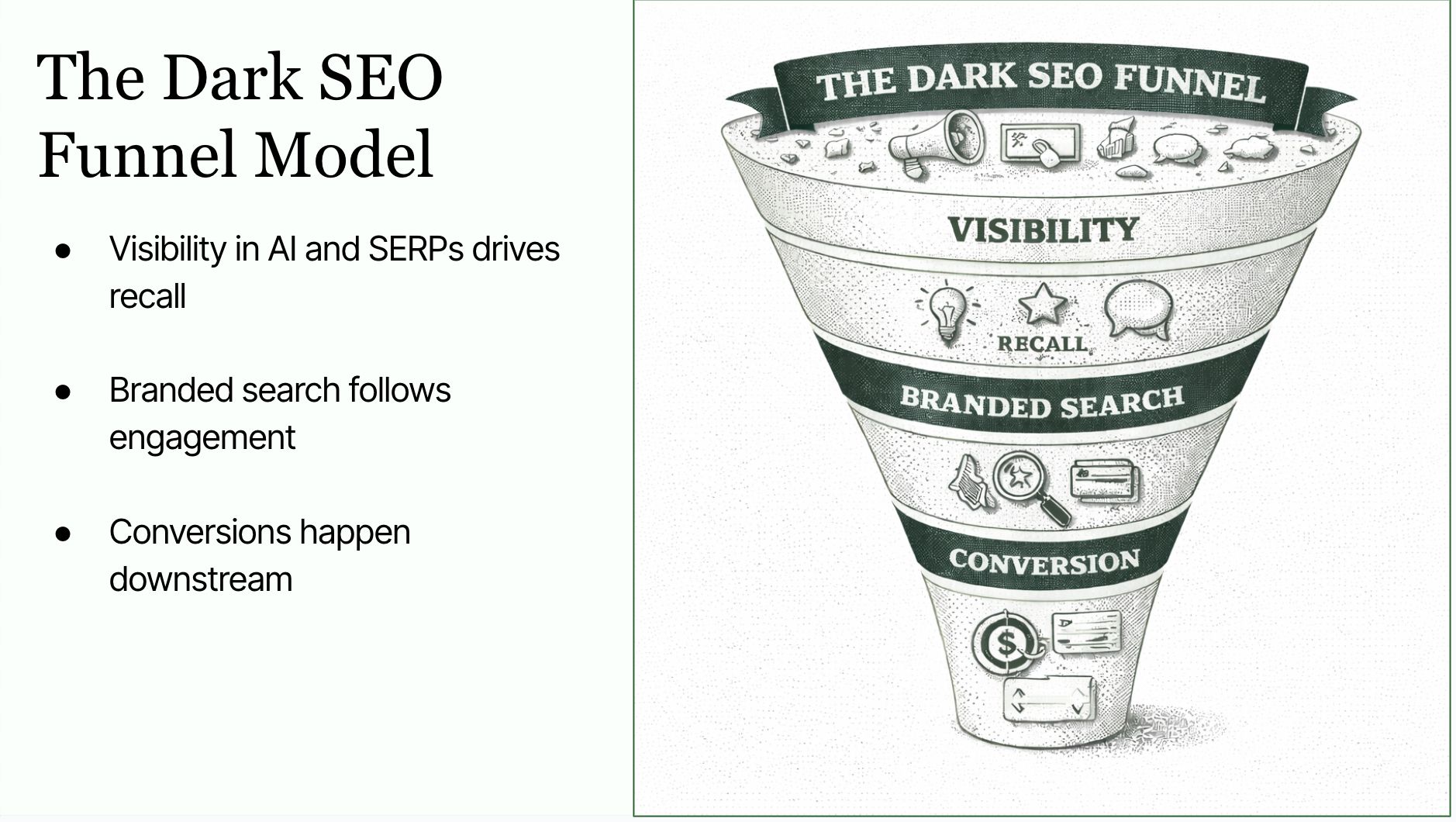
Why "Money Prompts" Matter More Than Search Volume
If you're measuring AI visibility using generic informational prompts, you'll get the wrong read.
Because a lot of prompts that look "big" are actually low intent.
The shift Gaetano described is simple: instead of trying to "rank for everything," content teams should prioritize the prompts that actually influence evaluation and purchase decisions.
These are the prompts your buyers ask when they're:
- evaluating vendors
- comparing options
- looking for a workflow, tool, or service provider
- deciding what to trust
They're grounded, high intent, and commercially meaningful.
Examples (conceptually):
- "Best tool for scaling programmatic SEO"
- "What platform helps content teams build AI workflows?"
- "Alternative to ___ for content operations"
- "How do teams automate content briefs and refreshes?"
This is where Gaetano's concept of grounded prompts comes in. When you track the right prompts, you start to see which brands are being sourced and which brands are being recommended:
AI Answers Are Volatile, So Your Visibility Has to Be Tracked Continuously
In classic SEO, rankings moved slowly enough that weekly reporting worked. In AI search, the ground shifts constantly.
Sources rotate in and out. Answers get rewritten. Citations disappear even when content hasn't changed.
That volatility creates a new operational requirement.
You can't treat AI visibility like a quarterly audit.
You need monitoring that behaves more like:
- brand tracking
- competitive intelligence
- continuous QA
Because your visibility can drop without a traffic decline until it's too late.
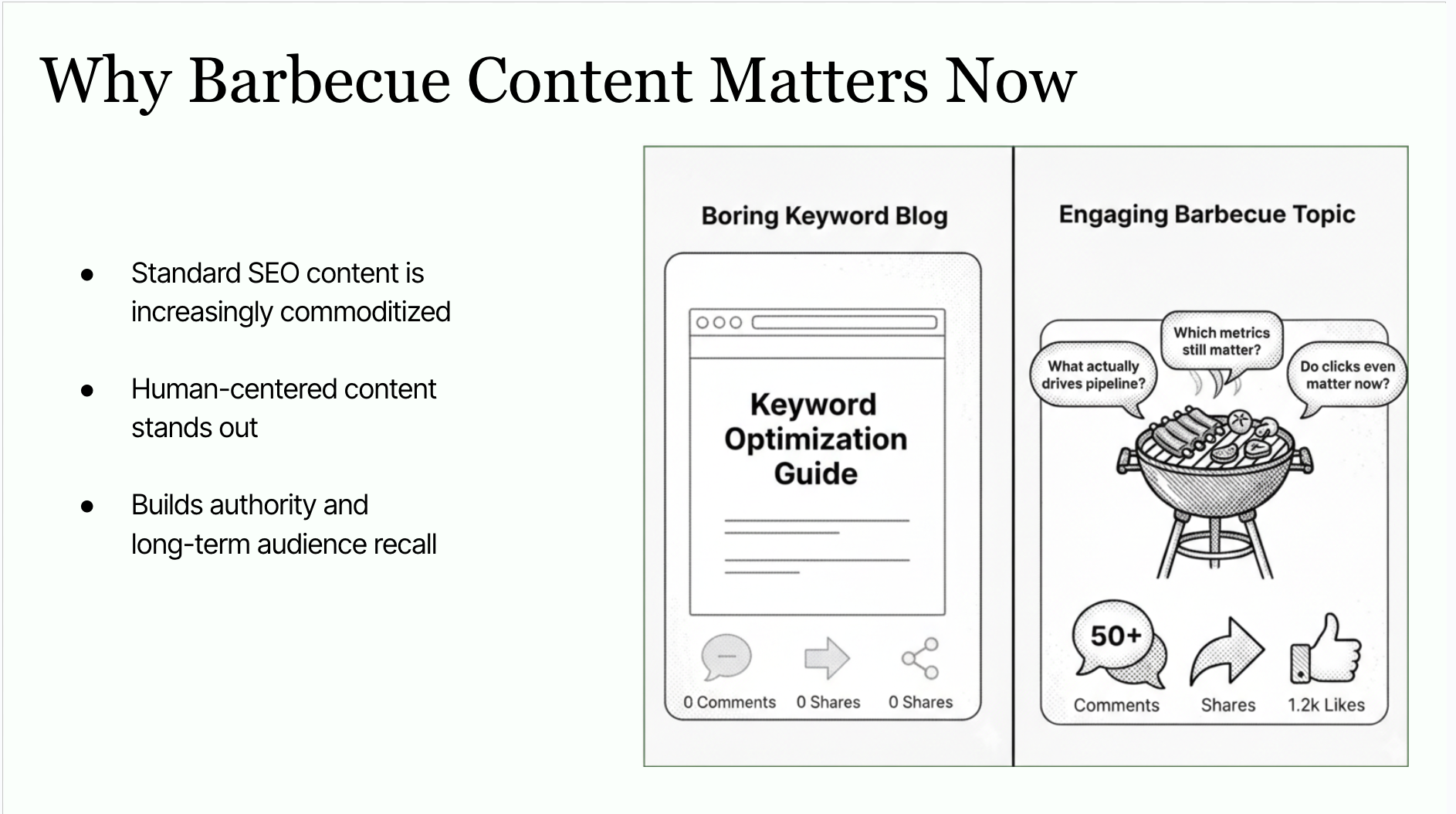
"Barbecue Content" Is How You Stand Out When Everyone Has the Same Ingredients
Most content today is like showing up to a barbecue with the same grocery-store ingredients as everyone else.
Same:
- generic advice
- recycled best practices
- safe takes
- "SEO checklist" content
But the brands that win now do something different.
They bring the topics that everyone is talking about at a barbecue.
Meaning:
- original insights
- real experience
- sharp POV
- specific frameworks
- things AI can't synthesize from 10 competing blogs
Because when AI compresses the top-of-funnel, differentiation moves upstream.
If your content sounds like everyone else's, you don't just lose rankings. You lose recommendation power.
And that's how you get replaced in AI answers by:
- bigger brands
- stronger POVs
- more memorable positioning
What This Means for Content and SEO Teams in 2026
If you're leading organic growth right now, your job is expanding.
You're not just responsible for:
- rankings
- traffic
- conversions
You're now responsible for presence in the buyer's AI layer, the layer that increasingly determines what options even make it into consideration.
Here's the modern operating model this webinar points toward:
1) Track traffic and AI visibility
Don't abandon clicks. Just stop pretending clicks are the only proof of performance.
2) Separate citations from mentions
They're different signals with different strategies.
3) Build a "money prompt" map
A smaller set of high-intent prompts will outperform 1,000 low-intent ones.
4) Monitor volatility like a new category of SEO
AI answers change fast. Treat visibility as something you manage continuously.
5) Invest in "barbecue content"
If you want to be recommended, you need to be memorable.
Want to Measure Mentions, Citations, and AI Visibility Automatically?
This is exactly what we're building at AirOps. We help content and SEO teams move from traffic reporting to AI-first visibility tracking, so you can:
- monitor citations and mentions
- track your money prompts
- see where competitors show up
- tie visibility to outcomes that actually matter
AirOps is the partner for this shift, bringing the platform, the media mix, and a hands-on team together to build and run the strategy alongside yours, and tie it back to pipeline and revenue.
If you want to see what that looks like in practice, book a demo and we'll walk you through it.
Get the latest on AI content & marketing
