Conductor monitors AI search. AirOps builds the system that turns visibility into revenue.
- See how your content performs across AI search and Google in one unified view per URL, with real Google Search Console (GSC) clicks and Google Analytics 4 (GA4) engagement data instead of estimates
- Scale content operations with bulk workflows, direct publishing to 9 CMS platforms, and Quill, AirOps' AI agent captain, running Playbooks your team designs
- Govern every piece of content with Brand Kits and Knowledge Bases while 30+ native integrations keep your entire stack connected from day one

Webflow 5xed content refresh velocity and increased visibility across Google and ChatGPT

Webflow 5xed content refresh velocity and increased visibility across Google and ChatGPT
Webflow 5xed content refresh velocity and increased visibility across Google and ChatGPT

Chime went from being recommended in 24 to 68 priority questions


George Bonaci VP of Growth, Ramp

Nicole Baer, CMO, Carta


50% cut in production costs, thanks to the elimination of external agencies and manual tasks.

Marcio Arnecke, CMO, Apollo















Why Customers Choose AirOps to Go Beyond Visibility
Watching trends while traffic slips away is not a winning strategy. Only AirOps gives you the system to produce quality content that earns citations.
and agents alike
Get prime placement in AI Search by improving the structure, clarity, and quality of your content.
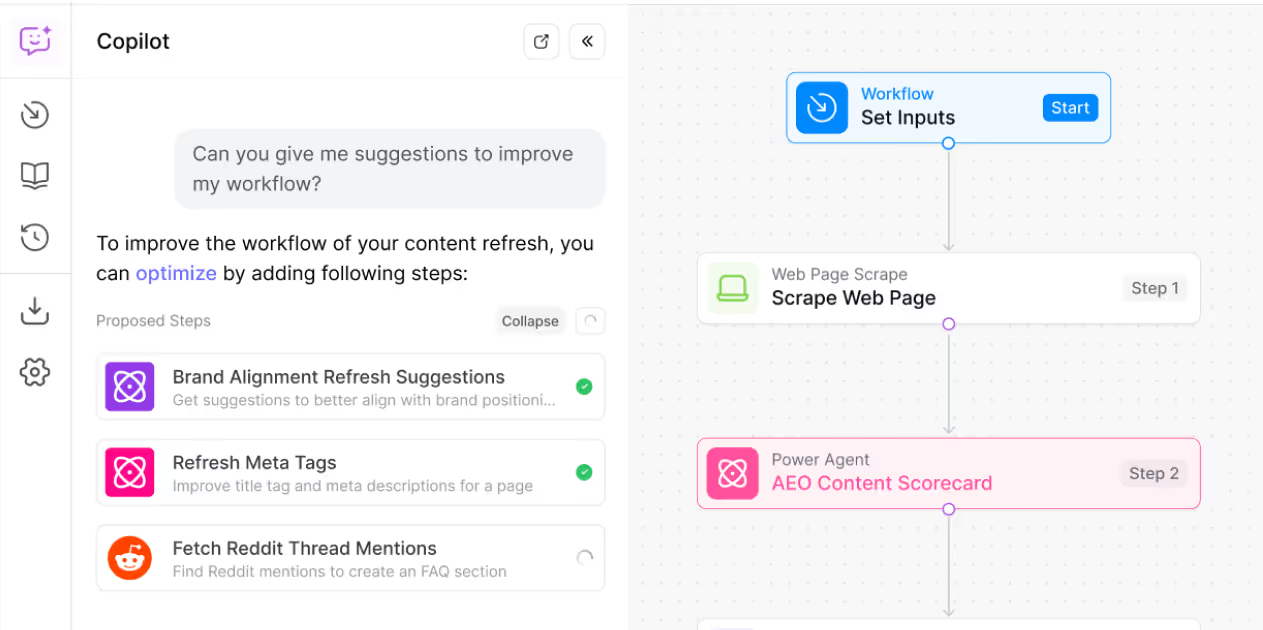
Brand Kits
Create content that sounds like your brand by weaving in your brand voice, personas, and expertise.
Our experts help brands like Carta and Rippling build workflows and train their teams to move faster with confidence.

What sets AirOps apart from Conductor
AirOps connects what you measure to what you publish, so performance compounds with each workflow your team runs. Conductor brings strong AI visibility tracking and a 10-year proprietary data engine, but execution stops at a Writing Assistant with annual draft caps and publishing limited to Drupal. AirOps pairs that same depth of visibility with Workflow Studio for multi-step content pipelines, Grids for bulk operations across thousands of pages, Quill for autonomous execution, and external content for third-party citation building. The result is a partnership that pairs the platform with a team of experts who set and execute your AI search strategy across owned content and external content, with strategy, intelligence, and measurement for AI ads, community, and social and influencer. Your team can spot a gap, fix it at scale, publish it to any CMS, and measure what it moved.

What our customers are saying
“AirOps is unlike any other AI tool we’ve seen. We’ve been able to drop our agency and focus on the highest value initiatives in weeks”

Nick Fairbain
VP Growth Marketing, Chime
“Our brand visibility score hit a high of 28% after we refreshed content. We saw a 56% increase in subscriptions in 30 days that corresponds to content engineered for agents."

George Bonaci
VP of Growth and Demand, Ramp
“With AirOps, we grew AI-attributed signups from 2% to over 10% in under a year with zero headcount growth. Just sharper workflows and faster loops.”

Josh Grant
VP of Growth, Webflow
AirOps vs. Conductor
Which platform is right for your team?
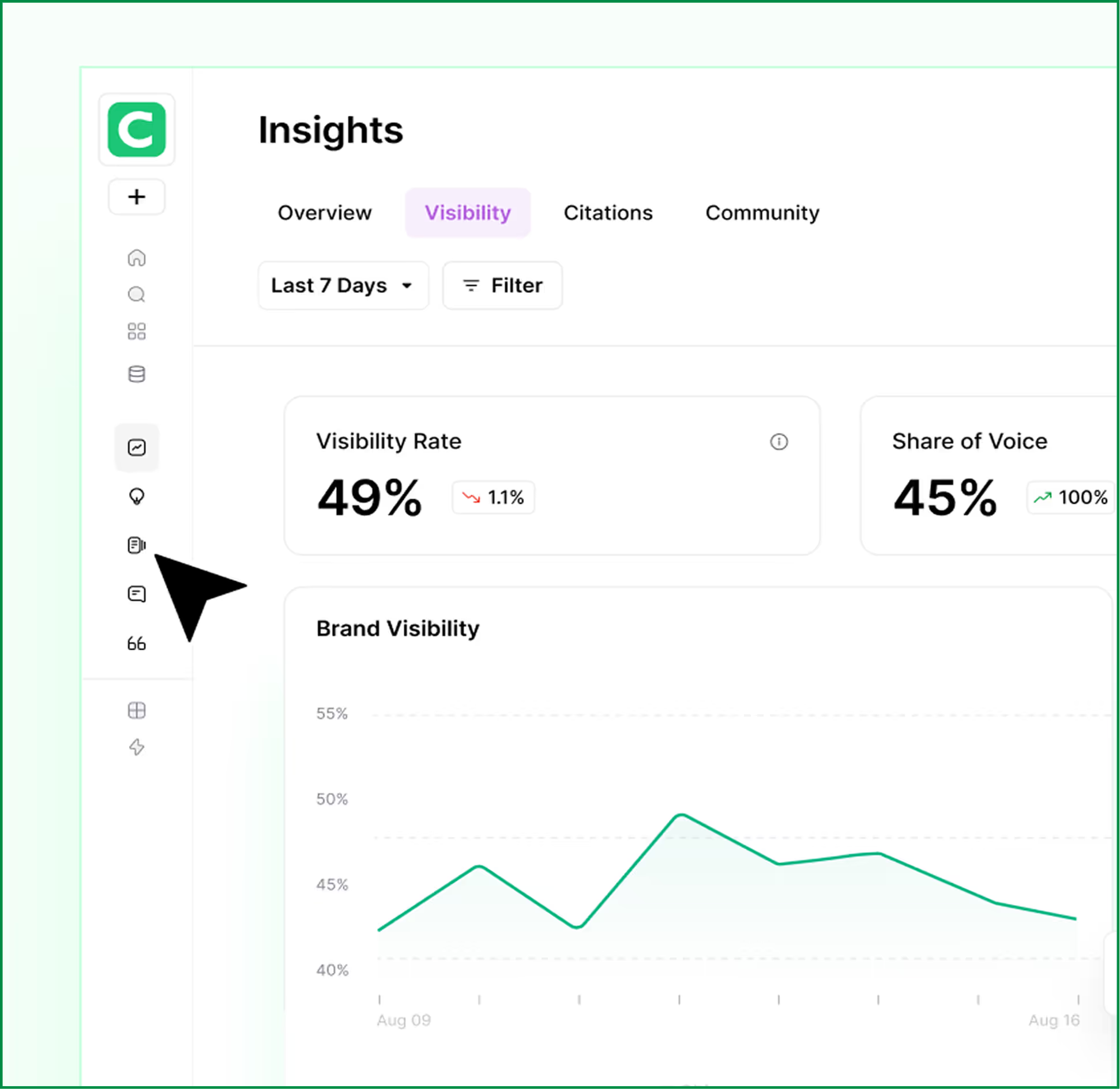
Track visibility across AI search
AirOps gives you a single prioritized view per URL that combines AI search citations, GSC clicks, GA4 engagement, and content freshness in one dashboard. Conductor tracks AI visibility across six platforms and provides strong competitive benchmarking, but its analytics live in separate products (Intelligence, formerly Conductor Searchlight, plus Creator and Monitoring) that require stitching together manually. Page360 eliminates that gap by surfacing real traffic data alongside AI visibility so your team can prioritize the pages that will move pipeline, not the pages that look busy in isolation.
Content creation, refresh and publishing workflows
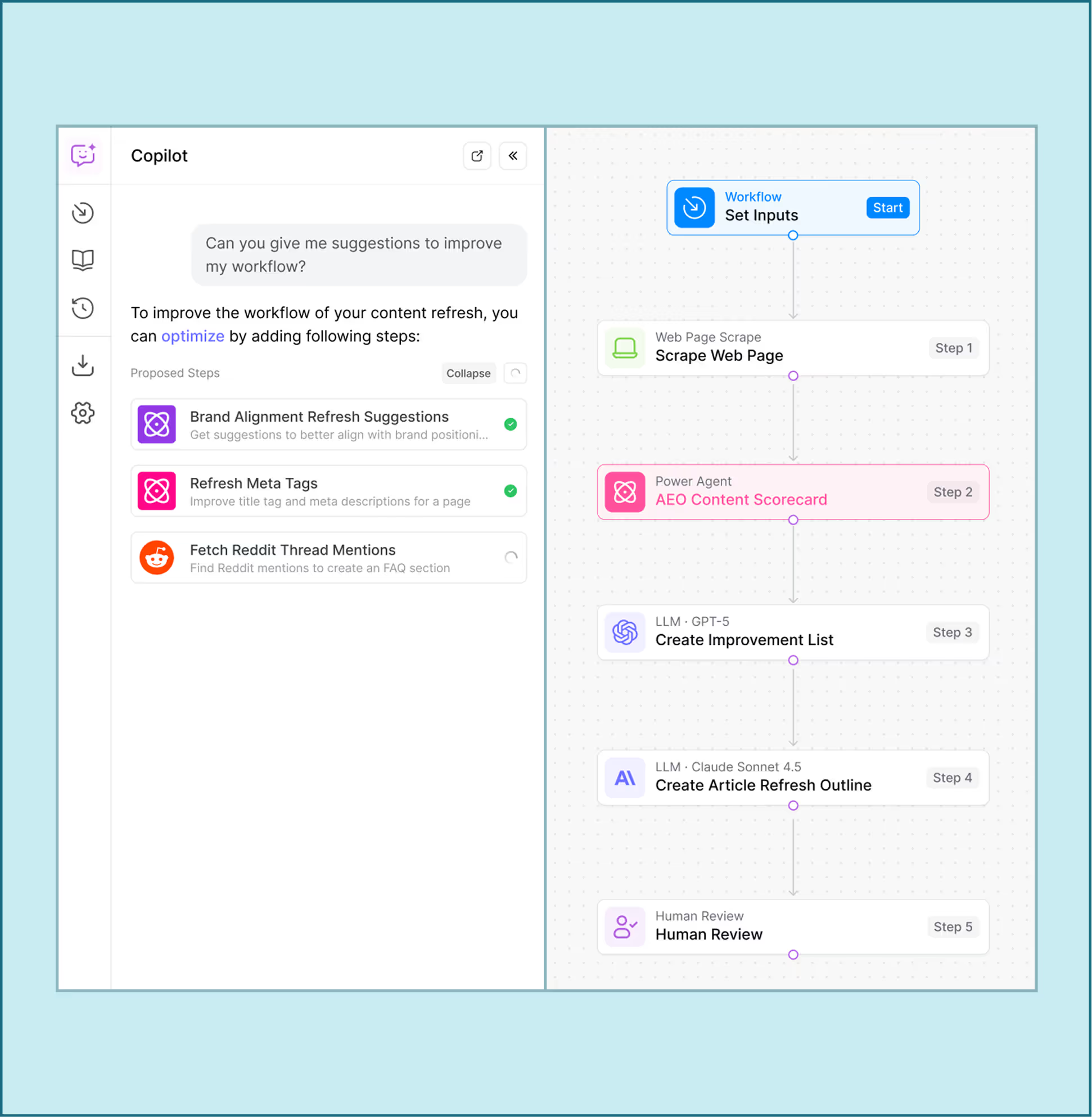
AirOps lets your team go from identifying a content gap to publishing the fix without leaving the platform. Conductor's Writing Assistant generates drafts from search insights but caps output at 60, 180, or 600 drafts per year depending on tier, and publishing is limited to Drupal. AirOps native Workflow Studio and Grids let teams orchestrate complex content operations at scale without technical handoffs. The AirOps team sets the strategy with you. Quill runs the execution.
Native integrations
AirOps connects your entire stack from day one with 30+ native integrations spanning 9 CMS platforms, data warehouses like Snowflake and BigQuery, SEO tools, and project management software. Conductor offers roughly 12 integrations with CMS coverage limited primarily to Drupal and no data warehouse connections. AirOps also exposes 38+ tools through its MCP server, so your team can access Brand Kit context, Insights data, and workflow triggers from any MCP-compatible environment including Claude.
SEVERAL CMS platforms
(Webflow, Contentful,
WordPress, Ghost,
and more)
Email and live chat support
AirOps pairs you with Solutions Architects who build workflows alongside your team and own your implementation. Conductor offers 24/7 chat and email support under standard SLA terms with expert-led onboarding through Conductor Academy. Where Conductor trains your team on the platform, AirOps builds the system with you, then works alongside your team from strategy through execution while your team builds lasting capability through live cohort trainings and the Content Engineering Certification.
300+ Content Engineers
trained to date with AirOps University

How Chime Increased AI Search Citations 3x with AirOps
Frequently Asked Questions
AirOps vs Profound: Which is better?
Which is better: AirOps or Conductor?
AirOps is better for teams that need a partner to turn AI visibility data into published content at scale. Conductor is better suited for teams that prioritize deep historical trend analysis and 24/7 site monitoring across a mature SEO program.
Conductor brings a 10-year proprietary data engine and Forrester Wave Leader recognition (2025), backed by ISO 42001 certification for AI quality. Its Intelligence product tracks AI search performance across ChatGPT, Gemini, Perplexity, Copilot, Claude, and Google AI Overviews (AIO).
Where Conductor stops is execution. AirOps adds visual workflow building, bulk operations via Grids, direct CMS publishing to 9 platforms, Brand Kits for content governance, and Quill, AirOps' AI agent captain, to close the loop between what you see and what you ship.
What features does AirOps offer that Conductor does not?
AirOps offers several capabilities Conductor lacks:
Quill, AirOps' AI agent captain, for autonomous content creation and refresh Playbooks that report back against your visibility metrics
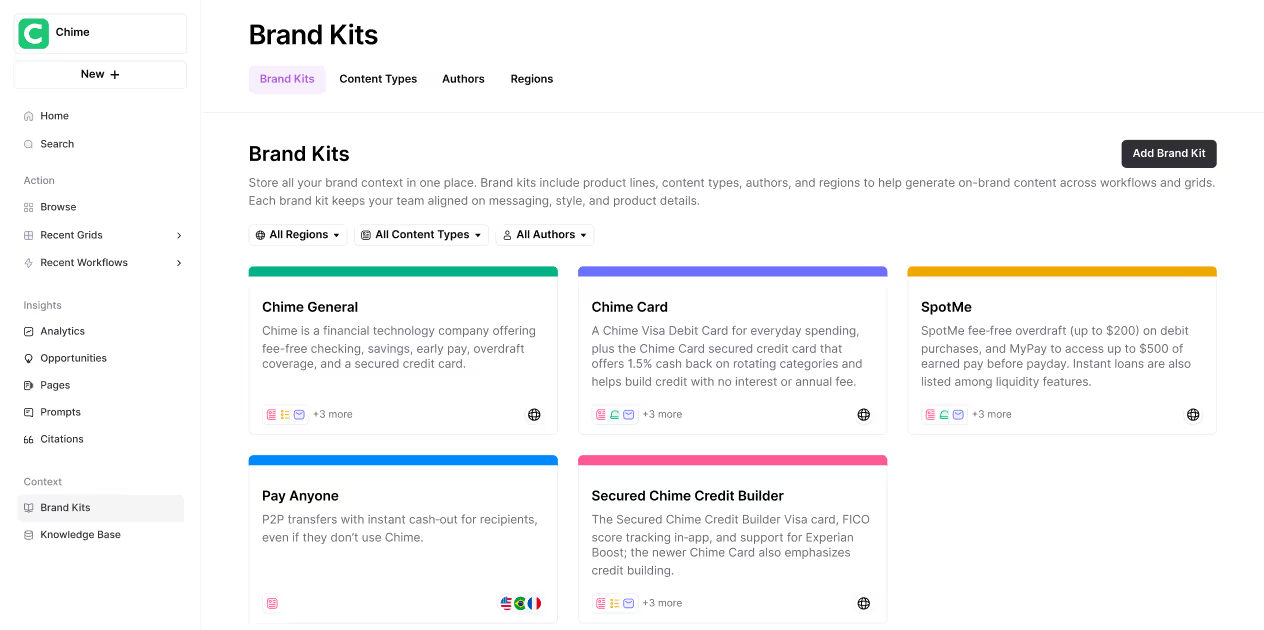
Copilot for conversational AI assistance within the platform to answer questions, pull data, and trigger workflows on demand
Page360 unified view for combining AI search citations, GSC clicks, GA4 engagement, and content freshness into a single per-URL dashboard
Prompt Discovery for mining high-value questions from four intent sources (People Also Ask (PAA), search suggest, AI engine queries, and synthetic generation) instead of synthetic generation alone
Grids for bulk operations across hundreds of content pieces in a single run
Brand Kits for centralized content governance across audiences, regions, product lines, and visual foundations
AirOps MCP with 38+ tools for accessing Brand Kit context, Insights data, and workflow triggers from any MCP-compatible environment
External content for earning placements in the third-party sources AI already trusts to grow your brand's AI search share of voice
Query Fan-outs for revealing the sub-queries AI engines run behind each prompt so you can optimize for the full intent chain
Closed-loop execution that ties every content action back to AI visibility and search performance changes, so your team sees what shipped and what it moved
Does Conductor automate content fixes, or does it stop at recommendations?
Conductor identifies content gaps through its AI Topic Map and Content Guidance tools, then generates drafts with its Writing Assistant. But execution stops there. Publishing is limited to Drupal with no bulk operations support, and custom multi-step workflows require external tools.
AirOps runs the full loop. Workflow Studio lets your team build multi-step pipelines that pull from Insights, generate or refresh content with Brand Kit governance, route it through human review, and publish directly to any of 9 CMS platforms. Conductor shows you what needs fixing; AirOps builds the system that fixes it at scale.
How do AirOps workflows differ from Conductor's automation?
Conductor offers Turnkey Agents (a Content Agent and a Technical Agent) that handle fixed-function tasks like generating a draft or flagging a technical issue. These agents follow preset paths and cannot be customized into multi-step sequences. LLM Apps and MCP Server are add-ons at every pricing tier.
AirOps Workflow Studio is a visual builder where your team designs multi-step content pipelines with conditional branching, loops, human-in-the-loop review checkpoints, and code execution steps. Grids let you run those workflows in bulk across hundreds of rows. You can publish directly to 9 CMS platforms and connect 30+ integrations without leaving the platform. Quill, AirOps' AI agent captain, runs the Playbooks your team designs and reports results back against the metrics you set.
How does AirOps track AI search visibility compared to Conductor?
Both platforms track visibility across the same major AI engines: ChatGPT, Gemini, Perplexity, Google AI Mode, and Google AIO. Conductor also covers Copilot and Claude, giving it an edge on raw platform count with six-plus engines tracked.
The difference is how that data connects to your content operation. Conductor's AI metrics live in Intelligence, while content performance sits in Creator and site health in Monitoring. Your team stitches those views together manually.
AirOps Page360 combines AI search citations, GSC clicks, GA4 engagement, and content freshness into a single per-URL view. A page losing AI citations but gaining organic traffic signals a different action than a page declining across both channels simultaneously. That unified signal is what makes prioritization possible without spreadsheet gymnastics.
Can AirOps replace Conductor and my content creation tools?
Yes. AirOps replaces multiple tools by combining daily AI visibility tracking, visual workflow orchestration, bulk content operations through Grid, native CMS integrations, Brand Kits, Knowledge Bases, and team collaboration in one system, backed by a team of experts.
Teams using Conductor still need separate tools for visual workflow automation (no native builder), bulk programmatic operations (API/MCP for external agents), and connecting to modern CMS platforms beyond Drupal/Acquia. Conductor positions itself as the "Command Center" for observation. AirOps is the partner for execution.
What is the pricing difference between AirOps and Conductor?
Conductor does not publish specific dollar amounts, but third-party estimates (Vendr) place mid-market contracts at $40,000 to $70,000 per year, with enterprise deals at $100,000 to $180,000 or more. Writing Assistant draft caps (60, 180, or 600 per year) are baked into each tier. LLM Apps and MCP Server are add-ons at every level, with Data API included only at Enterprise.
AirOps scopes each partnership to your funnel and opportunity and meets your team where it is, whether you are just starting with AI search or running an advanced program.
The total cost of ownership difference compounds when you factor in the tools Conductor does not replace. Teams running Conductor still need separate subscriptions for workflow automation, bulk content operations, multi-CMS publishing, and external content management. AirOps combines visibility tracking, content workflows, and publishing in one partnership.
How hard is Conductor to operationalize day to day?
Conductor requires significant configuration to operationalize beyond individual page analysis. Third-party reviews cite a steep learning curve and "clunky" UI due to platform breadth. Bulk operations require API integration work, workflow automation relies on linear handoffs to external tools (Jira/Asana), and there is no native visual builder for custom automation. Daily rank tracking requires specific configuration (weekly is default). Conductor mitigates complexity through expert-led onboarding and 24/5 support.
AirOps excels at operational speed, with Workflow Studio for visual pipeline building, Grids for bulk execution, 9 native CMS integrations, Page360 for unified analytics, and Power Agents for reusable workflow components. Conductor tells you what to optimize; AirOps provides the team and the platform to execute at scale.
Does Conductor support Answer Engine Optimization the way AirOps does?
Conductor has invested heavily in AI search visibility and offers strong tracking across six-plus AI platforms with competitive benchmarking, sentiment analysis, and share-of-voice reporting. For teams whose primary need is monitoring how their brand appears in AI search results, Conductor covers that well.
Where the two platforms diverge is what happens after monitoring. Answer Engine Optimization (AEO) as AirOps defines it is a closed loop: measure visibility, take action on gaps, publish optimized content, and track what it moved. AirOps includes Prompt Discovery for finding the questions buyers ask across four sources, Campaigns for prioritizing which gaps to close first, Quill for executing content at scale, and Content Publish Tracking for correlating every publish event with visibility changes.
Conductor gives you the first part of that loop. AirOps runs the full cycle and feeds results back so performance compounds over time. The question for your team is whether you need a system of record or a system of action.
What is Conductor, the AEO platform?
Conductor is an enterprise SEO and AEO platform that tracks how brands appear across AI search and organic results. It pairs a 10-year proprietary data engine with competitive benchmarking, sentiment analysis, and share-of-voice reporting. Many teams adopt Conductor for monitoring, though execution runs through separate products.
Does Conductor integrate with CRM and marketing tools?
Conductor offers roughly 12 integrations, and its marketing CRM coverage stays limited next to modern content platforms. It provides no native data warehouse connections, so AEO, CRM, and pipeline data often sit in separate systems. AirOps connects 30+ integrations across CMS platforms, data warehouses, and marketing tools so your stack stays unified.
Does Conductor connect content to pipeline and demand generation?
Conductor reports ranking and visibility metrics, but it does not tie content directly to pipeline or demand generation attribution. Teams that want AEO pipeline metrics and ROI must export data and model attribution in other tools. AirOps Page360 links AI citations, GSC clicks, and GA4 engagement per URL so teams can prioritize the pages that move pipeline.
AirOps for teams comparing Conductor
Conductor shows your team where you stand in AI search. AirOps turns that visibility into published content, then measures what it moved across AI search and organic results.
See the closed loop on your own pages with a personalized AirOps vs Conductor walkthrough.