Search Atlas covers the breadth of SEO. AirOps builds the content engine that wins AI search and SEO.
- See how your brand shows up across AI search and Google in a single unified dashboard that connects citations, organic performance, and engagement metrics per URL
- Scale content operations with multi-step workflows, bulk execution via Grids, and direct publishing to 7+ CMS platforms
- Ensure brand consistency at scale with centralized Brand Kits, Knowledge Bases, and human review gates built into every workflow

Webflow 5xed content refresh velocity and increased visibility across Google and ChatGPT

Webflow 5xed content refresh velocity and increased visibility across Google and ChatGPT
Webflow 5xed content refresh velocity and increased visibility across Google and ChatGPT

Chime went from being recommended in 24 to 68 priority questions


George Bonaci VP of Growth, Ramp

Nicole Baer, CMO, Carta


50% cut in production costs, thanks to the elimination of external agencies and manual tasks.

Marcio Arnecke, CMO, Apollo


















Why Customers Choose AirOps to Go Beyond Visibility
Watching trends while traffic slips away is not a winning strategy. Only AirOps gives you the system to produce quality content that earns citations.
and agents alike
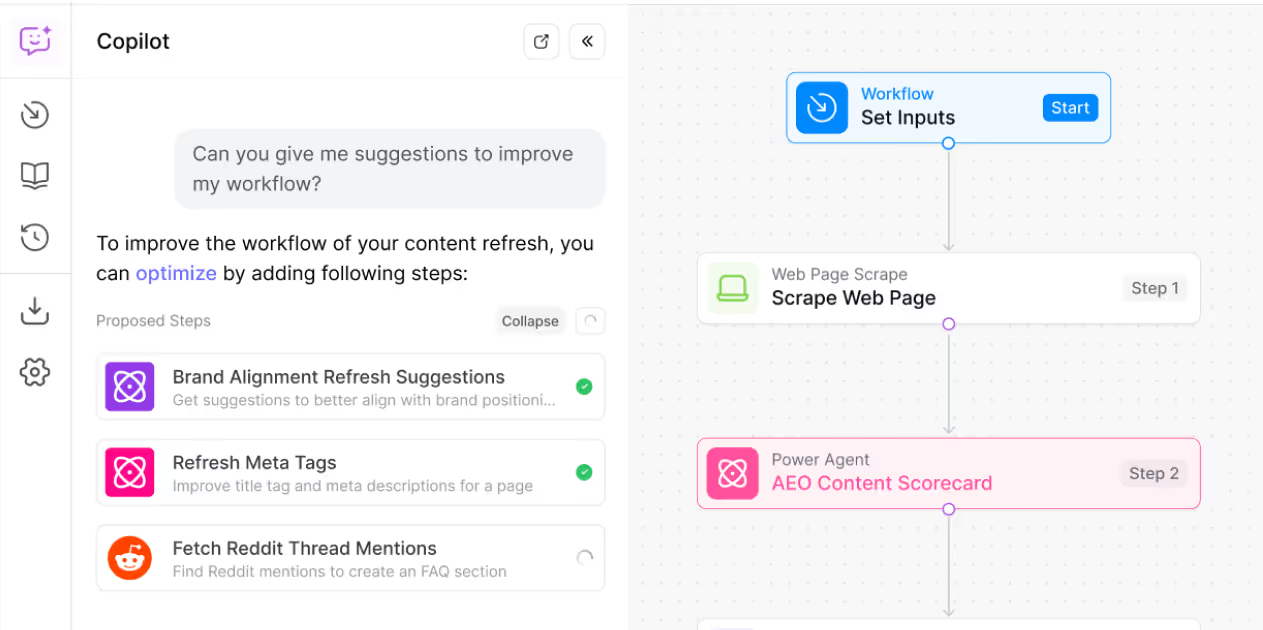
Get prime placement in AI Search by improving the structure, clarity, and quality of your content.
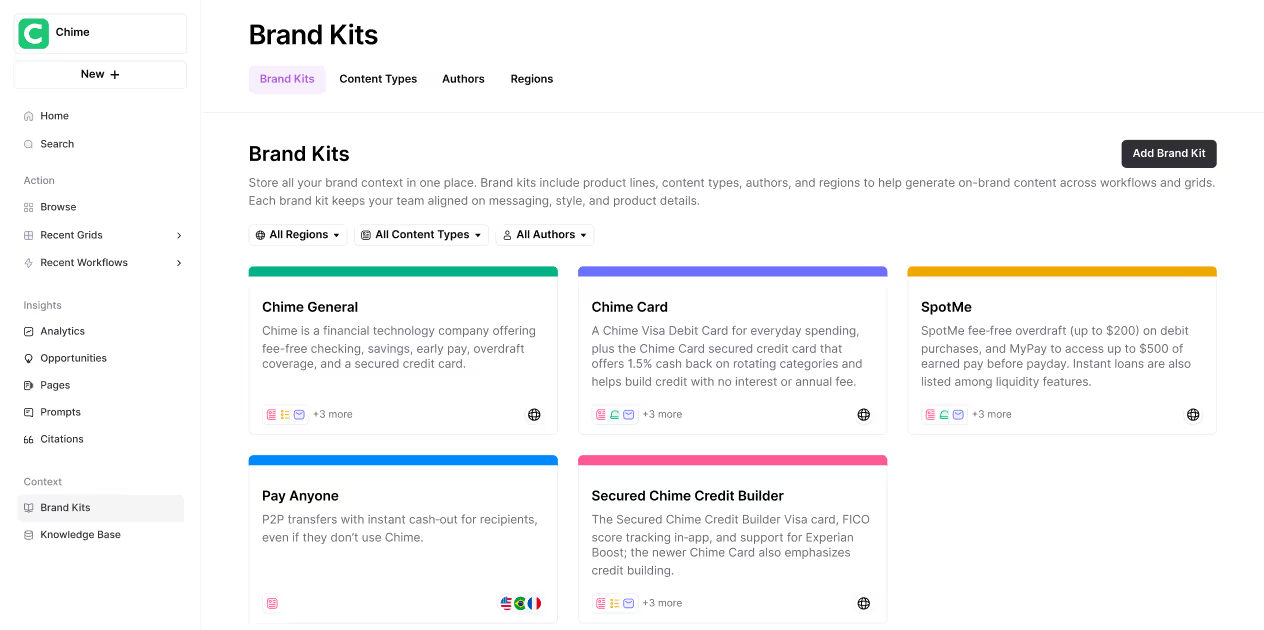
Brand Kits
Create content that sounds like your brand by weaving in your brand voice, personas, and expertise.
Our experts help brands like Carta and Rippling build workflows and train their teams to move faster with confidence.

What sets AirOps apart from Search Atlas
AirOps is built for teams that need to act on insights, not stop at measuring them. While Search Atlas covers a wide range of SEO capabilities from local search to link building, AirOps combines AEO analytics with content creation, refresh, and publishing workflows in a single closed-loop system. Your team can move from identifying a content gap to publishing an optimized page and measuring the result without leaving the platform. That closed loop of insight, action, and measurement is what compounds performance across AI search and SEO over time.

What our customers are saying
“AirOps is unlike any other AI tool we’ve seen. We’ve been able to drop our agency and focus on the highest value initiatives in weeks”

Nick Fairbain
VP Growth Marketing, Chime
“Our brand visibility score hit a high of 28% after we refreshed content. We saw a 56% increase in subscriptions in 30 days that corresponds to content engineered for agents."

George Bonaci
VP of Growth and Demand, Ramp
“With AirOps, we grew AI-attributed signups from 2% to over 10% in under a year with zero headcount growth. Just sharper workflows and faster loops.”

Josh Grant
VP of Growth, Webflow
AirOps vs. Search Atlas
Which platform is right for your team?
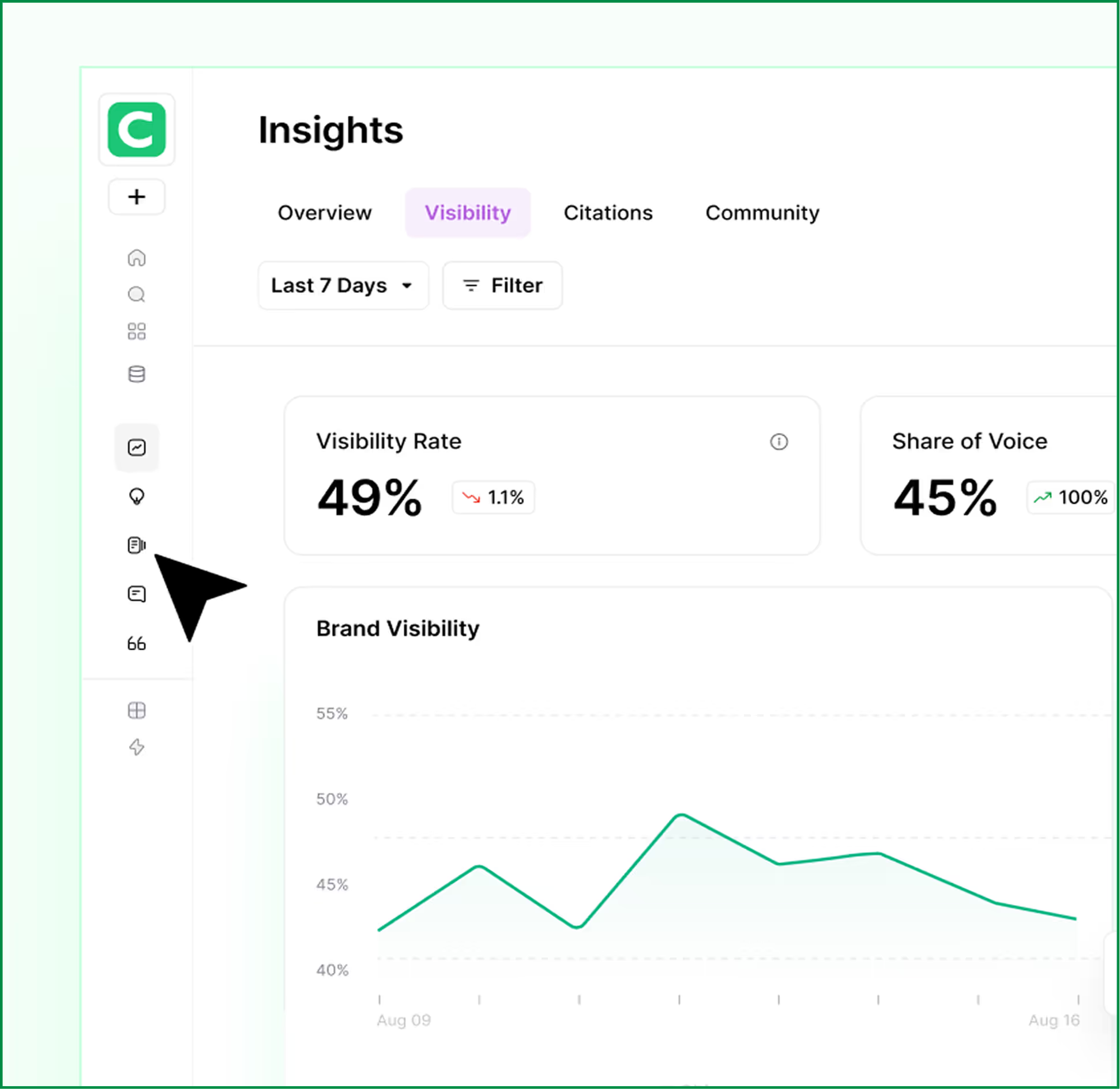
Track visibility across AI search
AirOps gives your team a complete picture of AI visibility and SEO performance in one place, combining Google Search Console (GSC) clicks, Google Analytics 4 (GA4) engagement, and AI citation data into a single prioritized view per URL through Page360. Search Atlas tracks LLM visibility across five AI platforms but does not connect that data to organic search or web analytics in a unified dashboard. AirOps also includes Prompt Discovery, which extracts the questions buyers are asking from four distinct intent sources, and Query Fan-outs, which reveal the sub-queries AI engines run behind each prompt.
Content creation, refresh and publishing workflows
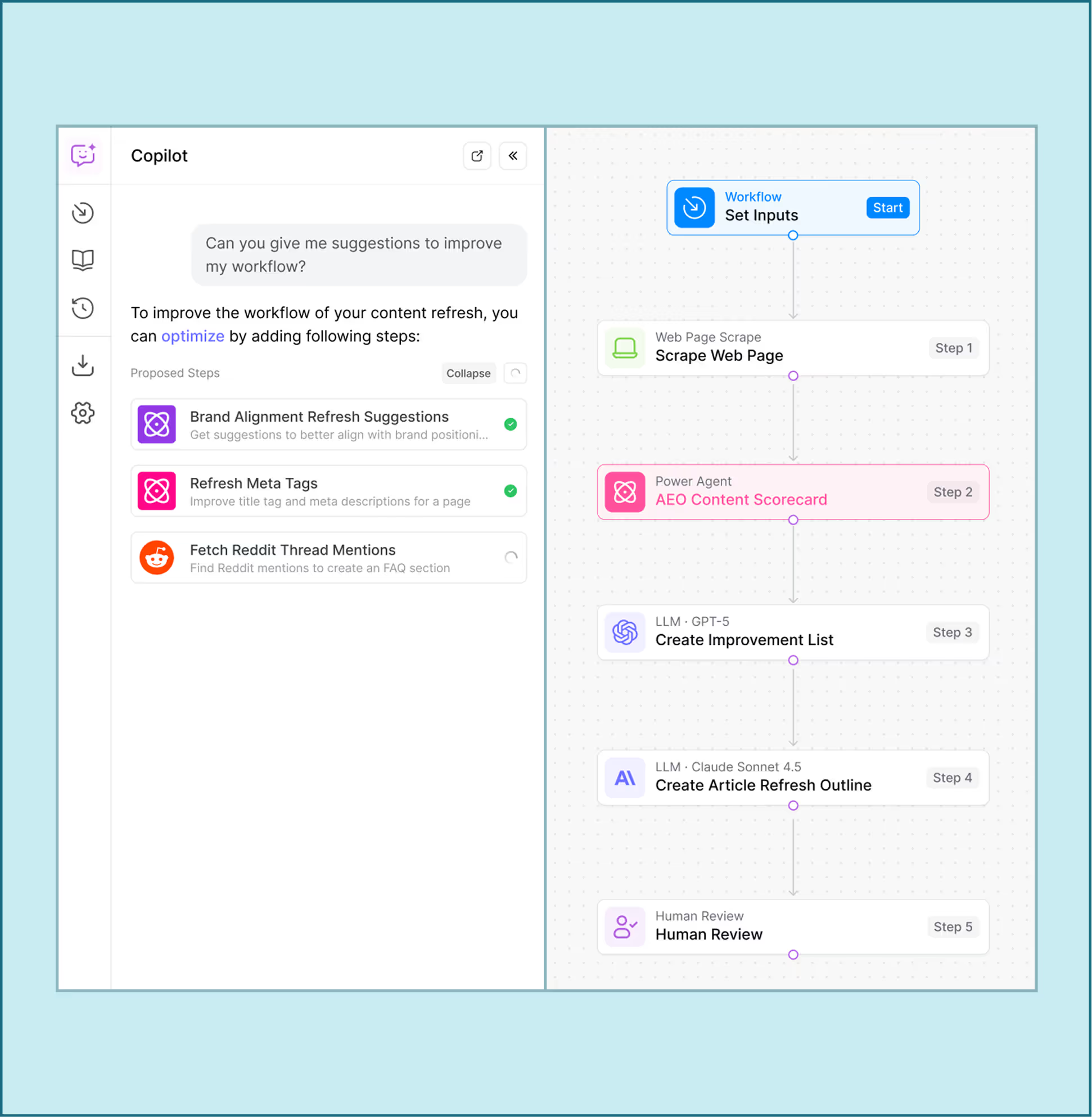
AirOps turns visibility gaps into published content through multi-step workflows that include conditional logic, Human Review gates, and direct CMS publishing across 7+ platforms. Search Atlas generates content through Content Genius and applies changes via its OTTO pixel, but lacks a workflow builder for orchestrating multi-step content operations at scale. With AirOps, your team sets the strategy. Quill runs the execution.
Native integrations
AirOps connects your entire stack through 30+ native integrations and MCP access to 38+ tools, including Salesforce, HubSpot, Notion, and Slack. Search Atlas integrates with approximately 10 CMS platforms via its pixel but does not offer connections to project management tools or data warehouses. AirOps functions as a central hub where CMS platforms, analytics tools, and collaboration software feed into the same workflows your team runs every day.
SEVERAL CMS platforms
(Webflow, Contentful,
WordPress, Ghost,
and more)
Email and live chat support
AirOps pairs responsive support with hands-on enablement designed to build lasting capability across your team. Search Atlas offers email and live chat support along with weekly webinars, but does not provide embedded solution architects or structured certification programs. AirOps Enterprise customers work directly with a dedicated Content Engineer and solution architect, and the Content Engineering Certification gives every team member the skills to operate the platform independently.
300+ Content Engineers
trained to date with AirOps University

How Chime Increased AI Search Citations 3x with AirOps
Frequently Asked Questions
AirOps vs Profound: Which is better?
Which is better: AirOps or Search Atlas?
AirOps is better for enterprise content teams that need to connect AI visibility insights to content workflows and measure the business impact of every piece they publish. Search Atlas is better suited for agencies and small-to-midsize businesses that want broad SEO coverage across local search, link building, PPC, and AI visibility tracking at a lower entry price starting at $99 per month.
Search Atlas offers genuine breadth, covering keyword research, backlink analysis, Google Business Profile (GBP) management through GBP Galactic, and AI content generation through Content Genius. Where it stops is connecting those capabilities into a system that orchestrates multi-step content operations at scale.
AirOps fills that gap with workflow automation, Brand Kits for governing content quality, and Page360 for unifying AI citations with organic search and engagement data per URL. Teams running AirOps can move from insight to published content to measured outcome inside one platform.
What features does AirOps offer that Search Atlas does not?
As an AI search visibility platform built for execution, AirOps offers several capabilities Search Atlas lacks:
Quill as the AI execution engine that runs Playbooks across content creation, refresh, and optimization campaigns
Copilot for conversational AI assistance inside AirOps workflows
Page360 for a unified per-URL view combining GSC clicks, GA4 engagement, and AI search citations
Prompt Discovery from four intent sources (search data, brand research, competitor analysis, and user intent)
Grids for bulk operations across hundreds of pages with direct CMS publishing
Brand Kits for centralized brand governance including tone, personas, writing rules, and visual assets
Knowledge Bases for semantic search over proprietary data like customer research, brand guidelines, and product documentation
AirOps MCP with 38+ tools connecting to platforms like Salesforce, HubSpot, Notion, and Slack
Offsite for managing third-party publisher placements and growing AI brand citation share
Query Fan-outs revealing the sub-queries AI engines run behind each prompt
Closed-loop execution that connects insight, action, and measurement in a single compounding system
Does Search Atlas execute content changes, or does it stop at recommendations?
Search Atlas does execute changes through its OTTO SEO pixel, which applies modifications at the JavaScript level on your site. Content Genius generates and rewrites content. The limitation is that OTTO pixel changes are applied through a JavaScript overlay rather than being published directly to your CMS, which means changes can revert when the pixel is removed or the subscription ends.
AirOps takes a different approach by publishing content directly to your CMS through workflow-driven pipelines. Your team identifies opportunities in Page360, builds multi-step workflows with Human Review gates, and publishes optimized content that persists permanently in your CMS. Search Atlas shows you what to change and applies temporary fixes; AirOps builds the system that publishes permanent content at scale.
How do AirOps workflows differ from Search Atlas automation?
Search Atlas automates content generation through Content Genius and site modifications through the OTTO pixel. These are powerful tools for individual page optimization, but they operate as standalone capabilities rather than steps in a customizable pipeline. There is no visual workflow builder for chaining actions together with conditional logic or approval gates.
AirOps Workflow Studio gives your team a visual builder with conditional branching, loops, Human Review checkpoints, and code execution steps. Grids enable bulk execution across hundreds of rows with direct CMS publishing to 7+ platforms. Every workflow connects to 30+ native integrations, and Brand Kits and Knowledge Bases feed context directly into each step so content stays on brand at scale.
How does AirOps track AI search visibility compared to Search Atlas?
Search Atlas tracks LLM visibility across five AI platforms: ChatGPT, Gemini, Perplexity, Google AI Mode, and Microsoft Copilot. AirOps tracks those same platforms plus Google AI Overviews, which is a growing channel that Search Atlas does not cover.
The bigger difference is in how each platform contextualizes that data. Search Atlas separates LLM visibility from its SEO tools, so your team needs to cross-reference dashboards to understand the full picture. AirOps connects AI citation data with GSC organic performance and GA4 engagement metrics in Page360, giving you a unified per-URL view.
A page losing AI citations while gaining organic traffic signals a different action than a page declining across both channels simultaneously. That kind of prioritization requires the unified view AirOps provides.
Can AirOps replace Search Atlas and my content creation tools?
Yes. As a full-stack AI SEO platform, AirOps replaces multiple tools by combining AI visibility tracking, workflow orchestration, bulk content operations, native CMS integrations, and team collaboration in one extensible platform.
Teams using Search Atlas still need separate tools for workflow automation beyond 1-click fixes, bulk operations without a Grid-like interface, data warehouse connections to BigQuery or Snowflake, custom integrations via public API, SEO research tool integrations like Semrush or Ahrefs, and project management connections to Asana, Notion, or ClickUp. AirOps handles all of this natively with unlimited seats on Pro and Enterprise plans, plus an open REST API and MCP Server for custom extensibility.
What is the pricing difference between AirOps and Search Atlas?
Search Atlas offers four self-serve tiers: Starter at $99 per month, Growth at $199, Pro at $399, and Agency at $999. LLM visibility tracking is not available on the Starter plan. OTTO SEO adds $49 to $99 per site per month on top of those base prices, which means managing 10 sites on the Agency plan could cost $1,490 to $1,990 per month.
AirOps offers a free Solo plan with 100 prompts and 20,000 tasks per month on ChatGPT. Pro and Enterprise plans are custom-priced based on task volume, with unlimited seats on both tiers. There are no per-site fees and no per-user charges.
The total cost of ownership comparison goes beyond sticker price. Search Atlas provides strong visibility and SEO research tools, but teams that need workflow automation, brand governance, and bulk CMS publishing still need separate subscriptions for those capabilities. AirOps combines visibility tracking and content workflows in one platform, which reduces the number of tools in your stack.
How hard is Search Atlas to operationalize day to day?
Search Atlas is designed for fast time-to-value. The OTTO pixel deploys in hours and starts applying optimizations immediately. Content Genius generates content with 15+ microagents and semantic grading. The platform handles individual page optimization and content generation well within its interface.
Scaling those operations across a large content portfolio is where friction increases. Search Atlas caps seats at 10 users, which limits cross-functional collaboration. There is no workflow builder for chaining tasks together, so bulk content operations require manual coordination. Analytics for AI visibility and SEO live in separate views.
AirOps is built for operational scale. Grids handle bulk execution across hundreds of pages. Workflow Studio chains tasks into automated pipelines with Human Review gates. Page360 unifies AI visibility and SEO analytics. Unlimited seats on Pro and Enterprise plans mean your entire team can work in the platform without per-user cost concerns.
Does Search Atlas track Google AI Overviews?
Search Atlas does not track Google AI Overviews as of June 2026. Its LLM visibility module covers five platforms: ChatGPT, Gemini, Perplexity, Google AI Mode, and Microsoft Copilot. Google AI Overviews is a significant gap given how frequently Google surfaces AI-generated answers at the top of search results.
AirOps tracks Google AI Overviews alongside those same five platforms, giving your team a more complete picture of where your brand appears in AI-generated responses. Prompt Discovery and Query Fan-outs add another dimension by revealing the questions and sub-queries that trigger those AI answers, so your team can optimize for the prompts that drive the most visibility.
Can AirOps pull data from Google Analytics for SEO insights?
Yes. AirOps connects to Google Analytics 4 (GA4) and pulls engagement data into Page360, where it sits alongside Google Search Console (GSC) clicks and AI citation data in one per-URL view. That unified view shows your team which pages drive traffic, which pages earn AI citations, and where SEO insights point to your next content opportunity.
Does AirOps have built-in content analytics dashboards?
Yes. Page360 is AirOps' built-in per-URL dashboard that unifies Google Search Console (GSC) clicks, Google Analytics 4 (GA4) engagement, and AI citation data in one prioritized view.
Search Atlas tracks LLM visibility across five AI platforms but keeps it separate from its SEO tools. AirOps connects all three data sources so you can act on the full picture without switching between reports.
GSC clicks, GA4 engagement, and AI citations unified per URL
Prioritized view surfaces pages that need attention first
No fragmented dashboards or manual data stitching
Content performance tied directly to AI visibility metrics
Is AirOps built for enterprise SEO or AI content marketing?
Both. AirOps is built for enterprise content teams that scale SEO and answer engine optimization (AEO) together, moving from insight to CMS-published content to measured outcome in one closed-loop system.
Search Atlas offers broader coverage across local search, link building, PPC, and rank tracking, suited to agencies and SMBs starting at $99 per month. AirOps combines AEO analytics with content creation, refresh, and publishing workflows for teams operating at enterprise scale.
Closed-loop system connecting insight, action, and measurement
Native CMS publishing to 7+ platforms
AEO analytics tied directly to content workflows
How does AirOps help agency teams collaborate?
AirOps offers unlimited seats on Pro and Enterprise plans, so your entire team can work inside the platform without per-user fees. Centralized Brand Kits enforce brand governance across every client, and Human Review gates let you approve content before it publishes.
Search Atlas caps seats at 10 users. AirOps also includes Knowledge Bases for shared context and Grids for bulk operations across hundreds of pages with direct CMS publishing.
Unlimited seats on Pro and Enterprise plans
Centralized Brand Kits for multi-client governance
Human Review gates in every workflow
Grids for bulk operations with direct CMS publishing