Adobe LLM Optimizer optimizes for AEM. AirOps builds content that wins in AI search and SEO.
- Identify opportunities, execute workflows, publish to seven CMS platforms natively.
- Full data exports, 20+ AI models, your API keys included.
- Analytics, workflow automation, and content publishing in one unified platform.

Webflow 5xed content refresh velocity and increased visibility across Google and ChatGPT


Chime went from being recommended in 24 to 68 priority questions


George Bonaci VP of Growth, Ramp

Nicole Baer, CMO, Carta


50% cut in production costs, thanks to the elimination of external agencies and manual tasks.

Marcio Arnecke, CMO, Apollo


















Why Customers Choose AirOps to Go Beyond Visibility
Watching trends while traffic slips away is not a winning strategy. Only AirOps gives you the system to produce quality content that earns citations.
and agents alike
Get prime placement in AI Search by improving the structure, clarity, and quality of your content.
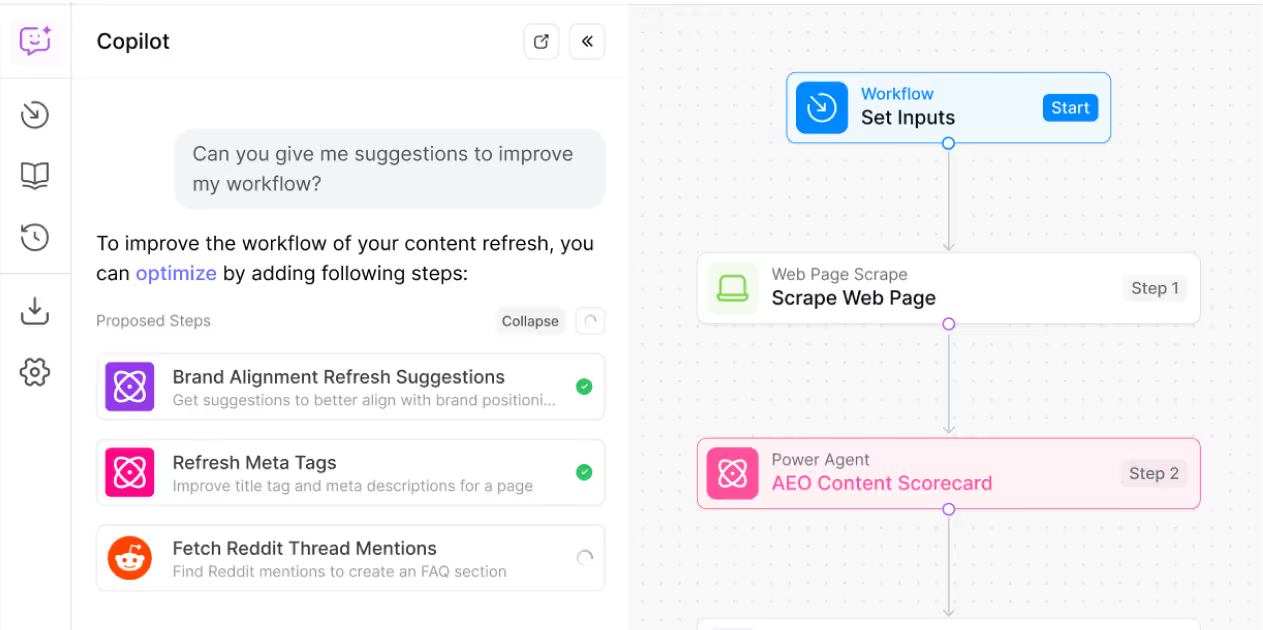
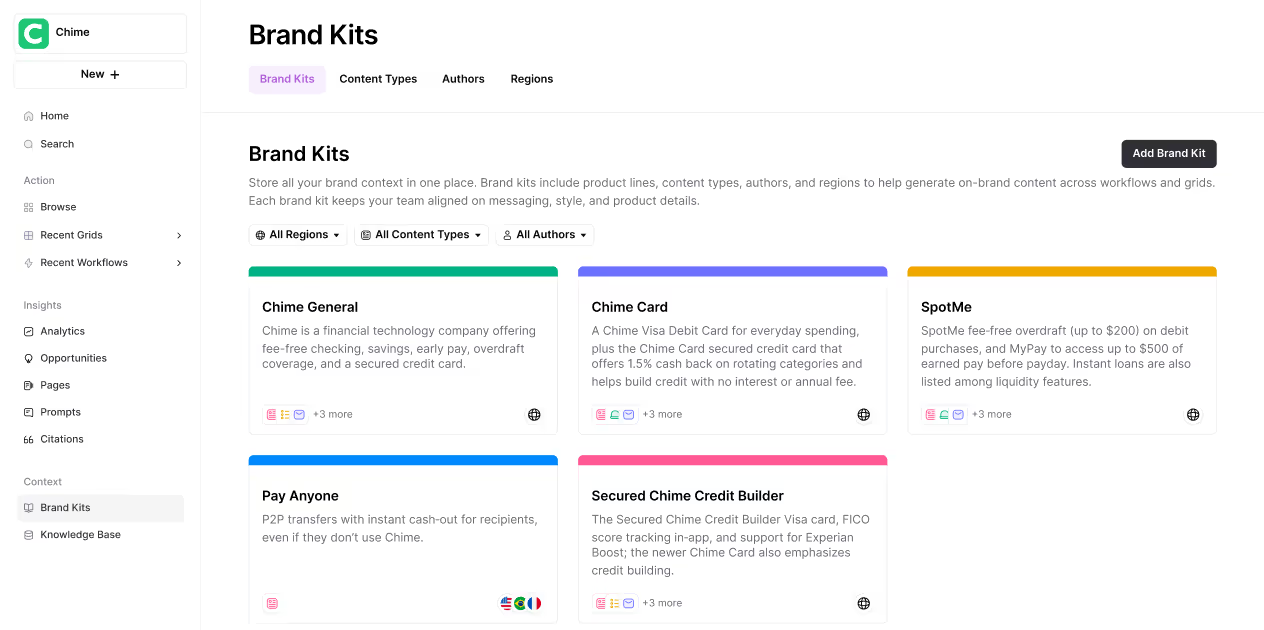
Brand Kits
Create content that sounds like your brand by weaving in your brand voice, personas, and expertise.
Our experts help brands like Carta and Rippling build workflows and train their teams to move faster with confidence.

What sets AirOps apart from Adobe LLM Optimizer
AirOps is built to help teams execute content operations at scale, not just track visibility. While Adobe LLM Optimizer provides AI search analytics and optimization suggestions primarily for Adobe Experience Manager users, AirOps combines unified analytics with multi-step workflow orchestration and bulk content operations so teams can continuously create, refresh, and optimize performance across AI search and SEO in one system without platform switching.

What our customers are saying
“AirOps is unlike any other AI tool we’ve seen. We’ve been able to drop our agency and focus on the highest value initiatives in weeks”

Nick Fairbain
VP Growth Marketing, Chime
“Our brand visibility score hit a high of 28% after we refreshed content. We saw a 56% increase in subscriptions in 30 days that corresponds to content engineered for agents."

George Bonaci
VP of Growth and Demand, Ramp
“With AirOps, we grew AI-attributed signups from 2% to over 10% in under a year with zero headcount growth. Just sharper workflows and faster loops.”

Josh Grant
VP of Growth, Webflow
AirOps vs. Adobe LLM Optimizer
Which platform is right for your team?
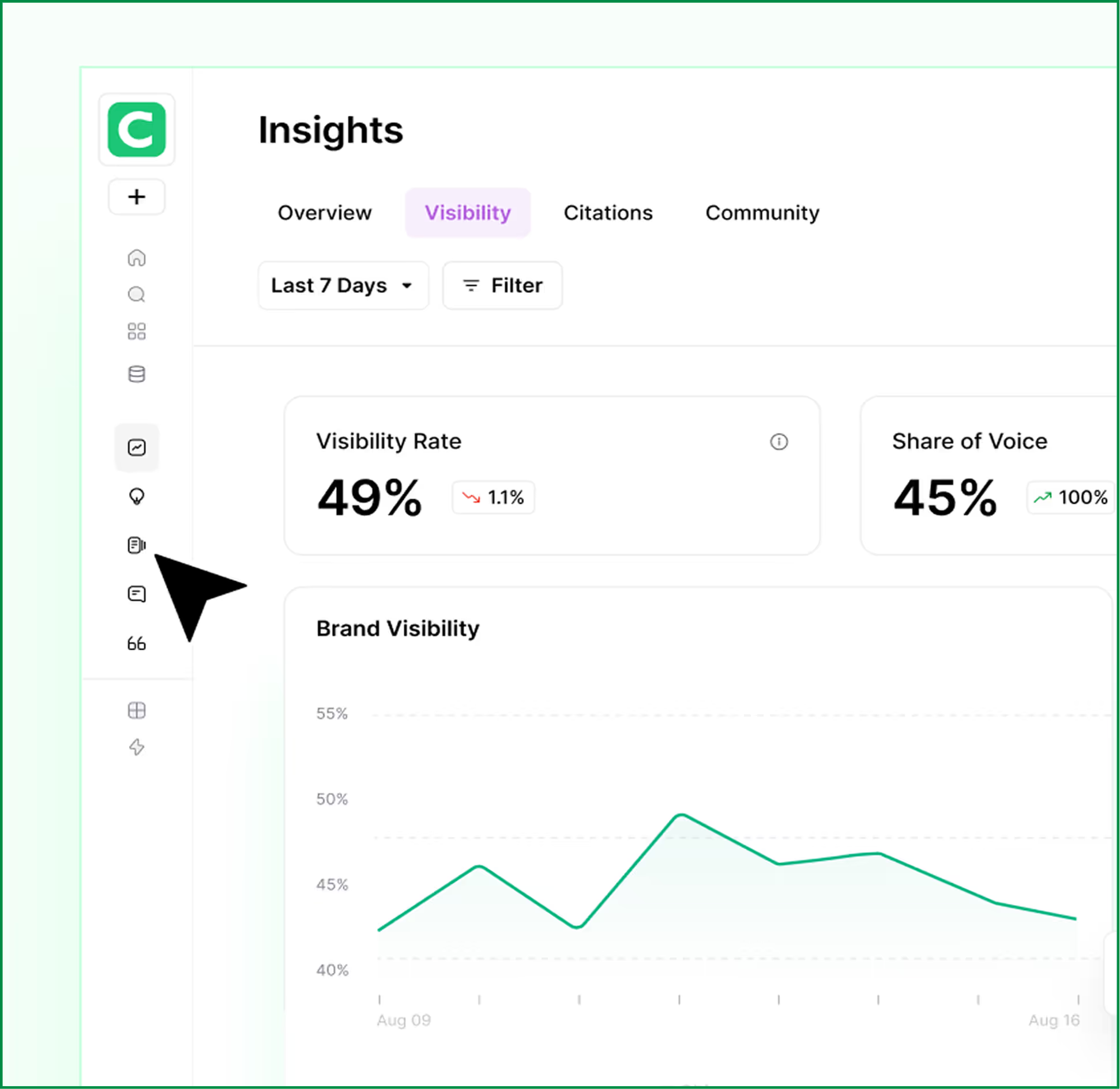
Track visibility across AI search
Adobe LLM Optimizer tracks AI citations but splits SEO and analytics across separate tools. AirOps Page360 unifies AI search visibility, Google Search Console, and Google Analytics 4 in one dashboard with full data exports.
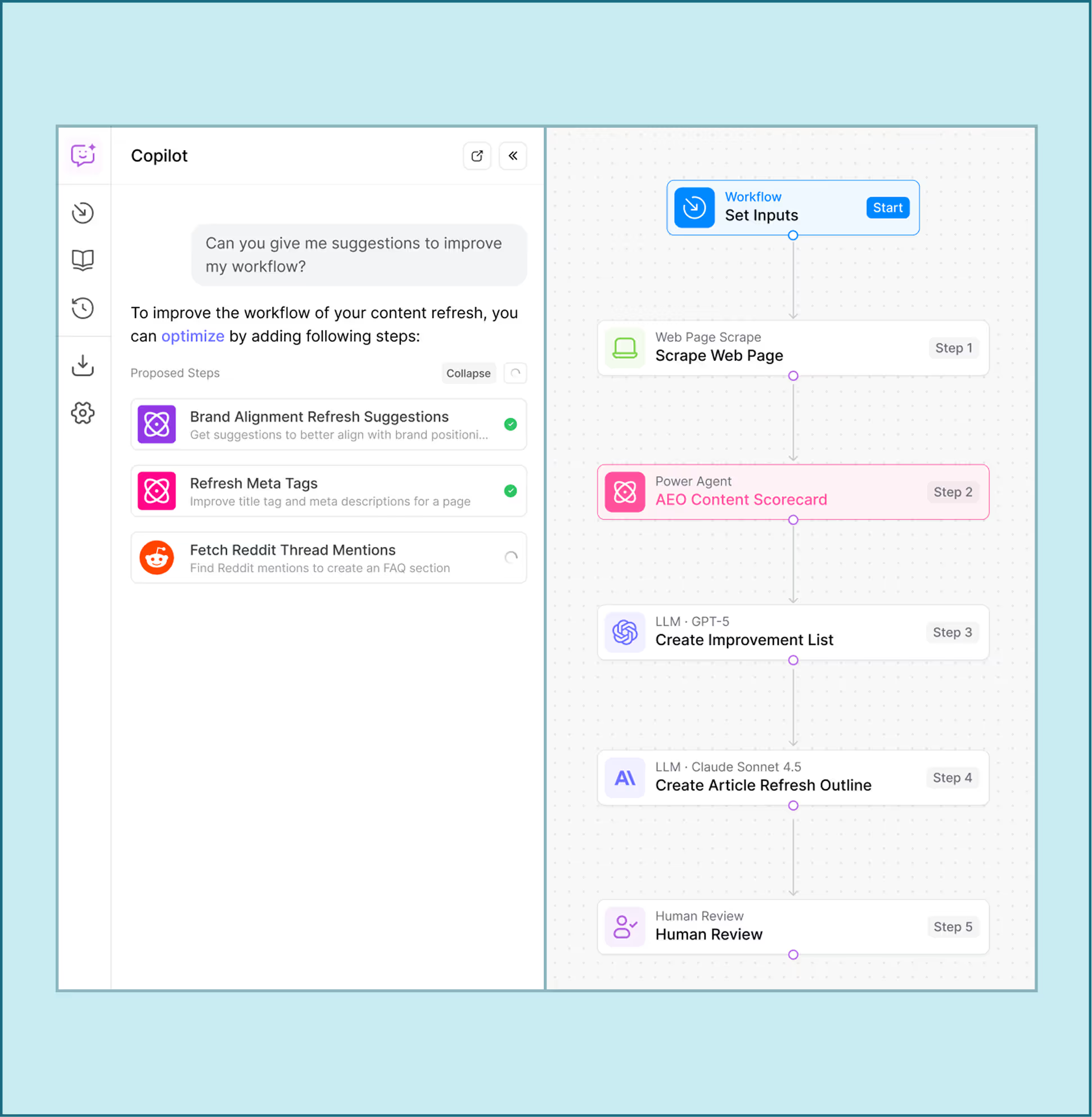
Execute workflows across your entire stack, not just in Adobe
Adobe's auto-optimize loop handles individual fixes with one-click deployment for AEM users, but lacks multi-step workflow orchestration. AirOps Workflow Studio and Grids let teams build complex content pipelines with branching logic and publish to 7 CMS platforms at scale.
Pre-built, reusable
workflow components
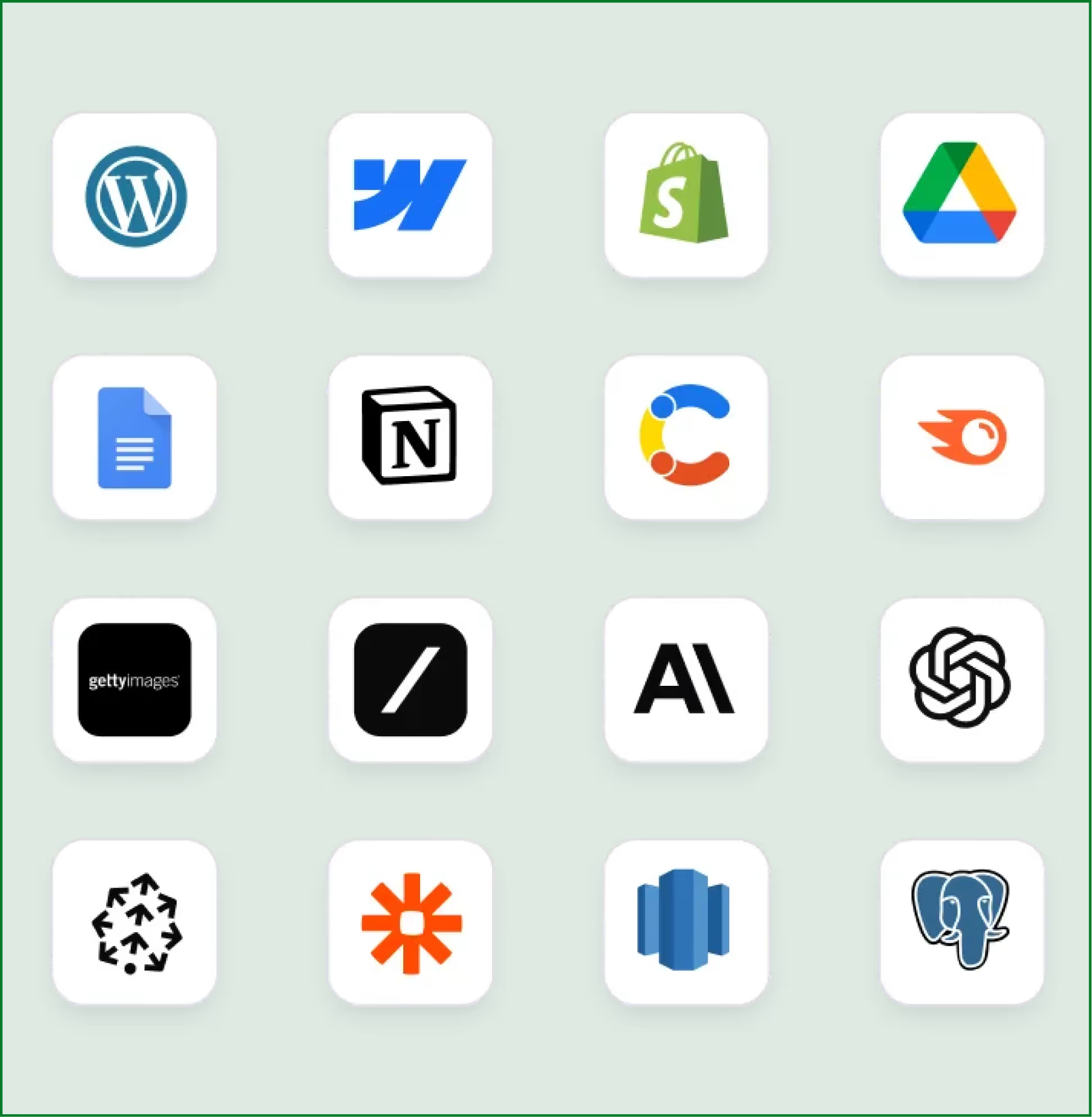
Connect AirOps with your entire stack from day one
Adobe optimizes for Experience Manager users; other platforms need custom integrations. With 30+ native connections across CMS, SEO tools, and data warehouses, AirOps works with your existing stack without platform switching.
SEVERAL CMS platforms
(Webflow, Contentful,
WordPress, Ghost,
and more)
AirOps pairs hands-on support with built-in enablement
Adobe offers Professional Services for architecture and implementation. AirOps provides solution architects, embedded content engineers, live cohort trainings, and fully managed offsite services to build lasting capability across your team.

How Webflow scaled content 5x in days with AirOps
Frequently Asked Questions
Which is better: AirOps or Adobe LLM Optimizer?
AirOps is better for teams that need to scale content operations across both SEO and AI search with unified analytics and automated workflows. Adobe LLM Optimizer is better suited for enterprises deeply embedded in the Adobe Experience Cloud who need AI visibility tracking and can manage content execution through separate systems.
What features does AirOps offer that Adobe LLM Optimizer does not?
AirOps offers several capabilities Adobe LLM Optimizer lacks:
- Workflow builder for multi-step content pipelines with branching logic, loops, and conditional triggers
- Grids for bulk content operations across hundreds of rows without developer resources
- Page360 unified analytics combining AI citations, Google Search Console, and Google Analytics 4 in one view
- Brand Kits with hierarchical segmentation by product lines, audiences, and regions
- Knowledge Bases for grounding AI outputs in proprietary databases and documents
- 7 native CMS integrations (Webflow, WordPress, Contentful, Ghost, Sanity, Strapi, ContentStack)
- 20+ AI model options with bring-your-own-API-key support versus Adobe's blended models
- Transparent usage-based pricing versus Adobe's unpublished enterprise pricing
Does Adobe LLM Optimizer just show optimization scores, or can it actually automate the fixes?
Adobe LLM Optimizer provides GEO scores and prescriptive recommendations through an "auto suggest" system, then requires human approval for each optimization via "one-click implementation." This linear review-approve-deploy flow works well for AEM users but becomes a bottleneck at scale.
AirOps automates the entire loop: Page360 identifies underperforming content, Opportunities Engine prioritizes the highest-impact actions, Workflows execute multi-step optimization pipelines with quality checks, and Grids publish updates directly to 7+ CMS platforms in bulk. Adobe shows you what needs fixing; AirOps builds the system that fixes it at scale.
How do AirOps workflows differ from Adobe LLM Optimizer's automation?
Adobe LLM Optimizer offers an "auto identify / auto suggest / auto optimize" loop with one-click deployment for individual optimizations, primarily designed for Adobe Experience Manager users. Complex workflows or non-AEM platforms require custom API integrations and developer resources.
AirOps provides a visual Workflow Studio for creating sophisticated content pipelines with branching logic, error handling, and dynamic variables. Teams execute these workflows at scale through Grids, a spreadsheet-like interface where they can process hundreds or thousands of content operations simultaneously and publish directly to 7 CMS platforms without technical handoffs or tool switching.
How does AirOps track AI search visibility compared to Adobe LLM Optimizer?
Both platforms track AI visibility, but AirOps provides unified 360° visibility through Page360, which combines AI search citations from 5 platforms, Google Search Console performance data, and Google Analytics 4 engagement metrics in one view.
Adobe LLM Optimizer tracks "agentic traffic" and provides GEO scores, but splits performance data across separate tools and does not publish specific details about data storage, export formats, or retention periods. Page360's unified approach surfaces high-impact optimization opportunities that would remain invisible when metrics are fragmented across disconnected systems.
Can AirOps replace both Adobe LLM Optimizer and my content creation tools?
Yes. AirOps replaces multiple tools by combining AI visibility tracking, SEO analytics, workflow orchestration, bulk content operations, 7 native CMS integrations, and unlimited team seats in one platform.
Teams using Adobe LLM Optimizer still need separate tools for complex workflow automation, bulk content operations beyond AEM, connections to most CMS platforms, and data warehouse integrations. Adobe optimizes for the Adobe Experience Cloud ecosystem; AirOps integrates with your existing stack through 30+ native connections across CMS, SEO tools, analytics platforms, and data warehouses.
What's the pricing difference between AirOps and Adobe LLM Optimizer?
Adobe LLM Optimizer does not publish pricing, tiers, or rate cards publicly. Pricing is handled through enterprise sales conversations, likely as add-on or bundled pricing for existing Adobe Experience Cloud customers.
AirOps offers transparent, usage-based pricing starting with a free tier to get started, then Pro and Enterprise plans that include unlimited seats so your entire team can collaborate. You get granular cost control through task-based billing and the option to bring your own AI model keys (1 task per call, with token costs billed directly by your provider), making variable costs predictable as you scale.
The real difference: Adobe charges through opaque enterprise contracts. AirOps gives you transparent pricing tied to actual usage, plus the execution system to operationalize insights without additional tool subscriptions.
How hard is Adobe LLM Optimizer to operationalize day to day?
Adobe LLM Optimizer is designed for seamless operation within the Adobe Experience Manager ecosystem, offering one-click deployment for AEM users. However, operationalizing beyond individual optimizations requires custom API integrations for non-AEM platforms, separate systems for complex workflow automation, and lacks native connections to most CMS platforms, SEO tools, and data warehouses.
AirOps is built for daily operations across any tech stack: visual Workflow Studio for multi-step pipelines, Grids for bulk content management without developer resources, 7 native CMS integrations, 30+ connections to SEO and analytics tools, unlimited seats for team collaboration, and full data export capabilities. Teams execute and ship optimizations without platform switching or technical handoffs.