BrightEdge stops at data. AirOps builds the content engine that wins AI search and SEO.
- BrightEdge stops at data. AirOps builds the content engine that wins AI search and SEO.
- Page360 unifies AI citations, SEO, and web analytics. BrightEdge splits them across tools.
- Go from insight to published content without leaving the platform.

Webflow 5xed content refresh velocity and increased visibility across Google and ChatGPT


Chime went from being recommended in 24 to 68 priority questions


George Bonaci VP of Growth, Ramp

Nicole Baer, CMO, Carta


50% cut in production costs, thanks to the elimination of external agencies and manual tasks.

Marcio Arnecke, CMO, Apollo


















Why Customers Choose AirOps to Go Beyond Visibility
Watching trends while traffic slips away is not a winning strategy. Only AirOps gives you the system to produce quality content that earns citations.
and agents alike
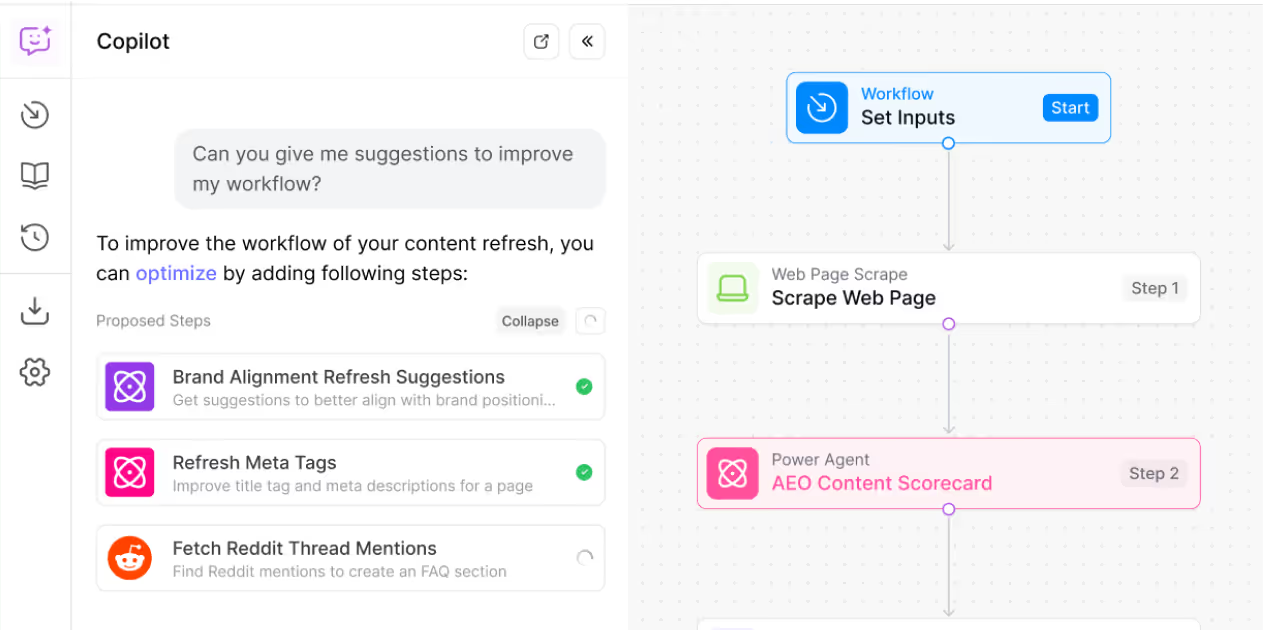
Get prime placement in AI Search by improving the structure, clarity, and quality of your content.
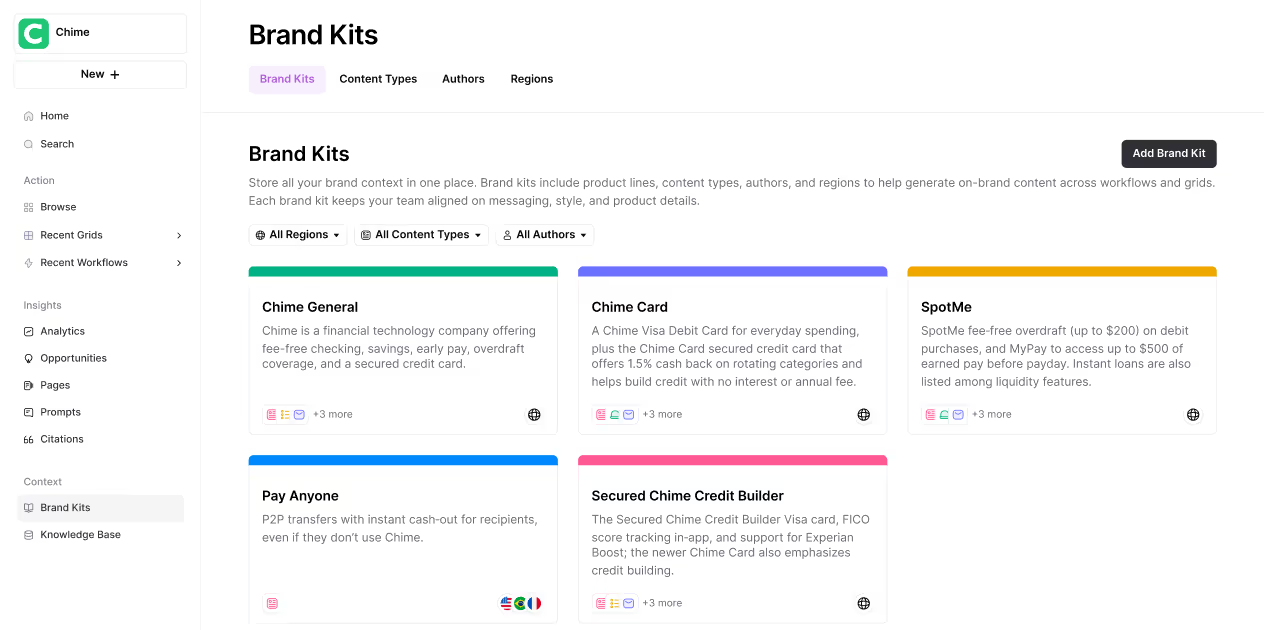
Brand Kits
Create content that sounds like your brand by weaving in your brand voice, personas, and expertise.
Our experts help brands like Carta and Rippling build workflows and train their teams to move faster with confidence.

What sets AirOps apart from BrightEdge
AirOps is built to help teams execute content operations at scale, not just report on them. While BrightEdge excels at enterprise rank tracking and technical auditing, it leaves content execution to your team or to Autopilot's risky zero-touch automation. AirOps combines unified analytics with multi-step workflow orchestration and bulk content operations so teams can continuously create, refresh, and optimize performance across AI search and SEO in one system.

What our customers are saying
“AirOps is unlike any other AI tool we’ve seen. We’ve been able to drop our agency and focus on the highest value initiatives in weeks”

Nick Fairbain
VP Growth Marketing, Chime
“Our brand visibility score hit a high of 28% after we refreshed content. We saw a 56% increase in subscriptions in 30 days that corresponds to content engineered for agents."

George Bonaci
VP of Growth and Demand, Ramp
“With AirOps, we grew AI-attributed signups from 2% to over 10% in under a year with zero headcount growth. Just sharper workflows and faster loops.”

Josh Grant
VP of Growth, Webflow
AirOps vs. BrightEdge
Which platform is right for your team?
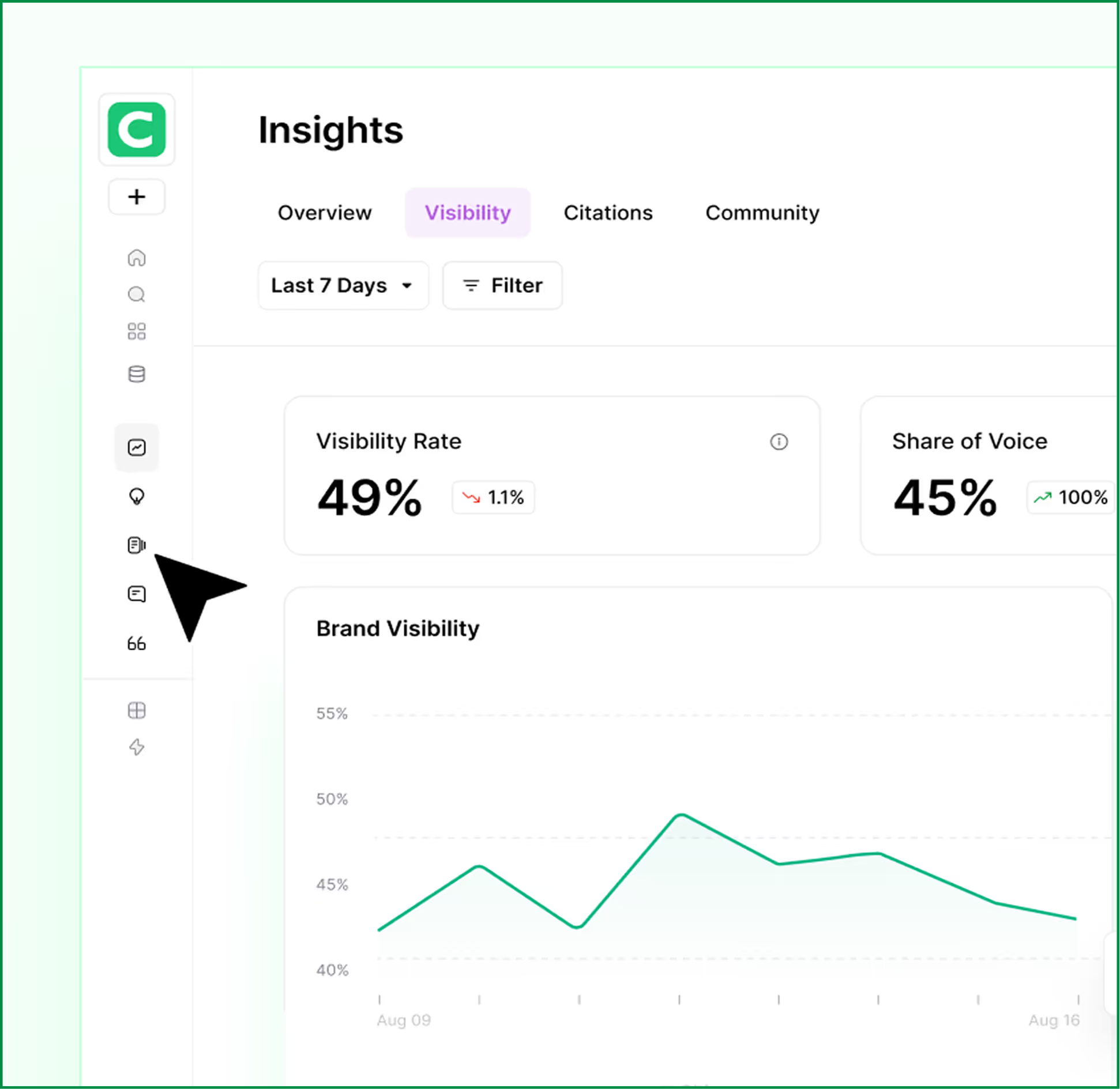
AirOps gives you unified AI and SEO visibility. BrightEdge splits it across tools.
BrightEdge tracks AI visibility through a separate add-on (AI Catalyst) while SEO data lives elsewhere. AirOps Page360 unifies AI citations, search performance, and web analytics in one view — no toggling, no stitching.
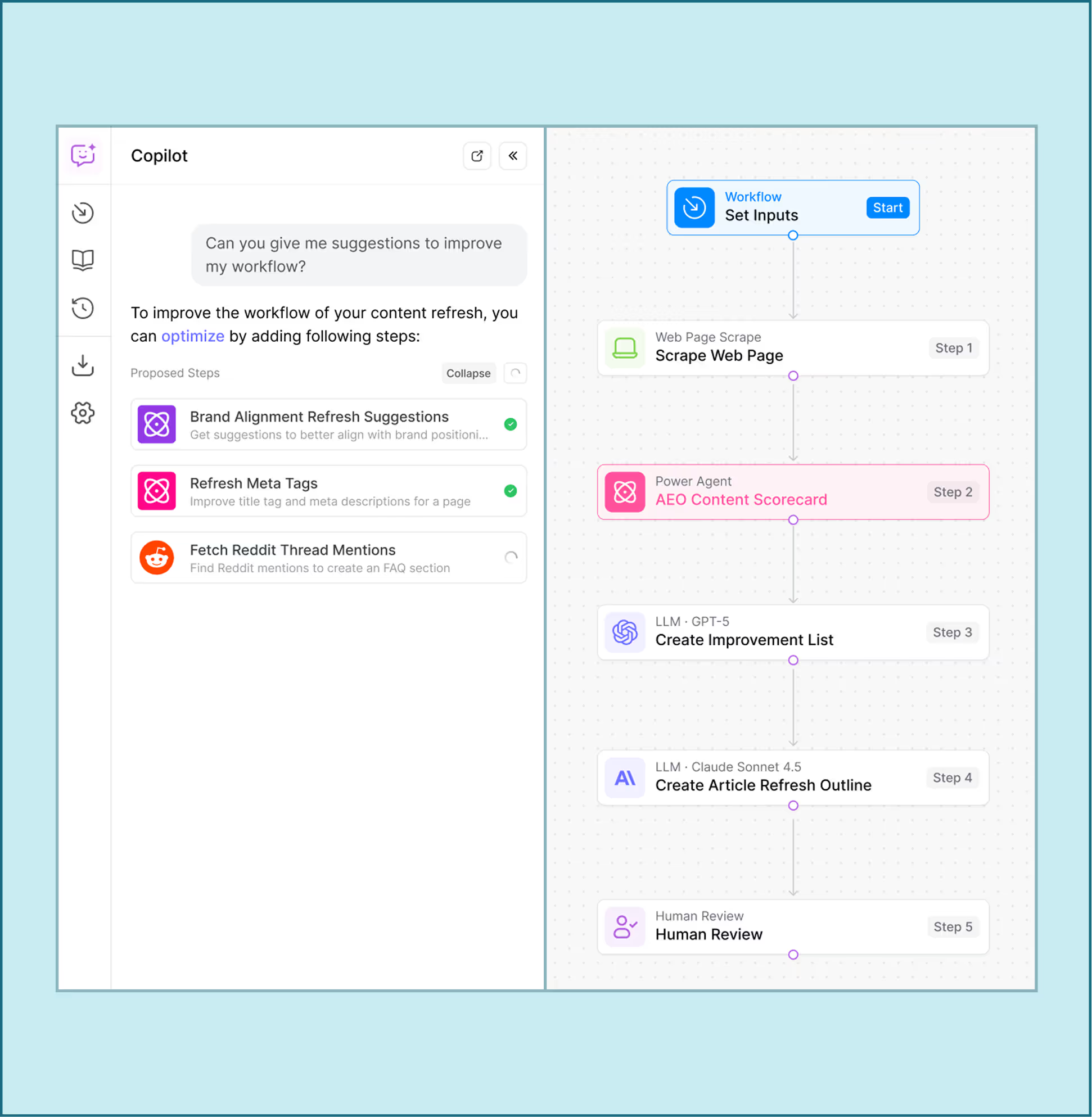
AirOps goes from insight to published content. BrightEdge stops at the report.
BrightEdge surfaces opportunities but leaves execution to you, or to Autopilot, which users report has broken site builds. AirOps' native workflow builder and Grid let teams orchestrate, review, and publish content at scale without tool switching or technical risk.
Pre-built, reusable
workflow components
Connect AirOps with your entire stack from day one.
BrightEdge integrates deeply with Adobe, Coremetrics, and Tableau, legacy enterprise stacks. AirOps connects natively with the modern marketing stack: 7 CMS platforms, data warehouses, SEO tools, and project management, ready to use without developer handoffs.
SEVERAL CMS platforms
(Webflow, Contentful,
WordPress, Ghost,
and more)
AirOps pairs hands-on support with built-in enablement.
BrightEdge provides dedicated CSMs who guide strategy, but the work stays with your team. AirOps embeds solution architects and content engineers directly, runs live cohort trainings, and offers fully managed offsite services when you need execution, not just guidance.

How Webflow scaled content 5x in days with AirOps
Frequently Asked Questions
Which is better: AirOps or BrightEdge?
AirOps is better for teams that need to scale SEO and AEO content operations with automated workflows and unified analytics. BrightEdge is better suited for large enterprise organizations that need real-time rank tracking and technical site auditing at massive scale, but it lacks the execution layer required to turn insights into content at speed.
What features does AirOps offer that BrightEdge does not?
AirOps offers several capabilities BrightEdge lacks: a visual workflow builder for multi-step content pipelines with branching logic and human review checkpoints, Grids for bulk content operations accessible to non-developers, Brand Kits with segmentation by product lines, audiences, and regions, Knowledge Bases for grounding AI outputs in proprietary data and documents, 7 native CMS integrations (Webflow, WordPress, Contentful, Ghost, Sanity, Strapi, ContentStack), Page360 unified analytics combining AI citations, GSC, and GA4, and 20+ AI model options with bring-your-own-API-key support.
Does BrightEdge just surface opportunities, or can it actually execute the fixes?
BrightEdge surfaces what needs fixing through its Recommendations feed and Opportunity Forecasting module, and Autopilot handles select technical fixes like internal linking and mobile optimization automatically. However, Autopilot carries documented operational risk. Users have reported it breaking site builds, and content creation still requires manual work through Copilot or your own team.
AirOps automates the full loop: Page360 identifies underperforming pages, workflows generate refreshed content, human review checkpoints validate quality, and Grids publish updates directly to your CMS. BrightEdge tells you what to fix. AirOps builds the system that fixes it.
How do AirOps workflows differ from BrightEdge's automation?
BrightEdge Autopilot handles narrow technical tasks like internal linking and mobile optimization for teams willing to accept zero-touch risk. Content execution beyond that requires manual effort or external tools. AirOps provides a visual workflow builder for creating multi-step content pipelines with branching logic, iteration, error handling, and built-in human review steps — then executes them at scale through Grids. Grids give teams a spreadsheet-like interface to process hundreds of rows simultaneously and publish directly to their CMS without developer resources.
How does AirOps track AI search visibility compared to BrightEdge?
Both platforms track AI search visibility, but AirOps provides a unified view through Page360, which combines AI citation signals, Google Search Console data, and GA4 engagement metrics in one place. BrightEdge tracks AI visibility through AI Catalyst, a separate module from its core SEO reporting. That split means prioritization requires manually reconciling data across tools. Page360's unified approach surfaces high-impact opportunities that would be invisible when looking at those signals separately.
Can AirOps replace both BrightEdge and my content creation tools?
Yes. AirOps replaces multiple tools by combining AI and SEO visibility tracking, workflow orchestration, bulk content operations, 7 native CMS integrations, and team collaboration in one system. Teams using BrightEdge still need separate tools for content workflow automation, bulk publishing operations, and connecting to most modern CMS platforms. AirOps handles all of this natively.
What is the pricing difference between AirOps and BrightEdge?
BrightEdge does not publish pricing. It operates on an enterprise contract model, with third-party reviews citing costs over $55,000 per year. Key capabilities like AI Catalyst are positioned as separate solutions, making total cost less predictable as requirements grow. BrightEdge also requires significant implementation time — averaging two months to set up and fourteen months to see ROI — meaning the cost starts before value is realized.
AirOps offers transparent, tiered pricing with a freemium Insights plan to get started, and Pro and Enterprise plans that include team collaboration. AirOps combines visibility tracking and content workflows, reducing or eliminating the need for separate subscriptions across analytics, automation, and CMS tools. Task-based billing and bring-your-own-model-key support give teams granular cost control as they scale.
The real difference: BrightEdge charges enterprise rates for data and guidance. AirOps gives you the system to act on it at a lower total cost of ownership.
How hard is BrightEdge to operationalize day to day?
BrightEdge carries a well-documented learning curve. Users describe the interface as clunky and slow, with information paralysis from the volume of tools and tabs. Implementation averages two months, and ROI averages fourteen months. Content execution beyond Autopilot's narrow technical scope requires manual effort, and most CMS connections outside of Optimizely and Adobe Marketing Cloud require additional configuration. AirOps is built for daily operations with a visual workflow builder, Grids for bulk content management, 7 native CMS integrations, and team collaboration included from day one.