Optiversal generates pages. AirOps builds the content engine that wins AI search and SEO.
- Get unified AI and SEO signals in one dashboard, not a standalone visibility tool disconnected from search and analytics
- Connect your entire stack out of the box: 7 CMS platforms, GSC, GA4, and leading SEO tools with no infrastructure changes required
- Build and scale content operations with Workflows and Grids, not template-driven automation locked to one vertical

Webflow 5xed content refresh velocity and increased visibility across Google and ChatGPT


Chime went from being recommended in 24 to 68 priority questions


George Bonaci VP of Growth, Ramp

Nicole Baer, CMO, Carta


50% cut in production costs, thanks to the elimination of external agencies and manual tasks.

Marcio Arnecke, CMO, Apollo


















Why Customers Choose AirOps to Go Beyond Visibility
Watching trends while traffic slips away is not a winning strategy. Only AirOps gives you the system to produce quality content that earns citations.
and agents alike
Get prime placement in AI Search by improving the structure, clarity, and quality of your content.
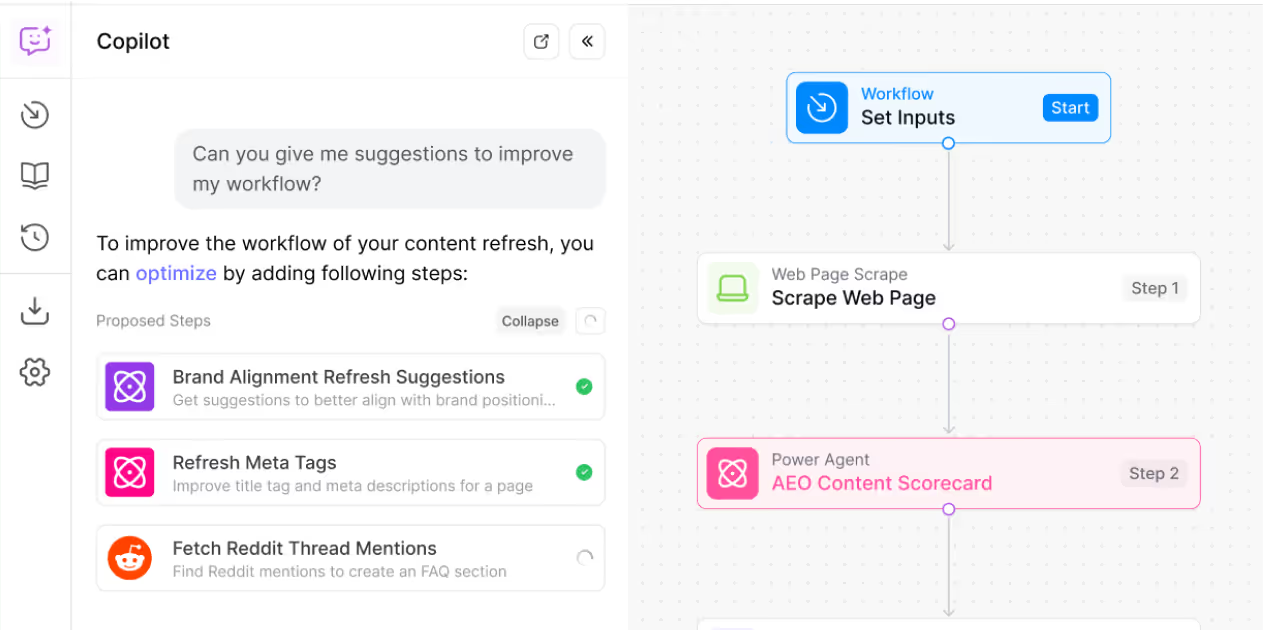
Brand Kits
Create content that sounds like your brand by weaving in your brand voice, personas, and expertise.
Our experts help brands like Carta and Rippling build workflows and train their teams to move faster with confidence.

What sets AirOps apart from Optiversal
AirOps is built to help teams execute content operations at scale, not just generate pages for one vertical. Optiversal excels at programmatic retail pages, catalog enrichment, and local inventory, but it stops there. AirOps combines unified AI and SEO analytics with workflow automation and bulk content operations so any team can create, refresh, and publish content that wins AI search and SEO in one platform.

What our customers are saying
“AirOps is unlike any other AI tool we’ve seen. We’ve been able to drop our agency and focus on the highest value initiatives in weeks”

Nick Fairbain
VP Growth Marketing, Chime
“Our brand visibility score hit a high of 28% after we refreshed content. We saw a 56% increase in subscriptions in 30 days that corresponds to content engineered for agents."

George Bonaci
VP of Growth and Demand, Ramp
“With AirOps, we grew AI-attributed signups from 2% to over 10% in under a year with zero headcount growth. Just sharper workflows and faster loops.”

Josh Grant
VP of Growth, Webflow
AirOps vs. Optiversal
Which platform is right for your team?
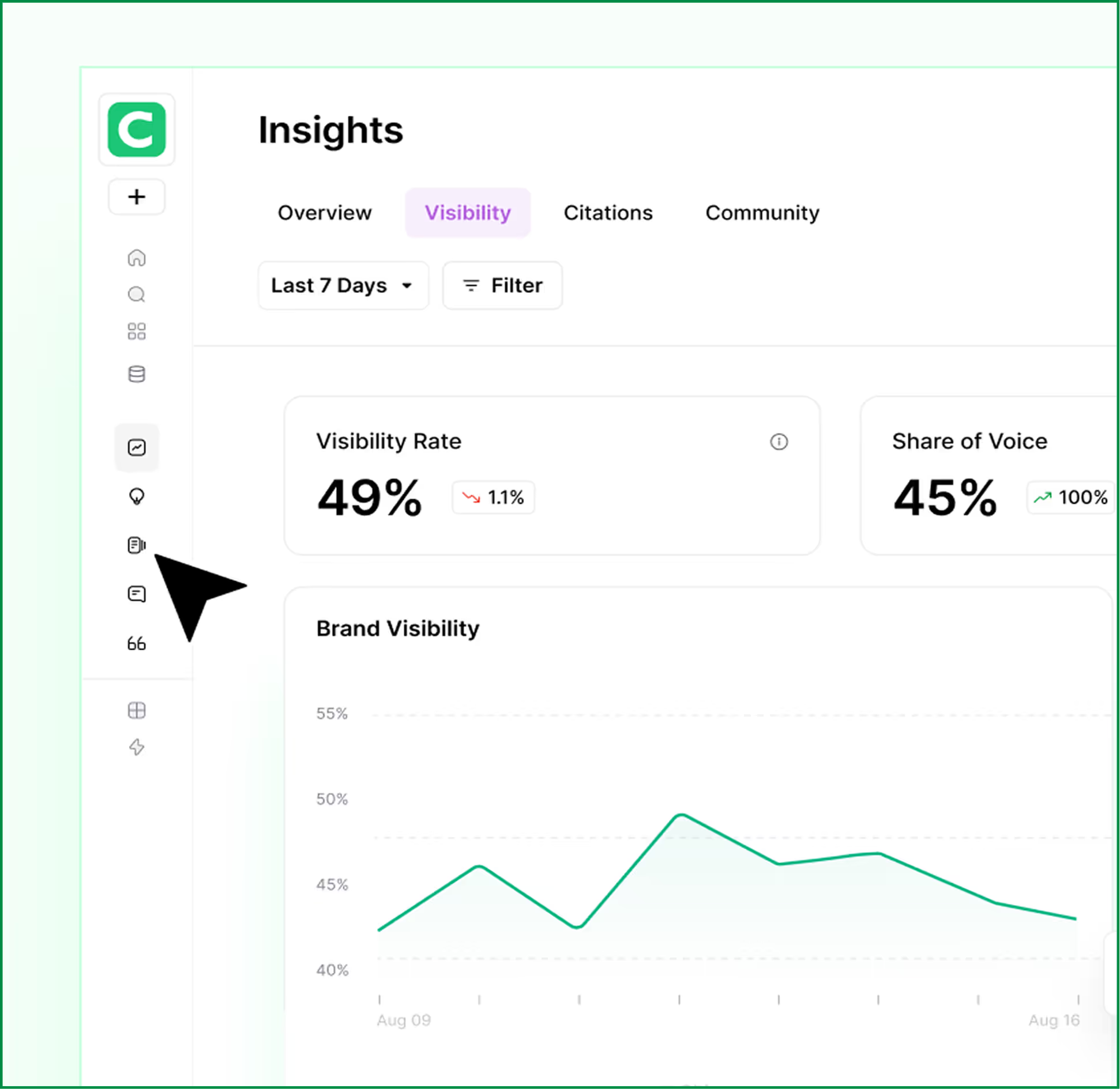
AirOps gives you unified AI and SEO visibility. Optiversal gives you a standalone dashboard.
Optiversal tracks AI visibility across ChatGPT, Gemini, and Google AI Overviews, but the dashboard is disconnected from SEO and web analytics. AirOps Page360 combines AI citations, Google Search Console, and GA4 in one live view. No stitching required.
AirOps turns insights into action. Optiversal automates page generation.
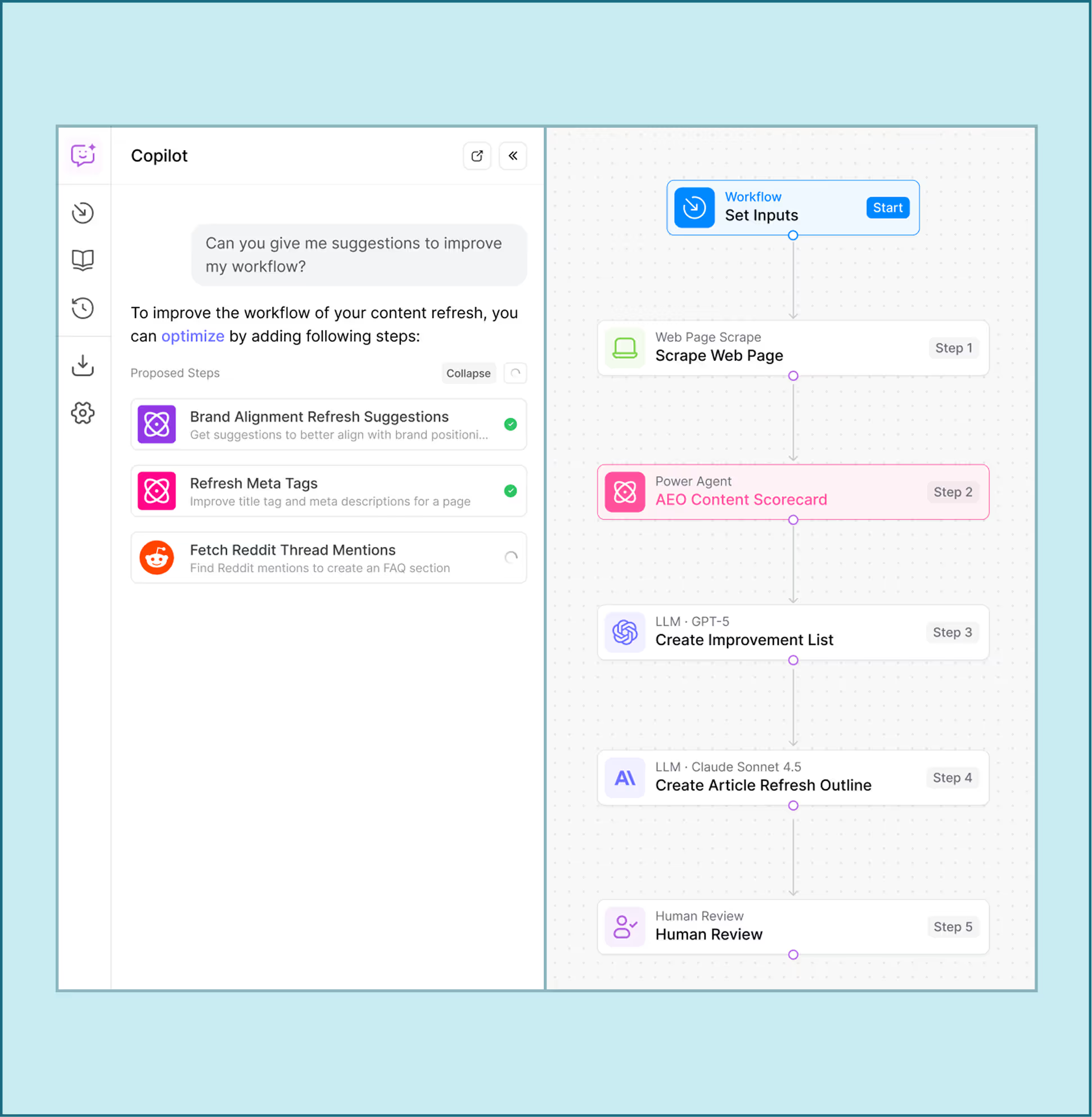
Optiversal excels at programmatic page creation for retail (landing pages, local pages, catalog enrichment) but relies on template-driven automation with limited user-facing workflow control. AirOps surfaces prioritized opportunities and lets you execute immediately through Grid, Workflows, and direct CMS publishing, all inside one platform.
Pre-built, reusable
workflow components
AirOps connects with your entire modern stack. Optiversal connects with commerce platforms.
Optiversal integrates with commerce tools like Shopify, SFCC, and Google Merchant Center, but lacks native CMS, SEO research, data warehouse, or project management connections. AirOps integrates across 7 CMS platforms, leading SEO tools, data warehouses, and project management systems out of the box.
SEVERAL CMS platforms
(Webflow, Contentful,
WordPress, Ghost,
and more)
AirOps embeds expertise into your team. Optiversal runs a managed implementation.
Optiversal runs a high-touch managed model with structured implementation and end-to-end program delivery, effective but dependency-creating. AirOps embeds solution architects and content engineers into your workflow, runs live cohort training, and delivers managed execution when your team needs output, not just direction.

How Webflow scaled content 5x in days with AirOps
Frequently Asked Questions
Which is better: AirOps or Optiversal?
It depends on your use case. Optiversal is purpose-built for enterprise retail and eCommerce, excelling at programmatic page generation (long-tail landing pages, local inventory pages, catalog enrichment) at massive scale. If you need to generate hundreds of thousands of product-driven pages with real-time inventory sync, Optiversal delivers. AirOps is better for teams that need end-to-end content engineering: unified AI and SEO visibility, customizable workflow automation, bulk content operations, and direct CMS publishing across any industry. If your goal is to measure, act, and compound content performance across both AI search and traditional SEO, AirOps covers the full loop.
What features does AirOps offer that Optiversal does not?
AirOps offers several capabilities not found in Optiversal's platform:
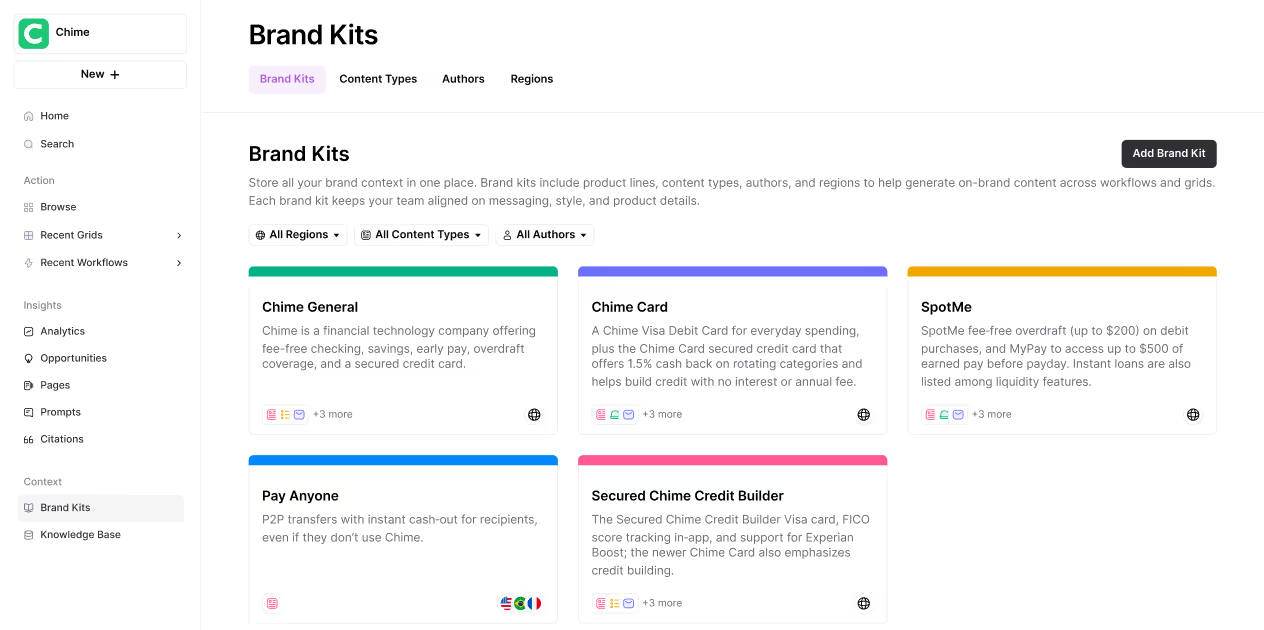
- A visual Workflow Studio for building multi-step content pipelines with branching logic and human review checkpoints
- Grids for bulk content operations accessible to non-developers
- Brand Kits with segmentation by product lines, audiences, and regions
- Knowledge Bases for grounding AI outputs in proprietary data (files, SQL, web scrapes)
- Page360 unified analytics combining AI citations, Google Search Console, and GA4 in one view
- 7 native CMS integrations (Webflow, WordPress, Contentful, Ghost, Sanity, Strapi, ContentStack)
- SEO research tool integrations (Semrush, Ahrefs, Moz, DataForSEO)
- 20+ AI model options with bring-your-own-API-key support
Does Optiversal just surface opportunities, or can it actually execute?
Optiversal does execute, but within a specific scope. It automates programmatic page generation, lifecycle management (enriching high-performing pages, pruning underperformers), and maintenance tasks (pricing updates, stock changes, seasonality adjustments). It also offers a WYSIWYG page editor for layout control. However, these automations are template-driven and retail-specific. There is no user-facing workflow builder for custom content operations, no multi-step pipeline logic, and no direct publishing to external CMS platforms. Content is hosted via reverse proxy or self-hosted via API.
AirOps automates the full loop: Page360 identifies underperforming pages, workflows generate refreshed content with human review checkpoints, and Grids publish updates directly to your CMS. Optiversal automates page generation. AirOps lets you build the system that runs your entire content operation.
How do AirOps workflows differ from Optiversal's automation?
Optiversal's automation focuses on content lifecycle rules: enriching pages after 30 days, deleting underperformers, updating pricing and stock automatically. These are effective for maintaining programmatic page programs at scale. However, the automation logic is internal and template-driven. Optiversal recently launched a WYSIWYG editor, but there is no documented visual workflow builder for custom multi-step content pipelines.
AirOps provides a visual Workflow Studio where teams build multi-step processes involving LLMs, code execution, web research, SEO tools, and human review, then run them at scale through Grids. Grids give teams a spreadsheet-like interface to process hundreds of rows simultaneously and publish directly to 7 CMS platforms without developer resources. The difference: Optiversal automates predefined retail page workflows. AirOps lets you design, customize, and scale any content workflow.
How does AirOps track AI search visibility compared to Optiversal?
Both platforms track AI search visibility. Optiversal's AI Visibility Dashboard monitors brand and product presence across ChatGPT, Gemini, and Google AI Overviews, tracking sentiment, citations, and product references in unbranded prompts. Perplexity coverage is referenced in marketing but not confirmed in dashboard documentation.
AirOps tracks 5 AI platforms (ChatGPT, Gemini, Perplexity, Google AI Mode, Google AI Overviews) with daily updates and provides a unified view through Page360, which combines AI citation signals, Google Search Console data, and GA4 engagement metrics in one place. The key difference is unification. Optiversal's AI dashboard operates separately from SEO and analytics data. Page360 correlates all three signal types in a single view, surfacing high-impact opportunities that would be invisible when looking at those signals in separate tools.
Can AirOps replace both Optiversal and my content creation tools?
For most use cases outside retail-specific programmatic page generation, yes. AirOps replaces multiple tools by combining AI and SEO visibility tracking, workflow orchestration, bulk content operations, 7 native CMS integrations, SEO research tools, and team collaboration in one system.
However, if you specifically need high-volume programmatic landing pages with real-time local inventory sync and reverse proxy hosting for hundreds of thousands of commerce pages, Optiversal addresses that niche directly. For teams managing content operations across blogs, documentation, support pages, landing pages, and any non-retail content type, AirOps handles the full stack natively without requiring additional tools for monitoring, automation, or publishing.
What is the pricing difference between AirOps and Optiversal?
Optiversal does not publish pricing publicly. All paths lead to "Book a Demo." Based on its emphasis on "incremental revenue" and claimed "20-50x ROI," the model appears to be high-ticket enterprise pricing, likely value-based or performance-oriented. Cost and scope are only disclosed after a sales conversation.
AirOps offers transparent tiered pricing with a freemium Insights plan to get started, and Pro and Enterprise plans that include team collaboration. Task-based billing and bring-your-own-model-key support give teams granular cost control as they scale. AirOps combines visibility tracking and content workflows, reducing or eliminating the need for separate subscriptions across analytics, automation, and CMS tools.
The real difference: Optiversal prices for enterprise retail programs with opaque costs. AirOps gives you the platform to measure, act, and compound results with predictable, transparent pricing.
How hard is Optiversal to operationalize day to day?
Optiversal is designed as a managed, high-touch platform. Implementation involves structured kickoffs, weekly meetings, and significant upfront configuration. The "best practice" deployment requires a reverse proxy setup (e.g., Cloudflare Workers), which means IT involvement for domain routing. Once live, the platform automates page generation and maintenance effectively within its retail scope.
However, for teams running diverse content operations beyond programmatic commerce pages, the limitations surface: no self-serve workflow builder, no grid-based bulk execution across content types, no native integrations with non-commerce CMS platforms or SEO research tools, and no unified real-time data layer combining AI and SEO signals. AirOps is built for daily team operations with a visual workflow builder, Grids for bulk content management, 7 native CMS integrations, and collaboration features included from day one, with no reverse proxy or CDN configuration required.