Semrush gives you the insights. AirOps builds the system to win AI search and SEO.
- Know where you stand and what to prioritize across AI + traditional search.
- Take action on insights to craft content that drives pipeline.
- Page360 unifies AI citations, SEO rankings, and actual traffic per URL

Webflow 5xed content refresh velocity and increased visibility across Google and ChatGPT


Chime went from being recommended in 24 to 68 priority questions


George Bonaci VP of Growth, Ramp

Nicole Baer, CMO, Carta


50% cut in production costs, thanks to the elimination of external agencies and manual tasks.

Marcio Arnecke, CMO, Apollo


















Why Customers Choose AirOps to Go Beyond Visibility
Watching trends while traffic slips away is not a winning strategy. Only AirOps gives you the system to produce quality content that earns citations.
and agents alike
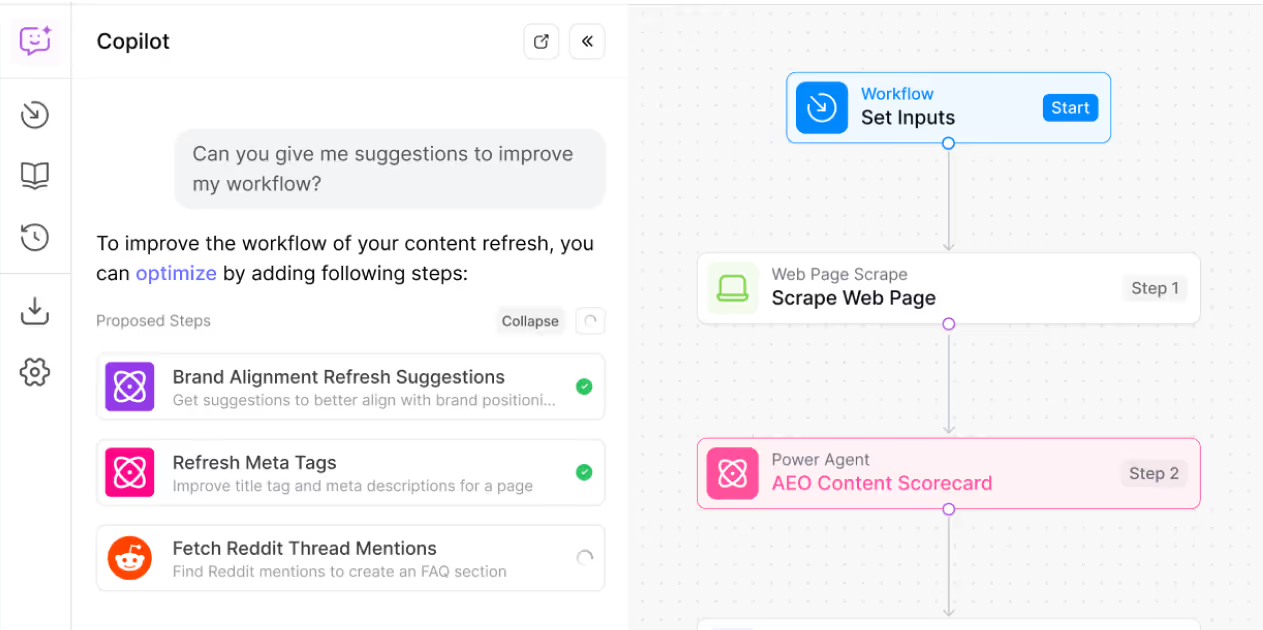
Get prime placement in AI Search by improving the structure, clarity, and quality of your content.
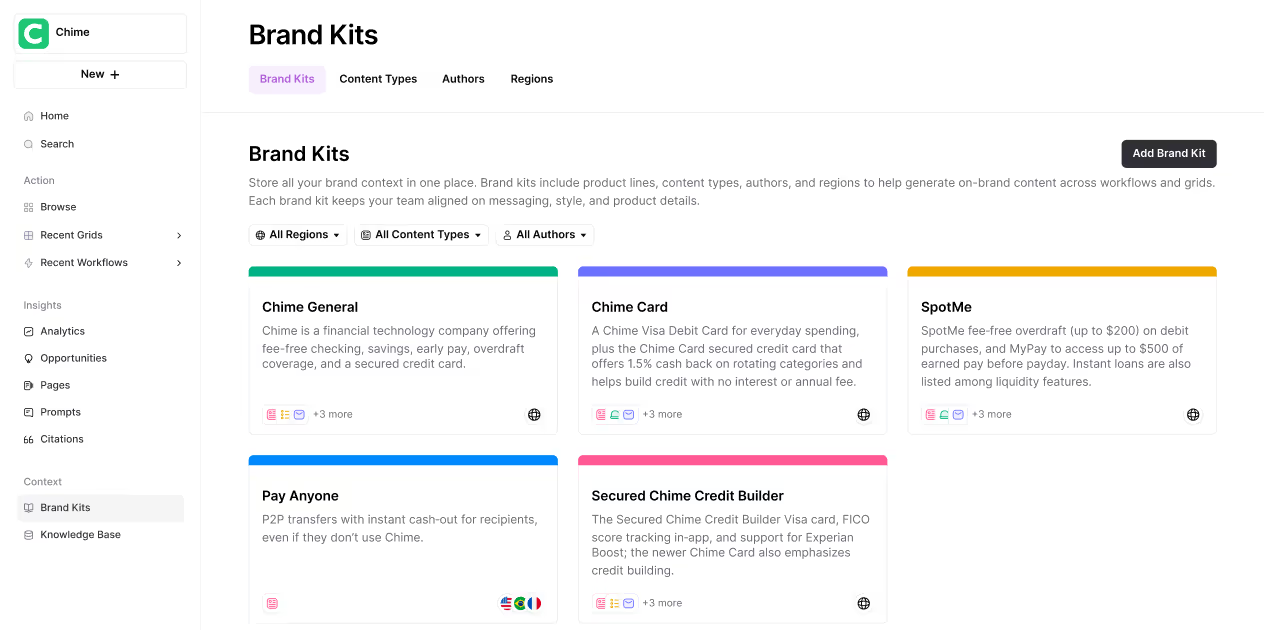
Brand Kits
Create content that sounds like your brand by weaving in your brand voice, personas, and expertise.
Our experts help brands like Carta and Rippling build workflows and train their teams to move faster with confidence.

What sets AirOps apart from Semrush
AirOps is built to execute content operations at scale, not just track visibility. While Semrush provides keyword databases and multi-channel analytics, AirOps combines unified performance tracking with workflow automation and bulk publishing so teams can create, refresh, and optimize content without exports or tool switching.

What our customers are saying
“AirOps is unlike any other AI tool we’ve seen. We’ve been able to drop our agency and focus on the highest value initiatives in weeks”

Nick Fairbain
VP Growth Marketing, Chime
“Our brand visibility score hit a high of 28% after we refreshed content. We saw a 56% increase in subscriptions in 30 days that corresponds to content engineered for agents."

George Bonaci
VP of Growth and Demand, Ramp
“With AirOps, we grew AI-attributed signups from 2% to over 10% in under a year with zero headcount growth. Just sharper workflows and faster loops.”

Josh Grant
VP of Growth, Webflow
AirOps vs. Semrush
Which platform is right for your team?
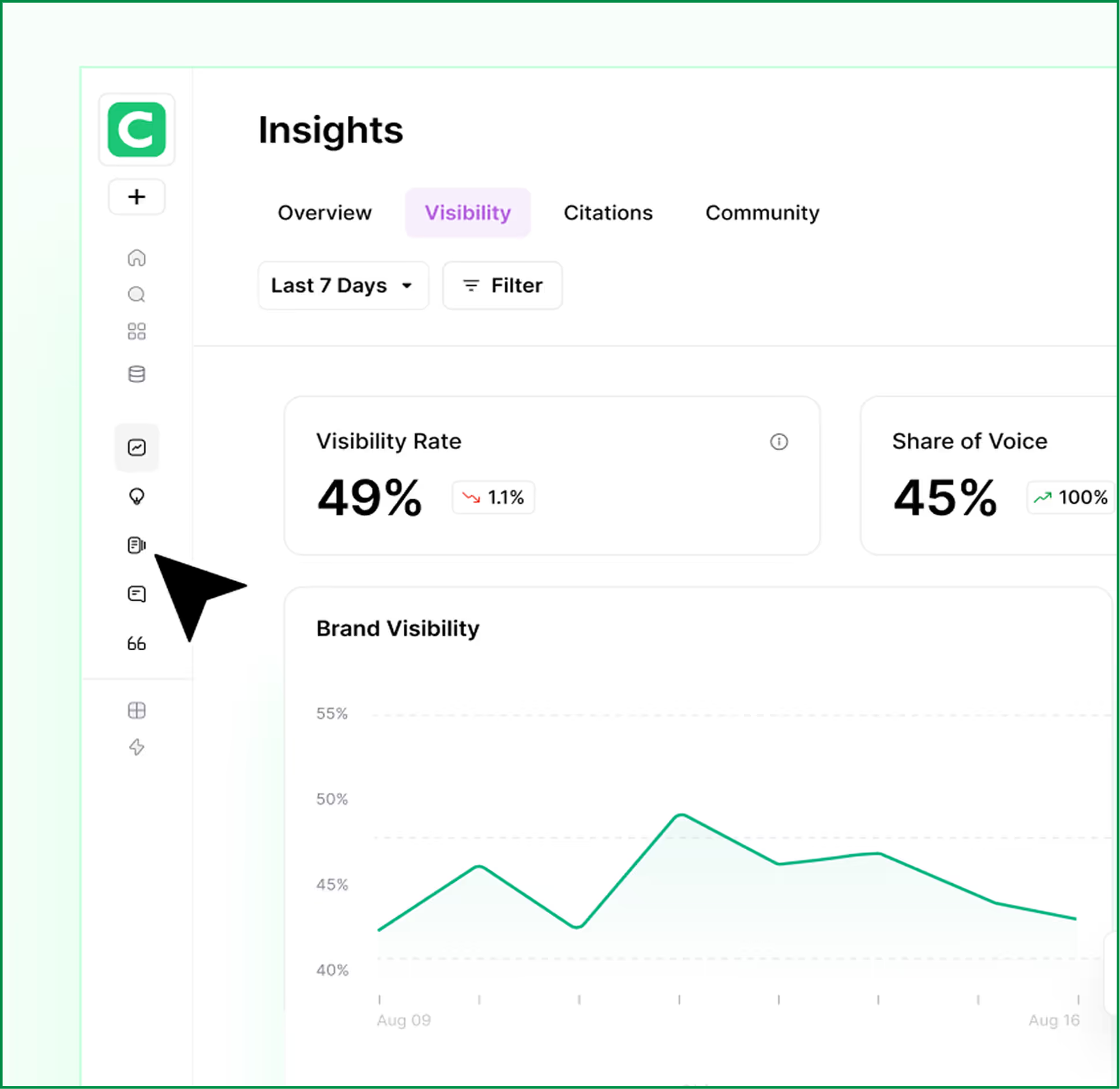
AirOps unifies AI visibility and SEO performance in one dashboard
Semrush forces you to navigate between AI Visibility Toolkit and Position Tracking tools, then estimate traffic from panel data. AirOps Page360 unifies actual GSC clicks, GA4 engagement, and AI citations in one dashboard per URL.
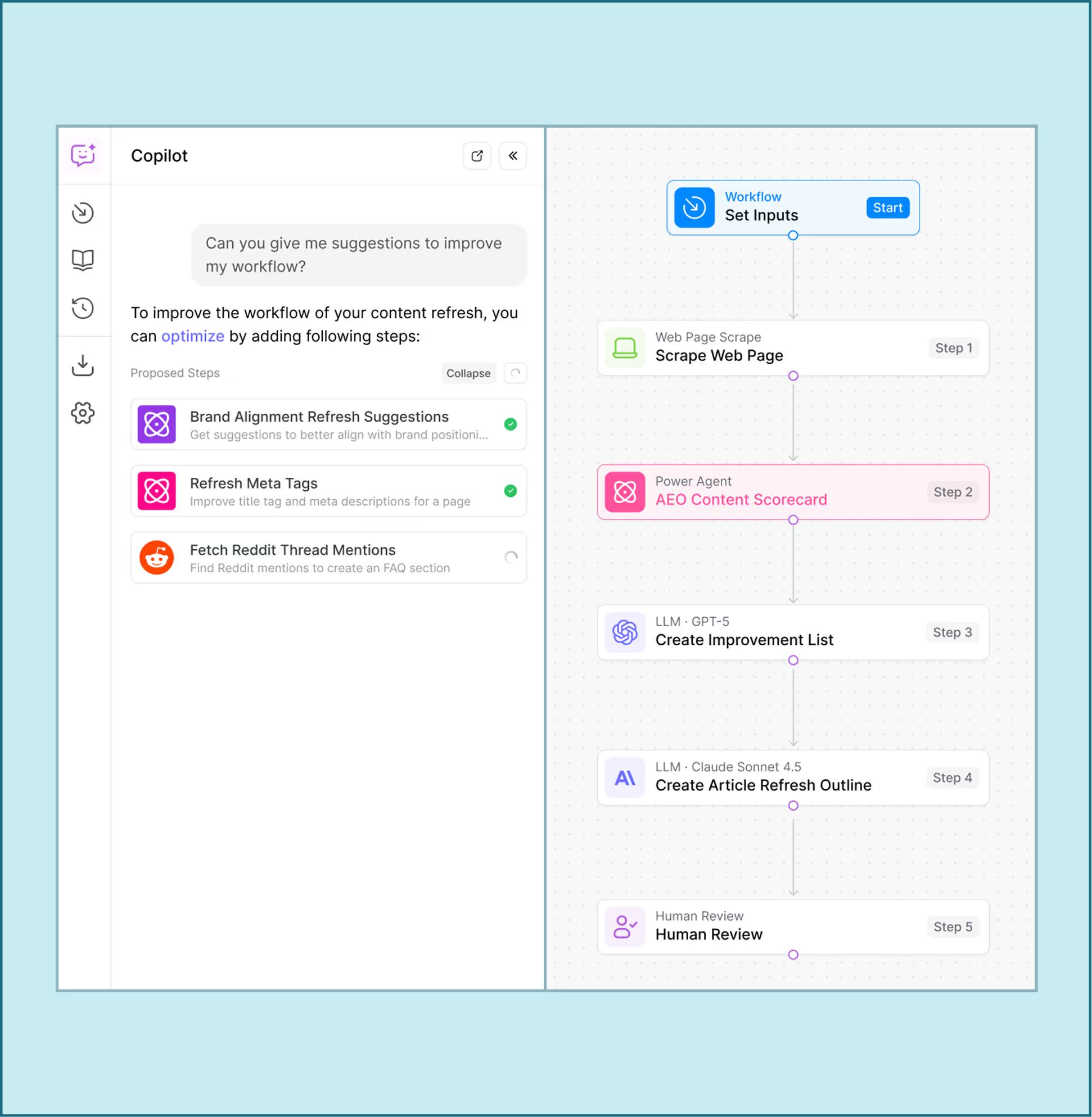
AirOps orchestrates multi-step content operations without exporting data to spreadsheets
Semrush Content Toolkit follows one path: research, brief, write, optimize. Complex operations require exporting data to spreadsheets or Zapier. AirOps Grid and Workflows handle conditional logic, bulk operations, and CMS publishing natively without exports.
Pre-built, reusable
workflow components
AirOps connects your entire martech stack from day one
Semrush integrates deeply with Google Analytics, Search Console, and social media but requires App Center partners or APIs for CMS publishing and data warehouses. AirOps provides 30+ native integrations including 7 CMS platforms and SQL databases.
SEVERAL CMS platforms
(Webflow, Contentful,
WordPress, Ghost,
and more)
AirOps pairs hands-on support with built-in enablement
Semrush Academy provides excellent free training but support is webform-only unless you pay for priority tiers. AirOps pairs live chat and private Slack channels with embedded content engineers, cohort trainings, and fully managed offsite services.

How Webflow scaled content 5x in days with AirOps
Frequently Asked Questions
Which is better: AirOps or Semrush?
AirOps is better for teams that need to scale SEO and AEO content operations with automated workflows and unified analytics. Semrush is better suited for marketers who need comprehensive keyword research databases and multi-channel visibility tracking (SEO, PPC, Social) but lacks the workflow orchestration layer required to execute and operationalize insights at scale.
What features does AirOps offer that Semrush does not?
AirOps offers several capabilities Semrush lacks:
- Workflow builder for multi-step content pipelines with conditional logic, loops, and code steps
- Grids for bulk content operations (hundreds of rows simultaneously) accessible to non-developers
- Brand Kits with hierarchical segmentation by product lines, audiences, regions, and content types
- Knowledge Bases (RAG) for grounding AI in proprietary databases, PDFs, and internal documents
- 7 native CMS integrations (Webflow, Contentful, ContentStack, Ghost, Sanity, Strapi, WordPress)
- Page360 unified analytics combining AI citations, actual GSC clicks, and GA4 engagement per URL
- 20+ AI model options with bring-your-own-API-key support vs. locked-in Semrush AI models
- MCP Server allowing external AI assistants (Claude, Cursor) to query workspace data
Does Semrush just show optimization scores, or can it actually automate the fixes?
Semrush identifies issues through Site Audit (technical health), Position Tracking (ranking changes), and On Page SEO Checker (optimization ideas) but execution happens outside the platform. The Content Toolkit follows a linear path (Topic Research → SEO Content Template → ContentShake AI → Optimize) limited to WordPress publishing. Complex multi-step operations require exporting data to spreadsheets, using Zapier, or building custom API integrations.
AirOps automates the entire workflow by identifying underperforming pages in Page360, running multi-step optimization workflows with quality checks, and publishing updates directly to 7 CMS platforms through Grids. Semrush shows you what needs fixing; AirOps builds the system that fixes it at scale.
How do AirOps workflows differ from Semrush's automation?
Semrush offers trigger-based alerts (Position Tracking custom triggers when rankings change) and a linear Content Toolkit flow (idea → brief → write → optimize → publish to WordPress). Enterprise tier mentions "SEO Automations" but these are limited to predefined tasks, not custom workflow building. Bulk operations require using their Standard API or Trends API with developer resources.
AirOps provides a visual Workflow Studio for creating multi-step content pipelines with conditional branching (if/then logic), loops, human-in-the-loop review checkpoints, and code execution steps. Workflows integrate with 30+ tools including Semrush's own data via native workflow steps. Grids provide a spreadsheet-like interface where teams can execute workflows across hundreds of rows simultaneously and publish directly to 7 CMS platforms without technical resources or API development.
How does AirOps track AI search visibility compared to Semrush?
Both platforms track the same 5 AI platforms (ChatGPT, Gemini, Perplexity, Google AI Mode, and Google AI Overviews), but their architectures differ fundamentally. Semrush splits analytics across separate tools requiring navigation between multiple interfaces: the AI Visibility Toolkit ($99/mo add-on or bundled in Semrush One) tracks AI citations and mentions, Position Tracking handles Google rankings, Traffic Analytics provides estimated traffic from a 200M+ user clickstream panel (explicitly noting data "might differ from your Google Analytics"), and Site Audit covers technical health.
AirOps Page360 provides unified 360° visibility by combining AI search citations showing actual prompts your pages appear in, Google Search Console data with actual clicks and impressions rather than estimates, Google Analytics 4 engagement metrics including actual sessions, bounce rates, and conversions, and content freshness tracking covering publish dates, age, and decay trends. Page360's unified approach per URL helps identify high-impact opportunities that remain invisible when metrics are fragmented across separate tools. For example, a page losing AI citations but gaining SEO traffic signals a different action than a page declining in both channels simultaneously.
Can AirOps replace both Semrush and my content creation tools?
Partially. AirOps replaces Semrush's execution gaps by combining AI visibility tracking, workflow orchestration, bulk content operations, 7 native CMS integrations, and team collaboration in one system. However, Semrush maintains advantages in proprietary keyword databases with 27.3B keywords and 43T backlinks providing historical competitive intelligence, multi-channel breadth including social media scheduling, local SEO listings, and PPC advertising research, and market intelligence through Traffic Analytics competitive benchmarking via clickstream panel data.
The optimal setup uses AirOps as your execution engine while pulling Semrush competitive data into AirOps workflows via native Semrush workflow steps including Backlinks Overview, Domain Organic Keywords, and Keyword Magic Tool. This gives you Semrush's data scale with AirOps' workflow automation and bulk publishing capabilities. Teams using only Semrush still need separate tools for workflow automation like Zapier, bulk operations requiring API development or manual exports, and connecting to most CMS platforms beyond WordPress. AirOps handles all of this natively with real-time collaboration and unlimited seats.
What's the pricing difference between AirOps and Semrush?
Semrush uses tiered subscriptions with stacking add-ons including base plans from $139.95 to $499.95 per month, plus additional costs for AI Visibility Toolkit ($99/mo per domain), extra users ($45-$100/mo each), Traffic & Market ($289/mo), and Local SEO ($30-$60/mo per location). Strict limits on projects, keywords, and page crawls force upgrades as usage grows.
AirOps uses value-based metering with unlimited seats, starting with a free Insights plan for AI visibility tracking. Pro and Enterprise plans bill based on task execution rather than seat count, with a bring-your-own-API-key option that charges 1 task per LLM call while your provider bills token costs directly. There are no per-user fees, project limits, or keyword caps.
The total cost difference matters because Semrush charges for data and guidance but requires separate tools for workflow automation, bulk operations, and most CMS integrations. AirOps combines visibility tracking and content workflows, eliminating 3-4 separate subscriptions while providing execution capabilities Semrush lacks. Semrush charges you for insights and recommendations, AirOps gives you the system to execute them at scale.
How hard is Semrush to operationalize day to day?
Semrush requires manual work beyond individual page optimization. Bulk operations need API subscriptions plus developer resources, workflow automation requires Zapier at additional cost, multi-step operations need spreadsheet exports and manual processing, CMS publishing is WordPress-only, team collaboration costs $45-$100 per user monthly, and analytics are fragmented across separate tools.
Semrush excels at keyword research with 27.3B keywords, backlink analysis with 43T backlinks, multi-channel visibility, and free certification courses. AirOps provides Visual Workflow Studio for pipelines without code, Grids for bulk operations, 7 native CMS integrations, unlimited seats, Page360 unified analytics, and pre-built agents. Semrush tells you what to optimize with linear tools for individual pages, AirOps provides infrastructure to execute at scale across your content operation.
Can I use both platforms together?
Yes. Many AirOps customers use Ahrefs as a research tool and data source while using AirOps as their execution engine. AirOps Workflows include native Ahrefs integration steps for backlink analysis and keyword research, allowing you to pull Ahrefs data directly into automated content workflows. This "best of both worlds" approach lets you leverage Ahrefs' superior backlink data while using AirOps to scale the execution—turning insights into published content without manual handoffs.