- The same foundations that earn Google rankings also earn AI citations, including strong intent matching, depth, authority, and technical accessibility
- Traditional SEO improvements frequently increase LLM visibility when pages include clear, quotable statements and structured answers
- AI platforms measure success through citations and mentions instead of clicks and rankings
- A unified strategy connects SEO and AEO into one system rather than splitting them into separate playbooks
- Conversational question formats and direct answers give AI systems precise material to extract and reference
Is AI search optimization fundamentally different from SEO? This question dominates marketing conversations right now. The honest answer sits in the middle.
AI search optimization builds on traditional SEO principles rather than replacing them. The same foundations drive visibility. But the way platforms use and present content changes how teams need to execute.
This guide explains what stays the same, what truly changes, and how SEO and AEO should coexist in a practical content strategy.
Why the SEO vs AI search debate creates a false choice
Both SEO and AI search aim to make content visible and useful for real people. Google ranks pages, and AI platforms summarize and cite them. The goal stays the same: help users find accurate answers quickly.
Framing AEO vs SEO as an either-or choice misses the point. Teams do not need to choose one or the other. They need a unified approach that supports both. The real question is less about replacement and more about how content needs to change in structure, writing, and measurement.
Here is the simple way to think about it:
SEO earns rankings and traffic
AI search earns citations and mentions
The same content investments support both outcomes
What stays the same between SEO and AI search
Most of the work that makes content succeed in Google also helps it succeed in AI answer engines. The fundamentals still matter. AI search engine optimization, also called artificial intelligence search engine optimization, shares the same core principles as traditional SEO.
User intent matching
Both Google and AI answer engines reward content that answers the right question.
A page that misses user intent will fail to rank well in search results and in AI citations. Matching intent remains the foundation of any visibility strategy.
Content quality and depth
Comprehensive, well-researched content wins in both environments.
Thin articles struggle to rank in Google and struggle to earn citations in AI answers. AI systems generate basic information easily, which means the bar for strong content keeps rising.
Experience, expertise, authority, and trust
Google evaluates content through experience, expertise, authority, and trust (E-E-A-T). AI systems follow the same logic.
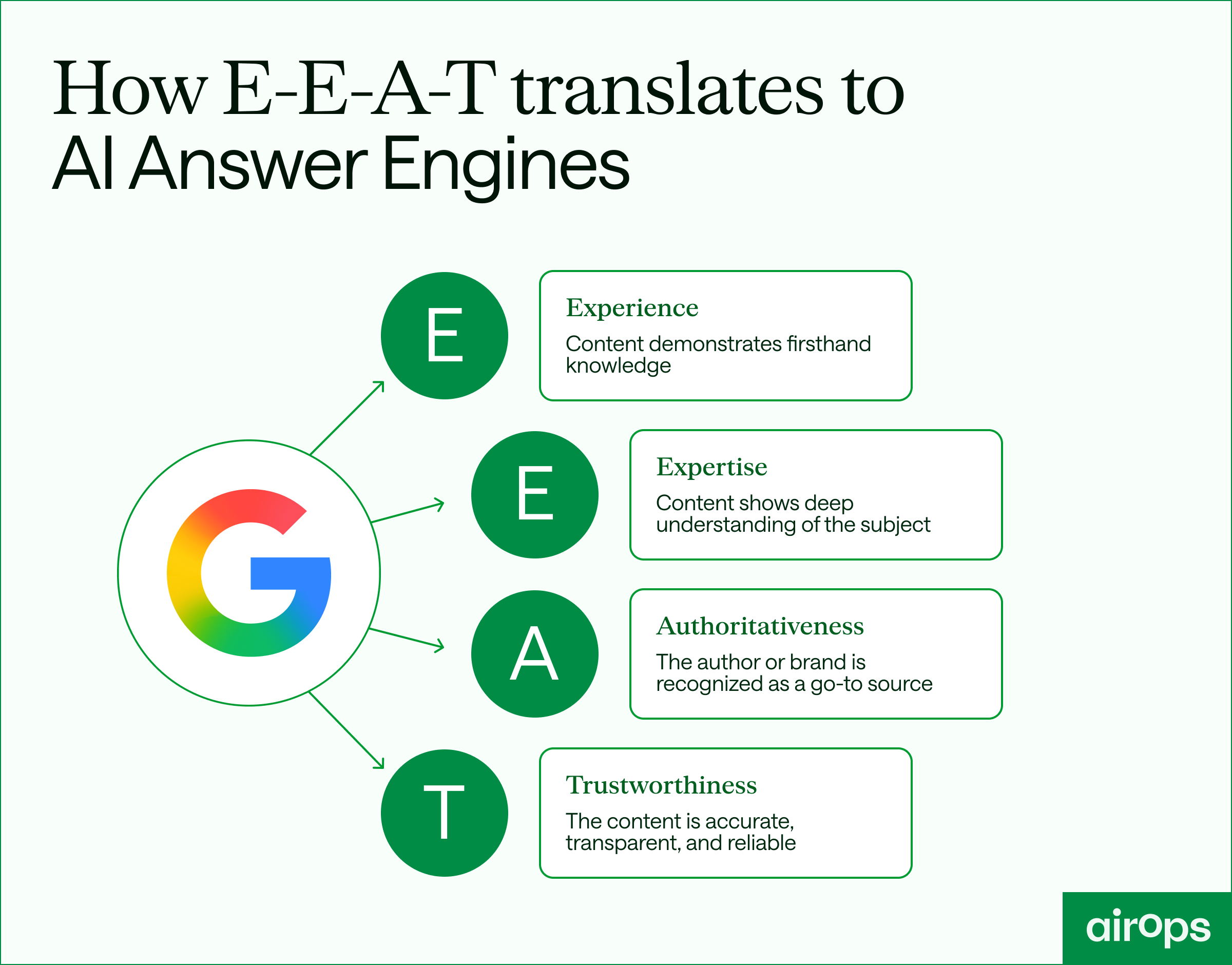
Platforms prefer to cite credible, established sources. Reliable information reduces the risk of inaccurate answers and protects user trust.
Technical accessibility
Crawlability, page speed, and clean HTML still matter.
If Googlebot or an AI crawler cannot access your content, neither system can surface it. Technical SEO remains table stakes.
Clear structure and organization
Headings, logical flow, and scannable formatting help machines and people understand content.
AI platforms need structured information they can extract and quote. Page-level analysis backs this up: pages that follow sequential heading structures (H1 → H2 → H3) correlate with 2.8× higher citation likelihood compared to pages with inconsistent hierarchy.
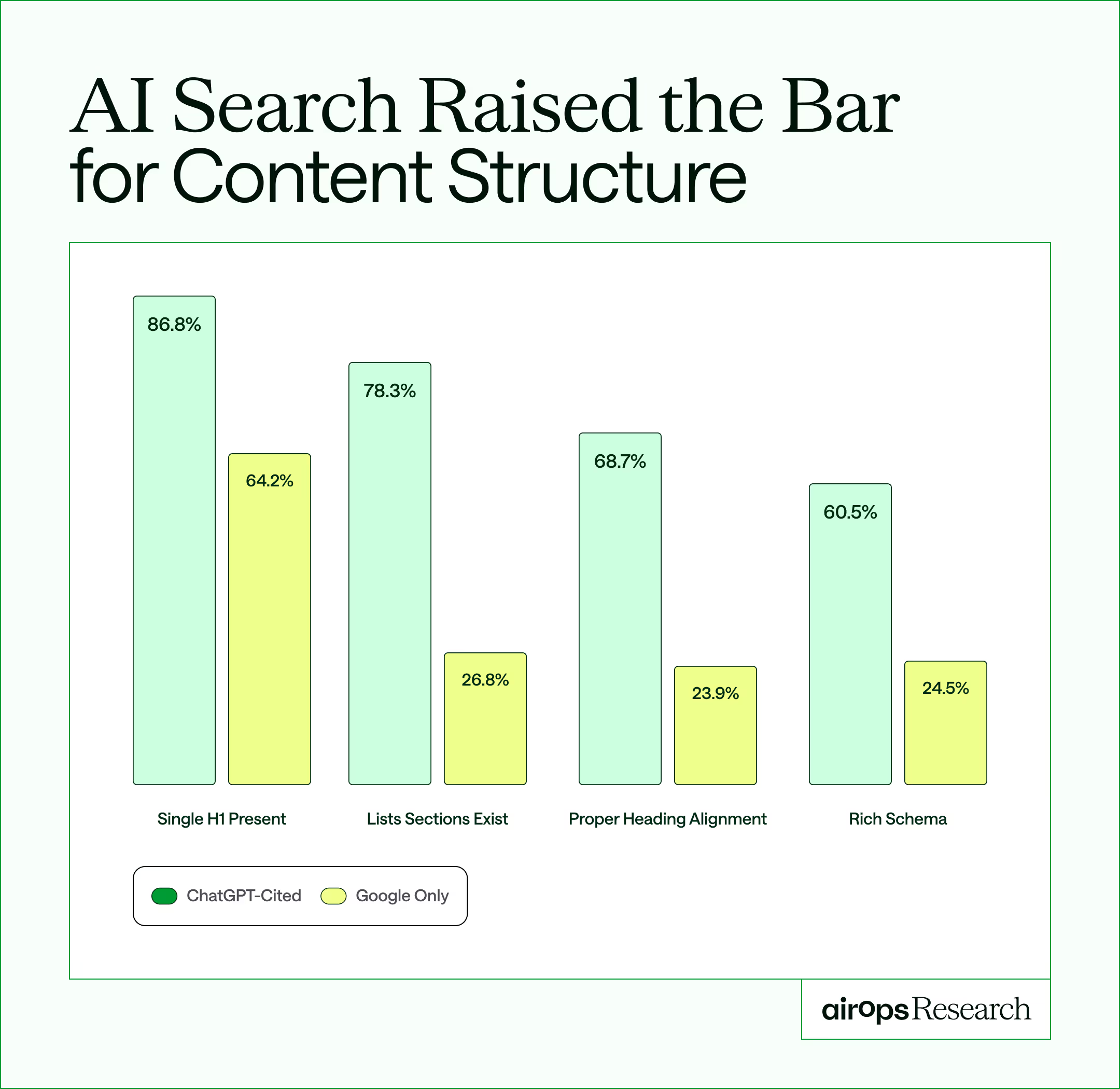
This is classic on-page hygiene, and it now has a second payoff. A clean structure helps Google understand the page and gives AI platforms clear "grab points" for accurate citations.
What changes when you optimize for AI answer engines
The differences between SEO and AI search show up in how platforms present information, how users interact with results, and how brands get discovered and evaluated. These differences separate traditional SEO from AI search optimization without erasing the fundamentals they share.
From rankings to citations
Search engines display ranked lists. AI platforms deliver synthesized answers. This shift from ranking to citation is the foundation of answer engine optimization.
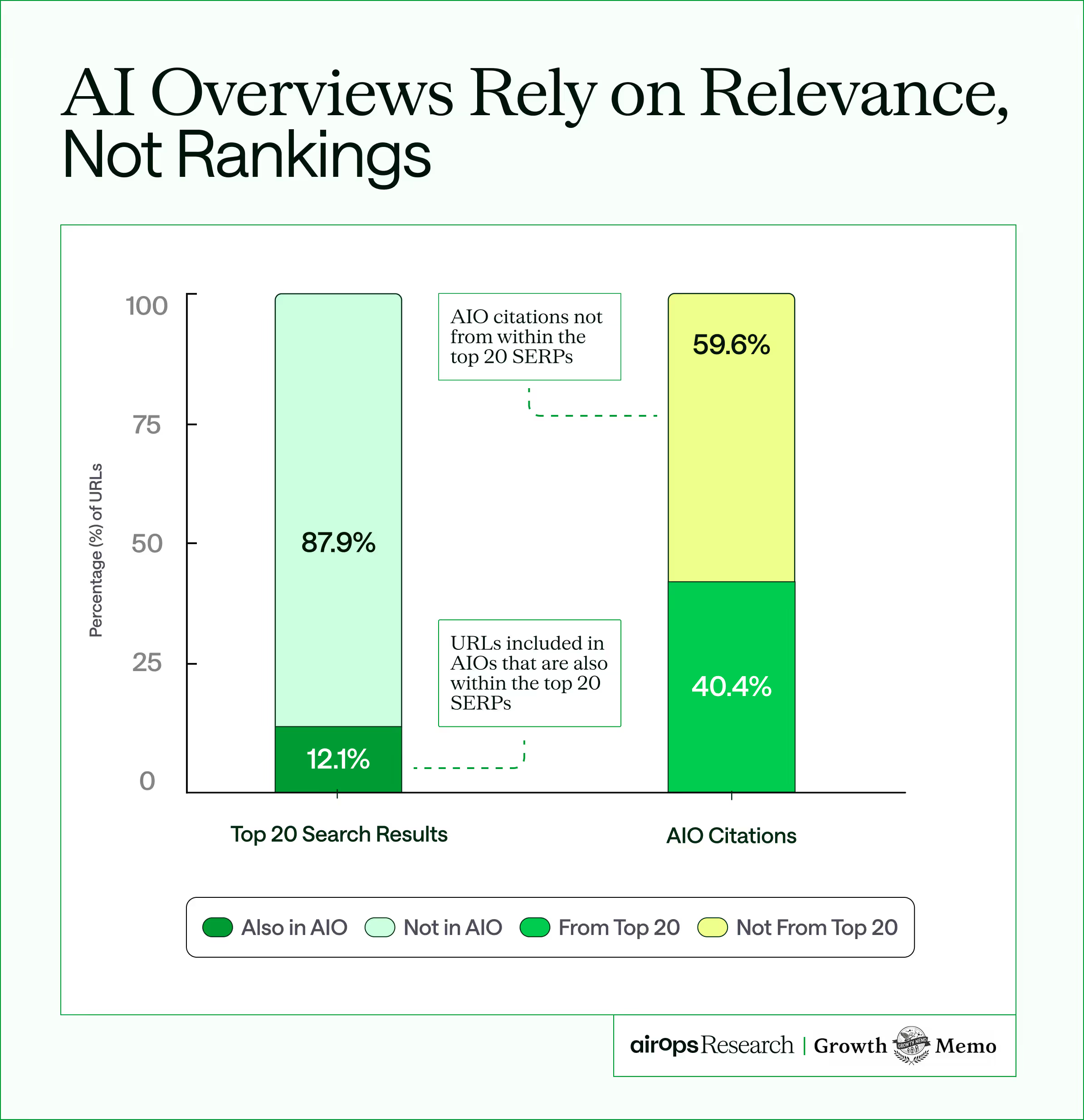
Success in AI search means appearing as a cited source inside an answer, not simply ranking on page one. In AI Overviews, citations often bypass traditional rankings. AirOps research found that roughly 60% of AI Overview citations came from URLs outside the top 20 organic results.
That shift changes how teams evaluate progress. Rankings still matter, but they don't fully explain whether AI platforms will quote your content when a buyer asks a question.
From backlinks to brand mentions
Google relies heavily on links. AI models learn about brand authority through mentions across the web, including broader brand signals.
Mentions on Reddit, LinkedIn, forums, and industry sites build recognition even without hyperlinks. Those unlinked references still shape how AI platforms view authority, which is why many teams now treat brand mentions for AEO and AI search as a core part of their optimization playbook rather than an afterthought.
HubSpot found that a single article earned 85 AI citations with only one backlink. Content clarity and structure drive AI visibility more than link authority.
From keywords to conversational queries
People interact with AI tools differently than they do when typing into Google. In AI search optimization, users ask full questions instead of typing keywords, so content that answers those questions directly wins.
Queries sound like this:
What is the best CRM for small businesses?
How do I create an onboarding checklist?
Which payroll provider works for global teams?
AI platforms respond to those questions in a very different way than traditional search engines. Instead of treating a prompt as a single query, they break it into multiple related searches behind the scenes. This process, called query fan-out, changes how content is discovered.
Chris Long of Nectiv Digital explained this dynamic in a recent AirOps webinar:
"So, query fan-out simply is, instead of doing a single search for a certain query, when you put in a prompt… it is going to perform multiple queries, right?" — Chris Long
When a user asks, "How do I start a podcast?" the system may simultaneously look for answers about equipment, hosting, promotion, and costs. That means one piece of content can surface for many variations of the same intent.
Content written in clear, conversational formats performs better in this environment because it gives AI systems more precise statements to pull from across those related threads.
How AI platforms process content differently
Understanding the technical difference between Google and AI answer engines clarifies why content performs differently. AI evaluates content differently from traditional SEO because it extracts and synthesizes passages instead of ranking whole pages.
Google ranks pages and presents links for users to evaluate.
AI platforms use a method called RAG (Retrieval-Augmented Generation), which lets systems pull relevant passages from many sources before generating an answer.
Key distinction:
Google shows links and lets users decide
AI platforms retrieve snippets and answer directly
That difference creates a new requirement. Content must be quotable and factually clear so an AI system can extract it accurately.
Vague generalizations give platforms nothing useful to cite.
What signals determine whether AI models cite your content
AI models select sources based on page structure, content specificity, and answer clarity. Pages that earn citations share several patterns.
Question-based headings are the strongest citation driver. HubSpot data confirms that formatting H2s and H3s as questions has the most significant correlation with AI citations.
Subheadings with clear outcomes improve LLM visibility because they give AI systems precise extraction points tied to specific user questions.
Compact, low-dependency sentences get cited more often. Key terms placed close together reduce the processing AI needs to extract a useful passage.
Content specificity outperforms broad coverage. Pages tailored to a specific persona or use case earn more citations than generic overviews.
Authority signals in opening sentences matter. Leading each section with a direct, factual claim increases the likelihood that AI models extract and cite the passage.
These patterns show why traditional SEO hygiene, combined with answer-first formatting, translates directly into AI visibility.
How SEO and AEO should coexist
SEO and AEO work best as parts of the same program. You integrate AEO into your existing SEO strategy by keeping one content calendar and adding answer-first formatting to pages you already publish.
SEO builds discoverability, and AEO builds citability. Together, they create durable visibility across search results and AI answers.
A practical operating model looks like this:
Use SEO to win rankings and traffic
Use AEO to win citations and mentions
Use one shared content calendar to support both
Treat AI visibility as an ongoing performance measure, not a separate project
This model keeps teams focused on a single set of priorities instead of managing parallel strategies. Every new article, update, or refresh serves two goals at once. Strong SEO foundations create the entry point. Precise, fact-driven content creates the citation opportunity.
Industry strategists see the same overlap in their own work. As George Chasiotis put it:
"AI search emerged as a new channel with massive overlap with SEO fundamentals. Teams that clearly communicate this overlap and position SEO + AEO as complementary growth engines will unlock more buy-in and impact." — George Chasiotis
The teams that win treat SEO for AI search as a natural extension of their existing strategy rather than a new discipline to bolt on.
Teams that optimize for AI search alongside SEO see compounding returns. Citation and mention signals build over time, creating a visibility flywheel that traditional ranking signals alone do not match.
How does GEO fit alongside SEO and AEO?
Generative engine optimization (GEO) is the practice of shaping content so generative AI engines use it in their answers. GEO, AEO, and AI search optimization describe the same shift with different emphasis, and all three build on traditional SEO fundamentals.
The difference is mostly scope. Answer engine optimization (AEO) focuses on earning citations inside direct AI answers. GEO covers the broader goal of shaping what generative engines say about your brand across ChatGPT, Perplexity, and Google AI.
A few practical distinctions clarify GEO vs SEO:
SEO targets ranked links, while GEO targets inclusion in a generated answer.
SEO measures rankings and clicks, while GEO measures citations and brand mentions.
SEO rewards keyword-matched pages, while GEO rewards clear, quotable, well-structured passages.
None of this replaces SEO. The same intent matching, depth, and authority that lift Google rankings also make content easy for generative engines to cite. Treat GEO vs SEO as one strategy with two payoffs, not a choice between them.
How traditional SEO improvements translate into stronger LLM citations
Traditional SEO improvements translate into stronger LLM citations when pages include clear structure and explicit answers.
Actions that typically help both channels include:
Updating content for accuracy and depth
Adding clear definitions and explanations
Improving structure and readability
Expanding topic coverage
Publishing original research
Strengthening brand authority
Pages that already rank well in Google often earn citations in AI platforms because the same signals guide both systems.
McKinsey & Co. research shows that more than half of AI overview sources already come from the top 10 Google results. Strong SEO performance creates a practical head start in AI visibility.
The biggest gap appears when content ranks but lacks clear, quotable statements. That scenario requires light editing rather than a full rewrite.
Pages that lose AI citations can recover. AirOps research shows a 40% recovery rate when content is re-optimized with clear structure and direct answers.
How to prepare content for Google and AI platforms at the same time
A unified approach serves both environments.
Improve AI readability first
Review existing pages with a simple goal: make ideas easier to extract.
Replace vague phrases with specific nouns
Remove unclear pronouns and indirect language
Favor direct, concrete sentences
AI systems interpret text literally. Straightforward wording gives them clearer material to cite.
AirOps State of AI Search 2026
Organize pages around real questions
Structure content the way people actually search.
Turn major sections into clear question-style headers
Place the direct answer immediately after each heading
This format helps human readers and gives AI platforms clean, quotable passages. More on this from Ethan Smith at Graphite.
Expand coverage where it adds value
Broaden pages to include the context a buyer needs. Add definitions, examples, and logical follow-ups. Comprehensive content creates more opportunities to rank in Google and more material for AI systems to reference.
Use schema markup to clarify meaning
Structured data helps machines understand the purpose of a page and the relationships between ideas. AirOps research found a connection between richer schema and AI visibility. In one dataset, pages using three or more schema types showed a 13% higher likelihood of being cited.
Focus on schema markup that fits the intent of the page:
Article and BreadcrumbList for editorial content
FAQPage or QAPage when the page answers direct questions
Organization or Person schema to reinforce authorship and credibility
These signals improve context for Google and increase the odds that AI platforms surface the right excerpt. FAQ formatting and schema markup correlate with measurable citation lift in AI answers, making structured markup one of the highest-return investments for teams bridging SEO and AEO.
Publish information AI can't invent
Original insights stand out. Unique data, surveys, case studies, and expert perspectives give platforms a clear reason to cite your content instead of repeating generic explanations.
How to measure performance across SEO and AI search
Traditional SEO metrics still matter for AI optimization. Rankings and organic traffic remain core signals, but standard tools rarely show AI brand visibility. Teams need practical ways to measure both.
You can measure AI visibility alongside traditional SEO metrics by tracking citations, brand mentions, and AI referral traffic in the same dashboard as your rankings.
Track citations and brand mentions
Monitor when AI platforms quote your content or reference your brand. Manual checks help early on. Automated tracking becomes essential as content volume grows.
Monitor referral traffic from AI platforms
Look for visits from ChatGPT, Perplexity, Gemini, and other AI tools in your analytics. These referrals often convert at high rates even when total volume stays modest.
Build a simple measurement cadence
Start with a lightweight dashboard that blends SEO and AI metrics in one view:
Monthly trend in AI citations by topic
Rankings for core keywords
Referral sessions from AI platforms
Top pages that rank well but lack citations
Competitor share of voice for priority queries
Review this dashboard once a month, identify gaps in citability, and assign updates to the next content sprint. This cadence connects measurement directly to action instead of producing reports that sit unused.
How AEO differs from traditional SEO
SEO helps search engines find and rank your content.
AEO helps AI systems understand, trust, and reuse your content.
The difference shows up in user behavior:
- SEO: Users click your result and explore your site
- AEO: Users consume your answer inside the AI interface
Key components of AEO include:
- Structured content: Clear hierarchies, schema markup, and predictable formats
- Direct answers: Concise responses early in the page that AI can extract
- Authority signals: Demonstrated experience, subject expertise, and accuracy over time
Structure plays a measurable role in whether content gets cited. AirOps analysis shows that pages with clean structure earn 2.8 times more AI citations than poorly structured pages.
This is where AEO diverges most clearly from SEO: ranking rewards relevance and authority, while citation rewards extractability.
Key differences between AEO and SEO
AEO and SEO operate on the same content foundation, but they reward different outcomes. SEO performance reflects how well a page competes inside traditional search results. AEO performance reflects whether AI systems select that page as a reliable source when generating answers.
The distinction matters because a page can rank well and still fail to earn citations, or earn citations without driving a click.
The table below summarizes where the two approaches diverge operationally. It's not meant to frame a choice between them, but to clarify how each one contributes to visibility across modern search surfaces.
In practice, these signals reinforce each other. Strong SEO increases discoverability and trust, which helps content enter the AI selection pool. AEO-focused structure and clarity increase the likelihood that the same content gets reused as an answer once it's discovered. Teams that plan for both avoid a common failure mode: optimizing pages exclusively for rankings, then wondering why those pages never appear in AI-generated responses.
Is AEO replacing SEO?
No.
AEO extends SEO. It does not replace it.
AI systems rely on authoritative web content to generate answers. Strong SEO increases the likelihood that content enters the AI selection pool in the first place.
That trust often forms off-site. AirOps research shows that approximately 85% of brand mentions in AI Search originate from third-party pages, not the brand's own domain. Reviews, community discussions, expert commentary, and earned media continue to influence which brands AI systems recognize as credible.
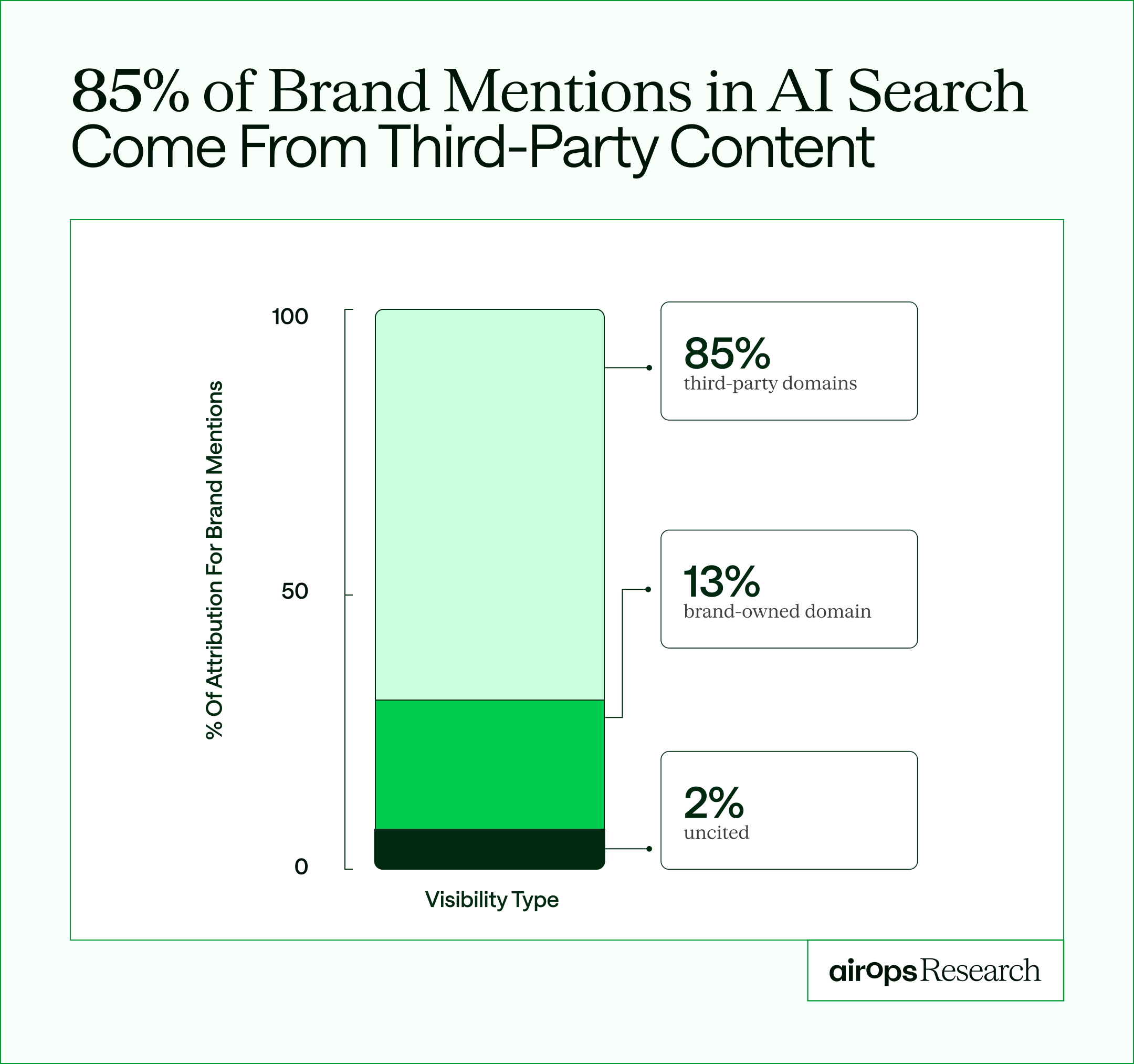
Brand mentions across the web increasingly act as trust signals, reinforcing why off-site visibility remains a core part of modern search strategy.
This also matches what Lily Ray shared in AirOps' recent webinar. As she put it:
“Large language models have to use search engines… they’re not going to be able to replace Google’s index anytime soon… so we have to be visible in search and do a good job in search as part of our AEO or GEO strategy. That’s going to be true forever.” — Lily Ray
The relationship works like this:
- SEO builds discoverability and credibility
- AEO converts credibility into AI visibility
Ignoring either limits performance.
How to integrate AEO and SEO together
The most effective approach treats AEO and SEO as complementary, not competing priorities.
Audit for dual performance
Test priority queries across ChatGPT, Perplexity, and Google AI Overviews. Note which sources appear and why.
Then review SEO signals for those pages. Strong candidates often rank well but lack clear answer formatting.
A simple scorecard helps:
- SEO performance (1–10)
- AEO readiness (1–10)
This highlights where small structural changes can unlock AI visibility.
Once you identify pages with high SEO performance and low AEO readiness, prioritize them for refresh. Small changes often drive outsized gains, especially when you add a direct answer, tighten headings, and update facts and examples.
If you want a repeatable way to run this across a large site, AirOps supports content refresh programs by helping teams identify which pages to update and what to fix, without losing brand standards.
This kind of evaluation is especially important for mid-funnel content, where buyers ask more specific questions and AI systems increasingly shape how those answers are surfaced.
Some teams run this integration through partners like AirOps, layering AI citation tracking on top of existing SEO reporting to see where the two strategies diverge.
Structure content intentionally
A pattern that works well:
- Direct answer in the opening
- Context and credibility immediately after
- Full topic coverage below
- FAQs reinforcing core questions
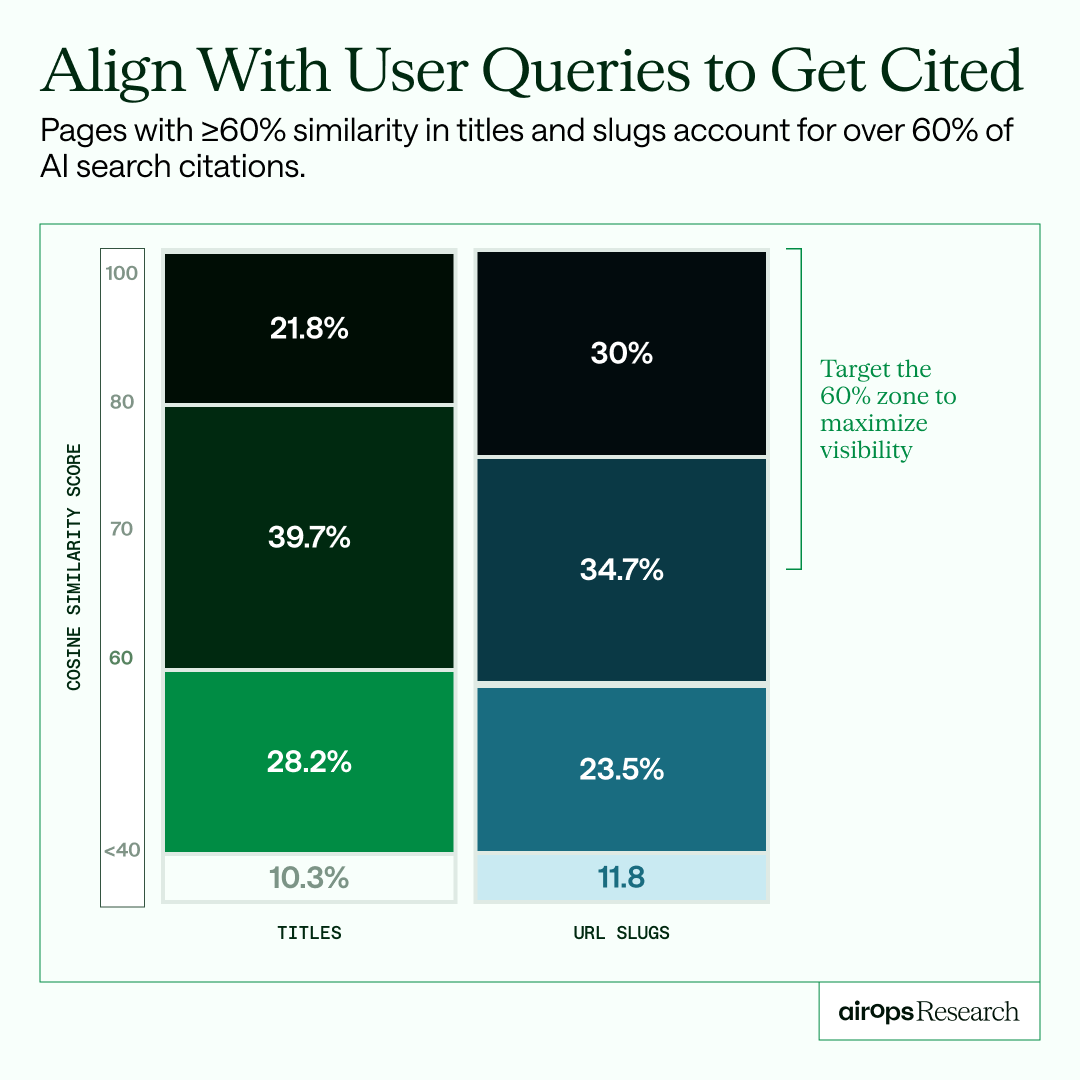
Clear intent signals matter as much as layout. AirOps research shows that pages with roughly 60% similarity between user queries and on-page signals, including titles and URL slugs, account for more than 60% of AI search citations. When titles and slugs reflect how questions are actually asked, models find and reuse those pages more reliably.
Schema markup supports both humans and machines. Use it consistently.
When teams create new pages, they can bake this structure in from the start. AirOps helps teams create on-brand drafts faster, using consistent templates and sources, so each page ships with clear answers, clean sections, and the right building blocks for AI Search and traditional SEO.
AEO metrics to add to your SEO reporting
AEO does not show up cleanly in analytics dashboards, so teams need a simple operating rhythm.
Effective teams:
- Test your core queries weekly across ChatGPT, Perplexity, and Claude.
- Track citation frequency and accuracy
- Monitor brand mentions for consistency
Pair that with your existing SEO metrics so you can spot patterns between ranking gains, content changes, and AI inclusion. Over time, you’ll see which pages keep earning citations and which ones drop out.
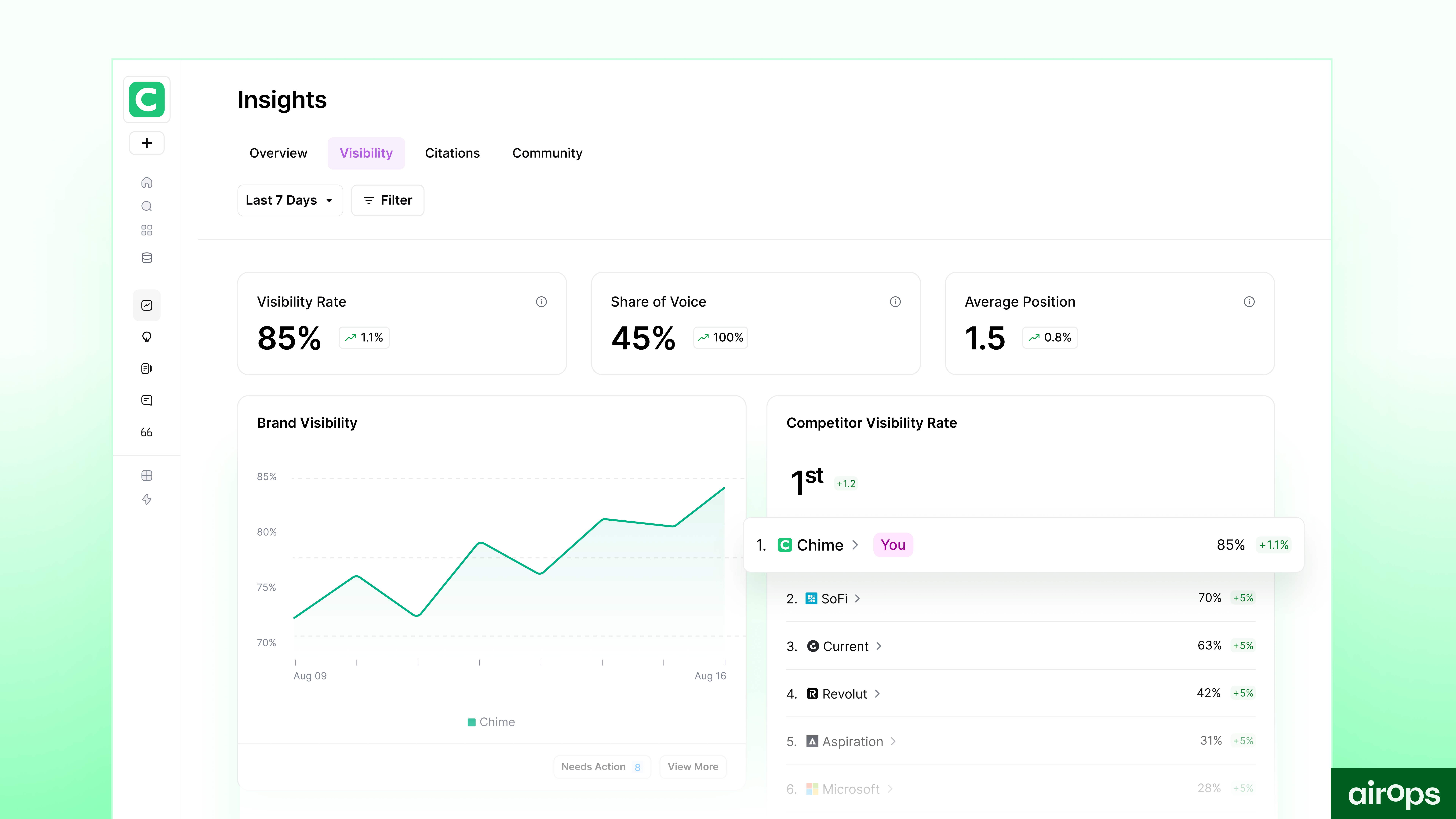
This is also where the right tooling saves time. AirOps supports this work by helping teams see where content shows up in AI answers and where gaps show up across topics, structure, and authority signals. You can treat this as ongoing QA, not an occasional audit.
Common mistakes teams make with AI search optimization
Several misconceptions cause practitioners to waste effort. Knowing what doesn't work saves time and resources.
Keyword stuffing for AI queries: AI systems prefer natural language. Forced optimization hurts readability and reduces citations.
Ignoring conversational patterns: Teams that write only for short keywords miss how people actually ask AI questions.
Neglecting citability: Content without clear statements, data, or definitions gives AI platforms nothing to quote.
Betting on one platform: Focusing only on ChatGPT or only on Google creates fragile visibility. A diversified approach protects results.
Skipping your own visibility check: If you never search your key terms across AI tools as a customer would, you miss the fastest signal of where your brand is absent.
How to start optimizing for both channels today
A practical starting point requires three actions in your first 30 days.
Audit your top 10 pages for citability. Check whether each page answers the main question within the first two sentences of every H2 section. If it does not, rewrite the opening sentence as a direct answer.
Search your own key terms across ChatGPT, Perplexity, and Gemini. If your brand does not appear in the answers, that gap is your first priority.
Add FAQ sections with schema markup to your highest-traffic pages. An AI search optimization tool like AirOps identifies which pages have the largest citation gaps so you can prioritize updates.
These three steps bridge SEO and answer engine optimization without requiring a new team or a separate strategy.
Key takeaways
AI search optimization builds on SEO fundamentals, then adds a higher bar for structure and extractability.
Rankings signal discoverability, but citations decide whether AI platforms surface your content in answers.
Sequential heading hierarchy makes content easier to parse, and correlates with 2.8× higher citation likelihood when pages follow clean H1 → H2 → H3 structure.
Schema helps systems interpret purpose and relationships, and pages with three or more schema types show a 13% higher likelihood of being cited in one dataset.
AI platforms fan out a single prompt into many related searches, so content that answers core questions plus logical follow-ups earns more citations over time.
Turn one strategy into two channels
Strong visibility in 2026 requires a single approach to organic search and AI visibility that works for Google rankings and AI citations at the same time.
Start with an audit of your current content. Update pages that already rank and lack clear, quotable statements. Expand into new topics using question-driven formats and structured answers.
This approach converts familiar SEO fundamentals into reliable AI citations while keeping existing workflows intact.
AirOps gives teams a single platform to track citations across ChatGPT, Perplexity, and Google AI, identify which pages earn AI visibility and which need updates, and connect that data directly to content workflows. AirOps is the partner brands bring in for this shift, combining the platform, the media mix, and the team that builds and runs the strategy alongside your own, and ties it back to pipeline and revenue. Prompt Discovery surfaces the questions your audience asks AI search engines, drawn from panel data across millions of real users, so you can close citation gaps before they compound.
Book a demo to see how AirOps helps brands measure, manage, and grow AI citations alongside SEO performance in one unified system.
Frequently Asked Questions
How long does it take to see results from AI search optimization efforts?
Most brands begin seeing measurable changes in AI citations within 60 to 90 days of implementing structural improvements and adding quotable statements to existing content, though building consistent visibility across multiple AI platforms typically requires 6 to 12 months of sustained effort.
Do I need separate content for ChatGPT versus Perplexity versus Google AI Overviews?
No, a single piece of well-structured content with clear answers and strong E-E-A-T signals can perform across all major AI platforms simultaneously, since they use similar retrieval methods and prioritize the same quality indicators like factual accuracy and source credibility.
What tools can track whether my brand is being mentioned in AI-generated answers?
Dedicated AI visibility platforms like AirOps offers citation tracking across ChatGPT, Perplexity, and Gemini, while manual spot-checking with specific prompts related to your industry remains useful for smaller teams just starting to monitor AI mentions.
Should I block AI crawlers from accessing my website content?
Blocking AI crawlers eliminates your chance of being cited in AI answers entirely, so most brands benefit more from allowing access while focusing on creating content valuable enough to earn citations rather than restricting visibility out of concern about content being used without attribution.
How do AI answer engines handle conflicting information from different sources?
AI platforms typically prioritize sources with stronger authority signals and more recent publication dates when encountering contradictions, which means keeping content updated and building topical authority through consistent publishing increases the likelihood your version gets cited over competitors.
What content formats get cited most often by AI platforms?
Definition paragraphs, numbered step-by-step processes, comparison tables, and direct answers placed immediately after question-style headings earn citations at higher rates because they give AI systems clean, extractable passages that require minimal interpretation or reformatting.
What is AI search optimization?
AI search optimization is the practice of structuring and writing content so AI answer engines cite it in generated responses. It builds on core SEO fundamentals like intent matching, depth, and authority, then adds answer-first formatting that makes passages easy to extract. The goal shifts from earning rankings to earning citations and brand mentions.
What is AI SEO and why does it matter?
AI SEO is the discipline of optimizing content for both traditional search rankings and AI-generated answers in one unified system. It matters because buyers increasingly ask AI tools questions before visiting any website, so brands that earn citations shape decisions earlier. Teams that ignore it lose visibility in the answers that now guide purchases.
Can the same content rank on Google and get cited by AI answer engines?
Yes, the same content can rank on Google and earn AI citations because both systems reward relevance, depth, and authority. The requirements are not fundamentally different, but AI answer engines add a higher bar for clear structure and quotable statements. Pages that already rank often need only light editing to become citable.
What page-level improvements increase the chances of being cited?
Question-style headings, direct answers placed immediately after each heading, and compact factual sentences increase the chances of being cited. Adding schema markup, original data, and specific examples gives AI systems clean, extractable passages. These page-level improvements translate SEO hygiene directly into stronger AI visibility.