Webinar Recap: Google In Flux - AI Mode, AI Overviews & Algo Updates with Lily Ray
Google is transforming at breakneck speed. In this AirOps webinar, Lily Ray, SEO Director at Amsive Digital, joined Josh Spilker to dissect Google's latest algorithm changes and the emergence of AI search features.
Top 5 Takeaways
• AI Overviews expand Google’s walled garden. They dominate informational queries with on-page answers, but Google withholds them when liability or transaction intent is high.
• Freshness is shifting from cosmetic to substantive. Real updates — not date tweaks — now shape visibility as AI systems reward meaningful revision over passive maintenance.
• YouTube is emerging as Google’s credibility anchor. Video-backed explanations and multimedia assets increasingly influence both organic rankings and LLM-generated answers.
• AI search expands the total addressable market. LLMs are accelerating new discovery behavior, but Google remains the dominant gateway as overall search volume continues to rise.
• Google is prioritizing experience over expertise. First-person insights, real-world usage, and authentic perspectives now outperform generic “best practices,” redefining what credible content looks like in AI-driven search.
The impact of AI Overviews and AI Mode on search and traffic
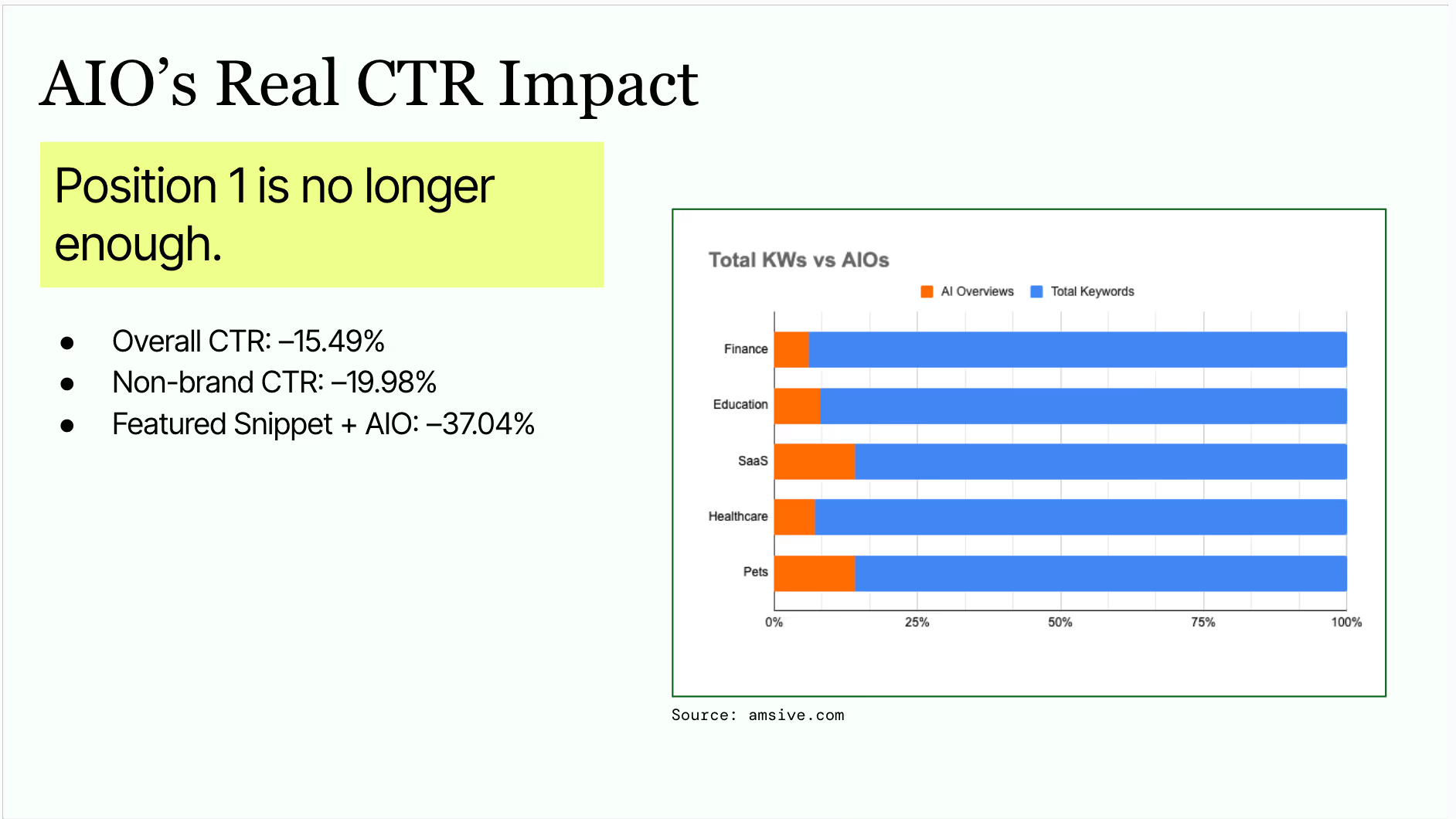
Lily explained how Google's AI Overviews and AI Mode are changing user behavior, reducing clicks to websites, and forcing brands to rethink their SEO strategies. She highlighted differences across industries and why measuring impact is more complex than ever.
- AI Overviews and AI Mode keep users on Google by providing direct answers, reducing external clicks.
- Informational queries, especially upper-funnel content, are most affected by falling click-through rates.
- AI Mode leverages Google's massive databases, giving it an edge over other LLMs.
"If your main metric is clicks and traffic, it's gonna be a really hard time. We're not gonna see the levels of traffic that we saw, let's say, in 2022 for many sites, especially the sites that are producing, like upper funnel informational content, or content that's relatively easy to answer, or content that you can really honestly just get really quickly from AI, that type of traffic is not going to be there anymore, unfortunately." — Lily Ray
Content quality, E-E-A-T, and the evolution of "spam"
The discussion covered how Google's core updates and spam policies now target low-value, automated, or "SEO-first" content. Lily emphasized the growing importance of E-E-A-T (Experience, Expertise, Authority, Trust) and authentic, human-driven insights for ranking and visibility.
- Google's definition of "spam" now includes even legitimate brands that rely on scalable, low-effort content.
- E-E-A-T rewards sites with original insights, expert voices, and authentic conversations—especially for sensitive "your money, your life" queries.
- Automated or "set-it-and-forget-it" content, even if not strictly AI-generated, is being systematically demoted.
"The main distinction to really think about here in the last few years with Google is that the definition of spam is evolving. A lot of people that think they're doing SEO properly, for example, are actually finding themselves treated as a spam website by Google now, so the stakes are much higher." — Lily Ray
Measurement, KPIs, and adapting SEO for AI search
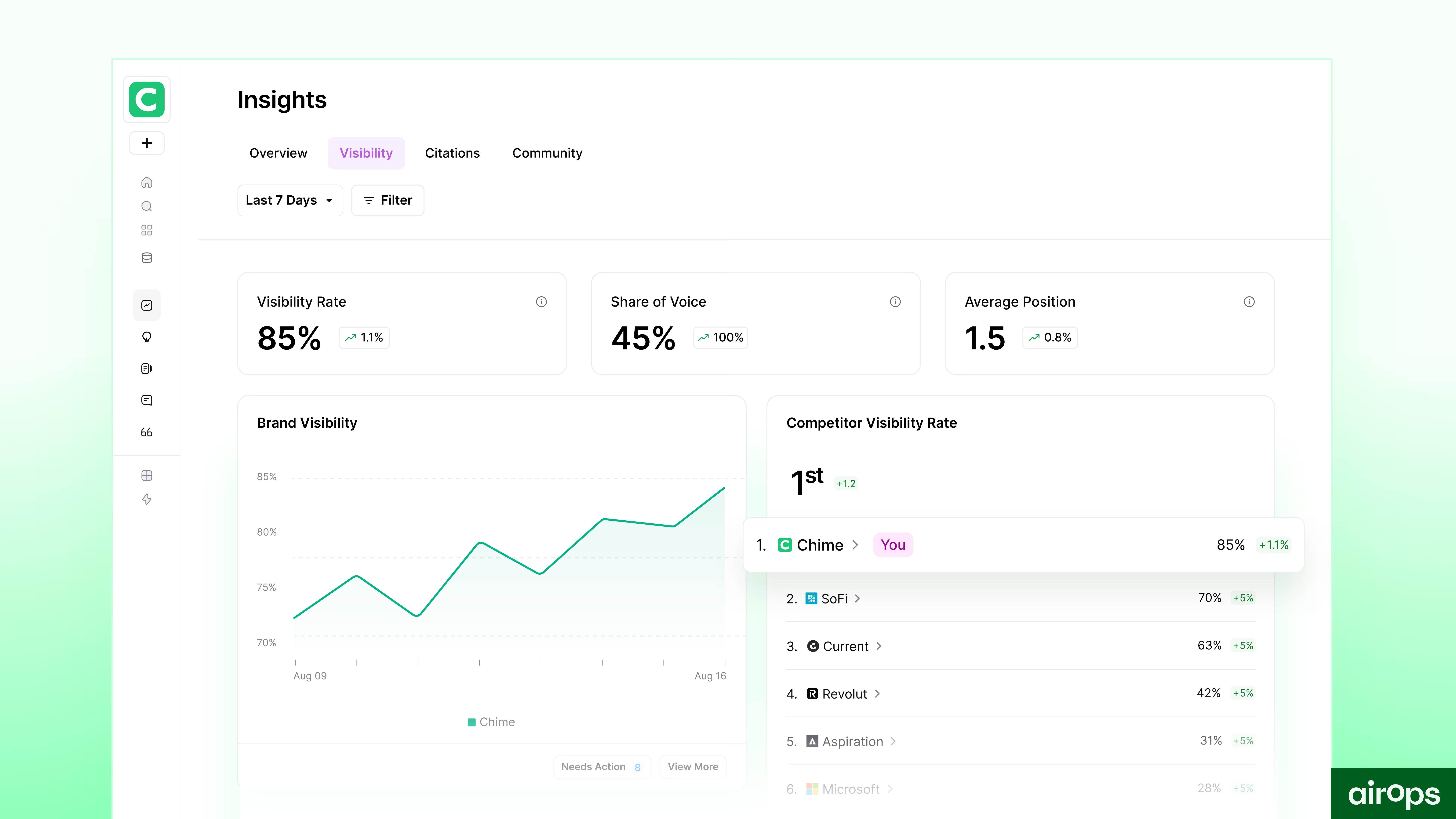
With AI-driven features reducing traditional traffic, Lily shared how brands need to shift their focus to new metrics like visibility, citation rate, and entity clarity. She also addressed the challenges of tracking performance in AI-embedded features.
- Success now means tracking citations, visibility in AI Overviews, and entity clarity—not just rankings or clicks.
- Regularly updating evergreen content with real changes (not just date tweaks) improves AI and search visibility.
- YouTube and multimedia assets are key for both AI and organic visibility.
"The more that you can get your content out on YouTube, that's a really good AI search strategy. And obviously upload those transcripts. YouTube can generate them automatically, but that really helps with AI search." — Lily Ray
AI search, LLMs, and the expansion of search
Lily covered how large language models (LLMs) like ChatGPT and Gemini interact with Google and Bing, the overlap in their data sources, and how user behavior is evolving. She stressed that while AI search is growing, Google remains dominant.
- LLMs depend on search engines for data, and citations often reflect strong entity clarity and original research.
- Most users still default to Google, and global search volume is rising despite the growth of LLMs.
- AI search is expansionary, enabling longer, deeper queries and new use cases—not just replacing traditional search.
"Large language models have to use search engines, that's going to be true forever. You know, they're not going to be able to replace Google's index anytime soon, or Bing's index, so we have to be visible in search and do a good job in search as part of our AEO or GEO strategy. That's going to be true forever." — Lily Ray
Actionable strategies for 2026
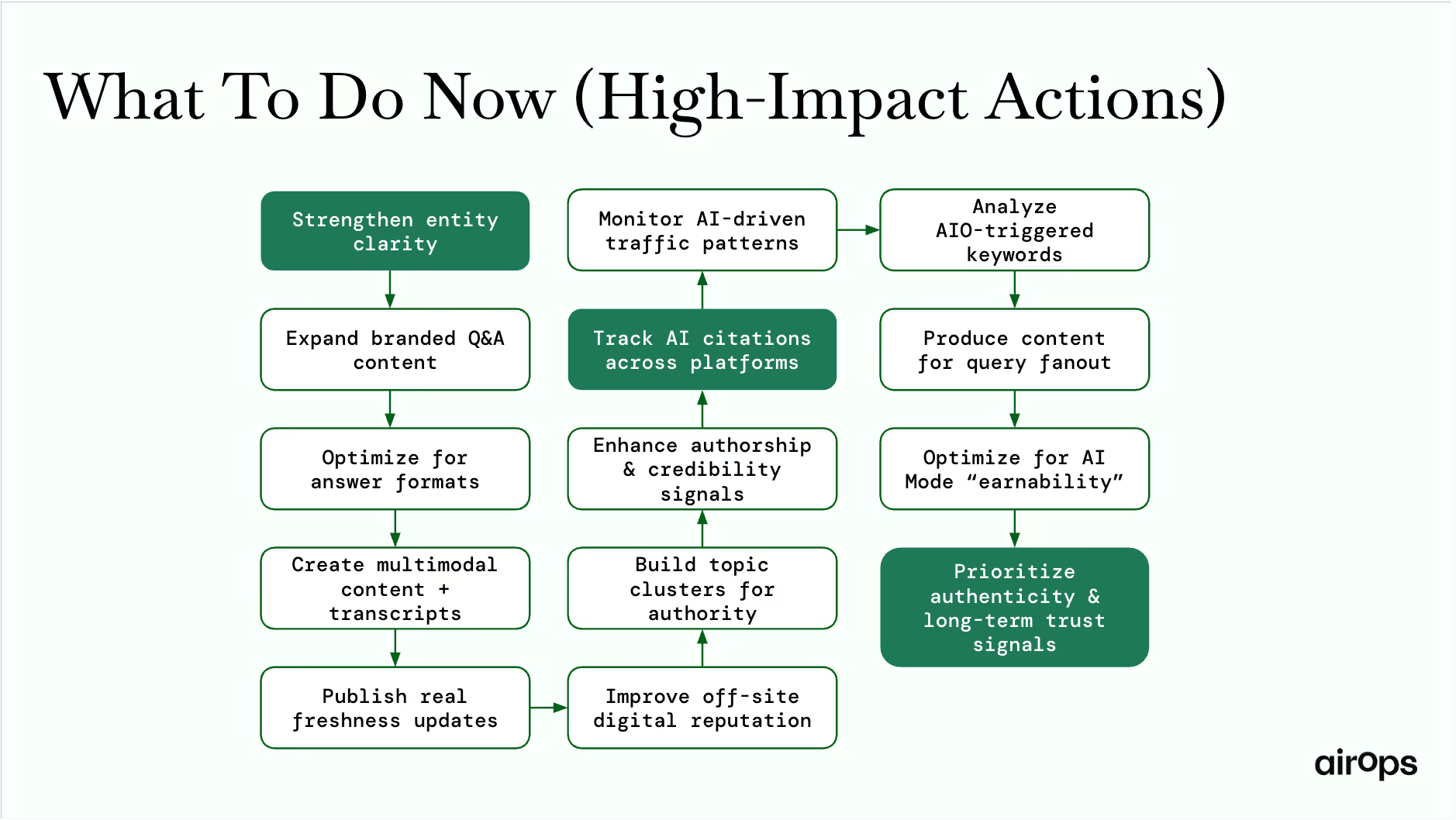
The webinar wrapped with actionable advice for brands: balance automation with original insights, strengthen entity clarity, and use omnichannel strategies for maximum visibility in both AI and traditional search.
- Use AI for efficiency in research and production, but always add original, human-driven insights.
- Strengthen your brand's entity clarity across your website, structured data, and third-party platforms.
- Expect new algorithm updates targeting content created only for AI agents, not humans.
"I expect a giant algorithm update, if not new spam policies around some of the tactics people are using for AI search. ... I expect to see new ones next year, and a giant algorithm update or multiple algorithm updates to demote a lot of the content people are creating specifically for AI agents and not for humans." — Lily Ray
Best Practices and Key Learnings
There are clear steps brands can take now to stay ahead. Here's what matters most.
Focus on original, expert-driven content
Google's algorithms now reward sites that offer unique perspectives and real expertise, not just SEO-driven copy.
- Feature subject matter experts and original research in your content.
- Avoid "set-it-and-forget-it" content and add new insights with every update.
- Make sure your content answers real user questions better than generic AI outputs.
"They're really looking for that, those net new insights, which is why you see sites like Reddit, for example, that have grown so much over the last few years." — Lily Ray
Track the right metrics for AI search & SEO
Traditional KPIs like traffic and rankings are less reliable as AI features take over search results.
- Use third-party tools to measure visibility, citation rate, and entity clarity in AI Overviews and People Also Ask.
- Monitor your brand's citations and mentions across Google, LLMs, and social platforms.
- Refresh evergreen content with meaningful updates—not just date changes.
Build a strong, everywhere brand presence
Visibility now depends on being present and consistent across channels, not just your own website.
- Publish content on YouTube and upload transcripts to maximize AI and organic visibility.
- Maintain an active, authoritative presence on social media and third-party sites.
- Strengthen your entity clarity through consistent messaging, structured data, and third-party mentions.
Future-proof your SEO and content strategy for AI search
Staying visible in the age of AI means adapting quickly, focusing on quality, and building a brand that's everywhere your audience looks. The brands that win will balance automation with human insight, track the right metrics, and keep their content and presence fresh across every channel.
Want to see how AirOps helps teams do exactly that? Book a call to get started.
Get the latest on AI content & marketing
