The GEO Strategy Playbook for Marketers and Organic Growth Teams
Have you noticed a change in how buyers approach transactions and purchases?
Perhaps you've seen an uptick in AI search referral traffic or your "how'd you hear about us" form get populated with names of popular AI search engine tools.
If so, the stats are bearing it out.
Ninety-four percent of B2B buyers now use generative AI somewhere in their purchase process, according to 6sense's 2025 Buyer Experience Report.
And 98% of enterprise marketing leaders are already optimizing for AI search or plan to within the next 12 months, according to Branch's 2026 enterprise research.
In only a few years, a niche side entrance to your site has become a front door.
Generative engine optimization, or GEO, is the response: the practice of getting content selected, cited, and trusted by the large language models (LLMs) writing those answers. Most marketing teams are still running it through an SEO measurement stack built for a different job.
SEO earns a position on a results page. GEO earns a seat inside the synthesized answer itself, and those are two different competitions judged by two different sets of rules. A model deciding what to cite weighs freshness, structure, and third-party corroboration far more heavily than it weighs a brand's position in Google's index.
What actually changed for marketers
Search used to be a list of links a person scanned and clicked through. Now a model reads across the web, synthesizes an answer, and names a handful of sources it trusts enough to cite or mention by name. The competition moved from ten blue links to a shortlist of three or four brands a model is willing to vouch for.
That shift is also less stable than the SEO rankings marketers are used to defending. AirOps' 2026 State of AI Search research, developed with growth strategist Kevin Indig, found that only 30% of brands stay visible in an AI answer from one run to the next, and just 20% remain visible across five consecutive runs of the same prompt.
Buyer behavior backs up why this matters commercially. 6sense's research puts generative AI use at 94% of B2B buyers during their most recent purchase process.
Branch's survey of 300 enterprise marketing leaders found 65% are already committing 25% or more of their 2026 marketing budget to AI search, and the top tactics they're funding are foundational: improving crawlability for AI tools, tracking AI-driven traffic, and building LLM-friendly content formats like FAQs. Buyers moved first. Budgets are catching up.
This is why GEO has to run as its own discipline with its own scorecard, not as a rebrand of an SEO program that already exists.
Why the old SEO dashboard misses what matters
A monthly rankings report was built to catch slow-moving change. GEO moves at a different speed, and teams that keep measuring it with SEO's old cadence miss the signal until it shows up as a revenue problem.
A few patterns show up again and again in teams that struggle to gain ground:
- They track brand-level visibility instead of query-level visibility, so a brand that's well cited on category questions looks healthy even while it's losing every comparison and evaluation prompt that actually drives pipeline.
- They wait for a traffic drop to trigger a content refresh, instead of watching the freshness clock on high-value pages before they age out of consideration.
- They treat GEO as an onsite project, when 85% of the mentions that shape a buyer's shortlist happen somewhere else entirely.
- They keep chasing keyword volume instead of mapping the specific prompts and comparison questions their buyers are actually asking a model.
None of these are hard problems to fix. They're just invisible to a dashboard built for a different era of search.
The framework: Levers that drive GEO citations
Winning GEO in 2026 comes down to four connected levers: measurement, content engineering, offsite presence, and vendor-evaluation readiness. Each one reinforces the others.
1. Track the metrics that matter
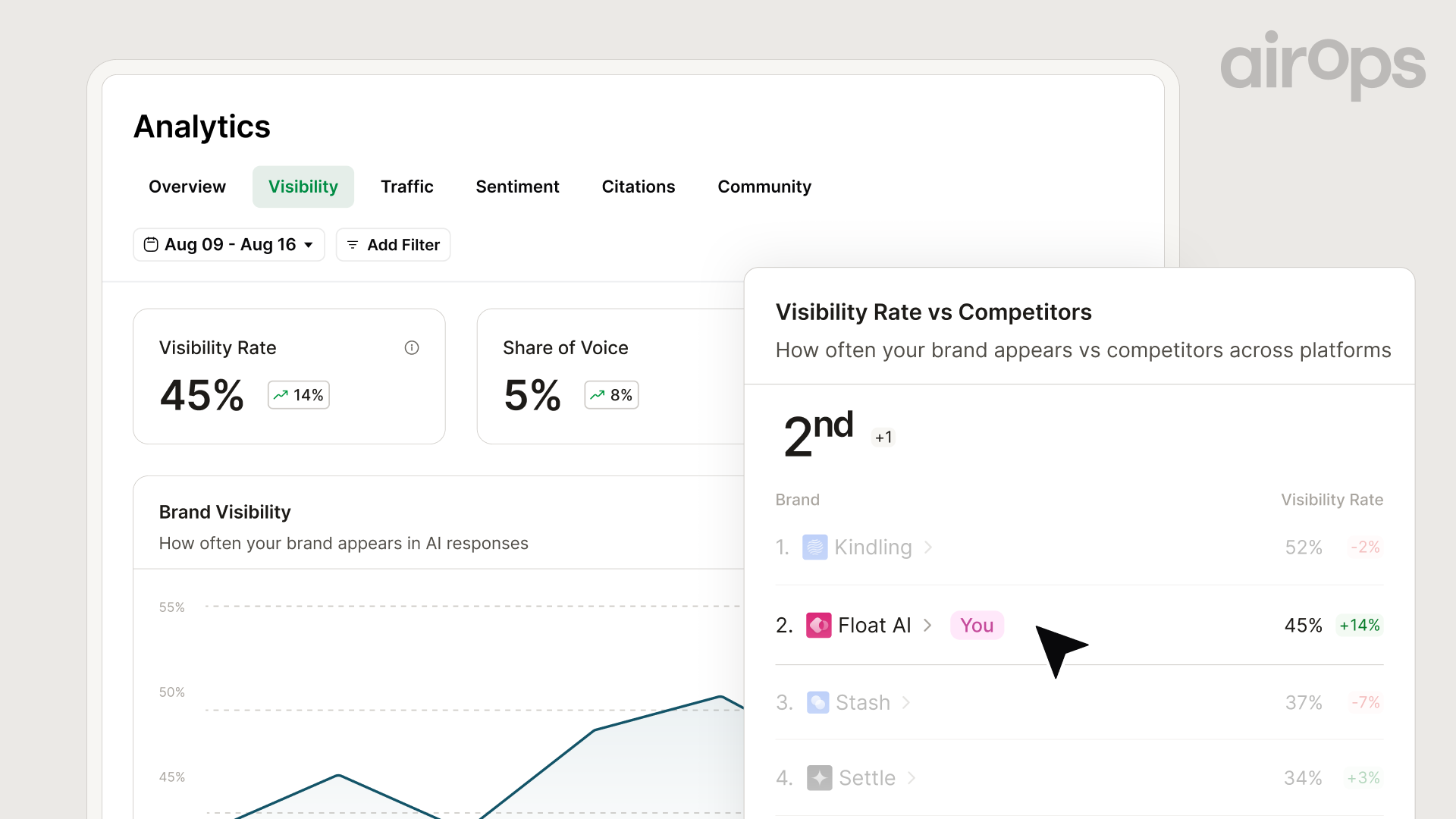
GEO tracking means moving a team's standing review from a monthly rankings report to a weekly citation review, because AI visibility moves faster than organic rankings ever did.
Five metrics replace the SEO scorecard:
- Citation rate (how often a page gets used as a cited source)
- Mention rate (how often a brand gets named without a link)
- Share of voice (visibility relative to competitors across the same prompts)
- Sentiment (whether a model describes a brand positively, neutrally, or negatively),
AirOps' North Star Metric for AI Search research breaks down how these replace impressions, clicks, and position as the metrics that actually describe whether a model trusts a brand.
Kevin Indig made the distinction directly in an AirOps webinar on ChatGPT's growth: "Mentions and sentiment in AI platforms are now as important as traditional rankings," he said, describing how visibility inside a synthesized answer now carries the same weight rankings used to carry.
A brand can be well cited on top-of-funnel category questions and nearly absent on the comparison or evaluation prompts that actually influence a purchase. Track at the query level, not just the brand level, or that gap stays invisible until a competitor closes it.
The teams with the highest compounding visibility run a standing weekly review across three signals: which prompts they're cited for and how often, which pages are approaching the three-month freshness cliff, and which competitors are gaining ground on prompts they used to own. They catch decay before it shows up in pipeline, the same way SEO teams learned to treat rankings as a leading indicator instead of a lagging one.
2. Engineer content models can extract
LLM optimization means structuring content so a model can extract, trust, and reuse it as a source. That comes down to three levers: originality, structure, and freshness.
Originality first. Models filter for information gain: a page that repeats what ten other sites already say adds nothing an LLM doesn't already know, so it gets passed over for a source with proprietary data or a distinct point of view.
Carta's team turned internal datasets and subject-matter interviews into net-new content and saw a 7x increase in AI citations with a 75% citation rate on newly published pages.
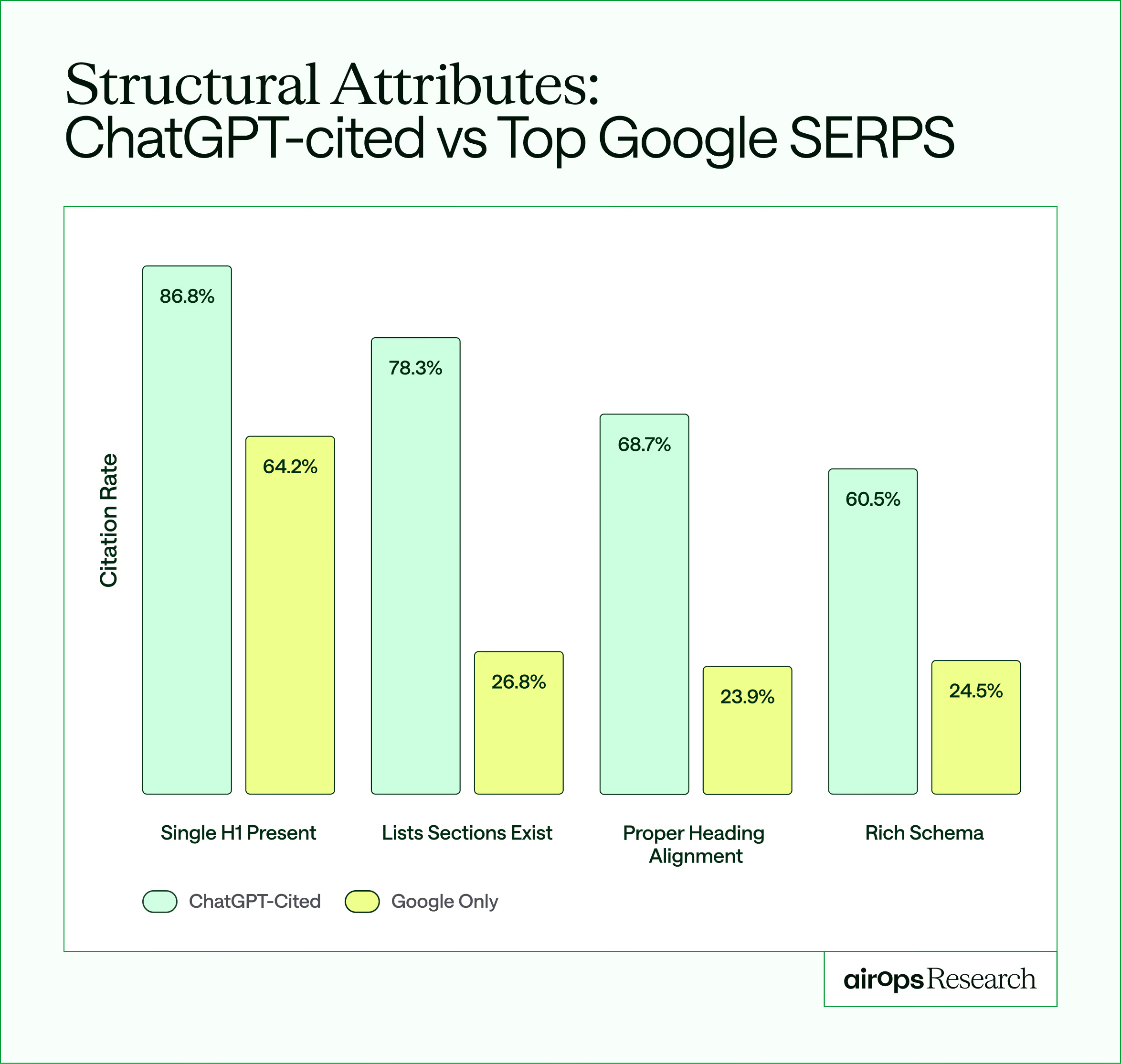
Structure second. AirOps' analysis of more than 12,000 pages found every structural element tested, FAQs, schema, heading hierarchy, lists and tables, appeared more often in ChatGPT-cited content than in Google's top organic results, in some cases by 20 to 40 percentage points. Pages with FAQs are 40% more likely to be cited. Pages with three or more schema types are 13% more likely to earn citations. Clean H1-to-H2-to-H3 heading hierarchy increases citation odds by 2.8x. Lists and tables appear in nearly 80% of ChatGPT citations, versus 29% of Google's top results.
Lily Ray made the practical version of this point in an AirOps webinar on Google's AI features: "If you can get the information from the page without having to run JavaScript... the better off you're going to be." Static, well-structured HTML beats a beautifully designed page a model can't parse.
Freshness third, and it's the lever most teams underinvest in. Kevin Indig has called content refresh one of his top three priorities in every AirOps research conversation: "Content refresh is always in my top 3... whether we talk about blog content, landing page content, which is often forgotten, or bigger platforms like a Tripadvisor. If they get a lot of new, fresh reviews, Google rewards that with a freshness signal." (Webinar recap) Webflow proved the return on that lever concretely: automating refresh workflows through AirOps drove a 5x increase in refresh velocity, a 40% traffic uplift within days of publishing, and ChatGPT-attributed signups growing from 2% to nearly 10%, with AI-sourced traffic converting at 6 times the rate of standard organic search.
Andy Crestodina, CMO of Orbit Media, builds this same discipline into his own content process. In an AirOps webinar on B2B content, he described rarely publishing an article without three or four contributor quotes, treating original research and expert collaboration as what makes content credible and link-worthy in the first place.
3. Win visibility beyond your own domain
Multi-surface GEO means treating a brand's own site, third-party publications, and community platforms as one connected system, because 85% of brand mentions in AI search happen off the domain entirely.
That statistic, drawn from AirOps' analysis of more than 21,000 brands, means onsite optimization alone caps visibility well below what's achievable. Brands are 6.5 times more likely to be cited through third-party sources than their own domain, and 68% of brand mentions are unique to a single AI model, which means consistent coverage across external sources is what keeps a brand visible model to model. Nearly 90% of third-party citations in AI search come from listicles, comparisons, and review sites, and 80% of cited brands appear in the first three positions of those pages. A brand that isn't in the top three on the "best [category]" page that matters most to its buyers is effectively invisible in that AI answer.
Community platforms carry real weight too. AirOps' analysis of 5.5 million AI answers found user-generated content clustering into four types: community Q&A (Reddit, YouTube), professional social (LinkedIn, X), community editorial (Wikipedia, Medium), and review platforms (G2, Trustpilot). Together, these four categories account for 48% of AI citations. Reddit alone appears as a cited source in roughly 22% of AI-generated answers, and 75% of YouTube citations in AI answers occur on non-branded, "how-to" style searches, making it an underrated surface for category education content rather than product pitches.
.jpg)
Allyson Havener, CMO of TrustRadius, made the same point from the buyer's side: "The most powerful influence happens where attribution can't see: visibility in AI answers, peer referrals, and third-party proof. Credibility is the lever."
Content also has to be quotable, not promotional, to earn any of this. Vague positioning gives a model nothing concrete to extract. The brands that earn the most offsite citations write in specific, factual language a model can lift and trust, and category-level superlatives don't survive that filter.
4. Own the vendor-evaluation moment
B2B vendor evaluation now happens largely inside AI answers before a prospect ever contacts sales, which means the content that wins isn't a landing page. It's a listicle placement, a comparison table, or a Reddit thread.
6sense's 2025 Buyer Experience Report found 94% of B2B buyers used generative AI during their most recent purchase process. Branch's 2026 research on enterprise marketing leaders found 98% are optimizing for AI search or plan to within 12 months, and 65% are already committing 25% or more of their marketing budget to it. A related TrustRadius study found that 100% of buyers want to self-serve product information, 63% shortlist just two or three products, and 78% pick a brand they already know. The shortlist is largely set before a buyer ever picks up the phone.
For vendor evaluation specifically, two moves matter more than general GEO practice. Own the comparison format: since nearly 90% of third-party citations come from listicles and comparisons, and 80% of cited brands sit in the first three positions, getting into, and staying near the top of, the "best [category] tools" pages buyers actually search is higher leverage than polishing an owned comparison page alone. And be quotable, not promotional: named metrics, specific facts, and consistent positioning need to read the same whether the content lives on a company blog, a third-party comparison page, or a Reddit thread.
That consistency is what builds authority in a model's eyes over time. A model that sees the same facts about a brand corroborated across its own site, a comparison page, and a community thread trusts those facts more than it trusts a single, well-produced landing page standing alone.
What this means for your team
Winning GEO in 2026 is a systems problem, not a content-volume problem. The four levers compound each other: a weekly measurement cadence surfaces where a brand is losing ground, structured and fresh content wins the citation once a model is deciding what to extract, offsite presence gets a brand into consideration before a buyer ever visits its site, and quotable, consistent language is what makes all three levers reinforce each other instead of contradicting one another.
None of this requires abandoning SEO. It requires a second scorecard, a second content standard, and a second measurement cadence running alongside the first one, because the two disciplines are answering two different questions for two different judges.
The GEO era is here: what it means for marketers, in one line
GEO doesn't reward more content. It rewards the content, and the third-party proof, a model trusts enough to speak on a brand's behalf. The teams compounding visibility right now aren't publishing the most. They're the ones a model keeps choosing to cite, run after run, prompt after prompt. That's the new competitive advantage, and it's still early enough to build it.
AirOps helps you run all the levers from one system to influence GEO and AEO
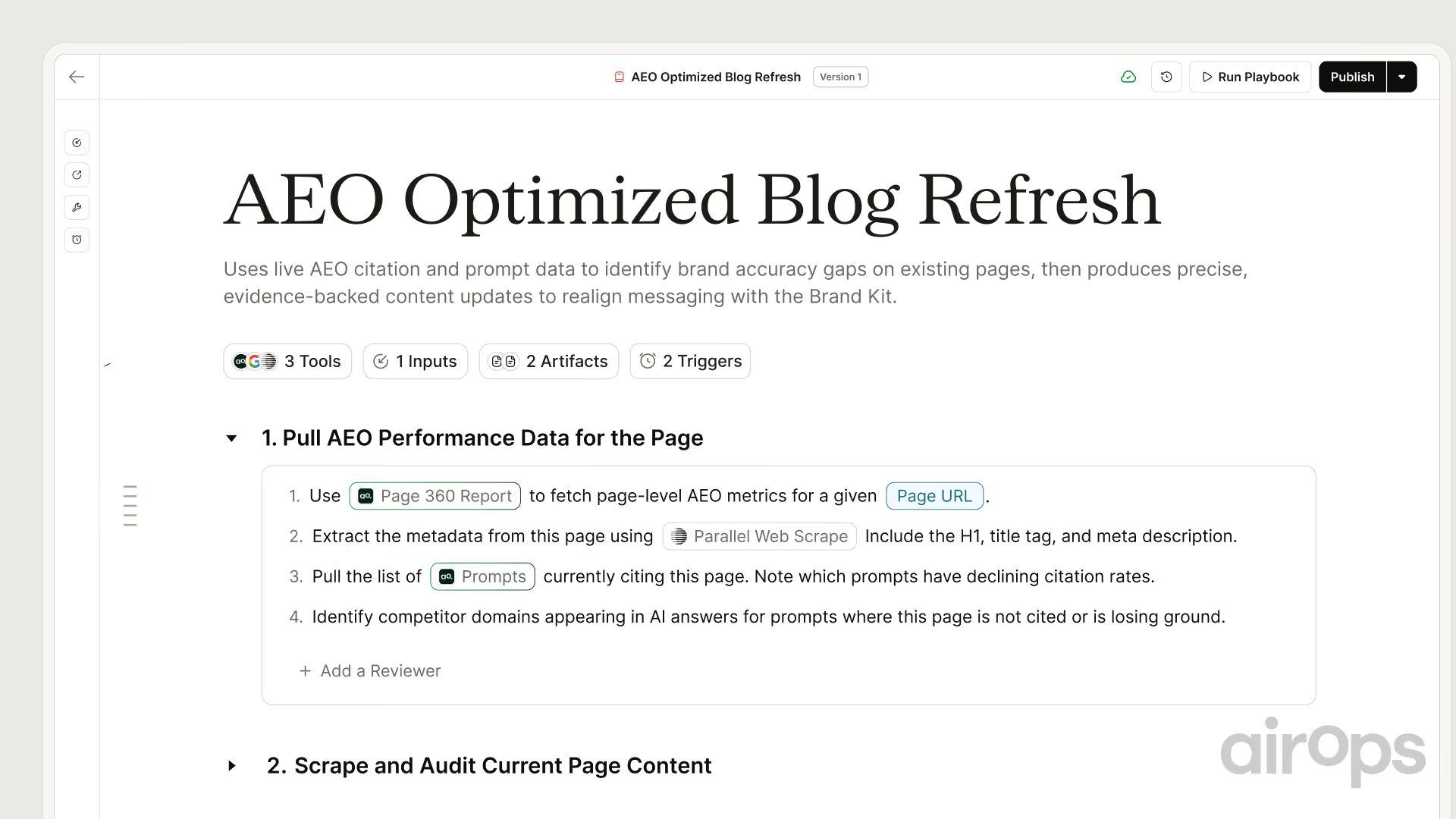
AirOps connects the insight, action, and measurement loop that GEO requires: Insights tracks citation rate, mention rate, sentiment, and share of voice across ChatGPT, Perplexity, Gemini, and Google AI Overviews. Quill runs the content refresh and structural fixes the data surfaces and Offsite helps teams find, secure, and measure the third-party mentions that drive 85% of AI visibility. Carta, Webflow, and other AirOps customers are already running this loop weekly instead of waiting for a quarterly audit to catch what a model stopped citing months ago.