How to Measure AI Search Visibility: Step-by-Step Guide for 2026
- Measure AI visibility by tracking brand mentions, citations, and share of voice across major AI platforms using structured analytics and systematic monitoring.
- AI search engines prioritize fresh, up-to-date content—measuring visibility helps you spot when pages are losing traction so you can refresh them before rankings and citations drop.
- Learn how measuring visibility in answer engines can uncover high-impact opportunities to improve your brand’s presence and authority.
Traditional SEO metrics like rankings and clicks no longer reflect true brand influence as AI search engines and answer engines dominate discovery.
Research from AirOps found that over 60% of Google searches now feature AI-generated answers, making legacy metrics increasingly obsolete.
The bottom line: If you aren't tracking your brand's AI search visibility across AI-generated answers, you risk losing visibility, trust, and pipeline to competitors who are already optimizing for this shift in search behavior.
Why Measuring AI Visibility Matters
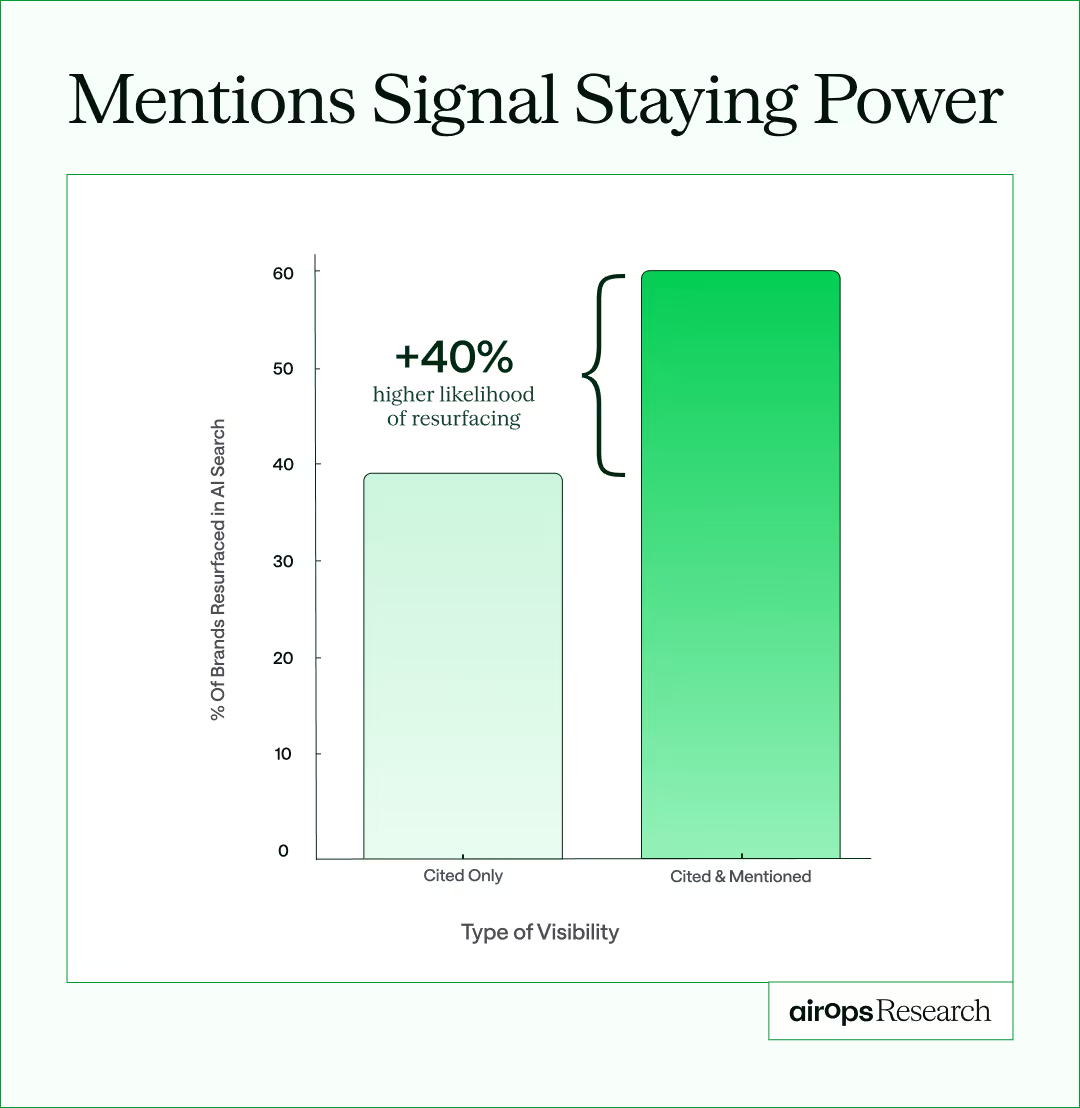
Measuring AI visibility is the only way to understand and influence how often your brand is surfaced, cited, and trusted across answer engines. This metric is directly tied to buyer discovery, competitive positioning, and revenue in an era where AI answers drive buying decisions. AirOps recent research found that brands earning both a mention and a citation in AI-generated answers are up to 40% more likely to maintain ongoing visibility.
Measuring visibility delivers four key advantages:
Direct pipeline impact: Brands cited in AI answers are discovered and trusted earlier in the buyer journey.
Competitive benchmarking: Visibility metrics reveal where you’re winning or losing ground to competitors.
Actionable optimization: Tracking citations and mentions helps you prioritize content refreshes and technical improvements.
Leading indicator of influence: Visibility is measurable long before traditional attribution shows up.
According to AirOps, the Brand Visibility Score—answers mentioning your brand divided by total relevant answers—is now the North Star metric for AI search. This AI search visibility score gives teams one number to track brand influence over time.
Factors that Influence AI Visibility
Several internal and external factors affect how visible your brand is in answer engines. Understanding these variables helps you interpret results and prioritize optimization efforts.
Brand authority signals: Positive authority signals such as external citations, domain authority, and overall industry visibility directly influences citation likelihood.
Content freshness: Pages that have been updated within the past 12 months are 2x more likely to earn citations.
Technical optimization: Pages with rich schema and clear structure improve agent extractability.
Competitive landscape: Dense, competitive verticals require more aggressive strategies to gain share of voice.
Query intent alignment: Content should directly answers user questions and align with the users query intent.
Prerequisites: What You Need Before Starting
Before you begin, make sure you have access to the following:
Google Analytics 4 (or equivalent)
Basic understanding of analytics and traffic sources
LLMs platforms such as ChatGPT, Gemini, Perplexity, or Claude
Historical website performance data for baseline comparison
How to Measure AI Visibility
Once your prerequisites are in place, you can begin tracking how often your brand is surfaced, cited, and mentioned in AI-generated answers. The process below is designed for manual measurement — ideal for establishing a baseline, validating tool data, and identifying early opportunities.
For teams that prefer to automate, AirOps can handle tracking, monitoring, and competitor benchmarking across multiple AI platforms—turning raw visibility data into actionable insights without the heavy lifting. Tools to measure AI search visibility give teams consistent data across every major engine.
1. Set Up Infrastructure to Track AI Traffic
Before you can measure visibility, you need an analytics setup that isolates AI-driven traffic from other channels. This ensures your data is accurate and easy to segment.
Create custom channel groups in Google Analytics 4 for AI sources (e.g., chat.openai.com, gemini.google.com, perplexity.ai).
Configure UTM parameters for tests and campaigns involving AI platforms.
Set up tracking views or filters to separate AI-driven sessions from other referral traffic.
2. Establish a Baseline with Manual Testing
Document your current presence in answer engines to create a baseline for tracking growth and impact. In AirOps' recent research, we found that only 30% of brands remain visible in consecutive AI-generated answers, while just 1 in 5 sustain visibility across five runs—so establishing a robust, ongoing baseline is essential for accurate measurement.
Run industry-relevant queries across LLMs:
Test 20–30 industry-relevant questions your customers typically ask
Test both branded and unbranded queries
Include direct competitor comparison queries (ie. "Is [brand] or [competitor] better for project management?")
Track a variety of metrics:
Brand mentions (yes/no)
Citation and mention quality (direct quote, paraphrase, or passing reference)
Competitor co-mentions
Source attribution (the source where your page is cited or mentioned)
Answer sentiment (positive, neutral, negative)
Log results in a spreadsheet or dashboard, and estimate impressions by dividing AI-sourced traffic by the 2% CTR benchmark for AI answers.
How do I know if my brand is mentioned in ChatGPT responses?
Start by asking ChatGPT relevant industry questions and documenting brand mentions. For scale, use automated tracking tools like AirOps to monitor mentions across multiple queries and platforms.
3. Scale Measurement with Automated Monitoring
Manual testing gives you valuable insights, but it can't capture the full scope of your AI search visibility.
To get statistically significant AI search visibility data and track changes over time, you need automated systems that can test hundreds of queries across multiple platforms consistently.
Deploy tracking tools: Choose automated AI visibility analytics platforms like AirOps for comprehensive monitoring across LLMs, or build custom API integrations if you need specialized functionality.
Build a prompt library: Determine what queries your audience is searching for by analyzing real customer language from support tickets, sales calls, search console data, and social media discussions to ensure you're testing the questions your audience actually asks.
Establish monitoring cadence: Create a systematic schedule with daily scans for your most critical topics, weekly brand audits to track overall performance trends, and monthly competitive analysis to spot market positioning shifts.
Set up performance alerts: Stay ahead of visibility changes by configuring notifications for significant drops in citation rates, negative sentiment shifts, or when competitors suddenly gain share of voice in your key topic areas.
Which AI platforms should I prioritize for visibility tracking?
Focus on ChatGPT, Google AI Overviews, Perplexity, and Gemini as core platforms, then expand to additional AI platforms that align with your audience and industry vertical.
4. Benchmark Against Competitors
Measuring your own performance isn’t enough—you also need to understand how you stack up in your market. This AI visibility benchmark highlights gaps and opportunities.
Select strategic competitors: Choose 2-3 direct competitors and track their share of voice across AI platforms, focusing on co-mention frequency when brands appear together.
Analyze performance trends: Collect 60-90 days of historical data to identify seasonal patterns, content decay rates, and competitor campaign impacts.
Study competitor citation sources: Review which page types (product pages, blogs, case studies, FAQs) earn your competitors the most citations to identify content gaps.
Create competitive dashboards: Build competitive dashboards that map your visibility, citation frequency, and sentiment over time, with competitor data layered in for context
5. Update Content for AEO
Focus on the factors that most influence AI citations, from structure and schema to clarity and authority. Ongoing optimization is critical to maintaining and increasing visibility as AI models and answer engines evolve.
Use AI search visibility gap analysis tools to analyze citation patterns and identify your highest- and lowest-performing pages.
Focus your AI visibility analysis on:
Pages with declining citation rates over the past 60 days
Topics where competitors consistently dominate mentions
Content with outdated statistics, case studies, or research data
Once you've identified your optimization targets, implement these content improvements to increases your chances of earning a citation.
Refresh content with current information: Update outdated pages with fresh data, current statistics, and authoritative sources to position your content as the most authoritative, up-to-date resource.
Enhance technical structure: Strengthen schema markup implementation and maintain clear, sequential heading hierarchies (H1 > H2 > H3) that make it easier for AI systems to parse and extract information.
Improve content extractability: Add FAQ sections, bullet lists, and concise answer blocks that directly address common questions while improving both E-E-A-T signals and LLM citation potential.
In our latest research at AirOps, we found that pages with rich schema are 13% more likely to earn AI citations, and sequential heading structures boost citation odds by 2.8x.
Measure the impact of your optimizations by tracking shifts in citation share, sentiment, and share of voice for queries tied to the updated page’s content. This ensures you can connect specific changes to measurable visibility gains.
How Often Should I Check My Brands Performance in AI Search?
Use automated daily monitoring to capture fluctuations in ai search, with a manual review at least once a month for accuracy. For updated pages, re-run your query set every 7 days to detect early changes in generated responses and citation patterns.
How AI visibility metrics differ from traditional SEO metrics
AI visibility is how often AI answer engines mention or cite your brand when people ask questions about your category. Traditional SEO metrics track ranked links, while AI visibility metrics track your presence inside the answer itself.
The two systems reward different signals, so the metrics do not map one to one.
Watch for three practical differences when you shift focus:
Position is dynamic, so the same prompt can surface different sources each time.
Success means being synthesized into the answer, not just ranking on a results page.
Attribution is indirect, so mention rate and citation share replace clicks as the core AI search visibility metrics.
How mature is AI visibility measurement today?
AI visibility tracking remains an emerging discipline. No industry-wide benchmarks exist yet, and tools use different methods to collect and present data. Even so, teams can measure AI visibility today with a consistent set of prompts and metrics.
As Aleyda Solis explained in a recent AirOps webinar,
"SEOs must rethink how they measure success — AI overviews change what visibility looks like." — Aleyda Solis
Her point captures the core challenge. Traditional SEO dashboards no longer tell the whole story.
AI outputs also vary over time, making tracking less precise than established SEO metrics.
Research from AirOps highlights this volatility. Only 30% of brands stay visible from one answer to the next in AI search results, and just 20% remain visible across five consecutive runs. That instability makes consistent tracking far more valuable than occasional spot checks.
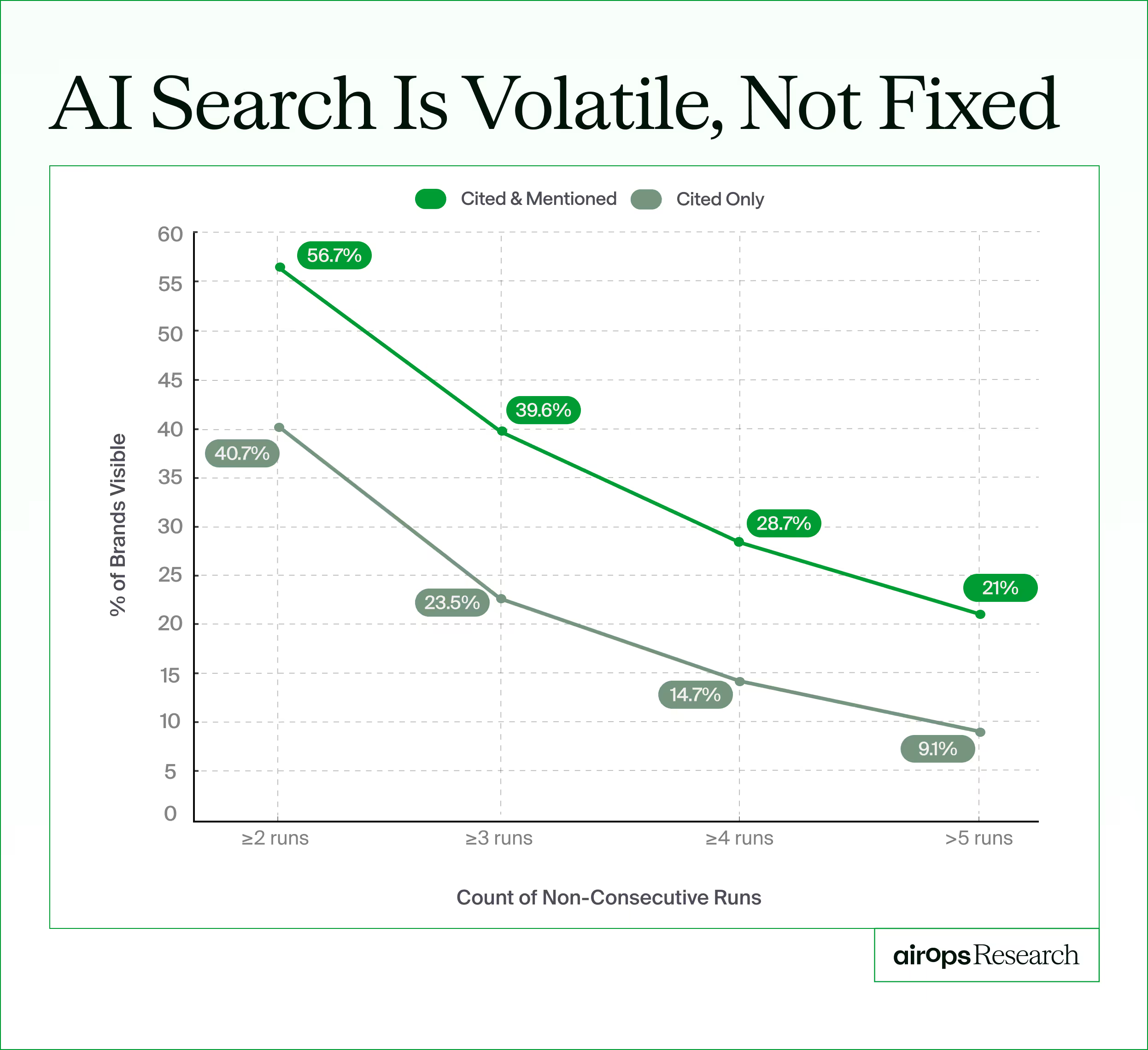
Even with these limitations, the data still delivers real value. Directional insights beat guesswork. Patterns over time reveal where visibility improves and where it slips. Teams that consistently track AI presence make better decisions than those that rely on intuition alone.
Five AI visibility metrics worth tracking
Most dashboards offer dozens of numbers. In practice, five indicators provide the clearest signals. They also show you how to measure AI search visibility without drowning in vanity numbers.
1. Citation share
Citation share measures how often AI responses cite your content compared to competitors for a specific set of prompts.
If you test 100 prompts and AI systems cite you 18 times while citing a competitor 47 times, the picture becomes clear. Citation share answers a direct question: do AI tools recognize your brand as a trusted source? Teams also call this the share of citation metric, and it anchors any AI visibility share analysis.
Low citation share usually points to shallow content, outdated pages, or unclear answers to common questions. It signals where refreshes and structural improvements will make the biggest difference.
2. Competitive share of voice
Share of voice tracks how often your brand appears versus competitors across relevant AI queries. It is one of the core AI brand visibility metrics for benchmarking against named rivals.
You might dominate technical topics while a competitor controls introductory guides. Tracking these patterns helps you decide where to defend existing ground and where to expand coverage. Watching competitive AI visibility trends over time shows where you gain ground and where you slip.
3. Mention rate
Mention rate tracks how often your brand name appears in AI-generated answers. Monitor brand mentions in LLMs on a weekly cadence so AI visibility monitoring catches swings early.
Two outcomes matter here:
A citation with a link, which can drive measurable traffic
A mention without a link, which still shapes awareness and perception
Many purchase decisions begin with an unlinked recommendation. Because most AI mentions originate from third-party sources, mention rate often reveals how well your reputation travels beyond your own content. Mention rate ranks among the essential LLM visibility metrics because it captures reach no link can show.
4. Sentiment score
Sentiment score captures the tone AI models use when they describe your brand.
An AI system might mention you frequently but frame you poorly. It might highlight missing features, outdated information, or unfavorable comparisons. Tracking sentiment helps you catch those narratives early and correct the underlying content.
Sentiment belongs in any complete set of AI visibility metrics, because a frequent but negative mention can hurt more than no mention at all.
5. Drift and volatility
Drift tracks how AI outputs change over time. As models retrain on new data, their descriptions of brands evolve.
A sudden drop in citations usually signals one of three issues:
Competitors published stronger content
Your pages grew outdated
Models learned new information that changed how they answer
Regular monitoring helps you respond before negative shifts become the default story. An AI visibility momentum metric turns these AI visibility trends into an early warning signal.
What is an AI visibility score?
An AI visibility score is a single number that combines your mention rate, citation share, and share of voice into one trackable measure of brand presence in AI answers. AirOps research names this the brand visibility score, calculated as answers that mention your brand divided by total answers for your space.
A higher AI visibility score means AI engines surface you more often in high-intent, buying moments.
Track these inputs to build the score:
Mention rate across ChatGPT, Perplexity, and Google AI Overviews.
Citation share for your priority prompts.
Share of voice against named competitors.
Sentiment and drift, which show whether the score holds or slips.
No universal benchmark exists yet, so read your AI visibility score as a trend against your own baseline and your competitors, not as a fixed target.
What do we do with LLM visibility data?
Most teams stop at the dashboard. The numbers feel interesting, but they do not automatically turn into action.
Real value appears when metrics connect to repeatable workflows. These steps convert visibility data into a practical operating rhythm for content, SEO, and growth teams. This is how teams turn AI visibility insights into prioritized, repeatable content actions.
Build a focused prompt tracking pack
Start with the questions your audience actually asks.
Create a list of 20–50 prompts that cover:
High-intent product comparisons
Category definitions
Implementation questions
Use-case decisions
Organize them by topic cluster and buyer intent.
Many teams use AirOps to centralize prompt packs, automate testing across models, and track results over time. That approach turns visibility work into a structured process instead of a manual checklist.
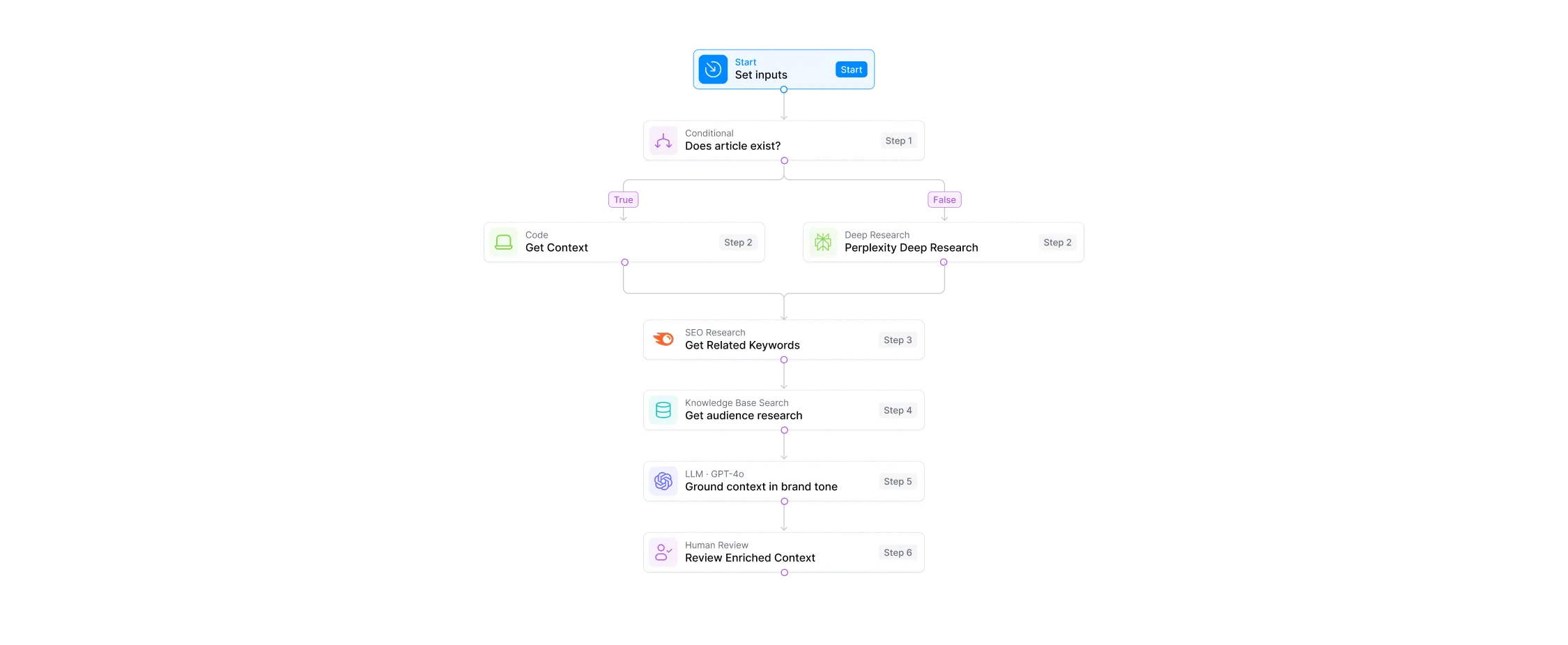
Run simple, consistent audits
Complex processes slow teams down. A basic weekly routine works best:
Run your saved prompts
Record which brands appear
Note citations and sentiment
Log results in one place
Trends over time matter more than any single snapshot. Log these AI visibility tracking success metrics in one AI visibility reporting view so patterns stay clear.
Turn gaps into content decisions
AI visibility gap analysis highlights specific opportunities to find the gaps in your AI visibility:
A competitor appears for a topic where you have no content
You rank well in search but never appear in AI answers
AI tools cite outdated pages instead of your newer work
It's also important to look beyond your own website. AirOps research shows that approximately 85% of brand mentions in AI search originate from third-party pages rather than the brand's own domain.

That means reviews, community discussions, partner content, and external validation play a major role in how AI systems describe you. Visibility gaps often point to off-site credibility issues as much as on-site content problems.
Many teams connect visibility data to content refresh workflows, so updates start from clear briefs instead of guesswork.
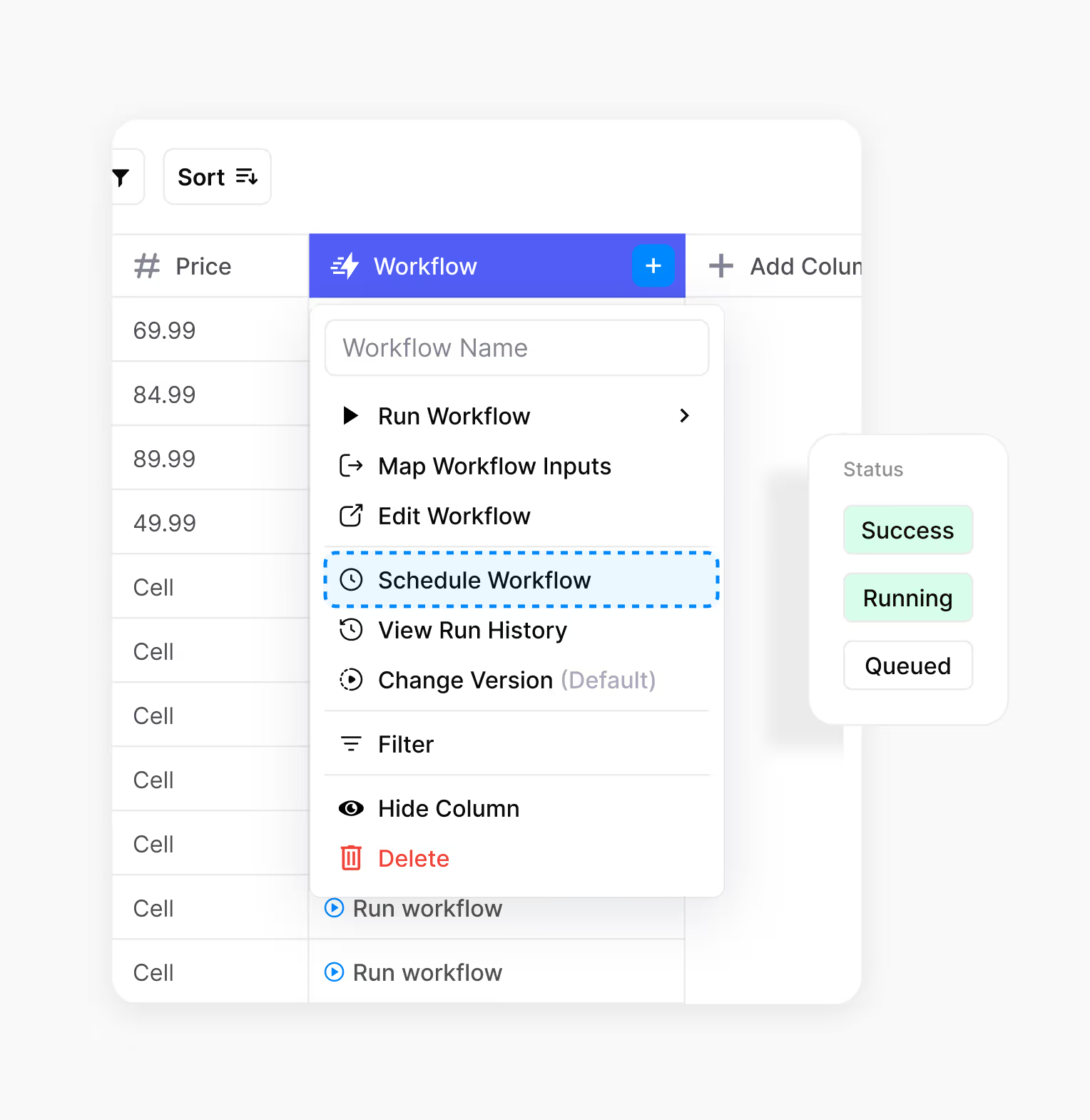
Prioritize by intent and impact
Not every gap deserves attention today. Focus first on the changes most likely to influence real buying decisions.
Work in this order:
High-intent buyer queries
Core category topics
Long-tail educational questions
Fast feedback loops matter more than perfect analysis. Act on the clearest opportunities first, then refine the program over time.
In most organizations, this process works best as a shared effort between content and SEO, with RevOps or analytics providing measurement support. Teams without an in-house AEO function often bring in an answer engine optimization agency like ClearBrand to run the tracking-to-content loop end to end. A monthly leadership review keeps priorities aligned and resources focused on the highest-impact updates.
After teams begin tracking visibility and closing gaps, a practical question naturally follows: how do we judge impact when AI traffic still looks small?
How should teams evaluate AI traffic when it is currently small?
Many leaders hesitate because AI referral traffic still looks modest.
That's normal at this stage. The value of AI visibility shows up in three practical signals that matter long before click volume grows.
Branded search as a leading indicator
When AI tools mention your brand more often, people tend to search for you by name afterward. Increases in branded search volume often follow improvements in AI visibility.
Track these metrics together to see the relationship.
Referral traffic where it exists
Some AI platforms already send measurable visits. Perplexity includes source links, and Google AI Overviews link out regularly. Use UTM parameters and referrer reports to capture what you can today.
Treat this traffic as incremental validation rather than the primary goal.
Pipeline influence
Early research behavior shapes later choices. Even when AI answers do not produce a click, they influence shortlists and evaluations.
AirOps research found that brands earning both citations and mentions are 40% more likely to resurface across multiple runs than citation-only brands. Mentions stabilize visibility, even when they never turn into direct traffic.
Think of AI visibility the way you think about PR or brand search. The impact appears upstream of direct attribution, but it still affects real buying decisions.
How to choose the right AI visibility tool
The best tool depends on your team size, budget, and goals. Most AI visibility tools fall into three broad categories. Choosing the best platform for AI visibility metrics comes down to model coverage, prompt flexibility, and accuracy.
Enterprise platforms fit large marketing organizations that manage multiple brands or regions. These tools usually provide multi-model tracking, competitor benchmarking, and API access for deeper reporting.
SEO platform add-ons work well for teams already invested in tools like Semrush or Ahrefs. These options add AI visibility modules inside dashboards marketers already use, which keeps reporting simple and familiar.
AI-native trackers serve smaller teams or focused AEO programs. They often cost less and specialize in purpose-built monitoring without the overhead of full SEO suites.
Evaluation criteria that matter
Use these AI visibility platforms evaluation criteria before you choose a tool:
Model coverage: Does the platform track ChatGPT, Perplexity, Google AI Overviews, and Claude?
Prompt flexibility: Can you test your own prompts, or do you have to rely on preset templates?
Historical data: Can you view trends over time instead of single snapshots?
Integrations: Can the data connect to your content, analytics, or reporting stack?
Gap analysis: Does the platform surface AI visibility gaps by topic, so you can see content gaps by topic at a glance?
Avoid tools that lock you into rigid prompt templates or narrow model support. Flexibility matters more than elaborate dashboards, especially as AI platforms continue to evolve.
Whatever tool you choose, focus on a simple path from measurement to action. The strongest setups connect visibility tracking to the systems teams already use for content planning and updates, so insights turn into work without extra handoffs. The right software to track AI visibility performance connects measurement straight to action.
Common Mistakes to Avoid When Tracking AI Search Performance
Avoiding these mistakes will save time, prevent false conclusions, and ensure your brand visibility is measured accurately and produces actionable insights.
Tracking only one platform: Limiting measurement to ChatGPT or Google AI hides 60–70% of your true visibility footprint. Monitor all major answer engines from day one.
Relying solely on manual spot checks: AI responses fluctuate. To get statistically valid data, run 50+ queries per topic across platforms and track results over time.
Failing to capture AI referral traffic: Without custom channel groups and UTM parameters, AI-driven visits get lost in generic referral data — skewing your analytics.
Publishing content AI can’t extract: Dense paragraphs, missing headings, or unstructured layouts make it harder for answer engines to parse and cite your content.
Turn Measurement Insights Into Action
The brands winning in AI search aren’t just tracking their presence—they’re acting on it. The gap between measurement and execution is where competitive advantage is built. AirOps closes that gap as a partner, bringing the platform, the media mix, and the team together to build and run the strategy alongside yours.
With AirOps, you can:
See where your brand is—and isn’t—appearing in AI-generated answers and identify citation gaps that limit your reach.
Spot competitive threats early before they impact pipeline and share of voice.
Pinpoint optimization opportunities with the greatest potential ROI.
Take targeted, high-impact actions to improve extractability, authority, and relevance.
Monitor the impact of changes in real time across multiple answer engines.
Secure your place in the answers that matter most. Book a strategy session to learn how AirOps can help your brand turn visibility into measurable growth.
FAQs
Why aren’t traditional SEO metrics enough to understand AI search performance?
Traditional SEO metrics focus on clicks, impressions, and rankings, which don’t capture how brands are represented in AI-generated answers. Many AI platforms surface information directly without sending traffic to a site, meaning visibility and influence can increase or decline without any change in clicks. Measuring AI visibility fills this gap by showing whether your brand is being surfaced, cited, and trusted during early discovery.
What data do I need to establish a baseline for measuring how my brand shows up in AI search?
To establish a baseline, you need a consistent set of high-value queries, coverage across major AI platforms, and repeated test runs over time. Tracking whether your brand is mentioned or cited, which sources are used, and how competitors appear alongside you creates a reference point for measuring change. Without this baseline, it’s difficult to tell whether visibility shifts are meaningful or just normal variation.
How can AI search visibility metrics be used to prioritize content updates?
Visibility metrics highlight which pages and topics are losing presence in AI answers before traditional traffic declines. When citation rates or share of voice drop for specific queries, those pages become high-priority candidates for refresh or structural improvement. This allows teams to focus updates where they are most likely to restore or expand visibility rather than relying on broad, reactive content changes.
What is AI search visibility?
AI search visibility measures how often and how prominently your brand appears in AI-generated answers. It tracks mentions, citations, and share of voice across engines like ChatGPT, Perplexity, Gemini, and Google AI Overviews. Higher AI search visibility means AI systems surface and trust your brand during buyer discovery.
How do AI visibility platforms work?
AI visibility platforms run large query sets across multiple AI engines and record when your brand is mentioned or cited. They track metrics like citation rate, mention rate, sentiment, and share of voice over time. This gives teams a consistent signal of how AI systems represent their brand.
How do companies structure AI visibility tracking across topics, audiences, and competitors?
Companies group prompts by topic, buyer audience, and funnel stage, then track visibility for each group separately. They add competitor brands into the same query sets to measure share of voice side by side. This structure shows exactly where a brand wins or loses ground across its market.
How long does it take to see improvements in AI-generated brand mentions after implementing an AI visibility strategy?
Most teams see measurable shifts in AI-generated mentions within 30 to 90 days of consistent optimization. Content freshness, authority signals, and re-crawl frequency all affect the pace of change. Tracking citation share weekly helps teams confirm which updates drove results.
What are the risks of not monitoring competitor visibility in AI answers?
Without competitor monitoring, brands miss when rivals gain share of voice in the answers buyers see first. This lets competitors shape purchase decisions during early discovery while your brand stays invisible. Tracking competitor visibility flags these threats early enough to respond.
How do I check my AI search visibility?
Start by running your top industry questions across ChatGPT, Perplexity, Gemini, and Google AI Overviews, then record every brand mention and citation. For consistent results, use an automated platform like AirOps to track visibility across hundreds of queries and engines. Repeat the checks on a set cadence to measure change over time.
Which tools let you track AI visibility by topic?
Dedicated AI visibility platforms like AirOps let teams group prompts by topic and track citation rate, mention rate, and share of voice for each one. Topic-level tracking shows which subject areas earn AI citations and which need content work. This focus helps teams prioritize refreshes where visibility gains are most likely.
AirOps for measuring AI search visibility
AirOps tracks your citation rate, mention rate, and share of voice across ChatGPT, Perplexity, Gemini, and Google AI Overviews. It connects those AI search visibility metrics to the content actions that move them, then measures the impact. Beyond the software, AirOps brings the strategy, intelligence, measurement, and execution together, with a team that stays hands-on alongside yours from strategy through execution.
See where your brand stands in the AirOps visibility platform.
Frequently Asked Questions
Frequently Asked Questions
How do I know if my brand is mentioned in ChatGPT responses?
Start by asking ChatGPT relevant industry questions and documenting brand mentions. For scale, use automated tracking tools like AirOps to monitor mentions across multiple queries and platforms.
Which AI platforms should I prioritize for visibility tracking?
Focus on ChatGPT, Google AI Overviews, Perplexity, and Gemini as core platforms, then expand to additional AI platforms that align with your audience and industry vertical.
How Often Should I Check AI Visibility Performance?
Use automated daily monitoring to capture fluctuations, with a manual review at least once a month for accuracy. For updated pages, re-run your query set every 7 days to detect early changes in generated responses and citation patterns.
Why aren’t traditional SEO metrics enough to understand AI search performance?
Traditional SEO metrics focus on clicks, impressions, and rankings, which don’t capture how brands are represented in AI-generated answers. Many AI platforms surface information directly without sending traffic to a site, meaning visibility and influence can increase or decline without any change in clicks. Measuring AI visibility fills this gap by showing whether your brand is being surfaced, cited, and trusted during early discovery.
What data do I need to establish a baseline for measuring how my brand shows up in AI search?
To establish a baseline, you need a consistent set of high-value queries, coverage across major AI platforms, and repeated test runs over time. Tracking whether your brand is mentioned or cited, which sources are used, and how competitors appear alongside you creates a reference point for measuring change. Without this baseline, it’s difficult to tell whether visibility shifts are meaningful or just normal variation.
How can AI search visibility metrics be used to prioritize content updates?
Visibility metrics highlight which pages and topics are losing presence in AI answers before traditional traffic declines. When citation rates or share of voice drop for specific queries, those pages become high-priority candidates for refresh or structural improvement. This allows teams to focus updates where they are most likely to restore or expand visibility rather than relying on broad, reactive content changes.
Get the latest on AI content & marketing
