- LLM visibility monitoring tools track how your brand appears (or doesn't) in AI-generated answers across ChatGPT, Gemini, Perplexity, Claude, and other platforms. They're now essential for enterprise content teams.
- The biggest capability split in this category is between tools that stop at monitoring and tools that connect visibility data to content execution. The tools that connect visibility data to content workflows deliver more value than those that stop at reporting.
- AirOps is the best AEO tool for enterprise teams because it has a closed-loop system connecting AI visibility data to content execution and measurable impact in one platform.
- Semrush and Conductor offer solid AI visibility tracking for teams already invested in their SEO ecosystems. Otterly.AI is the most budget-friendly entry point for smaller teams.
- When evaluating tools, prioritize data accuracy, breadth of engine coverage, speed from insight to action, and whether the platform can prove the ROI of your content changes.
Your content is performing in a channel you can't fully see. When someone asks ChatGPT for a product recommendation, asks Perplexity to compare vendors, or triggers a Google AI Overview, your brand either shows up or it doesn't. And right now, most content teams have no reliable way to know which one is happening.
That gap is driving a new category of tools: LLM (large language model) visibility monitoring platforms. These tools track how AI engines cite, mention, and position your brand in their responses. Some go further, connecting visibility data to the content workflows that move the numbers. Enterprise LLM visibility platforms pair that tracking with the workflows content teams use to act on the data.
This guide compares the nine strongest LLM visibility tools available in 2026. It's written for content directors and heads of content at enterprise companies who need more than a dashboard: you need a system your team can act on. The best LLM visibility tracking tools do more than report numbers; they connect the data to the content work that moves it. If you are shopping for the best LLM visibility software, weigh how fast each tool turns a finding into a published change.
What is an LLM visibility monitoring tool?
LLM visibility software, also called an LLM visibility monitoring tool, tracks how your brand appears in responses from AI assistants and AI-powered search features. It measures whether AI engines cite your pages, mention your brand, recommend your products, or surface your competitors instead. Think of it as the AI search equivalent of rank tracking, but for a world where there are no fixed positions and every answer is generated fresh.
These tools typically monitor multiple platforms: ChatGPT, Google Gemini, Perplexity, Claude, Google AI Overviews, Google AI Mode, and others. The best ones go beyond tracking to help teams understand why visibility is shifting and what to do about it. Some teams call these LLM SEO tools, since they extend search optimization into AI answers. Buyers looking for the best LLM SEO tracking tools, or a single LLM SEO tool, usually want both the tracking signals and a way to act on them.
Common use cases for LLM visibility monitoring tools
- Citation tracking across AI engines: See which of your pages AI assistants are citing in their answers, how often, and for which buyer questions. This is the foundational metric for understanding your AI search footprint.
- Competitive share of voice in AI search: Compare how frequently your brand is mentioned or cited relative to competitors when buyers ask category-level questions. Especially valuable for understanding positioning in head-to-head evaluations.
- Content gap identification: Find high-value questions where AI engines are answering with competitor content or third-party sources instead of yours. These gaps represent immediate content opportunities.
- Sentiment and brand narrative monitoring: Track how AI engines characterize your brand: what themes they emphasize, what tone they take, and whether the narrative is shifting over time.
- AI search performance reporting: Build reports for leadership that connect AI visibility metrics to business outcomes. Prove that content investments are driving results in a new channel.
- Content refresh prioritization: Identify which existing pages are losing AI citations or visibility and need to be updated first. Prioritize based on the combination of traffic impact and AI search signals.
What makes a great LLM visibility monitoring tool?
- Accurate, real-world data: The best tools track visibility using real user questions and real AI responses, not synthetic prompts generated by AI. Data quality determines whether the insights you see reflect actual buyer behavior.
- Broad engine coverage: AI search is fragmented. A tool that only tracks ChatGPT misses the full picture. Look for coverage across ChatGPT, Gemini, Perplexity, Claude, Google AI Overviews, and Google AI Mode at minimum.
- Connection to content execution: The strongest tools in this category connect visibility insights directly to content production workflows, so your team can close gaps at the speed the data surfaces them.
- Enterprise governance and brand control: For teams of five to twenty, ungoverned AI content production creates brand risk. Great tools enforce brand voice, terminology, and positioning automatically across every piece of content they help produce.
- Measurable closed-loop impact: You need to prove that the content you publish or refresh improves AI visibility. Tools that timestamp content changes and overlay them on visibility charts make cause-and-effect visible.
- API access for your stack: The strongest enterprise platforms expose an LLM visibility API, so your team can pull citation and mention data into the systems you already run.
Types of LLM visibility software
The category covers a few distinct types of LLM visibility software, and knowing the differences helps you match a tool to your goal. When you compare the best LLM visibility analysis tool options against simpler LLM monitoring tools, check whether each one only reports or also helps you act on the data.
- LLM visibility tracking tools: monitor citation rate, mention rate, and share of voice across AI engines over time.
- LLM visibility analysis tools: break down why your brand does or doesn't appear, down to the prompt and source level.
- LLM visibility optimization tools: turn that analysis into content changes that improve how AI engines cite and recommend you.
- LLM visibility checkers: run quick, on-demand audits of how a page or brand shows up in AI answers.
- LLMO tools: focus on large language model optimization, shaping content so AI engines retrieve and trust it.
What metrics should an LLM visibility tool track?
The metrics that matter track presence, position, and perception across AI engines. A strong LLM visibility tool reports each one, not a single blended score.
- Citation rate: how often AI engines cite your pages as a source in their answers.
- Mention rate: how often your brand name appears in answers, cited or not.
- Share of voice: your citation and mention presence against competitors for the same prompts.
- Sentiment: how AI engines describe your brand, and whether that narrative is improving.
- Answer position: where your brand lands when an engine names several options.
Presence alone is a weak signal. In a recent AirOps webinar, growth advisor Kyle Poyar argued that reputation and sentiment now matter as much as raw visibility. The best AI visibility tracking tool pairs these metrics with trends over time, so you can see whether a change actually helped.
Why off-site signals matter for LLM visibility
Most of your AI visibility comes from pages you do not own. AirOps research found that 85% of brand mentions in AI answers come from third-party domains, not your own site.
That changes what an LLM visibility tool needs to watch. A tool that only tracks your owned pages misses most of the signal.
- Third-party coverage: nearly 90% of those third-party mentions came from listicles, comparisons, and reviews.
- Placement: 80% of cited brands appeared among the first three companies named in that content.
- Multi-domain monitoring: strong AI search visibility tools track where AI engines source your mentions, not just your domain.
- Competitive context: AI brand visibility tools show which third-party pages cite rivals, so you can earn a place there too.
Track both sides. Owned content sets the facts, and off-site mentions carry them into the answers buyers see.
A quick look at the tools we chose
Small teams and agencies on tight budgetsAffordable entry point; strong agency focusNo content execution; add-on pricing for some platforms
9 best LLM visibility tools (reviewed and compared)
1. AirOps: best for connecting LLM visibility insights to content execution at scale
Enterprise content teams need an AEO system that closes visibility gaps at scale and proves the content changes worked. Most monitoring tools surface the data but leave your team to figure out the response manually, across multiple tools, with no way to tie the action back to the outcome.
AirOps closes that LLM visibility gap. It's the growth platform for AI search: a single system that monitors visibility across ChatGPT, Claude, Gemini, Perplexity, Google AI Mode, and AI Overviews, then connects those insights directly to the content workflows that improve your numbers. For content directors managing enterprise teams, it replaces the patchwork of monitoring tools, writing tools, and spreadsheets with one governed loop.
What AirOps does for LLM visibility monitoring
Tracking AI visibility starts with understanding the questions buyers are asking. Insights pulls prompt data from real user sessions across ChatGPT, Perplexity, and Google AI, then combines it with search intent signals and voice-of-customer data from tools like Gong and Zendesk. Those are real questions from real buyers, not synthetic prompts generated by an AI model. For each prompt, you see citation rates, mention rates, sentiment themes, competitive positioning, and trends over time, filtered by AI engine, country, and buyer persona.
When Insights surfaces a gap (say, a high-volume buyer question where a competitor is cited and you're not), Quill picks it up. Quill is AirOps's AI agent captain. It reads the gap, pulls competitive data, and recommends a specific Campaign: refresh an existing page that's losing citations, draft a new piece targeting the uncovered prompt, or correct outdated brand information on a third-party site.
Accept the Campaign, and Quill executes it inside your Brand Kit guardrails, routing the output for human review through Slack or the AirOps Inbox before anything publishes. Every page Quill touches is logged as a timestamped event in Insights, so when citation rates shift the following week, you see exactly which content change caused it.
For teams running larger programs, Grid serves as the production workspace where hundreds of content pieces move through review, approval, and publishing in parallel. Workflows let you design custom pipelines that chain data sources, AI steps, and human review checkpoints together. The system compounds: Quill learns from every approval and edit, improving its recommendations and execution quality with each run.
.png)
Why this matters for real teams
The typical enterprise workflow for AI visibility looks like this: one tool tracks citations, a second tool briefs the content, a third tool (or a freelancer) writes the update, someone manually publishes it, and then the original monitoring tool eventually reflects whether the change worked, days or weeks later. Nobody can draw a clean line from the insight to the action to the outcome. When leadership asks what's working, your team scrambles to stitch data together from four systems.
AirOps replaces that patchwork. Asana's content team saw a 93% increase in ChatGPT citations within two weeks of deploying Quill. Chime achieved 3x AI citation lift, with insights reaching their C-suite. Venn, a two-person content team, used the platform to deliver 600% citation growth, outranking Canada's Big 5 banks in AI search.
Those results come from the closed loop: every content action is connected to the visibility data that triggered it and the outcome it produced.
For a content director, the operating shift is meaningful. Your team sets the strategy. Quill runs the execution. Every result feeds back into the next round of prioritization through Brand Kit guardrails. You spend less time coordinating tools and more time directing the program.
When AirOps is (and isn't) the right choice
AirOps is built for teams that need more than a monitoring dashboard. Here's where it fits and where it doesn't.
- AirOps works best for: Enterprise content teams (5+ people) that need to move from visibility data to published content at scale. Teams managing AI search across multiple engines and geographies. Organizations that need brand governance baked into their AI content workflows. Content directors who need to prove content ROI to leadership with clear cause-and-effect reporting.
- AirOps may not be ideal if: You only need a standalone monitoring dashboard with no execution component. Your team is a single person running lightweight tracking. You're looking for a quick plug-in to an existing SEO suite without adopting a new platform.
Pricing
AirOps offers a free tier that gives you access to Insights, so you can start monitoring AI visibility across engines without a paid commitment. The Solo plan starts at roughly $200 per month and covers ChatGPT tracking with core execution features. The Pro plan, at roughly $2,000 per month, unlocks multi-engine tracking, unlimited seats, and the full closed-loop system including Quill, Workflows, Grid, and Brand Kit. Enterprise pricing is custom and includes dedicated onboarding, advanced integrations, and priority support.
AirOps is a partnership, not just software to log into: the platform, the media mix, and a team that builds and runs your AI search strategy alongside your own, from strategy through execution.
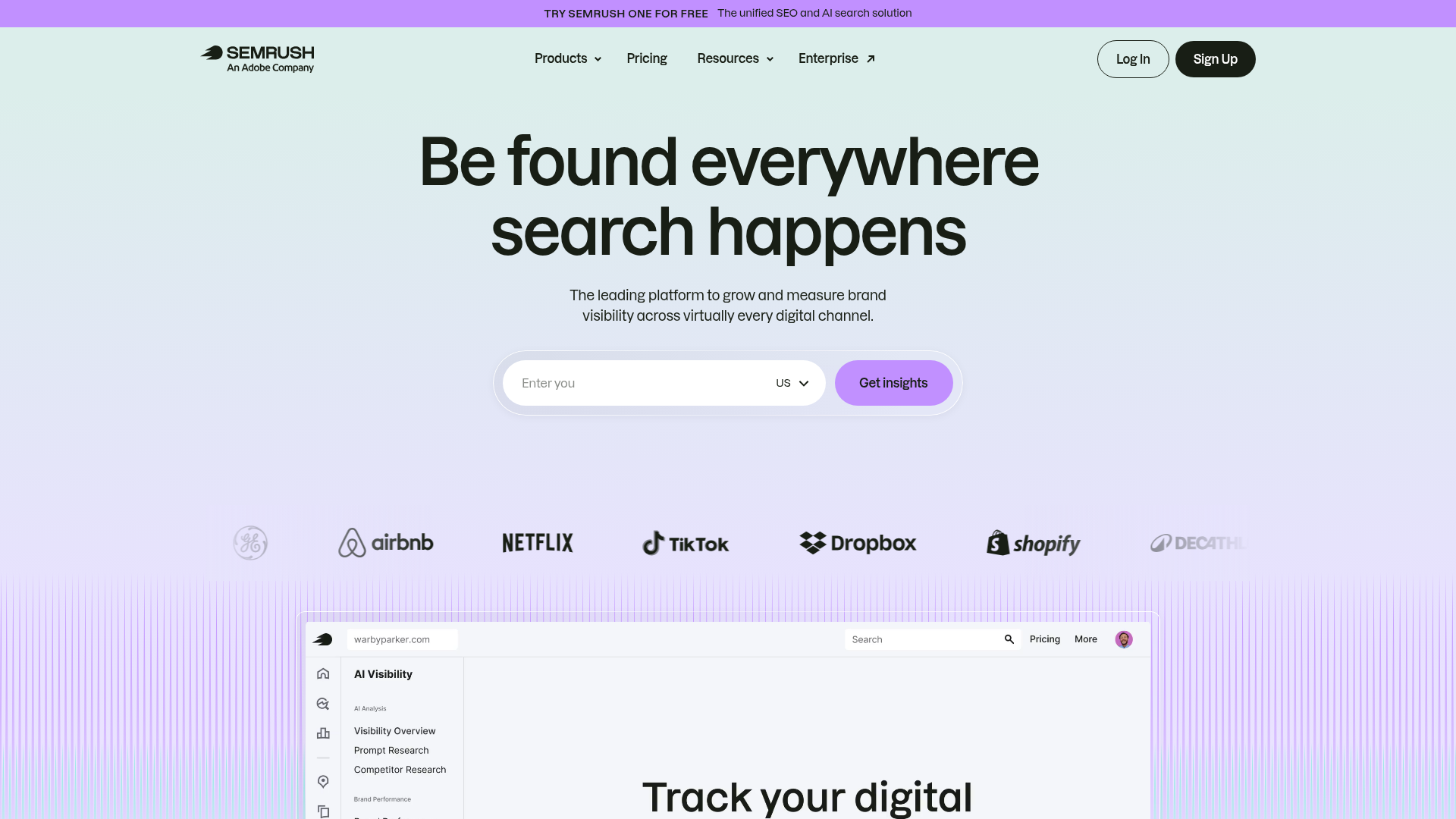
2. Semrush AI Visibility Toolkit: best for SEO teams adding AI tracking to an existing Semrush stack
Semrush has been a staple of SEO toolkits for over a decade, and its AI Visibility Toolkit extends that foundation into LLM monitoring. Now part of Semrush One following Adobe's acquisition, it gives SEO-native teams a familiar interface for tracking AI search performance.
Key features:
- Massive prompt dataset: 261 million+ LLM prompts tracked across 7+ platforms including ChatGPT, Gemini, Claude, Perplexity, Grok, DeepSeek, and Google AI Overviews.
- SERP Snapshot Viewer: See exactly how AI engines display results for specific queries, including citations, mentions, and formatting context.
- AI Search Site Audit: Evaluate how well your site is structured for AI search discoverability, with actionable technical recommendations.
- Brand Performance Reports: Track how your brand compares to competitors in AI-generated responses over time with dedicated reporting dashboards.
Pros:
- The largest prompt dataset in the category gives broad coverage of how AI engines respond to real-world queries.
- Familiar interface for teams already using Semrush for keyword research, backlink analysis, and rank tracking.
- Integrates AI visibility data alongside traditional SEO metrics in one platform, reducing tool switching.
Cons:
- AI visibility is an add-on to the core SEO suite, not a purpose-built product. The monitoring experience can feel like a bolt-on rather than a native workflow.
- Pricing escalates quickly as you add AI visibility features to an existing Semrush subscription. Teams paying for the full stack may find costs compound.
- No content execution capabilities. Semrush shows you what's happening in AI search but doesn't help you produce or publish the content needed to improve it.
Pricing
The AI Visibility Toolkit is available as a standalone product starting at $99 per month. Semrush One, which bundles AI visibility with the broader SEO platform, starts at $199 per month. Higher tiers with expanded limits and team features are available at additional cost.
Who it's best for:
SEO teams already using Semrush who want to add AI visibility tracking without adopting a separate platform. Especially useful for teams with strong SEO foundations who view AI search as an extension of their existing strategy.
Who it's not suited for:
Teams that need to move from AI visibility insights to content execution within the same system. If your challenge is acting on the data at scale, rather than simply having the data, Semrush won't close that loop.
3. Profound: best for AI engine coverage and conversation-level analysis
Profound positions itself as an AI monitoring platform, tracking brand visibility across 10+ AI engines with frontend-based monitoring that captures how real users interact with AI assistants.
Key features:
- Conversation Explorer: Analyze real AI conversations to understand how engines discuss your brand, products, and category at a granular level.
- ChatGPT Shopping Insights: Track how ChatGPT surfaces products in shopping-related queries, a growing channel for e-commerce brands.
- CDN attribution: Connect traffic from AI engines to specific pages on your site, helping quantify the business impact of AI search visibility.
- Broadest engine coverage: Monitors more than ten AI engines at the enterprise tier, including platforms many competitors skip.
Pros:
- The broadest engine coverage available at enterprise tier, giving the most complete picture of AI search visibility across the ecosystem.
- Frontend-based monitoring captures real user interactions rather than relying on API-level data alone.
- Strong e-commerce features, especially ChatGPT Shopping Insights for brands selling products through AI-mediated discovery.
Cons:
- Full engine coverage requires enterprise pricing. Lower tiers limit which platforms you can track, which reduces the tool's core value proposition.
- The interface is data-heavy. Teams without dedicated analysts may find it difficult to extract actionable insights quickly.
- Prompt data relies on AI-generated synthetic questions rather than real user queries, which can create gaps between what the platform reports and what buyers are asking in practice.
- No content production or publishing capabilities. Profound monitors and reports but doesn't help close the gap between insight and action.
Pricing
Profound's Starter plan begins at $99 per month but covers only ChatGPT monitoring. The Growth plan at $399 per month expands to additional engines. Enterprise pricing is custom and unlocks the full 10+ engine coverage along with advanced features like CDN attribution and team collaboration.
Who it's best for:
Enterprise teams with dedicated analytics resources that need the broadest possible view of AI engine behavior, especially brands with significant e-commerce revenue flowing through AI-mediated product discovery.
Who it's not suited for:
Smaller content teams looking for a straightforward monitoring tool they can act on quickly. The data depth is a strength for analysts but a barrier for teams that need to move fast from insight to published content.
4. Conductor: best for large enterprises with existing enterprise SEO infrastructure
Conductor is one of the most established enterprise SEO platforms on the market, and it has expanded into AI visibility with its AgentStack framework and a suite of AI-specific features.

Key features:
- AI Search Performance: Track how your brand appears across AI-generated results with metrics designed for enterprise reporting workflows.
- AI Topic Maps: Visualize how AI engines organize and connect topics related to your brand, revealing content gaps and positioning opportunities.
- AI Content Score: Assess how well individual pages are optimized for AI discoverability with a purpose-built scoring framework.
- AgentStack with MCP Server: A developer-oriented framework for building custom AI agents, APIs, and turnkey agents that connect to your content systems.
Pros:
- The deepest enterprise pedigree in the category. Conductor is Forrester's highest-rated SEO platform, and its AI features build on that foundation.
- AI Topic Maps offer a unique view into how AI engines conceptualize your category, which helps content strategists identify structural gaps.
- Strong compliance and governance features for regulated industries and large organizations with strict content policies.
Cons:
- Enterprise-only pricing with no self-serve tier. Teams exploring AI visibility without an enterprise budget won't be able to access the platform.
- Dashboard complexity is significant. New users report a steep learning curve, especially when navigating between traditional SEO and AI visibility features.
- AgentStack is developer-oriented. Content teams without engineering support may not be able to take full advantage of the customization capabilities.
Pricing
Conductor uses custom enterprise pricing only. There are no published tiers or self-serve plans. You'll need to contact their sales team for a quote, and pricing varies based on the number of domains, users, and features included.
Who it's best for:
Large enterprises (1,000+ employees) that already use Conductor for SEO and want to add AI visibility tracking within their existing platform investment. Especially strong for organizations with compliance requirements and established enterprise procurement processes.
Who it's not suited for:
Mid-market teams or content organizations without dedicated technical resources. The enterprise-only pricing and dashboard complexity make it a poor fit for teams that need to move quickly with lean headcount.
5. Scrunch AI: best for persona-level AI visibility segmentation
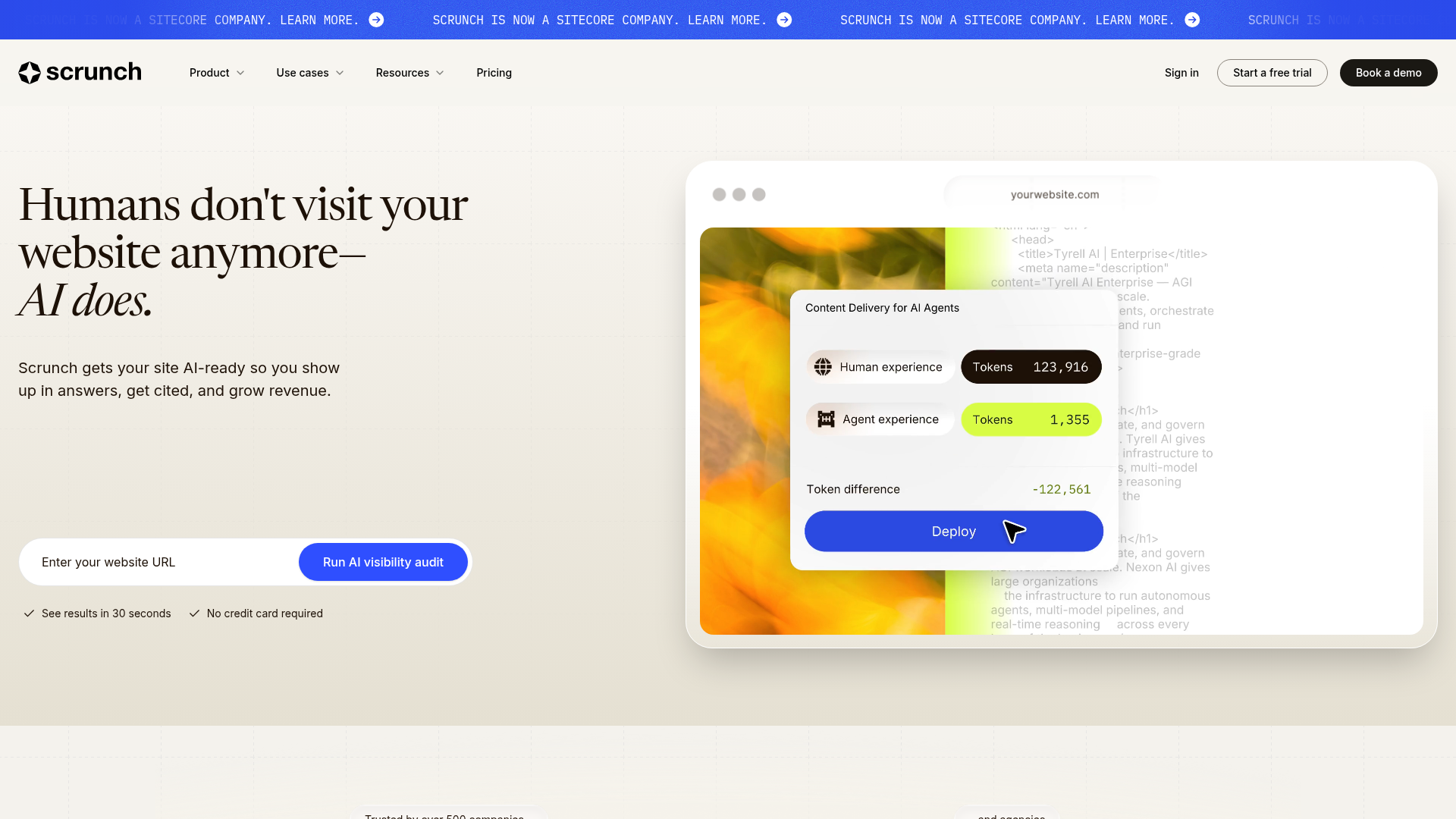
Scrunch AI, recently acquired by Sitecore, brands itself as an Agent Experience Platform (AXP): a tool that optimizes content specifically for how AI agents discover and recommend brands.
Key features:
- Agent Experience Platform (AXP): A unique framework for understanding and optimizing how AI agents interact with your content, distinct from traditional SEO or AEO (answer engine optimization) approaches.
- Persona-level segmentation: Analyze how AI visibility varies by buyer persona, giving content teams granular data on which audiences see your brand and which don't.
- Multi-engine tracking: Covers ChatGPT, Claude, Perplexity, Meta AI, Google AI Mode, Google AI Overviews, and Gemini.
- SOC 2 compliance: Meets enterprise security standards, an important checkbox for regulated industries evaluating new AI tools.
Pros:
- The AXP framing offers a genuinely different lens on AI visibility, focusing on how AI agents experience and interpret your content rather than traditional ranking metrics.
- Persona-level segmentation is deeper than most competitors offer, letting teams understand visibility differences across distinct buyer profiles.
- SOC 2 compliance signals enterprise-grade security, which speeds up procurement for organizations with strict vendor requirements.
Cons:
- No content execution tools. Scrunch AI is monitoring and analysis only; you'll need separate tools to act on the insights it surfaces.
- Prompt credits multiply per AI engine tracked, which means costs scale quickly as you add platforms to your monitoring configuration.
- The AXP concept is novel but less proven than established AEO frameworks, which may require internal education to get buy-in from stakeholders.
Pricing
Scrunch AI offers four tiers. The Explorer plan starts at $100 per month and provides basic monitoring. Starter runs $300 per month with expanded coverage. Growth is $500 per month for teams needing broader engine tracking and persona segmentation. Enterprise pricing is custom and includes dedicated support and advanced features.
Who it's best for:
Content teams that need to understand how AI visibility varies across different buyer personas and want a fresh framework for thinking about AI-driven content optimization.
Who it's not suited for:
Teams that need to move from visibility insights to content production within the same tool. Scrunch AI's strength is analysis, not execution, so you'll need to pair it with separate content tools to close the loop.
6. Gauge: best for broad AI engine coverage on a startup budget
Gauge, a Y Combinator S24 company, tracks AI visibility across eight platforms and focuses on giving growing teams affordable access to multi-engine monitoring.

Key features:
- 8-platform coverage: Tracks ChatGPT, Claude, Gemini, Perplexity, Microsoft Copilot, Google AI Mode, Google AI Overviews, and Grok, even on the entry-level tier.
- Action Center: Surfaces prioritized recommendations for improving AI visibility based on your current tracking data.
- GEO Audit: Evaluates your content's readiness for generative engine optimization with specific, actionable improvement suggestions.
- AI analyst agent: An AI-powered assistant that helps interpret your visibility data and surface patterns across engines.
Pros:
- Broad 8-platform coverage available even on the entry tier. Most competitors gate multi-engine tracking behind enterprise pricing; Gauge includes it from the start.
- Transparent pricing with clear tier distinctions. You know what you're paying for and what each plan includes without a sales conversation.
- Strong early case studies: PostHog achieved 41x LLM traffic growth, and Braintrust went from 2.5% to 45% visibility using the platform.
Cons:
- Limited enterprise track record. As a YC-backed startup, Gauge is still building the customer base and operational maturity that larger organizations look for in vendor evaluations.
- Startup-scale operations mean support, uptime guarantees, and feature roadmap stability may not match what established enterprise platforms offer.
- No content execution capabilities. Gauge surfaces insights and recommendations but doesn't include tools for content production, brand governance, or publishing.
Pricing
Gauge offers three tiers. Starter begins at $99 per month with full 8-platform coverage. Growth is $599 per month and adds expanded tracking limits, team features, and advanced analytics. Enterprise pricing is custom and includes dedicated support and higher-volume monitoring.
Who it's best for:
Growing content and SEO teams that want multi-engine AI visibility monitoring without enterprise pricing. Especially attractive for teams that value transparent pricing and broad coverage from day one.
Who it's not suited for:
Large enterprises with strict vendor requirements around compliance, SLAs, and operational maturity. Teams that need content execution capabilities alongside monitoring will need to supplement Gauge with additional tools.
7. LLMClicks.ai: best for AI listicle placement and visibility audits
LLMClicks.ai takes a unique approach to AI visibility by combining monitoring with a marketplace model for securing brand placements in AI-friendly listicle content.
Key features:
- AI Listicle Marketplace: Access to 1,200+ domains where you can secure brand placements in listicle content that AI engines frequently cite. A unique model in the category.
- 120-point AI Visibility Audit: A detailed evaluation of your site's readiness for AI search discovery, covering technical, content, and structural factors.
- Hallucination detection: Identifies cases where AI engines generate inaccurate information about your brand, helping teams prioritize correction efforts.
- Content Embedding Analyzer: Evaluates how well your content is represented in the vector embeddings that power AI search retrieval.
Pros:
- The AI Listicle Marketplace is genuinely unique. No other tool in this category offers a direct path to securing brand placements on domains that AI engines reference frequently.
- The 120-point visibility audit is among the most thorough available, covering dimensions most monitoring tools don't evaluate.
- Affordable pricing with a 14-day free trial makes it accessible for teams exploring AI visibility for the first time.
Cons:
- The platform is still in beta. Features, pricing, and reliability may change as the product matures.
- Unproven at enterprise scale. There's no independent validation of the marketplace model's effectiveness from third-party analysts or large brand case studies.
- The marketplace model raises questions about content quality and editorial control that enterprise content teams will need to evaluate carefully.
Pricing
LLMClicks.ai offers plans ranging from $49 to $399 per month, with a 14-day free trial available on all tiers. Specific features and limits vary by plan, and pricing may change as the product exits beta.
Who it's best for:
Marketing teams interested in a proactive approach to AI visibility through content placement, especially brands that want to experiment with the listicle marketplace model alongside traditional monitoring.
Who it's not suited for:
Enterprise content directors who need a proven, stable platform with established track record and compliance certifications. The beta status and unvalidated marketplace model make it a higher-risk choice for large-scale operations.
8. Clearscope: best for content-first teams adding AI visibility to their optimization workflow
Clearscope has built a strong reputation as a content optimization platform, and it's expanding into AI visibility with features that connect content quality to AI discoverability.
Key features:
- AI Tracked Topics: Monitor how your content performs across Google, ChatGPT, and Gemini for specific topics you care about.
- Content quality scoring: Grade your content against AI discoverability factors, connecting Clearscope's existing optimization approach to the new AI search channel.
- Optimization recommendations: Get specific suggestions for improving content to increase AI visibility, built on Clearscope's established content analysis engine.
- Enterprise customer base: Used by Intuit, Adobe, Shopify, IBM, and Webflow, which validates the platform's enterprise readiness for content optimization.
Pros:
- The content-first approach means AI visibility is framed in terms content teams already understand: topic coverage, content quality, and optimization scores.
- Strong enterprise customer base provides confidence in platform stability, support quality, and data reliability.
- Natural extension for teams already using Clearscope for content optimization, requiring minimal workflow changes to add AI visibility tracking.
Cons:
- Limited LLM coverage compared to purpose-built AI visibility tools. Tracking is currently limited to Google, ChatGPT, and Gemini, missing platforms like Perplexity, Claude, and AI Overviews.
- No custom prompt tracking. You can't monitor specific questions that matter to your brand; you're limited to topic-level visibility data.
- AI visibility features are newer additions to the platform and may not match the depth of tools that have been purpose-built for AI search monitoring.
Pricing
Clearscope's Essentials plan starts at $129 per month. Higher tiers with expanded limits, team features, and advanced analytics are available. AI visibility tracking is included in the platform pricing, not charged as a separate add-on.
Who it's best for:
Content teams that already use Clearscope for content optimization and want to extend their workflow into AI visibility tracking without adopting a new platform.
Who it's not suited for:
Teams that need deep, multi-engine AI visibility monitoring with custom prompt tracking. If AI search is a primary channel for your brand, Clearscope's limited LLM coverage won't give you the full picture.
9. Otterly. AI: best for budget-friendly AI visibility monitoring for small teams and agencies
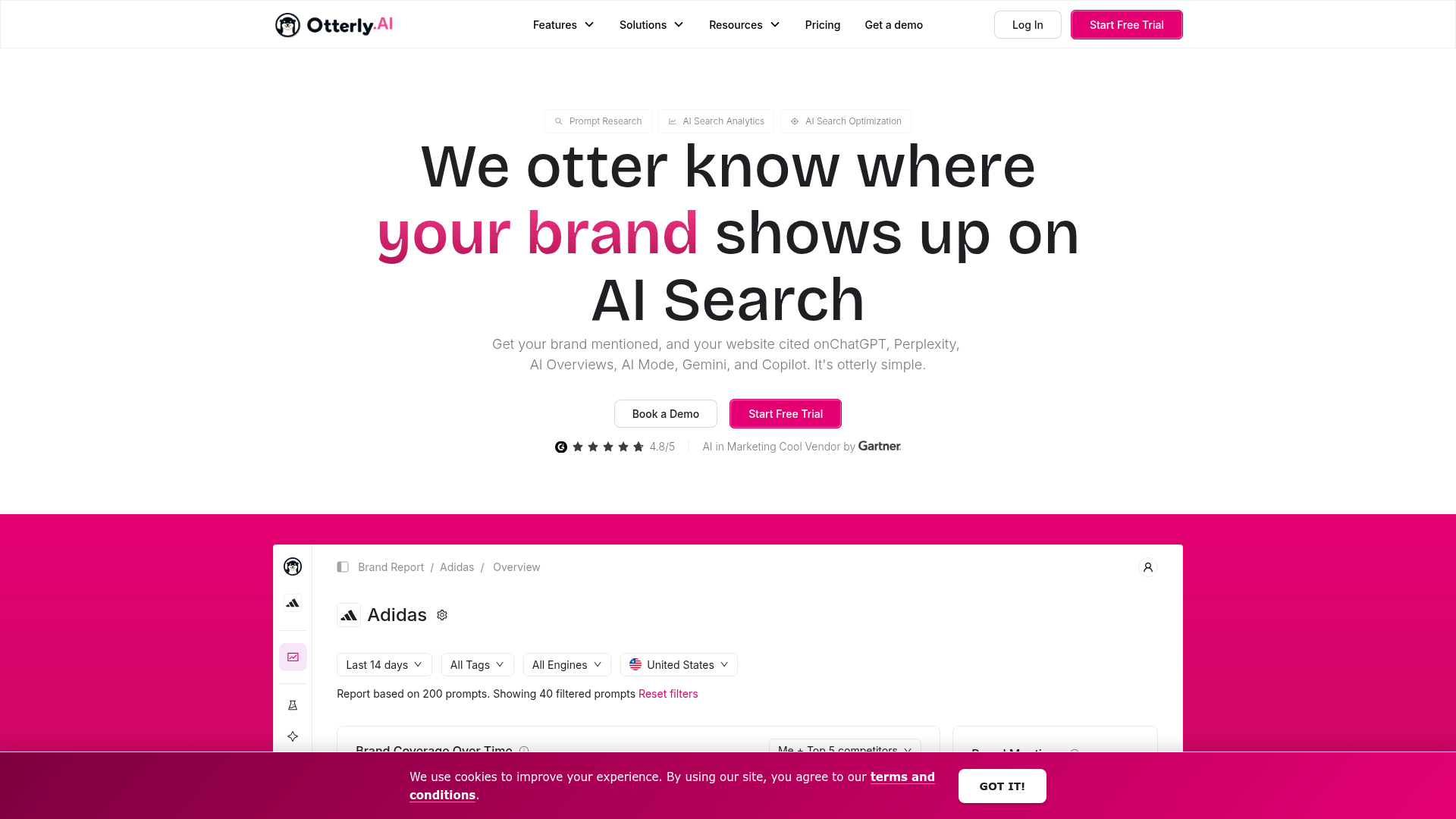
Otterly. AI offers AI visibility monitoring across six platforms at price points significantly lower than most competitors, making it the most accessible entry point for smaller teams.
Key features:
- 6-platform monitoring: Tracks AI visibility across six major platforms, giving small teams reasonable coverage without enterprise pricing.
- AI Prompt Research: Discover which AI-related queries are relevant to your brand and category, helping prioritize monitoring and content efforts.
- Brand Visibility Index: A composite score that tracks your overall AI search presence over time, useful for reporting and trend analysis.
- GEO Audit: Evaluate your site's readiness for generative engine optimization with improvement recommendations.
Pros:
- The most affordable entry point in the category. The Lite plan at $29 per month makes AI visibility monitoring accessible for teams with minimal budgets.
- Strong agency focus. Otterly. AI supports multi-client management workflows that agencies need to serve multiple brands efficiently.
- Recognized as a Gartner Cool Vendor in 2025, with 30,000+ users validating the platform's market fit for smaller teams.
Cons:
- No content execution capabilities. Otterly. AI monitors and reports but doesn't help teams produce, optimize, or publish content.
- Some platform coverage requires add-on pricing, which means the total cost can exceed the published tier prices if you need full engine coverage.
- Limited enterprise features. Teams with compliance requirements, advanced governance needs, or complex team structures may outgrow the platform quickly.
Pricing
Otterly. AI offers three tiers. Lite starts at $29 per month for basic monitoring. Standard is $189 per month with expanded limits and additional platform coverage. Pro runs $989 per month for the highest-volume tracking and advanced features. Some platform integrations are available as add-ons at additional cost.
Who it's best for:
Small content teams and agencies that need affordable AI visibility monitoring across multiple clients. Especially well-suited for agencies managing 5+ brands that need a cost-effective way to track and report on AI search performance.
Who it's not suited for:
Enterprise content teams that need deep integrations, content execution capabilities, and the ability to connect visibility data to content production at scale. Otterly. AI's strength is affordable monitoring, not end-to-end workflow automation.
Once you've mapped where your brand stands across AI search, Entail AI can help you turn those opportunities into rankings and citations across Google, ChatGPT, Perplexity, and other AI platforms—so your brand shows up wherever your buyers are searching.
10. Allmond: best for affordable AI visibility monitoring and competitor intelligence
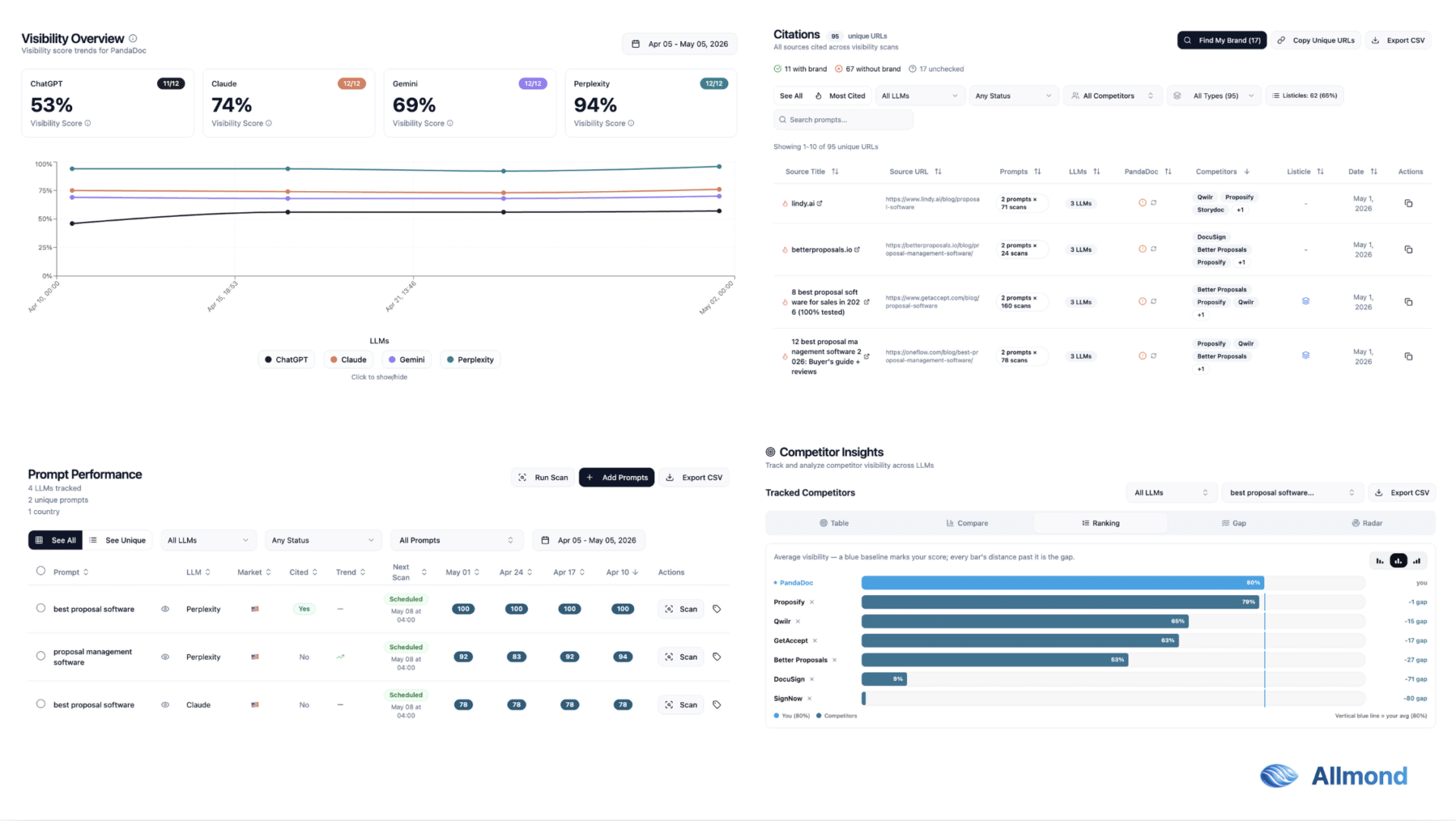
Allmond is an AI visibility tracking platform built for agencies, SaaS companies, startups, and e-commerce brands. It monitors brand mentions across ChatGPT, Claude, Gemini, and Perplexity, helping teams track visibility, analyze competitors, and identify citation opportunities without the complexity or cost of enterprise tools.
Key features:
- Multi-LLM visibility tracking: Monitor brand mentions across ChatGPT, Claude, Gemini, and Perplexity in 67+ countries. Competitor intelligence: See which competitors appear in AI-generated answers and compare visibility across the same prompts. Citation analysis: Identify the sources and URLs AI engines rely on when generating responses and discover new visibility opportunities. Visibility scoring and trend tracking: Measure performance over time with automated scans and simple 0-100 visibility scores.
Pros:
- Affordable pricing compared to most enterprise-focused AI visibility platforms.
- Simple interface with client-ready dashboards and shareable reports.
- Supports unlimited projects, prompts, and brands, making it suitable for agencies and growing teams.
Cons:
- Focused primarily on AI visibility monitoring rather than broader SEO functionality.
- Weekly scan cadence may not satisfy teams that require daily monitoring.
- Reporting is designed for simplicity and may lack the customization some enterprise users expect.
- No content production, workflow automation, or publishing capabilities.
Pricing
Allmond offers a 7-day free trial. Paid plans start at $29/month for 240 scans, $99/month for 825 scans, and $199/month for 1,660 scans. Additional scan packs can be purchased without changing plans.
Who it's best for:
Agencies, SaaS companies, startups, and e-commerce brands looking for affordable AI visibility tracking, competitor monitoring, and citation analysis across major AI platforms.
Who it's not suited for:
Large enterprises looking for advanced workflow automation, content execution tools, or a comprehensive SEO platform beyond AI visibility monitoring.
How to choose the right LLM visibility tool for your needs
- If you need to move from insight to published content in one system, prioritize platforms with built-in content execution and brand governance. Monitoring alone won't improve your AI visibility; the speed from data to action determines your results. LLM visibility optimization tools that build content changes into the platform close that gap faster than a monitor plus a separate writing tool.
- If you're already invested in an enterprise SEO platform, evaluate whether adding AI visibility to your existing tool (Semrush, Conductor) gives you enough depth, or whether the add-on experience falls short of what a purpose-built solution provides.
- If your primary concern is breadth of engine coverage, compare which platforms each tool tracks at your budget tier, since LLM search visibility fragments across ChatGPT, Gemini, Perplexity, and Google AI. Several tools gate multi-engine coverage behind enterprise pricing, while others (Gauge, AirOps) include it earlier.
- If you manage a team of five or more, evaluate governance and collaboration features carefully. Brand consistency, approval workflows, and team-level reporting become critical at scale and are absent from most monitoring-only tools. The best LLM visibility tool for marketing teams pairs that governance with reporting a SaaS or growth team can share upward.
- If budget is your primary constraint, Otterly. AI and Gauge offer the most accessible entry points. Start with monitoring, build your understanding of AI visibility, and consider upgrading to a platform with execution capabilities as your program matures.
- If you need to prove ROI to leadership, prioritize tools that connect content changes to visibility outcomes with timestamps and causal reporting. Dashboards that show trends without explaining what caused them won't survive a board review.
For enterprise content teams that have outgrown the monitoring-only approach, AirOps provides the full loop: visibility data grounded in real buyer questions, an AI agent (Quill) that executes your content strategy within brand guardrails, and measurement that ties every content change to its impact on AI search. That combination turns AI search from a reporting exercise into a repeatable growth channel. Pairing continuous monitoring with a disciplined answer engine optimization program is how enterprise teams turn AI search into durable growth.
Monitor LLM visibility now
AI search is already shaping how buyers discover and choose brands in your category. Every quarter you track AI visibility and act on the data, your competitive position compounds. AirOps connects visibility intelligence to brand-governed content execution and measurable outcomes in one platform, so your team can lead in AI search instead of reacting to it. The best AI visibility tools do more than report; they connect what you learn to the content that improves it.
Book a call to see how AirOps turns AI visibility data into content that moves the numbers.
Frequently Asked Questions
FAQs
What's the difference between LLM visibility monitoring and traditional SEO rank tracking?
Traditional rank tracking measures your position in a fixed list of search results. LLM visibility monitoring tracks whether AI engines cite your pages, mention your brand, and recommend your products in dynamically generated answers. Every AI response is unique, so visibility is measured in citation rates and mention frequency rather than fixed rankings.
Can free LLM visibility tools give enterprise teams enough data to act on?
Free tiers are useful for getting a baseline view of where your brand appears in AI search. AirOps offers free access to its Insights dashboard, which covers multi-engine tracking. For teams that need to act on the data (producing content, governing brand voice, measuring impact), paid tiers with execution capabilities will deliver significantly more value.
How many AI engines should an LLM visibility tool track?
At minimum, look for coverage across ChatGPT, Google Gemini, Perplexity, and Google AI Overviews. These represent the largest share of AI-mediated brand discovery today. Claude, Google AI Mode, and Microsoft Copilot are increasingly important. The more engines a tool covers at your price point, the more complete your picture of AI search performance.
Do LLM visibility tools require technical setup?
Most tools require minimal setup: enter your brand name, domain, and competitors, and monitoring begins within hours. More advanced features (custom prompt tracking, API integrations, content publishing workflows) may require some configuration. Enterprise platforms like AirOps and Conductor offer dedicated onboarding to help teams get value quickly.
How quickly can you expect to see results from improving LLM visibility?
Timelines vary by engine, but teams using closed-loop platforms (where visibility data connects directly to content execution) typically see measurable citation improvements within two to four weeks. Asana saw a 93% ChatGPT citation increase in two weeks. The key factor is how fast your team can move from identifying a gap to publishing the content that addresses it.
Can LLM visibility tools integrate with existing content management systems?
Integration depth varies widely. Some tools are standalone dashboards with export capabilities. Others, like AirOps, connect to content systems through APIs, MCP integrations, and direct CMS publishing workflows. If your team uses WordPress, Webflow, or another CMS, check whether the tool can publish content directly or requires manual transfer between systems.
Which SEO services provide visibility through LLM integration?
Platforms that combine SEO data with AI answer tracking give you visibility through LLM integration. AirOps, Semrush, and Conductor connect traditional search metrics to citation and mention data across ChatGPT, Gemini, and Perplexity. AirOps goes further by linking that visibility to the content workflows that improve it.
How can you analyze competitor visibility in LLMs?
Track how often competitors are cited and mentioned in AI answers for the same buyer questions you care about. AirOps shows competitive share of voice by prompt, engine, and persona, so you see exactly where a rival earns the citation and you don't. That gap becomes a prioritized content opportunity.
What tools track prompt-level visibility across LLMs?
Prompt-level tracking tools measure how your brand appears for individual questions, not just broad topics. AirOps tracks visibility per prompt across ChatGPT, Claude, Gemini, Perplexity, and Google AI, with citation and mention rates for each. Scrunch AI and Profound also offer prompt or conversation-level views.
How do AI visibility tools use query fan-out for prompts?
Query fan-out is the set of sub-queries an AI engine runs behind the scenes before it answers a prompt. AirOps surfaces these fan-out queries per prompt, so you see which searches your content covers and which you miss. That explains why visibility varies across runs of the same question.
What's a good platform for LLM SEO tracking?
A good LLM SEO tracking platform covers multiple AI engines, uses real buyer questions, and connects tracking to action. AirOps does all three, pairing multi-engine tracking with Quill, its AI agent that turns visibility gaps into published content. Semrush and Conductor are solid options for teams anchored in an existing SEO suite.
Which LLM visibility tools offer an API?
The strongest enterprise platforms expose an LLM visibility API so you can pull citation and mention data into your own stack. AirOps offers API access on its Pro and Enterprise plans, and Profound, Semrush, and Conductor provide API or export options at higher tiers.
How do I run an LLM visibility audit, and which tools help?
Run an LLM visibility audit by tracking a fixed set of buyer prompts across ChatGPT, Gemini, Perplexity, and Claude, then recording your citation rate, mention rate, and share of voice for each. AirOps automates this in Insights, and tools like Gauge, Otterly. AI, and LLMClicks.ai include built-in audit or GEO scoring features.
AirOps for LLM visibility tracking
AirOps is the growth platform for AI search, built for teams that need to act on LLM visibility, not just watch it. Insights shows where your brand stands across ChatGPT, Claude, Gemini, and Perplexity, and Quill turns those gaps into published content within your Brand Kit guardrails.
Book a call to see how AirOps turns LLM visibility data into content that earns citations.
Get the latest on AI content & marketing
