- Google rankings stopped predicting visibility inside ChatGPT and Perplexity
- Each AI platform pulled from different indexes and returned different sources
- Running the same queries across sessions revealed which pages AI tools trusted
- Brand mentions shaped perception, while live citations produced measurable traffic
- Citation gaps exposed weaknesses in authority, structure, and topical depth
Your content can rank on page one of Google and still stay invisible in ChatGPT and Perplexity.
AI tools pull from different sources, apply different citation rules, and refresh on different timelines than traditional search engines, so rankings no longer predict visibility.
This guide shows how to test whether Perplexity and ChatGPT mention, cite, or ignore your content, and how to turn those findings into next steps you can act on.
Tools like AirOps run prompts across Perplexity, ChatGPT, and Gemini simultaneously, showing which pages receive citations in each platform's answers.
Why AI Search visibility testing matters
Testing content visibility in AI search means asking real questions inside tools like ChatGPT and Perplexity, then tracking whether your brand appears and how it appears. You can run these tests manually or automate them at scale with monitoring tools.
AI search visibility answers one core question: Do AI tools surface your content when users ask about topics you own? AI search optimization now requires testing across both traditional and AI-powered engines to understand where your content actually appears. To measure brand visibility in ChatGPT and Perplexity, track how often each engine names and links your brand.
Visibility also changes fast. In the 2026 State of AI Search, only 30% of brands stayed visible from one answer to the next, and only 20% remained visible across five consecutive runs. That volatility explains why one-time checks mislead. Real insight only appears when you repeat the same queries over time and track movement, not snapshots.
"SEOs must rethink how they measure success — AI overviews change what visibility looks like." — Aleyda Solis
That shift in measurement explains why teams now test AI answers directly instead of relying on rankings as a proxy for visibility. As AI summaries replace traditional result pages, the mechanics of visibility change as well — from link position to how clearly your content answers the question inside the model's response.
When your brand fails to appear in AI answers, you disappear from a fast-growing discovery channel. That loss rarely shows up in Google Search Console or rank trackers.
Why this matters:
Brand perception: AI answers often create the first impression of your company
Traffic quality: Citations send readers straight to your site
Competitive insight: Testing shows where competitors appear and you don't
Platform-specific tracking: Each AI engine cites differently, so you need to track Perplexity visibility and ChatGPT visibility separately to catch platform-specific drops
Visibility stabilizes when brands earn both mentions and citations. Brands that showed up with both signals were 40% more likely to resurface across multiple runs than citation-only brands, which makes mention tracking as important as citation tracking.
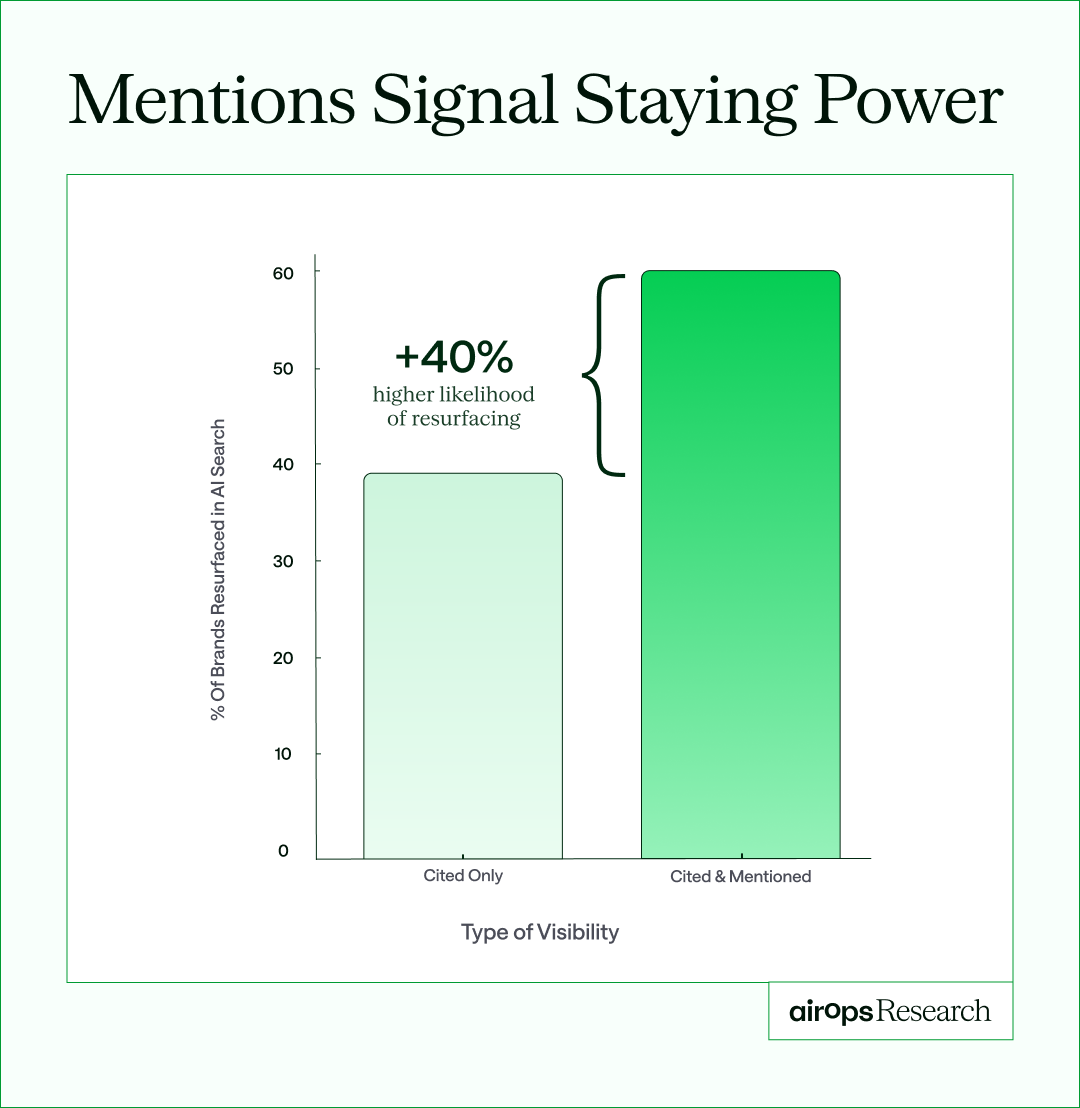
The 2026 State of AI Search
That stability often comes from consistent third-party references across reviews, community threads, and editorial coverage rather than from your own site alone.
How ChatGPT and Perplexity surface content differently
Each platform retrieves and presents information in its own way. Those differences change how you read test results.
How ChatGPT selects and cites sources
ChatGPT pulls from Bing's index and its training data. This means ChatGPT SEO depends heavily on Bing optimization, not just Google rankings. When browsing is on, it accesses live web results. Free and Plus versions behave differently. Plus users often see fresher answers and more links.
ChatGPT citation behavior changes from query to query. Some answers show inline links, some show footnotes, and others show no sources at all. That inconsistency makes repeat testing a requirement, not a nice-to-have.
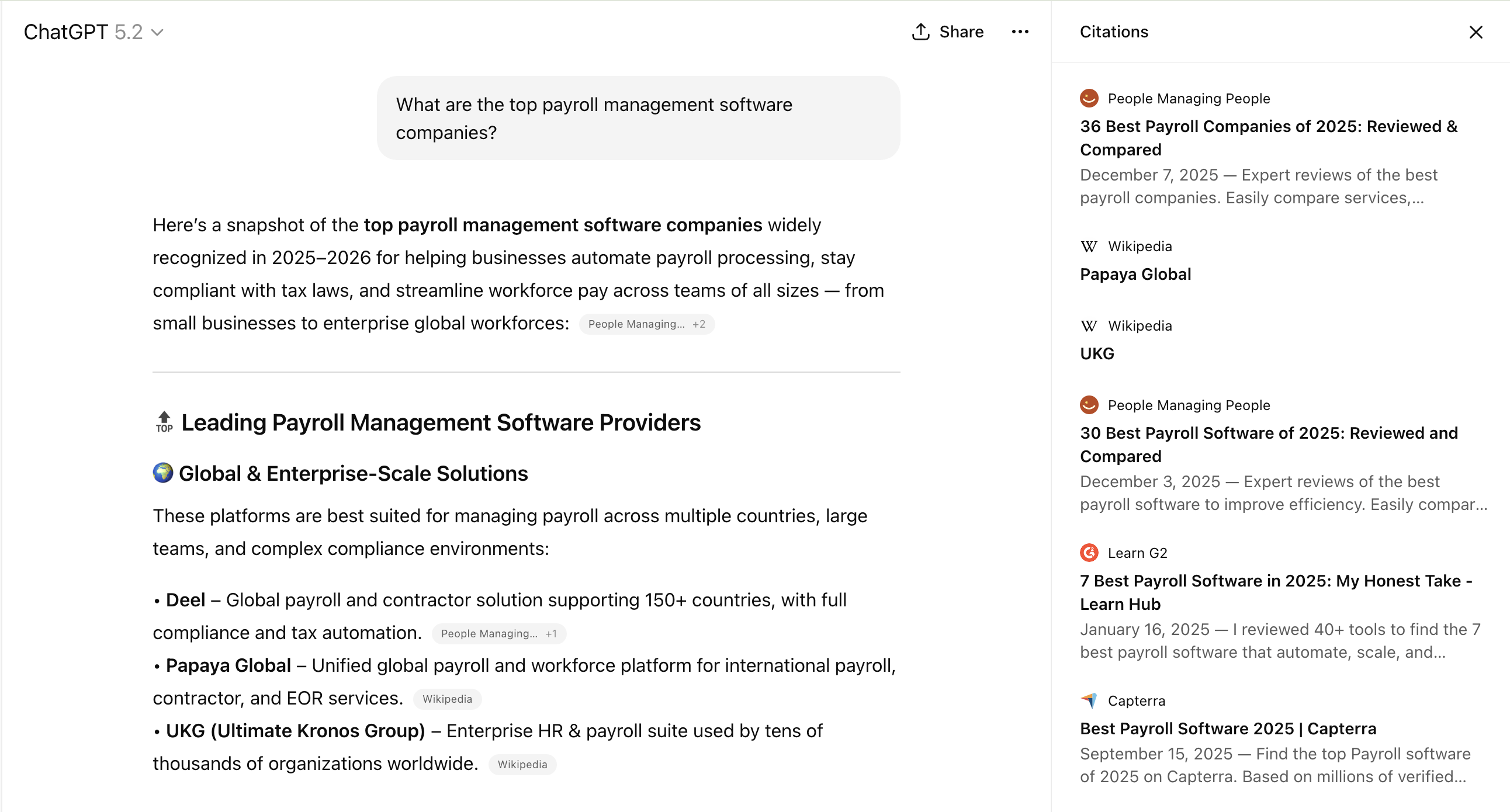
ChatGPT Search results with sources shown
How Perplexity retrieves and displays results
Perplexity works as a search-first AI. It always shows a sources panel and crawls the web in near real time by default. Every response includes a numbered list of domains that shape the answer.
This transparency makes Perplexity easier to test because you can see which pages influence the output. That visible sources panel makes Perplexity AI visibility easier to audit than ChatGPT visibility.

Key differences that affect testing
ChatGPT and Perplexity do not surface information in the same way. These platform differences shape how you interpret results and why you need to test both tools instead of treating them as interchangeable. Perplexity displays brand mentions differently than ChatGPT: it lists every source in a visible panel, while ChatGPT often names your brand with no link. That gap is why Perplexity AI visibility is easier to audit than ChatGPT visibility.
Source display: ChatGPT sometimes shows citations and sometimes shows none. Perplexity always includes a sources panel with the domains used to generate the answer.
Real-time search: ChatGPT only pulls live results when browsing is on. Perplexity runs a real-time search by default.
Index source: ChatGPT relies on Bing plus its training data. Perplexity blends multiple search indexes.
Citation format: ChatGPT uses inline links or footnotes when it cites. Perplexity uses a numbered source list tied directly to the answer.
Citation benchmarks: Each engine has different baseline citation rates across categories. The 2026 State of AI Search provides benchmark data teams can use to contextualize their test results per platform.
How to test your content visibility in ChatGPT
The process stays simple, but consistency shapes the quality of your results.
1. Open a new ChatGPT session
Start with a clean session to avoid prior context shaping responses. Use incognito mode or log out entirely to establish a baseline.
2. Enter brand and product queries
Ask direct questions such as:
"What is Webflow?"
"What does Ramp do?"
"What is Carta used for?"
Record whether ChatGPT mentions your brand and whether the description matches your positioning.
.png)
3. Test informational and comparison queries
Ask questions your buyers ask before they know your brand:
"What are the best tools for corporate card management?"
"How does Ramp compare to Brex?"
These queries show whether ChatGPT recommends you alongside competitors or skips you.
.png)
4. Document mentions, citations, and links
Capture each response and note whether it includes:
A direct link to your content
A brand mention without a link
No mention at all
Mentions build awareness, and citations drive traffic, so track both.
5. Repeat across multiple sessions
Results change from day to day. Run the same queries across multiple sessions over one to two weeks, then review the responses together to surface trends.
How to test your content visibility in Perplexity
Perplexity uses a similar process, but its source signals are clearer. Run these Perplexity visibility checks on the same cadence you use for ChatGPT.
1. Use Perplexity's search interface
Go to perplexity.ai and enter your query. You don't need an account for basic testing.
.png)
2. Run brand and topic queries
Use the same queries you tested in ChatGPT to keep comparisons clean.
.png)
3. Review the sources panel
Check whether your domain appears in the list. Sources near the top usually shape the answer more than those listed last.
.png)
4. Compare free and Pro results
Perplexity Pro runs on different models and may surface different sources. If you have access, test both versions to spot gaps. To benchmark brand mentions in Perplexity Pro Search, run your key prompts in Pro mode and record how often it names your brand compared with the free version.
5. Record citation URLs and context
Log the exact URLs cited, not only the domain. Note how Perplexity uses the content and which formats show up most often. This data feeds directly into your Perplexity SEO strategy by revealing which page formats and structures earn citations.
Types of queries to test for AI Search visibility
Different query types surface different signals. Organize tests by intent.
Brand queries: "What is Webflow?"
Product queries: "What features does Ramp include?"
Problem-solution queries: "How do I manage corporate card spend?"
Comparison queries: "Alternatives to Carta"
Long-tail informational queries: Narrow questions tied to your expertise
Brand queries test recognition. Comparison queries test positioning. Long-tail queries test topical depth.
Freshness matters most for high-intent queries. For commercial searches, about 83% of AI citations came from pages updated within the past 12 months, and over 60 percent from pages refreshed within the last 6 months. Product, pricing, and comparison pages need the tightest refresh cycles if you want them to keep surfacing.
How to see query fanouts when testing visibility
Query fanout is the set of sub-queries an AI engine runs before it writes an answer. The pages that match those sub-queries are the pages in contention for citations. Seeing your fanout queries tells you which questions your content must answer to get cited.
In Perplexity, open the steps under an answer to read the sub-queries it ran in plain text.
In ChatGPT, the fanout stays hidden, so run the same prompt several times and note which sources recur.
Run each fanout query yourself and check whether your page shows up in the results.
Turn the fanout queries you find into new H2 and FAQ headings so your content matches them.
Steve Toth explained in an AirOps webinar that Perplexity shows its fanouts openly while ChatGPT keeps them hidden. Capturing those queries gives you your next set of content targets.
The five AI visibility metrics that matter
Five AI visibility metrics separate useful testing from guesswork. Tracking all five gives you a complete picture of how AI search engines treat your brand. These Perplexity visibility metrics and ChatGPT visibility metrics anchor any AI search dashboard.
Track citations and mentions as separate signals. A citation links to your page, and a mention names your brand with no link. You need both, because they do different jobs inside an AI answer.
Citation rate: The percentage of AI answers that link directly to your pages. This is the strongest signal that your content is being used as a source.
Mention rate: How often AI answers name your brand without linking. Brands earning both citations and mentions are 40% more likely to resurface across multiple AI responses.
Share of voice: Your brand's mention frequency compared to competitors for the same set of queries.
Sentiment: Whether AI answers describe your brand positively, neutrally, or negatively. Negative sentiment in AI answers can shape buyer perception before they reach your site.
Position: Where your brand appears in the AI answer. First-mentioned brands capture more attention and click-through than brands listed third or fourth.
AI search visibility compounds when you measure the right signals consistently. Use these five metrics as the columns in your tracking spreadsheet or monitoring dashboard to spot trends early.
AI visibility testing tools
Teams test AI search visibility in three main ways. The right tool to monitor visibility in Perplexity and ChatGPT automates all three.
Manual query testing
Manual testing works well for audits and spot checks. It costs nothing but time. As query lists grow, the effort adds up fast.
Third-party monitoring platforms
The fastest way to tell if you are being cited in ChatGPT is to use a monitoring platform that runs your target queries automatically and logs every citation, mention, and link. Tools like AirOps help monitor AI visibility and citations across ChatGPT, Gemini, and Perplexity at scale. A dedicated Perplexity visibility tracker automates query testing across ChatGPT and Perplexity, shows which content appears in Perplexity, and tracks citation changes over time. See the leading LLM visibility tools for a side-by-side comparison.
A monitoring platform also lets you track ChatGPT and Perplexity mentions in real time, so you see new mentions as they appear instead of waiting for a manual check.
Custom tracking spreadsheets
Spreadsheets still work for lean teams. Track:
Query
Platform
Date
Mentioned (yes or no)
Cited with link (yes or no)
Citation URL
Notes
Why prompt tracking is the most effective AI visibility method
Prompt tracking is the most effective AI visibility method because it mirrors exactly how your customers discover brands through AI. Instead of guessing whether your brand shows up somewhere, prompt tracking tests the specific questions your audience asks and records the AI's exact response every time. Prompt tracking lets you track Perplexity mentions continuously instead of running one-off spot checks.
Teams looking to improve visibility in Perplexity and ChatGPT should start with prompt tracking for three reasons:
Real query coverage: You test the exact prompts buyers use, not proxy keywords. AirOps Prompt Discovery surfaces the questions your audience asks AI search engines, drawn from panel data across millions of real users.
Longitudinal tracking: Running the same prompts weekly reveals whether your visibility is improving, declining, or volatile after content updates.
Fanout query discovery: AI engines break a single user prompt into multiple sub-queries before retrieving sources. As a recent AirOps webinar explained, the pages ranking for those sub-queries are the pages in contention for citations. Capturing fanout queries gives you the next set of content optimization targets.
Question-based headings also move the needle. HubSpot's research found that formatting headers as questions had the most significant impact on earning citations from Google AI services. Use your fanout queries as candidates for H2 and FAQ headings.
How to track AI visibility over time
One-time testing shows a snapshot. Ongoing tracking reveals direction. To track Perplexity visibility over time, reuse a fixed query set and log every result.
Treat each cycle as a lightweight AI visibility audit. Use the same prompts, the same engines, and the same log every time so the numbers stay comparable.
Create a standardized query list
Build a fixed set of high-value queries and reuse it every cycle. Consistency matters more than volume.
Establish a testing cadence
Weekly or bi-weekly testing works well for most teams. Monthly checks serve as a minimum. Teams that track Perplexity visibility alongside ChatGPT catch platform-specific drops that single-engine monitoring misses. Pages with properly structured content earn 2.8x higher citation rates, so structure audits should be part of every testing cycle.
Pages that teams did not refresh quarterly were 3× more likely to lose AI citations than recently updated pages. Use that benchmark to shape your testing rhythm and flag pages that need attention before they disappear.
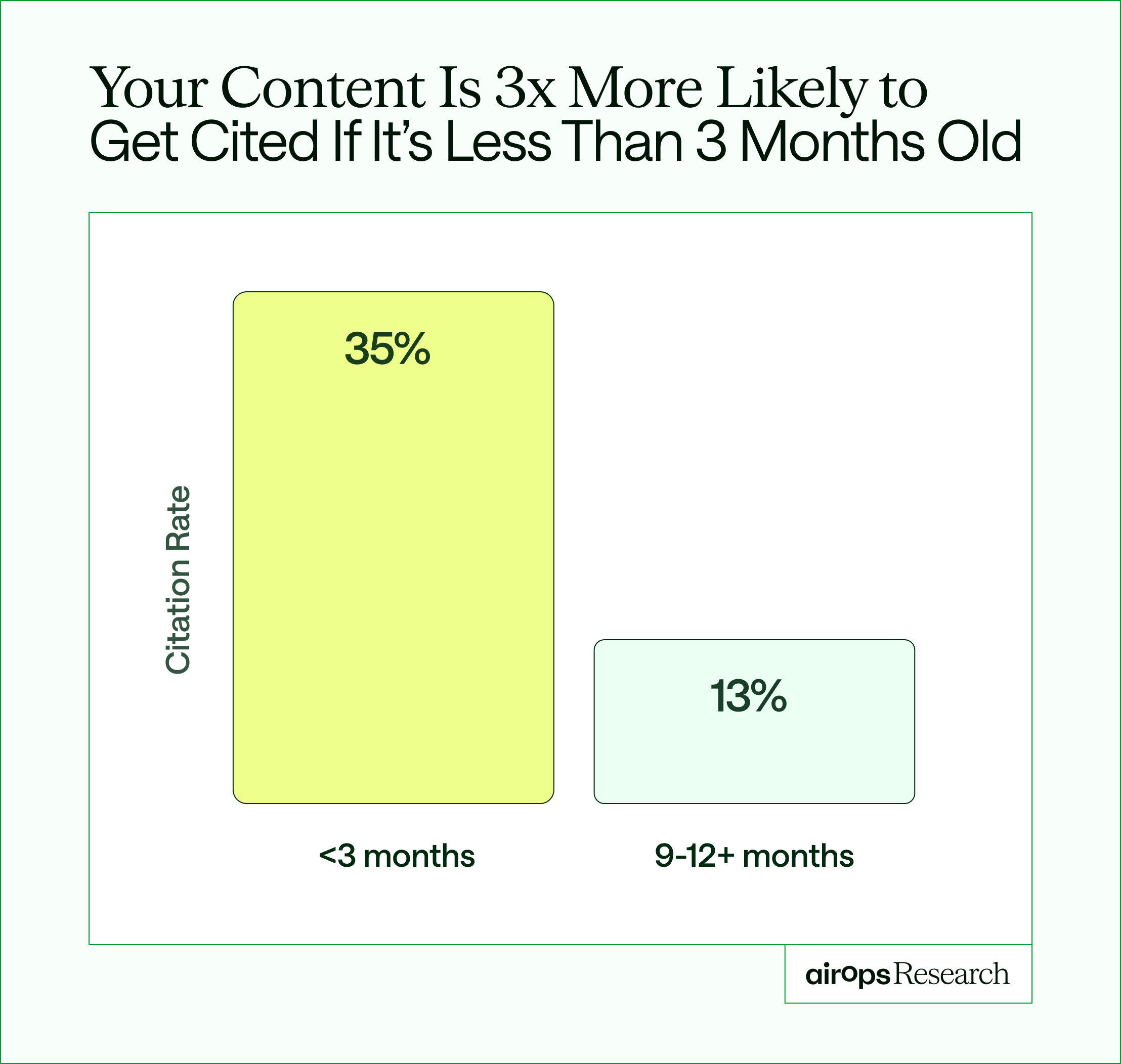
The 2026 State of AI Search
Centralize results
Store results in one shared doc or dashboard so patterns become obvious across time. Pull Perplexity visibility reports and ChatGPT reports on the same cadence to see month-over-month trends.
Analyze trends and gaps
Look for repeat issues:
Pages that never get cited
Competitors that appear consistently
Query types where visibility improves after updates
How to track AI referral traffic in GA4
Testing shows whether AI engines cite you. Google Analytics 4 (GA4) shows whether those citations send real traffic. Set it up to capture visits from ChatGPT and Perplexity so you can connect visibility to sessions.
Create a custom channel group that captures referrals from chatgpt.com and perplexity.ai.
Build an exploration report filtered to those sources to see sessions, engagement, and conversions.
Compare AI referral traffic against your citation rate to confirm which cited pages drive visits.
AI referral traffic still runs small for most sites, and it tends to convert well because readers arrive with high intent. Track it early to build a baseline before the channel grows.
What to do when your content doesn't appear in AI Search
When testing reveals visibility gaps, you have several options for improvement. Closing those gaps is the work of answer engine optimization (AEO), the practice of structuring content so AI engines can find, trust, and cite it.
Audit authority signals: Check if your content includes author credentials, citations to external sources, and clear expertise indicators.
Improve structure and answer readiness: Pages with clean structure earn results. Pages that use clear headings and schema show 2.8× higher citation rates than poorly structured pages. Add direct answers to common questions near the top, define key terms early, and use schema markup to clarify page intent for AI systems.
Strengthen topical clusters and internal links: Build related content around core topics. Link between pages to signal depth and relevance. Isolated pages perform worse than interconnected content clusters because referring domains predict ChatGPT citations more than any other factor.
Monitor changes after updates: After making improvements, re-test the same queries. Changes may take days or weeks to appear in AI responses, so patience is important. Track whether visibility improves over time and note which changes had the biggest impact.
Check crawler access: Confirm your robots.txt allows GPTBot and PerplexityBot, and that your key pages are indexed in Bing, since ChatGPT draws on Bing's index.
Key takeaways
AI search now shapes how buyers discover brands
Regular testing reveals how tools interpret your content and where competitors win attention
Clear answers, visible expertise, and connected topics drive stronger AI visibility
Want to monitor your visibility in ChatGPT, Perplexity and in AI mode? Try AirOps.
AirOps helps you understand how your brand shows up across ChatGPT, Perplexity, and AI search, so you can track visibility with confidence. Our Insights layer goes beyond traditional rankings to show when your content is being cited, where you are gaining or losing authority, and what to prioritize next. Instead of static dashboards, AirOps turns AI search visibility into clear, actionable signals that help teams improve content quality and stay competitive.
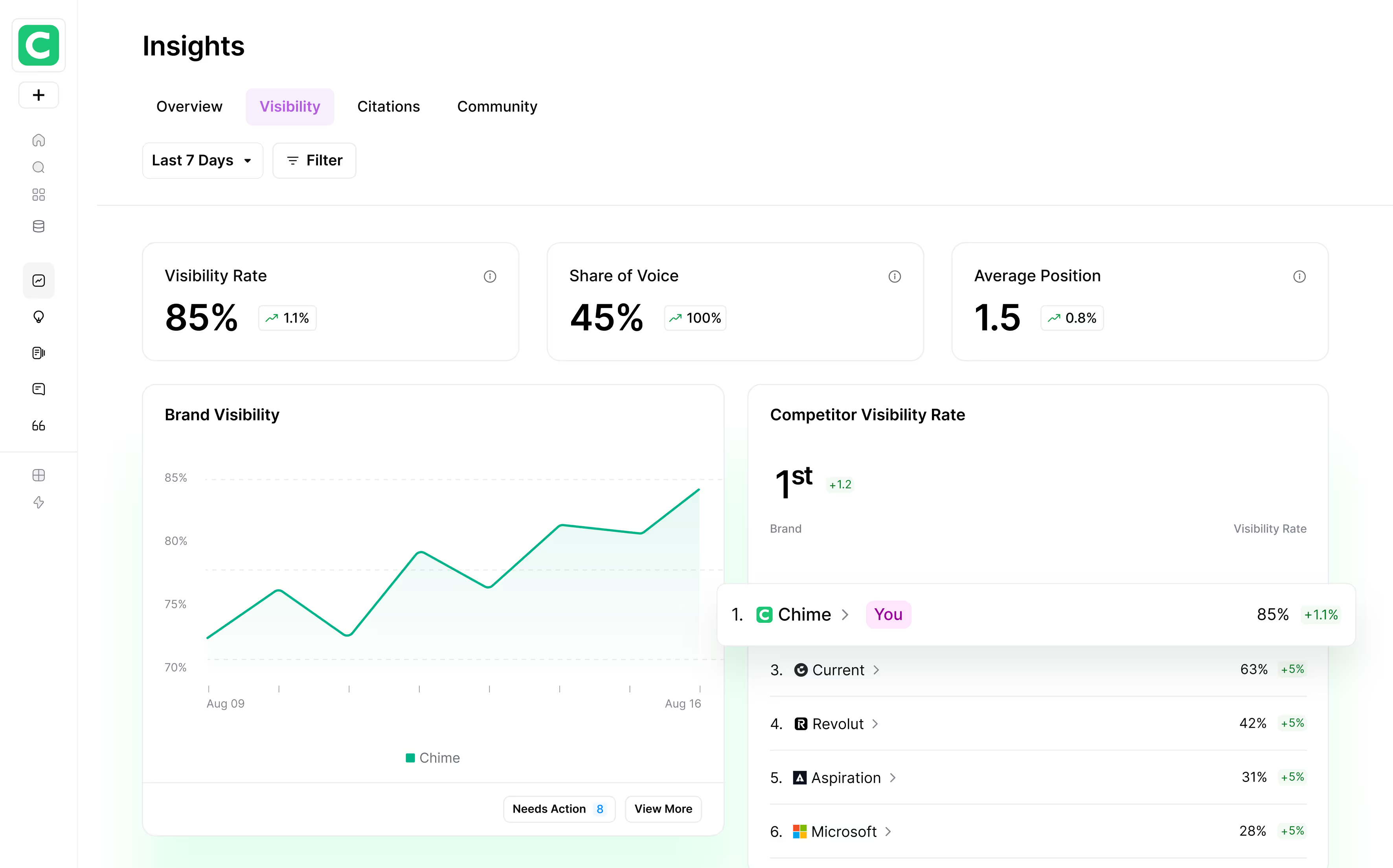
Turn AI answers into a measurable channel
AI search now shapes how buyers discover and evaluate brands. Teams that test visibility consistently gain a clear view of how tools like ChatGPT and Perplexity understand their content and where competitors earn attention.
AirOps centralizes mentions, citations, and gaps across AI tools so teams can move from observation to action without manual checks and focus on the updates that actually change outcomes. AirOps is the partner for this shift: the platform, the media mix, and a hands-on team that builds and runs the strategy alongside yours, tied to pipeline and revenue.
Book a demo to see how AirOps helps teams track AI search visibility, identify gaps, and earn more citations and mentions at scale.
Frequently Asked Questions
How often do ChatGPT and Perplexity update their indexes with new content?
ChatGPT's browsing feature pulls from Bing's index which updates continuously, but training data refreshes happen less frequently during major model updates. Perplexity crawls the web in near real-time by default, meaning new content can appear in results within hours to days of publication rather than weeks.
Can I block my content from appearing in AI search results?
Yes, you can use robots.txt directives to block specific AI crawlers like GPTBot (OpenAI) and PerplexityBot, though this prevents your content from being cited entirely. Consider whether blocking serves your goals, since visibility in AI search increasingly drives discovery and traffic.
Does content length impact whether AI tools cite my pages?
Content length alone does not determine citation likelihood, but comprehensive pages that thoroughly answer questions tend to perform better than thin content. AI tools favor pages that provide complete, well-structured answers with clear expertise signals over lengthy but unfocused articles.
How can I see mentions in Perplexity?
Enter your query in Perplexity, read the sources panel, and note whether your domain appears and how the answer describes your brand. Run the same prompts weekly to see mentions in Perplexity trend up or down. A monitoring platform like AirOps logs every mention automatically, so you skip manual checks.
How can I track which content pieces drive citations in ChatGPT and Perplexity?
Log the exact URL cited in each answer, not just the domain, so you can tie citations back to specific pages. Group those URLs by page across several runs to see which content pieces drive citations most often. AirOps Page360 connects each cited page to its GSC and GA4 performance in one view.
How can I benchmark brand rankings against rivals across ChatGPT and Perplexity?
Run the same set of prompts for your brand and your competitors, then compare mention rate, citation rate, and share of voice across both engines. Share of voice shows how often each brand appears for the queries you care about. AirOps tracks competitor citation rates side by side, so you can benchmark rankings against rivals in one place.
How does the number of referring domains affect visibility in Perplexity?
Referring domains are one of the strongest predictors of AI citations, so pages with more quality references tend to surface more often in Perplexity. Building third-party mentions across reviews, community threads, and editorial coverage raises your citation odds. Track referring domains alongside your citation rate to see the connection over time.
How do citations inside ChatGPT and Perplexity differ from AI Overviews?
ChatGPT and Perplexity cite sources inside a conversational answer, while Google AI Overviews cite sources inside a search results page. The retrieval and ranking signals differ across all three, so a page cited in one is not always cited in the others. Track each surface separately to catch platform-specific gaps.
How is AI search visibility different from traditional SEO visibility?
AI search visibility measures whether AI engines cite or mention your brand in their answers. Traditional SEO visibility measures where your pages rank on Google's results page. A page can rank on page one and still never appear in ChatGPT or Perplexity, so you track both.
How long does it take to improve AI visibility?
Changes usually take days to weeks to show up in AI answers, since engines re-crawl and refresh on their own schedules. Re-test the same prompts after each update and watch the trend rather than a single result.
Do I need paid tools, or can I test AI visibility for free?
You can test AI visibility for free by running prompts manually in ChatGPT and Perplexity and logging the results in a spreadsheet. Paid tools like AirOps save time once your query list grows, running prompts automatically and tracking every citation and mention over time.
Get the latest on AI content & marketing
