- The Content Engineer has moved from idea to profession in under a year and the market validated it fast.
- Teams that adopted Content Engineering are shipping faster, showing up in AI answers, and driving real pipeline impact.
- In 2026, the Content Engineer isn’t a nice-to-have skill. It’s infrastructure for modern organic growth.
- Want to train your team to be a content engineer? Join the Foundations cohort and sign up for AirOps University.
A year ago, I felt like there was a shift in the traditional content and SEO roles.
This new job-to-be-done was different than how a content marketer typically operated, but also different from technical SEO. The skills needed were a combination of content strategy, low-code construction, and leveraging the power of hybrid automation.
What was this? A builder? An AI marketer? A “content conductor?”
At the time, here's all we knew:
- Content marketers and SEO teams needed to stop being production units and start being system builders.
- AI wasn't the enemy for SEO or content, but a tool that would separate the builders from the bystanders.
- And the future belonged to content people who could automate research, scale workflows, and maintain quality at speed.
I hit publish on The Rise of the 10x Content Engineer and the market validated it faster than I ever expected.
The article became one of my most popular LinkedIn posts, circulated the industry, and triggered questions:
- How do we become a content engineer?
- Can you train my content strategists?
AirOps training cohorts were started in spring 2025, and at the beginning of this year, we ran a cohort with 200+ people attending live sessions (largest ever!) That single cohort represented over $1 million in pipeline from 17 active opportunity deals.
But the real story are the people. They proved this was more than theoretical.
.png)
Who are the MVP content engineers?
Meet Oshen Davidson, Head of Research and Product Intelligence at AIrOps.
Oshen joined AirOps in spring 2025 and built a workflow in a single weekend that makes exporting, filtering, and deep analysis seamless. Her research system distinguished between linked and unlinked mentions, surfaces third-party influence in AI search, and centralizes brand visibility. The same workflows turned insights into assets, like summarizing reports into sharp takeaways for email, social, LinkedIn, and internal updates. One person with a repeatable system.
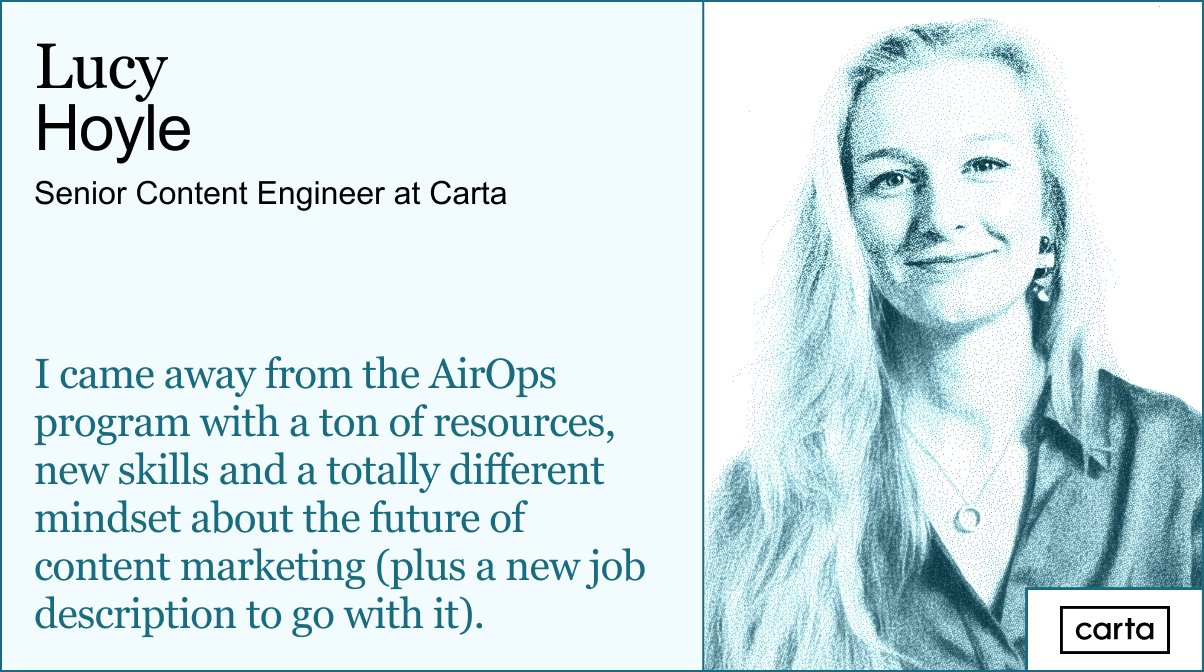
Then there's Lucy Hoyle at Carta.
Lucy went through cohort and immediately updated her title. Not "Content Marketing Manager." Not "Senior Content Strategist." Lucy was a "Senior Content Engineer." The market recognized what she'd become before most companies even knew the role existed and is now recognized by her CMO Nicole Baer for advancing her AI skills with AirOps.
And here’s Grady:
Grady Locklear is head of content at Tempo Software and was having difficulty creating illustrations in his brand colors. He turned to AirOps to help him create prompts for bulk image creation that was an absolute game changer. That’s just one of the use cases he’s started using with AirOps.
“My overall goal with AirOps is to amplify our blog production and refresh processes. We’ve merged 5 websites in the past couple years and a lot of blogs didn’t get the full refresh treatment. Now I can align them better to our brand writing, update internal linking, reliably find good external links, and update imagery in a day’s work.”
In case you were wondering, Grady is also a certified content engineer:
.png)
Other standouts include:
- Connor Beaulieu from LegalZoom who built Reddit engagement workflows that cut response time from 48 hours to 30 minutes
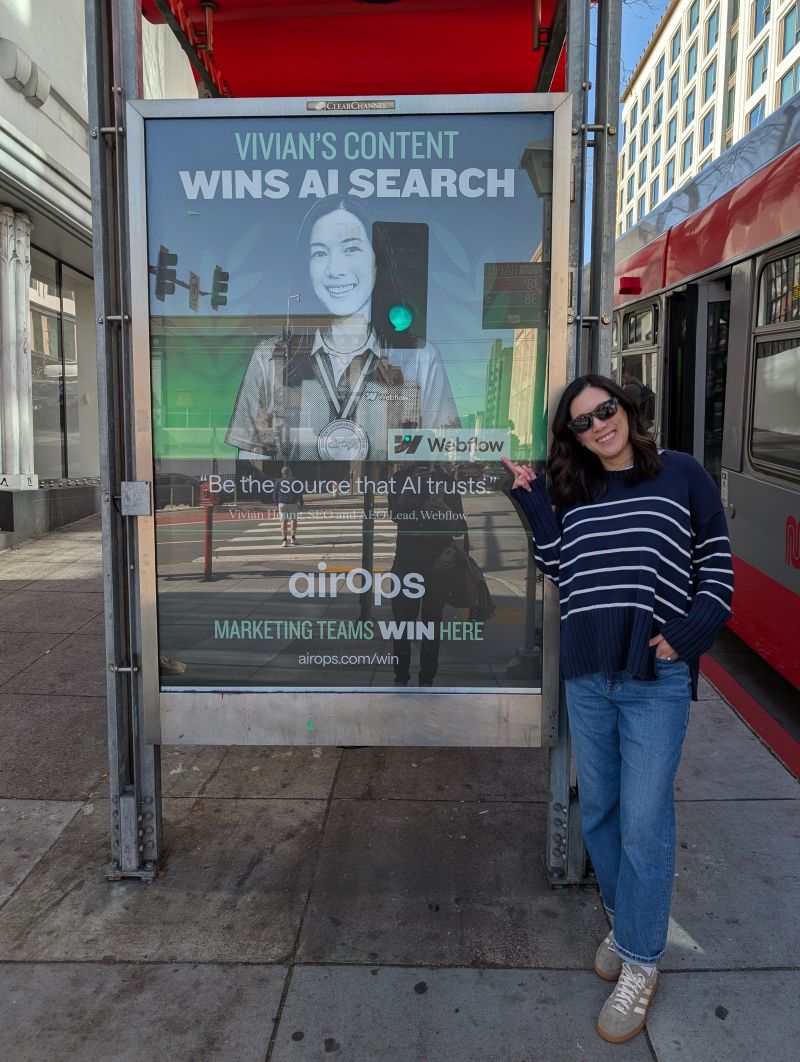
- Vivian Hoang from Webflow who added FAQs to hundreds of blog posts while keeping humans at the center for depth and trust
- Valeriia Frolova from Docebo, who built agentic workflows that automated content refreshes based on real-time performance data.
They are builders who are quietly upgrading the engine behind the scenes that had become the face of modern marketing. So much so that we added those three to billboards.
Here's Vivian in front of hers!
This is a movement. Not a trend.
You can tell when something shifts from idea to movement.
In the past 12 months:
- Hundreds of operators have graduated from Content Engineering cohorts
- Our January 2026 cohort had 200+ live attendees (largest ever)
- We hosted the first Content Engineering gathering + hackathon in NYC in October, with a room full of content engineers working in AirOps
- Our job board is filling with Content Engineering roles
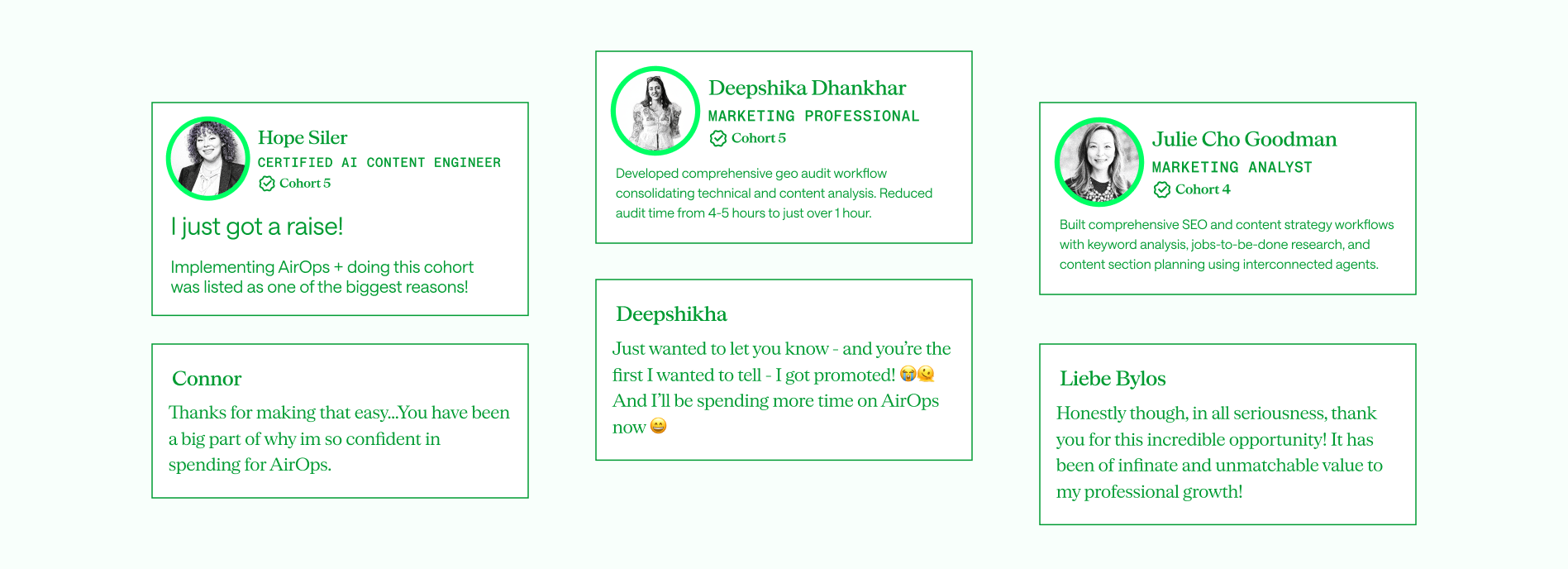
- A growing percentage of grads have reported promotions or pay increases
- LinkedIn is filled with graduation certificates and title updates
- Marketers are figuring out their Marketype. Take the quiz!
When operators start changing their job titles before HR writes the job description, something real is going on.
If you’ve been in SaaS, you’ve seen this pattern before.
- GTM Engineers at Clay.
- Inbound Marketing at HubSpot.
These once-new ideas became bedrocks of the industry. And it's happening again.
What actually changed after content engineering
How have things changed? The old metrics became vanity metrics overnight.
- Before: Content teams measured success by output. 20 blog posts per month. 50 pages indexed. 100 keywords targeted.
- After: Content Engineers measure success by system efficiency. Time-to-market for new content campaigns. Citation rate in AI outputs. Hours saved per published piece through automation.
Production inputs may seem similar but the pace is quite different. Content Engineers harness the ability to 10x output. So their focus relies on system efficiency.
- Before: You scaled content by hiring more writers.
- After: You scale content by training Content Engineers who build workflows that produce high-quality content while keeping humans in the loop for editorial review and quality control.
The ability to mine large datasets, interviews, reviews and more unlocks better, more original content.
- Before: Underutilized, lengthy customer interviews and sales calls in scattered docs that rarely made it into production in a systematic way.
- After: Question mining at scale. Teams can source, gather and pull high-intent queries from sales calls, support tickets, community threads, AI prompts, and review sites. That context is turned into frontier content powered by real information.
And the skills needed are tweaked:
- Before: Job postings said "Content Marketing Manager: 3+ years experience writing B2B content."
- After: Job postings say "Content Engineer: Experience building scalable content systems, comfortable with AI workflows and automation."
When titles shift this fast, it means the market recognized the value before other teams.
The business impact (that goes beyond theory)
Nicole Baer's team at Carta reduced content launch timelines from months to weeks when entering new markets. That's real revenue velocity. Being first to market with quality content in a new category means you own the conversation before competitors even show up. And by the way, Nicole got a billboard too!
"My advice to other CMOs would be understanding that we've already gone through a transition, and so you have to make some commitments to how you're going to guide your team through this new era that we're in," Nicole said.
Marketers who gained Content Engineering skills in Cohort quickly proved value to their businesses, unlocking productivity, outputs, and results at a never-before-seen pace. Our January 2026 cohort generated over $1 million in pipeline from companies that see Content Engineering as a strategic capability, not a nice-to-have skill. These are teams like Wiz, Vanta, Netflix, Ramp, Ironclad, Betterhelp and other growth-stage companies getting their teams to get trained.
This is executive-level validation happening in real-time.
What I got wrong
I thought this would take some time to become real. It took only a few months.
I thought titles would shift slowly as companies caught up to the concept. Lucy changed hers within weeks of graduating cohort.
I thought we'd need to convince individual contributors first, then they'd push the concept up to leadership. The opposite happened. CMOs and VPs of Marketing saw the strategic value immediately with a person who could combine modern skills and tools.
The goal of content engineering is to elevate people, not replace them.
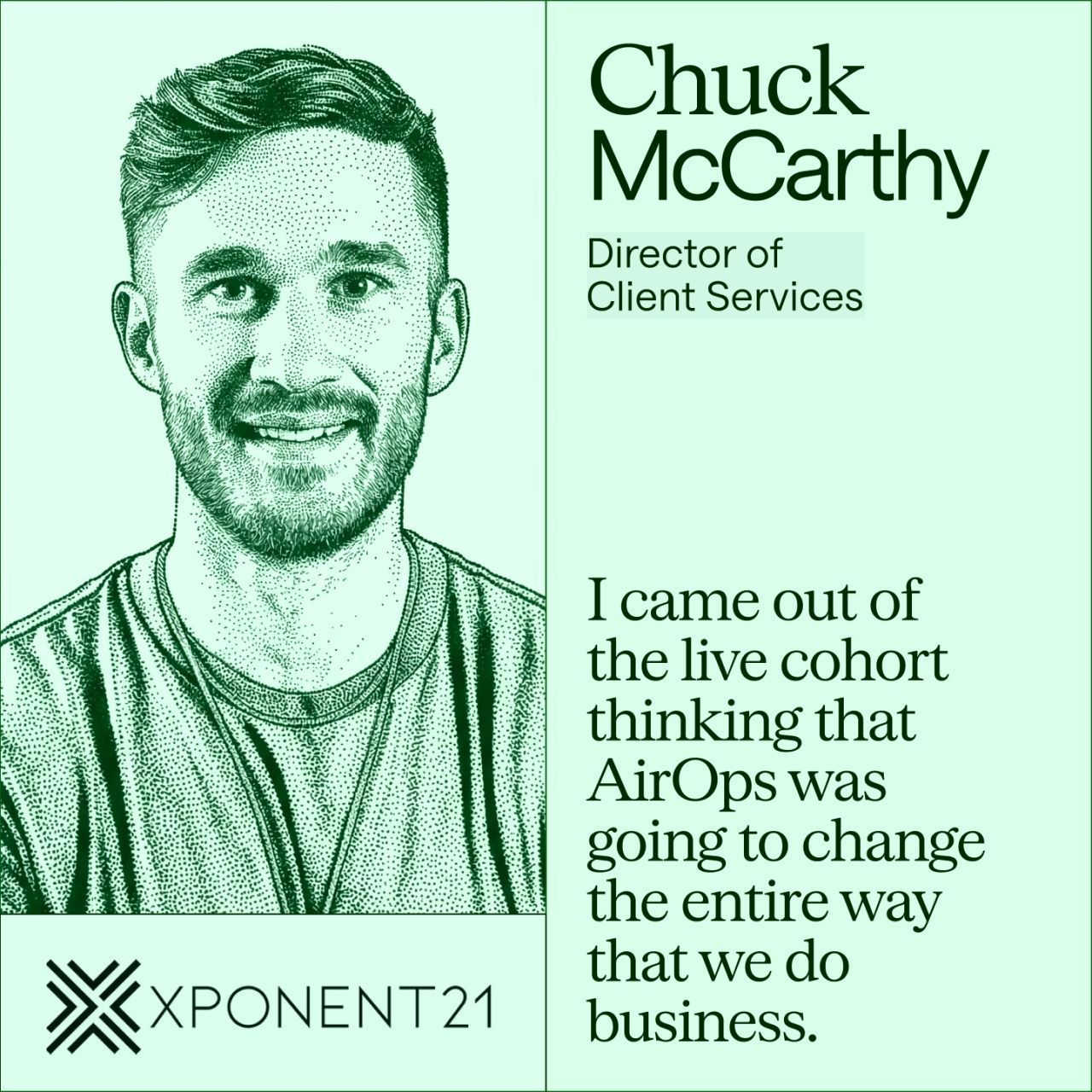
Hundreds of people are updating their job titles and sharing their content engineering bonafides on LinkedIn, like Grady and Shannon.
“I feel like I want to start doing more of content engineering in terms of leading businesses towards the impact they can make… I call it a capability shift within an organization.”
— Deepshika D., Content Strategy Lead at Revenue Zen and AirOps Cohort Grad
For most… true content engineers, you think like an operator. You build like a founder, and you deliver like a strategist. Content engineers do all three.
— Liebe Bylos, Content Engineering Consultant and AirOps Cohort Grad
Remember how I said executives get it too? If the buisness is optimizing for speed and quality with AI content workflows as an accelerator, it makes perfect sense for content/SEO teams toa dd a content engineer.
Take it from Josh Grant, VP of Growth at Webflow. Enabling your team with AI is an non-negotiable as a leader.
“So part of that is as a leader like bringing on those systems, giving team access to really simple workflows just to get experience with some of these tools. So finding questions, shipping answers, checking visibility if it's a visibility tool and then leaders really need to set the cadence here, right? You need to show and prove and you need to prove it out to the team and even at a growth leadership level that keeps me actively in platforms building.”
- Josh Grant, VP of Growth at Webflow.
What "failure to adapt" looks like in 2026
I've talked to teams that didn't evolve.
They're still measuring success by "posts published per month." They're still hiring "content writers" to churn out 1200-word blog posts, and thinking of AI as a drafting tool instead of an engine.
And they're... slowly becoming invisible. Their strategies can’t keep up with the pace of modern search.
Meanwhile, teams with Content Engineers are shipping comprehensive content in days, maintaining quality at scale, and showing up in the places that actually matter, with answers that buyers trust.
A year ago, this felt like a skill upgrade. But now it’s one of the most important seats in content, SEO, and your marketing team.
Why the content engineer is the most valuable role on the marketing team in 2026
This widening gap isn’t random. It’s growing because distribution has changed.
- Buyers ask ChatGPT and Perplexity with longer queries than traditional keywords
- Buyers scan AI Overviews in Google that leads to an answer, but not a click.
Maintaining your content and presence across all of these surfaces takes more effort…and engineering.
You’ll need to maintain clarity, freshness, and authority across your whole library. A content engineer is how you get it done and it's the most important growth team hire. Great writers, creators, and designers build incredible assets. One Content Engineer upgrades the entire system. You can quickly see how it impacts the whole GTM org.
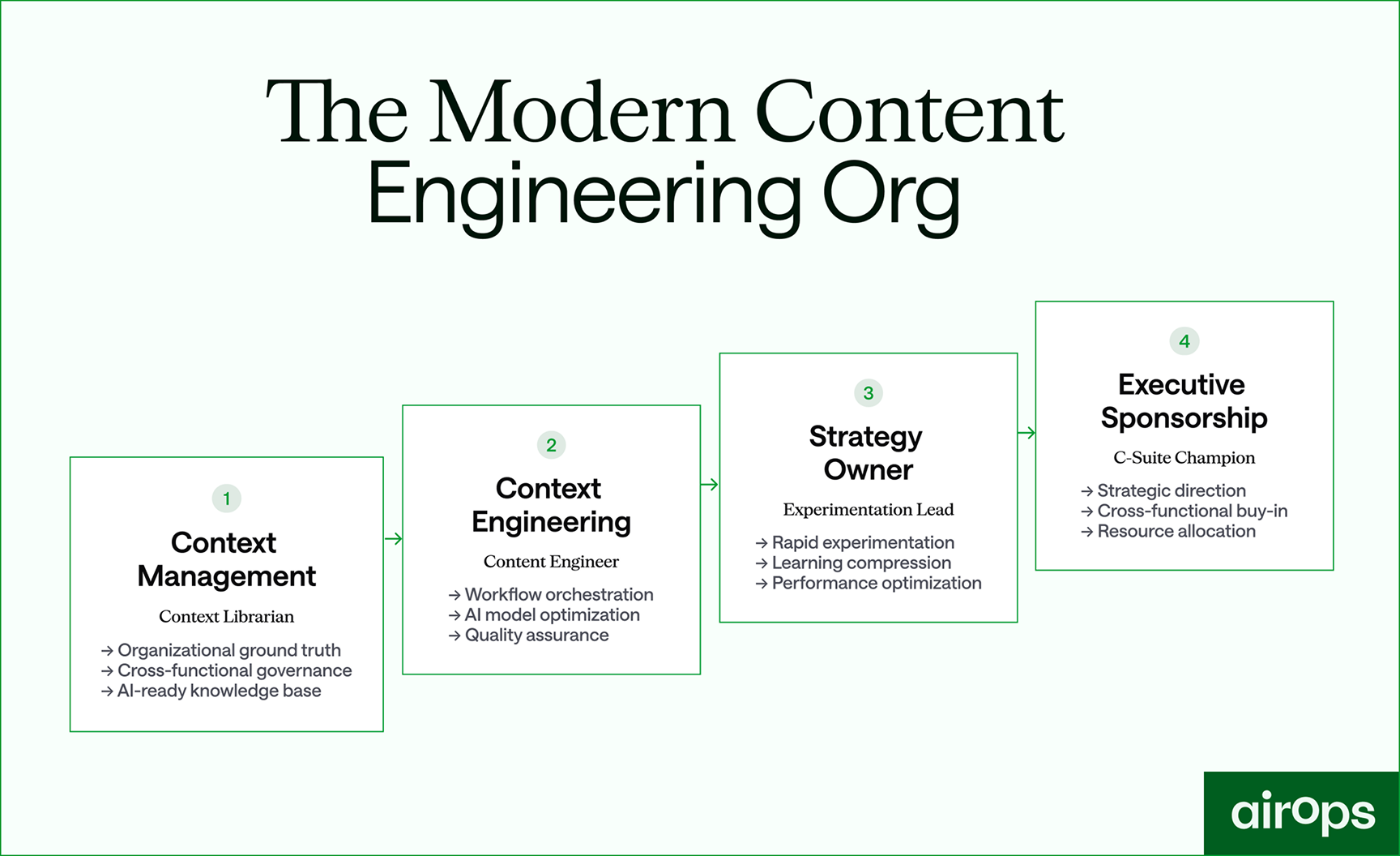
One action every marketing leader should take this quarter
Don’t overthink this.
Here's the specific action:
- Find your most systems-curious content person. This is a person who's already experimenting with AI, building little automations, asking "what if we could..." questions (and they may not be your most senior person or your top SEO).
- Give them permission to experiment and build with Claude Code and AirOps.
- Send them to the AirOps cohort and show them AirOps University. They’ll enhance their skills and join a community of other content engineers looking to level up.
One trained Content Engineer can build workflows that:
- Automate competitor research that used to take days
- Scale content briefs from 5 per month to 50
- Refresh existing content systematically instead of ad-hoc
- Track brand mentions across thousands of AI responses
- Maintain quality standards while increasing output 3-5x
Instead of hiring more writers, you need one Content Engineer who makes your current team 10x more effective, and can maintain your brand context.
What's next? 100,000 content engineers
My idea started as a blog post. Now it’s a profession. The enablement team scaled it to 100+ person sessions. Now we're making it an industry standard.
We're launching Foundations Cohort for people just starting their Content Engineering journey and to dip their toes in the water. Intermediate and advanced tracks are for people building sophisticated multi-step workflows.
The vision is simple: Cement content engineering as the most critical role in organic growth for B2B teams.
Ready to become a content engineer?
If you're leading a content team and you don't have a Content Engineer yet, you're already 12 months behind the early movers.
Not sure if Content Engineering is right for your team? Here are the signs you need one:
- Your content team is busy but invisible (lots of output, no impact)
- Competitors are shipping faster than you
- AI made drafting easy but you're still slow to market
- You're hiring more people but not getting more results
- Leadership keeps asking "what's our AI content strategy?"
If any of those sound familiar, you don't need more writers.
You need a content engineer.
Get more information about cohorts and sign up today.
Get the latest on AI content & marketing
