- AirOps connects AI search insight and measurement in one closed loop, so teams create, optimize, and publish without switching tools.
- Surfer SEO is a content optimization tool built around its Content Score, giving writers real-time, SERP-based guidance while they draft.
- Writesonic is an AI content generation platform that added AI search visibility tracking, built for producing high volumes of articles quickly.
- The choice comes down to scope: AirOps runs the full operation, Surfer SEO sharpens individual pages, and Writesonic accelerates raw output.
Content teams can now produce more than ever, yet turning that volume into governed, on-brand pages that actually rank across Google and AI search still forces most teams to stitch together a writer, an optimizer, a tracker, and a publishing step by hand.
AirOps, Surfer SEO, and Writesonic all promise to help you create, optimize, and rank content faster, but they solve different slices of that job. AirOps runs the whole operation from insight to published page, while Surfer SEO optimizes each piece against the SERP and Writesonic generates content at speed.
This comparison breaks down how each platform handles creation, optimization, governance, integrations, and measurement, so you can decide which one fits the way your team actually operates.
AirOps vs Surfer SEO vs Writesonic at a glance
AirOps is the only option here with built-in automation and full-stack workflows that carry a piece from research to publishing. Surfer SEO and Writesonic each own one strong stage of that work, which means teams still assemble the surrounding steps across separate tools.
AirOps vs Surfer SEO vs Writesonic: platform overview
AirOps is the partner for AI search and AEO, built for enterprise content teams that need to move from visibility insight to governed, published content in one system. Its core philosophy is a closed loop: understand how your brand shows up in AI search, act on the gaps with brand-governed content, then measure what each action moved. It fits teams running content as an operation across many pages, authors, and markets, not a single writer polishing one draft.
AirOps brings the platform, the media mix, and the team together, not just software to log into, and ties the work back to pipeline and revenue growth.
Surfer SEO is a content optimization platform designed to help writers and SEO teams score and improve pages against top-ranking search results. Its philosophy centers on data-driven guidance during the writing process, translating hundreds of on-page signals into a single Content Score. It suits writers and SEO specialists who want clear, in-editor direction on how to structure and optimize a piece.
Writesonic is an AI content platform that started in generation and now adds AI search visibility tracking on top. Its philosophy favors speed and output, helping teams produce articles, audits, and visibility reports quickly from one interface. It fits smaller teams and solo marketers who prioritize volume and want a low-cost entry into AI search tracking.
Core features: how AirOps, Surfer SEO, and Writesonic stack up
The features below show what each platform actually does and where its scope ends, so you can see how much of the create-optimize-rank loop it covers.
AirOps features:
- Quill:
- Quill — AirOps' AI agent captain that monitors AI visibility, recommends campaigns with data and briefs attached, executes accepted work with human review, and learns from every edit.
- For a Content Director, Quill turns the weeks lost between spotting a gap and shipping a fix into a governed loop your team steers instead of staffs.
- Surfer SEO and Writesonic offer point automations, but neither runs an always-on agent that watches signals, proposes strategy, and executes across your program.
- Page360 unified view:
- Page360 — combines Google Search Console (GSC) rankings, Google Analytics 4 (GA4) traffic, AI search citations, and page freshness into one per-page view with smart filters.
- Instead of cross-referencing three dashboards to prioritize 200 pages, your team sees what to fix first in one place and sends it straight to a workflow.
- Surfer SEO covers SERP signals and Writesonic tracks AI visibility, but neither unifies SEO, AI citations, and analytics into a single prioritization view.
- Prompt Discovery:
- Prompt Discovery — formerly Prompt Mining, builds a prioritized prompt universe from four intent sources: third-party panel data, SERP People Also Ask, search intent, and first-party customer conversations pulled through MCP.
- Your editorial plan gets grounded in the questions buyers actually ask AI, not keyword volume alone.
- Surfer SEO and Writesonic surface keyword and prompt data, but neither sources intent from your own sales calls and support tickets.
- Grids for bulk operations:
- Grids — give teams a spreadsheet-style workspace where every article and workflow run lives, with bulk operations, status tracking, version history, and real-time co-editing.
- A 500-page refresh becomes one managed operation where each row triggers its own governed workflow, rather than 500 scattered tasks.
- Surfer SEO manages pages inside its editor and Writesonic tracks articles individually, but neither runs bulk, workflow-driven production at that scale.
- Brand Kits:
- Brand Kits — store tone, writing rules, positioning, audiences, and approved claims as a governed, versioned source of truth that every workflow reads by default.
- When 15 people and agency partners produce content, brand consistency holds automatically, so scaling volume does not mean scaling review.
- Surfer SEO offers Brand Knowledge and Writesonic supports brand voices, but neither provides versioned, approval-based governance across audiences, regions, and content types.
- AirOps MCP:
- AirOps MCP — uses the Model Context Protocol (MCP), including a Claude connector, to bring Brand Kit context and live Insights data into 35+ tools like Claude, ChatGPT, and Cursor.
- Your brand rules and performance data travel with the team into whatever AI tool they open, so output starts on-brand.
- Surfer SEO and Writesonic offer API access for pulling data out, but neither pushes governed brand context into the AI tools your team already uses.
- Offsite:
- Offsite — discovers, places, and measures third-party citations, connecting publisher outreach to actual AI visibility lift with query-level attribution.
- Because most brand discovery in AI search happens through third-party sources, your team can grow citation share on pages you do not own and prove which placements worked.
- Surfer SEO and Writesonic focus on owned content and tracking, so neither manages third-party placements or attributes their impact.
- Query Fan-outs:
- Query Fan-outs — reveal the sub-queries an AI engine runs behind each prompt, showing which fan-out questions your content covers and which you miss.
- Your team finds the hidden content opportunities behind a single prompt and understands why visibility swings between runs.
- Surfer SEO and Writesonic report prompt-level visibility, but neither exposes the sub-query behavior AI engines run underneath each prompt.
- Closed-loop execution:
- Closed-loop execution — ties Insights, Action, and Measurement together, with Content Publish Tracking logging every publish as a timestamped event overlaid on visibility charts.
- Your team can prove which content actions drove which citation, ranking, and traffic changes, which turns budget conversations into evidence.
- Surfer SEO and Writesonic report performance metrics, but neither connects a specific publish action to the visibility outcome that followed it.

Surfer SEO features:
- Content Editor and Content Score:
- The Content Editor grades drafts in real time against a Content Score built from analysis of 500+ web and AI signals, guiding terms, structure, and length.
- Writers get concrete, in-the-moment direction that shortens the path from draft to publish-ready.
- The score optimizes one page at a time, so teams managing hundreds of pages add a separate system to prioritize across the library.
- AI Tracker:
- AI Tracker monitors brand visibility, mention gaps, and competitor share of voice across engines like ChatGPT, Perplexity, Gemini, and Google AI Overviews.
- SEO teams get a visibility baseline and can watch how AI perception shifts as they update content.
- Tracking is capped by plan and refreshes weekly on lower tiers, so daily, multi-engine coverage requires higher-priced plans.
- SERP Analyzer and content planning:
- Surfer SEO pairs a SERP Analyzer with keyword research, a Topical Map, Content Audit, and a Cannibalization Report to plan and maintain topic clusters.
- Teams can identify quick-win refreshes and structure clusters that build topical authority for Google and AI answers.
- These tools diagnose and recommend, but acting on them still happens in the editor or a separate content management system (CMS), so execution stays manual.
Writesonic features:
- AI search visibility tracking:
- Writesonic tracks prompts and answers daily across ChatGPT, Gemini, and Google AI Overviews, with Brand Explorer, Prompt Explorer, and a Page Tracker on higher tiers.
- Teams see where AI engines mention competitors instead of them and get a picture of daily visibility shifts.
- Sentiment analysis and broader engine coverage sit on Growth and Enterprise, so entry-tier teams track a narrower slice.
- AI Article Writer:
- The AI Article Writer generates articles at volume from Writesonic's content generation heritage, with brand voices and uploaded data to steer output.
- Teams that need many drafts quickly can produce a high volume of first-pass content from one tool.
- Article counts are capped per plan and optimization depth is thinner than a dedicated editor, so quality-focused teams add other tools on top.
- Action Center and Site Audit:
- The Action Center prioritizes on-page, off-page, and technical fixes, paired with a Site Audit that scans pages and applies automatic AI fixes.
- Teams get a ranked list of visibility improvements and some automated remediation for common issues.
- Full Action Center access sits on Enterprise, with only a small trial on Growth, so most self-serve buyers cannot execute the fixes it surfaces.
The practical split is clear: AirOps prioritizes, creates, governs, publishes, and measures across a whole program, while Surfer SEO optimizes individual pages and Writesonic generates content fast with basic tracking. For a team running content at scale, that difference decides how many tools and handoffs sit between an insight and a published, on-brand page.
Product architecture overview: AirOps vs Surfer SEO vs Writesonic
Architecture decides what each platform can do today and how far it stretches as your program grows. AirOps spans the full operation from data to governed publishing, while Surfer SEO is built around the optimization moment and Writesonic around fast generation with tracking added on.
Data sources and signals
Broader inputs mean fewer blind spots when your team decides what to create and fix next.
- Data Sources & Integrations: AirOps pulls AI visibility across eight engines and connects natively to GSC, GA4, Semrush, Ahrefs, and your CMS. Surfer SEO analyzes the SERP and tracks AI visibility but connects to a short list of writing tools, and Writesonic tracks a few engines and GSC by default, reserving GA4 and Looker Studio for Enterprise.
- Data Accuracy & Freshness: AirOps grounds prompts in real user behavior and first-party conversations, with daily multi-engine collection on paid tiers. Surfer SEO refreshes weekly on Standard and daily higher up, while Writesonic tracks daily but caps prompt and answer volume by tier.
- Data Portability: AirOps moves data through CSV, API, MCP, Grid exports, and direct CMS publishing, so signals become action. Surfer SEO offers export and API access on its top tier, and Writesonic provides exports with deeper integrations gated to Enterprise.
AirOps connects AI and SEO signals to execution, while Surfer SEO and Writesonic collect strong signals but leave acting on them to your team.
Prioritization of opportunities
After the data lands, the real question is which page to fix first and how to act on that call.
- Decision Engines & Scoring: AirOps Page360 scores every page by combining AI citations, SEO performance, traffic, and freshness, then routes it to action. Surfer SEO scores pages with its Content Score and flags quick-win refreshes, while Writesonic surfaces a ranked Action Center list with full access on higher tiers.
- AI-powered Recommendations: AirOps recommendations are executable in place, since Quill and Page360 trigger workflows that draft, govern, and publish. Surfer SEO recommends terms, structure, and internal links in the editor, while Writesonic recommends fixes and auto-applies some technical changes, with deeper execution gated by plan.
- Integration of Signals: AirOps blends AI visibility, rankings, traffic, and freshness into one prioritization view. Surfer SEO focuses on SERP and on-page signals, while Writesonic centers on AI visibility, so neither weighs the full mix together.
AirOps prioritizes with the whole performance picture and connects that call to execution, while Surfer SEO and Writesonic prioritize within their signal set and hand the next step back to you.
Workflow building & automation
This is where a decision either becomes a published page or a task in someone's queue.
- Workflow Builder Capabilities & Flexibility: AirOps offers a visual builder for custom pipelines across any content type or process, with Brand Kit context baked in. Surfer SEO structures work around its editor and audit views rather than a builder, while Writesonic provides agentic workflows with limited trial runs on most plans and full access on Enterprise.
- Workflow Automation Features: AirOps automates briefs, drafts, refreshes, optimization, QA, and CMS publishing through repeatable workflows. Surfer SEO automates optimization guidance and one-click internal linking, while Writesonic automates article generation and some site-audit fixes, scaled by tier.
- Workflow Conditional Logic & Triggers: AirOps supports schedules, signal-based triggers, and Human Review gates that pause and route work for approval. Surfer SEO offers ranking-drop alerts rather than conditional logic, while Writesonic runs scheduled and agent-driven tasks with the deepest automation on Enterprise.
- Ease of building vs. Complexity of What can be Built: AirOps balances a no-code builder and Power Agent templates with deep customization. Surfer SEO is simple but limited to optimization tasks, while Writesonic is quick to start but narrower in what its automations orchestrate.
AirOps is the only platform here with a true workflow builder, so it turns decisions into governed, published output, while Surfer SEO and Writesonic automate specific tasks inside their own surfaces.
Governance, context & brand control
Brand control decides whether AI-assisted content ships on-brand automatically or needs a human check on every piece.
- Brand Voice & Governance Features: AirOps enforces tone, terminology, approved claims, and editorial rules through Brand Kits that govern every workflow output and version every change. Surfer SEO applies Brand Knowledge and custom voices to guide writing, while Writesonic supports brand voices that scale by plan.
- Knowledge Bases & Brand Kits: AirOps pairs Brand Kits with Knowledge Bases so workflows and Copilot reason over reusable brand and product context. Surfer SEO stores brand knowledge for its editor, while Writesonic lets teams upload data to steer generation without versioned governance across audiences and regions.
- Customization vs. Templates: AirOps supports deep customization plus forkable Power Agents scoped by audience, region, and content type. Surfer SEO relies on custom voices and templates within set workflows, while Writesonic offers templates and writing styles capped by tier.
AirOps treats governance as versioned infrastructure the whole operation reads from, while Surfer SEO and Writesonic offer lighter controls for individual drafts.
Integrations & ecosystem
How well a platform connects to your stack decides how much manual bridging your team does every day.
AirOps integrations:
- CMS: Content teams publish directly to Webflow, WordPress, Contentful, Sanity, ContentStack, Ghost, and Strapi from Workflows and Grids, so a finished draft becomes a live page without copy-paste.
- SEO and analytics: Native GSC, GA4, Semrush, and Ahrefs connections feed Page360, so teams prioritize by business impact, not visibility alone.
- AI tools and project management: The Claude connector and MCP carry Brand Kit context into Claude, ChatGPT, and Cursor, while Asana, ClickUp, Monday.com, and Airtable keep content tasks in your team's planning tools.
Surfer SEO integrations:
- Publishing and writing: WordPress, Google Docs, and Contentful let writers push optimized drafts into common editing and publishing surfaces.
- Automation: A Zapier connection extends Surfer SEO to other apps, though it adds a configuration step rather than native depth.
Writesonic integrations:
- Search data: Google Search Console and WordPress connect on all plans, so teams tie tracking to search performance and publish basic content.
- Analytics: GA4 and Looker Studio connect only on Enterprise, so mid-tier teams reporting on traffic will bridge that gap manually.
AirOps connects across CMS, SEO, analytics, project management, and AI tools so the operation runs in one place, while Surfer SEO and Writesonic offer focused connections and reserve deeper ones for top tiers.
Platform depth & scalability
Depth and scale decide whether a platform still fits when your team, page count, and markets multiply.
- Architectural Breadth & Depth: AirOps supports many workflow types and runs each deeply, from prompt discovery to publishing and attribution. Surfer SEO goes deep on optimization and SERP analysis within a defined scope, while Writesonic spans generation and tracking at a lighter depth than a specialist tool.
- Scalability Across Teams & Content Volume: AirOps Pro includes unlimited seats and Grids handle bulk operations across hundreds of pages, so capacity grows with the team. Surfer SEO caps seats and document volume by plan, while Writesonic limits users, projects, and article counts per tier and charges per extra seat.
- Long-Term Extensibility & Future-Proofing: AirOps adapts through MCP as new AI tools emerge and through a builder that absorbs new channels and approval logic without a rebuild. Surfer SEO extends mainly through Zapier and new tracked engines, while Writesonic broadens engine coverage and commerce features largely at Enterprise.
AirOps scales in capacity and adapts in shape as needs change, while Surfer SEO and Writesonic scale within their focus and lean on plan upgrades to stretch further.
AirOps vs Surfer SEO vs Writesonic: out-of-the-box services & solutions
AirOps offers the most ready-to-run operational value, since teams deploy governed pipelines in hours rather than assembling a process from scratch. Surfer SEO and Writesonic get individual users productive fast, but their out-of-the-box value centers on a single task rather than a full operation.
The gap shows up in what "ready" means. Surfer SEO and Writesonic get you to an optimized page or a fast draft immediately, while AirOps gets you to a repeatable operation running across your whole library within the first day.
AirOps vs Surfer SEO vs Writesonic: support, resources & community
AirOps invests in hands-on enablement through managed services and live training, Surfer SEO leans on structured self-serve academies, and Writesonic gates its most direct support behind Enterprise.
Execution & training
- Implementation Support & Training: AirOps provides AirOps University, AirOps Academy, and live cohort trainings, plus expert onboarding on higher plans. Surfer SEO offers Surfer Academy and optimization courses with onboarding on its top tier, while Writesonic provides documentation and reserves a dedicated AI search strategist for Enterprise.
- Managed Services vs. Self-Service Approaches: AirOps offers managed services including Brand Kit setup, custom workflow building, Knowledge Base ingestion, and CMS integration setup, typically reaching full production over a few weeks. Surfer SEO is self-serve with a success manager on its highest plan, while Writesonic is self-serve with a strategist and account manager only at Enterprise.
Ease of use & onboarding
- Onboarding Process: AirOps pairs a no-code builder with Power Agent templates and Copilot to shorten setup for a full operation. Surfer SEO onboards writers quickly into its editor, while Writesonic gets users generating within minutes of signup.
- Ease of Use: AirOps balances approachable building with deep capability, so non-technical users run workflows while advanced users customize. Surfer SEO is intuitive within its optimization scope, and Writesonic is easy to start for generation and basic tracking.
Support & resources
- Resources: AirOps maintains documentation, an AI search playbook, and a template library. Surfer SEO offers a knowledge base and academy content, while Writesonic provides documentation and product guides.
- Community: AirOps runs an active builder Slack community and a Champions program. Surfer SEO points users to its academy and support channels, while Writesonic centers engagement on its help center rather than a named community.
- Customer Support: AirOps provides community and live chat support on entry tiers and a dedicated account manager on higher plans. Surfer SEO offers 24-hour weekday support with a success manager on top tiers, while Writesonic offers email support, moving to priority email on Growth and an account manager on Enterprise.
AirOps vs Surfer SEO vs Writesonic: pricing & value comparison
Subscription price is only the starting point, since the real cost includes every tool you add around each platform to run a complete content operation.
Total cost of ownership tells the real story. Surfer SEO and Writesonic carry lower entry prices, but a team running content at scale usually adds a separate creation, governance, analytics, or publishing tool alongside them, and both reserve their deepest execution and integration features for top tiers. AirOps starts free and folds creation, optimization, governance, publishing, and measurement into one platform, so the spend consolidates instead of spreading across a stack.
Real-world: when to use each platform
Each platform fits a different operating model, so the right pick depends on how your team moves from idea to ranked, published content.
AirOps
Workflow fit: AirOps fits teams running systematic programs, including large-scale content refresh, programmatic SEO, and AI visibility optimization with governed drafting and direct CMS publishing. A Content Director coordinating writers, SEO leads, and agency partners uses it as the hub where insight becomes a published page.
Industry fit: Enterprise B2B SaaS, e-commerce, media, and financial services teams producing 50 to 500-plus pieces a year across multiple products, audiences, or regions.
Surfer SEO
Workflow fit: Surfer SEO fits writers and SEO specialists who want in-editor guidance to optimize pages and plan topic clusters, working best when a separate system handles production and publishing across the library.
Industry fit: Agencies, in-house SEO teams, and content marketers focused on ranking well-structured articles in Google and AI answers.
Writesonic
Workflow fit: Writesonic fits solo marketers and lean teams that need to generate a high volume of drafts fast and want an affordable entry into AI visibility tracking, adding optimization and governance depth elsewhere.
Industry fit: Startups, small marketing teams, and agencies producing frequent content who prioritize speed and a low starting price.

AirOps vs Surfer SEO vs Writesonic: strengths & limitations
AirOps
Strengths:
- Closed-loop operation: the only platform here connecting AI search insight to governed creation, publishing, and measurement in one system.
- Brand governance depth: versioned Brand Kits enforce tone, claims, and rules scoped per audience, region, and content type automatically.
- Workflow and bulk execution: a visual builder and Grids run hundreds of pages as governed pipelines rather than one-off tasks.
Limitations:
- Pro and Enterprise use custom pricing, so those tiers require a sales conversation, though Solo is free.
- The platform's breadth creates a learning curve, which Power Agents and Copilot reduce.
- Teams that only want a single-page optimization score may find more capability than that narrow task needs.
Surfer SEO
Strengths:
- Content Score guidance: a well-established optimization metric built from hundreds of signals that writers trust.
- Fast page-level optimization: clear, in-editor direction that speeds a single draft to publish-ready.
- Content planning tools: SERP Analyzer, Topical Map, and Content Audit help structure clusters and spot quick-win refreshes.
Limitations:
- It optimizes pages one at a time, so teams with a large library add a separate system to prioritize across it.
- AI visibility depth and daily multi-engine tracking sit on higher tiers, so full coverage costs more.
- It does not govern brand rules or publish across a program, so execution beyond the editor happens elsewhere.
Writesonic
Strengths:
- Fast content generation: a mature AI writer that produces drafts and audits quickly from one interface.
- Low entry price: an accessible starting point for teams beginning AI visibility tracking.
- Combined tracking and generation: AI visibility monitoring and content creation in a single self-serve tool.
Limitations:
- The Action Center and full engine coverage sit on Growth and Enterprise, so entry buyers cannot execute most surfaced fixes.
- Optimization and governance run thinner than dedicated tools, so quality-focused teams add other products on top.
- Seat, project, and article caps per tier add cost as output scales.
Bottom line
AirOps is the strongest fit for teams that need to create, optimize, publish, and measure content as one governed operation across AI and traditional search. Surfer SEO is the better pick for sharpening individual pages, and Writesonic works for generating drafts quickly at a low starting price.
Choose AirOps if:
- You need to connect AI search insight to governed content creation and CMS publishing without switching tools.
- You manage a large library that requires systematic refresh, bulk operations, and brand governance across a team.
- You want to prove which content actions moved citations, rankings, and traffic in one measurement loop.
Choose Surfer SEO if:
- Your priority is optimizing individual pages against the SERP with trusted, in-editor guidance.
- Your writers want a clear Content Score and topic-cluster planning tools during drafting.
- You already run production management and publishing in separate systems.
Choose Writesonic if:
- You need to generate a high volume of drafts quickly at a low starting price.
- You want a self-serve entry into AI visibility tracking for a small team.
- You are comfortable adding optimization and governance depth through other tools.
Why teams choose AirOps
Teams pick AirOps when creating content is not the hard part, but running it as a governed operation is. Surfer SEO sharpens the page and Writesonic speeds the draft, yet both hand the surrounding work of prioritizing, governing, publishing, and measuring back to your team. AirOps keeps that work in one loop.
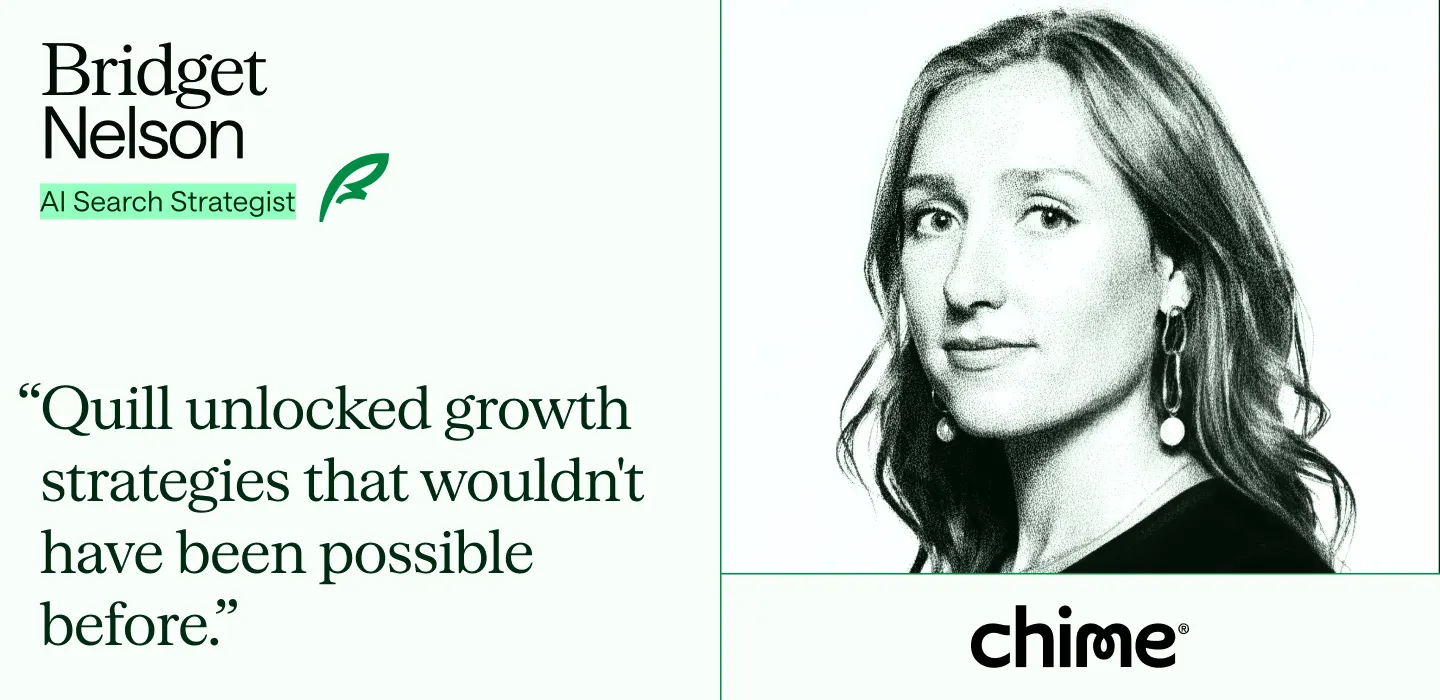
The results follow the loop. Webflow grew AI-attributed signups from 2% to over 10% in under a year with zero headcount growth, using sharper workflows and faster loops. Chime cut per-article refresh time by 89% and tripled AI search citations, which let the team drop its agency and focus on higher-value work. Growth teams at Asana used Quill to lift ChatGPT citations 93% in the first two weeks, moving 58% of tracked prompts from zero to cited. Each team scaled output by running content through governed workflows instead of stitching tools together.
Ready to run content creation, optimization, and AI search from one system? Book a call with our team to see how AirOps fits your workflow.
Frequently Asked Questions
FAQs
What can AirOps do that Surfer SEO and Writesonic cannot?
AirOps connects AI search insight to governed content creation, bulk workflows, and direct CMS publishing in one loop, then measures the impact. Surfer SEO optimizes individual pages and Writesonic generates drafts, so both leave production management, governance, and publishing to other tools.
AirOps vs Surfer SEO vs Writesonic: which platform is right for my team?
Pick AirOps when you need to run content as a governed operation across many pages and prove its impact. Surfer SEO fits teams focused on optimizing individual pages, while Writesonic suits small teams that mainly need fast drafts at a low price. You can also weigh each platform's independent user reviews before shortlisting.
Is Surfer SEO or AirOps better for content optimization at scale?
Surfer SEO gives writers a strong page-level Content Score, but it optimizes one document at a time. AirOps prioritizes and optimizes across a whole library through Page360 and workflows, so it scales optimization to hundreds of pages without manual handoffs.
Does Writesonic replace a dedicated content optimization tool?
Writesonic generates content quickly and tracks AI visibility, but its optimization depth is thinner than a specialist editor. Teams focused on ranking quality typically pair it with an optimizer or choose a platform like AirOps that builds governance and optimization into the workflow.
How does pricing compare across AirOps, Surfer SEO, and Writesonic?
AirOps starts free, with custom pricing on Pro and Enterprise. Surfer SEO ranges from $49/mo on Discovery to $999/mo on Enterprise, and Writesonic runs from $79/mo on Starter to custom Enterprise pricing, both billed annually.
Which platform is best for improving AI search visibility?
All three track AI visibility, but only AirOps connects that signal to governed execution and measurement, and adds Offsite for third-party citations. Surfer SEO and Writesonic show where you stand, while AirOps helps you act on it and prove the result.
Can I use Surfer SEO or Writesonic alongside AirOps?
Yes. Some teams keep Surfer SEO for in-editor scoring or Writesonic for quick drafts while running AirOps as the operational hub. Because AirOps covers creation, optimization, governance, and publishing, the overlap often makes a single platform the simpler choice.
Get the latest on AI content & marketing
