- SEO continues to drive website traffic, while AEO determines which brands AI systems cite as the answer
- Answer engines synthesize information directly,ai reducing the role of ranked links in discovery
- Zero-click search increases the importance of being referenced and named, not just visited
- AI systems favor established authority first, with freshness acting as a supporting signal
- Content built with clear structure and real expertise performs best across both traditional and AI Search
- Some teams run this integration through platforms like AirOps, layering AI citation tracking on top of existing SEO reporting to see where the two strategies diverge.
Search visibility no longer lives in one place.
SEO still determines whether you rank in Google's blue links. AEO determines whether AI systems like ChatGPT, Perplexity, and Google AI Overviews cite your content as the answer.
Most teams treat these as separate strategies. The brands winning today don't. They build content that earns clicks and citations.
This guide explains how AEO and SEO differ, where they overlap, and how to build a content strategy that holds up as AI Search continues to change.
Defining AEO and SEO
Search Engine Optimization (SEO) is the practice of improving how pages rank in traditional search results. Its primary goal is to earn visibility in search engine results pages and drive qualified traffic to a website.
Answer Engine Optimization (AEO) focuses on a different outcome. AEO prepares content so AI systems can interpret it, trust it, and cite it directly when answering user questions. Instead of earning a click, AEO earns a reference.
Both approaches depend on strong content and real expertise. The difference lies in how that content gets discovered and consumed across search interfaces.
What are answer engines?
Answer engines are the systems that make AEO necessary.
Instead of returning a list of links, answer engines generate direct responses to user questions.
Examples include:
- ChatGPT
- Perplexity
- Google AI Overviews
- Claude
These systems synthesize information from multiple sources, then present a single response or short list of cited answers. Users often never visit a website. They read, hear, or reuse the answer directly.
This changes how visibility works. Presence in AI answers is not fixed, but it is also not random.
AirOps research shows that more than 50% of brands that drop out of an AI-generated answer resurface within one to three subsequent runs. Visibility loss is often temporary as models rebalance for diversity, freshness, and category coverage. Brands that return quickly tend to show stronger signals, including fresher content, deeper citation presence, and clearer off-site validation.
These patterns suggest that AI visibility is less about appearing in every answer and more about building signals that help systems bring your brand back into rotation. Rankings alone don't create that resilience. Consistent citations, clear structure, and external validation give models confidence to reselect a source as answers evolve.
What is AI Search?
AI Search describes how users discover information through conversational, generative interfaces rather than traditional search results pages.
Follow-ups happen in the same interface, often refining or expanding the original query.
This matters because AI Search prioritizes:
- Clear, extractable answers
- Consistent expertise across related topics
- Signals that confirm accuracy and authority
Ranking still matters, but interpretation matters more. AI systems don't just index pages. They evaluate whether content deserves to represent the answer.
What does zero-click search mean?
Zero-click search happens when a user gets what they need without clicking through to a website.
This includes:
- Featured snippets
- Knowledge panels
- Google AI Overviews
- AI chat responses
Recent studies estimate that more than half of U.S. searches end without a click. That number continues to rise as AI interfaces become the default entry point.
Zero-click does not mean zero value. It shifts value from traffic volume to brand visibility, authority, and recall. If AI answers consistently cite your brand, you stay top of mind even without a session.
How AEO differs from traditional SEO
SEO helps search engines find and rank your content.
AEO helps AI systems understand, trust, and reuse your content.
The difference shows up in user behavior:
- SEO: Users click your result and explore your site
- AEO: Users consume your answer inside the AI interface
Key components of AEO include:
- Structured content: Clear hierarchies, schema markup, and predictable formats
- Direct answers: Concise responses early in the page that AI can extract
- Authority signals: Demonstrated experience, subject expertise, and accuracy over time
Structure plays a measurable role in whether content gets cited. AirOps analysis shows that pages with clean structure earn 2.8 times more AI citations than poorly structured pages.
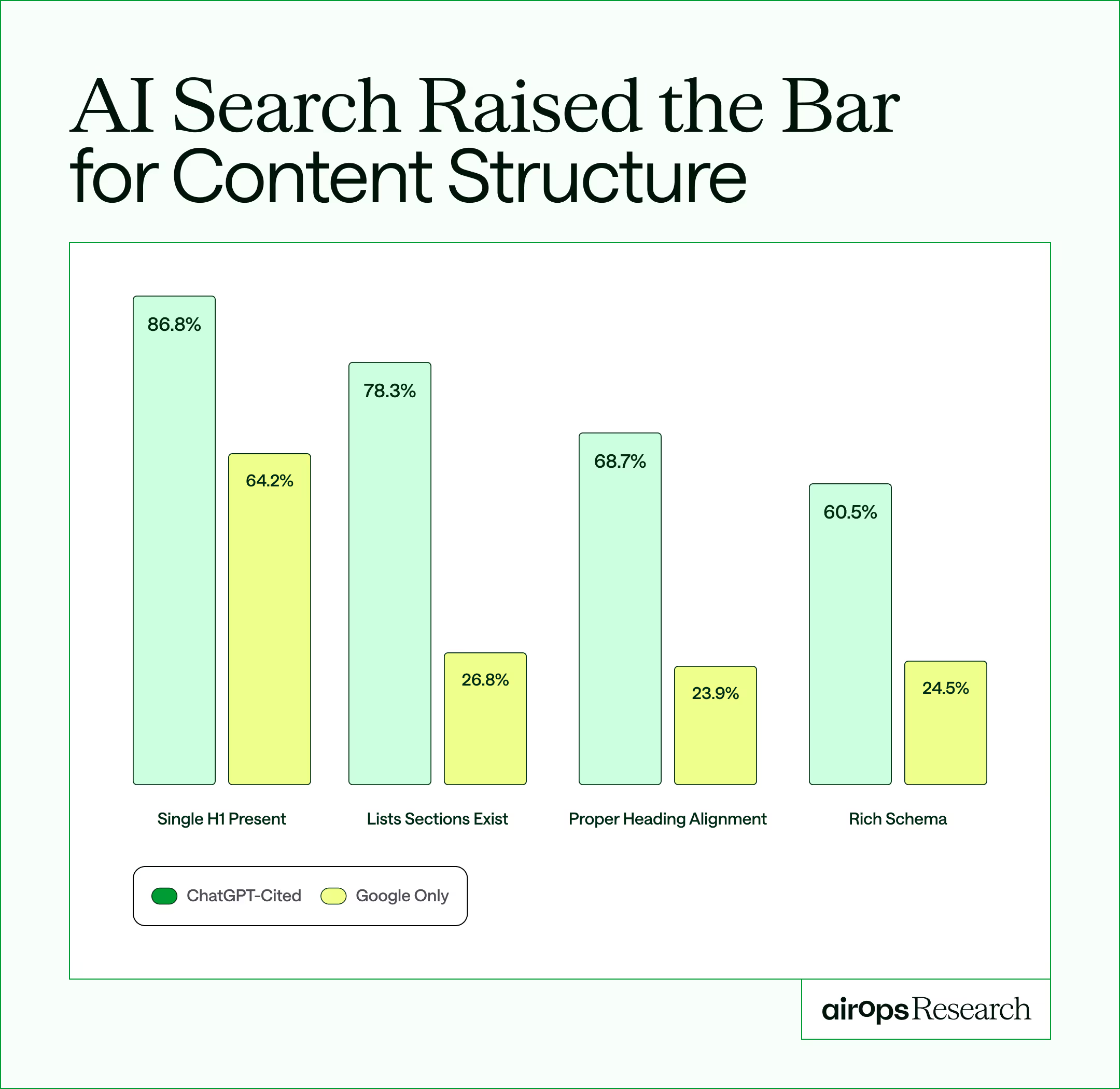
This is where AEO diverges most clearly from SEO: ranking rewards relevance and authority, while citation rewards extractability.
What SEO still does best
SEO remains the primary way to earn sustained website traffic.
Modern SEO focuses on:
- Keyword intent matching
- Technical site health and crawlability
- Internal linking and topic depth
- Page experience and performance
Google still sends a meaningful share of traffic for most businesses. That traffic drives conversions, pipeline, and revenue in ways AI answers currently do not.
Strong SEO also increases the likelihood that AI systems encounter and understand your content in the first place.
Key differences between AEO and SEO
AEO and SEO operate on the same content foundation, but they reward different outcomes.SEO performance reflects how well a page competes inside traditional search results. AEO performance reflects whether AI systems select that page as a reliable source when generating answers.
The distinction matters because a page can rank well and still fail to earn citations, or earn citations without driving a click.
The table below summarizes where the two approaches diverge operationally. It's not meant to frame a choice between them, but to clarify how each one contributes to visibility across modern search surfaces.
| Factor | SEO | AEO |
|---|---|---|
| Primary goal | Rank high, drive clicks | Be the direct answer, get cited |
| Content method | Keywords, backlinks, technical optimization | Structured data, clear answers, FAQ formats |
| User action | Click to website | Consume answer directly |
| Success metric | Traffic, rankings, conversions | Citations, AI mentions, brand authority |
| Time to results | 3-6 months typically | 2-8 weeks for AI inclusion |
In practice, these signals reinforce each other. Strong SEO increases discoverability and trust, which helps content enter the AI selection pool. AEO-focused structure and clarity increase the likelihood that the same content gets reused as an answer once it's discovered.Teams that plan for both avoid a common failure mode: optimizing pages exclusively for rankings, then wondering why those pages never appear in AI-generated responses.
Is AEO replacing SEO?
No.
AEO extends SEO. It does not replace it.
AI systems rely on authoritative web content to generate answers. Strong SEO increases the likelihood that content enters the AI selection pool in the first place.
That trust often forms off-site. AirOps research shows that approximately 85% of brand mentions in AI Search originate from third-party pages, not the brand's own domain. Reviews, community discussions, expert commentary, and earned media continue to influence which brands AI systems recognize as credible.
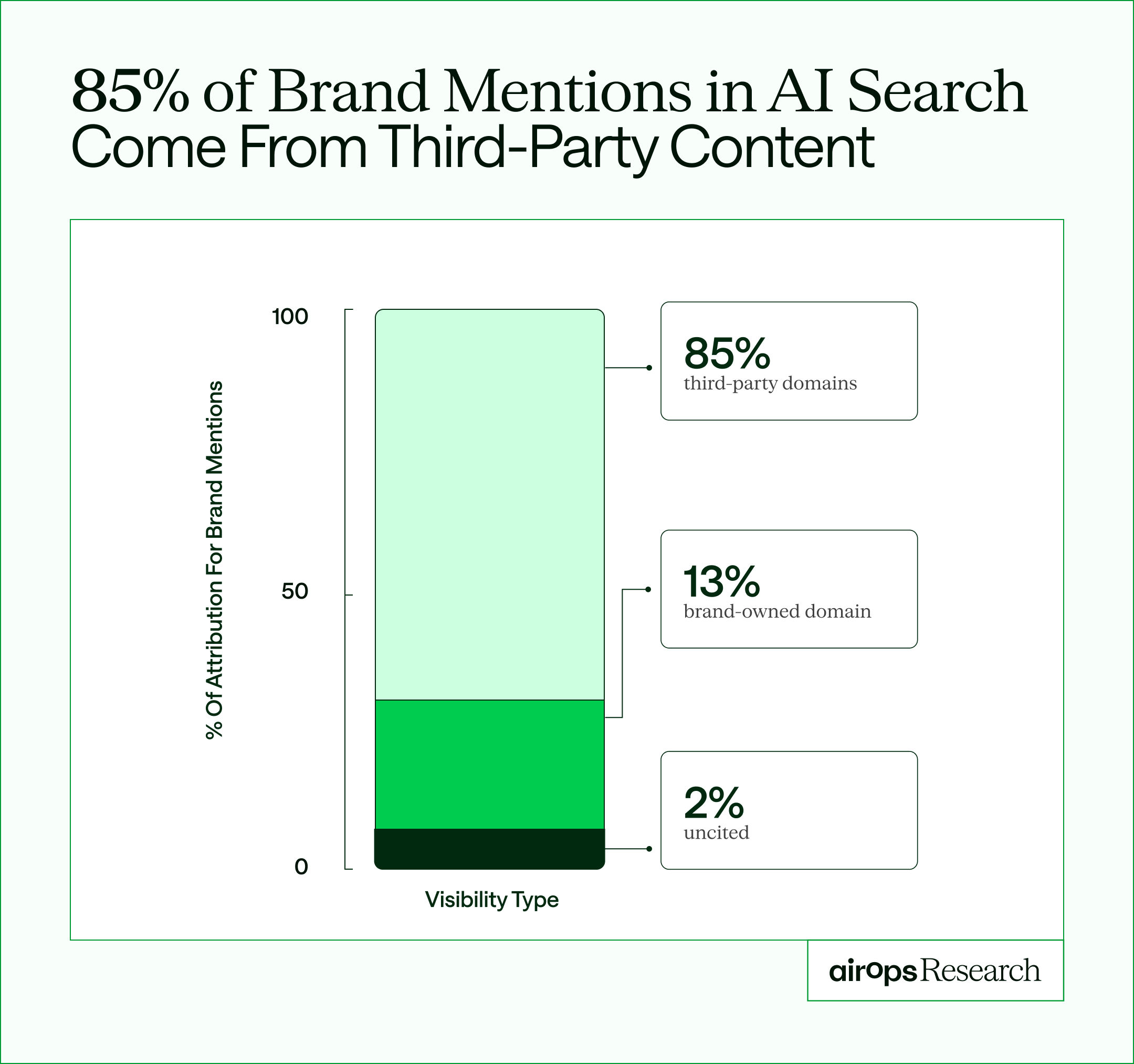
Brand mentions across the web increasingly act as trust signals, reinforcing why off-site visibility remains a core part of modern search strategy.
This also matches what Lily Ray shared in AirOps' recent webinar. As she put it:
“Large language models have to use search engines… they’re not going to be able to replace Google’s index anytime soon… so we have to be visible in search and do a good job in search as part of our AEO or GEO strategy. That’s going to be true forever.” — Lily Ray
The relationship works like this:
- SEO builds discoverability and credibility
- AEO converts credibility into AI visibility
Ignoring either limits performance.
How to future-proof content for evolving AI Search
Future-proofing does not mean chasing every interface change. It means building content that holds up as systems evolve.
Focus on:
- Durable expertise: Content grounded in real experience, not summaries
- Clear ownership: Named authors, consistent bylines, transparent sourcing
- Update discipline: Refresh facts, examples, and guidance regularly
- Systematic structure: Repeatable formats AI can interpret across your site
Does Google's AI Overview prioritize freshness or authority?
Authority comes first. Freshness refines the answer.
AI Overviews tend to favor sources that demonstrate consistent expertise across a topic and appear repeatedly in related citations. Freshness matters most when information changes quickly, but authority determines whether updates carry weight.
AirOps research found that more than 70% of pages cited by AI were updated within the past 12 months, showing that recency acts as a qualifying signal rather than the primary driver. Publishing authoritative content first — then keeping it current — consistently outperforms frequent updates to shallow pages.
How to integrate AEO and SEO together
The most effective approach treats AEO and SEO as complementary, not competing priorities.
Audit for dual performance
Test priority queries across ChatGPT, Perplexity, and Google AI Overviews. Note which sources appear and why.
Then review SEO signals for those pages. Strong candidates often rank well but lack clear answer formatting.
A simple scorecard helps:
- SEO performance (1–10)
- AEO readiness (1–10)
This highlights where small structural changes can unlock AI visibility.
Once you identify pages with high SEO performance and low AEO readiness, prioritize them for refresh. Small changes often drive outsized gains, especially when you add a direct answer, tighten headings, and update facts and examples.
If you want a repeatable way to run this across a large site, AirOps supports content refresh programs by helping teams identify which pages to update and what to fix, without losing brand standards.
This kind of evaluation is especially important for mid-funnel content, where buyers ask more specific questions and AI systems increasingly shape how those answers are surfaced.
Some teams run this integration through platforms like AirOps, layering AI citation tracking on top of existing SEO reporting to see where the two strategies diverge.
Structure content intentionally
A pattern that works well:
- Direct answer in the opening
- Context and credibility immediately after
- Full topic coverage below
- FAQs reinforcing core questions
Clear intent signals matter as much as layout. AirOps research shows that pages with roughly 60% similarity between user queries and on-page signals, including titles and URL slugs, account for more than 60% of AI search citations. When titles and slugs reflect how questions are actually asked, models find and reuse those pages more reliably.

Schema markup supports both humans and machines. Use it consistently.
When teams create new pages, they can bake this structure in from the start. AirOps helps teams create on-brand drafts faster, using consistent templates and sources, so each page ships with clear answers, clean sections, and the right building blocks for AI Search and traditional SEO.
Build authority AI systems recognize
AI systems look for patterns, not one-off wins. They favor sources that demonstrate consistent experience, expertise, and reliability across a topic.
In practice, this maps closely to E-E-A-T signals, even when models don’t label them explicitly.
.png)
Authority builds through:
- Topic consistency across your site, showing sustained expertise
- Accurate, original explanations grounded in real experience
- Clear authorship, sourcing, and evidence that content comes from people who know the subject
Link earning, expert contributions, and thoughtful updates still matter. They reinforce authoritativeness and trustworthiness over time, helping AI systems recognize which brands deserve to be cited repeatedly.
How to measure AEO performance
AEO does not show up cleanly in analytics dashboards, so teams need a simple operating rhythm.
Effective teams:
- Test your core queries weekly across ChatGPT, Perplexity, and Claude.
- Track citation frequency and accuracy
- Monitor brand mentions for consistency
Pair that with your existing SEO metrics so you can spot patterns between ranking gains, content changes, and AI inclusion. Over time, you’ll see which pages keep earning citations and which ones drop out.
This is also where the right tooling saves time. AirOps supports this work by helping teams see where content shows up in AI answers and where gaps show up across topics, structure, and authority signals. You can treat this as ongoing QA, not an occasional audit.

Winning visibility across every search surface
AEO and SEO are not competing playbooks. Together, they reflect how discovery now works across traditional search results and AI answer interfaces.
The brands that win treat content as a long-term visibility asset, not a short-term traffic tactic. They write clear answers, build authority through consistent expertise, and create systems that make expertise, structure, and authority clear to both humans and AI. That foundation holds up as AI Search evolves, interfaces change, and zero-click behavior increases.
AirOps helps teams put this approach into practice by showing where content appears in AI answers, where authority gaps exist, and how to improve structure and clarity at scale without sacrificing expertise or brand standards.
Book a demo to see how AirOps helps teams track, improve, and scale AI search visibility.
Get the latest on AI content & marketing
