.avif)

AI is reshaping content teams. The ones that adapt fast will win.
AI is reshaping every part of content operations: how ideas are generated, how content is created, and how performance is measured. This shift isn’t just operational. It has the potential to reshape marketing budgets, moving investment away from traditional ad spend and toward high-impact content because of ads being disrupted by the shift to agents.
Based on survey data from ~150 content leaders across multiple industries, our research reveals organizations are at varying stages of AI implementation, with most recognizing AI adoption as a top imperative rather than merely a tactical option.
5 key shifts reshaping how content gets done:
- AI is changing the way teams work. Most respondents are experimenting with AI in their workflows, if not already fully using it.
- Quality is the top concern. Nearly 75% say maintaining quality is their biggest challenge with AI.
- Teams need new skills. 44% of respondents say upskilling is a major hurdle to effective implementation.
- Budgets are shifting. 63% of teams plan to invest more in AI tools, training, or dedicated roles over the next 18 months.
- Research and production are still bottlenecks. Research (65%) and content creation (40%) are the biggest time sinks—and the first places teams want AI to help.
The message is clear: content operations are being redefined. Teams that delay AI adoption are falling behind as the gap between early adopters and holdouts grows. While forward-thinking teams gain hands-on experience and build momentum, others risk missing the learning curve as both the tech and the competition move fast.
Introduction & methodology
This report gives content and SEO leaders a data-backed look at what’s working, what’s not, and how leading teams are using AI to drive results.
We set out to answer 5 core questions:
- Where are most teams today with AI adoption beyond the hype?
- What’s working, and what’s failing, in real-world implementation?
- What’s getting in the way of successful adoption?
- How should you structure a team and what skillsets are needed for an AI future?
- Where should you invest to stay competitive over the next 12–18 months?
Research methodology
To go beyond any assumptions, we gathered quantitative data and patterns from a diverse set of teams:
- Respondents: 144 content and SEO leaders across industries, company sizes, and team structures
- Format: Anonymous survey to encourage honest insights
- Timeframe: January–March 2025
- Approach: We analyzed correlations between AI maturity, team setup, performance metrics, and strategy
The goal? Build a real-world snapshot of what AI-first content operations look like today and what they’ll require next.
The content trends that are happening now in 2025
1. AI adoption is happening everywhere (but unevenly)
The data shows AI implementation is accelerating across content teams, but with significant variation:
- Teams fall along a spectrum, from “just playing around” to fully committed to AI-first operations.
- 72% plan to increase investment in AI tools and capabilities over the next year.
- Content creation and optimization are still the primary focus, but analytics and workflow automation are gaining traction.
2. Team structures are being completely reimagined
AI implementation is forcing significant changes to team setup.
- 48% of companies are adding AI-specific roles, like prompt and content engineers.
- Technical skills are becoming as important as creative ones.
- Teams are reallocating time and headcount away from execution and toward strategy and analysis.
3. Traditional performance metrics need a total overhaul
The old metrics don’t work in an AI-first world. Teams are struggling to measure success in ways that reflect how content is actually being created, surfaced, and consumed.
- Efficiency is hard to quantify without clear baselines or systems that track AI’s contribution.
- Quality is tough to measure especially with hybrid AI-human content.
- Attribution remains murky, and many teams can’t clearly link AI-driven content to revenue or business outcomes.
- Keyword rankings mean less as AI overviews, zero-click results, and SERP features dominate.
- CTR is losing value since users often get answers without clicking through.
- Historical conversion rates from organic traffic are in flux as what constitutes “search” has changed
4. Implementation challenges are real (and sometimes unexpected)
Despite the hype, teams face technical and organizational friction as they try to scale usage.
- Integration issues with legacy systems are common.
- Maintaining brand voice and authenticity in AI-generated content is an ongoing concern.
- Training needs are growing fast, and many orgs can’t keep up with the pace of change.
I think with the introduction of AI and increasing usage a lot of content and SEO teams are still trying to find their footing on how it fits into their plan. I think SEO teams are especially impacted with the introduction of the AI overview in Google search results because it is having a direct impact on website traffic. – Hannah, Director Demand Generation Content Marketing
We'll break down each of these trends below.
Trend #1: The current state of AI adoption
There are 4 distinct stages in how content teams are using AI today. Each stage comes with its own challenges, processes, and next steps.
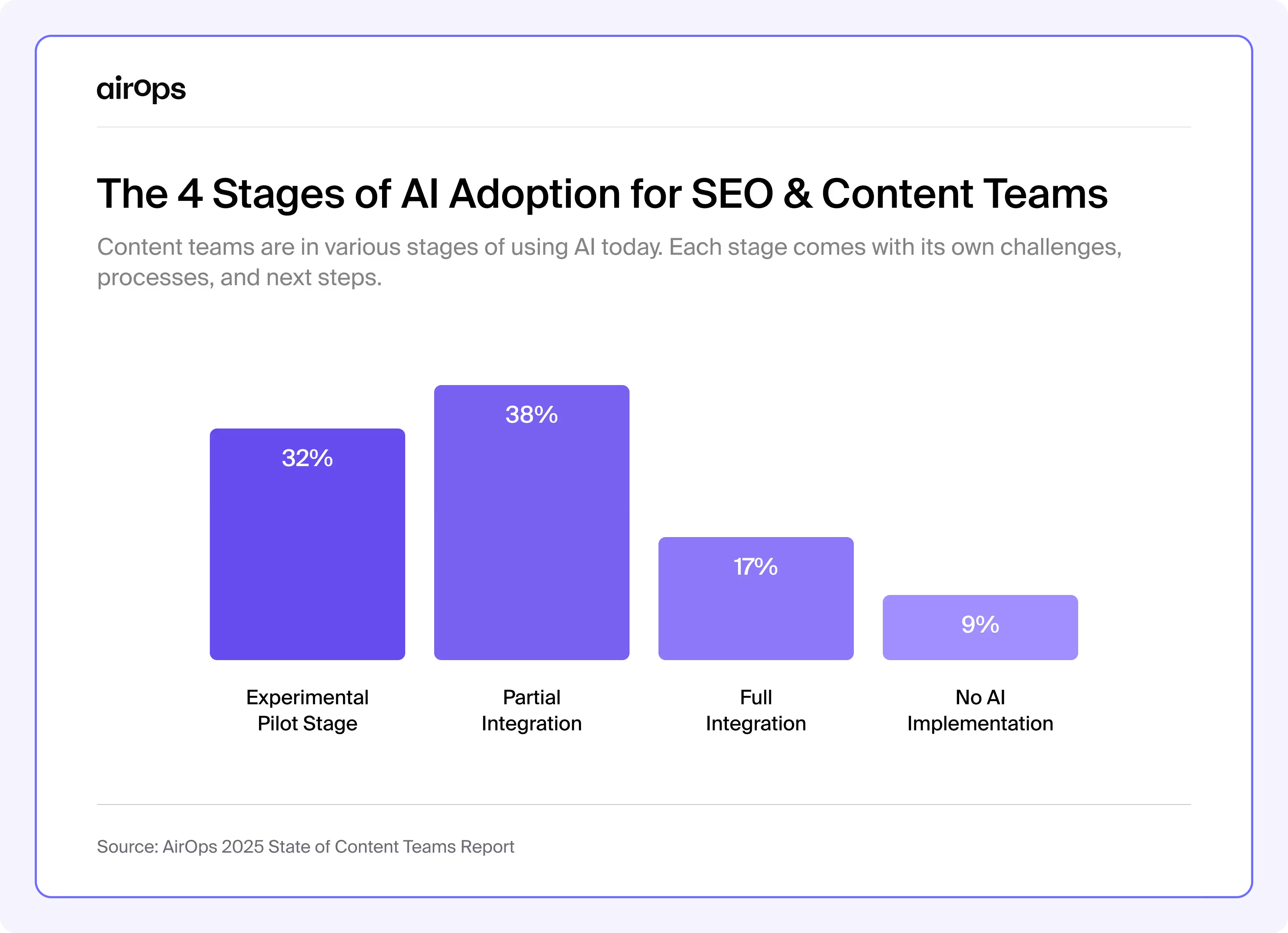
1. Experimental/Pilot stage (32% of respondents)
Teams at this stage are testing the waters. AI use is scattered and usually led by a few individuals rather than a coordinated effort.
What it looks like:
- Ad hoc use by individual contributors
- No formal governance or shared workflows
- Limited tool integration
- Basic use cases like headline generation or summarization
Top challenges:
- Inconsistent quality from AI outputs
- No clear process for implementing AI
- Uncertainty about which use cases are worth scaling
- Difficulty proving value or ROI
AirOps takeaway:
Document what works. Teams that graduate to the next stage do so by codifying successful prompts, workflows, and use cases
2. Partial integration (38% of respondents)
AI is being used in specific, repeatable workflows, but not across the whole team.
What it looks like:
- Documented use cases and quality checks for certain content types
- Integration with some content systems
- AI used regularly, but not everywhere
Top challenges:
- Inconsistency across content categories
- Bottlenecks where manual and AI workflows clash
- Uneven skill development across the team
- Scalability concerns
AirOps takeaway:
During this stage, playbooks matter. The best teams build SOPs that define how AI is used, when human oversight is required, and how quality is measured. Cross-functional input from brand, and SMEs helps scale AI safely.
3. Full integration (17% of respondents)
Characteristics:
- AI implementation across most content workflows
- Deep integration with CMS, analytics, and distribution tools
- Advanced frameworks for AI-generated content, including custom workflows and prompt libraries
- Ongoing measurement and optimization
Common challenges:
- Maintaining human creativity and original thinking
- Balancing efficiency with differentiation and brand voice
- Managing complexity across systems
- Keeping pace with rapidly evolving AI capabilities
- Being transparent with audiences about AI usage
AirOps takeaway:
At this level, proprietary data is a competitive advantage. Leading teams rely on internal knowledge to fine-tune outputs and have established cross-organizational governance.
4. No AI Implementation (9% of respondents)
Characteristics:
- Traditional content workflows with no significant AI adoption
- Minimal understanding of AI’s capabilities
- Strong reliance on manual production
- Potential competitive disadvantage and at risk of falling behind competitors
- Often found in highly regulated industries or specialized content niches
Common challenges:
- Growing efficiency gap compared to AI-augmented competitors
- Resource limitations on content production capacity
- Talent retention as AI skills become table stakes
- Loss of competitive position
AirOps takeaways:
Start small with low-risk, high-impact use cases like focusing on content research and summarization. Those are areas where AI could demonstrably save time without creating significant risk. You could also conduct educational workshops to show both the capabilities and limitations of AI in content creation.
How to progress through these stages:
A successful progression through these maturity stages typically involves:
- Incremental implementation: Organizations that advanced successfully typically started with well-defined, limited use cases before expanding.
- Clear governance & SOPs: Establishing governance frameworks early—rather than after problems arise—facilitated smoother scaling of AI implementation.
- Balanced investment: Leading organizations invested equally in AI tools, process development, and team training rather than overemphasizing technology.
- Continuous evaluation: Regular assessment of AI impact on both operational metrics (efficiency, volume) and performance metrics (engagement, conversion) guided ongoing implementation.
"AI is a great resource tool to help ideation and outlines and research. But it is not a replacement for original thinking and writing. From leadership to other teams outside of content, it's imperative they understand this and that AI can not replace a human writer.” – Mike, Director Content Strategy
Implementing AI and technology
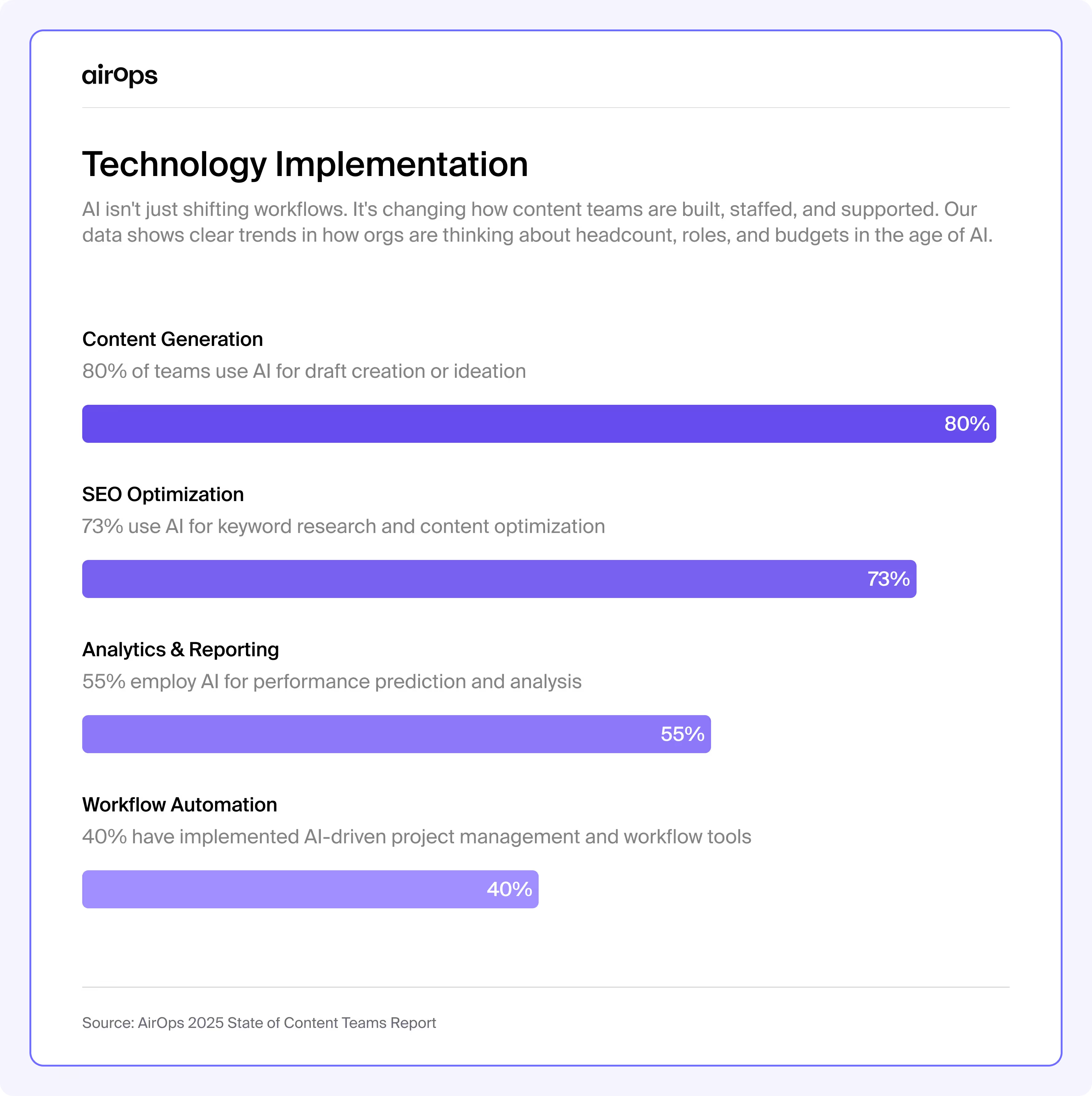
AI isn't just shifting workflows. It's changing how content teams are built, staffed, and supported. Our data shows clear trends in how orgs are thinking about headcount, roles, and budgets in the age of AI.
- Content generation: 80% of teams use AI for draft creation or ideation
- SEO optimization: 73% use AI for keyword research and content optimization
- Analytics & reporting: 55% employ AI for performance prediction and analysis
- Workflow automation: 40% have implemented AI-driven project management and workflow tools
Trend #2: Team composition is changing
There’s no single structure for AI-first teams, but common patterns are emerging.
- New roles are popping up, including AI content strategists, content engineers, prompt engineers, and QA specialists
- Technical fluency is becoming just as important as editorial or domain expertise
Budgets are being reallocated
Teams are investing differently. AI is reshaping how content teams spend across tools, talent, and training.
- 72% expect to increase investment in AI-powered tools
- 48% plan to hire for AI-specific roles over the next year
- Budgets are shifting from outsourced content and manual production toward AI enablement
Org structure is getting more cross-functional
AI is blurring the lines between content, data, and engineering. The best teams are leaning into this shift.
- More collaboration between content, analytics, and tech leads
- Governance frameworks are emerging to manage AI-generated content
- Content teams are gaining visibility in broader strategic planning
"I view AI like the invention of the power saw. It can't build the house for you but it will certainly improve the output, increase production, & expand options if you learn how to use it. I honestly think content teams that don't adopt AI utilization will become redundant. Like the guy who's job was to make everyone's copies in the office." — Aimee, Director of SEO
What about content production workflows?
Content creation is faster, but still not seamless
AI is helping teams move faster, especially on first drafts and outlines. But quality control, SEO, and distribution are still time-consuming.
- Most teams report 25 to 35 percent gains in productivity
- Research, drafting, and approvals are the top slowdowns
- Teams are adding new review steps to ensure AI-generated content meets brand standards
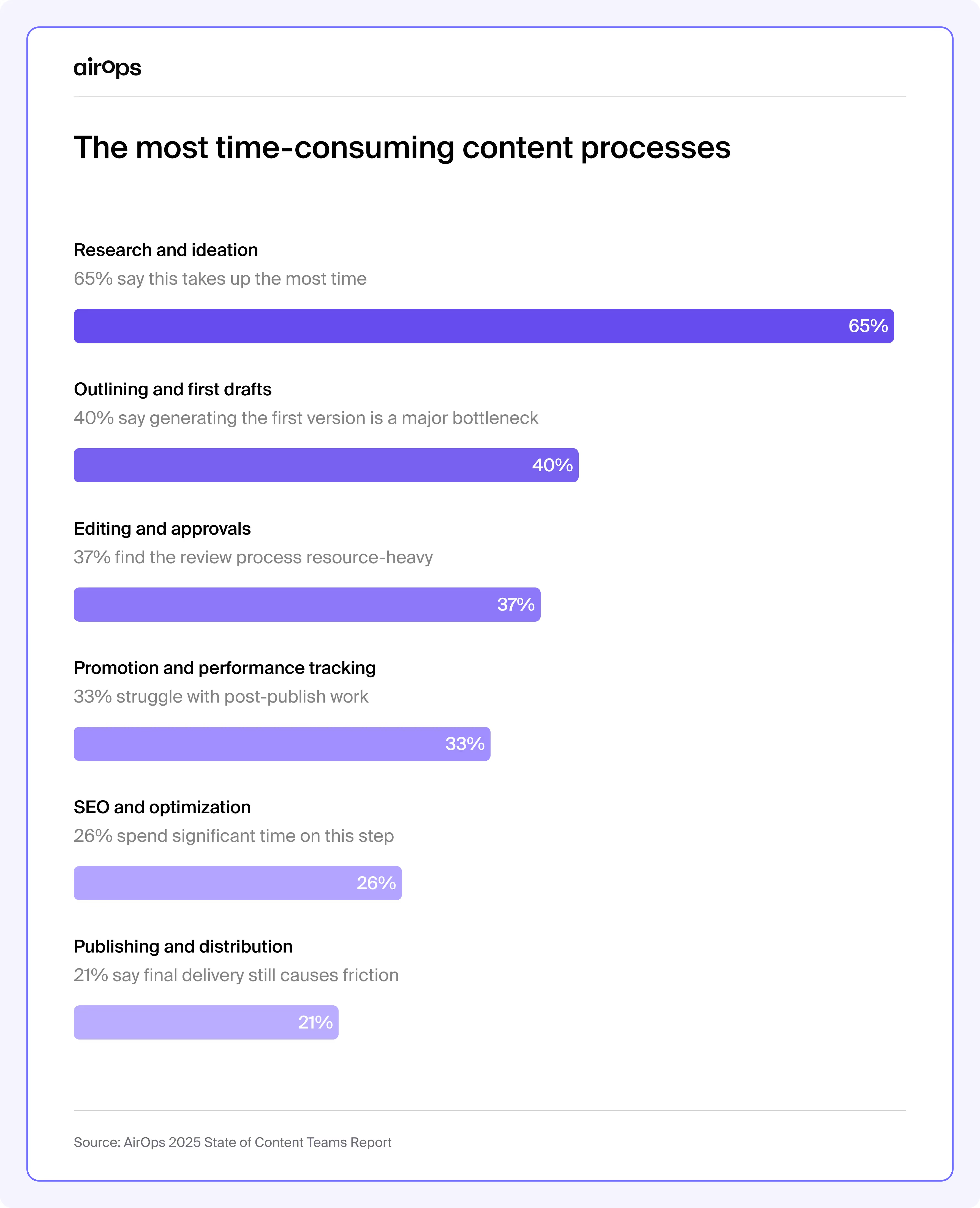
Our survey identified the most time-consuming stages in the content creation process:
- Research and ideation — 65% say this takes up the most time
- Outlining and first drafts — 40% say generating the first version is a major bottleneck
- Editing and approvals — 37% find the review process resource-heavy
- Promotion and performance tracking — 33% struggle with post-publish work
- SEO and optimization — 26% spend significant time on this step
- Publishing and distribution — 21% say final delivery still causes friction
How are teams integrating AI into their workflows?
Some teams are running end-to-end AI workflows. Most are somewhere in the middle.
- 21% have fully integrated AI across the entire content workflow
- 63% are using AI in specific parts of the process
- 16% are still in early testing or using AI on the side
Trend #3: Traditional performance metrics need a total overhaul
There are significant shifts in how content teams are measuring success, with traditional metrics increasingly seen as inadequate for evaluating AI-augmented content operations. New SEO and content metrics are needed.
Productivity is up, but is hard to quantify without strong baselines.
- Beyond traffic metrics: As AI increases content volume, traffic alone doesn’t reflect quality. Teams noted that basic metrics fail to capture the nuance between AI-generated and human-written content and that quality standards still need to be met
- Revenue attribution is rising: Connecting content to revenue is now a top priority. Multiple teams are using multi-touch attribution to track how AI content supports the buyer journey.
- Quality and engagement: To assess performance at scale, teams are leaning more on metrics like bounce rate and time on page.
- Efficiency and speed: Many now measure content velocity and production efficiency alongside traditional KPIs.
- A shift to impact: The focus is moving toward outcomes that reflect business value.
- Blended frameworks are emerging: Leading teams are building measurement models that combine quality, reach, efficiency, and ROI.
“It will continue to become more about tracking KPIs that are closer to revenue, such as demos and pipeline influenced, rather than vanity metrics, such as website visits and social media engagement. Quantity of content produced will be completely irrelevant because people can create hundreds of articles a week. I think quality and qualitative feedback from sales and ICPs will become even more valuable when measuring a content team’s success to ensure that they’re producing great content rather than just a lot of content.” – Julia, Head of Content Marketing
Trend #4: Implementation challenges are real (and sometimes unexpected)
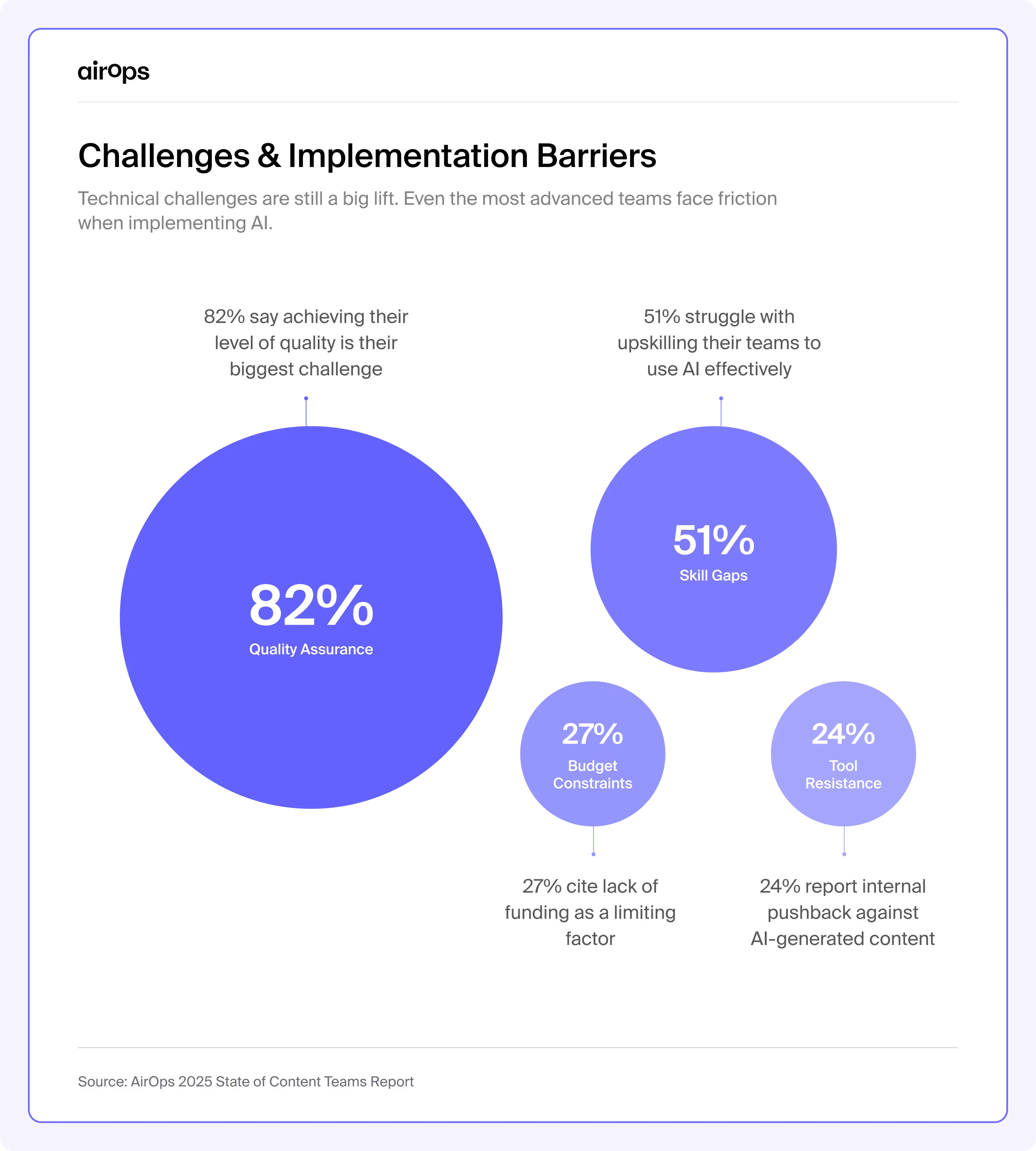
Technical challenges are still a big lift
Even the most advanced teams face friction when implementing AI. The most common blockers include:
- Quality control: 82 percent say maintaining content quality is their biggest challenge
- Skill gaps: 51 percent struggle with upskilling their teams to use AI effectively
- Budget constraints: 27 percent cite lack of funding as a limiting factor
- Tool resistance: 24 percent report internal pushback against AI-generated content
"I totally agree that content teams must evolve, but not in the 'replace writers with AI' way some people think. AI has always been, and will always remain, a tool. And all things being equal, the tool's efficiency is only as good as the person wielding it. So, sure, we must evolve, but not to the point of total dependency." — Anonymous respondent
Organizational barriers
Skill gaps: 51 percent of respondents said upskilling is a major challenge. Many teams lack the AI expertise to prompt tools effectively, evaluate outputs, or integrate AI into workflows. This goes beyond tool know-how. It requires a deeper understanding of how to structure and guide AI systems strategically.
Change resistance: 24 percent reported cultural pushback. That includes skepticism from creators worried about quality, and quiet resistance from teams who delay or deprioritize AI adoption. Both slow down implementation.
Workflow redesign: AI isn’t a layer on top of existing processes. It requires rethinking how content moves from idea to publication. Teams that succeed treat it as a full transformation and not a one-off upgrade.
Leadership misalignment: Some execs see AI as a shortcut to lower costs, without grasping the investment needed in training and quality control. The best teams bridge this gap with upfront education and clear expectations.
"There aren't budgets being allocated to content, the business expects us to use AI to write things and don't understand that we need a human in the loop model to feed the AI a unique perspective in order to create useful content. There's still research to be done that AI just can't replace." — Roxana, Head of Search SEO
What are respondents concerned about?
Leaders report fundamental questions about AI's role in content strategy:
Brand identity: Many worry that AI can mimic brand voice on the surface but fails to capture the nuance, tone, and values that define a brand. Authenticity is a major concern.
Competitive differentiation: As AI tools become more accessible, leaders fear content will become commoditized. This could be especially in B2B industries where subject matter expertise has traditionally been a key advantage.
Ethical concerns: Questions around originality, transparency, and authorship are top of mind. Teams are thinking hard about how to maintain trust, especially when producing thought leadership content.
"Content teams definitely need to evolve and change. AI is a tool. Not using it will make content teams uncompetitive. But using it poorly will make content teams unreliable and not credible. The key is to learn to use AI to structure and iterate on content, without depending on AI to deliver quality, usable, reliable content on its own." — Tamara, VP Brand Content Communications Interim CMO
The future trends for SEO & content teams
⭐️ AI will soon be table stakes
Most teams are planning deeper AI integration over the next 12 to 18 months. What started as experimentation is quickly becoming a strategic requirement.
- Increasing adoption: Respondents indicate plans to include more AI resources in the next 12-18 months.
- Competitive necessity: Several respondents expressed that teams without AI capabilities may struggle to remain competitive
- Changing capabilities: Respondents anticipate continued improvements in AI tools, particularly around quality and customization needs that current solutions don't fully address.
⭐️ Early adopters are already pulling ahead
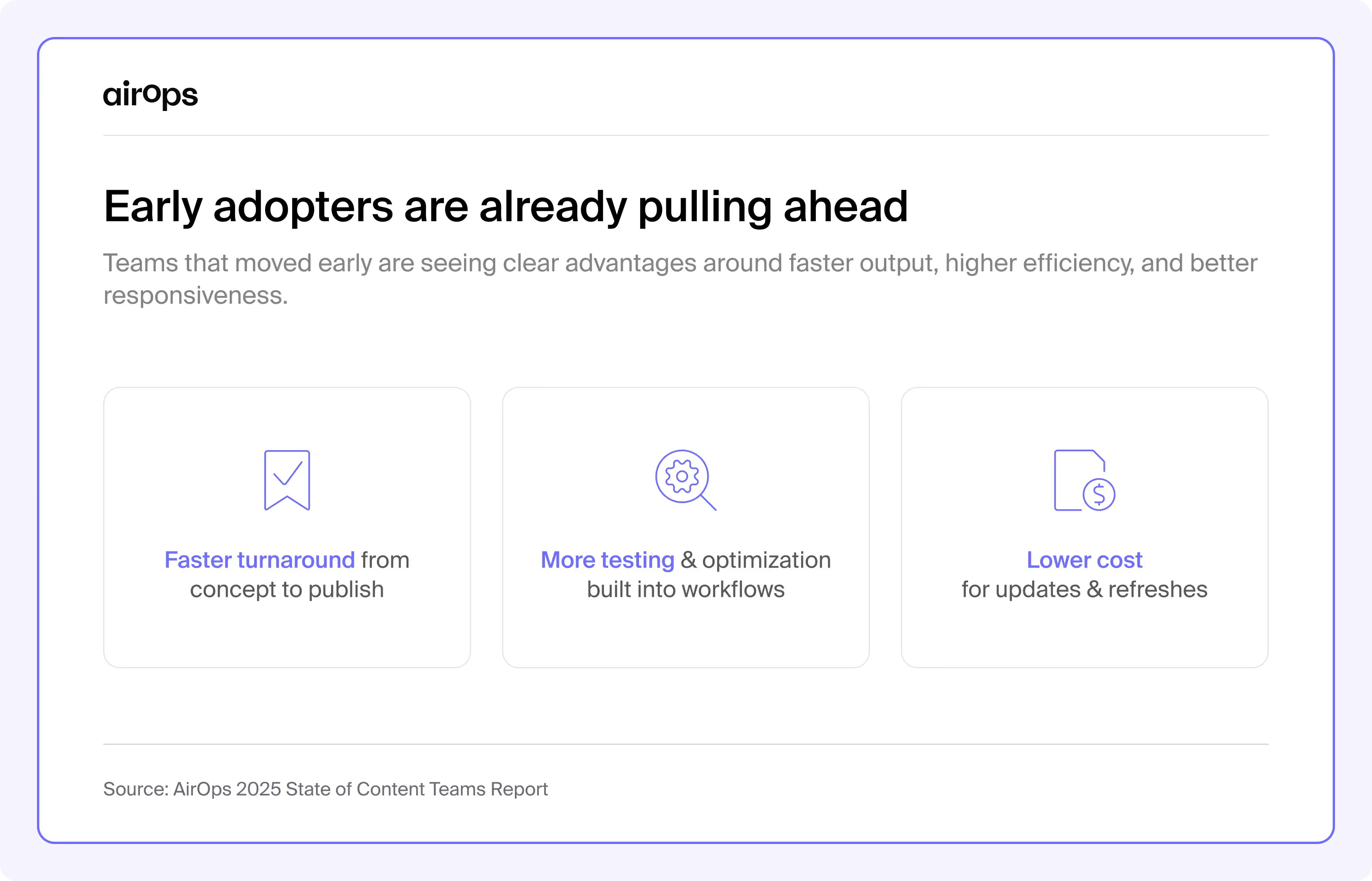
Teams that moved early are seeing clear advantages around faster output, higher efficiency, and better responsiveness.
- Lower cost per asset
- Faster turnaround from concept to publish
- More testing and optimization built into workflows
"Speed to publishing has always been a priority for content teams. Teams that don't adopt AI won't be able to keep up with the publishing pace of competitors who do." — Anonymous respondent
What the ideal team looks like…
Content teams at enterprise companies are undergoing a structural shift. The most effective teams are moving beyond fragmented processes and siloed roles and are investing in systems that support scale, repeatability, and measurable business outcomes. These teams are designed to operate with clarity, consistency, and control, even as content demands increase. Content and SEO teams will need new roles for new capabilities.
Content engineers and workflow leads
Content engineers design the systems that power high-volume content operations. They develop structured workflows that incorporate AI into research, drafting, optimization, and prioritization for refreshes and maintenance. Their work allows teams to move quickly while maintaining alignment and quality.
AI strategists and prompt specialists
With AI becoming a core part of content production, teams are formalizing how it is used. Prompt specialists help operationalize AI by building reusable prompts, defining review checkpoints, and ensuring consistent output across channels and formats. This is an essential part of a solid AI content strategy.
Writers, editors, and subject matter experts
Human input remains critical. This isn’t going anywhere. Writers focus on high-impact narratives and differentiated messaging. Editors and SMEs ensure that content is accurate, thoughtful, and credible, particularly in categories where expertise and trust are essential. With any AI process, you’ll need human review steps for accuracy and refinement.
Performance and insights leads
These roles are responsible for tracking results and connecting content efforts to business outcomes. They measure what matters, from content velocity and engagement to influence pipeline and sales feedback. Their insights help prioritize efforts and guide future investments. Learn more about creating a high-performing content team.
Systems and practices that enable repeatability
Standardized workflows
Top teams build repeatable systems for briefing, research, drafting, and optimization. These workflows are supported by templates and automation tools that reduce manual work and improve consistency.
Content refresh programs
Rather than focusing only on net new content, high-performing teams maintain and improve existing assets. Descript increased organic traffic by 35 percent using a structured refresh workflow. Anne Klein used a similar approach to grow traffic by 50 percent, combining SEO audits with scalable update systems.
Editorial oversight
Human review remains an essential layer. Most teams include quality control checkpoints to ensure brand alignment, accuracy, and clarity before content is published. This is particularly important for thought leadership and strategic content.
Tooling and infrastructure that scales
Content operations platforms
Leading teams rely on unified systems that support AI-assisted production, SEO planning, and workflow automation. Platforms like AirOps provide transparency, structure, and efficiency without adding unnecessary complexity.
Workflow and CMS integration
Content systems are connected across the stack. Prompt libraries, production workflows, and review processes integrate with existing tools, reducing friction and accelerating publishing.
Centralized reporting
Measurement is evolving. Instead of focusing only on volume or rankings, modern teams report on content velocity, production efficiency, and revenue influence. Executive stakeholders gain visibility into how content supports broader business goals.
The ideal content team is not defined by size or specialization alone. It is built around clear systems, shared standards, and the ability to scale quality output. These teams are intentional about how they use AI and focused on delivering measurable results. They are positioned not only to execute, but to lead.
What’s the path forward?
The survey findings show a content marketing landscape in the middle of a transformation. Content teams are navigating significant challenges as they integrate AI into their operations.
However, the message from industry leaders is clear and consistent: adaptation is non-negotiable.
"Content teams definitely need to adapt. Using AI in content workflows enables a much higher/faster output without sacrificing quality if used properly and complemented with human expertise. So either you adapt or you'll be left behind the competition, at least in terms of quantity." – Alec, Director of Content Marketing
"I think it's critical for content and SEO teams to learn to use AI effectively. The technology will continue to improve, and those who don't master it will be left in the dust. AI does not meet all of our needs right now but this is the time to upskill the team and understand the potential of AI so that when it is more ready, we are also ready." – Marsha, Director of Brand and Content Strategy
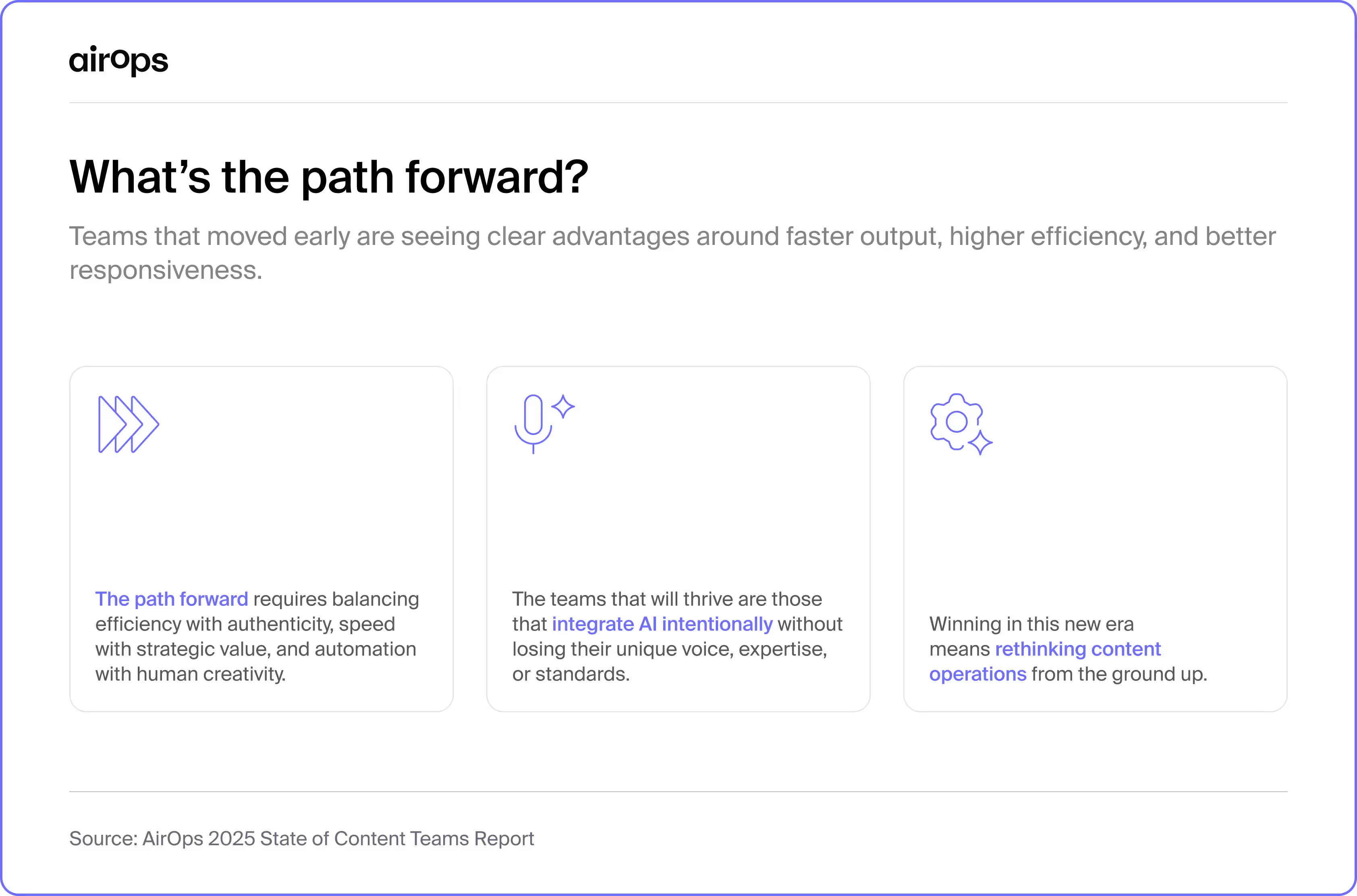
The path forward requires balancing efficiency with authenticity, speed with strategic value, and automation with human creativity.
The teams that will thrive are those that integrate AI intentionally without losing their unique voice, expertise, or standards.
Winning in this new era means rethinking content operations from the ground up, using AI to scale execution while keeping strategy, creativity, and quality firmly in human hands.
Winning content in the AI era
The definition of "great content" is shifting. Now, it has to do more than rank. It must resonate, differentiate, and influence. Our research and experience at AirOps suggest that winning content today is characterized by a blend of originality, technical structure, and contextual depth. It focuses on authority, trust, and business outcomes.
Characteristics of Winning Content
1. Original, authoritative, and hard to replicate
AI has raised the bar for what qualifies as useful. “Good enough” content is now just background noise. To stand out, winning content must showcase proprietary data or original research, clear author expertise, and unique points of view grounded in real experience. This is the kind of content AI models can’t synthesize from public data alone.
2. Designed for agent + human consumption
People and search engines aren’t the only ones reading your content anymore. AI agents are rapidly becoming intermediaries between your brand and your audience. To succeed, content needs to: answer questions clearly and directly, use structured formatting (like headings and schema), and surface relevant citations. Successful content strategies must now consider both audience persuasion and agent persuasion as critical objectives.
3. Ranking in existing and emerging graphs
Content no longer exists in isolation. Search systems now evaluate how well your content fits into a broader knowledge graph. Winning content strategies build interconnected content clusters, use internal linking to surface related topics, and reinforce subject matter expertise through consistent depth.
4. Designed to Be Cited, Not Just Found
Being discoverable is step one. Being referenced is where the real leverage comes from, especially as AI models rely on trusted sources to generate summaries and recommendations. Winning content earns citations by leading with data or defensible claims, clearly articulating their sourcing, and providing quote-worthy insights from real experts.
As AI reshapes how content is created, found, and consumed, the smartest teams are moving beyond volume and into strategy. Winning content in this new environment is:
- Expert-led
- Structurally intelligent
- System-aware
- Designed for humans and agents alike
That’s what it takes to stand out and stay relevant in the age of AI.