- Content velocity measures both how much content you produce and how efficiently your pipeline moves from idea to publication
- Track three key metrics: volume of content published, speed through your workflow, and time to first organic impression
- Increase velocity by auditing your workflow, using AI tools, building editorial calendars, and removing approval bottlenecks
- Maintain quality through clear brand guidelines, stage-based quality checkpoints, and AI-assisted consistency checks
- Topic velocity matters too because it shows how quickly you're covering important subject areas within your niche
If a competitor has been publishing for two years and you're just starting, how do you catch up? The answer isn't working harder or hiring more writers. It's content velocity.
Content velocity measures how fast your brand moves content from idea to publication. Beyond volume, it's about building topical authority before your competitors do, responding to industry shifts while they're still relevant, and creating a content operation that compounds over time.
For SEO and growth teams, content velocity has become the metric that separates leaders from followers. This guide covers how to measure it, increase it without sacrificing quality, and turn it into a real competitive advantage.
What is content velocity?
Content velocity captures two things at once: 1) how much content you produce and 2) how efficiently your pipeline operates.
The concept breaks down into three core pillars:
- Volume: The total number of pieces you publish within a set timeframe, whether weekly, monthly, or quarterly
- Speed: How fast content moves from initial idea to live publication on your site
- Coverage: How quickly you address topics relevant to your audience and industry
Churning out more posts isn't always the answer. Content velocity is about covering important topics faster than competitors, which directly impacts your visibility in both traditional search and AI search. A brand that can publish a comprehensive guide on an emerging topic in a few days has an advantage over one that takes two months. That first-mover advantage compounds as search engines and AI systems favor established, authoritative coverage.
Why content velocity matters for SEO and growth
Here's why velocity matters more now than ever before.
Search engines view sites that consistently publish high-quality content as more authoritative. Google's algorithms favor websites that demonstrate ongoing expertise in their subject areas. Pages not updated quarterly are more than 3× as likely to lose AI citations, making consistent content velocity critical for maintaining visibility in AI search.
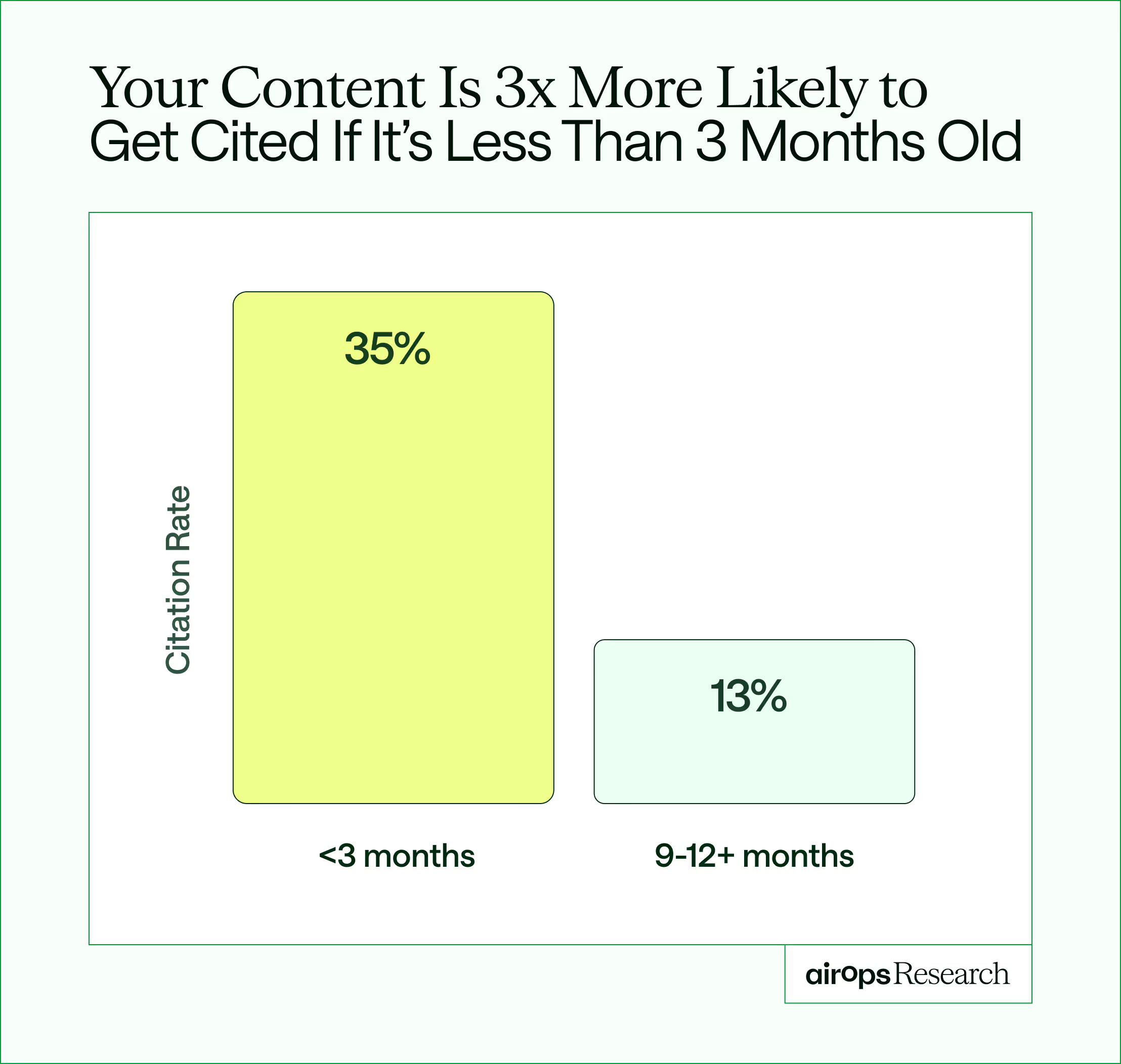
When you publish relevant content at a steady pace, you signal to search engines that your site is an active, reliable source of information.
Beyond rankings, content velocity creates real competitive advantage. If a competitor has a two-year head start on content, increasing your velocity is one of the few ways to close that gap. You can't change when they started, but you can control how fast you move now.
Industries change quickly. New trends emerge, regulations shift, and customer questions evolve. High content velocity lets you address changes while they're still timely. When ChatGPT or Perplexity pulls answers, they prioritize current, well-maintained content over stale pages.
Key benefits of strong content velocity:
- Authority signals: Consistent publishing builds topical depth
- Competitive edge: Outpace competitors who publish less frequently
- Trend responsiveness: Address fast-moving topics before competitors
- Audience retention: Fresh content keeps visitors engaged
- AI search visibility: Regular updates keep your pages competitive for AI citations
How to measure content velocity
Before you can improve content velocity, you need to measure where you stand today. Content velocity involves tracking three distinct dimensions. Each tells you something different about your content operation's health.
1. Volume of content published
Start by counting total pieces published per week, month, or quarter. This baseline number shows your raw production capacity. Compare this figure against your own historical output to spot trends. Are you publishing more or less than six months ago?
Then look at competitor publishing rates. Tools like Ahrefs Site Explorer or SEMrush can show you how frequently competitors add new pages. Run a content gap analysis to see which topics they've covered that you haven't. This comparison reveals whether you're keeping pace with your market or falling behind.
Track this in a simple spreadsheet: Week/Month, Your Output, Top Competitor Output, Gap. The pattern will tell you if your velocity is trending up or down.
2. Speed through the content workflow
Measure the average time from ideation to publication. This metric exposes bottlenecks in your process. Track how long content spends in each stage: drafting, review, approval, and publishing.
The easiest way to do this? Create a simple tracking sheet with columns for each stage. When a piece enters "Draft," log the date. When it moves to "Review," log that date. Calculate the time between stages. After tracking 10-20 pieces, you'll see clear patterns.
You might find that writing takes two days, but approval takes two weeks. That insight points directly to where you can improve. If approval is your bottleneck, you know exactly where to focus your process improvements.
3. Time to first organic impression
Track how quickly new content begins ranking or earning traffic. This metric connects content velocity to actual SEO performance. A piece that takes three months to rank delivers value much later than one that ranks in three weeks.
Use Google Search Console or Page360 in AirOps to track when new pages first appear in search results and start generating impressions. Some content types rank faster than others — how-to guides often rank quicker than thought leadership pieces. Understanding these patterns helps you prioritize topics that can generate results quickly.
Understanding these three measurements gives you a complete picture of your content velocity. Now you can identify specific areas to improve.
.png)
How to increase content velocity
Most content teams face similar bottlenecks: limited resources, siloed departments, and slow approval processes. Addressing these obstacles directly is the fastest path to higher velocity.
1. Audit your current content workflow
Map every step from ideation to publication. Document who touches each piece and how long each stage takes.
Start with a simple flowchart: Idea Generation → Brief Creation → Drafting → Review → Approval → Publishing. Under each stage, list the person responsible and the typical time spent. This audit often reveals surprising inefficiencies, like content sitting in someone's inbox for days waiting for review.
Ask these questions: Where does content get stuck? Which stage takes the longest? Who's the bottleneck? Once you have answers, you can make targeted fixes instead of guessing.
2. Use AI tools to accelerate content creation
AI can handle research, first drafts, and content briefs much faster than manual processes. This frees your writers to focus on strategy, voice, and the insights that make content genuinely valuable.
Tools like AirOps combine AI with your brand's specific knowledge to produce drafts that actually sound like your company. The result is faster production without sacrificing the quality that builds trust.
3. Build a content roadmap and editorial calendar
Planning topics in advance reduces decision fatigue. When writers know what they're working on next week, they spend less time wondering what to write and more time writing.
Align your calendar with business goals and seasonal opportunities. This keeps your velocity aligned with strategic objectives instead of chasing activity metrics. A strong calendar also makes it easier to say no to random requests that derail your momentum, which are inevitable.
4. Create templatized content briefs
Standardize your brief format so every piece starts with the same foundation: target keywords, audience, structure, and key points to cover. Consistent briefs speed up the handoff between strategists and writers.
5. Repurpose and refresh existing content
Updating high-performing older content often delivers faster results than creating something new. A refresh can take a fraction of the time while capturing traffic from an already-ranking URL.
AirOps research shows a clear link between content freshness and AI citation performance. More than one-third (35.2%) of cited pages were updated in the last three months alone, and just over half (53.4%) were refreshed within six months. Only about a quarter (26.2%) of cited pages hadn't been updated in over a year.

The pages surfaced most often by AI aren't static. They're actively maintained, which means your content velocity strategy should include regular refreshes alongside new content creation.
Transform one piece into multiple formats. A blog post becomes a LinkedIn article, a video script, or a series of social posts. This multiplies your output without multiplying your effort.
One emerging strategy: transform declining Q&A blog posts into video content. As Steve Toth explained in an AirOps webinar, repurposing content into video can recapture audiences lost to AI overviews while increasing citation opportunities in LLM responses.
6. Remove approval bottlenecks
Reduce the number of people who approve each piece. Every additional reviewer adds delay. Set clear deadlines for review stages and hold people accountable to them.
Tip: Consider implementing a "silence is approval" policy for routine content. If reviewers don't respond within 48 hours, the piece moves forward.
How to maintain quality while increasing content generation speed
The most common concern about content velocity is quality. Will faster production mean worse content? It doesn't have to.
Establish clear brand guidelines
Document your voice, tone, and style rules so writers stay consistent without heavy editing. Include examples of good and bad content to set clear expectations. When guidelines are explicit, writers make fewer mistakes and editors spend less time fixing them.
Implement quality checkpoints at each stage
Build review steps into your workflow rather than saving all feedback for the end. Catching errors early prevents rework later. A quick check after the outline stage can save hours of revision after the draft is complete.
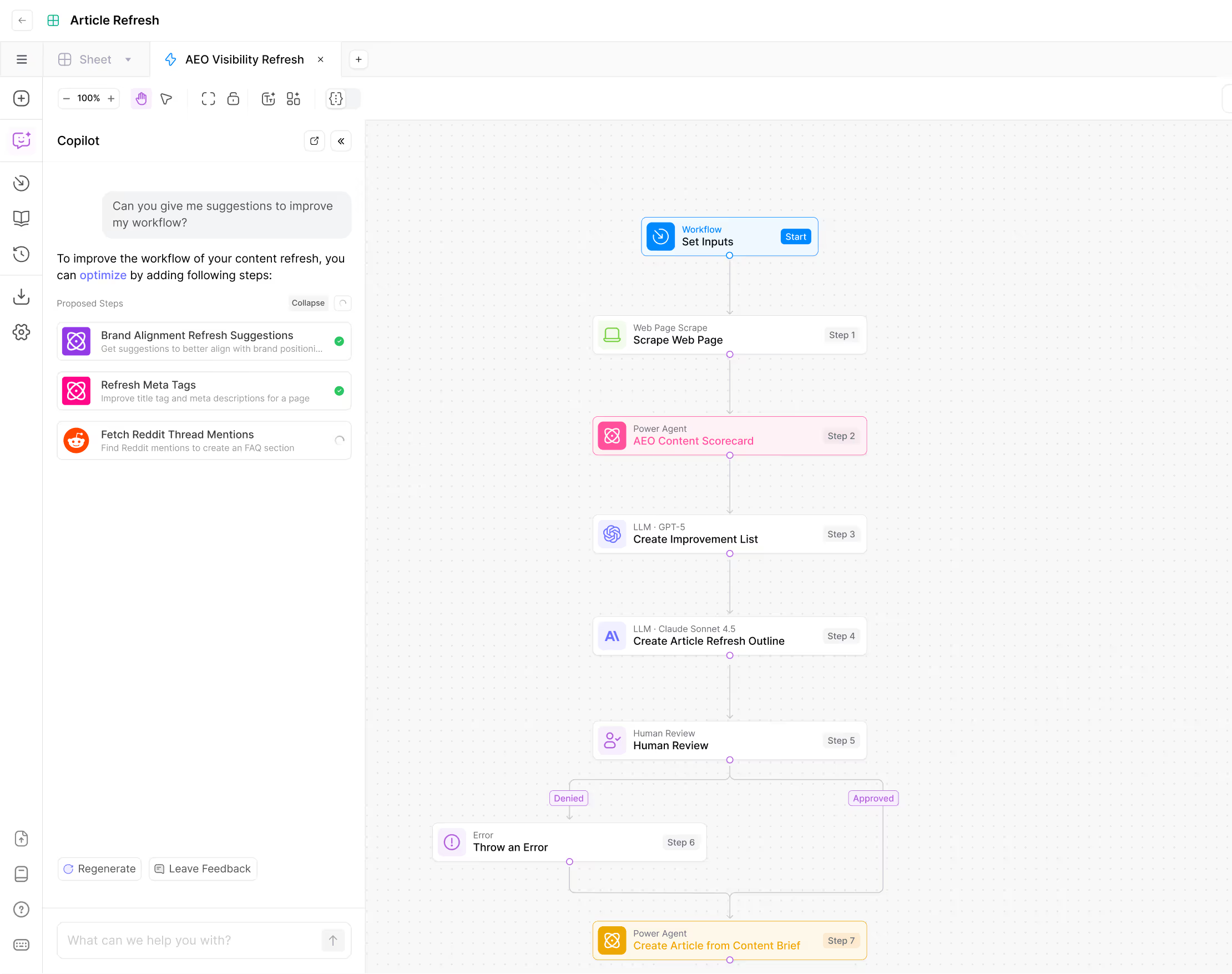
Use AI for consistency and brand voice checks
AI tools can flag off-brand language, inconsistent terminology, or factual errors before human editors see the content. This frees editors to focus on strategic improvements rather than basic fixes.
AirOps uses your brand's specific knowledge to check content against your guidelines automatically. The result is consistent quality even as velocity increases.
How topic velocity guides editorial focus
Topic velocity is a related concept that measures how quickly you cover topics within your niche. While content velocity tracks overall output, topic velocity tracks coverage of specific subject areas.
This distinction matters for strategy. You might have high content velocity overall, but still have gaps in important topic areas. For example, you could be publishing 20 posts per month but completely missing AI search optimization, which is a critical topic for modern content teams. Tracking topic velocity helps you identify these gaps and prioritize accordingly.
Topic velocity helps you with:
- Gap identification: Find topics competitors rank for that you haven't covered yet.
- Priority setting: Focus on high-value topics you can publish quickly.
- Authority building: Cluster content around core topics to establish expertise faster.
Competitive analysis becomes more actionable when you track topic velocity. Instead of just counting competitor posts, you can see which topics they've covered that you haven't. That gap represents both a risk and an opportunity.
Combine high content velocity with strategic topic velocity, and you've got a formula for building authority faster than competitors can respond.
Start building your content velocity advantage
Content velocity is a measurable, improvable metric. The brands that treat it as a strategic priority consistently outperform brands that don't. It's not magic—it's systems, focus, and the right tools.
Start by measuring where you are today. Then identify your biggest bottlenecks and address them one by one.
Small improvements in workflow efficiency compound over time into significant competitive advantages. A bottleneck fixed today means faster output next month, and faster output next month means more authority by next quarter.
The combination of speed and quality is what separates high-performing content operations from the rest. You don't have to choose between them. AirOps is built for teams that need to ship high-quality content faster. As your partner, AirOps combines AI with your brand's specific knowledge to create drafts that sound like your company, check content against your guidelines automatically, and speed up every stage of your content pipeline.
Whether you're scaling from 5 pieces a month to 50, or just trying to cut your production time in half, AirOps gives you the systems and tools to increase velocity without sacrificing quality. We help you see how your content performs in AI search, identify what's working, and take action, all in one place. AirOps brings the platform, the media mix, and a hands-on team together to build and run this work alongside yours, tied back to pipeline and revenue.
Book a demo to see how AirOps helps brands increase content velocity and win more AI citations.
Get the latest on AI content & marketing
