- AI-powered content strategies scale production 10x by leveraging automation and intelligent workflows.
- Actionable frameworks and real-world checklists enable teams to produce high-quality, measurable content at speed.
- This playbook details proven steps for building scalable AI workflows for content marketing that drive business results.
- AI search platforms like AirOps organize AI content production around topic clusters and human review gates, which is how some teams maintain quality at higher volume.
Platforms like AirOps organize AI content production around topic clusters and human review gates, which is how some teams maintain quality at higher volume.
AI is transforming content marketing by enabling teams to scale production efficiently while maintaining quality and creativity.
According to research from Influencer Marketing Hub, 77% of companies are now using or exploring AI for content creation and marketing automation.
AI-powered tools automate repetitive tasks, reduce manual errors, and accelerate decision-making. To stand out, content must blend AI's efficiency with human creativity and strategic oversight.
As Rand Fishkin aptly puts it, "AI-generated content is the new floor. Anyone can make it. Most of it is at least OK. Some of it's pretty good. If your content isn't better than what AI can produce, it's not worth making."
This playbook provides actionable frameworks and step-by-step instructions to help you scale high-quality content without sacrificing brand voice or measurable results.
What Is an AI Content Strategy?
An AI content strategy is a systematic approach to content creation that leverages artificial intelligence to streamline research, drafting, optimization, and distribution. The goal is to multiply content output and impact without multiplying headcount or manual effort.
Move Beyond Basic AI Implementation
Scaling content without sacrificing quality requires strategy, efficiency, and a direct line to business results. Teams must build on three foundational questions:
- What unique insights power your strategy? Identify proprietary data, customer pain points, and industry opportunities that only your brand can deliver.
- Which processes benefit from automation versus human oversight? Use AI for research, drafting, and optimization, while reserving human expertise for creative direction and strategic alignment.
- How do you measure success? Move beyond vanity metrics. Track KPIs tied to business outcomes: lead generation, sales, or customer retention.
According to Sam Altman, CEO of OpenAI, AI will handle 95% of traditional marketing work within five years. Strategic thinking, creative direction, and brand voice will remain the core differentiators for human marketers.
AI-Powered Content Strategy Checklist
Use this comprehensive checklist as your evolving roadmap for building and scaling AI-driven content operations, ensuring each step aligns with the four stages of an AI workflow.
Phase 1: Strategic Planning & Setup
- Content Strategy Alignment: Define goals, identify audiences, map content to the buyer journey, and document voice.
- AI Tool Configuration: Set up AI writing tools, configure templates, and test outputs for brand alignment.
Phase 2: Research & Ideation
- Collect keyword and competitor data.
- Use AI to generate and validate topic ideas, prioritize content, and map internal experts.
Phase 3: Content Architecture & Creation
- Draft content briefs, outlines, and gather supporting statistics.
- Guide AI tools with clear instructions; add human insight for authenticity and authority.
- Check for hallucinations, verify facts, and optimize internal linking.
Phase 4: Technical Optimization
- Optimize titles, metadata, schema, images, and internal links for SEO and readability.
Phase 5: Quality Control & Approval
- Run plagiarism, grammar, and compliance checks.
- Secure approvals from experts and stakeholders.
Phase 6: Publication & Distribution
- Schedule publication, set up tracking, and promote across priority channels.
Phase 7: Performance Optimization
- Monitor engagement, run regular audits, and use feedback to update and improve content.
The Four Pillars of an AI-Enhanced Content Strategy
Scaling content requires building intelligent systems that deliver measurable results. The four pillars of an AI-enhanced content strategy are designed to help your team achieve scale, quality, and agility.
Pillar 1: Build a Strategic Foundation
Every successful AI content strategy starts with a robust strategic foundation. This means aligning every piece of content with clear business goals and audience needs.
- Growth Content: Focuses on revenue generation, such as product landing pages and conversion-driven blog posts.
- Authority Content: Establishes brand credibility with whitepapers, research reports, and long-form articles.
- Innovation Content: Explores new ideas and formats to uncover growth opportunities.
Prioritize your distribution channels: invest 80% in primary channels (where your audience converts), amplify with secondary channels, and experiment with new platforms. Use audience intelligence, such as pain point mapping and decision journey analysis, to inform your pillar and cluster strategy and content planning.
Pillar 2: Create a Well-Oiled Content Ops Engine
Efficient content operations are the backbone of scalable strategy. Integrate automation, human oversight, and performance tracking to optimize every workflow layer.
- Automated Foundation: Automate technical checks and repetitive tasks to ensure consistency.
- Human Layer: Assign creative direction and final review to maintain quality and brand voice.
- Performance Systems: Define clear metrics, conduct regular reviews, and adapt based on data.
Learn more about the risks of manual content workflows and why automation is critical for scaling.
Pillar 3: Lay a Strong Technical Foundation
Integrate your tools and systems to create a seamless, data-driven content ecosystem. A unified technical infrastructure ensures collaboration, automation, and continuous optimization.
- Connect content creation, optimization, and distribution tools into a single workflow.
- Eliminate data silos and synchronize insights across platforms.
- Implement quality assurance and performance monitoring at every stage.
Efficient data flow is another critical aspect of integration. Eliminate silos by synchronizing data across your tools, like you can do in a platform like AirOps. A well-implemented integration framework ensures that all tools work in harmony, streamlining your operations.
Pillar 4: Create Systems for Continuous Improvement
High-performing teams thrive on feedback and iteration. Track both operational efficiency and business impact to refine your strategy over time.
- Monitor leading indicators like production velocity and quality scores.
- Assess lagging indicators such as organic traffic and conversion rates.
- Use feedback loops, regular reviews, and team debriefs to drive ongoing optimization.
By building your AI content strategy on these four pillars—strategic foundation, operational excellence, robust technical infrastructure, and systems for continuous improvement—you create a scalable, resilient framework that consistently delivers measurable business outcomes.
This approach ensures your team is equipped to maximize both content quality and impact at every stage of the content lifecycle.
However, to unlock the full value of AI-driven content operations, it's essential to integrate advanced technical SEO practices directly into your workflow.
How to Implement AI for Technical SEO
AI-powered technical SEO enables teams to automate essential optimization tasks, improving discoverability, indexation, and visibility for both traditional search engines and AI answer engines. Integrating these technical elements into your content workflows ensures every asset is fully optimized from publication onward.
Intelligent Metadata Optimization
Modern AI tools can analyze your content's context, target keywords, and user intent to generate optimized title tags and meta descriptions automatically.
Schema Markup Automation
Implementing schema markup is essential for search and AI visibility, but it is often time-consuming and error-prone.
AI solutions automatically detect content types and generate relevant schema markup, streamlining structured data implementation at scale and increasing your eligibility for rich results and AI citations.
Performance Monitoring and Optimization
Page speed and mobile usability are now key ranking factors for both traditional and AI-driven search. AI systems continuously monitor Core Web Vitals, flagging issues like slow-loading assets or mobile layout problems.
Automated suggestions and fixes—such as image compression or code optimization—help maintain fast, user-friendly experiences across your site.
Automated Internal Linking
Strategic internal linking strengthens topic clusters and authority distribution.
AI can analyze your entire content library, identifying relevant internal links that guide users and search engines through your content ecosystem. This not only aids discoverability but also supports higher rankings and improved site structure.
Continuous Technical Improvement
The biggest advantage of AI in technical SEO is its ability to provide ongoing monitoring and automated enhancements. Your content team can focus on producing valuable assets while AI manages technical details, ensuring every page remains optimized for discovery and performance.
By integrating AI-driven technical SEO into your content strategy, you create a seamless workflow that maximizes both content quality and visibility—positioning your brand for success across search engines and AI-powered answer platforms.
Real-world AI content transformation
AI-enhanced content operations become evidently powerful when we look at real organizations that have transformed their content strategies. Here are two companies that achieved remarkable results by implementing AI-powered workflows.
Wyndly: Scaling content with expertise
Wyndly, a telehealth platform specializing in allergy treatment, faced a common challenge: how to scale high-quality medical content without compromising accuracy. With a team of 8 writers producing 40 articles monthly, they struggled to transform their extensive video content and medical expertise into SEO-optimized articles.
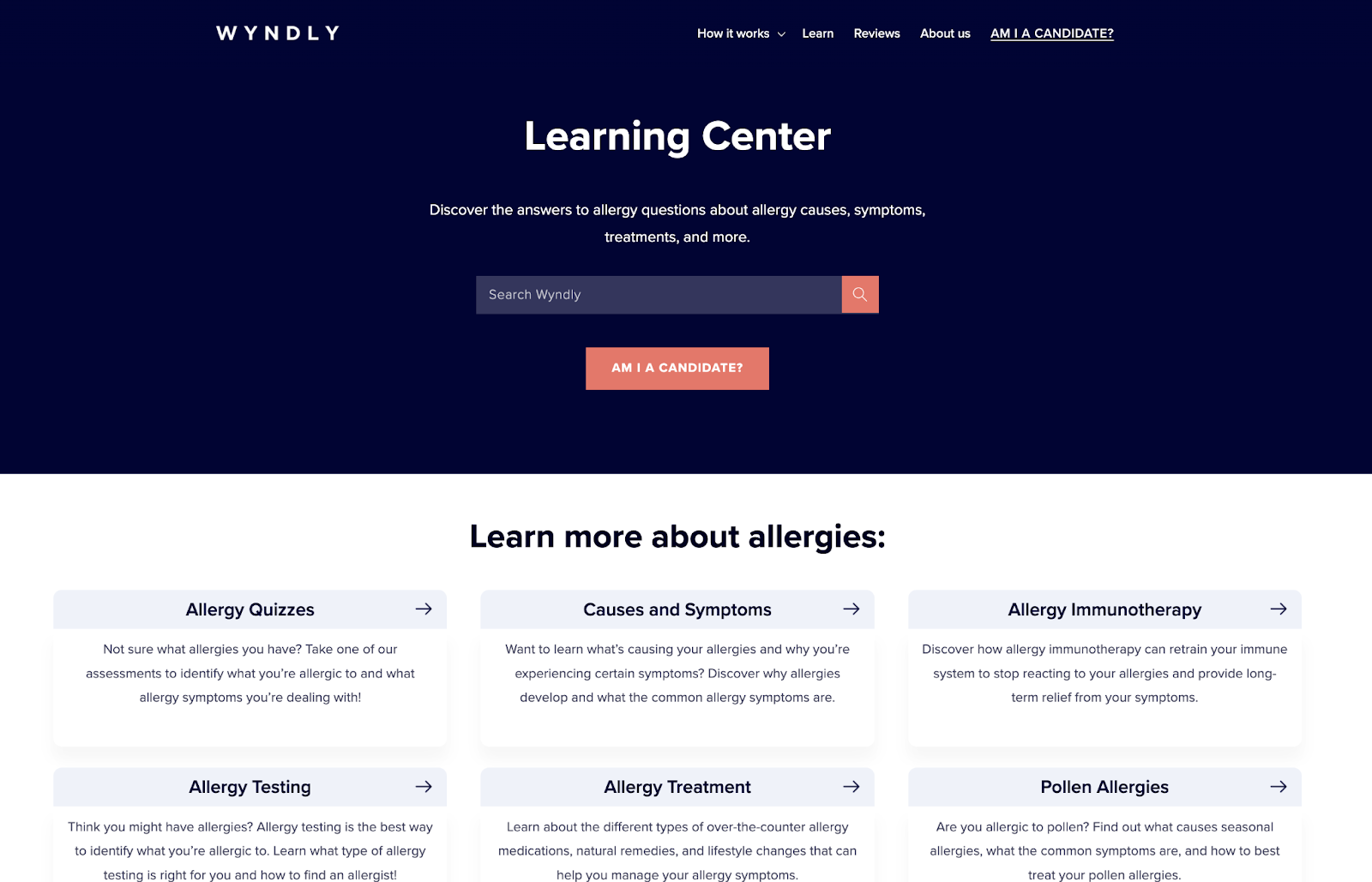
The Challenge:
Wyndly's manual process made it difficult to scale content. Their extensive library of expert-led videos was an untapped SEO asset, but they lacked an efficient way to turn these insights into optimized, authoritative articles. Managing medical accuracy and SEO best practices across hundreds of articles was nearly impossible without automation.
By implementing comprehensive AI workflows, Wyndly automated several critical processes:
- Content research and data collection from existing video content
- SEO optimization with automated meta titles and descriptions
- Brand voice consistency checks
- Visual asset creation
- Direct publishing integration
The transformation yielded impressive results:
- 5x increase in content production (from 40 to 200 articles monthly)
- 20x growth in organic traffic (from 10,000 to 200,000 monthly clicks)
- 28% increase in organic customer acquisition
- Consistently outranking major medical websites like WebMD and Healthline
By combining AI automation with medical expertise, Wyndly produced more content and initiated a scalable, SEO-driven content engine that continues to drive measurable growth. What once took weeks of manual effort now happens seamlessly, proving that with the right technology, scaling content doesn't mean sacrificing quality.
Content Trends for 2025: The AI Evolution
AI technology is driving three major trends that are reshaping content operations: scalable personalization, predictive analytics, and workflow intelligence. These trends are setting new standards for what content teams can achieve and how they deliver value.
Personalization at Scale
AI enables teams to deliver personalized content experiences at scale. Content teams can now create dynamic pieces that automatically adjust based on reader behavior, industry focus, and engagement patterns. Instead of creating multiple versions of each piece, AI systems analyze user data in real-time to deliver tailored experiences automatically.
A single article can now present different examples, case studies, or technical depth based on who's reading it, all without requiring additional content creation effort.
Predictive Performance Analytics
AI-powered predictive analytics help teams anticipate content performance and audience needs. This allows for proactive strategy adjustments and more efficient resource allocation.
Workflow Intelligence
AI-driven workflow intelligence automates repetitive tasks and optimizes processes. This trend frees up human talent for creative and strategic work, setting a new benchmark for operational efficiency.
The successful content teams of 2025 will be those that embrace these capabilities while maintaining their unique creative edge.
Scaling Growth with an AI Content Strategy
AI-powered content operations are redefining what's possible for growth-focused teams. Brands that combine automation, human expertise, and continuous optimization will lead in both search and AI-driven platforms.
The opportunity is clear: teams that build intelligent, scalable content systems now will outpace the competition as digital and AI ecosystems evolve.
How AirOps Accelerates AI-Driven Content Operations
AirOps empowers your team to put AI-driven strategies into action—automating workflows, streamlining production, and delivering measurable business results.
Book a strategy session to see how AirOps can help you scale content operations and lead in the era of AI-powered marketing.
Frequently Asked Questions
How do I prevent AI-generated content from sounding generic or off-brand?
Start by documenting brand voice, positioning, and editorial standards before introducing AI into your workflow. Use structured briefs, examples of high-performing content, and clear do-and-don’t rules to guide outputs. Human review should remain mandatory for narrative flow, tone, and differentiation, especially for high-impact pages.
What parts of a content strategy should stay human-led instead of automated?
Strategy definition, editorial direction, subject-matter expertise, and final approvals should remain human-led. AI is most effective when applied to repeatable tasks like research aggregation, drafting, formatting, optimization, and internal linking. Keeping humans responsible for judgment and prioritization protects quality and relevance.
How do I measure the success of an AI content strategy beyond production speed?
Look beyond output metrics and track indicators tied to business impact. This includes search visibility, engagement quality, conversion rates, and how well content supports each stage of the buyer journey. Operational metrics like revision cycles and time-to-publish also help assess whether AI is improving efficiency without sacrificing outcomes.
How can AI accelerate marketing creative workflows to reduce campaign bottlenecks?
AI accelerates creative workflows by automating research, drafting, and asset production, so campaigns move from brief to launch faster. It clears bottlenecks by handling repetitive production steps while your team focuses on strategy and creative direction. Teams using structured AI workflows ship more campaigns without adding headcount.
Get the latest on AI content & marketing
