What’s the Ideal Length for Content on a Web Page

Determining the ideal length for web content is a challenge that depends on SEO, user intent, and engagement goals. While some pages perform best with concise, to-the-point information, others require long-form content to provide depth, context, and authority. Striking the right balance is essential for both search rankings and user experience.
Search engines favor comprehensive, well-structured content that thoroughly answers user queries. However, content length alone isn't a ranking factor...clarity, relevance, and value matter just as much. Pages must be long enough to address key topics while remaining engaging and easy to navigate.
This article talks about best practices for determining the ideal content length, how different page types (blogs, landing pages, product descriptions) vary in their needs, and what businesses can do to optimize content for both users and search engines.
Key Takeaways
The ideal content length depends on the purpose, audience, and SEO goals. Blogs often perform well at 1,500-2,500 words, while landing pages and product descriptions are typically shorter.
Search engines favor well-structured, high-quality content that provides value, but length alone isn't a ranking factor.
User experience is crucial—break up content with subheadings, bullet points, and visuals to enhance readability and engagement.
Longer content often ranks higher due to in-depth coverage, but concise, relevant content can outperform lengthy, unfocused pages.
A/B testing, competitor analysis, and audience insights help determine the best content length for specific pages.
How long should a blog post be? AI search engines evaluate individual passages, not total word count. Structure content as short, declarative paragraphs (100–300 tokens each) with clear headings to increase citation rates.
Ideal Length for Content on a Web Page
The ideal length for web content depends on its purpose, audience, and search intent. While some pages require in-depth information, others perform best with concise, to-the-point content.
For blog posts and informational articles, experts suggest that 1,500 to 2,500 words tend to rank well in search engines, as longer content allows for comprehensive coverage and keyword optimization. However, quality matters more than word count—content should be engaging, well-structured, and relevant to user queries.
For landing pages and product descriptions use shorter content that is 300-600 words often works better, delivering key information quickly while maintaining user interest.
Service pages and pillar content length ranges from 800 to 2,000 words, depending on the level of detail required.
Ultimately, content length should be driven by value rather than arbitrary word counts. Well-optimized, reader-friendly content that effectively answers user needs will always perform better, regardless of length.
Use this table as a starting point for content length SEO planning. Adjust based on your competitive landscape and search intent.
Factors Affecting Optimal Web Page Length
There is no one-size-fits-all when it comes to page length for web pages. Here are some factors that heavily influence the final word count of your blog.
1. Purpose of the Page
The ideal content length varies depending on the type of page you're creating. A product description, for example, may only require a few hundred words to convey key features and benefits. On the other hand, an in-depth blog article or tutorial could easily span 1,500 words or more to cover the topic comprehensively.
Consider the goal of each page and the amount of information needed to achieve that goal effectively. Don't feel pressured to hit a specific word count if it doesn't align with the page's purpose.
2. User Experience
While search engines favor longer content, your priority should be providing a positive user experience. Visitors to your site want information that's easy to digest and navigate.
Break up your content into short paragraphs, use subheadings to organize your thoughts, and incorporate visual elements like images or videos to enhance readability. These tactics can make even lengthy pages feel more manageable and engaging.
Remember, the average user spends less than a minute on a webpage. Make those seconds count by delivering value quickly and keeping readers interested from start to finish.
3. Search Engine Optimization (SEO)
Studies show that longer content tends to perform better in search engine rankings. Comprehensive pages that cover a topic in-depth often earn more backlinks and social shares, which are important ranking factors.
However, simply writing longer content isn't enough to guarantee SEO success. Your pages must also be well-researched, original, and provide real value to readers. Google's algorithms are sophisticated enough to prioritize quality and relevance over sheer length.
Aim to create content that thoroughly answers user questions and aligns with their search intent. Incorporate relevant keywords naturally throughout the page, but avoid keyword stuffing or sacrificing readability for the sake of SEO.
Word count for SEO is shifting. AI search engines use passage-level ranking, not page-level. Pages with optimized heading structure and concise passages saw a 2.8x lift in AI citation rates. Focus on making each section a self-contained answer rather than inflating total word count.
Benefits of Having the Right Content Length

When you hit the sweet spot for content length, you'll enjoy a range of benefits that can take your website to the next level.
Improved SEO Rankings
Search engines, particularly Google, prioritize content that provides comprehensive, valuable information to users. Longer pages that cover a topic in-depth often rank higher in search results. This is because search algorithms view such content as more authoritative and relevant to user queries.
However, simply writing longer content isn't enough. Your pages must also be well-researched, original, and optimized for relevant keywords. The ideal content length for SEO depends on search intent. A 500-word answer to a specific question can outrank a 3,000-word guide that buries the answer.
Enhanced User Engagement
Providing valuable, in-depth content keeps users on your site longer. When visitors find the information they're looking for, they're more likely to explore other pages and engage with your brand. This increased engagement sends positive signals to search engines, further boosting your SEO efforts.
To maximize user engagement, focus on creating content that's easy to read and navigate. Use short paragraphs, subheadings, and visual elements to break up the text and make it more digestible. Keep readers interested in delivering value throughout the page and incorporating storytelling techniques to make your content more compelling.
Increased Conversions
The right content length can also lead to higher conversion rates. When you provide convincing, well-structured information that addresses user needs and pain points, you're more likely to persuade them to take action.
For example, if you're writing a product description, include enough detail to highlight the key features and benefits that set your offering apart. Use persuasive language and incorporate customer testimonials to build trust and credibility.
Similarly, if you're creating a landing page for a service, make sure to cover all the essential information users need to make an informed decision. Anticipate their questions and objections, and provide clear calls-to-action to guide them through the conversion process.
How to Determine the Ideal Content Length for Your Web Pages
While general guidelines provide a solid foundation, the optimal content length ultimately depends on your unique audience and goals. To determine the best approach for your website, consider the following tactics:
Analyze Your Target Audience
Understanding your audience is key to creating content that resonates. Dive into your website analytics to gain insights into user behavior, such as average time on page and bounce rates. If visitors consistently spend several minutes on longer posts, it's a good indication that they value in-depth content.
Additionally, consider your audience's preferences and attention span. Are they busy professionals looking for quick, actionable advice? Or are they enthusiasts eager to dive deep into a topic? Tailor your content length to match their expectations and needs.
Evaluate Your Competitors
Studying the content length of top-ranking pages in your niche can provide valuable insights. Conduct a competitive analysis to see how your content stacks up against industry leaders. If the top results for your target keywords consistently feature long-form content, it's a sign that search engines and users favor comprehensive coverage.
However, don't simply mimic your competitors' content length. The best content length for SEO comes from analyzing what the top 5 results cover, identifying topics they miss, and filling those gaps with original data or expert insight.
Conduct A/B Testing
The most effective way to determine the ideal content length for your website is through A/B testing. Create two versions of a page – one shorter and one longer – and compare their performance in terms of engagement, conversion rates, and search rankings.
Use tools like Google Optimize to set up and track your tests, and be sure to run them long enough to gather statistically significant data. Based on the results, you can refine your content strategy and create pages that truly resonate with your audience.
Remember, finding the perfect content length is an ongoing process. As your audience and industry evolve, so should your approach to content creation. Regularly assess your website's performance and make data-driven decisions to ensure you're always providing the most value to your users.
What is the Best Way to Structure Long-Form Content?
When creating longer form content, it's essential to structure your content in a way that keeps readers engaged and makes the information easy to digest.
Here are some ways to structure longer types of content:
Use Subheadings: One effective approach is to use subheadings to break up the text into smaller, more manageable sections. This not only helps readers navigate the content but also allows them to quickly find the specific information they're looking for.
Add Bullet Points: In addition to subheadings, you can use bullet points to highlight key ideas or summarize important information. Bullet points make your content more scannable and can help draw the reader's attention to crucial points you want to emphasize.
Incorporate images in your content: Images are another powerful tool for breaking up long blocks of text and making your content more visually appealing. Relevant images, such as charts, graphs, or illustrations, can also help clarify complex ideas and make your content more memorable.
When structuring your long-form content, keep in mind that many readers will be scanning the page rather than reading every word. To accommodate this behavior, ensure that your content is easy to skim by using short paragraphs, clear and concise language, and plenty of white space.
One content length best practice gaining traction: keep each paragraph to 100–300 tokens (roughly 75–225 words) with one idea per block. According to a recent AirOps webinar, paragraphs beyond 600 tokens risk being truncated by AI models during retrieval. Short, declarative paragraphs with supporting evidence get cited more often than dense blocks covering multiple ideas.
Is Longer Content Always Better for SEO?
You might be tempted to believe that longer content automatically translates to better SEO performance. While it's true that comprehensive, in-depth pages often rank well, the quality and relevance of your content are far more important than word count alone.
Google's algorithms prioritize pages that provide genuine value to users and effectively answer their queries. A 500-word blog post that directly addresses a user's question may outrank a 2,000-word article that rambles on without providing clear, actionable information.
When creating content for your website, focus on delivering a satisfying user experience. Conduct thorough keyword research to identify the topics and questions your audience is searching for, and craft your content to meet their needs. Use clear, concise language and structure your pages in a logical, easy-to-follow manner.
Remember, the goal isn't simply to hit a specific word count but to provide the most comprehensive, valuable resource on a given topic. How many words should a blog post be? The data points to 1,500–2,500 for competitive informational queries. Pages with strong citation signals compound visibility gains over time, regardless of whether they hit an exact word count target.
How Much Content Do You Need for AI Search?
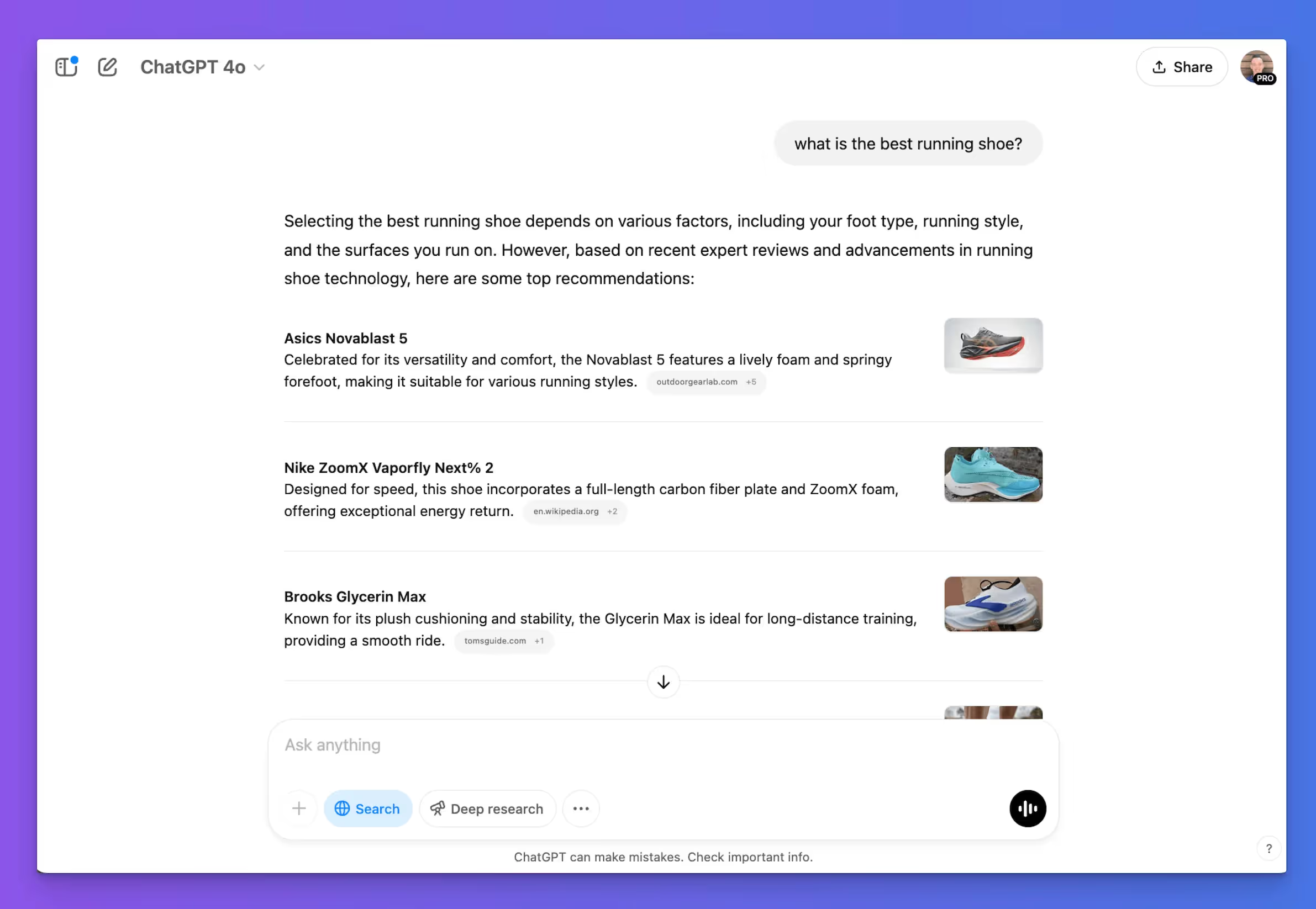
AI search engines like ChatGPT, Perplexity, and Google AI Overviews retrieve individual passages, not entire pages. Google uses a dedicated passage-level ranking index for AI results. Total word count has near-zero correlation with whether a page gets cited.
What matters for AI visibility:
Short, declarative paragraphs (100–300 tokens) with one idea per block
Clear question-answer pairings under specific headings
Numbers, data points, and named examples in every key section
Front-loaded answers in the first 30% of the page, where AI retrieval concentrates
Content structured with clear question-answer pairings and schema markup outperforms unstructured long-form content in AI search. The takeaway: write for passage quality, not page quantity. A 1,200-word article with five well-structured answer blocks will outperform a 3,000-word article with no clear passage boundaries.
How Often Should You Update Your Content Length?
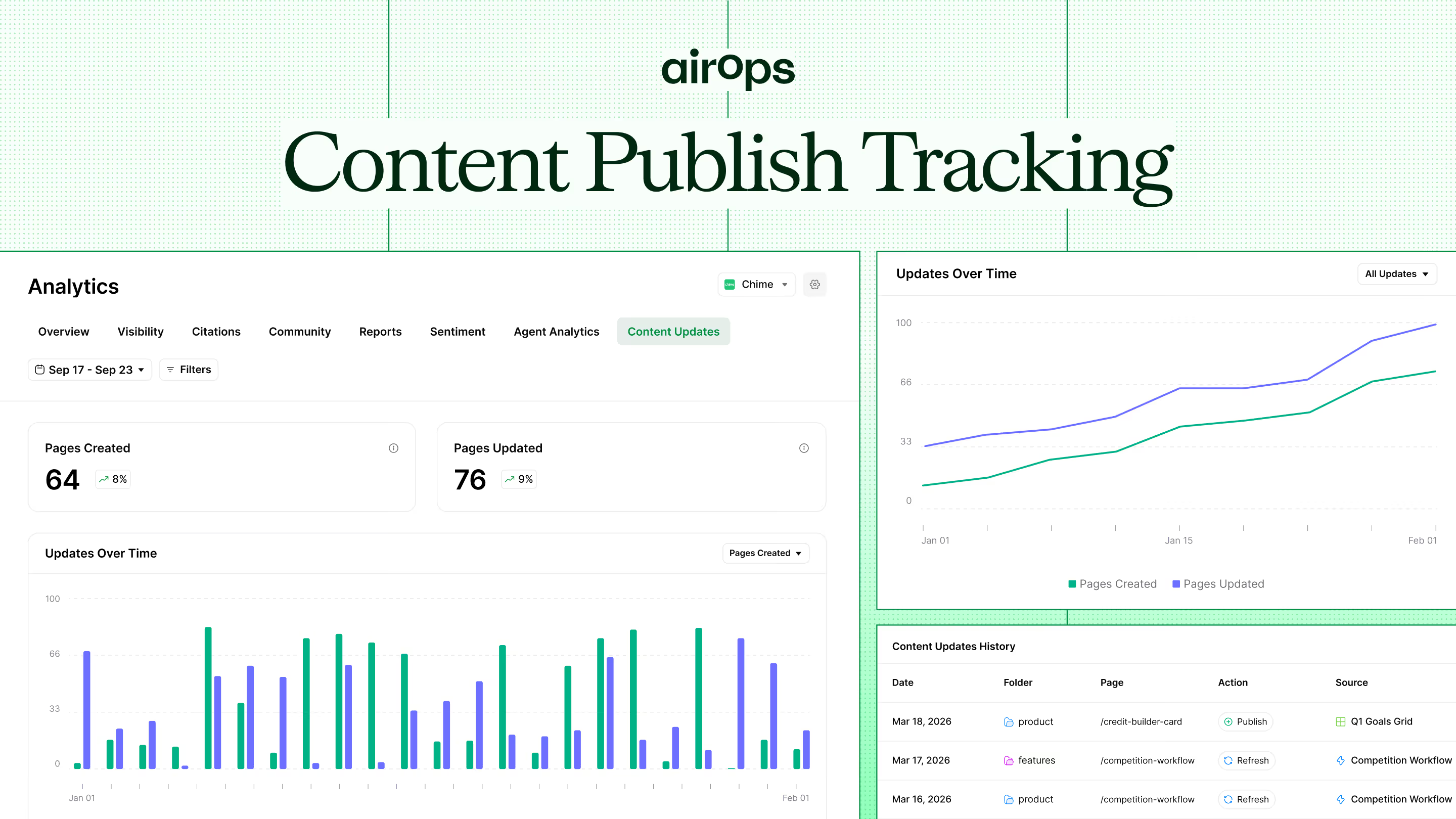
Content length is not a set-it-and-forget-it decision. Unrefreshed pages experience up to 3x citation loss over time. Search intent shifts, competitors publish new content, and AI models update their indexes regularly.
Plan to revisit your highest-traffic pages every 3–6 months. During each refresh:
Check whether the top-ranking competitors have added new sections you don't cover
Update statistics, screenshots, and product references that have gone stale
Restructure dense paragraphs into short, passage-friendly blocks for AI retrieval
Add or update FAQ questions based on current search queries
Regular refresh cycles significantly reduce visibility decay in both traditional and AI search. Treat your content library as a living system, not a publishing archive.
Create the Right Amount of Content with AirOps
Finding the perfect content length can be challenging, but focusing on quality and user experience makes a significant difference. AirOps helps you optimize your web pages with tools designed to boost engagement and SEO performance.
AirOps connects content strategy, creation, and performance across both Google and AI search. The Insights layer surfaces where to invest by unifying SEO, AI search, and analytics data. The Action layer turns those opportunities into content using brand knowledge, search signals, and AI with human review steps built in.
Page360 gives you a unified view of each page's SEO, AI search, and traffic performance so you can identify which pages need more depth, tighter structure, or a full refresh.
Instead of guessing the right content length, you can see exactly how your pages stack up against competitors and AI citation benchmarks, then act on those signals through structured Workflows and Grids.
Brand Kits and Knowledge Bases keep every piece of content aligned with your voice and factual standards, whether you're refreshing a single page or optimizing across hundreds.
Book a call to see how AirOps turns content length decisions into a data-driven system.
Get the latest on AI content & marketing
Get the latest in growth and AI workflows delivered to your inbox each week
.avif)