How Oyster Boosted Clicks 230% While Meeting the Quality Bar for High-Stakes Content
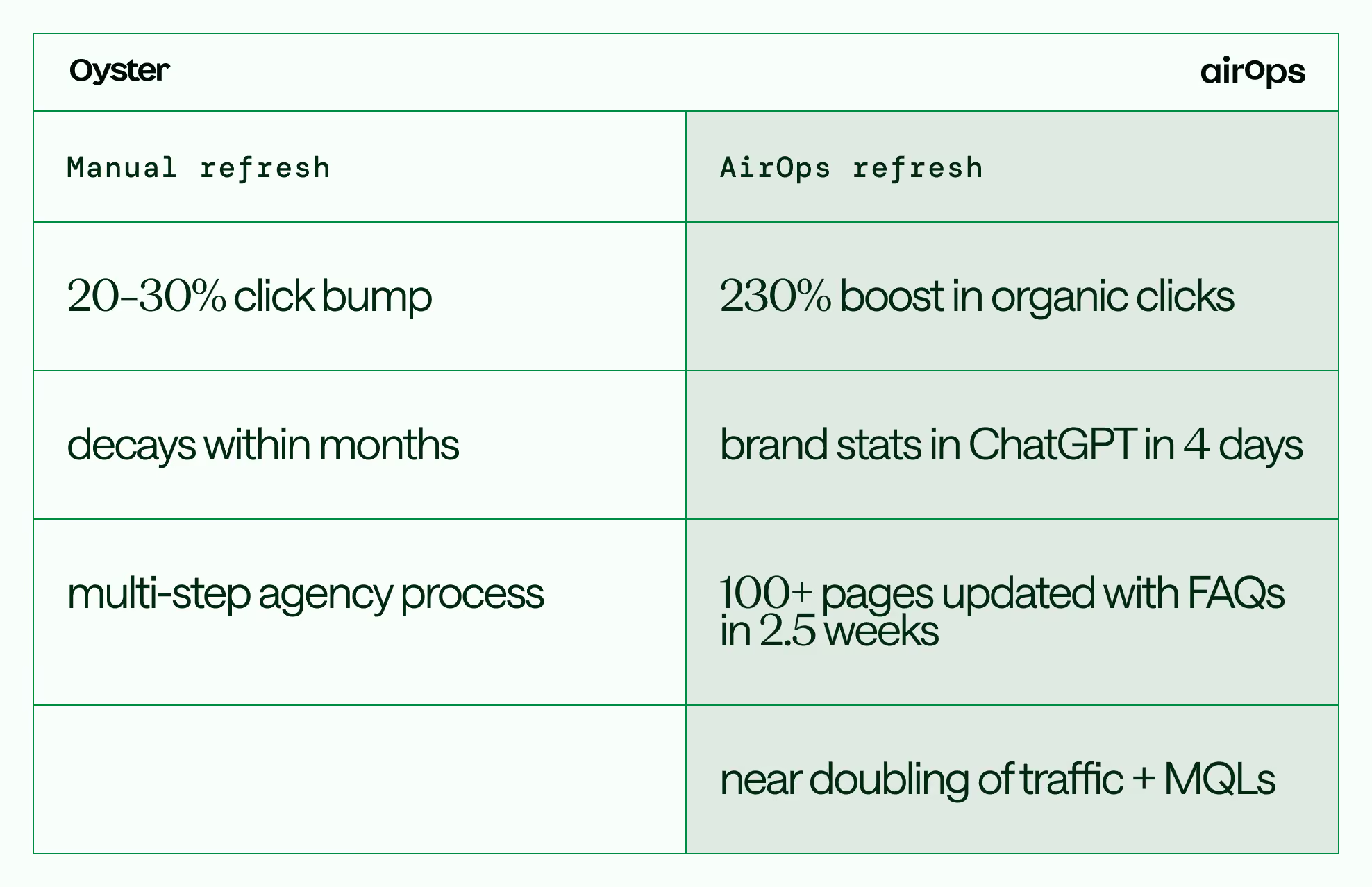
- 230% boost in organic clicks on refreshed glossary content vs. manual process
- Brand stats cited in ChatGPT within four days of publishing FAQs across 100+ pages
- Near doubling of traffic and correlated MQLs on top hiring guide pages
- Every piece of content grounded in 1,000–1,500 page legal documents per country, validated by Oyster's lawyers
Watch Oyster's story on a tour of New York City
Meet Oyster HR: the global employment platform that has to get every country right
Oyster HR helps companies hire, pay, and care for employees in over 180 countries without setting up a local entity.
As an Employer of Record, that global footprint creates a content challenge most marketing teams never face: the company publishes authoritative hiring guides, glossary entries, and library content spanning dozens of legal jurisdictions, each with its own employment laws, cultural norms, and compliance requirements. Inaccurate hiring guides don't just hurt rankings, they affect how real companies treat real, globally distributed workers.
Josephine Cahill leads Web at Oyster, a role that covers content strategy, SEO, CRO, and website performance. "Basically, I make sure that our website both works for users and performs for our business. It’s essential that folks recognize Oyster as a trustworthy source for understanding their global employment rights," she said. “The content we put out can directly affect how companies hire and how workers are treated around the world.”
When Josephine’s team evaluated their content operations six months ago, the core issue wasn't just speed. It was that they needed a new approach to compete in AI search: content that was accurate, original, and constantly fresh.
Today, AirOps powers nearly every stage of Oyster's content strategy, from research and analytics to production, translation, and publishing, with expert review built into every step.
From a six-week refresh process to 230% more clicks
Oyster's content tends to peak in organic performance between six and eight months after publication. After that, the team would see an average 15% month-over-month decline in clicks as competitors published fresher, more complete pages and overtook Oyster's rankings.
That pattern tracks with broader trends: AirOps research across 4,000+ pages found that content not updated quarterly is 3× more likely to lose AI citations, and more than 70% of all pages cited by AI models were refreshed within the past 12 months.
The old refresh process was reactive. By the time the team caught a decline, it was already significant. From there, each piece moved through a serial chain of handoffs: research, briefing, writing, review. All manual, all one at a time. A single refresh could take weeks.
"It was a huge pain," Josephine said. "Not my favorite process at all."
The AirOps-powered process changed that. On glossary content, refreshes now deliver a 230% boost in organic clicks compared to the same content refreshed manually.
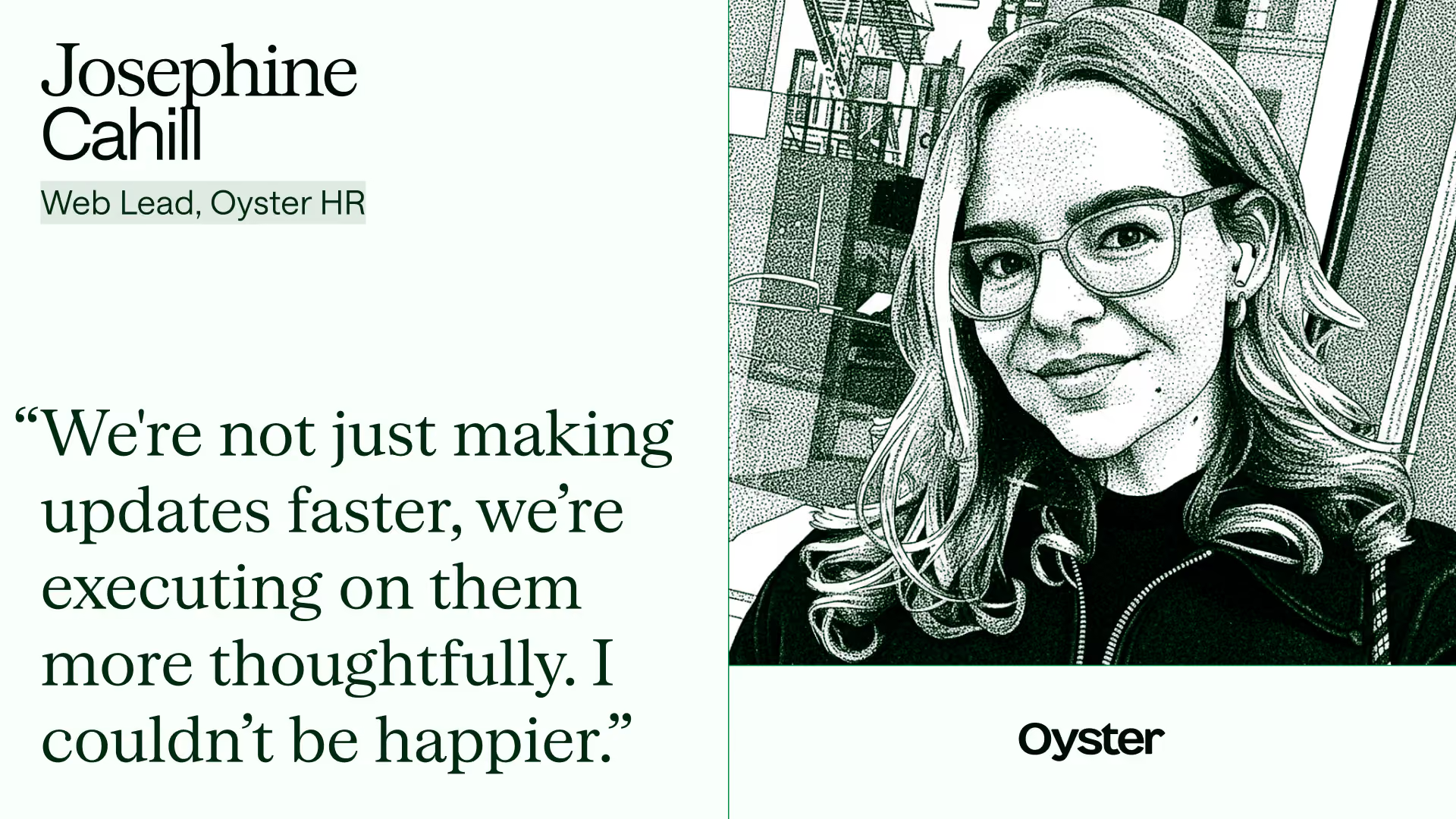
"We're not just making updates faster, we’re executing on them more thoughtfully," Josephine said. "I couldn't be happier."
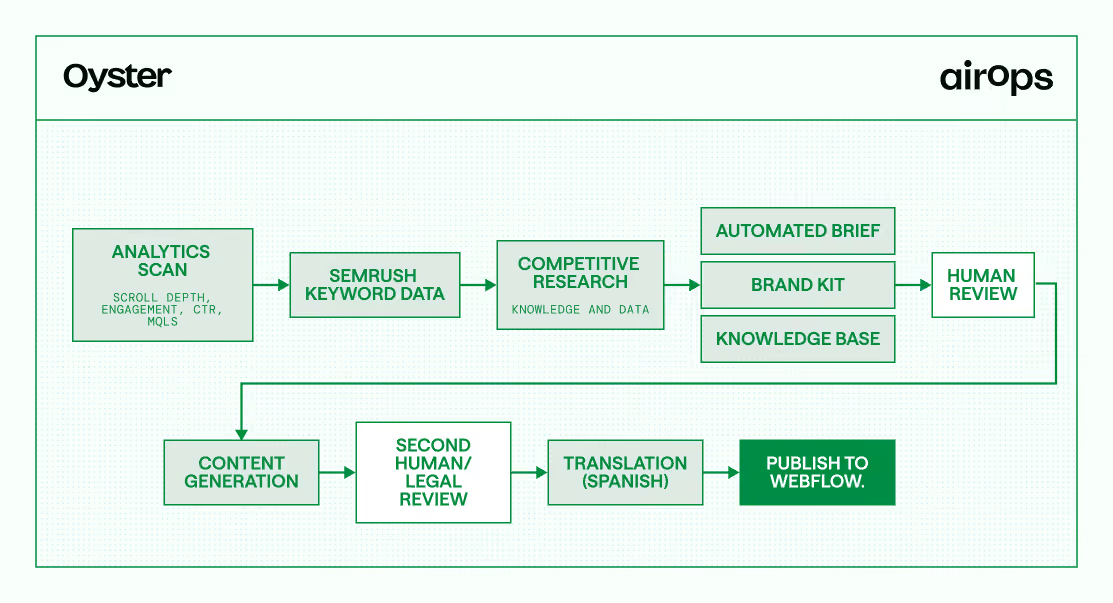
Here's how it works. The process starts with analytics, scanning each page for scroll depth, engagement, click-through rates, and MQL performance. From there, it pulls keyword data through a SEMrush integration and runs a competitive search to see who's ranking on page one, how their pages are structured, and what they're covering that Oyster isn't.
All of that feeds into an automated content brief with far more research than the team could ever assemble manually. On top of the search data, the process layers Oyster's Brand Kit and Knowledge Base - a collection of legal guidance documents, country-specific data, and internal resources. This is where accuracy gets built in: the content is grounded in Oyster's own verified data from the start, not bolted on after the fact.
"We layer all of that on in AirOps on top of that search data, to then create a brief with actual content based on accurate, insightful thoughts," Josephine said. "And then that goes into human review."
After human review, AirOps generates a refreshed article, runs it through a second review cycle, translates it into Spanish (if needed), and publishes directly to Webflow. Every piece passes through at least two rounds of expert human review before it goes live.
Oyster stats showing up in ChatGPT within four days
When Oyster added company stats to their FAQ pages (like the fact that they can onboard new employees in as fast as 48 hours), those numbers started appearing in ChatGPT responses within four days.
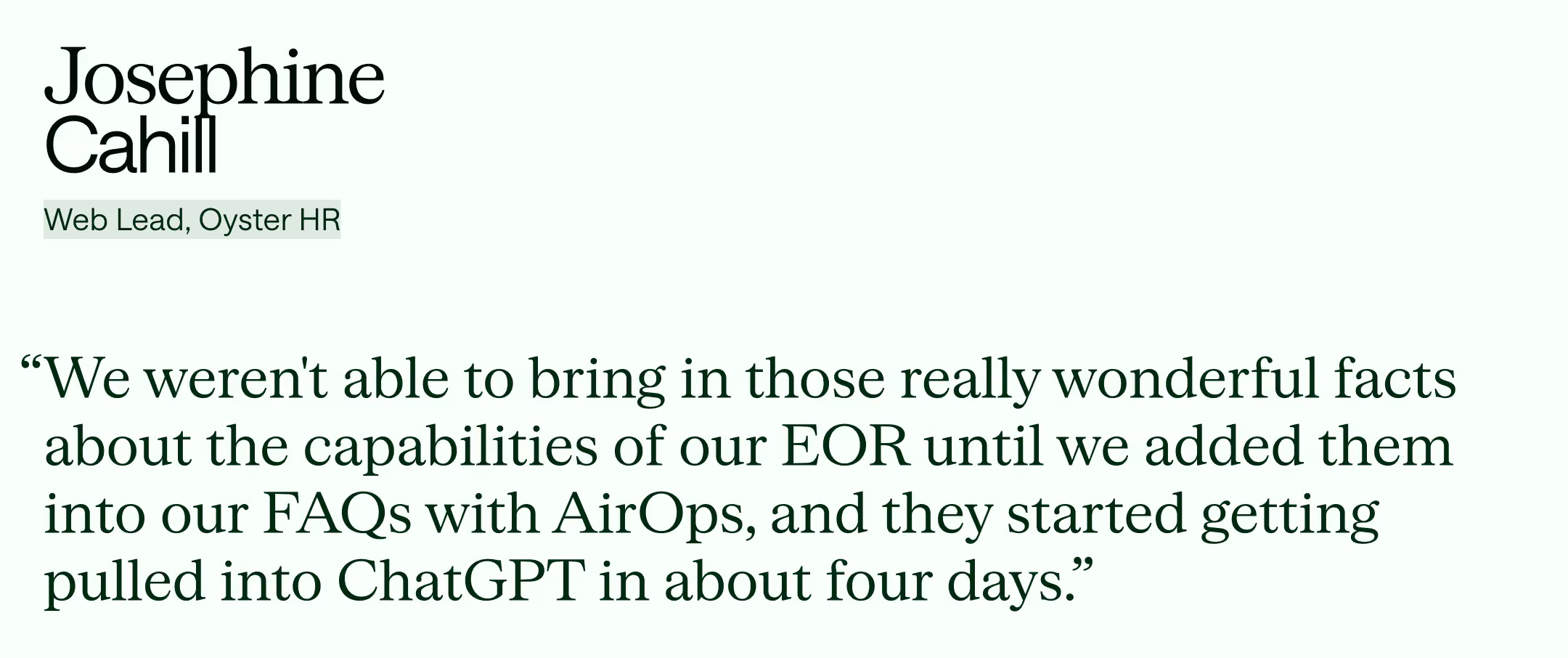
"Stats like that were not showing up when people queried LLMs about our brand," Josephine said. "We weren't able to bring in those really wonderful facts about the capabilities of our EOR until we added them into our FAQs with AirOps, and they started getting pulled into ChatGPT in about four days."
The backstory: Oyster's team noticed that LLMs like ChatGPT and Perplexity were aggressively prioritizing pages with FAQ sections. Those scannable, conversational chunks of content were being cited at much higher rates than pages without them, a finding consistent with AirOps research showing that pages with sequential heading structures and rich schema earn 2.8× higher citation rates in AI search. The problem was that 80% of Oyster's content library didn't have a single FAQ.
"It was a missed opportunity," Josephine said. "We just couldn't produce that manually at scale for the needs that we had."
The team built an AirOps process to fix it. It scans a page, queries Oyster's Knowledge Base for relevant facts, pulls People Also Ask data from SEMrush, and generates FAQ content using Oyster's brand voice from the Brand Kit. Each set goes through human review and a separate legal review, then publishes directly to Webflow. They rolled it out across more than 100 pages in about two and a half weeks.
Depth, quality, and accuracy on pages that matter most
Refreshing content faster is one thing. Refreshing content that governs how companies treat employees across 180 countries is another.
Oyster's hiring guides are some of their most commercially important pages. Each one covers everything from maternity and paternity leave to cultural sensitivities to 13th month pay for a specific country.
They drive both organic discovery and attributable MQLs. And what these guides say shapes how companies treat workers around the world, so getting them wrong isn't an option.
To get accuracy right, Oyster maintains "single source of truth" documents for each country, running 1,000 to 1,500 pages each, validated by their expert employment lawyers and commercial legal specialists. These feed into AirOps to ground every piece of content in verified legal data. The system is also prompted to cite only official government sources for any external data.
"Before we even begin a content refresh or review of these pages, we provide this source of truth document as well as a prompt to only look at official government sites," Josephine said.
Turning prospect signals into content that shortens the sales cycle
Content accuracy keeps existing readers trusting Oyster. But the team also wanted to reach prospects earlier, before they ever booked a demo.
Oyster's team spotted a pattern in their Gong data: prospects were showing up to demo calls without a clear understanding of what an EOR even was. An employer of record (EOR) is an entity that legally employs workers on behalf of another business, taking full responsibility for all aspects of employment, including compliance, payroll, taxes, and benefits.
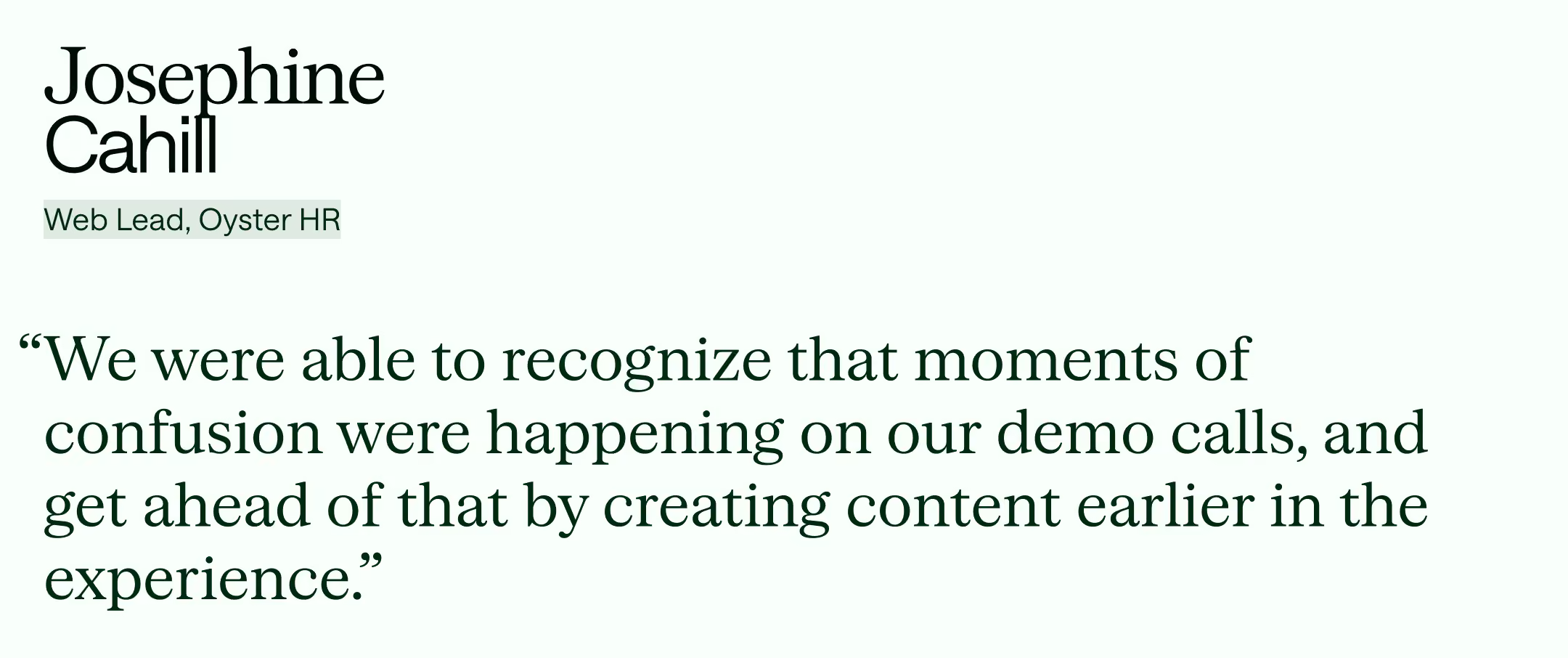
"We were able to recognize that moments of confusion were happening on our demo calls, and get ahead of that by creating content earlier in the experience," Josephine said. "So before they hop on the call, they're already sort of sold on us."
The engine behind that shift is what Oyster calls the Voice of the Prospect. It listens across three channels: Gong call transcripts, where it identifies which questions, integrations, and competitors prospects keep raising; Reddit, Quora, G2, and Trustpilot, where a tool the team calls the Oystercatcher tracks brand mentions and sentiment; and competitor websites, where it flags new positioning changes or feature releases.
Those signals feed directly into Oyster's content calendar, so the team is always building around what prospects actually need to hear - not what they assume matters. The result: a shorter path from first touch to demo, and sales conversations that focus on closing instead of educating.
Results
- 230% increase in organic clicks on glossary content refreshed through AirOps vs. manual process
- Brand stats cited in ChatGPT within four days of publishing FAQs
- Near doubling of organic sessions and correlated MQLs on top hiring guide pages
- 100+ pages updated with FAQs in 2.5 weeks, each passing through human and legal review
- Sales cycle shortened by surfacing and addressing prospect confusion earlier in the funnel
What's next: more experimentation thanks to a strong foundation
The biggest shift isn't any single result, it's that Oyster can now run experiments that would have been impossible before. When FAQs started mattering for AI search, the team tested the tactic across 100+ pages in two and a half weeks. When a batch of hiring guide refreshes came back flat, they could compare them to refreshes that performed, compare what worked against what didn't, and adjust the next sprint accordingly.
Before AirOps, each of those experiments would have been a quarter-long commitment (if they could be prioritized on the roadmap at all).
That capacity to iterate fast, without sacrificing the legal accuracy that Oyster's customers depend on, is what Josephine sees as the real advantage going forward. AEO tactics will keep shifting. The team that can test, measure, and adapt fastest will win.
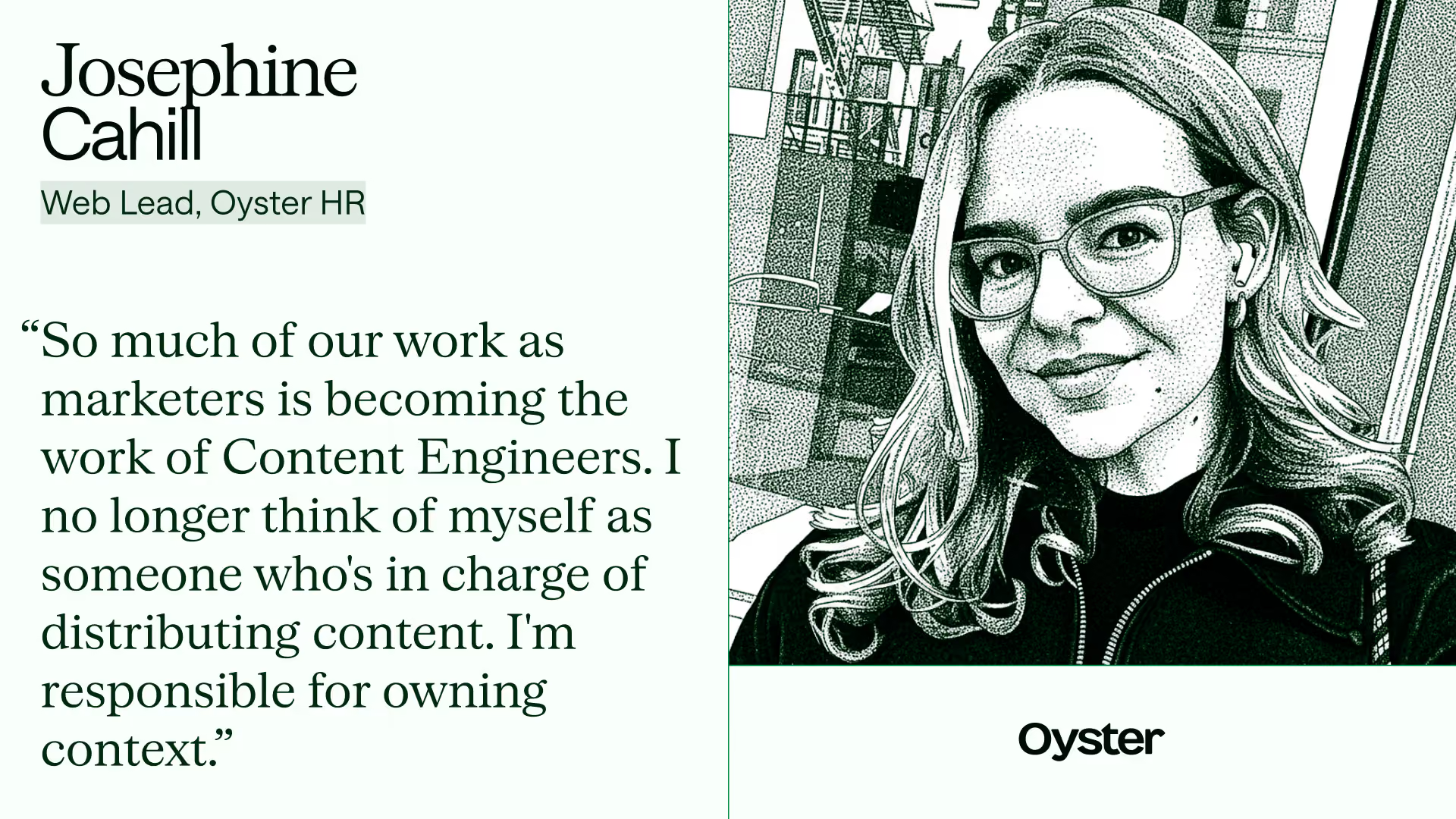
"So much of our work as marketers is becoming the work of Content Engineers," Josephine said. "I no longer think of myself as someone who's in charge of distributing content. I'm responsible for owning context.“
“Our job is to understand who Oyster HR is as a global employment partner, understand our story as a brand, and find new ways to communicate that clearly and effectively: to humans, to bots, and ultimately to the companies and workers whose livelihoods depend on us getting it right."
Get the latest on AI content & marketing
