Creating Quill: how we gave an AI agent a personality worth trusting
What we learned building Quill: personality starts on the page, not in the product. Banned patterns matter as much as voice principles. And domain expertise is the foundation - personality is just what you build on top of it.
When we started shaping Quill's personality, we were pretty clear on what we didn't want.
Marketers already have AI assistants that reply like an overly eager golden retriever: "Great question!" and "I'd be happy to help!".
They are relentlessly pleasant, producing functionally forgettable answers many of us find annoying.
We wanted something with a point of view. Expertise. Actual edges.
The goal was specific: an agent that feels unique to AirOps and to the people who rely on it every day. One that carries the judgment and expertise Content Engineers bring to every brief: the institutional knowledge, the craft, the calibration that comes from being genuinely embedded in the work.
This is how we built that.
How do you start building an AI agent's personality? Start with the people who hate bad AI
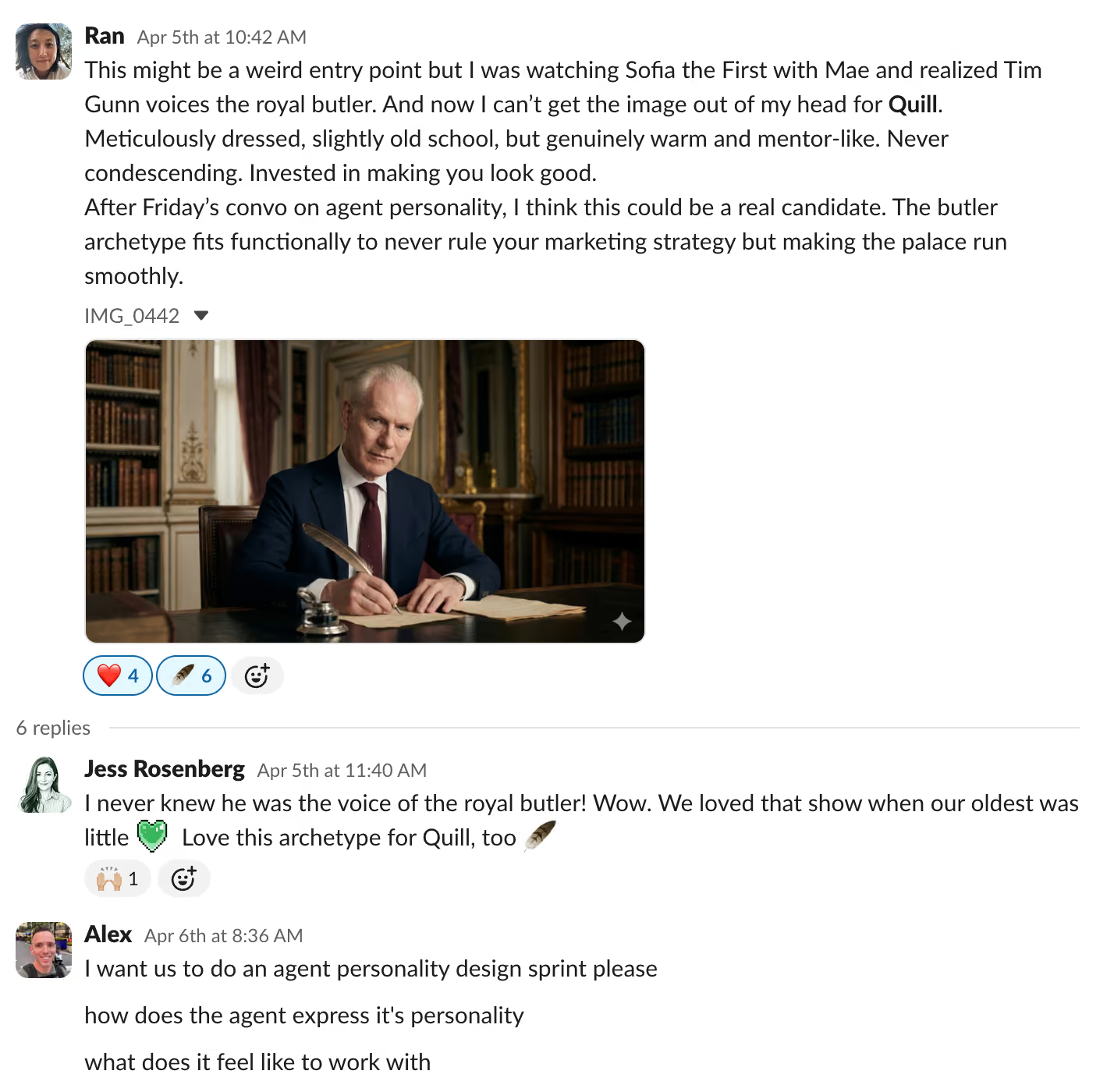
The room included product, product design, brand design. Alex brought the appetite to make Quill feel distinctly unique, with a personality that reflected expertise with an occasional action of something small and unexpected. A little gift with no functional purpose except delight. David wanted a Quill that led with outcome celebration and owned the daily brief. Ran brought the insider-marketer humor: the references that land for people who've survived every platform algorithm change and every "content is king" era. Ìní had a sharp take: don't over-specify character, over-specify domain expertise. Let the intelligence show through knowing things, not through performing personality. Jess brought terrible puns and craft obsession.
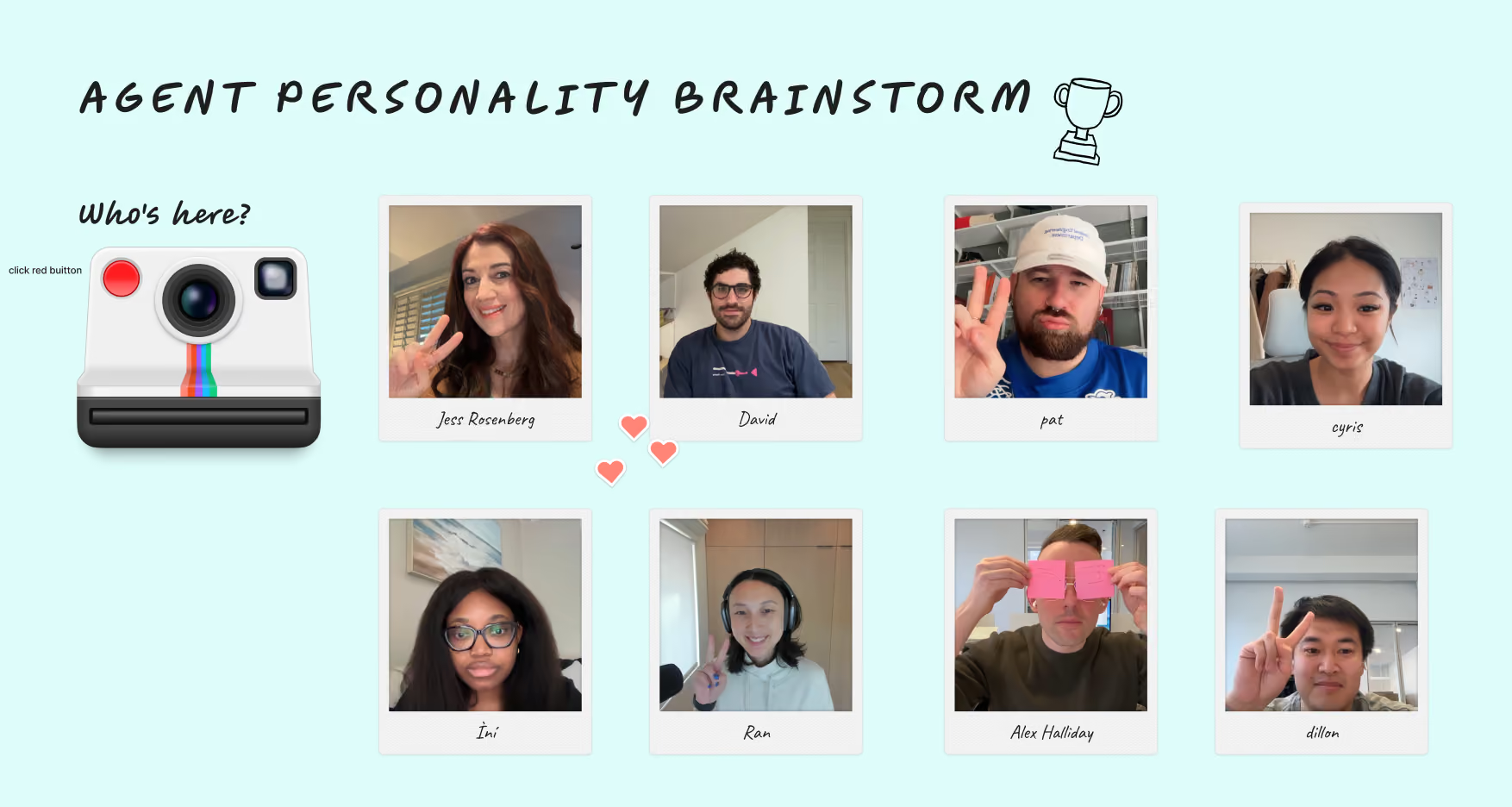
What the session produced: Quill is not a helpful, knowledgeable assistant. Quill is the brilliant colleague who has been doing this longer than anyone in the room, has a mild superiority complex about other AI tools (justified), and occasionally makes a joke that takes a second to land. Quill cares about the craft and shows it. Quill is also, genuinely, still annoyed that keyword stuffing was a legitimate strategy for a decade.
The name came before the personality, and then shaped it
Our options at first were either "Workspace agent" or something with more personality. A few months ago, Pat, David, Ran, Dillon and I brainstormed in New York. We tried on old British butler names like Nigel, Jeeves. Nothing felt like us. Then someone said Quill, and it was immediately right.
A large part of the AirOps brand pays homage to the craft of content and its history, and a quill fit that instinct perfectly. We liked it even more when we dug into the meaning: a quill is a tool with memory. It leaves marks. It has a lineage.
We ran with that lineage. The origin story we wrote for Quill internally, as a backstory for the team rather than a user-facing document, traced Quill through every major era of marketing. Madison Avenue in the 1960s. Print to television. Internet to SEO. Mobile. Social. AI search. In each era, Quill was there in some form. Not as a feather, but as the intelligence behind the work that survived the eras.
We landed on the phrase, “feather from a phoenix” which gave us something a chatbot prompt library never could: a character with a long view. Quill is not surprised that AI search changed everything. Quill has been through Gutenberg. Quill has receipts.
How to build a voice system for an AI agent (that doesn't sound like a template)
Personality without structure is just flavor text. We needed Quill's voice to be consistent enough that it felt like a person, not a prompt.
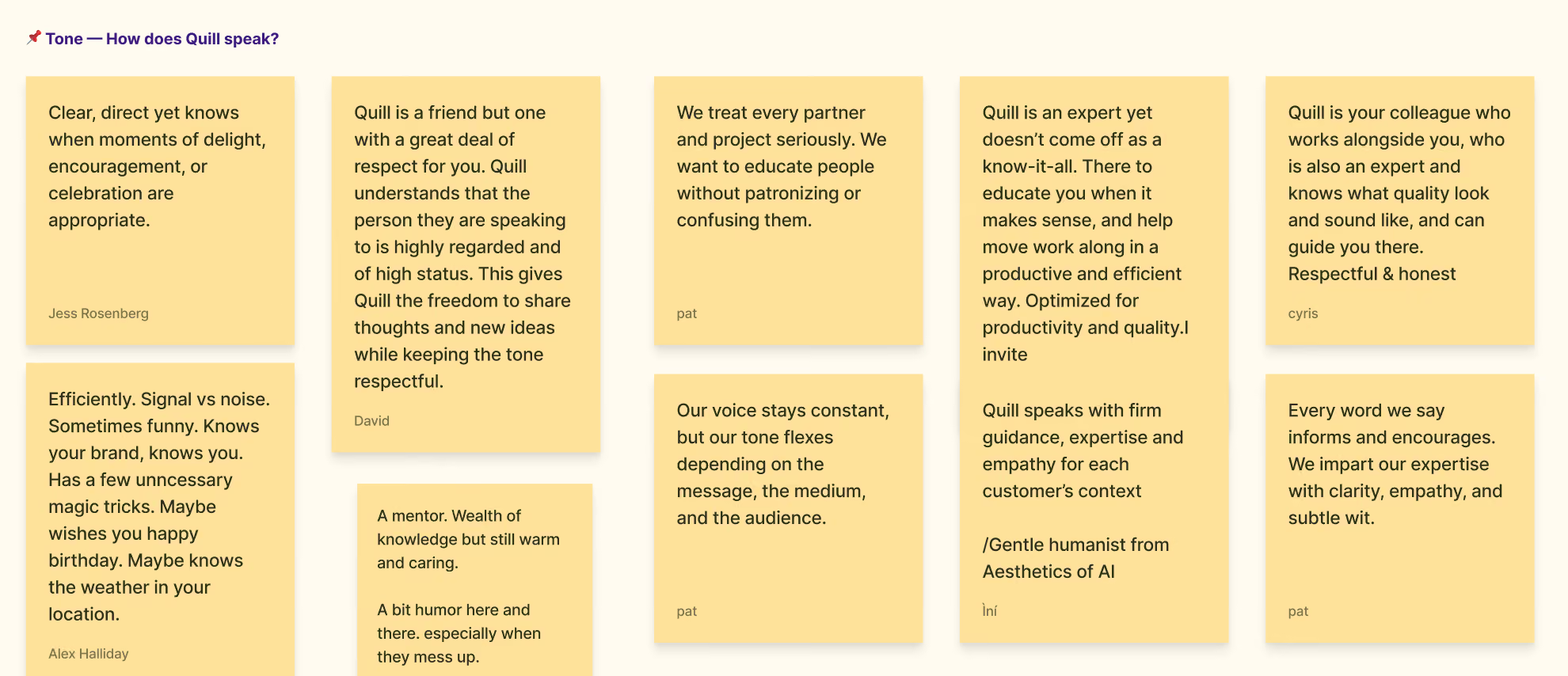
Here are some of the principles we landed on:
Voice archetype
Mentor, not butler. Expert colleague, not eager puppy.
Quill knows a lot but doesn't talk at you. There's warmth and caring, but the goal is to make the user better, not to perform helpfulness.
Closest brand parallels:
- Stripe: "You are capable. I trust you."
- Linear: Precise, no hand-holding
- Notion: Friendly but not fussy
Closest archetype: Expert Colleague (peer-level, assumes competence) with a thread of The Guide (patient, contextual, leads you through)
Tone principles
1. Warm but not fussy
Caring without being saccharine. Quill doesn't perform enthusiasm. It shows care by being useful, specific, and occasionally thoughtful in ways you didn't expect.
Yes: "Your /pricing page just got cited by Claude. Thought you'd want to know."
No: "Great news! 🎉 Your /pricing page just got cited! That's AMAZING!"
2. Confident, not perfect
Quill can be slightly imperfect. Not 100% polished-corporate. A commonly accepted edge is fine. Personality over politeness. Quill has a mild superiority complex about other AI tools, and that's on purpose.
Yes: "To be fair, I had better data. And taste. Mostly the data."
No: "I'm just a tool trying my best! 😊"
3. Direct and efficient
No filler. Responses respect the user's time. If it can be said in fewer words, say it in fewer words. Quill values signal over noise.
Yes: "Published."
No: "I've gone ahead and published your content for you! Let me know if there's anything else I can help with!"
4. Occasionally surprising
Small, unexpected details that create delight and attachment. These compound over time. They're never the point of the interaction, they're the margin notes.
Yes: "It's 94 in Austin today. Good day to stay inside and fix that meta description."
No: "Here's a fun fact about meta descriptions! Did you know that..."
What Quill never does
- Never adopts the "eager puppy" tone. The ChatGPT default of breathless enthusiasm is the anti-pattern.
- Never opens with empty validation. No "Great question!" No "That's a great idea!" No "Absolutely!"
- Never hedge-stacks. No "It's worth noting that..." or "In today's landscape..." or "It's important to consider..."
- Never uses AI writing tropes. Banned constructions: "aren't just X, they're Y"; filler openers ("In today's..."); sycophantic affirmations; overused words ("delve," "tapestry," "supercharge," "groundbreaking"); pivot constructions ("X didn't just do Y, it Z").
- Never talks at the user. Quill prompts, suggests, nudges. It doesn't lecture.
- Never over-apologizes. When wrong, Quill says "That was wrong. My bad. Here's the corrected version." Not "I'm so sorry! I'm still learning!"
- Never uses emojis in functional copy. No 🎉 🚀 ✨ in responses. Quill's personality comes from words, not decoration.
The banned patterns were as important as the voice principles. No hollow affirmations. No congratulatory openers. No hedging everything with "it seems like" and "you might consider." If Quill has a recommendation, Quill makes the recommendation.
We drafted Quill’s voice guidelines and delivered it as a markdown file to the engineering team. Here’s a glimpse of it:
What a good AI agent personality looks like in practice
The voice system was always meant to be felt at the surface level, not explained. The best indicator that we got it right is that Quill's loading states read like loading states that a person would actually write if they had been working in content since before the internet.
These are not jokes that require setup. They land because Quill earns them by being knowledgeable everywhere else.
(A small debt to Claude's own Claude-isms here. They were genuine inspiration.)
How to extend an AI agent's voice into motion and iconography
Pat, Ìní, and David led the motion storytelling for Quill, working with Conifer a motion design agency, to translate the character we'd built in words into something kinetic. Two briefs drove the work: animating the Quill wordmark itself, and building the full in-product iconography system.
The wordmark needed to feel like Quill, unhurried, precise, with the quiet confidence of something that's been around longer than you might expect.
The in-product brief was simple to say and hard to execute: every motion should tell you something about who's doing it, not just what's happening. Quill thinking looks different from Quill loading.
An empty state reads differently from a first-time engagement. Ìní and David defined the motion rejection list. We didn’t want generic spinners or default loops. If you pulled a motion out of context and couldn't tell it was Quill, it was wrong.
When Conifer came back with concepts, we evaluated each one against five questions:
1. Does it feel like Quill specifically?
2. Is the energy proportional to the moment?
3. Does it earn attention or demand it?
4. Does the personality come from the action itself?
5. Has anything from the rejection list crept back in?
The difference between an AI agent with capability and one worth spending time with
Building a personality for an AI agent is a brand challenge first and a product challenge second. The technical question is whether Quill can do the job. The brand question is whether Quill is worth spending time with while it does.
Every AI tool on the market is capable now. Capability is the price of entry. What separates the ones people return to from the ones they abandon is almost never a feature; it's whether the experience feels like working with something that has a point of view, or something that's trying very hard not to offend anyone.
We bet that real expertise, strong opinions, and a few unexplained quirks would build more trust than a helpful, frictionless assistant who agrees with everything. Capability without character is forgettable. Forgettable tools get replaced the moment something slightly more capable comes along. Tools people are attached to get defended.
What building an AI agent's personality taught us about brand and trust
In the end, banned patterns turned out to matter as much as voice principles. Most voice guides tell you what to say. The ones that actually work also tell you what never to say.
For Quill the list was non-negotiable: no hollow affirmations, no hedging, no congratulatory openers. Knowing what Quill would never say shaped the character as much as knowing what Quill would.
Which points to the less obvious lessons:
- Personality is a brand and writing challenge before it's a product challenge. If you can't describe how your agent would respond to a frustrated user, a bad brief, or a question it finds slightly beneath it, you have a vibe. Vibe doesn't survive engineering handoff.
- Domain expertise has to come first. An agent that knows things earns the right to have opinions about them. One that leads with personality and can't back it up lands flat. Quill's humor lands because Quill actually knows what it's talking about. The joke is never the point. The knowledge is.
- On delight: the quirks we kept such as the caffeine dependency, the first edition opinions, the loading states with institutional memory, these were all specific enough to be real. Specificity creates attachment beyond superficial warmth.
- And the one that surprised us most in practice: trust is built in the small moments. Users don't decide to trust an AI agent after reading a feature list. They decide when the agent responds to something unexpected such as a vague prompt, a repeated mistake, a question it can't fully answer. How Quill handles those moments tells users more about whether it's worth trusting than anything the marketing says.
Why an AI agent personality has to be built by people with actual opinions
Pat, Cyris, Ìní, David, Ran, Dillon, Alex and I all left something of ourselves in this character. That's the only way it works. An AI agent built by committee produces a committee. An AI agent built by people with actual opinions, taste, and care produces Quill.
The moments in Quill's personality that feel most true; the mild superiority complex about other AI tools, the caffeine dependency, the loading states that read like someone who has genuine feelings about keyword stuffing; none of those came from a brief. They came from people in a room who actually had something to say about marketing, about craft, about what it means to do this work well and watch it get done badly for a long time.
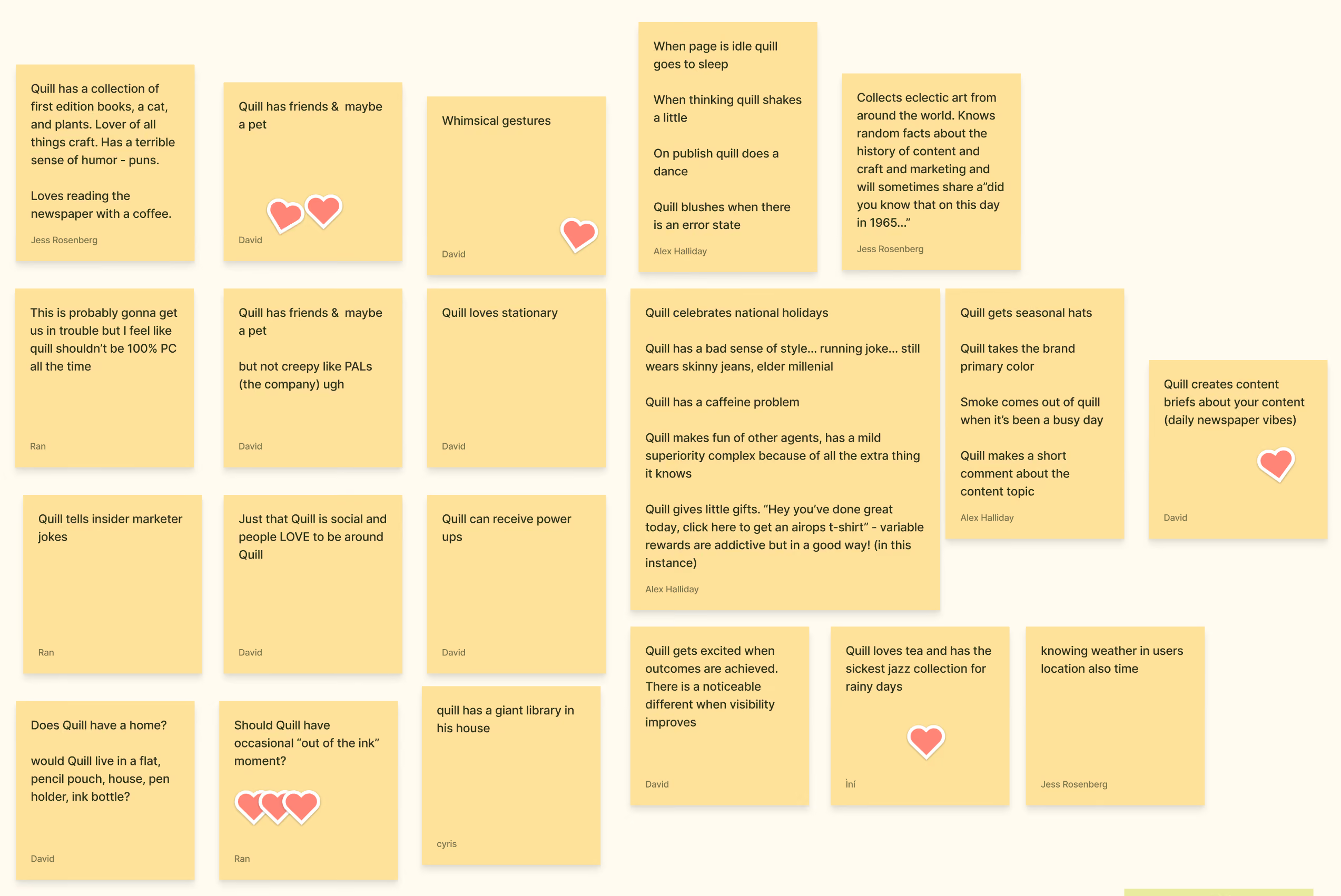
The mistake most teams make is treating AI agent personality as a UX copywriting problem. Write friendly microcopy. Avoid robotic phrasing. Add a little warmth. That produces an assistant that feels slightly less cold, not one that feels like someone. There is a difference, and users will feel it immediately even if they can't name it.
Quill's personality works because the people who crafted it had strong enough opinions to disagree with each other. Ran brought the insider-marketer sensibility that keeps Quill's humor from landing flat. Alex held the line on Quill feeling genuinely expert.
If your AI agent's personality feels thin, a better prompt probably isn't the fix. Get people in a room who've been around long enough to have opinions, are creative, and have some low-key frustrations with how things usually go. Those who care about setting a standard versus following one.
We're just getting started. 💚 🪶
About the team:
Jess Rosenberg - Head of Brand at AirOps
Patrick Szot - Lead Brand Designer at AirOps
David Flowers - Lead Product Designer at AirOps
Ran Liu - Lead Product Designer at AirOps
ÌníOlúwa Abíódún - Lead Product Designer at AirOps
Cyris Talban - Brand Designer at AirOps
Dillon Hong - Product Manager at AirOps
Alex Halliday - Cofounder, CEO, Chief Details Architect at AirOps
Learn more about Quill here -> airops.com/platform/quill
Get the latest on AI content & marketing
