Athena tracks AI visibility. AirOps turns insights into content that wins AI search and SEO.
- See what's working and where content is slipping across AI search and Google
- Scale operations with bulk workflows and direct CMS publishing
- Ensure brand consistency with centralized governance and knowledge bases

Webflow 5xed content refresh velocity and increased visibility across Google and ChatGPT

Webflow 5xed content refresh velocity and increased visibility across Google and ChatGPT
Webflow 5xed content refresh velocity and increased visibility across Google and ChatGPT

Chime went from being recommended in 24 to 68 priority questions


George Bonaci VP of Growth, Ramp

Nicole Baer, CMO, Carta


50% cut in production costs, thanks to the elimination of external agencies and manual tasks.

Marcio Arnecke, CMO, Apollo


















Why Customers Choose AirOps to Go Beyond Visibility
Watching trends while traffic slips away is not a winning strategy. Only AirOps gives you the system to produce quality content that earns citations.
and agents alike
Get prime placement in AI Search by improving the structure, clarity, and quality of your content.
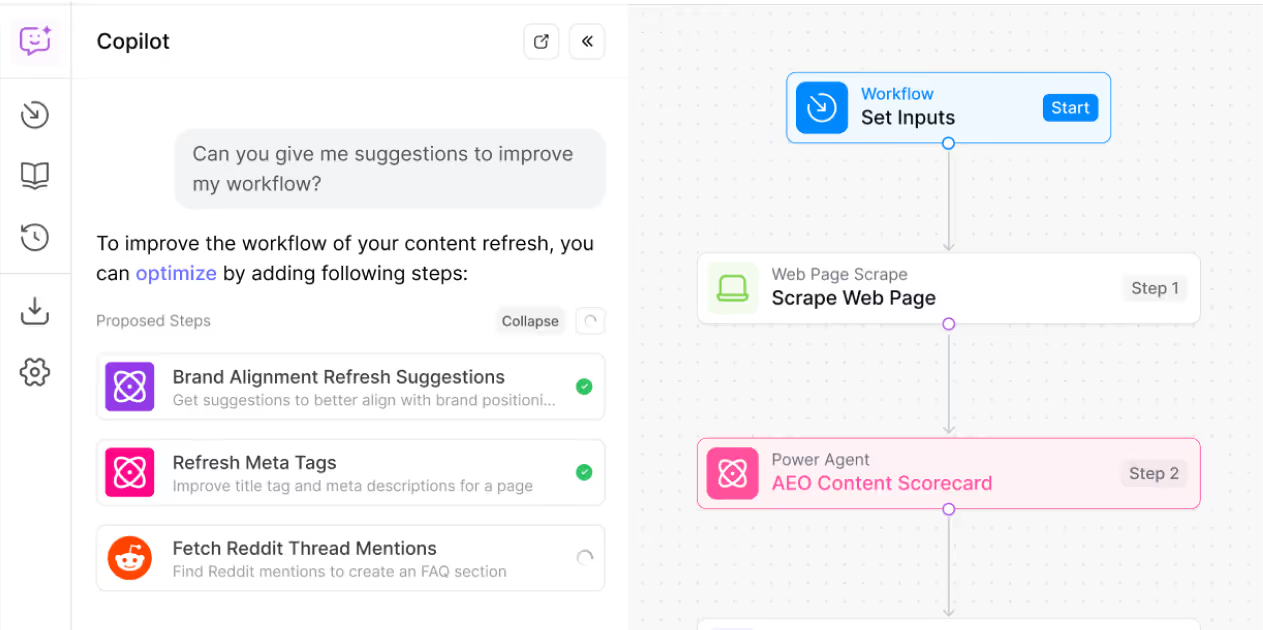
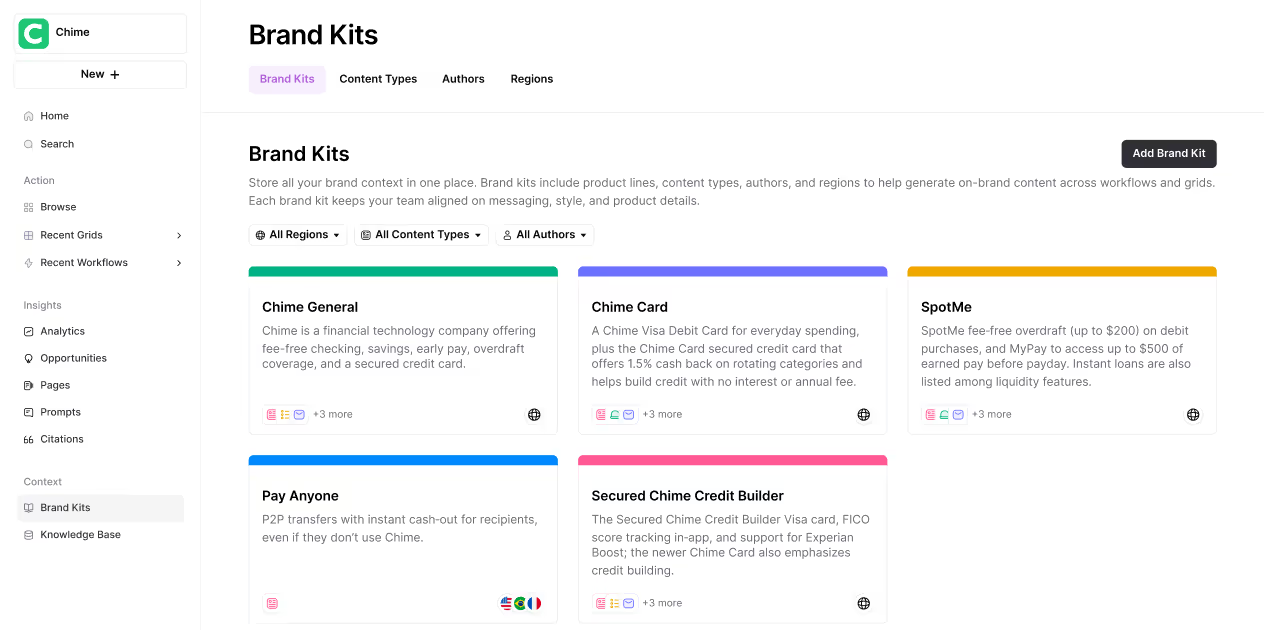
Brand Kits
Create content that sounds like your brand by weaving in your brand voice, personas, and expertise.
Our experts help brands like Carta and Rippling build workflows and train their teams to move faster with confidence.

What sets AirOps apart from Athena
While Athena focuses on monitoring AI search performance across LLMs, AirOps combines that monitoring with content workflows and direct CMS publishing so your team can close gaps the same day they find them. Your team sets the strategy. Quill runs the execution. Every cycle of insight, action, and measurement compounds your performance across AI search and SEO.

What our customers are saying
“AirOps is unlike any other AI tool we’ve seen. We’ve been able to drop our agency and focus on the highest value initiatives in weeks”

Nick Fairbain
VP Growth Marketing, Chime
“Our brand visibility score hit a high of 28% after we refreshed content. We saw a 56% increase in subscriptions in 30 days that corresponds to content engineered for agents."

George Bonaci
VP of Growth and Demand, Ramp
“With AirOps, we grew AI-attributed signups from 2% to over 10% in under a year with zero headcount growth. Just sharper workflows and faster loops.”

Josh Grant
VP of Growth, Webflow
AirOps vs. Athena
Which platform is right for your team?
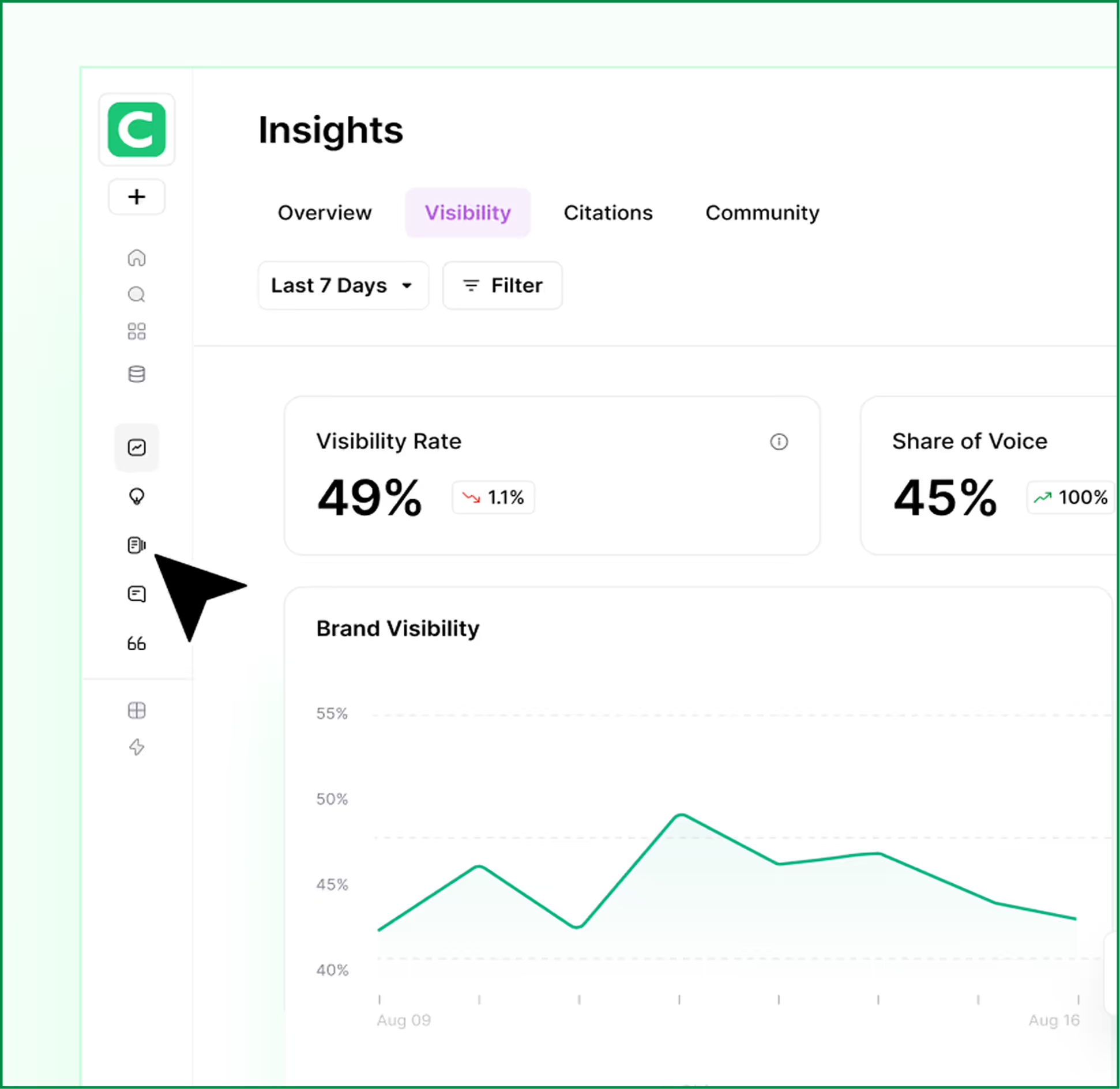
Track visibility across AI search
AirOps gives your team a unified view of AI citations and organic search performance per URL through Page360, combining Google Search Console (GSC) clicks with Google Analytics 4 (GA4) engagement data in one place. Athena tracks AI visibility across eight or more platforms but keeps those signals separate from organic search and web analytics data. With AirOps, your team can prioritize pages by combining AI citation trends with real traffic performance in a single dashboard.
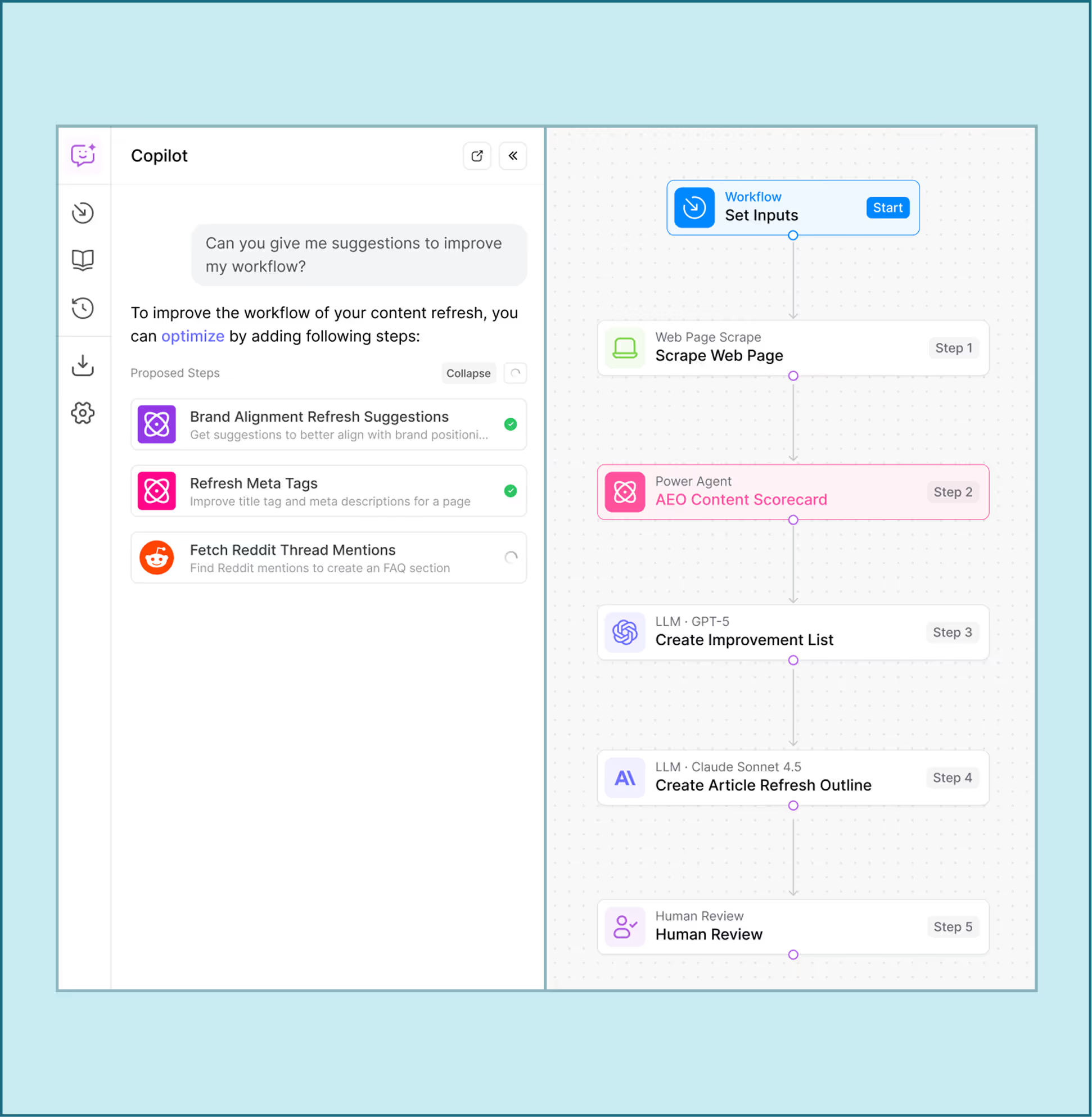
Content creation, refresh & publishing workflows
AirOps turns visibility gaps into published content through multi-step workflows with Grids for bulk operations, publishing directly to seven CMS platforms while Athena's Content Optimization AI Agent works one page at a time on Enterprise plans only. Your team sets the strategy. Quill runs the execution.
Native integrations
AirOps connects to 30+ tools across your content stack, from CMS platforms like WordPress and Contentful to SEO research tools like Semrush and project management tools like Asana. Athena integrates with roughly eight services, concentrated on analytics (GA4, GSC) and three CMS platforms (Shopify, Webflow, Framer). AirOps also offers a Model Context Protocol (MCP) connector available in the Claude App Store, giving your team access to AirOps data inside the tools they already use.
SEVERAL CMS platforms
(Webflow, Contentful,
WordPress, Ghost,
and more)
Email and live chat support
AirOps pairs hands-on support with structured enablement, including embedded Content Engineers on Enterprise plans and AirOps University with 39 tutorials alongside live cohort trainings and the Content Engineering Certification. Athena provides a dedicated Generative Engine Optimization (GEO) specialist and white-glove setup on Enterprise, along with a GEO certification for agency partners. AirOps also runs a Builders Slack community and Champions Program so your team builds lasting capability alongside other practitioners.

How Webflow scaled content 5x in days with AirOps
Frequently Asked Questions
AirOps vs Profound: Which is better?
Which is better: AirOps or Athena?
AirOps is the stronger choice for teams that need both Answer Engine Optimization (AEO) monitoring and a system to act on what they find. It combines workflow automation, bulk content execution, direct CMS publishing, and Brand Kit governance in a single platform. Athena is a capable standalone AEO monitoring tool with broad LLM coverage and the Athena Citation Engine (ACE) for citation prediction. Teams focused on monitoring alone may find Athena sufficient, but teams that need to close the loop from insight to published content will get more value from AirOps.
What features does AirOps offer that Athena does not?
AirOps offers several capabilities Athena lacks:
Quill, an AI execution engine that coordinates content creation and refresh through Playbooks and Campaigns, publishing directly to your CMS
Page360, a unified per-URL view combining AI citations, GSC clicks, GA4 engagement, and content freshness
Prompt Discovery, which sources real buyer questions from search keywords, People Also Ask, ChatGPT fan-outs, and voice-of-customer data from tools like Gong and Zendesk
Grids for bulk content operations across hundreds of pages simultaneously
Brand Kit, a multi-dimensional governance system covering tone, audience, region, content type, and product line rules
Knowledge Bases with semantic search for grounding content in proprietary data
AirOps MCP with 38+ tools, available in the Claude App Store
Offsite for managing third-party publisher placements and building citation consensus
Power Agents, pre-built reusable workflow components
Query fan-out visibility showing the internal search queries AI models run when answering buyer questions
Does Athena help fix problems, or identify them?
Athena is built to identify problems. Its monitoring tracks where your brand appears across AI platforms and flags citation gaps, while Athena Content surfaces recommendations based on those gaps. On its Enterprise plan, the Content Optimization AI Agent generates single-page optimization drafts. But there is no workflow builder or bulk execution capability.
AirOps connects the entire path from insight to outcome. When Page360 flags a page losing AI citations, your team can trigger a refresh workflow that pulls in Brand Kit guidelines and Knowledge Base data, generates an updated draft with human review gates, then publishes it directly to your CMS. Athena shows you what needs fixing. AirOps builds the system that fixes it at scale.
How do refresh workflows differ?
Athena's Content Optimization AI Agent, available on Enterprise plans, works one page at a time. It generates optimization suggestions and drafts based on AI search data, but your team handles editing and approval outside the platform before publishing manually. There is no way to chain steps together or run refreshes across multiple pages simultaneously.
AirOps Workflow Studio is a visual builder with conditional branching, loops, human-in-the-loop review gates, and code steps. Your team can connect workflows to Grids for bulk operations across hundreds of pages while pulling context from Knowledge Bases and Brand Kit, then publish directly to seven CMS platforms. Campaigns let you schedule recurring refreshes that run automatically and report back against AI visibility and SEO metrics.
How does AI visibility tracking compare?
Both platforms track AI search visibility. AirOps covers five platforms: ChatGPT, Gemini, Perplexity, Google AI Mode, and Google AI Overviews. Athena covers eight or more, including Claude, Copilot, and Grok alongside the platforms AirOps tracks.
AirOps Page360 unifies AI citations with GSC clicks and GA4 engagement in a single per-URL dashboard, so your team can prioritize pages based on the full picture rather than one signal in isolation. Athena connects GA4 and GSC but keeps those signals in separate views from its AI monitoring data.
Can AirOps replace both Athena and my content tools?
Partially. AirOps covers AI visibility monitoring, content creation and refresh workflows, CMS publishing, and brand governance with built-in SEO research integrations. For most teams, it consolidates the functions of a standalone AEO dashboard and a content operations platform into one system with brand governance built in.
Athena maintains advantages in two areas: broader LLM platform coverage (eight or more versus five) and proprietary prediction models like ACE and QVEM (Query Volume Estimation Model) that estimate citation likelihood and prompt volume. Teams that need coverage of platforms like Copilot and Grok, or that rely on predictive citation modeling, may find value in keeping Athena for those specific signals.
The optimal setup for many enterprise teams is AirOps as the primary content operations and AI visibility platform, supplemented by Athena when broader LLM monitoring data or predictive modeling is a priority.
What's the pricing difference?
Athena starts at $295 per month on its Self-Serve plan, which includes 3,600 credits per month. Enterprise pricing is custom. There is no free plan or free trial available.
AirOps offers a free Solo plan at $0 per month with 20,000 tasks and one user seat. Pro and Enterprise plans are custom-priced, with unlimited seats on both. AirOps uses task-based metering with transparent overage pricing at $0.025 per task, and supports bring-your-own-key for cost control.
The total cost comparison extends beyond the subscription. Athena's credit-based model means monitoring costs scale with usage, and G2 reviewers have noted opaque consumption rates. AirOps bundles visibility monitoring with content workflows and CMS publishing into a single platform with brand governance included, which can reduce the need for separate content tools and workflow automation subscriptions.
How hard is Athena to operationalize day to day?
Athena earns high marks for ease of use, with a 10.0 out of 10 score on G2 for its monitoring dashboard. Teams can set up visibility tracking quickly and start reviewing AI citation data within days. Where the daily work compounds is in acting on those insights. Optimization drafts happen one page at a time with no bulk workflow engine, and content publishing requires leaving the platform for most CMS destinations.
AirOps has a steeper initial learning curve because it covers more ground: workflows, Grids, Brand Kit, and Knowledge Base setup all require upfront investment. Once configured, Campaigns run on schedule and Quill coordinates multi-step execution with human review gates keeping your team in control. Athena tells you what to optimize. AirOps provides the infrastructure to execute at scale.
How does AI model flexibility differ?
Athena specifically monitors AI search results across eight or more platforms, giving your team the broadest LLM coverage for visibility tracking. Its proprietary ACE and QVEM models add predictive capabilities that estimate which pages are likely to be cited and which prompts carry the most volume.
AirOps takes a different approach to model flexibility. Workflows support 40+ AI models for content generation, letting your team select the best model for each step in a production pipeline. AirOps also supports bring-your-own-key, so your team can use existing API agreements and control per-task costs. For visibility monitoring, AirOps covers five AI platforms. For content execution, AirOps gives your team access to a broader range of models than any monitoring-only tool provides.