Surfer optimizes content. AirOps builds the system that turns AI visibility into pipeline.
- Track AI citations alongside traditional search performance and web analytics in one dashboard per URL. See which pages drive results and which need attention.
- Publish directly to 7+ CMS platforms with native field mapping, and connect Google Search Console (GSC), Google Analytics 4 (GA4), Semrush, Ahrefs, plus 30+ integrations out of the box.
- Run multi-step content workflows at scale through Grids and Power Agents using 20+ large language models (LLMs). Your team picks the right model for the job.

Webflow 5xed content refresh velocity and increased visibility across Google and ChatGPT

Webflow 5xed content refresh velocity and increased visibility across Google and ChatGPT
Webflow 5xed content refresh velocity and increased visibility across Google and ChatGPT

Chime went from being recommended in 24 to 68 priority questions


George Bonaci VP of Growth, Ramp

Nicole Baer, CMO, Carta


50% cut in production costs, thanks to the elimination of external agencies and manual tasks.

Marcio Arnecke, CMO, Apollo


















Why Customers Choose AirOps to Go Beyond Visibility
Watching trends while traffic slips away is not a winning strategy. Only AirOps gives you the system to produce quality content that earns citations.
and agents alike
Get prime placement in AI Search by improving the structure, clarity, and quality of your content.
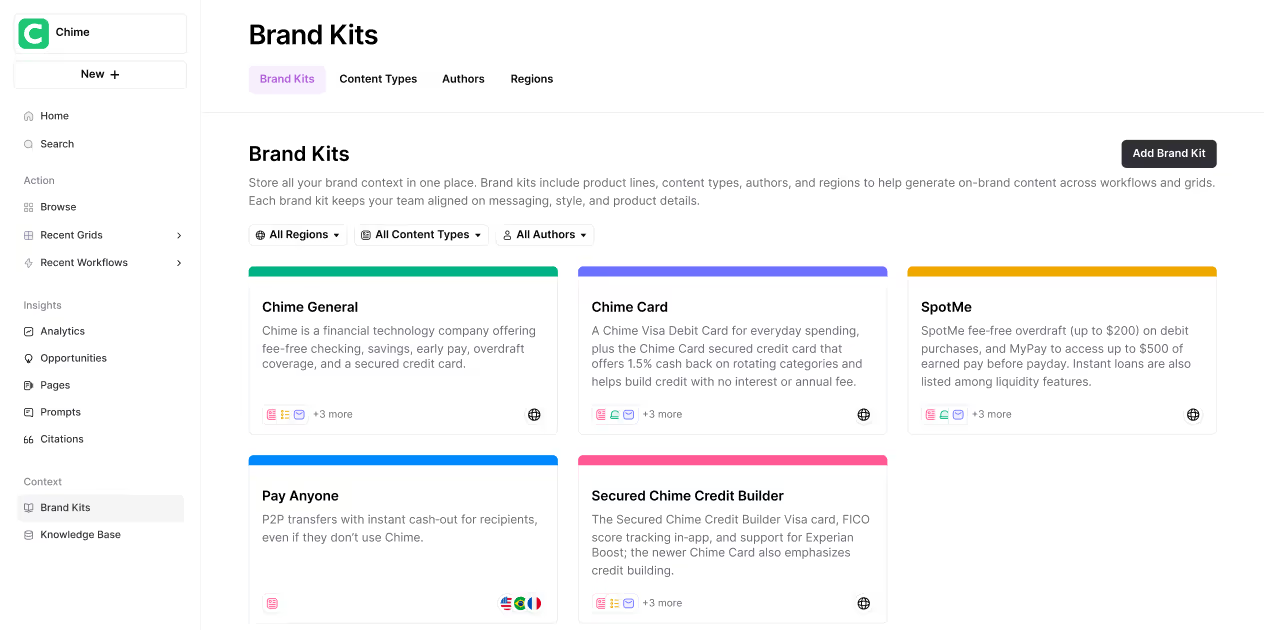
Brand Kits
Create content that sounds like your brand by weaving in your brand voice, personas, and expertise.
Our experts help brands like Carta and Rippling build workflows and train their teams to move faster with confidence.

What sets AirOps apart from Surfer
AirOps connects visibility data to content execution and tracks the results in one platform, so your team can move from finding gaps to publishing fixes without switching tools. Your team sets the strategy. Quill runs the execution. While Surfer focuses on prescriptive optimization for individual articles, AirOps unifies Answer Engine Optimization (AEO) tracking with real search performance and web traffic data per URL through Page360 and gives your team the workflows to continuously improve content performance across AI search and SEO.

What our customers are saying
“AirOps is unlike any other AI tool we’ve seen. We’ve been able to drop our agency and focus on the highest value initiatives in weeks”

Nick Fairbain
VP Growth Marketing, Chime
“Our brand visibility score hit a high of 28% after we refreshed content. We saw a 56% increase in subscriptions in 30 days that corresponds to content engineered for agents."

George Bonaci
VP of Growth and Demand, Ramp
“With AirOps, we grew AI-attributed signups from 2% to over 10% in under a year with zero headcount growth. Just sharper workflows and faster loops.”

Josh Grant
VP of Growth, Webflow
AirOps vs. Surfer
Which platform is right for your team?
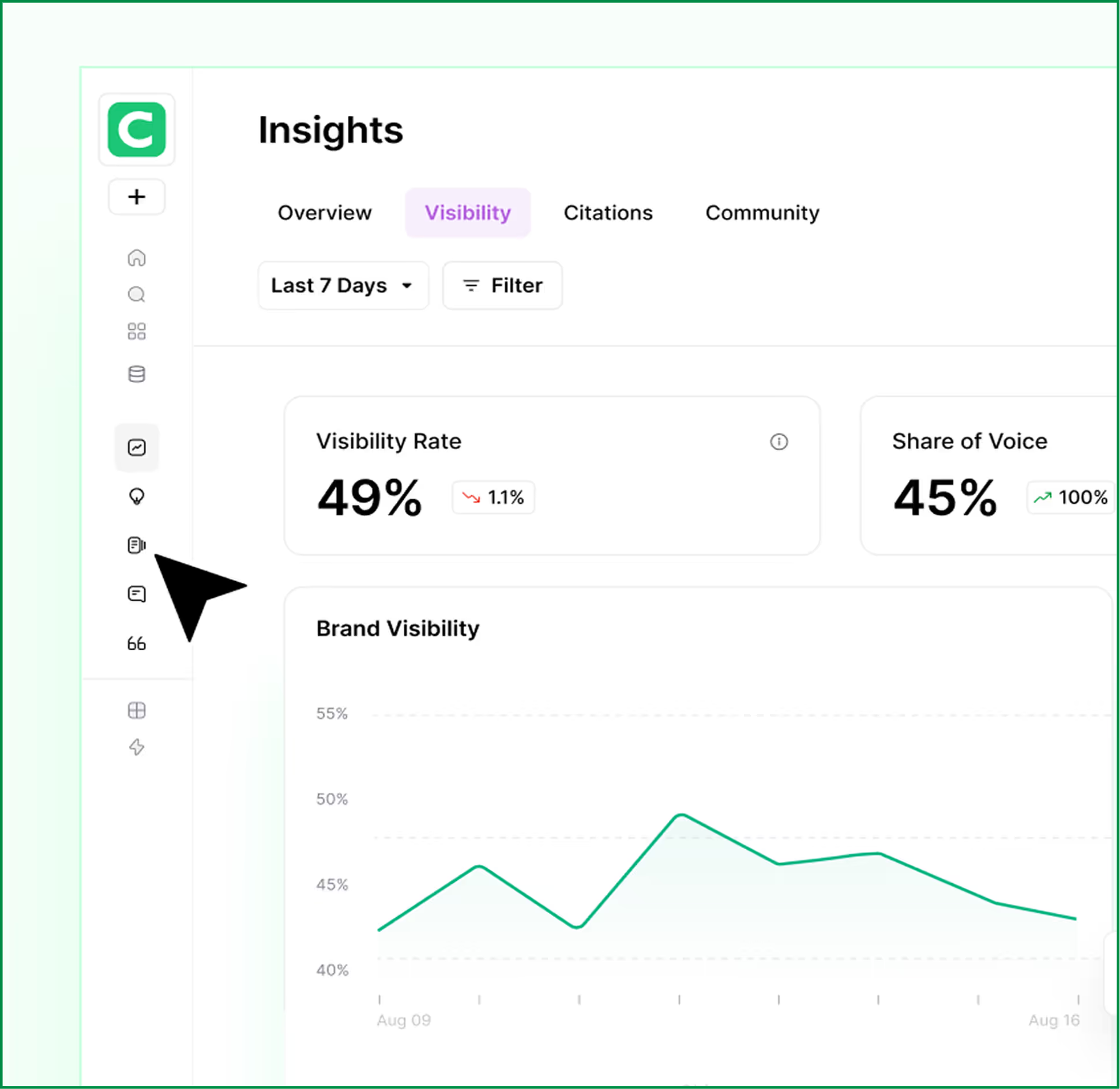
Track visibility across AI search
AirOps unifies AI citation data with GSC rankings and GA4 traffic into a single prioritized view per URL through Page360. Surfer tracks AI visibility across five platforms on its Pro plan and above, but keeps that data separate from search console metrics. AirOps brings those signals together so your team can prioritize the pages that will move revenue.
Content creation, refresh and publishing workflows
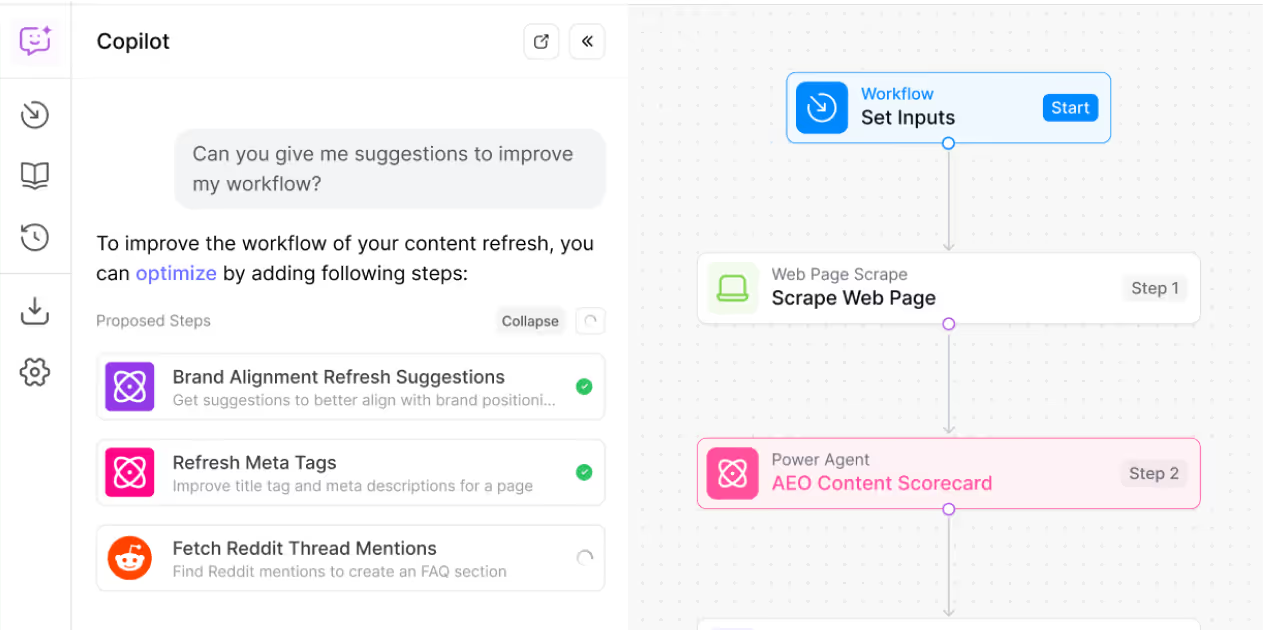
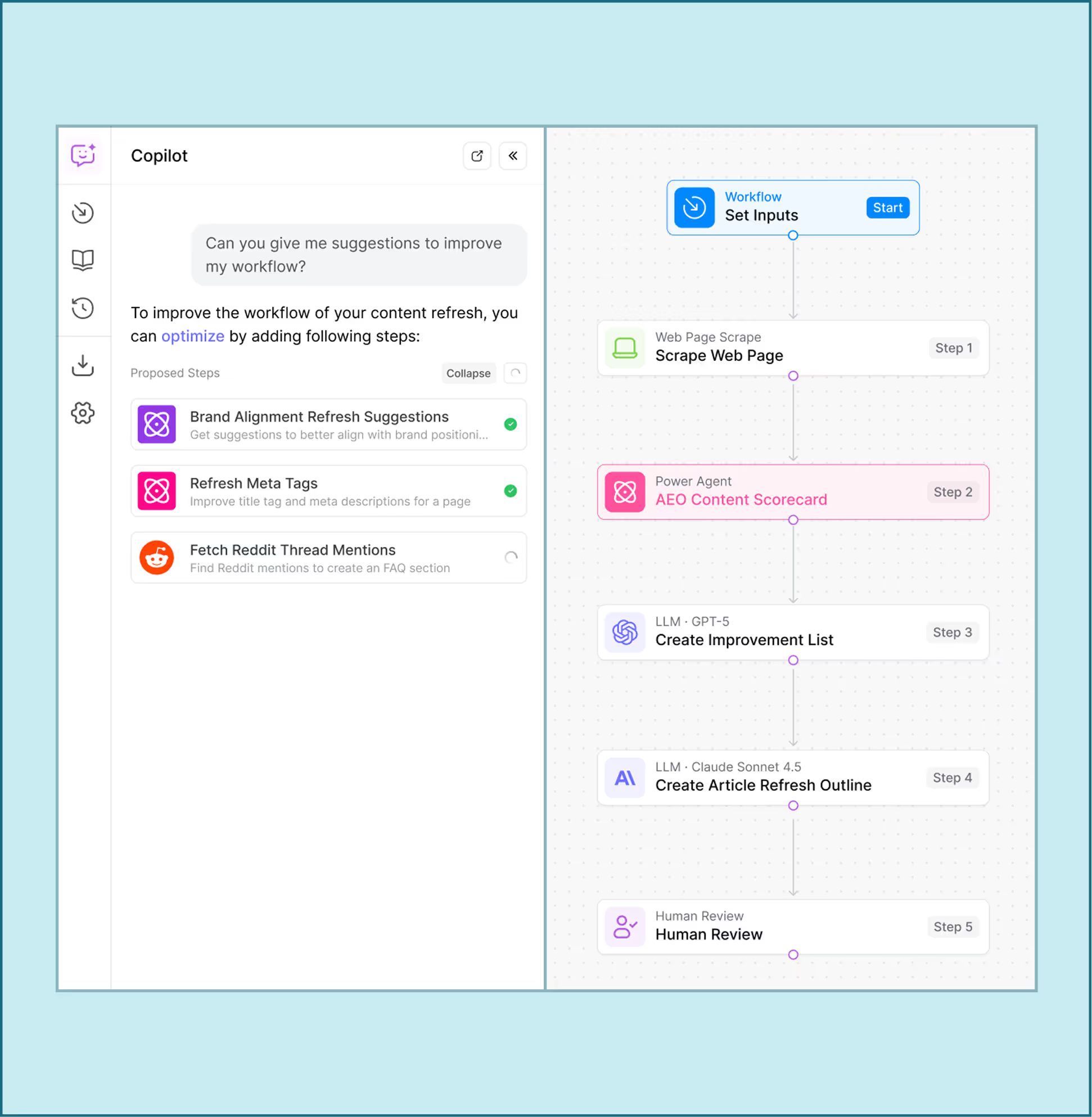
AirOps turns content gaps into published pages through multi-step workflows that handle research, drafting, brand review, then CMS publishing in a single pipeline. Surfer released a new API in May 2026 for programmatic access, but does not offer a native visual workflow builder or bulk execution engine. AirOps Grids let your team run these workflows across hundreds of pages simultaneously with human review gates at every stage.
Native integrations
AirOps connects your entire stack from day one with 30+ native integrations spanning CMS platforms, SEO research tools, project management, and analytics. Surfer offers roughly six native integrations focused on CMS publishing and does not connect to SEO research tools like Semrush or Ahrefs. AirOps also provides Model Context Protocol (MCP) access with 38+ tools, bringing platform capabilities directly into Claude and other MCP-compatible environments.
SEVERAL CMS platforms
(Webflow, Contentful,
WordPress, Ghost,
and more)
Email and live chat support
AirOps assigns a dedicated Content Engineer to every Pro and Enterprise account, functioning as a solution architect for your content operations alongside live cohort trainings and the Content Engineering Certification program. Surfer provides email and chat support with enterprise customers receiving a dedicated customer success manager. AirOps has trained 300+ Content Engineers to date, building lasting capability across teams rather than tool dependency.
300+ Content Engineers
trained to date with AirOps University

How Webflow scaled content 5x in days with AirOps
Frequently Asked Questions
AirOps vs Profound: Which is better?
Which is better: AirOps or Surfer?
It depends on what your team needs. Surfer is a strong choice for teams focused on prescriptive on-page optimization for individual articles, with Content Score providing clear improvement targets. AirOps is built for teams that need to go beyond optimization scores and close the loop between visibility data and content execution.
AirOps unifies AI visibility tracking with traditional search analytics and web traffic data at the URL level. It then connects that data to multi-step workflows, brand-governed content production, and direct CMS publishing. Teams that need to scale content operations across hundreds of pages while maintaining brand consistency will find more depth in AirOps.
What features does AirOps offer that Surfer does not?
AirOps includes several capabilities that Surfer does not offer:
Unified dashboard connecting AI citations with GSC and GA4 data per URL (Page360)
Visual multi-step workflow builder with conditional logic and human review gates
Bulk content operations across hundreds of pages simultaneously through Grids
Brand Kit governance with configurable writing rules scoped by audience, region, and content type
Direct publishing to 7+ CMS platforms with native field mapping
Offsite AI visibility management through Citation 360
MCP access with 38+ tools for Claude and other MCP-compatible environments
Prompt Discovery with a four-source intent methodology for identifying buyer questions
Native integrations with SEO research tools (Semrush, Ahrefs, Moz, DataForSEO)
Content publish tracking that correlates updates with citation and traffic changes
Does Surfer show optimization scores, or can it automate the fixes?
Surfer provides detailed optimization recommendations through Content Score and offers Auto-Optimize for applying suggested changes within the Content Editor. The Content Audit tool identifies performance issues and surfaces quick-win opportunities. For teams working on individual articles, these tools streamline the optimization process effectively.
AirOps approaches optimization differently by connecting diagnosis to execution at scale. Teams identify underperforming pages through Page360, then build multi-step workflows that handle research, rewriting, brand review, then publishing. After each update, the platform tracks whether AI citations and search rankings moved. The entire cycle runs through a single platform rather than requiring manual handoffs between diagnosis and action.
How do AirOps workflows differ from Surfer's automation?
Surfer's automation centers on Content Score optimization within individual articles. Auto-Optimize applies natural language processing suggestions directly in the Content Editor, and the new API (launched May 2026) enables programmatic access to Surfer data. These tools are effective for article-level optimization.
AirOps workflows are multi-step pipelines that span the full content lifecycle. A single workflow can pull underperforming URLs from Page360, generate refreshed drafts using your Brand Kit rules, route them through human review, then publish directly to your CMS. Grids let your team run these workflows across hundreds of pages simultaneously. Power Agents provide pre-built, reusable workflow components so your team does not rebuild common patterns from scratch.
How does AirOps track AI search visibility compared to Surfer?
Both platforms track AI search visibility. Surfer's AI Tracker monitors brand mentions and citations across five AI platforms on Pro and above, covering ChatGPT, Perplexity, Gemini, plus Google AI Overviews and Google AI Mode. The Standard plan tracks ChatGPT only. AI Tracker provides competitor benchmarking and citation analysis within its dedicated dashboard.
AirOps tracks visibility across the same AI platforms and adds two capabilities Surfer does not offer. First, Page360 connects AI citation data with GSC rankings and GA4 traffic at the URL level, so your team sees which pages drive both AI mentions and real conversions in a single view. Second, AirOps tracks offsite AI visibility through Citation 360, covering the third-party sources that LLMs rely on for brand discovery. AirOps research shows that 85% of top-of-funnel B2B brand mentions in AI come from third-party content.
Can AirOps replace both Surfer and my content creation tools?
Partially. AirOps consolidates AI visibility tracking with content production workflows, brand governance, and CMS publishing into one platform. Teams that currently use separate tools for monitoring and content execution can bring those functions under a single roof.
Surfer's Content Score and NLP-based optimization recommendations are specific to Surfer's approach. AirOps does not replicate Content Score. Teams that rely heavily on prescriptive optimization scoring may want to evaluate whether AirOps' workflow-driven approach to content quality meets their needs.
AirOps supports 20+ AI models and connects to Semrush, Ahrefs, plus Moz and DataForSEO for research data. Combined with Brand Kit governance and direct CMS publishing, most teams find they can reduce their tool count significantly. The best way to assess fit is to map your current workflow and see which steps AirOps covers.
What's the pricing difference between AirOps and Surfer?
Surfer offers five plans at month-to-month rates. Discovery starts at $59/month with 120 documents and 1 seat but no AI Tracker. Standard costs $119/month with 360 documents and ChatGPT-only AI Tracker. Pro costs $219/month and unlocks all five AI models with daily refresh. Peace of Mind runs $359/month with unlimited documents and API access, while Enterprise starts at $999/month. Surfer now offers free trials on all plans.
AirOps starts with Solo at $0/month for one user with 100 prompts and pages plus 20,000 tasks. Pro and Enterprise plans use custom pricing with unlimited users. AirOps Pro includes multi-engine insights, 75,000 tasks, and cohort trainings. Enterprise adds unlimited prompts, pages, and tasks with a dedicated account manager.
The pricing structures reflect different models. Surfer gates access by seat count and feature tier. AirOps gates by usage volume (prompts, pages, tasks) with unlimited seats on Pro and above. Teams should compare total cost of ownership including the separate tools that AirOps consolidates.
How hard is Surfer to operationalize day to day?
Surfer is straightforward for individual article optimization. The Content Editor provides clear, actionable scoring, and the Auto-Optimize feature applies fixes with minimal effort. Teams working on a handful of articles per week will find the tool intuitive. The Content Audit dashboard helps identify which published pages need attention.
Scaling Surfer across large content operations introduces friction. Each article requires individual attention in the Content Editor. The platform lacks a bulk execution engine and a visual workflow builder, and it does not connect optimization to CMS publishing in a single pipeline.
AirOps is designed for teams operating at scale. Grids process hundreds of pages simultaneously while workflows automate multi-step pipelines end to end. Brand Kit governance ensures consistency without manual review of every draft.
Can I use both platforms together?
Yes. Some teams use Surfer for on-page Content Score optimization on individual articles while running AirOps for AI visibility tracking, workflow automation, and scaled publishing with brand governance. The platforms address different parts of the content lifecycle, so they can complement each other.
AirOps does not currently integrate directly with Surfer. Teams using both platforms would manage them as separate tools. Over time, most teams that adopt AirOps find that its workflows and Brand Kit publishing capabilities reduce the need for a separate optimization tool.