Writer automates internal work. AirOps builds the content engine that wins AI search and SEO.
- Track AI citations, search performance, web analytics, and content freshness in one live dashboard so your team sees exactly where content is winning and where it needs attention
- Publish directly to 7+ CMS platforms with native field mapping while connecting GSC (Google Search Console), GA4 (Google Analytics 4), Semrush, and 30+ integrations out of the box
- Scale content execution across thousands of pages through Workflows and Power Agents using 20+ AI models with full brand governance

Webflow 5xed content refresh velocity and increased visibility across Google and ChatGPT

Webflow 5xed content refresh velocity and increased visibility across Google and ChatGPT
Webflow 5xed content refresh velocity and increased visibility across Google and ChatGPT

Chime went from being recommended in 24 to 68 priority questions


George Bonaci VP of Growth, Ramp

Nicole Baer, CMO, Carta


50% cut in production costs, thanks to the elimination of external agencies and manual tasks.

Marcio Arnecke, CMO, Apollo


















Why Customers Choose AirOps to Go Beyond Visibility
Watching trends while traffic slips away is not a winning strategy. Only AirOps gives you the system to produce quality content that earns citations.
and agents alike
Get prime placement in AI Search by improving the structure, clarity, and quality of your content.
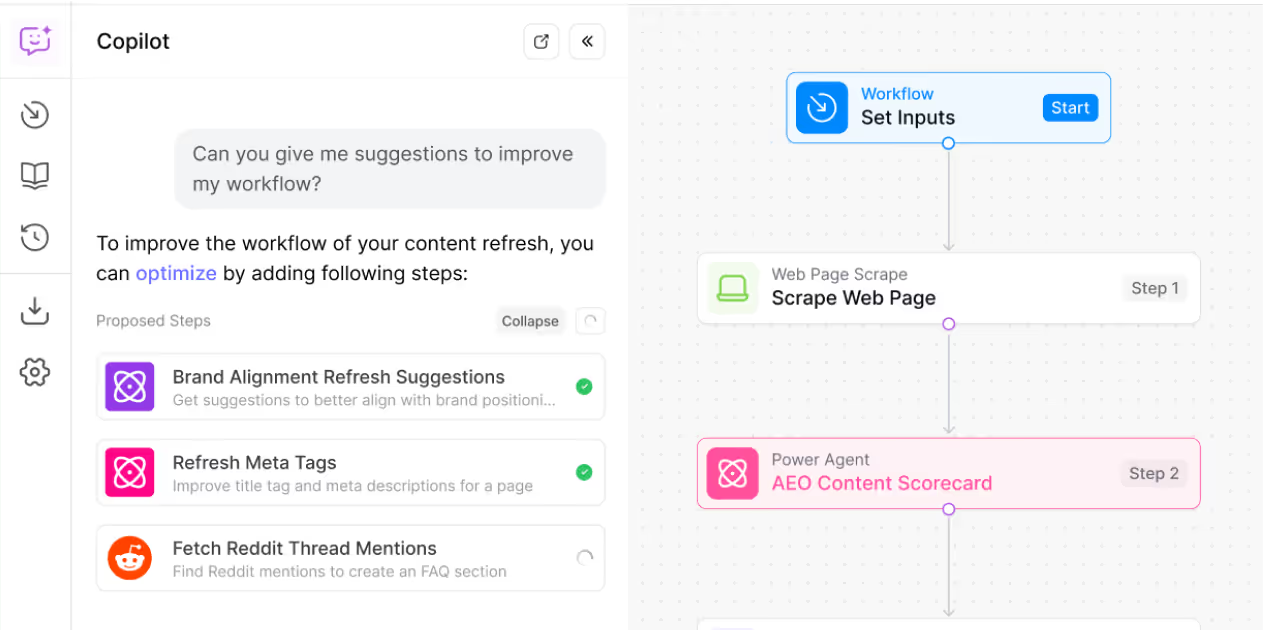
Brand Kits
Create content that sounds like your brand by weaving in your brand voice, personas, and expertise.
Our experts help brands like Carta and Rippling build workflows and train their teams to move faster with confidence.

What sets AirOps apart from Writer
Writer is an enterprise AI platform built for internal workflow automation across sales, support, HR, and legal, powered by proprietary Palmyra LLMs with strong governance and compliance guardrails. But it has no AI visibility tracking, no SEO integration, and no CMS publishing. AirOps is the content engineering platform that measures AI and SEO performance through Page360, prioritizes what to fix through the Opportunities Engine, and executes at scale through Workflows, Playbooks, Grids and direct CMS publishing across 7+ platforms. Every cycle of insight and action feeding back into measurement compounds your performance across AI search and SEO.

What our customers are saying
“AirOps is unlike any other AI tool we’ve seen. We’ve been able to drop our agency and focus on the highest value initiatives in weeks”

Nick Fairbain
VP Growth Marketing, Chime
“Our brand visibility score hit a high of 28% after we refreshed content. We saw a 56% increase in subscriptions in 30 days that corresponds to content engineered for agents."

George Bonaci
VP of Growth and Demand, Ramp
“With AirOps, we grew AI-attributed signups from 2% to over 10% in under a year with zero headcount growth. Just sharper workflows and faster loops.”

Josh Grant
VP of Growth, Webflow
AirOps vs. Writer
Which platform is right for your team?
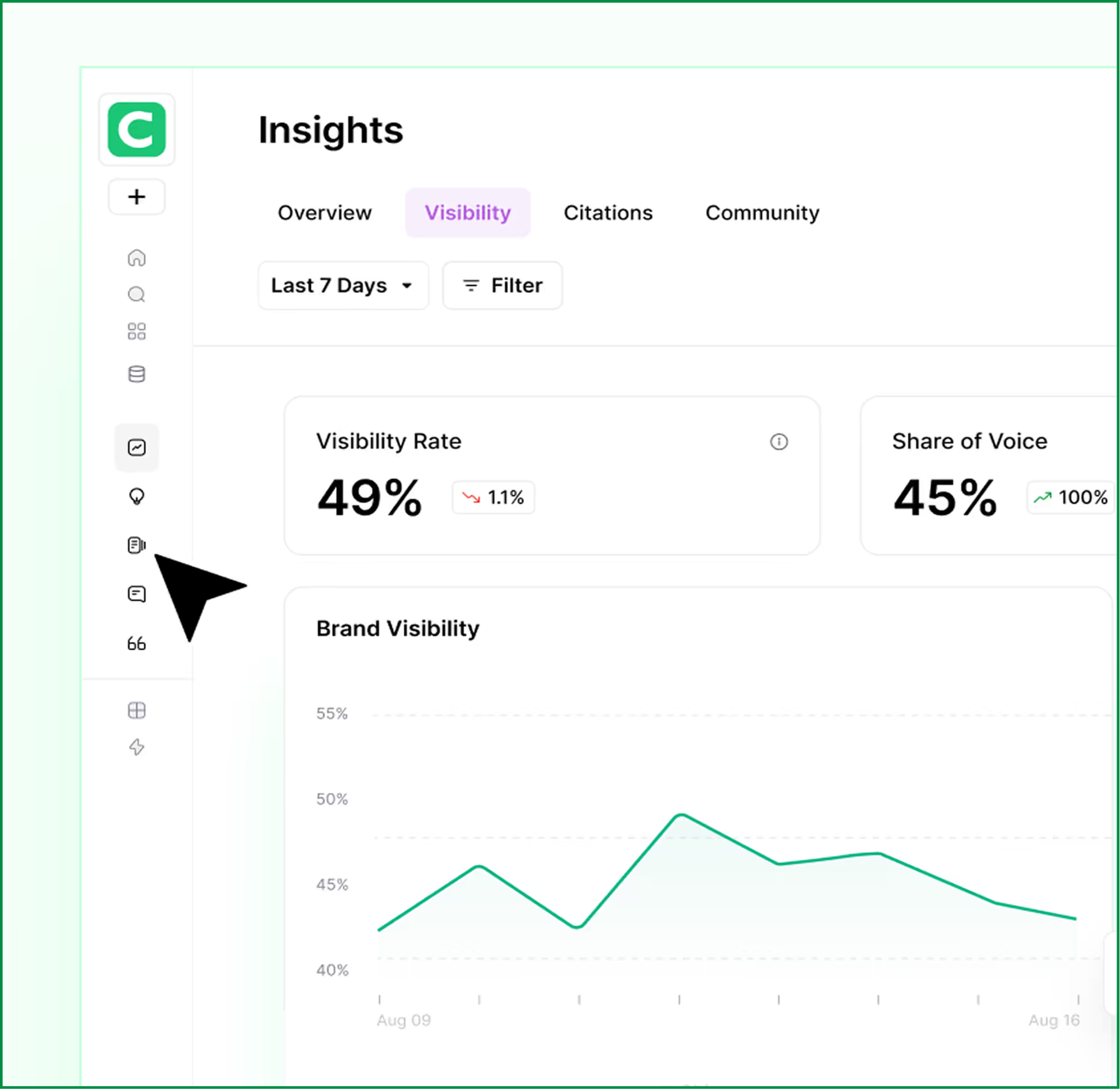
Track visibility across AI search
AirOps gives your team a unified view of AI visibility and SEO performance in one dashboard, combining real GSC clicks, GA4 engagement, AI citation data, and content freshness into a single prioritized view per URL through Page360. Writer has no AI search tracking and no SEO dashboard, which means no way to measure how your brand appears across ChatGPT, Gemini, Perplexity, or Google AI Mode. AirOps connects that signal to AEO (Answer Engine Optimization) metrics, including Offsite tracking for third-party AI visibility, so your team can see exactly which pages drive AI-attributed traffic and which need attention.
Content creation, refresh and publishing workflows
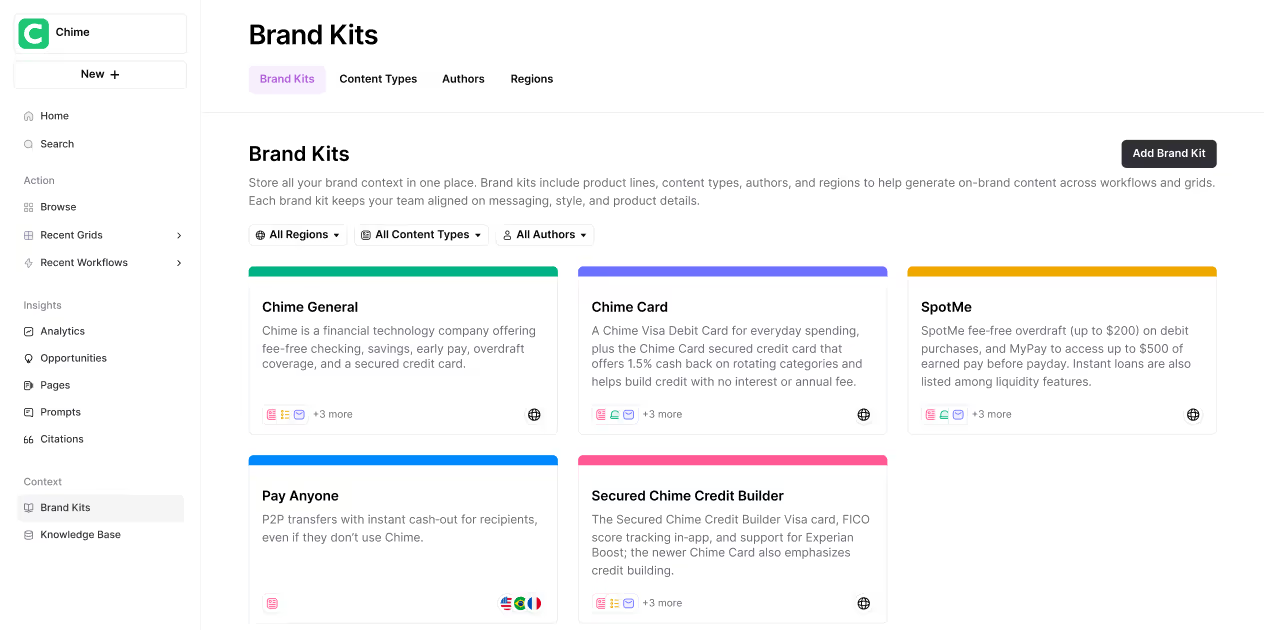
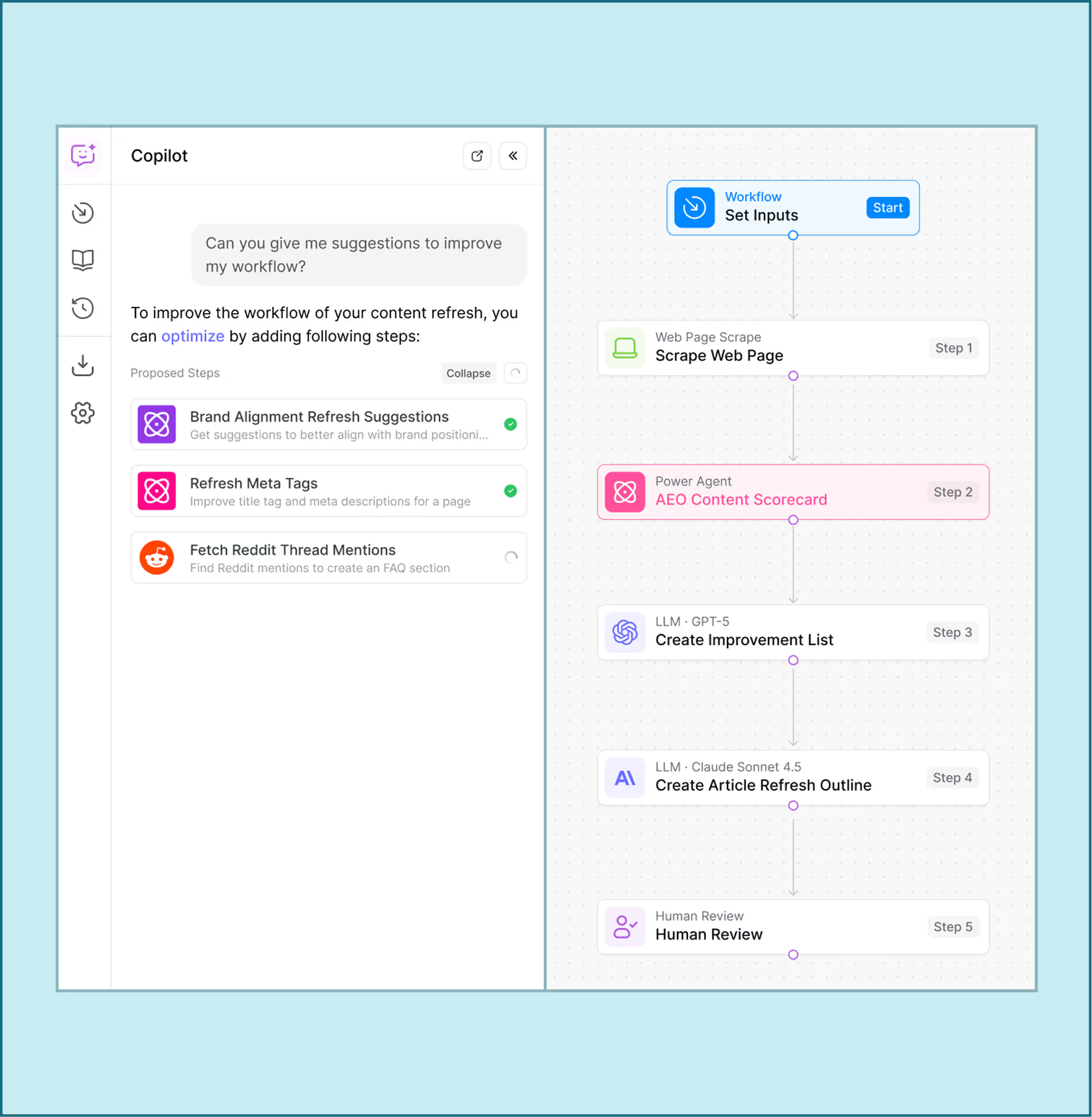
AirOps turns visibility gaps into executed content through multi-step Workflows that create, refresh, optimize, and publish across thousands of pages with direct CMS publishing to 7+ platforms, while Writer's internal workflow tools handle drafting and summarizing without the content strategy intelligence to guide what to create or why. Every workflow pulls from Brand Kit governance and publishes directly to your CMS with full brand oversight built in.
Native integrations
AirOps connects your entire content stack from day one with 30+ native integrations spanning 7+ CMS platforms including Webflow and WordPress, data sources like GSC, GA4, and Semrush, and project management tools like Asana, ClickUp, Monday.com, and Airtable, and MCP support for tools like Claude, ChatGPT, and Cursor. Writer integrates well with enterprise systems like Salesforce, Snowflake, Databricks, and SharePoint and recently added a Semrush connector and MCP gateway, but lacks CMS publishing and web analytics depth.
SEVERAL CMS platforms
(Webflow, Contentful,
WordPress, Ghost,
and more)
Email and live chat support
AirOps pairs hands-on support from embedded Content Engineers and solution architects with structured enablement including live cohort trainings that have upskilled 300+ marketers and AirOps University for on-demand learning. Writer offers AI program management and quarterly onsite reviews for Enterprise customers through WRITER Academy, but its enablement centers on general AI adoption rather than content performance and AI search strategy.
300+ Content Engineers
trained to date with AirOps University

How Webflow scaled content 5x in days with AirOps
Frequently Asked Questions
AirOps vs Profound: Which is better?
Which is better: AirOps or Writer?
AirOps for content and SEO teams that need to track AI search visibility, execute content at scale, and measure performance in one closed-loop system. Writer for enterprise teams automating internal workflows across sales, support, HR, and legal with proprietary LLMs (large language models) and strong compliance guardrails. They solve different problems: Writer automates internal operations, AirOps closes the loop between content performance data and content execution.
What features does AirOps offer that Writer does not?
AirOps offers several capabilities Writer lacks:
Quill, AirOps' AI execution engine, for running Playbooks that turn strategy into published content without manual handoffs
Page360 for a unified per-URL view combining AI citations, GSC clicks, GA4 engagement, and content freshness
Prompt Discovery for surfacing buyer intent from AI search, People Also Ask, community forums, and keyword data
Grids for bulk content operations across thousands of pages in a single run
Brand Kit for centralized brand voice, writing rules, persona enforcement, and terminology governance across every workflow
AirOps MCP with 35+ tools for connecting AI-native infrastructure to your existing stack
Offsite for managing third-party publisher placements and growing your AI brand citation share
Query Fan-outs revealing the sub-queries AI engines run behind each prompt so your team can optimize for how AI engines retrieve information
Closed-loop execution that ties every content action back to the visibility and conversion metrics it moved
How does Quill compare to WRITER Agent?
WRITER Agent is a general-purpose enterprise AI agent that plans and executes multi-step work across sales, support, HR, legal, and marketing. It connects to enterprise systems like Snowflake and Salesforce, drafts documents, generates presentations, and runs autonomous workflows through Playbooks and Skills. WRITER Agent is strong for internal operations, but it has no awareness of how the content it produces performs in AI search or SEO.
Quill is purpose-built for the content-to-performance loop. It operates on the insights AirOps surfaces, from pages losing citations to topics that need new content to competitors gaining ground, and executes Playbooks that create, refresh, and publish content directly to your CMS. Your team sets the strategy. Quill runs the execution. Every campaign Quill runs reports back against the AI visibility and SEO metrics your team wants to move, so results feed into the next cycle. Writer creates content; AirOps builds the system that connects content to performance at scale.
How do AirOps Workflows differ from Writer's automation?
Writer's Playbooks are linear multi-step routines that execute a defined sequence: draft a document, apply a voice profile, send to a channel. Event-Based Triggers add automation on top, kicking off Playbooks when a Gong call ends or a Slack message arrives. The architecture is built for internal task completion, and each Playbook runs independently without awareness of what came before or what should come next.
AirOps Workflows are built for content operations at scale. The visual builder supports conditional branching, loops, human-in-the-loop review steps, and code execution within a single workflow. Grids let your team run those workflows across thousands of pages in a single batch rather than one at a time. The key architectural difference is that AirOps workflows are data-informed: they pull from Page360 to know which pages need attention, use Brand Kit and Knowledge Bases to keep output governed, publish directly to your CMS, and feed results back into the measurement loop.
Does Writer track AI search visibility?
No. Writer has no capability to monitor how your brand appears across ChatGPT, Gemini, Perplexity, Google AI Mode, or Google AI Overviews. It does not track citations, mention rates, sentiment, or share of voice in AI answers.
AirOps tracks your brand across all five of those AI platforms through Page360, which combines AI citation data with real GSC clicks, GA4 (Google Analytics 4) engagement, and content freshness in a single view per URL. The Opportunities Engine then prioritizes which pages to create or refresh based on where the highest-impact gaps are. For example, Page360 might reveal that a product page is losing AI citations while its organic position holds steady, signaling that AI engines are shifting their source preferences and your team should act before organic traffic follows.
What does Writer offer that AirOps does not?
Writer has real strengths that AirOps does not replicate. Palmyra is a proprietary LLM family with domain-specific models for regulated industries like healthcare and finance. Knowledge Graph provides graph-based RAG that connects enterprise data from Snowflake, Salesforce, Databricks, and SharePoint into a structured context layer for AI agents. WRITER Agent can execute autonomous tasks including virtual computer use, browser automation, code execution, and presentation generation, all capabilities designed for broad enterprise operations rather than content specifically.
Writer also holds deep compliance certifications: SOC 2 Type II, HIPAA, GDPR, PCI, and ISO 27001/27701/42001. For teams in regulated industries where AI governance and data residency are non-negotiable, Writer's compliance posture is a genuine advantage. The strongest setup for many content teams is running both: Writer for internal workflow automation and enterprise AI governance, AirOps for the external content performance loop.
What is the pricing difference between AirOps and Writer?
Writer offers two tiers: a Starter plan that functions as a 14-day free trial with a cap of 5 users and 5 Playbooks, and an Enterprise plan that requires contacting sales. No public dollar amounts are available for either tier, and per-user fees and add-on pricing are not publicly disclosed. Starter's seat and Playbook limits push most teams to Enterprise quickly.
AirOps offers a free Solo plan with no time limit that includes 1 user, 20,000 tasks, 100 tracked prompts and pages, and ChatGPT insights. The Pro plan adds unlimited seats, 75,000 tasks, 250 tracked prompts and pages, multi-engine insights across ChatGPT, Google, Perplexity, and AI Mode, plus live cohort trainings. Enterprise plans include custom prompts and pages, multiple regions and personas, dedicated account management, and unlimited Knowledge Bases and Brand Kits. AirOps charges by usage, not by seat, so your entire team gets access without per-user fees.
The total cost comparison goes beyond sticker price. Writer provides workflow automation but requires separate tools for AI visibility tracking, SEO analytics, CMS publishing, and content performance measurement. AirOps combines insight and execution with built-in measurement in one platform, which means fewer subscriptions and less time spent stitching data across tools.
Is Writer locked into proprietary models?
Primarily. Writer is built around the Palmyra LLM family, and the platform is optimized for those models. The LLM Gateway supports some external models through Amazon Bedrock, but Palmyra is the default and the models that Writer's features are tuned for. Enterprise customers can bring preferred LLMs through the gateway, though the depth of integration varies by model.
AirOps is model-agnostic with access to 20+ models across OpenAI, Anthropic, Google, and Perplexity, plus bring-your-own-key support. Your team can choose the right model for each workflow step, using one model for research and another for drafting, without being locked into a single provider's roadmap.
Which platform is better for content teams?
AirOps is purpose-built for content teams. The entire platform is designed around the content lifecycle: identify what to create or refresh through the Opportunities Engine, execute through Workflows with Brand Kit governance, publish directly to your CMS, and measure what moved through Page360. Content teams using AirOps operate with a shared view of performance data, a library of reusable workflow components, and a direct connection between what they publish and how it performs.
Writer is built for broader enterprise use across sales, support, HR, legal, and marketing. Content teams can use Writer's Playbooks to draft and repurpose documents, but the platform does not provide the content strategy signals (which pages to prioritize, what topics are gaining traction in AI search, where competitors are earning citations) that content teams need to make decisions at scale.