Best AI Citation Tracking Tools - Compare Features, Pricing & Engine Coverage
Your brand can rank on page one and still be invisible in AI answers. Compare the tools that track citations across ChatGPT, Perplexity, Google AI Overviews, and Gemini - then take action on every gap.

Webflow 5xed content refresh velocity and increased visibility across Google and ChatGPT

Webflow 5xed content refresh velocity and increased visibility across Google and ChatGPT
Webflow 5xed content refresh velocity and increased visibility across Google and ChatGPT

Chime went from being recommended in 24 to 68 priority questions


George Bonaci VP of Growth, Ramp

Nicole Baer, CMO, Carta


50% cut in production costs, thanks to the elimination of external agencies and manual tasks.

Marcio Arnecke, CMO, Apollo















What Is an AI Citation Tracking Tool?
An AI citation tracking tool monitors where and how your brand appears as a cited source in AI-generated responses from platforms like ChatGPT, Perplexity, Google AI Overviews, and Gemini. Unlike traditional SEO software, these tools track prompt-level visibility, distinguish between mentions and citations, and benchmark your share of voice against competitors across answer engines.
This matters right now because AI-generated answers are reshaping how buyers discover brands. Gartner projects that traditional search traffic will decline 25% by 2026 as users shift to conversational AI. If your content isn't being cited in those responses, you're losing visibility in the exact moments that shape purchase decisions.
Citation tracking in LLMs sits at the intersection of answer engine optimization, competitive intelligence, and content strategy. Traditional rank trackers like Ahrefs and Semrush were built for a ten-blue-links world. They can't tell you whether ChatGPT is recommending your competitor by name, linking to their pricing page, or ignoring your category entirely. That's the gap AI citation tracking tools fill.
Citation: Your page is linked as a source in an AI-generated response. The answer engine attributes specific information to your URL, creating a clickable path back to your site.
Mention: Your brand name appears in the response text, but no source link is provided. You're referenced but not credited with a direct link.
Why it matters: Citations drive referral traffic and signal authority to AI models for future responses. Mentions build awareness but don't create a clickable attribution path. The best LLM visibility software separates these two metrics so teams can prioritize the pages that earn linked citations, not just brand name drops.
If you searched for citation tracking and expected bibliometrics or scholarly reference management, you're in the wrong spot. This page covers commercial AI citation tracking tools built for SEO, content, and marketing teams who need to monitor brand visibility across AI search platforms. The search results for this category often mix in academic tools - we're focused entirely on helping you understand and improve how AI answer engines cite your brand.
Quick Comparison - Best AI Citation Tracking Tools
Choosing the best LLM visibility software comes down to engine coverage, reporting depth, and whether the tool helps you act on what it finds. We evaluated the leading AEO analysis tools across the criteria that matter most to SEO and content teams. Here's how AirOps stacks up against the field.
TL;DR: Most tools stop at monitoring. AirOps helps you track AI search visibility, diagnose why competitors are winning, and take action through repeatable optimization workflows.

Who Uses AI Citation Tracking - and Why
Know exactly which competitors AI engines cite instead of you
Enterprise SEO teams use AirOps to track LLM brand citation share across ChatGPT, Perplexity, and Google AI Overviews for their entire keyword universe. When you can see which competitor pages are winning citations prompt by prompt, you stop guessing and start building the content strategy to reclaim that visibility. This is competitive benchmarking built for the AI search era, not retrofitted from legacy rank tracking.
Turn citation gaps into your next content sprint
When AI engines skip your brand, it's a content signal, not a mystery. Content ops and growth teams use AirOps to automatically surface prompt clusters where they're absent and generate briefs for pages that earn citations. This is content engineering in practice: using real citation data to prioritize what to create next, rather than relying on keyword volume alone. The result is a pipeline of pages designed to be cited, not just ranked.
Prove AI visibility ROI to clients with citation reports
Agencies and consultancies need more than screenshots to justify retainers. AirOps delivers white-label citation tracking dashboards that show clients exactly where their brand appears - and doesn't - in AI-generated answers. Replace guesswork with prompt-level competitive intelligence and AI visibility metrics that map directly to business outcomes. Your clients will finally see the value of answer engine optimization in a format they can share with their leadership.
Monitor brand sentiment across every AI answer engine
PR and brand communications teams use citation tracking to see how AI models characterize their brand in real-time responses. Catch negative sentiment early, track share of voice shifts after product launches or PR campaigns, and connect communications efforts to measurable citation improvements. This is brand monitoring for the AI-first search landscape, where a single model update can change how millions of people perceive your company.
How AirOps Tracks AI Citations in 3 Steps
Most tools stop at monitoring. AirOps connects citation intelligence directly to the workflows that close gaps - so your team moves from insight to action without switching tabs.
Connect your brand and competitors
Add your domain, competitor URLs, and the prompt clusters that matter to your category. You can import keyword lists from existing SEO tools or let AirOps suggest high-impact prompts based on your industry. Setup takes under five minutes, and you don't need engineering resources to get started.
Monitor citations across 7 AI engines daily
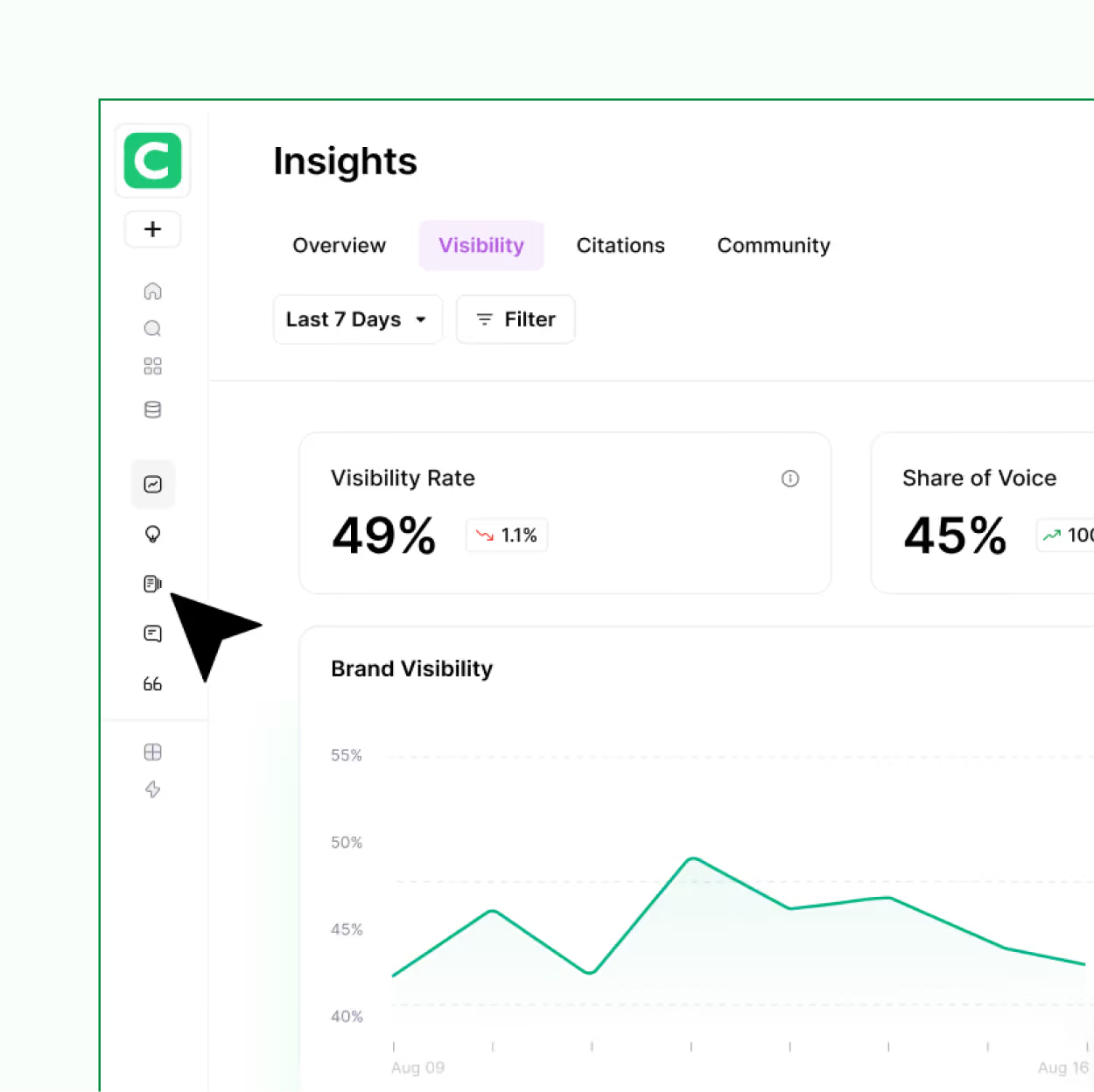
AirOps queries ChatGPT, Perplexity, Google AI Overviews, Gemini, Copilot, Claude, and Grok every day - tracking who gets cited, on which prompts, with what sentiment, and at what frequency. Daily refresh cadence means you catch shifts in citation behavior within 24 hours, not after a model update has already reshaped your category's visibility landscape.
Act on gaps with built-in workflows
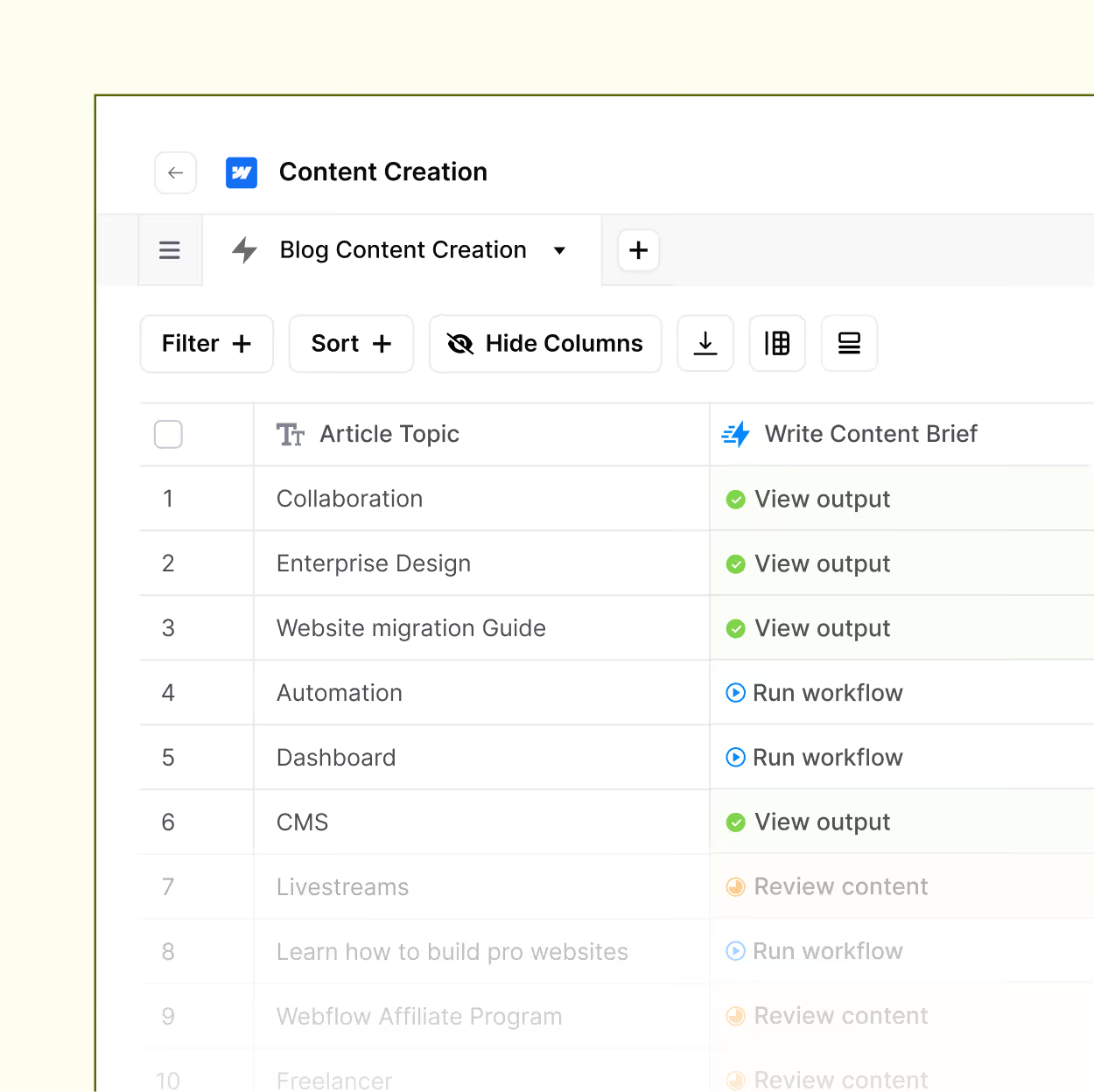
Prioritized citation gap reports surface the prompts where competitors are winning and you're absent. From your dashboard, launch content refreshes, generate new page briefs, trigger outreach campaigns, and update schema markup - all without leaving the platform. This is where SEO content automation meets citation intelligence.
Frequently Asked Questions
What are the tools or features that set AirOps apart?
What's the difference between AI citations and AI mentions?
An AI citation occurs when an answer engine like ChatGPT or Perplexity links to your page as a source in its response. An AI mention is when your brand name appears in the text without a source link. Citations drive referral traffic and signal source authority to AI models, which influences whether they cite you again in future responses. Mentions build awareness but don't create a clickable attribution path. The best AI citation tracking tools separate these two metrics so teams can focus on earning linked citations, not just brand name drops.
Which AI platforms should a citation tracking tool monitor?
A comprehensive AI citation tracking tool should cover at minimum ChatGPT Search, Perplexity, Google AI Overviews (including AI Mode), and Gemini. Advanced platforms also monitor visibility in Perplexity, Copilot, Claude, Grok, and DeepSeek. Engine coverage breadth matters because each AI model pulls from different source sets and citation behaviors vary significantly across platforms. A tool that only tracks one or two engines gives an incomplete picture of your AI visibility. Look for platforms that add new engines as the landscape evolves.
Can I use traditional SEO tools for AI citation tracking?
No. Traditional SEO platforms like Ahrefs, Semrush, and Moz track Google SERP rankings, backlinks, and organic traffic, but they cannot monitor whether your brand is cited in AI-generated responses. AI citation tracking requires specialized answer engine optimization tools that query AI platforms with relevant prompts, analyze the responses, identify source URLs, and measure citation share. This is a fundamentally different data layer that traditional SEO software was not built to capture. Think of it this way: rank trackers tell you where you show up in a list of links, while citation trackers tell you whether AI is recommending you by name.
How accurate are AI citation tracking tools, and how often should data refresh?
Accuracy depends on methodology: how prompts are sampled, whether the tool uses live API queries or cached data, and how response variability is handled since AI models can give different answers to the same prompt. Look for tools that disclose their prompt sampling approach and offer daily refresh cadence. Weekly or monthly refreshes miss rapid shifts in AI citation behavior, especially after major model updates. The best platforms for analyzing citation data for LLMO strategies also let you define custom prompt sets relevant to your specific category and buying journey.
Do AI citations actually drive traffic and business outcomes?
Yes, but the impact varies by platform. Perplexity and ChatGPT Search include clickable source links that drive direct referral traffic. Google AI Overviews can reduce click-through to underlying pages but increase brand authority signals that influence future citations. Beyond direct traffic, AI citations shape buyer research journeys - when your brand is consistently cited in AI answers to category prompts, it shapes purchase consideration before prospects ever reach your website. Teams should track citations alongside influenced pipeline and assisted conversions, not just click volume. The impact of featured brands on LLM citations compounds over time as models reinforce their source preferences.
What should my team do after identifying citation gaps?
Citation gaps are content and distribution signals, not dead ends. When you find prompts where competitors are cited but you're not, the playbook includes refreshing existing pages with more structured, factual, citable content and creating new bottom-of-funnel comparison and category pages. Pursue inclusion on third-party lists and review sites that AI models frequently cite as sources. Implement schema markup and structured facts to make your content more parseable. Launch PR and outreach to earn mentions on high-authority domains AI models trust. A strong keyword gap strategy combined with citation data turns monitoring into a repeatable growth engine.