From Shakespeare PhD to Content Engineer: How Lauren Shufran Builds Systems That Scale Human Judgment
Lauren spent eleven years in academia and was finishing a PhD in Shakespeare before pivoting to content marketing. Now an independent strategist working with early-stage teams, she builds cornerstone content from original research and designs automated systems that turn repeatable content work into scalable pipelines, including one that runs entirely through Claude Code.
Q: Introduce yourself! What do you do for work?
I support early-stage teams in their content strategy, with two core areas of focus right now.
The first is cornerstone content: data-driven, research-heavy assets that plant a flag for the company in its category. That includes benchmark reports, industry briefs, whitepapers, and guides built from original insight — proprietary survey data, product telemetry, customer voice, founder POV. When teams don't have in-house design support, I bring in a longtime collaborator on the visual side so the asset launches fully designed. It's typically also the centerpiece of a broader launch campaign, with surrounding content engineered to extend its reach.
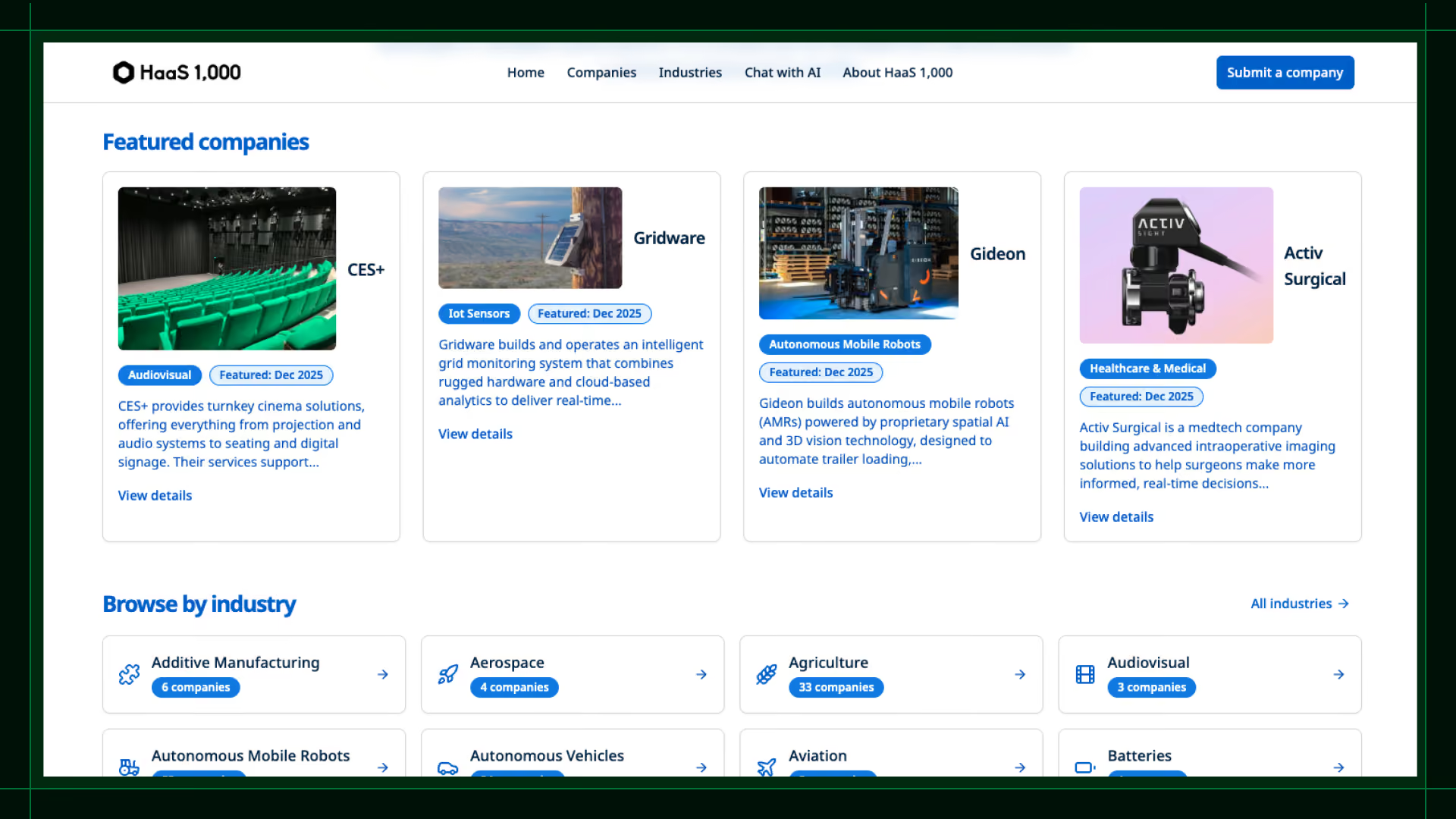
The second is content systems. In some cases I'm helping clients automate the repeatable, research-heavy work we used to do by hand. One example is Hardfin's HaaS 1,000, a living library of hardware-as-a-service company spotlights I'd been building manually for two years. It now runs through an automated pipeline in Claude Code, built as a set of modular skills. The pipeline qualifies each candidate as a genuine HaaS company, uses Exa to crawl their website, Perplexity to pull recent news and funding data, and Claude to draft a brand-aligned spotlight before it lands in Notion for human review.
Q: What led you to Content Engineering?
It's been a circuitous route. I spent eleven years in academia and was finishing a PhD in Shakespeare when I realized I didn't want the academic life that came after it. Through one of those right-place-right-time conversations, I landed at a large software company and figured out fast that content strategy wasn't all that different from designing a syllabus, which I'd done every quarter for eight years while teaching undergrads at UC Santa Cruz. Both ask the same questions: what does this audience need to know, in what order, with what scaffolding, before they can understand the next thing?
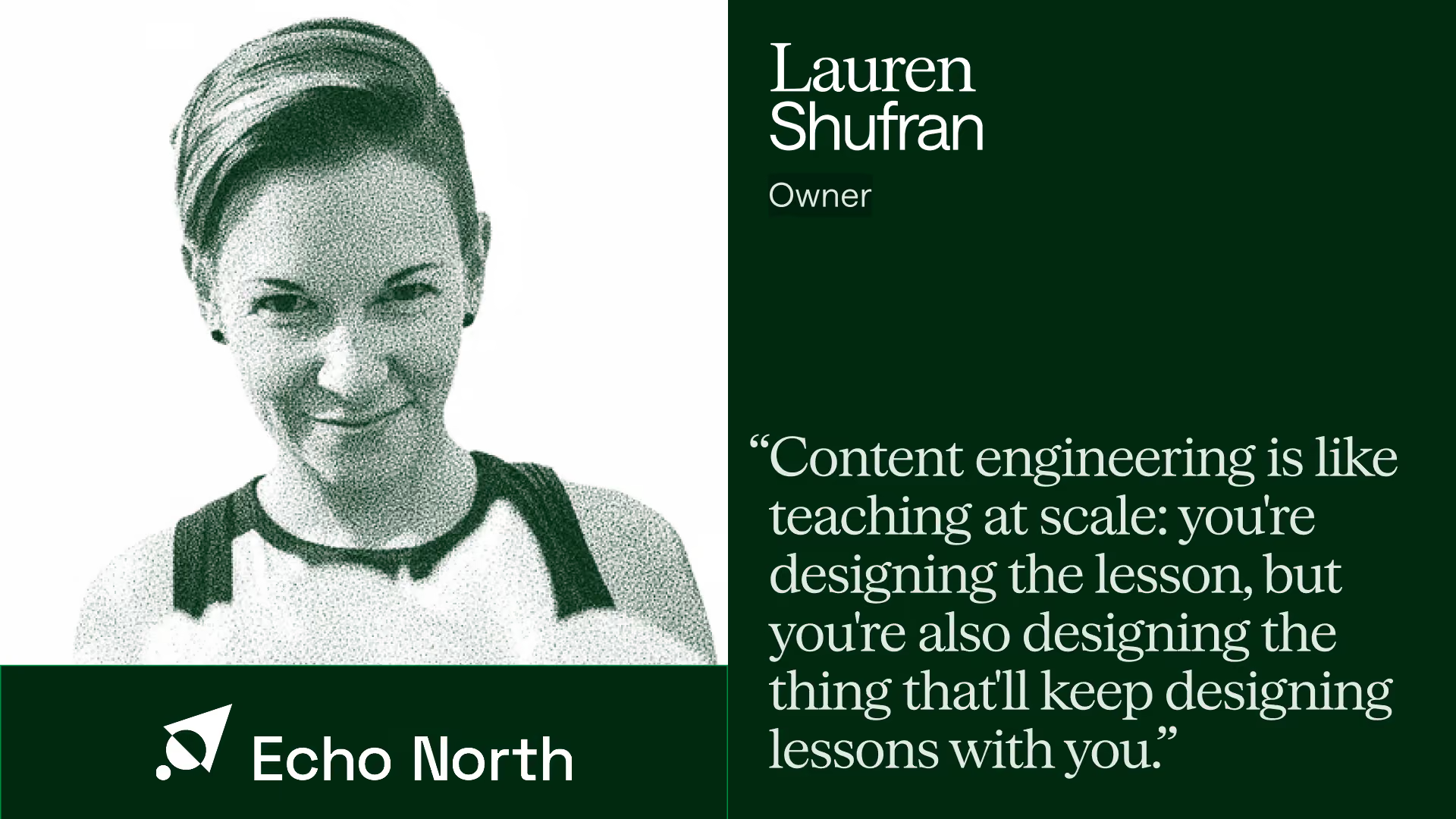
The draw toward content engineering makes a lot of sense in retrospect. Teaching has been the through-line of everything I've done: course syllabi, sub-sites, benchmark reports, thought leadership. Each of these things is an attempt to get an audience from where they currently are to somewhere more useful. Content engineering is like teaching at scale: you're designing the lesson, but you're also designing the thing that'll keep designing lessons with you.
That's not to say I don't still feel the old resistance sometimes. When I read an LLM draft that's technically competent but has no animating intelligence behind it, I remember why my skepticism was warranted in the first place. Content engineering, human-led, is a version of the work I can do in good conscience.
Q: When did you first learn about Content Engineering?
If I'm remembering correctly, I saw a notice for an AirOps webinar in Exit Five. For context, I spent years teaching literature to undergrads, and I'd been pretty resistant to AI-assisted writing. It had the same flavor as my students using SparkNotes to understand a Shakespeare play they hadn't read: skipping the slow, difficult encounter with the text, which was the whole point of assigning it in the first place.
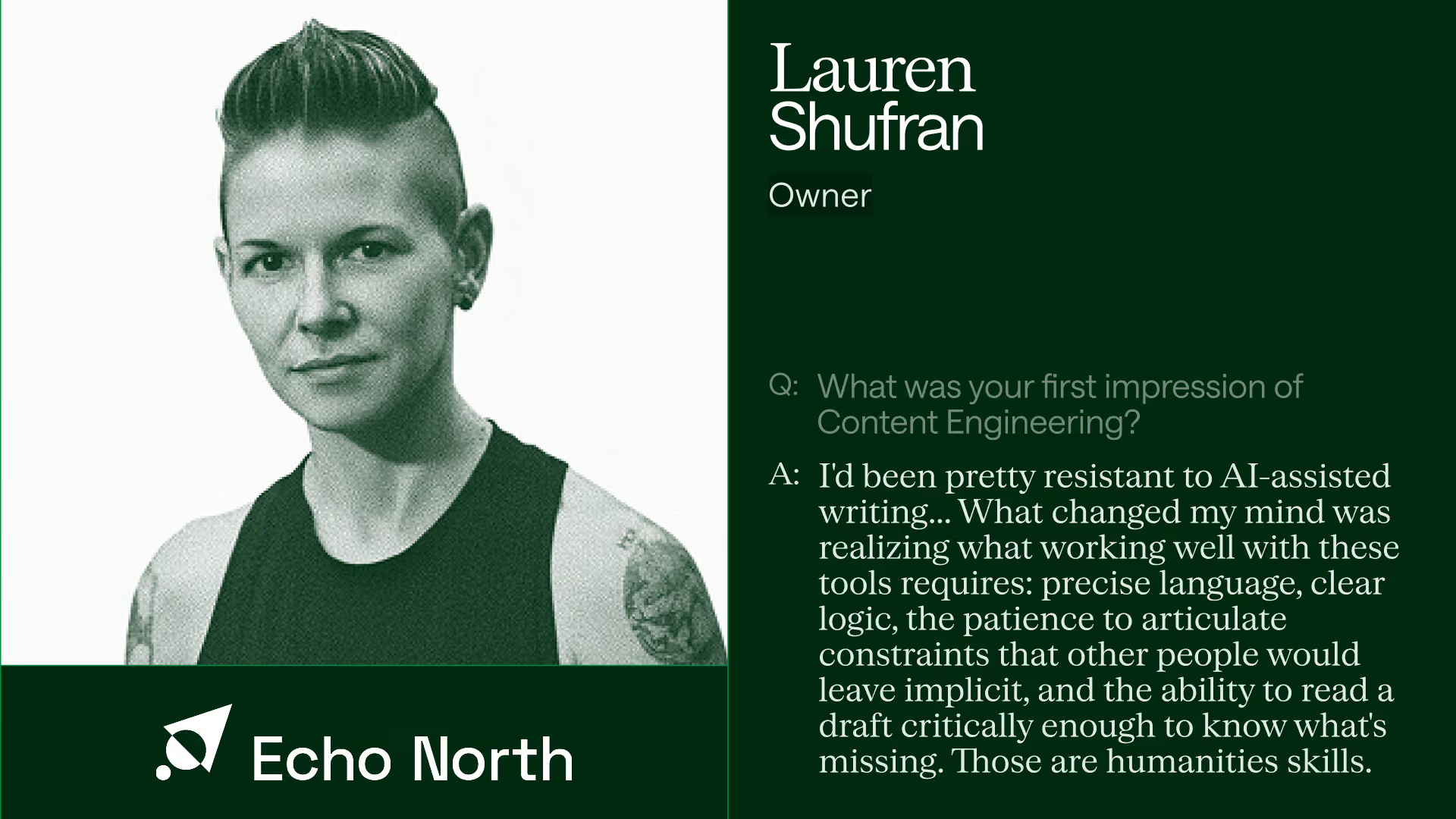
What changed my mind was realizing what working well with these tools requires: precise language, clear logic, the patience to articulate constraints that other people would leave implicit, and the ability to read a draft critically enough to know what's missing. Those are humanities skills. Turns out that years of close-reading Renaissance poetry had trained me to pressure-test an LLM's output and rewrite the prompt until the draft came back right.
I think the term "Content Engineer" is what ultimately sealed it. It framed the work as something you build with precision and intention, which is a very different invitation than "let AI write for you."
Q: How do you define Content Engineering?
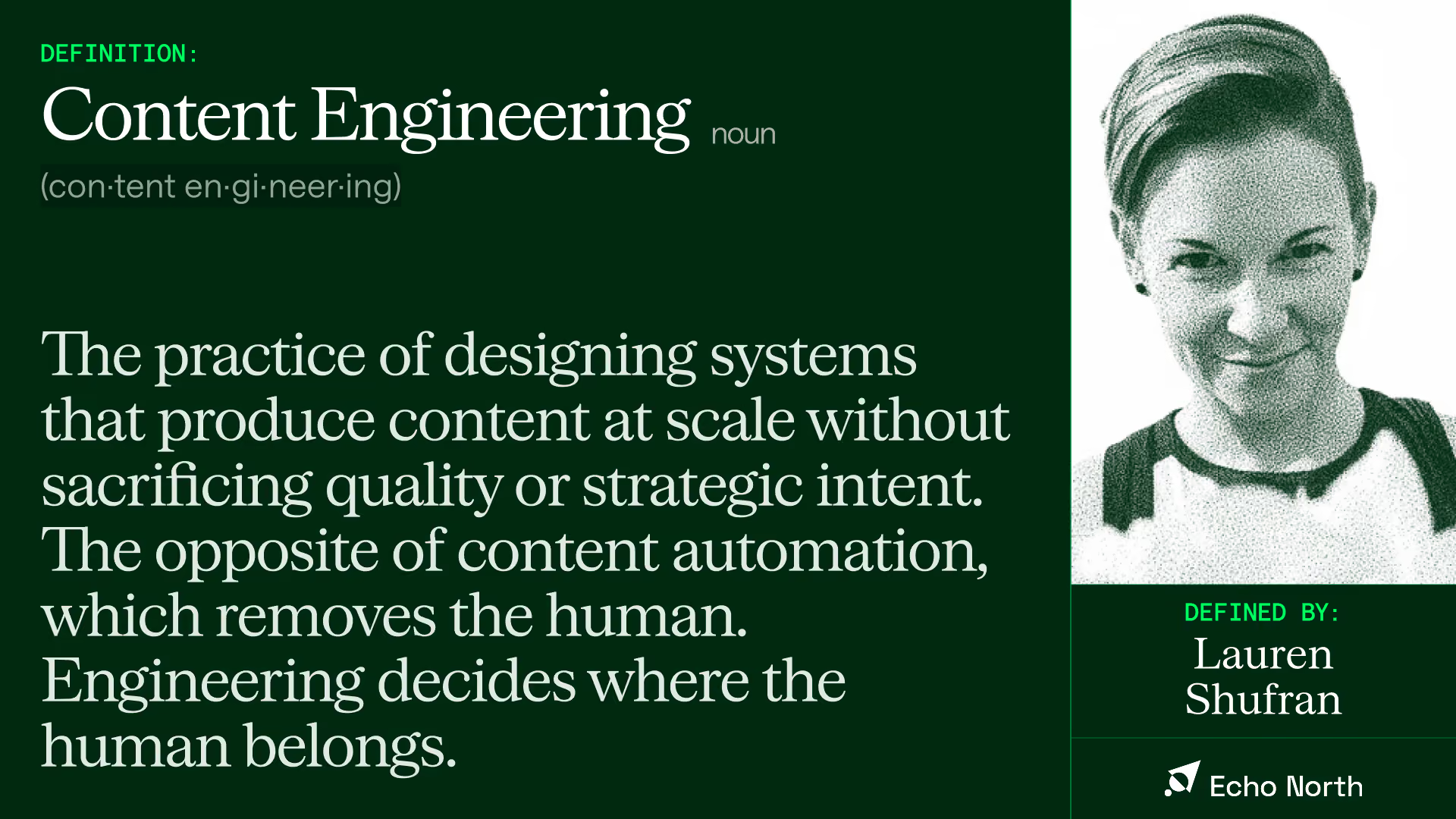
I'd say it's the practice of designing systems that produce content at scale without sacrificing quality or strategic intent. In that sense, it's the opposite of content automation, which removes the human. Engineering decides where the human belongs.
Q: Tell us about a specific project that Content Engineering made possible.
The HaaS 1,000 is one example — a living library of hardware-as-a-service company spotlights that one person (me) had been building by hand for years. It's now running through an automated pipeline that does the research, writes the draft, and deposits it in Notion for review.
Another is a webinar repurposing workflow I built for a client. Webinar recaps are a content marketing task that often falls through the cracks: they're time-consuming but too valuable to skip, and rarely get published in a timely manner. The workflow I built in AirOps changed the unit of effort entirely. Drop in a YouTube URL and a Brand Kit, and the workflow extracts the transcript, identifies six soundbites, scrapes the company's website and G2 reviews, runs SEMrush keyword research and six parallel AEO queries across the brand's core topic areas, and synthesizes a master content brief before writing anything. It then produces a publish-ready blog post with full SEO metadata and schema, plus six LinkedIn posts mapped to six specific clips with timestamps for fast video editing. The output lands at around 90% before I've touched it.

Q: What are you most excited about in the future of marketing?
The "how" of marketing is currently a wide-open question, and the tools have caught up to the imagination for quite possibly the first time ever. The assumptions of the SEO and content-marketing era — publish constantly, optimize for keywords, measure by traffic — are visibly under pressure, and that's created a window in which practitioners who are willing to experiment in public will shape what marketing will become. It also means craft and judgment matter again in ways they didn't during the spray-and-pray years. Frankly, that's a much more interesting field to work in.
Q: What are you most nervous about in the future of marketing?
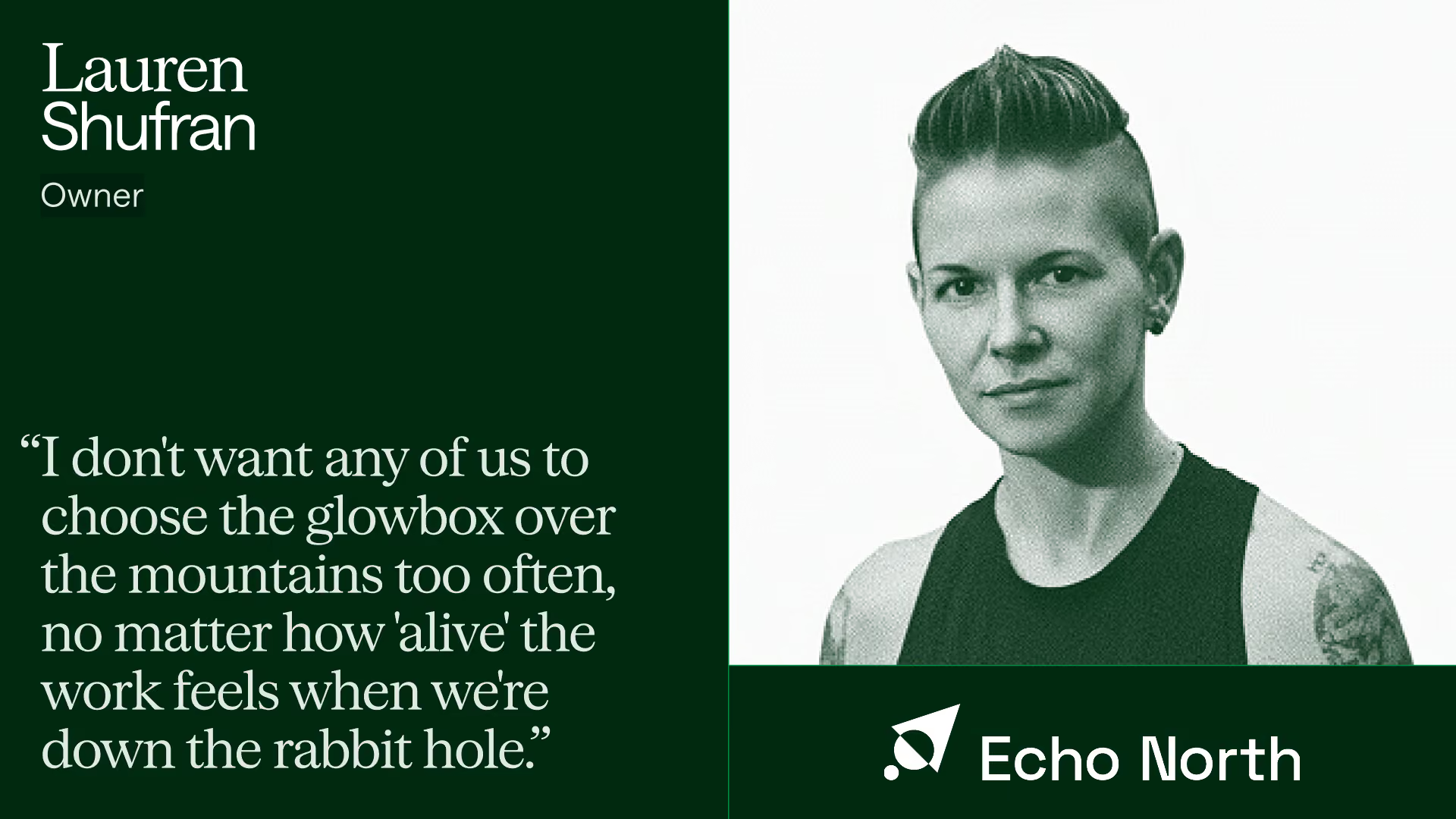
On a personal note, just keeping up. The LinkedIn feed creates a sense that everyone is reading everything and trying everything, and that staying relevant requires matching that pace. I'm wary of letting that decide what my life looks like. COVID surfaced something critical for me about not living inside a laptop, and the excitement about what's available now has made it easy to forget that balance. I don't want any of us to choose the glowbox over the mountains too often, no matter how "alive" the work feels when we're down the rabbit hole of it.
Q: What advice would you give someone just getting started with Content Engineering?
Start with a piece of content you've already made manually; ideally something you've made more than once. The repetition is the tell. If you've written three webinar recaps and the process felt roughly the same each time, that's a workflow waiting to be built. If you've written three founder POV essays and each one felt completely different, that can wait. Then before you touch a tool, map what you actually do, step by step, including the research you run, the sources you check, and the decisions you make along the way. The system will only be as good as the human process you're encoding into it.
And expect a rabbit hole. One of the hardest questions, once you're in it, is when to stop. Every workflow has a tipping point at which the cost of automating the next step exceeds the cost of doing it manually. Recognizing that point is part of the work. Not every step that can be automated should be.
Get the latest on AI content & marketing
