Visibility tools have spent the last year telling marketers where their brands stand in AI search. None of them tell you what to do about it.
Now that changes. This webinar shows what the future of agent-driven growth actually looks like for marketing teams, and how you can close the gap between AI search visibility and outcomes.
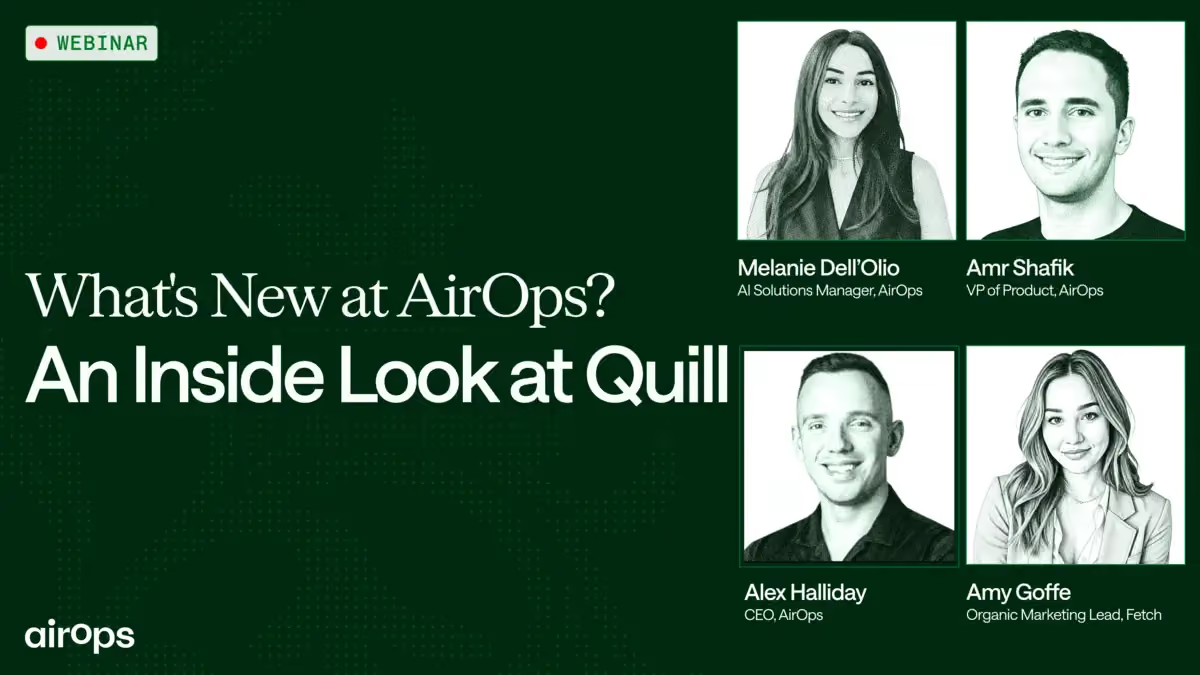
In a recent AirOps webinar, Amr Shafik VP of Product at AirOps and Alex Halliday, CEO of AirOps, did a walkthrough of Quill, the new product launch that connects AI search insights to execution. Melanie Dell'Olio and Amy from Fetch joined for a live demo showing how teams can turn sentiment gaps and citation issues into focused campaigns.
The core message: winning AI search programs need brand context, clear insights, and action that teams can measure.
Top 5 Takeaways
1. AI search teams need action layers, not just visibility dashboards
Knowing where you rank in AI answers matters, but execution matters more. The Quill launch centered on turning AI search insights into campaigns, content refreshes, and measurable outcomes that teams can track and improve over time.
2. AI search is about context, insights, and actions
Quill sits across all three layers to connect strategy, analysis, and execution. Brand context feeds the system, insights surface opportunities, and actions turn those opportunities into content your team can review and publish.
3. Brand context is a performance input (not only a style guide)
Fresh brand rules, visual guidelines, and governance help teams create more precise AI-search content. When your brand kit stays current with new products, markets, and messaging, your content stays consistent and trustworthy.
4. Sentiment gaps can now become focused campaigns with clear next steps
The Fetch demo showed how trust and privacy concerns can turn into refresh opportunities. Teams can identify negative sentiment themes, map them to specific prompts, and build targeted content that addresses buyer hesitation directly.
5. Human review still matters, even with agentic workflows
The product vision emphasized automation with control, not blind publishing. Teams can set review checkpoints for sensitive topics like privacy, legal claims, and product positioning while letting AI handle repetitive research and drafting work.
Best Practices and Key Learnings
The webinar focused on how teams can move from AI search analysis to execution. Here are the most useful lessons for content leaders and SEO teams that need clearer workflows, faster action, and stronger control.
Build Brand Context Before You Scale Output
AI search performance starts with inputs your team can trust. When your brand rules, product language, and governance drift, your content drifts too.
- Keep your brand kit current as your company launches new products, markets, and messaging.
- Set clear visual and editorial rules so teams create content that fits both human readers and answer engines.
- Track changes with version history and approvals so teams move fast without losing control.
"Keeping your brand kit fresh is very, very important in making sure that this is always up-to-date, so you can trust how it's evolving with the market." — Amr Shafik
Track Prompts, Citations, and Page Performance Together
Single metrics don't tell the full story in AI search. Teams need one view that connects prompts, third-party citations, owned pages, and content refresh opportunities.
Monitor prompt sets by topic, then add recommended prompts your team may miss on its own. Review third-party citation sources like Reddit, YouTube, and LinkedIn to see who shapes AI answers about your brand. Find pages with strong crawl activity but weak citation performance, then move those URLs into refresh work.
"AI is not just citing your website, it's citing third-party domains that span Reddit, YouTube, LinkedIn, and other websites." — Amr Shafik
Turn Sentiment Gaps Into Focused Campaigns
Visibility alone doesn't win in AI search. Teams also need to shape how answer engines frame their brand on high-stakes topics like trust, privacy, and product clarity.
- Start with negative sentiment themes that tie to buyer hesitation or brand risk.
- Ask which prompts drive that sentiment, then map gaps in your owned content.
- Build refresh or net-new content around those exact questions instead of publishing broad filler pages.
Use Campaigns to Connect Insight, Action, and Measurement
Amy Goffe, organic search marketing lead at Fetch and Melanie Dell'Ollio showed why disconnected tools slow teams down. When research, execution, and reporting live in one workflow, teams can act faster and prove impact more clearly.
Turn a sentiment or citation issue into a campaign with clear scope, cadence, and page criteria. Review recommended opportunities before your team sends work into production. Measure the exact URLs your team refreshed so you can tie actions to citation, visibility, and sentiment changes.
"This allows me to have a really easy, clean-cut view to go back to my leadership team and give them a quick summary." — Amy Gofe
Keep Humans in the Loop From Draft to Publish
Automation helps teams move faster, but control still matters. The strongest workflow combines strong brand inputs, quality checks, and human review before publish.
- Add human review for sensitive topics like privacy, trust, legal claims, and product positioning.
- Use content quality checks to flag weak claims, missing evidence, or gaps in first-party insight.
- Let AI handle repetitive work, but keep editorial judgment with your team.
"We would definitely want to have control over a human review step before we go to publishing." — Amy
How to Put These Insights Into Practice
AI search has moved past simple visibility tracking. Teams now need a working system that helps them understand performance, spot risks, and turn those signals into content actions they can review and measure.
Start with a narrow use case instead of trying to rebuild your whole content program at once. Pick a high-value topic, refresh the most cited pages tied to that topic, review off-site and sentiment signals, and create a repeatable campaign your team can monitor over time.
How AirOps Helps Teams Act on AI Search Insights
AI search teams need a tighter link between strategy, analysis, and execution. AirOps built Quill to help marketers move from prompt and sentiment data to campaigns, refreshes, and measurable outcomes without losing brand control. AirOps is the partner for this shift: the platform, the media mix, and the team together, not just software to log into, with our team building and running the strategy alongside yours and tying it back to pipeline and revenue growth.
Want to see how it works? Book a call with our team.
Get the latest on AI content & marketing
