SEO Content Automation Tools That Turn Manual Work Into Scalable Growth
Your team spends too many hours on briefs, audits, and optimization that should be automated. AirOps replaces fragmented SEO workflows with one system that scales - from keyword clustering to publish to refresh.

Webflow 5xed content refresh velocity and increased visibility across Google and ChatGPT

Webflow 5xed content refresh velocity and increased visibility across Google and ChatGPT
Webflow 5xed content refresh velocity and increased visibility across Google and ChatGPT

Chime went from being recommended in 24 to 68 priority questions


George Bonaci VP of Growth, Ramp

Nicole Baer, CMO, Carta


50% cut in production costs, thanks to the elimination of external agencies and manual tasks.

Marcio Arnecke, CMO, Apollo















What Are SEO Content Automation Tools?
SEO content automation tools are platforms that use AI and workflow automation to handle the repetitive work across your content lifecycle - keyword clustering, content brief generation, on-page optimization, content audits, internal linking, and publishing. They replace the manual copy-paste chaos between six different tabs with repeatable, scalable systems. The best tools keep humans in control through approval workflows, brand voice safeguards, and quality checkpoints.
The problem is not that your team lacks talent. It is that talented people are burning hours on tasks a machine should handle. Every minute spent manually pulling SERP data, formatting briefs, or chasing approvals in Slack is a minute not spent on strategy, creativity, or the kind of content engineering that actually moves rankings.
Traditional SEO tools handle one piece of the puzzle - research here, optimization there, publishing somewhere else. That fragmentation is why manual SEO workflows break at scale. When your content operations depend on four to six disconnected tools and manual handoffs between keyword research, brief creation, writing, editing, and publishing, bottlenecks multiply with every new page you try to produce. AI-powered SEO tools that connect the full pipeline are not a nice-to-have anymore. They are how modern teams compete.
How AirOps Compares to Other SEO Content Automation Tools
Most tools automate one piece of the content workflow. AirOps connects the entire pipeline - from keyword research to publish to refresh - in a single platform with human oversight at every stage. Here is how that breaks down against the alternatives.
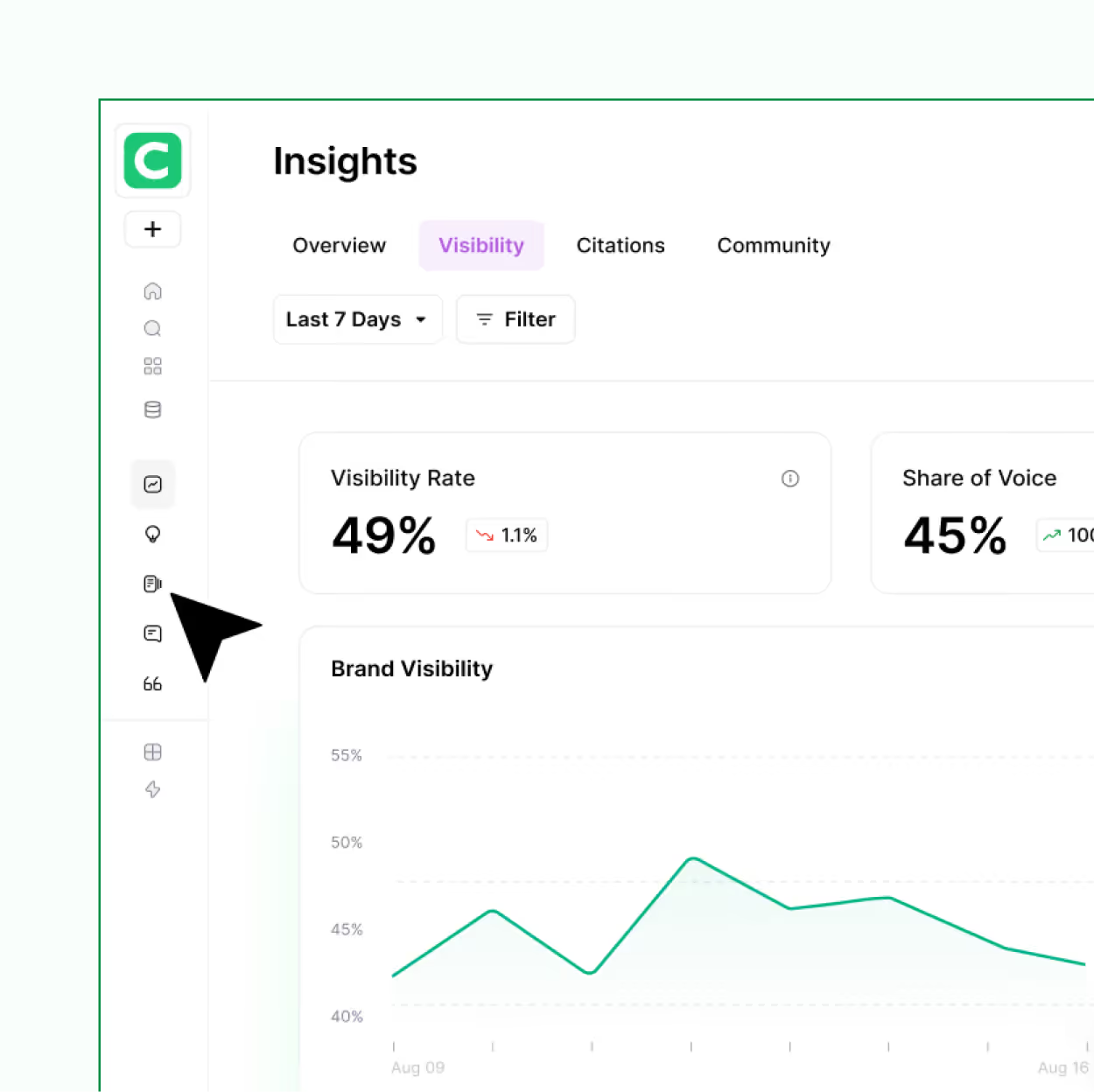
TL;DR: Most tools stop at monitoring. AirOps helps you track AI search visibility, diagnose why competitors are winning, and take action through repeatable optimization workflows.

The Workflows You Can Automate With AirOps
Generate publish-ready briefs in minutes, not hours
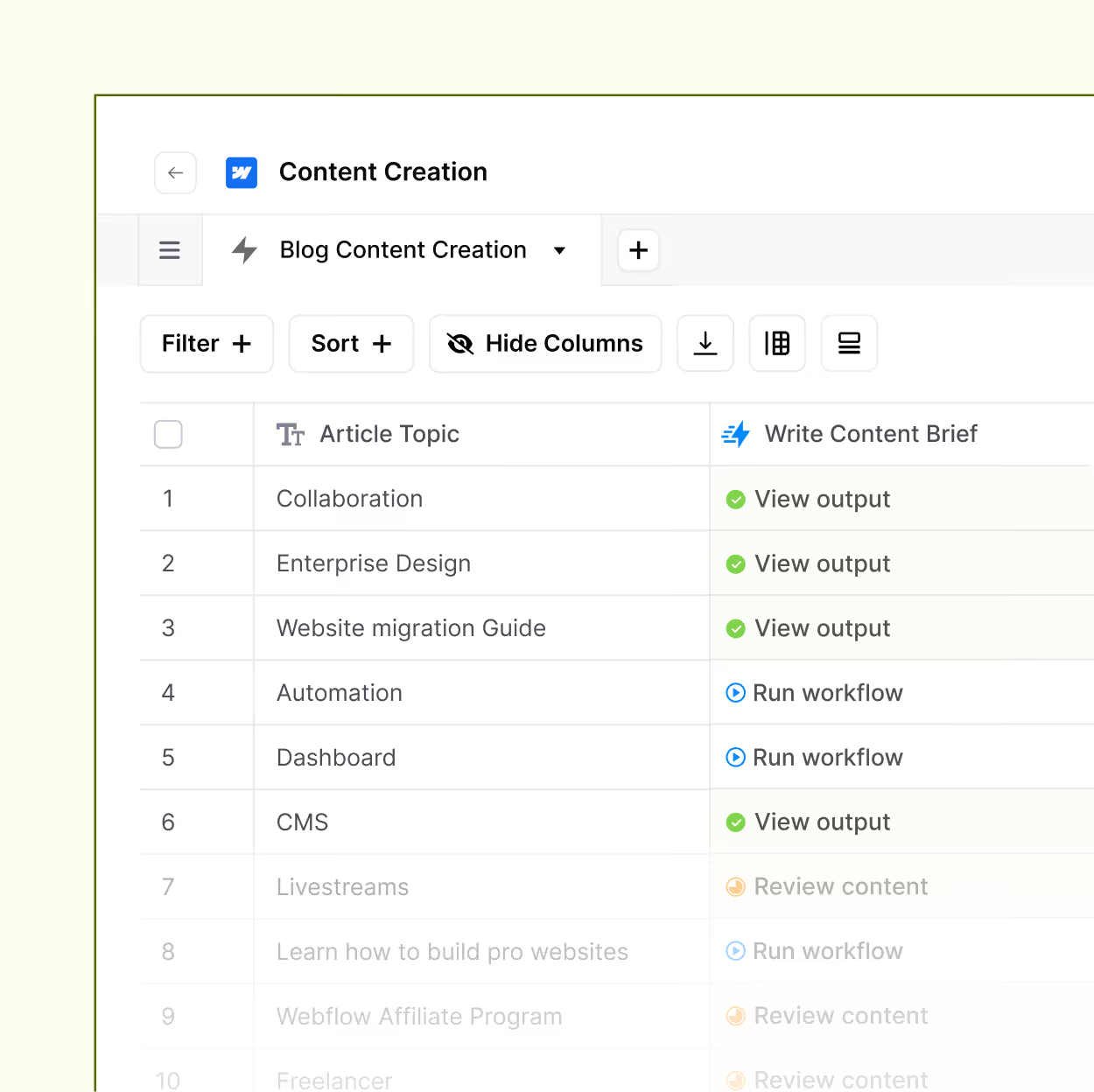
Feed AirOps a keyword cluster and get SERP-analyzed content briefs with target headings, semantic terms, competitor gaps, and word count guidance - automatically routed to your writers. No more toggling between research tools and Google Docs. Teams using this workflow report cutting brief creation time from 45 minutes to under 5, which means your writers start writing faster and your keyword gap strategy actually gets executed instead of sitting in a spreadsheet.
Optimize, approve, and publish without switching tools
AirOps scores drafts against live SERP data, flags missing topics, and routes content through team approvals before pushing directly to your CMS. This is where the "best AI tool for writing SEO-rich blog content" question gets reframed - because the best tool is not just the one that writes well, it is the one that optimizes, governs, and ships. Your editors stay in one place. Your content hits publish with confidence.
Find and fix decaying content before rankings drop
Automatically identify pages losing traffic, generate refresh briefs with updated SERP intelligence, and track performance after republishing - all from one dashboard. The types of pages that benefit from AI-driven refreshes include aging blog posts, seasonal content, product pages with outdated specs, and landing pages targeting competitive keywords where SERP composition has shifted. AirOps turns content audits from a quarterly fire drill into a continuous, automated process.
Launch hundreds of optimized pages from structured data
Use AirOps workflows to turn product feeds, location data, or topic clusters into unique, SEO-optimized landing pages with article schema markup and internal linking built in. This is programmatic SEO done right - each page is individually optimized against SERP data, not just templated and crossed fingers. Growth marketers running programmatic campaigns at scale finally get a system that does not require a dev team for every batch.
From Setup to Automated SEO Content in 3 Steps
Most automation platforms ask you to build everything from scratch. AirOps gives you pre-built SEO workflow templates on day one so you can start producing before you finish your coffee.
Connect Your Stack
Integrate AirOps with your CMS, Google Search Console, GA4, Semrush, and content tools in under 10 minutes. All connections use secure API integrations with role-based access controls and SOC 2-compliant data handling, so your IT team will not lose sleep over permissions or data governance.
Build or Choose a Workflow
Select from pre-built templates for briefs, optimization, audits, clustering search terms, and publishing - or create custom automation chains that match your exact process. The drag-and-drop workflow builder means you do not need engineering resources to design a pipeline that fits how your team actually works.
Automate, Review, Publish
AirOps runs your workflows on schedule or on demand. Your team reviews at human-in-the-loop approval checkpoints - checking quality, brand voice, and accuracy - then publishes directly to your CMS with one click. The system handles the repetitive execution. Your people handle the judgment calls.
Frequently Asked Questions
What are the tools or features that set AirOps apart?
What is SEO content automation and how does it work?
SEO content automation uses AI and workflow tools to handle repetitive tasks across the content lifecycle - including keyword research, brief generation, on-page optimization, content audits, and publishing. Instead of manually moving between four to six disconnected tools, teams set up automated workflows that execute each step in sequence with human review at key checkpoints. AirOps connects your entire content pipeline so work flows from keyword to published page without manual handoffs. The result is faster output, fewer errors, and a repeatable system that scales with your goals.
What is the best AI tool for writing SEO-rich blog content?
The best AI tool for SEO blog content goes beyond writing - it should automate the full workflow from keyword analysis to SERP-informed optimization to publishing. AirOps combines AI content generation with real-time SERP data, content scoring, and CMS integration so your output is optimized before it is published, not after. Unlike standalone AI writers, AirOps includes approval workflows and brand voice controls to ensure quality at scale. If your current tool only generates drafts that still need manual optimization and formatting, you are solving half the problem.
How does programmatic SEO work with content automation tools?
Programmatic SEO uses structured data - like product catalogs, location databases, or topic clusters - to generate large volumes of unique, optimized pages automatically. AirOps workflows let you feed in data sources, apply AI-powered content templates, add schema markup and internal links, and publish hundreds of pages directly to your CMS. Each page is individually optimized against SERP data, not just templated with swapped variables. This approach is how growth teams scale landing pages for long-tail keywords without requiring custom development for every batch.
Can SEO content automation tools handle content audits and refreshes?
Yes, and this is one of the highest-ROI workflows you can automate. The most effective SEO content automation tools identify pages losing rankings or traffic, generate refresh briefs with updated keyword and competitor data, and track performance after republishing. AirOps automates this entire audit-to-refresh cycle from a single dashboard. Pages that benefit most from AI-driven refreshes include aging blog posts, seasonal content, product pages with outdated specs, and landing pages targeting competitive keywords where SERP composition has shifted significantly since the original publish date.
How do SEO content automation tools integrate with existing workflows?
AirOps integrates with your existing stack - including WordPress and other CMS platforms, Google Search Console, GA4, Semrush, Google Docs, Notion, and project management tools. All integrations use secure API connections with role-based access controls, SOC 2-compliant data handling, and workspace permissions so your team can automate confidently without compromising security or governance. Setup takes under 10 minutes for most integrations, and you do not need engineering resources to connect your tools or configure permissions.
What is the difference between SEO content automation tools and AI content writers?
AI content writers generate text, but they do not manage the workflow around it. SEO content automation tools like AirOps handle the full pipeline: keyword clustering, SERP analysis, brief generation, draft optimization, approval routing, CMS publishing, and content refresh. If you are evaluating Copy.ai alternatives or other AI writers, the key question is whether you need a writing tool or a workflow platform. Teams that need to scale content operations - not just draft volume - typically need automation that governs quality, enforces brand voice, and connects every step from research to republish.