SEO Content Tools That Take You From Keyword to Published, Optimized Content - Faster
Stop juggling disconnected tools and guesswork. AirOps combines SERP analysis, AI-powered content briefs, real-time optimization scoring, and publishing workflows - so your content ranks on Google, ChatGPT, Perplexity, and Gemini.

Webflow 5xed content refresh velocity and increased visibility across Google and ChatGPT

Webflow 5xed content refresh velocity and increased visibility across Google and ChatGPT
Webflow 5xed content refresh velocity and increased visibility across Google and ChatGPT

Chime went from being recommended in 24 to 68 priority questions


George Bonaci VP of Growth, Ramp

Nicole Baer, CMO, Carta


50% cut in production costs, thanks to the elimination of external agencies and manual tasks.

Marcio Arnecke, CMO, Apollo















What Are SEO Content Tools (And Why Do They Matter)?
SEO content tools are software platforms that help writers and marketers research keywords, analyze SERPs, generate content briefs, optimize drafts for semantic relevance, and track rankings - all within a single workflow. Unlike general SEO platforms focused on technical audits or backlink analysis, SEO content tools are purpose-built to improve the quality and ranking potential of every page you publish.
The cost of getting this wrong is real. Teams using four or five disconnected tools for research, writing, optimization, and publishing lose hours per article to context-switching. Content ships slower, optimization is inconsistent, and pages that should rank sit on page three collecting dust.
The best SEO content tools now sit at the intersection of content optimization, AI-assisted drafting, and answer engine optimization. Traditional SEO writing assistants handle keyword density. Modern platforms handle semantic SEO, on-page optimization, content scoring, and visibility across AI search engines - because that is where your audience is heading.
General SEO tools like Semrush and Ahrefs are built for keyword research, rank tracking, site audits, and backlink analysis. They are broad, powerful, and essential - but they are not content-workflow-optimized. You still need to leave the platform to write, optimize, and publish.
SEO content tools like AirOps, Surfer, Clearscope, and Frase take a different approach. They start where general platforms stop: SERP-driven briefs, real-time content scoring, semantic keyword suggestions, AI-assisted drafting, and content workflow automation. The goal is not just data about your content - it is better content, published faster.
Compare the Top SEO Content Tools - Features, Pricing, Use Cases
We tested and compared the leading SEO content tools across the features that actually impact your content's ability to rank: brief quality, optimization scoring, AI writing capabilities, workflow integration, and scalability. Here is how AirOps stacks up as an AI SEO tool built for teams.
TL;DR: Most tools stop at monitoring. AirOps helps you track AI search visibility, diagnose why competitors are winning, and take action through repeatable optimization workflows.

Built for Every Content Workflow - From Solo Creators to Enterprise SEO Teams
Scale Client Content Without Scaling Headcount
Agencies running SEO content production across dozens of client accounts know the pain of fragmented tool stacks. AirOps replaces the manual SERP research, scattered Google Docs, and disconnected optimization tools with automated content workflows that let your team 3x their output without 3x their cost. Produce optimized briefs, drafts, and published pages from a single platform - across every client account.
Align Writers and SEO Strategists in One Workflow
In-house content teams often struggle with the handoff between SEO strategists who know what to target and writers who know how to tell the story. AirOps gives writers real-time optimization guidance, SERP-driven briefs, and semantic keyword suggestions built directly into the writing experience. No more waiting on an SEO specialist to review every draft. Content scoring happens as you write.
Programmatic SEO and Content Refresh at Enterprise Scale
Enterprise SEO operations need more than a content optimization tool - they need content engineering infrastructure. AirOps lets teams build and deploy programmatic SEO workflows that generate hundreds of optimized pages from structured data. Detect content decay, prioritize refreshes based on traffic impact, and monitor AI search visibility across ChatGPT, Perplexity, and Gemini - all from one platform.
Rank Faster Without the Enterprise Price Tag
Solo content marketers and bloggers deserve the same SERP analysis, content briefs, and AI-assisted optimization that large teams use. AirOps delivers exactly that at a price point that makes sense for independent creators. Go from keyword research to publish-ready content in a single session - and spend the time you save on promotion instead of production.
Research, Brief, Optimize, Publish
Most SEO content tools hand you data and leave you to figure out the rest. AirOps connects every step so insights flow directly into action - no copy-pasting between tabs, no manual translation from research to draft.
Analyze the SERP and Build a Content Brief
Enter your target keyword. AirOps analyzes the top-ranking pages, extracts semantic terms, maps search intent, and generates a comprehensive content brief in under 60 seconds. The brief includes competitor content analysis, recommended headings, topic coverage gaps, and target word count - so your writers start with clarity instead of a blank page.
Write and Optimize With Real-Time Scoring
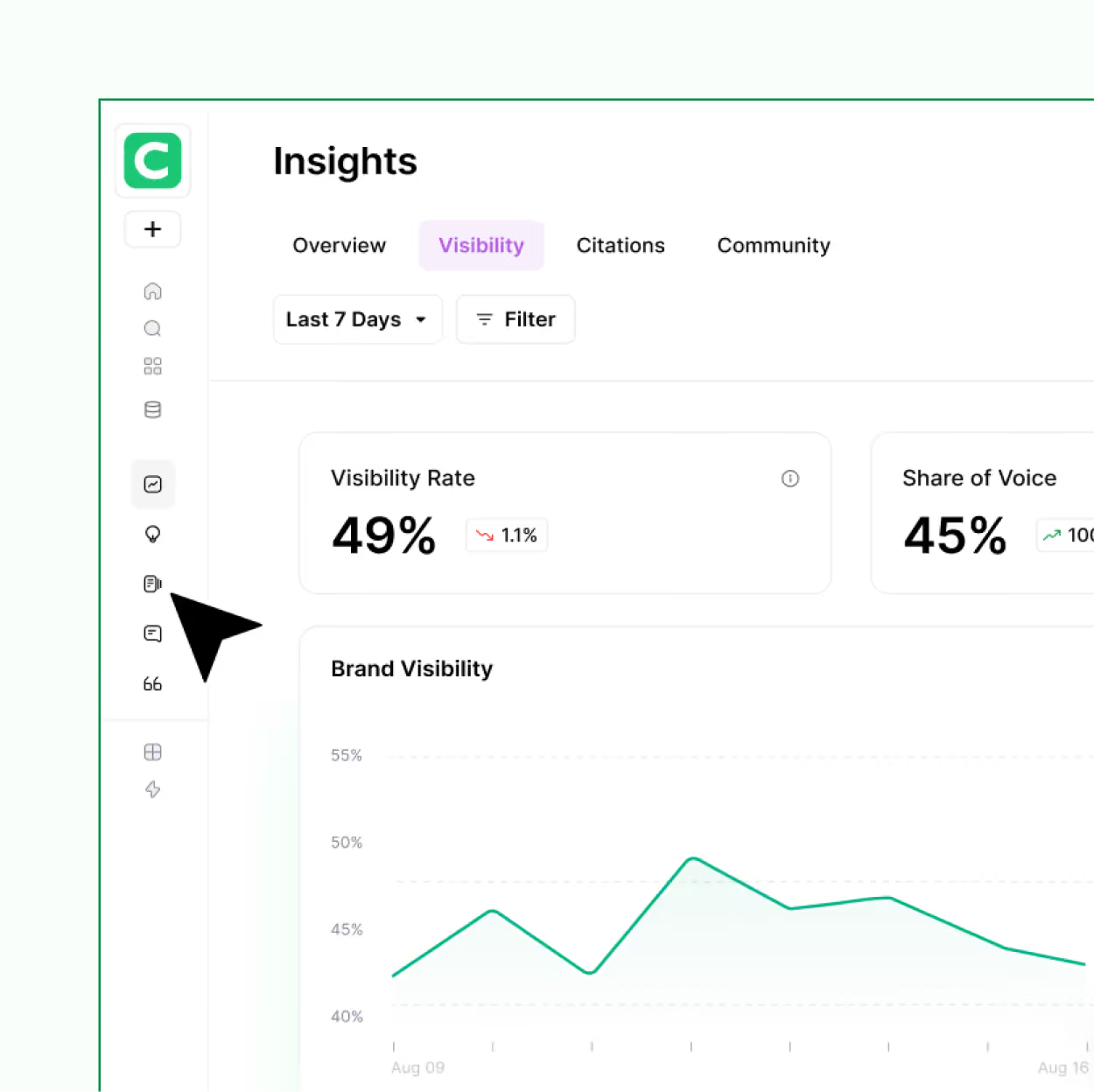
Draft content with AI assistance or paste your existing copy. AirOps scores your content in real time against SERP benchmarks, surfacing missing topics, related terms, and structural improvements as you write. The scoring adapts to what is actually ranking - not static keyword density rules - so your optimization reflects the current competitive landscape.
Publish, Monitor, and Refresh
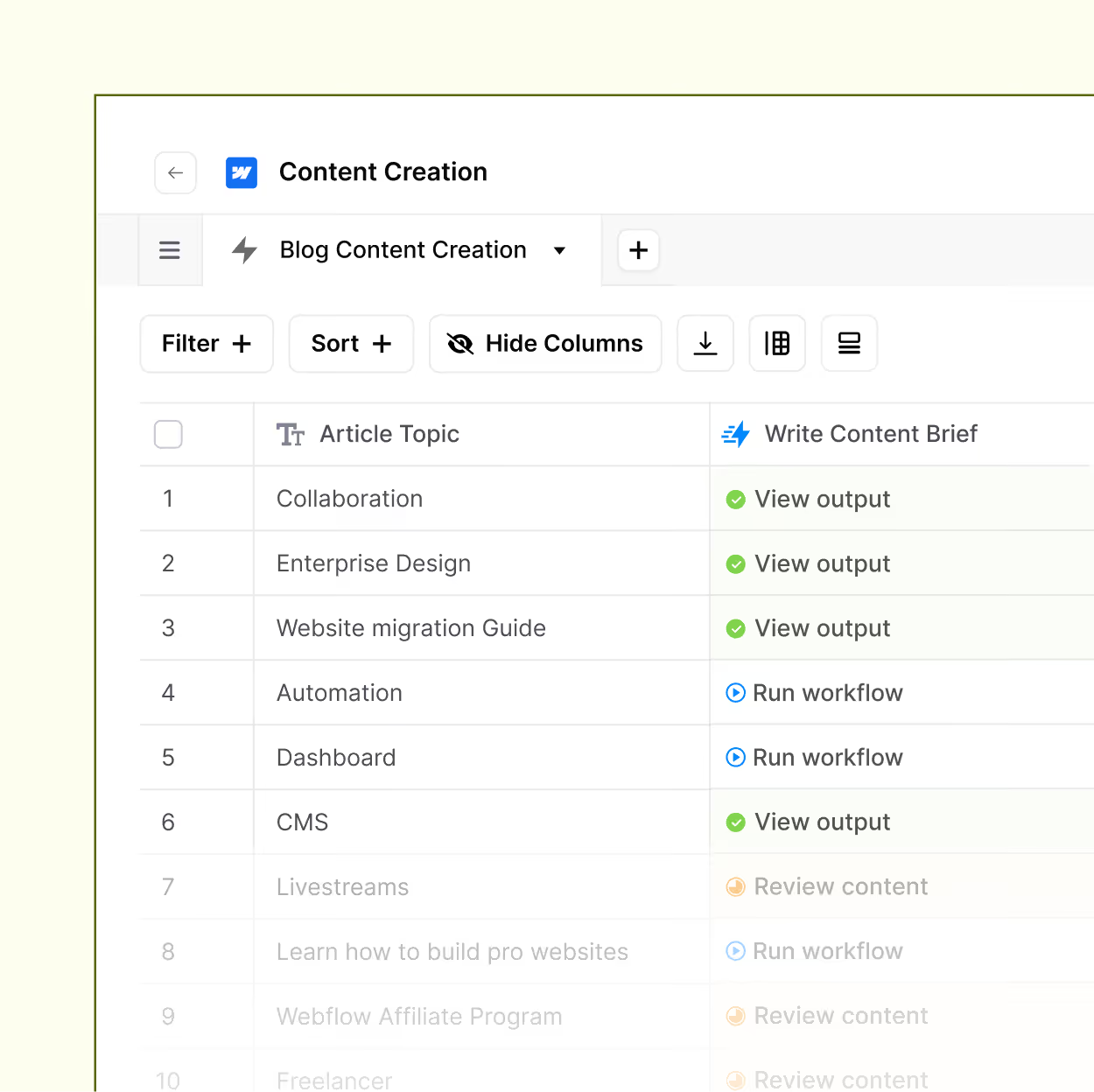
Push optimized content directly to WordPress or Google Docs. AirOps tracks performance over time, detects content decay before rankings slip, and triggers automated refresh workflows that update pages with current data, new examples, and improved structure. You maintain rankings without manually auditing hundreds of pages or starting from scratch.
No credit card required. Set up in under 5 minutes. Works with your existing content stack.
Frequently Asked Questions
What are the tools or features that set AirOps apart?
What is the best AI tool for writing SEO-rich blog content?
The best AI SEO content tool combines SERP analysis, content brief generation, real-time optimization scoring, and AI-assisted drafting in a single workflow. AirOps does all four - helping teams produce content that is optimized for both search intent and semantic relevance, not just keyword density. Unlike standalone AI writers that generate generic text, AirOps grounds every recommendation in live SERP data so your content competes with what is already ranking. This means your drafts start strong and improve as you write, rather than requiring a separate optimization pass after the fact. Learn more in our guide to the best AI tool for writing SEO-rich blog content.
How do SEO content tools differ from SEO content automation platforms?
Traditional SEO content tools focus on optimizing individual pages - scoring content, suggesting keywords, and analyzing competitors one article at a time. SEO content automation platforms like AirOps go further by automating the entire workflow: brief generation, AI drafting, optimization, publishing, and content refresh at scale. If your team produces more than a few pages per month, automation is the difference between incremental improvement and exponential content velocity. The distinction matters because most teams outgrow single-page tools faster than they expect, especially once content production becomes a core growth channel.
Can SEO content tools help with programmatic SEO?
Most SEO content tools are designed for one-page-at-a-time optimization and do not support programmatic SEO. AirOps is an exception - it lets teams build automated workflows that generate hundreds of optimized pages from structured data sources, templates, and dynamic keyword targeting. This makes it the preferred SEO content tool for teams running programmatic SEO strategies alongside traditional content production. If you have a product database, location data, or any structured dataset that maps to search demand, AirOps can turn it into ranking pages without manual article-by-article production.
How does AirOps compare to Clearscope and Surfer for content optimization?
Surfer and Clearscope are strong content scoring tools, but they focus primarily on the optimization layer. AirOps covers the full content lifecycle - from SERP analysis and automated brief creation to AI-assisted writing, real-time scoring, publishing, and content refresh. AirOps also uniquely supports AI search visibility optimization and programmatic SEO workflows, which neither Surfer nor Clearscope offers. For teams evaluating all three, the deciding factor is usually whether you need a scoring tool or a complete content production platform. See our detailed comparison for a full feature-by-feature breakdown.
Do SEO content tools work for AI search and answer engine optimization?
Most SEO content tools were built for traditional Google rankings and do not address AI search visibility. AirOps is one of the few platforms that optimizes content for both traditional SERPs and AI answer engines like ChatGPT, Perplexity, and Gemini. It includes LLM visibility tracking, citation analysis, and content structuring recommendations designed to increase your brand's presence in AI-generated answers. As AI search grows, the tools that only optimize for ten blue links will leave gaps in your visibility strategy. AirOps is built for where search is going, not just where it has been.
What types of pages benefit most from AI-driven content refreshes?
Pages that benefit most from AI-driven refreshes include high-traffic blog posts experiencing ranking decay, product pages with outdated specifications, comparison pages with stale competitor data, and evergreen guides that need updated statistics or examples. AirOps detects content decay automatically and triggers refresh workflows so you maintain rankings without manually auditing hundreds of pages. The biggest wins typically come from refreshing pages that already have backlinks and domain authority but have slipped due to outdated information. Learn more about which content to refresh first and how to prioritize your refresh queue.