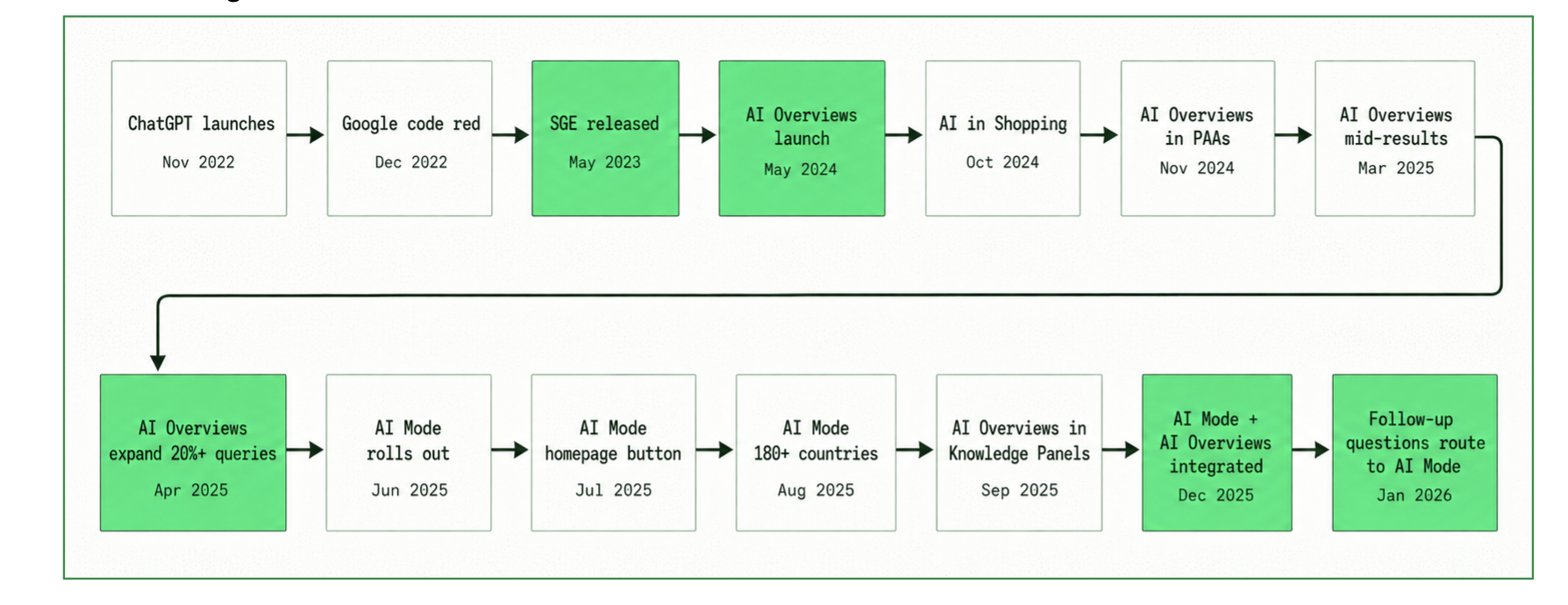
- Google has been stair-stepping users into AI Mode. AI Mode is the planned destination, not a sudden product shift.
- Traditional SEO reporting is losing signal. Impressions can rise while clicks flatten, making old traffic models less reliable.
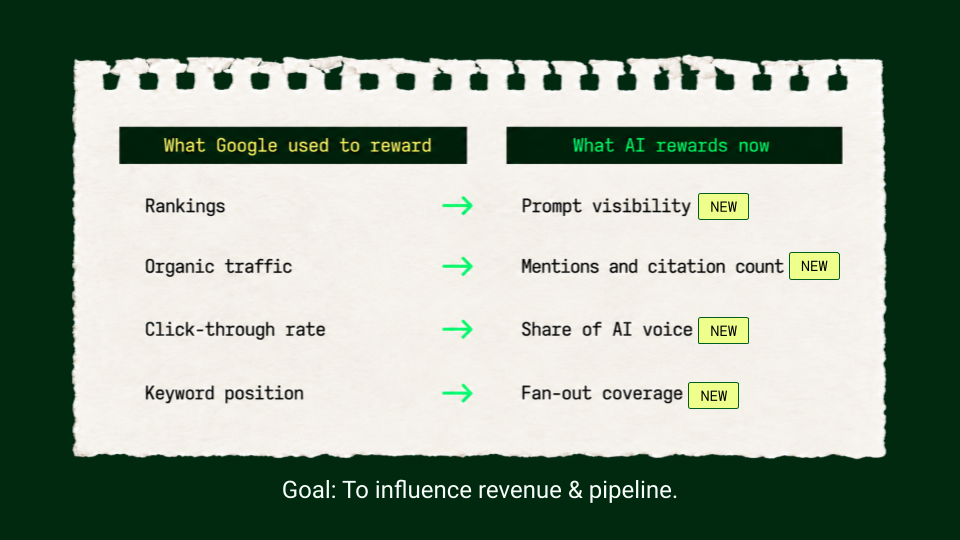
- Citations and mentions now matter as much as rankings. Teams need to track whether AI systems cite and recommend their brand.
- Fan-out queries reveal what AI actually values. They expose trust signals, entities, and content gaps worth prioritizing.
- Winning teams need fresher content and new workflows. Cross-functional AEO execution is becoming essential for AI search visibility.
Google has spent the last two years moving users toward a more conversational search experience. In this AirOps webinar, Chris Long, co-founder of Nectiv, joined Josh Spilker, head of search marketing at AirOps, to break down what AI Mode changes for SEO, content teams, and brand visibility.
The big message: AI Mode is not a side feature. It is the direction of search, and teams need new ways to measure performance, shape content, and organize execution.
Top Takeaways
1. Google is not experimenting with AI Mode. It has been training users for it.
AI Mode is the planned destination.
Google has been stair-stepping users toward this for a while: SGE, AI Overviews, conversational follow-ups, multimodal search, and now even a changed search box. Google is moving users toward a more conversational default search experience.
Look at your key pages and ask: if search becomes conversational by default, can this page answer the questions buyers are asking?
2. The SEO dashboard is starting to lie to you.
One of the most useful parts of the session was Chris explaining why traditional SEO reporting is losing signal.
The old model was simple: impressions go up, clicks go up, traffic goes up. AI search breaks that. You can gain visibility while clicks flatten or decline because the answer is being delivered before the visit.
Visibility still matters, but we need better ways to measure it.
And the traffic that does arrive may be higher intent. By the time buyers click through, they may have already done significant research inside AI systems.
Start tracking whether your brand is cited, mentioned, and recommended across the prompts your buyers use. You can use AirOps to do this.
3. Fan-out queries show you what AI values.
Fan-out queries show how AI systems reframe a prompt, what subtopics they consider important, which entities they associate with the question, and what trust signals they look for underneath.
Instead of guessing what content to create, use fan-out queries to see where the gaps are: missing comparisons, weak entity coverage, outdated claims, thin supporting evidence, or a lack of proprietary data.
Chris also called out freshness, original information, and structure. AI systems are more likely to use content that is current, specific, easy to verify, and easy to extract. Tables, clear headings, concise sections, and proprietary data all help.
Audit your most important pages for freshness, original insight, clear structure, and direct answers to the most important buyer questions.
4. Start with AI visibility tracking.
Chris's most practical advice was direct: if you are not doing AI visibility tracking yet, start now.
Teams need to know which prompts matter, where they show up, whether they are cited or mentioned, what sources AI systems rely on, and where competitors are winning.
AI search visibility is a workflow problem as much as a content problem. Track prompts, monitor mentions and citations, refresh priority pages, and bring in the teams that influence trust. You can learn more about that here.
Best practices and key learnings
Chris focused on what teams should do now, not just what changed in Google. The clearest pattern: brands win when they treat AI search as a new visibility layer with its own workflows, reporting, and content rules.
Plan for AI Mode as the default search experience
Google did not flip from classic search to AI overnight. Chris showed how product changes like SGE, AI Overviews, follow-up prompts, and the updated search box all push users toward AI Mode.
Start by auditing your highest-value commercial prompts. Check how AI Overviews and AI Mode frame the answer today. Prioritize queries where buyers ask for product recommendations, vendor comparisons, or category leaders. Most importantly, review whether your brand appears in the answer itself, not just in the linked sources.
"Google is stair-stepping us into this." — Chris Long
Update your reporting for citations, mentions, and pipeline
Traditional SEO metrics still matter, but they no longer tell the whole story. Teams now need reporting that shows whether AI systems cite their content, mention their brand, and influence qualified pipeline.
- Track citation rate and mention rate across ChatGPT, Gemini, AI Overviews, and AI Mode for a fixed prompt set.
- Separate citations from brand recommendations so you can see whether AI uses your content or actually names your company.
- Add self-reported attribution fields to forms so buyers can tell you when AI influenced their research.
"AI search is certainly changing that... clicks and impressions rising and staying stable, but traffic basically declining, or clicks declining." — Chris Long
Use fan-out queries to shape topic coverage
Fan-out queries show how AI expands a prompt and what evidence it looks for underneath. That makes them one of the best inputs for content planning, prompt tracking, and off-site prioritization.
Pull fan-out queries for high-priority prompts and map them to existing pages before you create new ones. Look for repeated entities like Gartner, G2, Reddit, certifications, regulations, or competitors that signal trust. Build landing pages, help docs, comparison pages, or press coverage when fan-out topics expose clear gaps.
"I think there is so much gold in these conversations that people don't even know they're missing." — Chris Long
Refresh and restructure content for easier AI retrieval
AI systems prefer content they can parse quickly and trust as current. Fresh pages with clear structure, concise copy, and proprietary information give you a better chance to earn both citations and mentions.
- Refresh timestamps, examples, stats, and positioning on pages tied to high-value prompts.
- Use descriptive headings, short paragraphs, bullets, and tables so models can extract the core point fast.
- Add original data, research, or firsthand insights that generic listicles cannot match.
Organize around AEO pods and agent-ready pages
AI visibility now depends on more than the SEO team. Chris pointed to cross-functional "AEO pods" that bring together SEO, social, PR, affiliate, and review signals around the same prompt and content priorities.
Create a shared prompt list and assign owners across SEO, content, social, PR, and review programs. Identify where competitors look weak across on-site content, social communities, affiliate content, and review platforms. Make key pages easier for agents to understand and act on by cleaning up structure, actions, and page intent.
How to put these AI search insights into practice
Start with the places where AI already influences revenue. Build a core prompt set, track citations and mentions across the major AI platforms, and review which pages show up most often in those answers.
Then move into execution. Refresh five high-value pages, map their fan-out queries, add missing trust signals, and set a weekly workflow that includes SEO, content, social, PR, and reviews so one team does not carry the whole program alone.
How AirOps helps teams win in AI search
The shift is clear: teams can no longer rely on rankings and traffic alone. You need better visibility tracking, stronger content workflows, and a faster way to turn fan-out and citation data into action. AirOps helps teams track mentions and citations, monitor prompts, uncover fan-out insights, and scale refresh workflows across the pages that matter most.
AirOps is also a partner in this shift, not just software to log into. Our team works alongside yours from strategy through execution, building evidence across the channels that shape AI discovery and tying it back to pipeline and revenue growth.
Book a call to see how it works in practice.
Get the latest on AI content & marketing
