- Most content refreshes are random and reactive. This one wasn’t. Using AI-powered workflows, AirOps built a scalable system to audit, prioritize, and optimize content for AI search.
- The result? +20% increase in ChatGPT citations and +22% boost in impressions.
- This post breaks down the exact workflows—from topic audits to AEO optimization—that drive visibility, conversions, and influence.
With search evolving faster than ever from shifting user intent to AI-generated answers, we ran into the same challenges content teams everywhere are facing: overlapping content, outdated posts, and missed opportunities to improve structure, clarity, and discoverability across both traditional search and answer engines.
Over the past two months, we turned those challenges into an opportunity to test and prove what AirOps can do. Instead of running a manual audit, we built a system of AI-powered workflows inside AirOps to solve the problem at scale.
As large language models become a primary way people discover and consume information, optimizing for clarity, structure, and extractability has become essential to stay aligned with modern search behavior.
During our refresh initiative, we treated clarity, structure, and extractability as growth levers—and saw a 20% increase in citations across answer engines like ChatGPT and Perplexity as a result.
But first, meet Oshen—AirOps' Content Engineer:
As a content engineer with a background in SEO, I’ve always believed the best content isn’t just creative—it’s structured, intentional, and scalable. At AirOps, we had a solid content foundation, but there was a clear opportunity to evolve—by pairing E-E-A-T best practices with a deeper understanding of how AI-powered search evaluates and surfaces content. That shift helped us future-proof our content for both traditional SEO and the growing influence of answer engines.
Instead of relying on gut instinct or manual audits, my goal was to replace guesswork by content-engineering a workflow built for clarity, speed, and strategic impact. The objective wasn’t just to update stale content—it was to give our team a repeatable system for identifying what to improve, why it matters, and how to execute with precision.
Curious how leading teams operationalize content strategy with AI?
Join our Content Engineering cohort to learn how to build AI-powered workflows that reduce manual effort, increase clarity, and accelerate growth.
Goals
We built this initiative around four key goals to improve the performance, structure, and discoverability of our content:
- Resolve internal conflicts: Identify and fix overlapping articles competing for the same keywords and search intent
- Align with evolving search behavior: Refresh content to match current user intent, improve internal linking, and strengthen topical authority
- Close content gaps: Surface and fill missing coverage across priority themes and high-impact queries
- Increase visibility in LLMs and answer engines: Optimize structure, clarity, and extractability to improve citations in tools like ChatGPT and Google AI Overviews
The Challenges
As user behavior and search evolves, even high-performing content can decay over time. Here’s what we were up against:
- Unclear content coverage: We needed to identify whether we had overlapping or cannibalizing articles competing for similar keywords and intent
- Outdated or under-optimized posts: Pages lagging behind on clarity, depth, or alignment with current user expectations
- Shifting search intent: Content that no longer matched what users were actually looking for
- Coverage gaps across key themes: Missing content for important user journeys and priority topics
- Disconnected site structure: Missed opportunities to strengthen internal linking and reinforce topical authority
According to AirOps Research, citation likelihood drops by more than 50% when content goes more than a year without updates.
The Approach: Workflow-First Content Engineering
We didn’t just audit and react. We engineered solutions.
By turning each content challenge into a focused AI workflow, we created scalable systems that eliminated guesswork and sped up decision-making.
Here’s a snapshot of what we built:
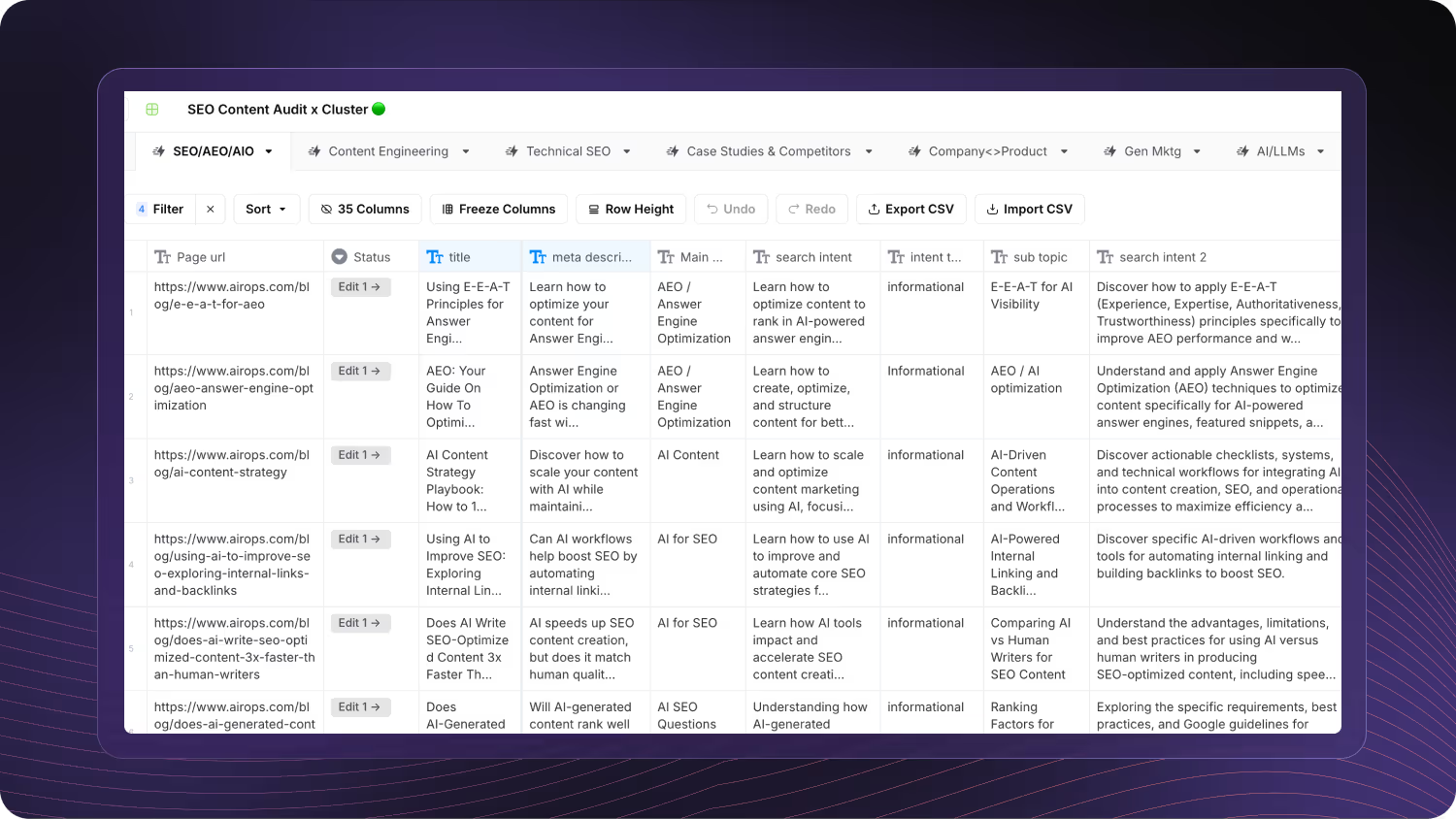
Workflow 1: Topic Cluster Audit
With search behavior and SERPs constantly evolving, we needed a fast, reliable way to assess our topical coverage and uncover areas of overlap, conflict, or underperformance—all through the lens of user intent.
Purpose: This workflow provides a clear map of how each article aligns with user intent. It helps identify overlapping or cannibalizing content, spot underperforming pages, and surface opportunities for pruning, merging, or refreshing—all based on structured, search-informed analysis.
Inputs: Page URL
How It Works: The workflow takes a single article URL and performs a full content and keyword analysis. It gathers metadata, keyword data, and top queries, then prompts GPT-4.1 to evaluate the page’s core topic, supporting themes, and the type of search intent it satisfies. This process produces a structured topical mapping that can be reviewed at scale.
Output: A clear, structured view of each article’s topic, subtopic, and search intent—giving us stronger visibility into stale, duplicative, or competing content. It allowed us to spot gaps, overlaps, and misalignments across our content library, setting the stage for smarter decisions on pruning, merging, or refreshing.
Impact: This workflow eliminated the guesswork from content audits. It gave us the clarity to prioritize refreshes, consolidate duplicative pages, and ensure each article delivers unique value aligned with real user intent—saving hours of manual review and improving overall site coherence.
Workflow 2: Refresh Brief Generator
Once we uncovered overlapping and competing content, the next challenge was figuring out how to differentiate it.
We needed more than a list of duplicate pages—we needed clear direction on how to align each article with the right search intent and make every piece stand on its own.
Purpose: This workflow removes the guesswork from content updates. It analyzes overlapping articles, clarifies search intent, and delivers actionable recommendations for how to differentiate or consolidate content.
By combining keyword data, competitive research, and internal context, it helps teams align updates with intent and reduce content conflict.
Inputs: Page URL, main topic, search intent
How It Works:
- Extracts content and data from the page, including headings, GSC queries, and Semrush keyword insights
- Analyzes intent and keyword alignment, identifying primary/secondary keywords and how the article compares to top-ranking SERP results
- Checks for internal duplication by querying our sitemap knowledge base and using GPT-4.1 to assess intent overlap with similar articles
- Surfaces clear recommendations for consolidation or differentiation, backed by keyword research, AEO suggestions, and deep topical insights
- Generates a structured refresh brief with writing directions, internal linking opportunities, and optimization guidance
Output: A complete refresh brief that includes content differentiation guidance, competitive analysis, keyword and query recommendations, research-backed updates, and internal linking opportunities.
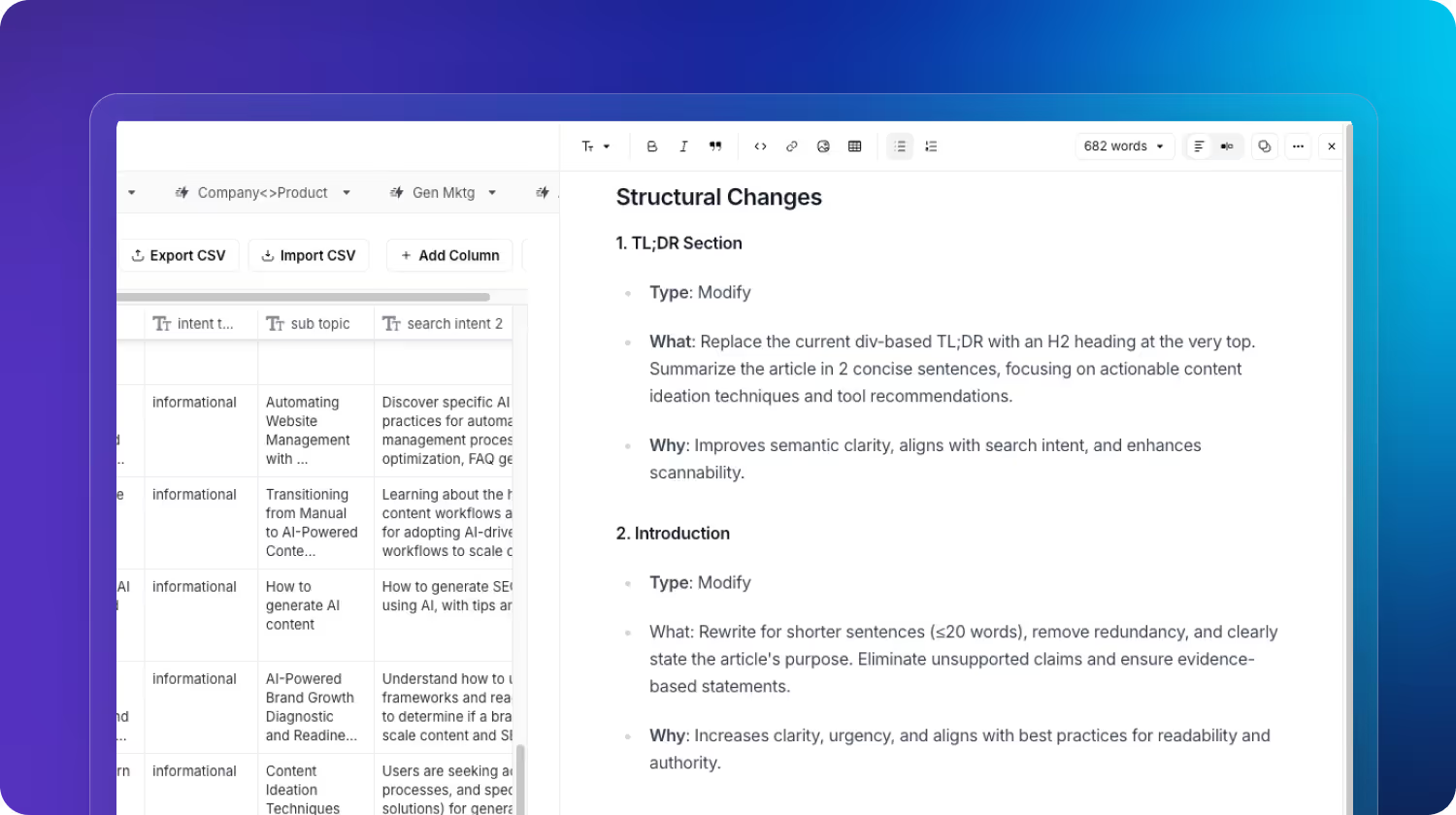
Impact: This workflow gave our team the clarity to prioritize what matters most. With structured briefs surfacing the right opportunities and guiding next steps, we moved from guesswork to grounded execution.
Workflow 3: AEO Optimizer
Modern search focuses on more than just rankings. To stay competitive, content teams need to align with how AI systems interpret and extract information—prioritizing clarity, structure, and semantic precision.
That’s why it’s more important than ever to create content that’s easy to consume, contextually rich, and optimized for both users and answer engines.
Purpose: This AEO optimization workflow ensures content is optimized not just for search engines, but for how users and AI systems consume information. It enhances E-E-A-T, improves structure and readability, and prepares content for extractability in answer engines like ChatGPT and Google AI Overviews.
Input: Article
How It Works:
- Analyzes content structure: Evaluates heading hierarchy, section nesting, and overall content organization
- Audits readability and clarity: Reviews sentence length, complexity, and flow to improve scannability and comprehension
- Assesses narrative and factual strength: Identifies areas for stronger reasoning, examples, or E-E-A-T signals
- Optimizes for AEO and AI visibility: Rewrites content with better formatting, long-tail FAQs, and schema-friendly structure using ChatGPT-4.1
- Delivers an optimized edit-ready draft: The revised article is structured for traditional SEO and extractability in LLMs and answer engines
Output: Well-structured, easy-to-read articles aligned with search intent—complete with clean headings, simplified language, improved narrative flow, long-tail FAQs, and schema markup recommendations.
Impact: This workflow dramatically reduced the manual effort required to analyze and rewrite articles for clarity, structure, and extractability. What used to take hours of editorial review and formatting can now be handled in minutes—enabling us to optimize more content in less time, with greater consistency and confidence.
Results: Engineering a Compounding Content Flywheel
By transforming our audit and refresh process into a system of modular, AI-powered workflows, we built a repeatable engine for quality, scale, and sustained growth—all within AirOps.
Here’s what we’ve seen so far:
- 10+ hours saved per article refresh, freeing up time for higher-leverage work
- Clearer decisions on consolidation and differentiation, reducing internal competition and overlap
- 15% increase in clicks and a 22% increase in impressions across refreshed content in just over two weeks
- Improved structure and formatting aligned with AI Overviews and LLM expectations, enhancing clarity and extractability for answer engines
- 20% increase in citations from Perplexity and ChatGPT as a result of taking AEO-aligned actions like adding FAQ schema and optimizing for query intent
- Improved readability and UX, with skimmable layouts and language aligned to modern search behavior and user intent
These aren’t just updates—they’re upgrades that compound over time, helping us scale quality while staying aligned with how both users and AI discover content today.
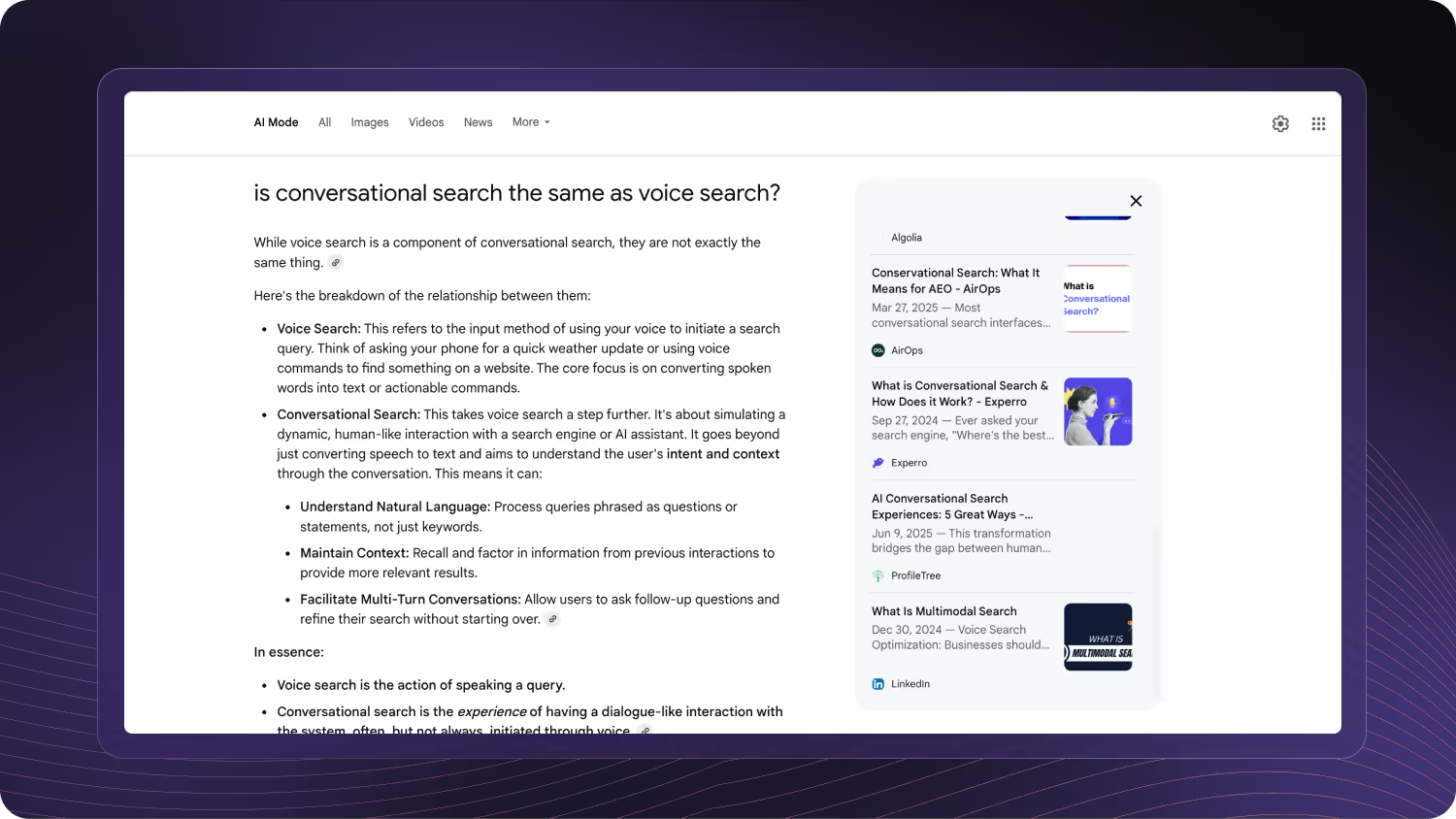
From Chaos to Clarity
This project was a reminder: great content doesn’t scale on gut instinct alone. It takes intentional systems to drive consistent quality, eliminate friction, and keep pace with how search and user behavior continues to evolve.
By building a workflow-first growth engine inside AirOps, we created the infrastructure to scale content quality without losing strategic focus. These purpose-built, AI-powered workflows turned our refresh process into a system—giving our team the clarity, speed, and consistency needed to produce content that performs for both users and answer engines.
Want to Dominate in AI Search?
The AI era has transformed how people search. LLMs and answer engines now choose what gets cited. Brands that don’t adapt risk losing visibility and revenue, as traditional clicks and rankings no longer guarantee attribution. Just like Google reshaped discovery, AI is changing how online commerce happens.
AirOps is the first AI search visibility platform built to help brands grow and prove the revenue impact of their organic content, now and in the future.
It gives teams what they need to win: visibility into how they appear in AI results, tools to create content that earns citations, and clear measurement linking AI visibility to pipeline. All this in a scalable platform that turns marketers into modern content engineers.
Ready to win in the new age of search?
Book a demo to see how AirOps can power your next major revenue channel.
Get the latest on AI content & marketing
