AI Search Visibility Tools: Compare Features, Pricing & Best-Fit Use Cases
Your buyers are getting answers from ChatGPT, Perplexity, and Gemini without ever visiting your site. AirOps shows you exactly where your brand appears in AI answers, where it doesn't, and what to do about it.

Webflow 5xed content refresh velocity and increased visibility across Google and ChatGPT

Webflow 5xed content refresh velocity and increased visibility across Google and ChatGPT
Webflow 5xed content refresh velocity and increased visibility across Google and ChatGPT

Chime went from being recommended in 24 to 68 priority questions


George Bonaci VP of Growth, Ramp

Nicole Baer, CMO, Carta


50% cut in production costs, thanks to the elimination of external agencies and manual tasks.

Marcio Arnecke, CMO, Apollo















What Are AI Search Visibility Tools?
AI search visibility tools monitor how your brand appears in AI-generated answers across ChatGPT, Perplexity, Google AI Overviews, Gemini, Claude, Copilot, and other LLMs. They track brand mentions, citations, source links, sentiment, and share of voice inside responses that now shape buying decisions before a click ever happens.
This matters right now because the zero-click shift is accelerating. Buyers are asking AI for product recommendations, vendor comparisons, and solution shortlists. If your brand isn't showing up in those answers, you're invisible during the most critical phase of the buyer journey.
These platforms - sometimes called LLM monitoring tools, GEO tools, or answer engine optimization tools - fill a gap that traditional SEO rank trackers were never designed to address. Keyword positions on Google don't tell you who AI is recommending when a prospect types "best tools for X" into ChatGPT. AI search visibility tools do.
AI Search Visibility Tools Compared: AirOps vs. Other Platforms
Not all AI visibility platforms track the same engines, surface the same data, or support the same workflows. Here's how AirOps stacks up against other tools across the features that matter most when you're evaluating the best LLM visibility software for your team.
TL;DR: Most tools stop at monitoring. AirOps helps you track AI search visibility, diagnose why competitors are winning, and take action through repeatable optimization workflows.

From Visibility Data to Competitive Advantage: Best Use Cases
Best for Enterprise SEO & Content Teams
Outcome: Protect brand visibility across every AI answer engine at scale.
Enterprise teams need multi-engine monitoring, competitor benchmarking across dozens of prompts, co-citation analysis, and integration with existing SEO workflows. AirOps connects AI visibility data with content engineering pipelines so teams can close gaps and defend brand positioning across ChatGPT, Perplexity, AI Overviews, and beyond. When you're managing hundreds of pages and multiple product lines, monitoring alone isn't enough - you need a platform built for answer engine optimization at enterprise scale.
Best for Agencies Managing Multiple Brands
Outcome: Deliver AI search visibility reporting clients can't get anywhere else.
Agencies need multi-brand dashboards, white-label reporting, and the ability to benchmark each client against their competitive set across every major AI engine. AirOps provides per-client workspaces with share of voice tracking and prompt-level insights, giving your team a differentiation story that goes well beyond traditional rank tracking. If your clients are asking about AI search and you don't have answers yet, this is the fastest way to get ahead of the conversation.
Best for Demand Gen & GTM Teams
Outcome: Understand how AI answers shape pipeline before buyers reach your site.
Demand gen teams care about whether AI recommends their brand during the research phase. AirOps tracks which prompts surface your product, how AI describes your value proposition, and where competitors are winning the recommendation. By aligning content strategy with AI-driven buyer behavior, GTM teams can influence pipeline at the moment of intent - not after the click. Think of it as tracking the key metrics that actually predict demand, not just measure traffic.
Best for Startups & Budget-Conscious Teams
Outcome: Get AI search visibility data without enterprise-level spend.
Startups need to know if AI is recommending their competitors and ignoring them. AirOps offers a free AI visibility report and affordable entry plans so early-stage teams can monitor brand mentions, track citations, and identify quick-win content optimizations across key AI answer engines. You don't need a massive budget to start - you just need to know where you stand.
How to Get Started with AirOps AI Search Visibility
Most AI visibility tools stop at dashboards and charts. AirOps connects monitoring directly to optimization, so your team moves from insight to action without switching platforms or stitching together spreadsheets.
Connect Your Brand & Competitors
Enter your brand, target prompts, and up to 10 competitors. AirOps begins monitoring across 10+ AI engines immediately - no complex onboarding, no waiting weeks for data. You'll have your first visibility snapshot within minutes, not days.
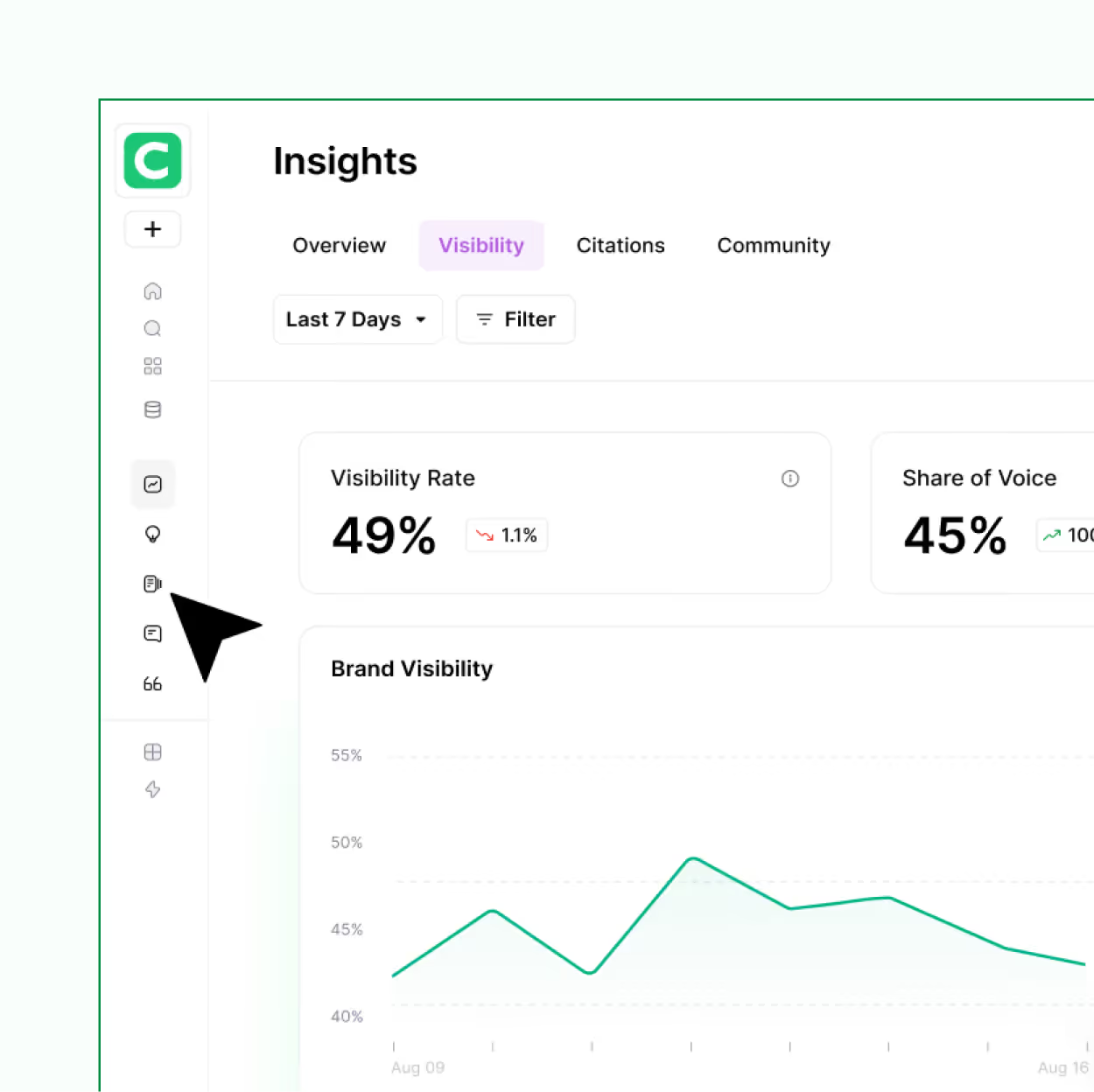
Monitor Mentions, Citations & Sentiment Across LLMs
See exactly where and how your brand appears in AI answers, updated on a regular cadence. The dashboard surfaces citation data at the URL level, tracks sentiment shifts over time, and flags when competitors gain or lose ground on prompts that matter to your category. You'll spot trends that single-snapshot tools miss entirely.
Get Actionable Recommendations to Improve Visibility
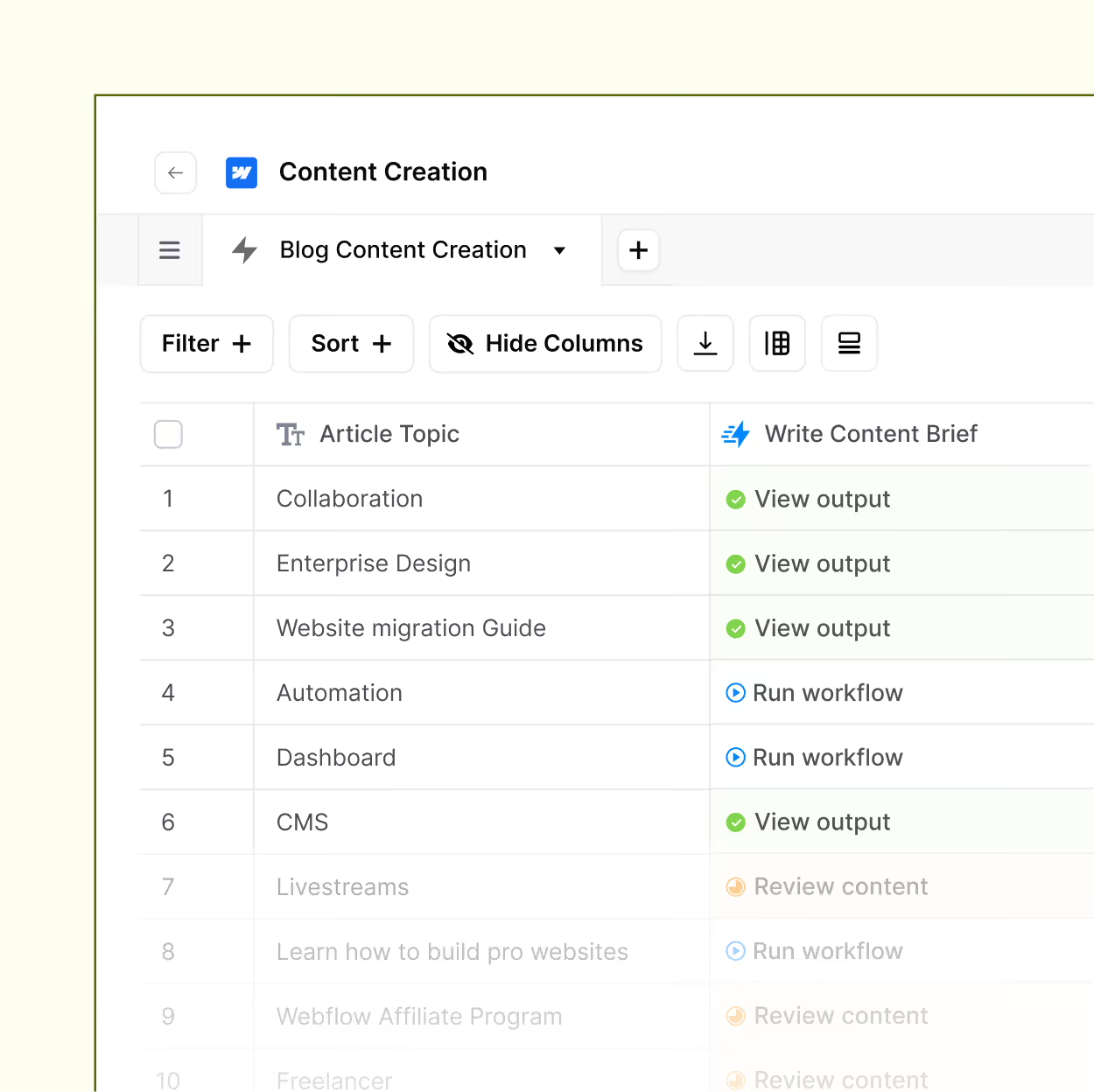
AirOps doesn't just show you the problem - it tells you what to fix. The platform surfaces content gaps, technical blockers, and SEO content automation opportunities tailored to each AI engine's citation behavior. Your team walks away with a prioritized playbook, not just a report to file away.
Frequently Asked Questions
What are the tools or features that set AirOps apart?
How are AI search visibility tools different from traditional SEO tools?
Traditional SEO tools track keyword rankings, backlinks, and organic traffic on Google and Bing. AI search visibility tools monitor how your brand is mentioned, cited, and described inside AI-generated answers on platforms like ChatGPT, Perplexity, Gemini, Claude, and Google AI Overviews. They measure share of voice, citation sources, and brand sentiment in LLM responses - metrics that SEO tools simply don't capture. Many teams now use both: SEO tools for search rankings and an AEO analysis tool for generative engine optimization.
Which AI platforms should I track for brand visibility?
At minimum, monitor ChatGPT, Google AI Overviews, Perplexity, Gemini, and Claude - these are the five highest-traffic AI answer surfaces today. Depending on your audience, you may also want to track visibility in Perplexity alongside Microsoft Copilot, Grok, DeepSeek, and Meta AI. The best AI search visibility tools let you monitor all of these from a single dashboard with prompt-level tracking and citation analysis for each engine. Coverage matters because your buyers don't stick to one AI platform.
How accurate is AI visibility data given that LLMs give different answers to different people?
This is one of the most important questions to ask any vendor. LLM outputs are non-deterministic - the same prompt can produce different answers depending on timing, user context, and model version. The best tools address this through repeat prompt sampling, confidence scoring, and trend analysis over time rather than relying on single-snapshot data. AirOps uses multi-sample methodology and surfaces confidence indicators so you know how stable your visibility is. Always ask vendors about their sampling approach, refresh frequency, and how they handle variation before you buy.
What is the difference between GEO, AEO, and LLM SEO?
Generative engine optimization (GEO) is the practice of optimizing content to appear in AI-generated answers. Answer engine optimization (AEO) focuses specifically on getting your content cited by answer engines like Perplexity and Google AI Overviews. LLM SEO is a broader term for optimizing brand visibility across large language models. In practice, these terms describe overlapping strategies, and AI search visibility tools help you measure and improve performance across all three. The terminology is still settling, but the goal is the same: make sure AI recommends you.
How much do AI search visibility tools cost?
Pricing varies widely. Entry-level plans for startups and small teams typically start at $49-$99/month. Mid-market plans with multi-brand monitoring, competitor benchmarking, and deeper reporting range from $200-$500/month. Enterprise plans with API access, custom integrations, and dedicated support can exceed $1,000/month. Key pricing variables include number of prompts tracked, AI engines monitored, competitor slots, refresh frequency, and regional coverage. AirOps offers a free AI visibility report so you can evaluate the platform before committing - see current plans and pricing.
Can AI search visibility tools help with citation tracking in LLMs?
Yes - LLM citation tracking is one of the core capabilities. The best tools show you which URLs are being cited when AI engines answer prompts related to your brand or category, whether those citations are linked or unlinked, and which competitors are being co-cited alongside you. This data helps content and SEO teams prioritize pages for optimization, identify citation gaps, and build content strategies that increase the likelihood of being referenced in AI answers. If you're evaluating platforms, look for tools that go beyond basic counts and offer co-citation analysis and strategic recommendations.