Best LLM Visibility Monitoring Tools in 2026
Your brand is being discussed in ChatGPT, Perplexity, Gemini, and Claude right now - but you can't see it. AirOps tracks, measures, and optimizes your AI search visibility across 6+ answer engines so you can stop guessing and start growing.

Webflow 5xed content refresh velocity and increased visibility across Google and ChatGPT

Webflow 5xed content refresh velocity and increased visibility across Google and ChatGPT
Webflow 5xed content refresh velocity and increased visibility across Google and ChatGPT

Chime went from being recommended in 24 to 68 priority questions


George Bonaci VP of Growth, Ramp

Nicole Baer, CMO, Carta


50% cut in production costs, thanks to the elimination of external agencies and manual tasks.

Marcio Arnecke, CMO, Apollo















What Are LLM Visibility Monitoring Tools?
LLM visibility monitoring tools track how your brand appears in AI-generated answers across platforms like ChatGPT, Perplexity, Gemini, Claude, Copilot, and Google AI Overviews. They measure citations, mentions, sentiment, share of voice, and competitor presence within AI search results - data that traditional SEO tools simply cannot capture.
The rise of AI-powered answer engines has fundamentally changed how buyers discover brands. Ranking on page one of Google no longer guarantees visibility, because AI models synthesize answers from multiple sources and often skip the link entirely. Zero-click search is no longer a trend - it's the default.
That's where LLM visibility software fills the gap. Unlike traditional rank trackers, these platforms monitor the actual language AI models use when discussing your brand, reveal which prompts trigger your inclusion, identify citation provenance, and flag hallucinations that could damage trust and revenue. The best LLM visibility monitoring tools go beyond dashboards to deliver actionable generative engine optimization recommendations connected to your content workflows.
LLM Visibility Monitoring Tools Compared: Feature-by-Feature
Not all LLM monitoring tools are built the same. Here's how AirOps stacks up against other platforms across the features that matter most when choosing the best LLM visibility software for your team.
TL;DR: Most tools stop at monitoring. AirOps helps you track AI search visibility, diagnose why competitors are winning, and take action through repeatable optimization workflows.

Who Needs an LLM Visibility Monitoring Tool? Use Cases by Team
SEO and Content Teams: Know Exactly Which AI Answers Include Your Content
Track citation sources, discover high-value prompts driving AI visibility, and get content optimization recommendations that close gaps between your organic rankings and your AI search presence. LLM visibility monitoring tools give SEO teams the data layer they've been missing - because a page ranking #1 on Google and a page cited in ChatGPT are two very different wins, and you need to track both.
Brand and Reputation Teams: Catch AI Hallucinations Before Your Customers Do
Monitor how LLMs describe your brand across ChatGPT, Perplexity, and Gemini. Detect inaccurate claims, track sentiment shifts, and protect brand trust in the channels where buyers increasingly form first impressions. Research on the impact of UGC platforms on brand mentions in LLMs shows that what AI models say about you is shaped by sources you may not even be tracking yet.
Agencies and Consultancies: Deliver AI Visibility Reporting Your Clients Can't Get Anywhere Else
Benchmark client brands against competitors across every major AI answer engine. Generate share-of-voice reports, citation analyses, and GEO recommendations that justify retainers and prove measurable impact. This is the reporting layer your clients are about to start asking for - and the agencies that offer it first win the conversation.
Product Marketing and RevOps: Understand How AI Engines Position Your Product vs. Competitors
See which products AI models recommend for key buyer prompts. Identify competitive threats, track positioning language changes over time, and connect AI visibility data to pipeline and revenue conversations. When your CEO asks "why are buyers choosing the competitor?" the answer might live in a ChatGPT response, not a Google SERP.
From Setup to Actionable Insights
Most LLM visibility monitoring tools show you what's happening. AirOps shows you what's happening and what to do next - because monitoring without a path to optimization is just expensive awareness.
Connect your brand.
Enter your brand, competitors, and target prompts. AirOps automatically discovers additional high-value prompts across 6+ AI engines using AI-powered prompt ideation - so you're not limited to the queries you already know about. Setup takes minutes, not days, and you don't need engineering resources to get started.

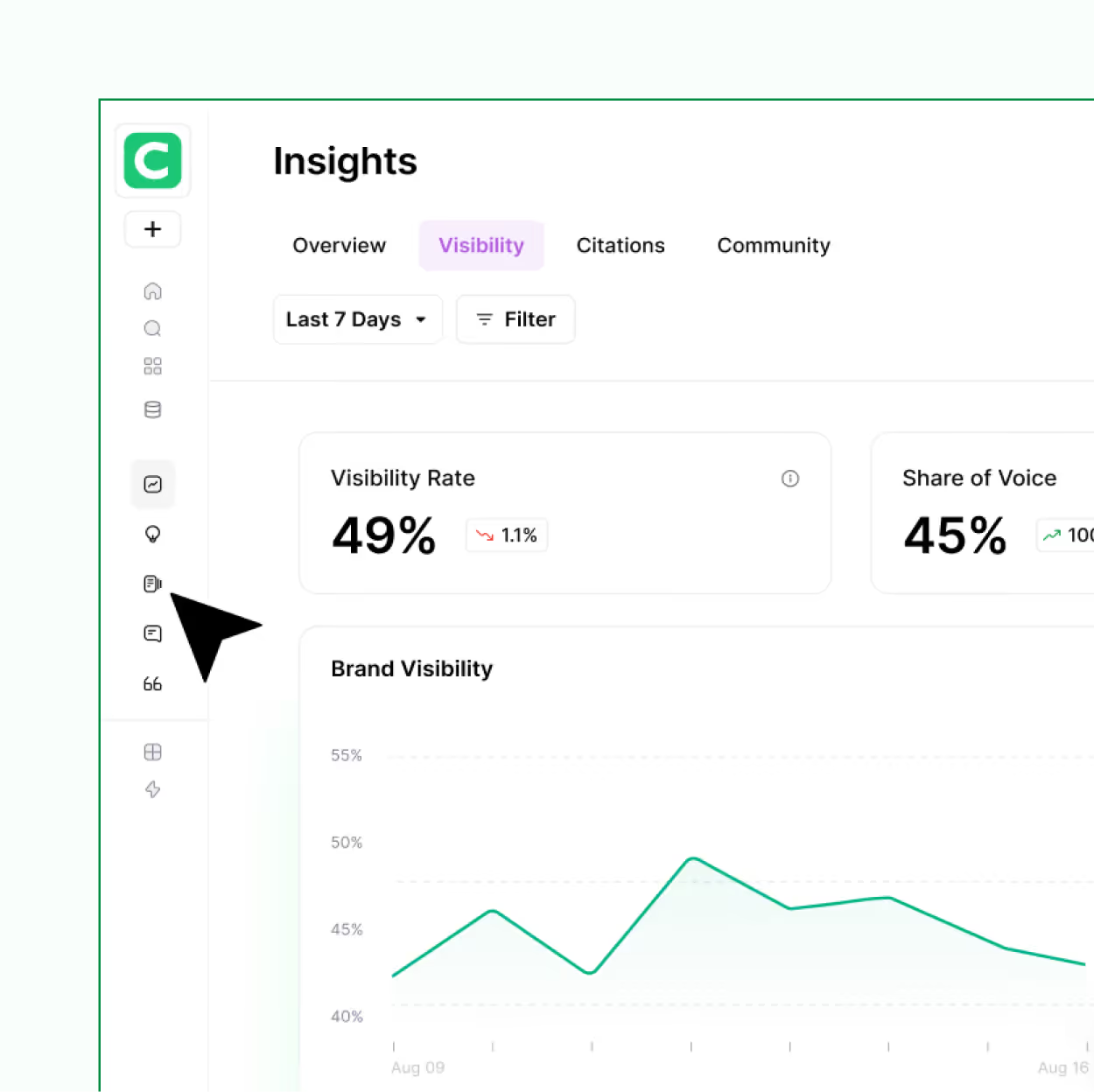
Monitor visibility in real time.
Track citations, mentions, sentiment, share of voice, and accuracy across ChatGPT, Perplexity, Gemini, Claude, Copilot, and Google AI Overviews. Every data point is updated continuously and broken out by engine, so you can see exactly where you're winning and where you're invisible. Historical trend reporting lets you measure progress over weeks and months, not just snapshots.
Optimize with actionable recommendations.
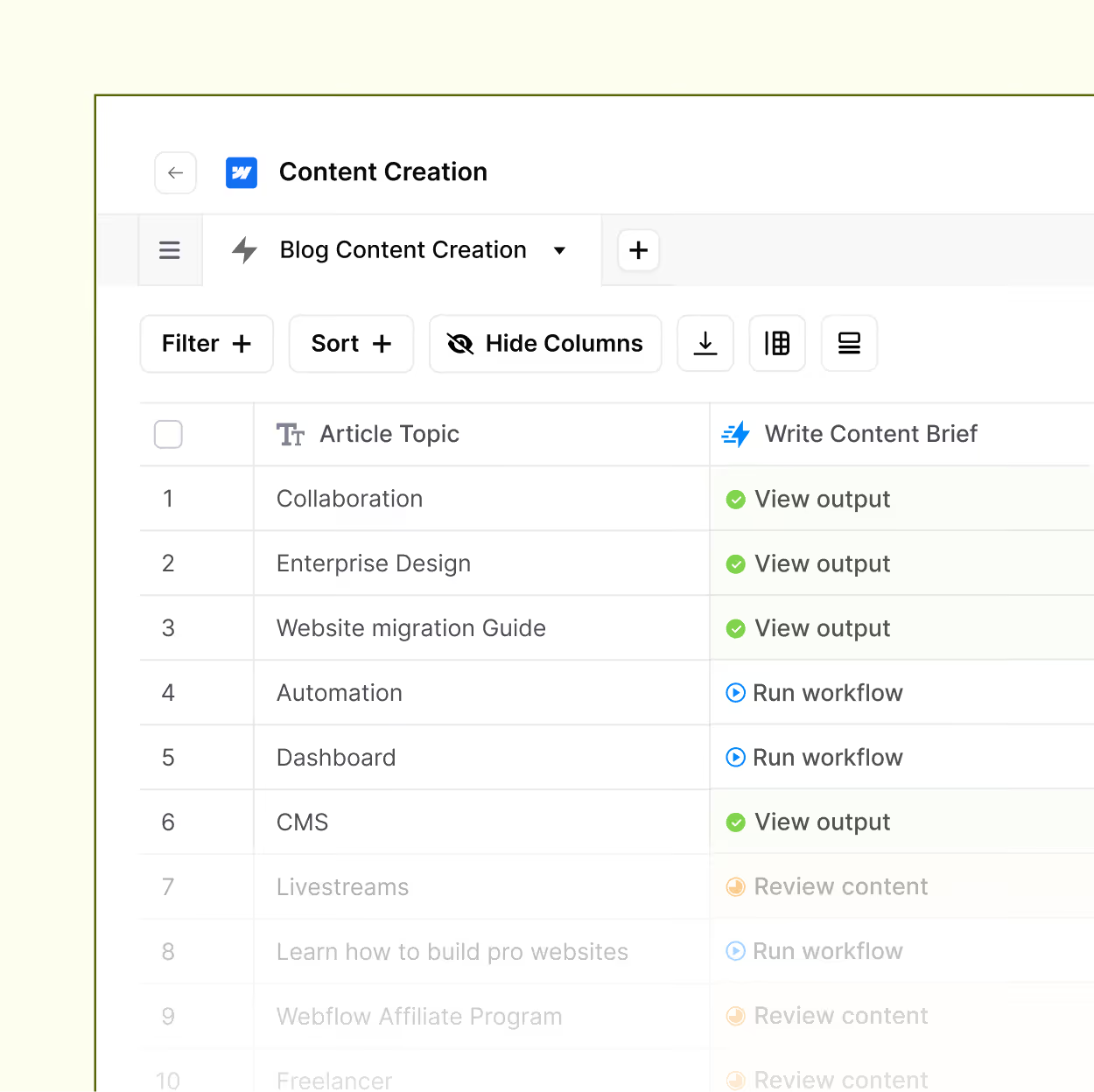
Get specific content and GEO recommendations to improve your AI search presence, close competitive gaps, and fix hallucinations. Recommendations connect directly to your SEO content automation workflows - so the distance between "insight" and "published improvement" shrinks from weeks to hours.
[Start Your Free Audit - See Results in Under 5 Minutes →](#audit)
Frequently Asked Questions
What are the tools or features that set AirOps apart?
What is the best LLM SEO tracking tool for monitoring brand visibility?
The best LLM SEO tracking tool combines multi-engine coverage, citation tracking, competitor benchmarking, sentiment analysis, and actionable optimization recommendations in a single platform. AirOps covers all of these, with AI-powered prompt discovery that most tools lack. When evaluating options, look for platforms that go beyond basic mention counting to deliver citation provenance, hallucination detection, and integration with your content workflows. The right tool depends on your team's size and goals, but breadth of coverage and actionability should be non-negotiable.
How do LLM visibility monitoring tools track citations in AI answers?
LLM visibility monitoring tools query AI engines with relevant prompts and analyze the responses for brand mentions, linked citations, unlinked references, and source domain attribution. Advanced platforms like AirOps also track citation provenance - identifying which specific pages on your site or competitors' sites AI models pull from. This goes beyond simple LLM link citation tracking to give teams actionable intelligence about their AI search footprint, including whether citations are accurate or hallucinated. The best tools run these queries continuously rather than as one-time snapshots.
What's the difference between LLM visibility tools and traditional SEO rank trackers?
Traditional SEO rank trackers monitor your position in Google's organic search results. LLM visibility monitoring tools track how your brand appears in AI-generated answers across ChatGPT, Perplexity, Gemini, Claude, and Google AI Overviews. These are fundamentally different data sets. A page ranking #1 on Google may never be cited in an AI answer, and a brand with no top-10 rankings may be prominently recommended by LLMs. LLM SEO tools measure share of voice, citation frequency, sentiment, accuracy, and competitive positioning within AI responses - none of which traditional rank trackers capture.
Can LLM visibility monitoring tools detect AI hallucinations about my brand?
Yes, but not all of them. Hallucination detection is one of the most underserved features in the category. Most LLM monitoring tools focus on mention counting and share of voice without verifying whether the information AI models present about your brand is factually accurate. AirOps includes accuracy monitoring that flags incorrect claims, outdated information, and fabricated details in AI-generated responses. This matters because a positive mention that contains wrong information can be more damaging than no mention at all - especially when buyers use AI answers to make purchasing decisions.
How do I monitor my brand's visibility in Perplexity and ChatGPT specifically?
To monitor visibility in Perplexity and ChatGPT, you need a tool that queries these platforms programmatically with prompts relevant to your brand, category, and competitors. AirOps automates this process - discovering high-value prompts, tracking responses over time, and reporting on citations, mentions, sentiment, and competitive positioning within each engine independently. This gives you engine-specific visibility scores rather than a single blended metric, so you can optimize for each platform's unique behavior. Since Perplexity and ChatGPT weigh sources differently, engine-level granularity is essential for effective optimization.
What should I look for when comparing LLM visibility monitoring tools for my team?
When comparing the best LLM visibility software options, evaluate five dimensions. First, engine coverage - does it track ChatGPT, Perplexity, Gemini, Claude, Copilot, and AI Overviews? Second, citation depth - does it track linked mentions, unlinked mentions, and source provenance? Third, actionability - does it provide AEO and content optimization recommendations or just dashboards? Fourth, accuracy monitoring - can it detect hallucinations? Fifth, pricing transparency - understand what's included in base plans versus what costs extra for prompts, seats, engines, update frequency, and regional coverage. Use a vendor evaluation checklist to compare apples to apples before committing.