LLM Visibility Tools: Compare the Best Platforms for AI Search Tracking
Your brand is being discussed in ChatGPT, Gemini, Perplexity, and Claude right now - but you can't see it. AirOps tracks your AI search visibility across 10+ engines so you can measure share of voice, benchmark competitors, and win.

Webflow 5xed content refresh velocity and increased visibility across Google and ChatGPT

Webflow 5xed content refresh velocity and increased visibility across Google and ChatGPT
Webflow 5xed content refresh velocity and increased visibility across Google and ChatGPT

Chime went from being recommended in 24 to 68 priority questions


George Bonaci VP of Growth, Ramp

Nicole Baer, CMO, Carta


50% cut in production costs, thanks to the elimination of external agencies and manual tasks.

Marcio Arnecke, CMO, Apollo















What Are LLM Visibility Tools?
LLM visibility tools track how your brand appears in AI-generated answers across ChatGPT, Google AI Overviews, Gemini, Perplexity, Claude, and Copilot. They measure brand mentions, citations, share of voice, and sentiment at the prompt level. Marketing and SEO teams use them to benchmark competitors, discover high-value prompts, and optimize content for AI search.
This is the analytics layer for a channel that barely existed two years ago. Over 40% of knowledge workers now use AI search tools weekly, and those AI answers shape brand perception before a single click happens. If a competitor gets recommended and you don't, you've lost the deal before you knew it was in play.
The category goes by several names - AI visibility tools, AI monitoring tools, GEO tools, LLM tracking tools. Regardless of the label, the core function is the same: give your team real-time data on how AI search shapes your reputation. Traditional SEO tools track Google's blue links. LLM visibility software tracks whether AI engines recommend your brand, cite your content, or ignore you entirely.
Feature Comparison: AirOps vs Other LLM Visibility Tools
We didn't just test these tools - we built one. Here's what actually matters when you're evaluating the best LLM visibility software, including where the category still has room to grow.
TL;DR: Most tools stop at monitoring. AirOps helps you track AI search visibility, diagnose why competitors are winning, and take action through repeatable optimization workflows.

Who Is This For? Turning AI Visibility Data Into Action
Protect brand reputation across every AI engine
Enterprise SEO and brand teams need executive-ready dashboards, not spreadsheets. AirOps gives you share of voice trends, sentiment shifts, and competitive gaps across ChatGPT, Gemini, AI Overviews, and 7+ more engines - all in one view. When your CMO asks "how are we showing up in AI search?", you'll have the answer before they finish the question.
Monitor AI visibility for every client from one platform
Agencies managing multiple clients shouldn't need to juggle five tools to cover one channel. Run multi-brand, multi-competitor tracking with white-label reporting and prompt-level insights that help you prove ROI. As AI search becomes a core deliverable, the answer engine optimization tools you choose become your competitive edge.
Find the prompts that drive AI referral traffic - then win them
In-house growth and content teams can discover which prompts mention competitors but not you. AirOps delivers content optimization recommendations that improve your citation rate and visibility in the AI answers your buyers actually see. Think of it as SEO content automation for a channel where rankings don't exist but recommendations do.
Fill the AI search blind spot your SEO suite can't cover
Already using Semrush or Ahrefs? Great - keep using them for traditional rankings. AirOps adds the missing layer: real-time visibility into how LLMs recommend, cite, and talk about your brand. Your current stack tracks blue links. This tracks the AI-powered answer engines that are increasingly where your buyers start their research.
3 Steps to AI Search Visibility
Most LLM visibility tools stop at dashboards. AirOps connects what you see to what you should do next - so monitoring leads directly to measurable improvement.
Connect Your Brand
Add your brand, competitors, and target topics. AirOps auto-discovers the prompts that matter most across 10+ LLMs, so you skip the tedious manual prompt list building that slows down every other tool. Setup takes minutes, not days, and regional and language-specific tracking is configured from the start.

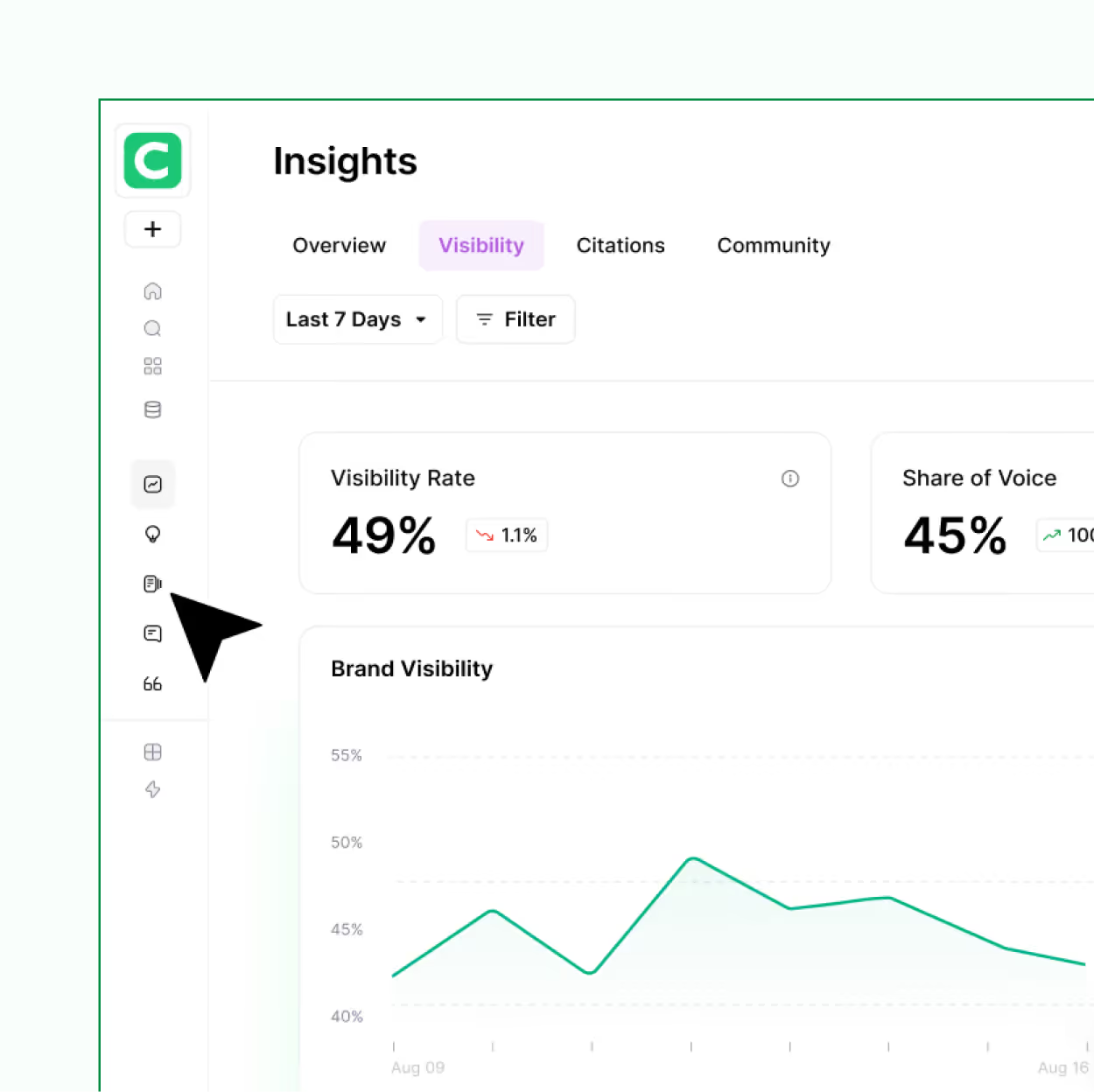
Track Mentions, Citations, and Share of Voice
Real-time dashboards show where your brand appears - and where it doesn't - in AI-generated answers. Filter by individual engine, monitor citation sources and sentiment, and spot competitive positioning shifts at the prompt level before they become trends your competitors act on first.
Optimize, Measure, Repeat
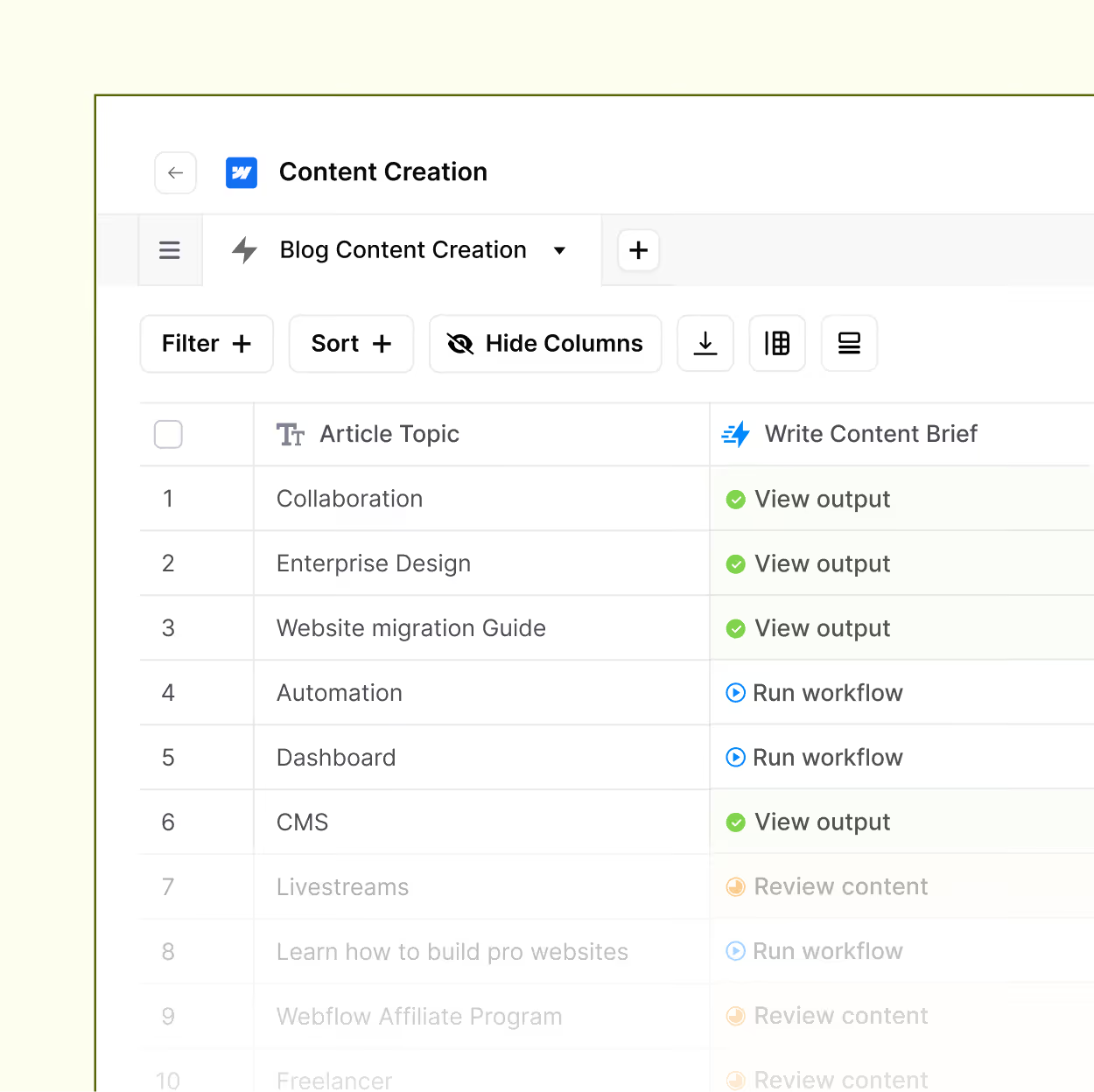
Receive actionable content and technical recommendations tailored to improving your AI search visibility. Track progress over time with trend reporting that shows whether your changes are working, and export reports that make it easy to communicate impact to stakeholders who care about results, not jargon.
Frequently Asked Questions
What are the tools or features that set AirOps apart?
What is the best LLM SEO tracking tool in 2026?
The best LLM SEO tracking tool depends on your team size, budget, and which AI engines matter most to your audience. AirOps covers 10+ LLMs including ChatGPT, Gemini, Perplexity, Claude, and Google AI Overviews, with prompt-level monitoring, citation tracking, and content optimization built into a single platform. That combination of visibility data and actionable recommendations makes it the most comprehensive option for teams that need both measurement and a path to improvement. For a detailed breakdown, see our feature comparison table above.
What's the difference between LLM visibility software and traditional SEO tools?
Traditional SEO tools like Semrush and Ahrefs track your rankings on Google's organic search results - the blue links. LLM visibility software tracks a completely different channel: how AI engines mention, cite, and recommend your brand in conversational answers. Most SEO suites don't monitor ChatGPT, Perplexity, or Claude responses at all. An LLM visibility tool fills that gap with prompt-level data, share of voice scoring, and citation tracking that traditional platforms simply can't provide.
How does LLM citation tracking work?
Can I monitor my brand's visibility in Perplexity and ChatGPT specifically?
Yes. AirOps tracks brand visibility across both Perplexity and ChatGPT, along with Gemini, Google AI Overviews, Claude, Copilot, Grok, DeepSeek, and Meta AI. You can filter dashboards by individual engine to see exactly how your brand appears in each platform's answers. This lets you compare share of voice per engine, identify platform-specific optimization opportunities, and understand where your content gets cited versus where it gets overlooked. For a deeper walkthrough, see our guide on how to test content visibility in Perplexity and ChatGPT.
What AI visibility metrics should I track as benchmarks?
The most important AI visibility metrics are share of voice (how often your brand is mentioned versus competitors), citation rate (how often your content is cited as a source), sentiment score (whether mentions are positive, neutral, or negative), prompt coverage (how many relevant prompts trigger your brand), and trend direction (whether visibility is improving or declining over time). Industry benchmarks vary, but tracking these five metrics gives teams a clear baseline for measuring AI search performance. The key is consistency - tracking key metrics over time reveals patterns that single snapshots miss entirely.
Are there answer engine optimization tools that also track LLM visibility?
Yes - some platforms combine AEO capabilities with LLM visibility tracking, though most don't. AirOps is one of the few tools that offers both: it monitors how your brand appears in AI answers and provides content optimization recommendations to improve your visibility. Most standalone AEO analysis tools focus on content optimization only, while most LLM monitoring tools focus on tracking only. If your team needs both measurement and action in a single workflow, look for a platform that integrates both - it saves time and ensures your optimization efforts are grounded in actual visibility data rather than guesswork.