Why Ranking on Page One Isn't Enough
Summary:
While SEO best practices remain important, these are just the baseline. The threshold for AI visibility is higher–content that prioritizes structure and extractability has a higher likelihood for citations across answer engines.
- Pages with rich schema are 13% more likely to earn AI citations.
- Sequential heading structures boost citation odds by 2.8x.
- Content that contains clear, easy-to-read sections drive nearly half of AI citations.
As organic search continues to evolve, ranking on page one is table stakes.
But as AI search engines like ChatGPT, Perplexity, and Google’s Search Generative Experience reshape the rules of organic search, a new challenge has emerged: earning citations in AI-generated answers.
In June, we studied what brands LLMs consistently favor and which content types secure the most AI-driven citations. That research identified the content levers that separate top performers in answer engines.
Building on those insights, this report goes deeper—moving from the brand level to the page level, to pinpoint the structural attributes that actually move the needle for AI visibility.
Our methodology was guided by a single question:
Why do some pages get cited in ChatGPT while other high-ranking articles remain invisible?
To answer this, we isolated and evaluated only the measurable, on-page attributes that you can directly control—elements like schema, heading hierarchy, and the structural clarity that enables information to be interpreted and extracted by answer engines.
For this report, we intentionally excluded off-page factors such as backlinks or authority to focus on what can be optimized directly within your content.
To create a clean, apples-to-apples comparison, we analyzed:
- ChatGPT Citations: URLs cited in direct responses to high-intent queries in ChatGPT.
- Google SERP Leaders: URLs ranking on page one for the same queries, but not cited in ChatGPT.
Scope of the LLM Study
To understand what sets cited content apart, we asked ChatGPT 900 high-intent queries—split evenly between informational and commercial intent—across 15 different industries.
For each query, we captured the URLs cited and compared them side by side with the top-ranking Google results for the exact same queries.
As a result, we analyzed more than 12,000 unique URLs—each individually reviewed for its structural attributes, whether cited in ChatGPT or ranking on page one of Google.
This approach provided deeper, page-level insight and allowed us to draw meaningful correlations between content structure, extractability, and what actually wins in AI search.
Why we analyzed structure:
Because some of the biggest, and fastest wins in AI search are often hiding in plain sight—many brands earn page-one visibility, yet miss out on AI citations because of simple, fixable gaps in how their content is structured and presented.
Overlooking these structural details doesn’t just leave easy wins on the table—it can leave your brand out of reach across the channels that users are quickly adopting as search evolves.
The AI Search Attributes We Evaluated:
To pinpoint what actually moves the needle for answer engine visibility, we focused exclusively on measurable, on-page attributes.
Each attribute aligns with best practices for technical SEO and Google’s E-E-A-T guidelines—the same foundations that not only adhere to core SEO standards, but also future-proof your content as search engines and AI platforms take on a larger role in shaping what users see and trust.
Here’s the criteria we used to define each structural attribute included in our analysis:
Heading Structure
1. Single H1 Present: Indicates whether the page has exactly one 'h1' element.
2. Proper Heading Alignment: Indicates whether the page’s headings are nested and ordered sequentially (e.g., H1 followed by H2, then H3, with no skipped or out-of-order levels).
Schema
1. Schema Presence: Indicates whether the page contains any structured data schema.
2. FAQ Schema: Indicates whether the page implements FAQPage schema or any QAPage schema.
3. Rich Schema (3+ types): Indicates whether a page includes three or more distinct schema types (such as Article, BreadcrumbList, FAQPage, QAPage, Person, etc.).
Lists & Bullets
1. Bullets Exist: Indicates whether the page contains at least one section with bullet points (an unordered list).
2. List Sections Exist: Indicates whether the page contains at least one section with an HTML list (an ordered list).
3. Average # of Sections Containing Lists: The average number of distinct list-containing sections per page.
4. Average # of Sections Containing Bullet Points: The average number of distinct bullet-point sections per page.
By focusing solely on these measurable aspects of content structure, our analysis revealed the choices that consistently set cited pages apart from the rest.
Structural Signals That Win in AI Search
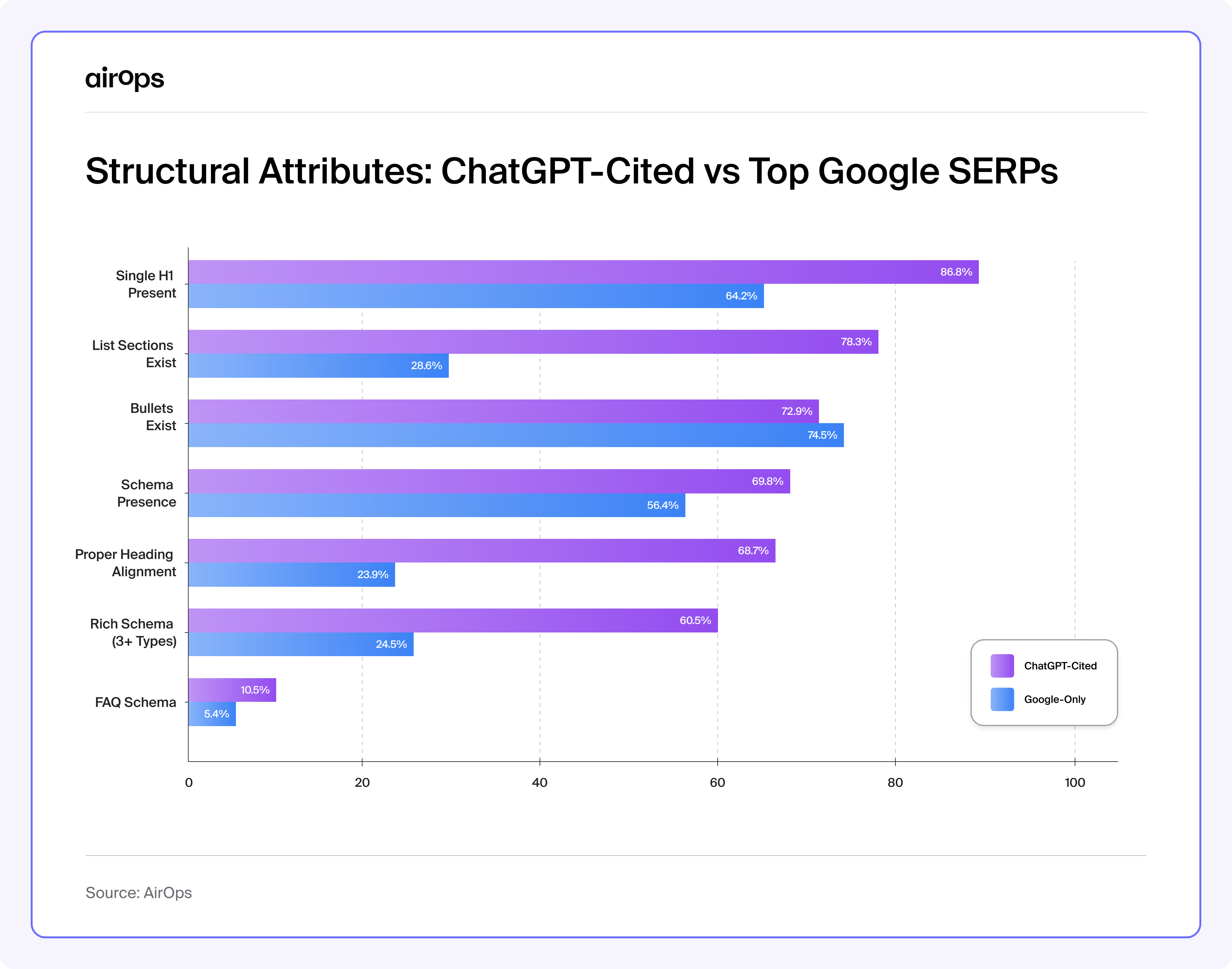
In analyzing over 12,000 URLs, we were able to gather insights into the page structure and features that most consistently separate cited content from the rest. The following section highlights the strongest signals and the biggest gaps, offering a clear look at the structural elements most closely associated with AI visibility.
1. Schema Features
Our analysis shows that schema isn’t just present more often—it’s more diverse and deeply integrated in cited content.
Pages surfaced by ChatGPT routinely leverage multiple schema types, including robust combinations of Article, FAQ, and QAPage. This richer schema structure distinguishes cited content from top-ranking Google pages and creates more pathways for engines to interpret and surface answers.
Key Findings:
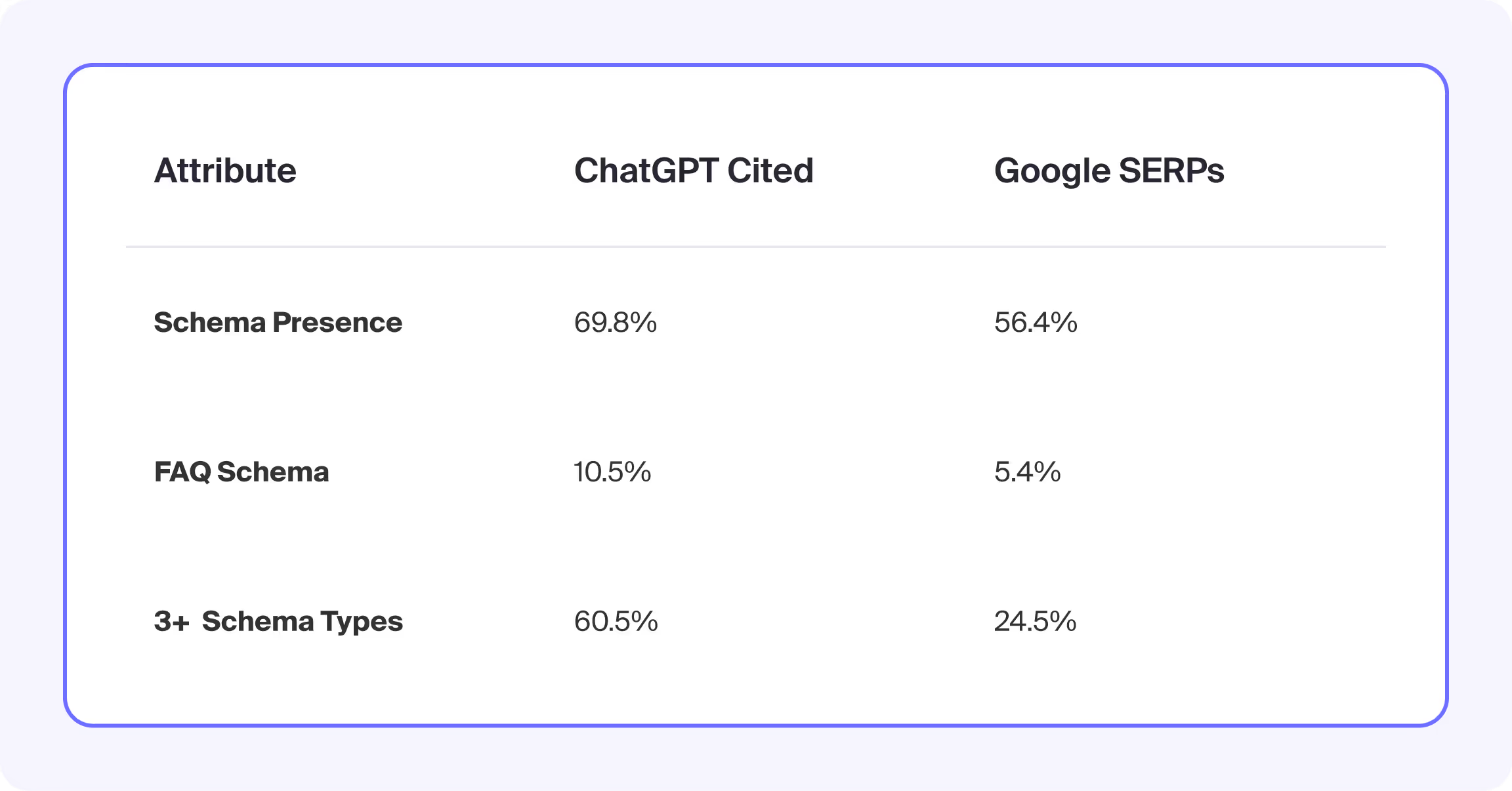
- Rich schema was found in 61% of ChatGPT-cited pages, but just 25% of Google SERP URLs.
- FAQ schema is more than twice as common in cited content (10.5% vs 5.4%).
- Pages cited by ChatGPT consistently show deeper and more diverse schema usage than top-ranking Google results.
- Rich schema and FAQ blocks remain a clear line of demarcation between the two groups.
Our findings reinforce that richer, multi-type schema is a clear line of demarcation between pages cited by ChatGPT and those that only rank in Google. By investing in structured data and ensuring the presence of robust schema—including FAQPage and QAPage where relevant—brands dramatically increase the likelihood that their content will be selected, interpreted, and surfaced by answer engines.
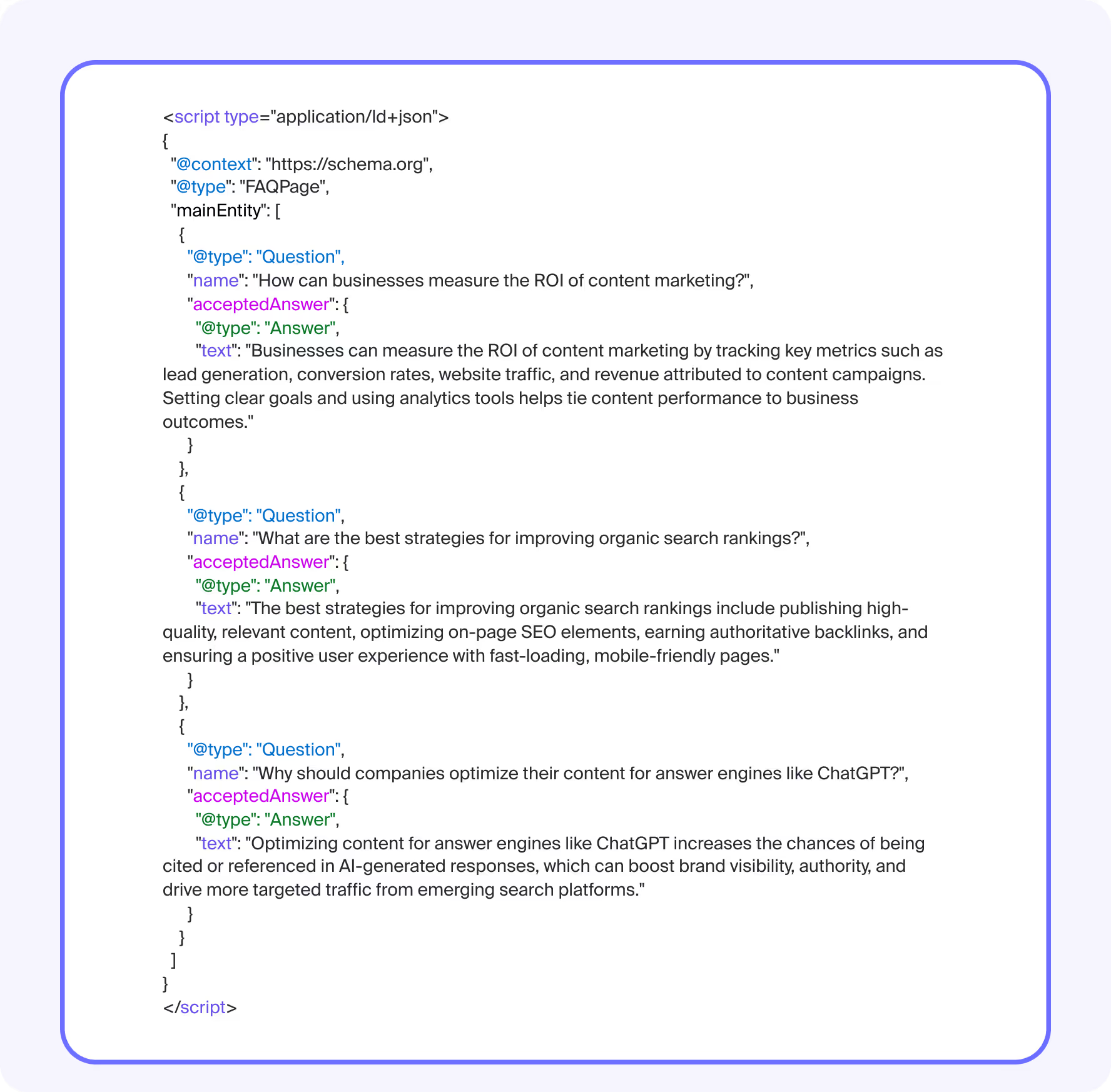
As AI-driven results continue to shape search, prioritizing schema is a key lever in future-proofing content to be both visible and easily extractable.
2. Heading Structure
Consistent heading hierarchy is a clear differentiator for pages that earn AI citations.
In our analysis, URLs cited by ChatGPT were far more likely to feature a single H1 and maintain logical, sequential nesting of headings—providing both structure and clarity from the top down.
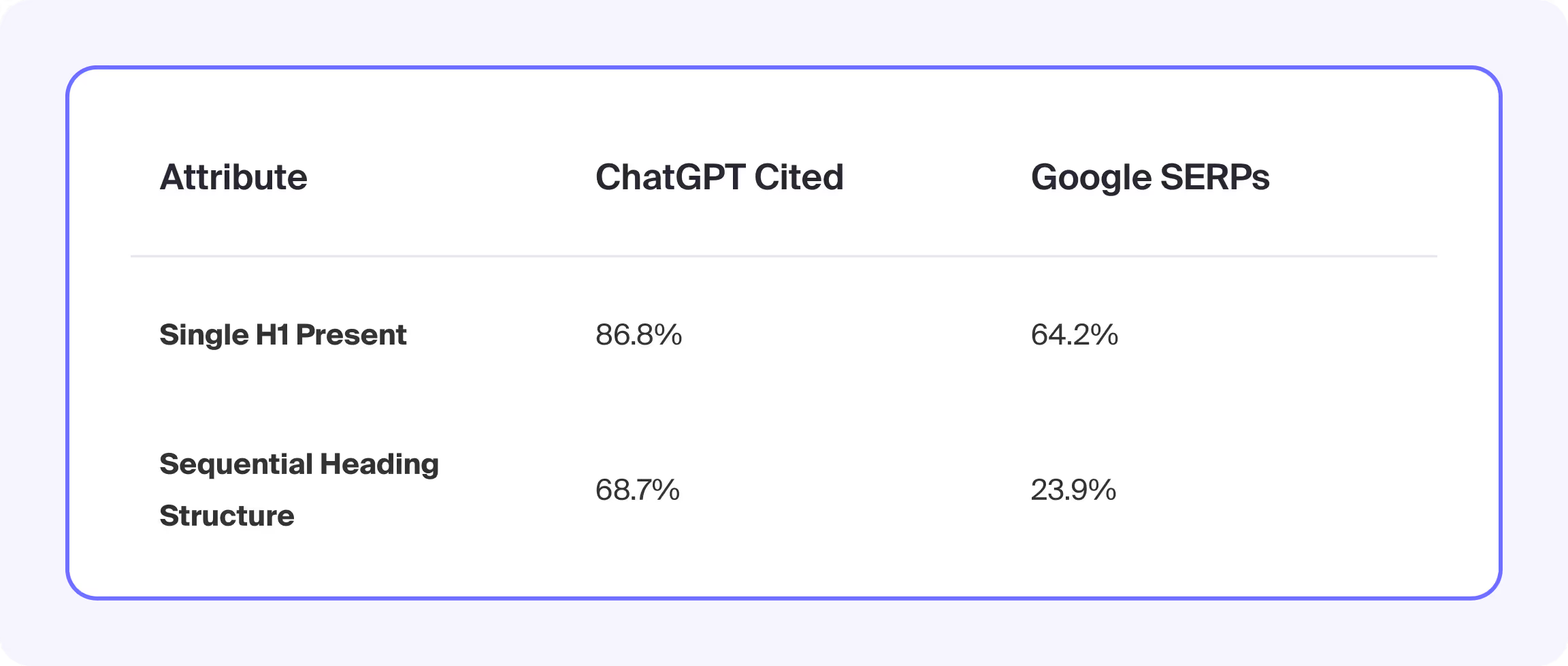
Among the URLs analyzed, 68.7% of urls cited by ChatGPT followed a sequential heading structure, compared to only 23.9% of Google’s top results.
Key Findings:
- Sequential heading structure (e.g., H1 > H2 > H3) is nearly three times as likely in ChatGPT-cited content.
- A single H1 is present on 87% of cited pages, compared to just 64% of Google SERP leaders.
- Pages lacking clear heading hierarchy are much less likely to be cited by ChatGPT—even if they rank well in Google.
A well-ordered heading hierarchy does more than organize a page—it signals expertise, clarity, and trustworthiness to both users and search engines. Google’s official documentation on headings emphasizes the importance of maintaining a single level-1 heading and using heading tags to structure content hierarchically.
Clear, consistent headings help readers and search engines understand the structure, context, and depth of your content.
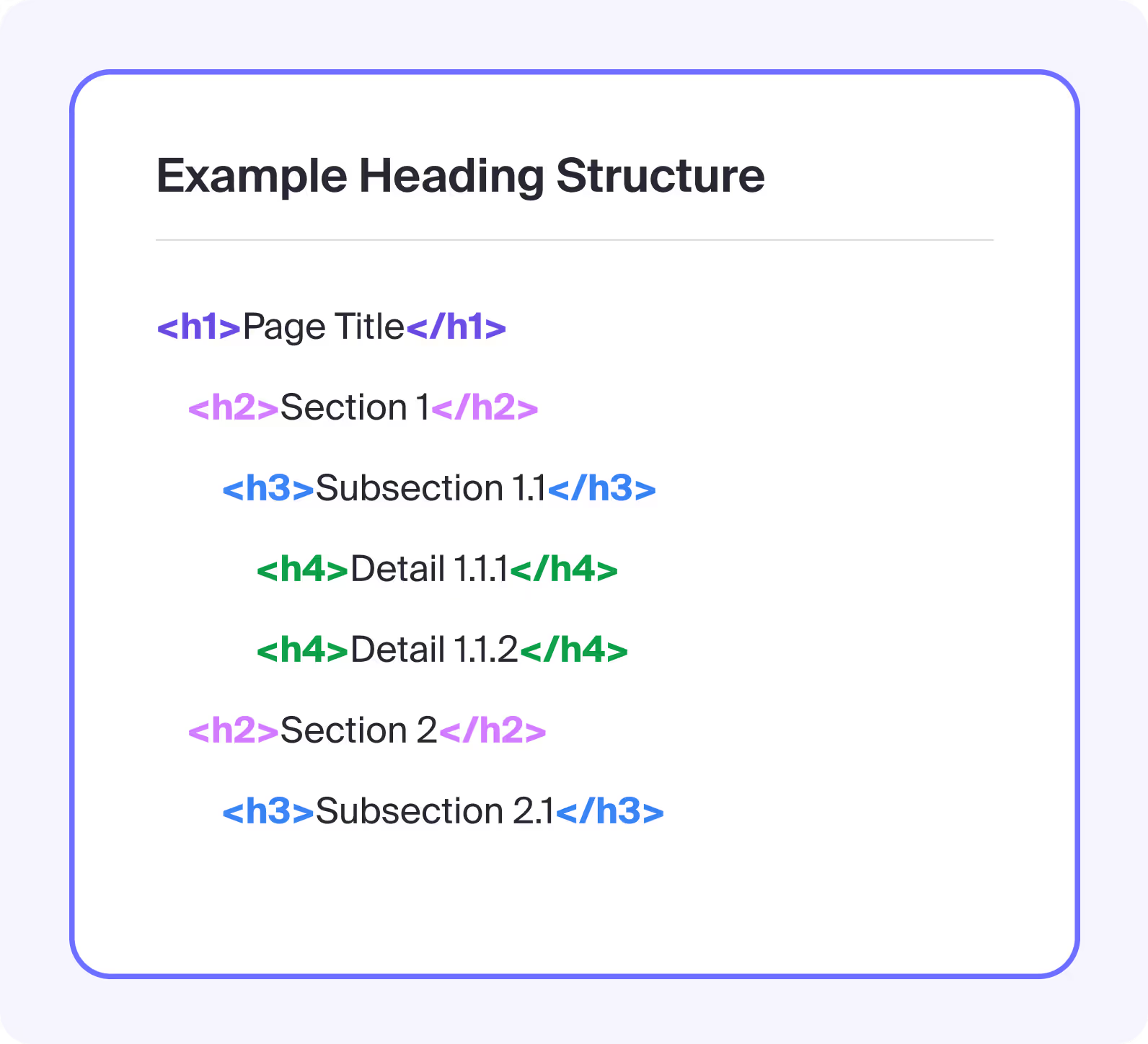
Our analysis confirm that pages cited by ChatGPT overwhelmingly follow these principles, making their information easier to surface, extract, and trust in answer engines.
Prioritizing proper heading alignment is more than a formatting choice—it’s strongly correlated with increased visibility across both traditional and AI-powered search results.
3. Numbered Lists
Lists emerged as one of the most decisive differentiators for pages cited by ChatGPT.
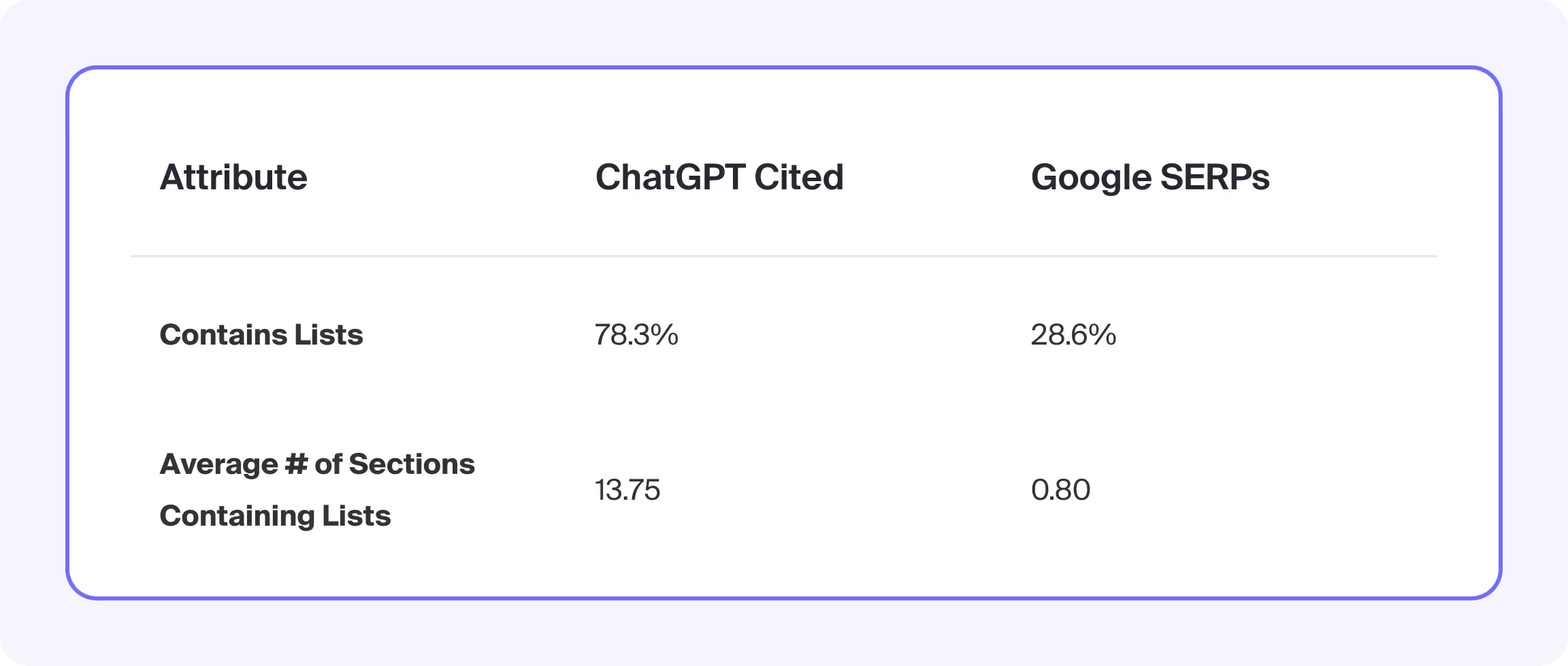
Our analysis found that among the URLs reviewed, pages cited by ChatGPT were almost three times as likely to include at least one section with an HTML list, compared to Google’s top-ranking results for the same queries.
What truly sets cited pages apart is list density: ChatGPT-cited URLs averaged over 17 times as many list sections as their Google counterparts. This concentration of well-structured, skimmable lists is a hallmark of extractable, citation-ready content in our dataset.
Key Findings:
- Pages with dense, organized lists are much more likely to be cited in AI search.
- Nearly four out of five urls cited in ChatGPT include at least one section with a list, compared to just 28.6% of Google’s top results.
- On average, ChatGPT-cited pages contain 13.75 distinct list sections—more than 17 times higher than the average for pages in the top of Google SERPs.
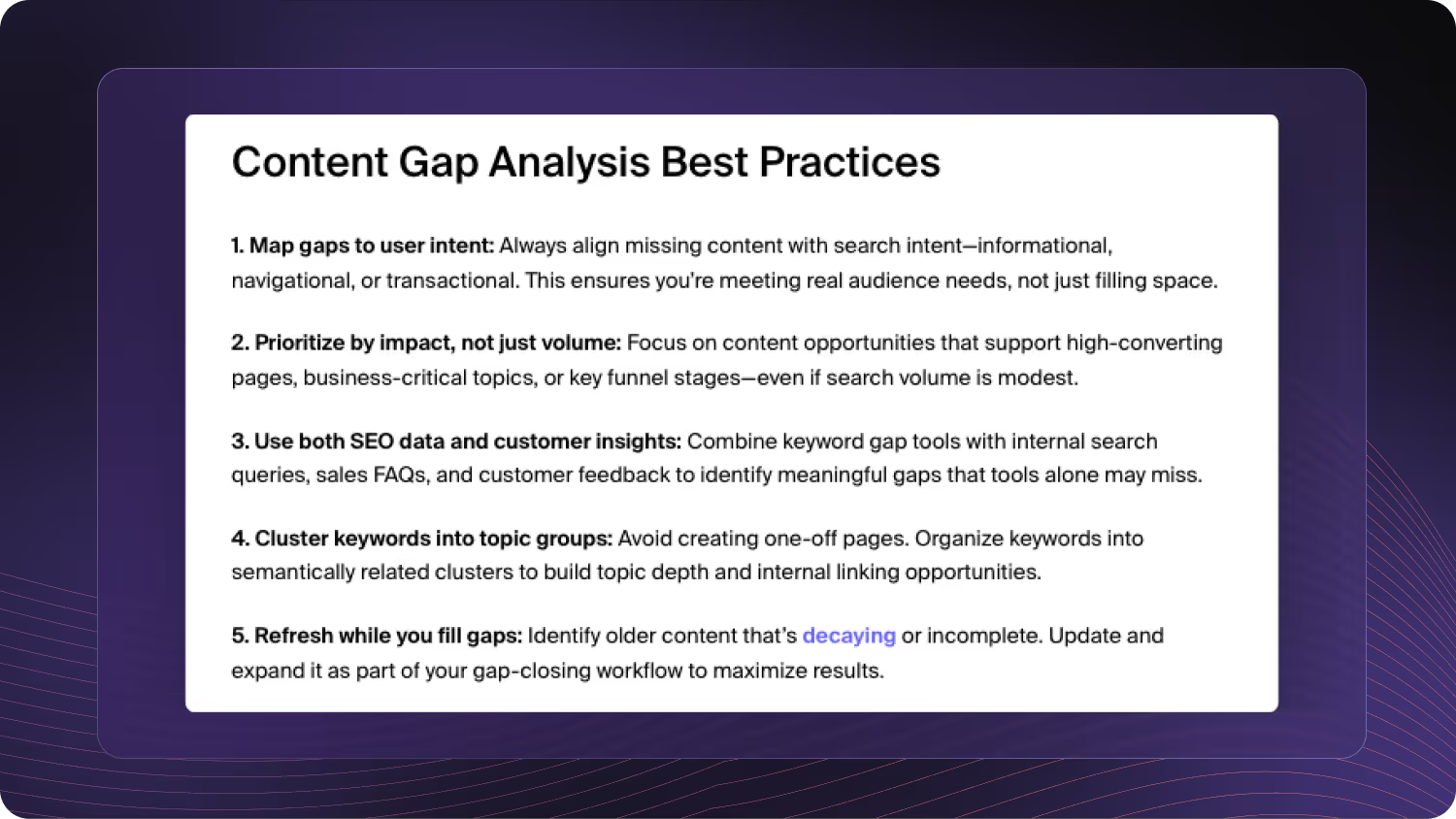
Well-structured lists are foundational for both user experience and machine readability. For users, lists make key information easier to scan, compare, and act on—improving satisfaction and supporting search intent. For answer engines and LLMs, lists provide clear extraction points for concise, actionable answers and summaries.
Google’s official documentation on lists emphasizes their value for “showing the sequence of steps, ranking, or hierarchy” within a topic, making complex content more accessible and signaling the relative importance or sequence of information.
In other words, lists don’t only correlate to traditional SEO best practices—they’re also a key ingredient for gaining visibility across AI search engines.
4. Bullet Points
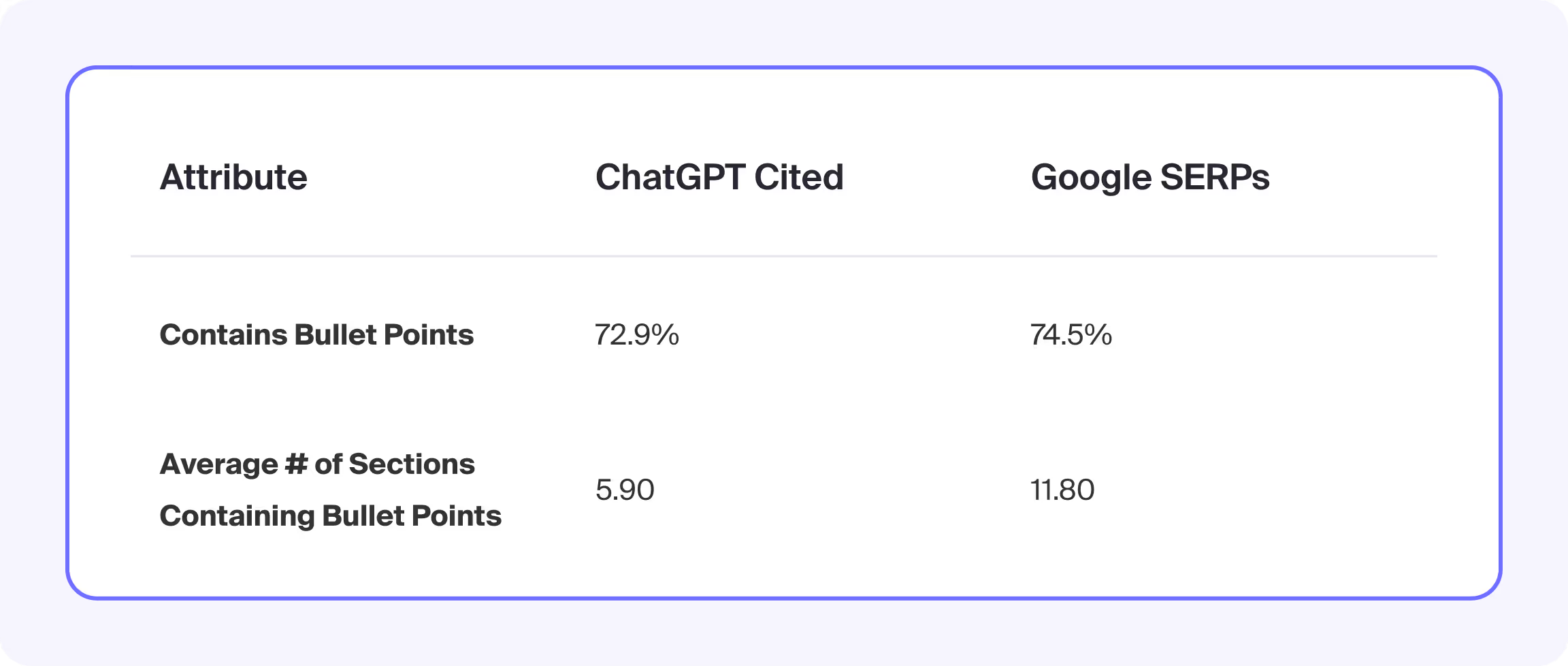
Bullet points are prevalent in both ChatGPT-cited and Google SERP content, but their usage reveals an important nuance. In our research, 72.9% of pages cited by ChatGPT included at least one section with bullet points, while Google’s top results were slightly higher at 74.5%.
However, the story beneath the surface is shaped by context: much of the higher average in Google’s results is driven by forum and discussion domains like Reddit and Quora. During our analysis, we found that 11.1% of page-one Google results came from discussion domains, where ChatGPT citations only accounted for .05%.
These findings are consistent with research from Kevin Indig, who found similar data in one of his recent reports. However, it’s important to note that this does not diminish the value of engaging on platforms like Reddit for overall brand visibility.
In a recent webinar, Ross Simmonds emphasized that participating in forums and discussion communities like Reddit is a powerful way for brands to build trust, boost visibility, and increase their discoverability in answer engines—even if these platforms are not always directly cited as sources.
Bottom line: While discussion forums were minimally surfaced as citations in our findings, their role in building brand visibility and organic brand mentions remains as important as ever.
Key Findings:
- Bullet points are common across both ChatGPT and Google SERPs.
- The average number of bullet sections per page is higher in Google SERP content, a difference primarily driven by forums and discussion threads.
- Editorially-structured bullet sections are more closely associated with AI visibility, while thread-based or discussion-style bullets are more common in Google’s results but less common across ChatGPT citations.
- We found the average sentence length is nearly identical between both groups (17.32 for ChatGPT-cited vs. 16.54 for Google), reinforcing that it’s structure and organization—not sentence complexity—that most influences AI citation.
Well-crafted bullet points do more than improve scannability—they create clear, digestible chunks of information that answer engines can easily extract and surface. Google’s content guidelines recommend using bullet points to enhance clarity and deliver value to users quickly.
Our research shows that bullet points, when used to improve clarity and structure, allow both users and language models to easily digest and surface essential information.
For teams focused on AI visibility, the lesson is clear: use bullet points to break up complex ideas, support extractability, and align with both SEO and answer engine best practices. When paired with strong page structure and clear organization, bullets become a key tool for boosting extractability and increasing the likelihood your content is cited in AI search.
Case Study: RentSpree
When we asked ChatGPT: "What platforms automate rent payment processing?"
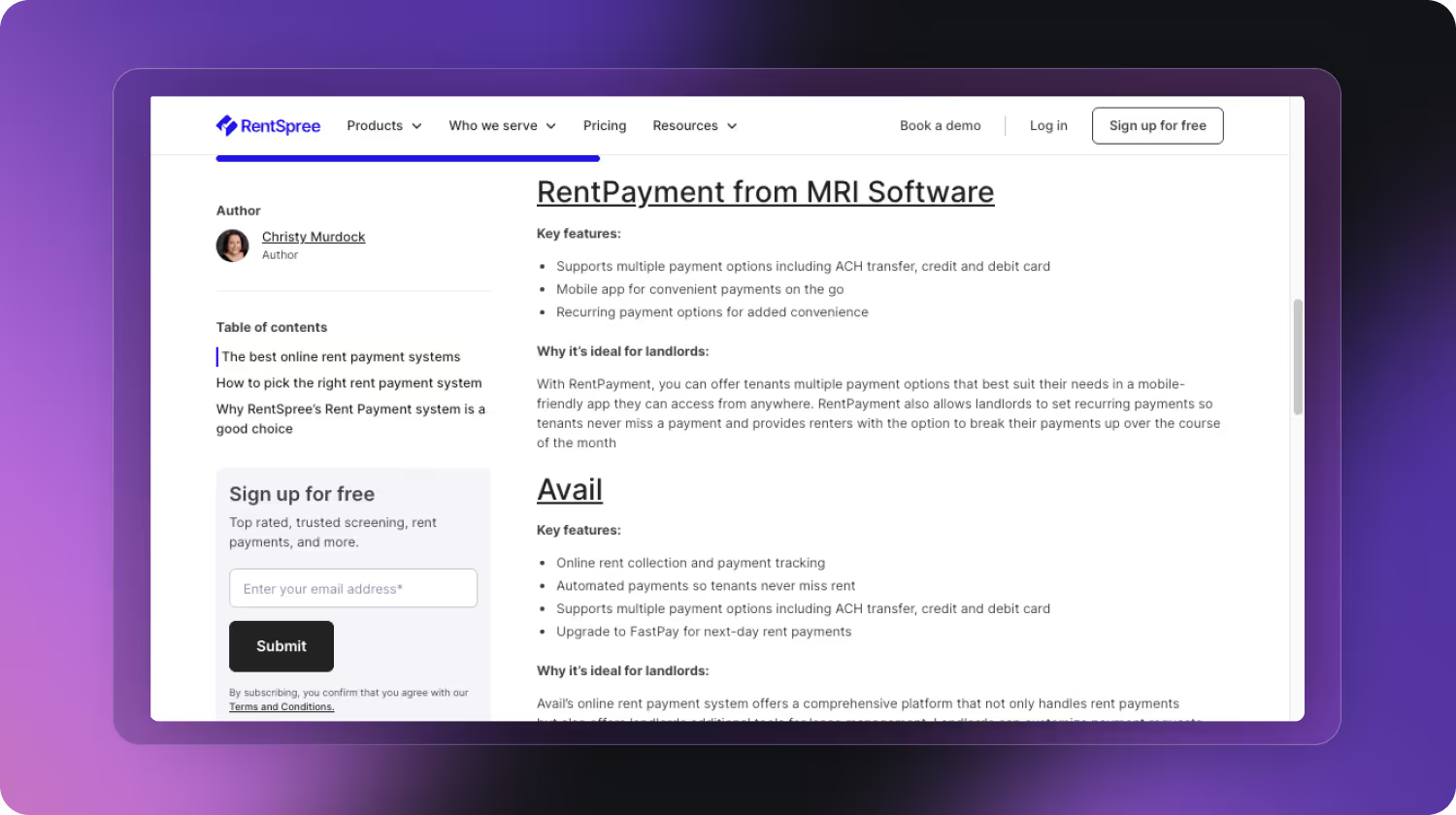
RentSpree’s article “The best online rent payment systems” appeared as a cited source.
RentSpree’s on-page elements mirror the structural patterns most strongly correlated with AI citation in our analysis—demonstrating how combining technical and editorial best practices can drive visibility in AI search.
Structural Strengths
- Rich schema
- A single H1
- Proper heading alignment
- Editorial bullet points throughout key sections
How to Leverage Structure to Scale AI Search Visibility
When content features sequential lists, clear headings, and concise bullet points, it’s not only easier for users to read and act on—it’s also far more extractible for answer engines.
Our findings reinforce this dual impact: the same on-page attributes that enhance user experience are strongly associated with increased citation in LLM and answer engine results.
1. Structure supports AI visibility: Pages cited by ChatGPT outperformed top-ranking Google pages on the structural fundamentals—rich schema, single H1, proper heading alignment, and well-organized lists.
2. Rich schema and clear headings are must-haves: Pages with three or more schema types and sequential heading structures (H1 → H2 → H3) are significantly more likely to be surfaced and cited in AI search results. This hierarchical clarity provides the contextual framework AI models need to understand content relationships.
3. Optimize for Extractability: Content that is well-structured, easy to scan, and presented in clear, digestible formats makes it easier for both users and answer engines to quickly identify and understand the key insights of a page.
4. SEO best practices remain essential–but they’re now just the starting point; answer engine visibility requires a higher standard of structure, clarity, and extractability.
The Structure That Sets Content Apart in AI Search
Content with a strong structural foundation is better positioned for AI visibility. Across the attributes we analyzed, pages that earned citations in ChatGPT consistently contained elements like multi-type schema, disciplined heading hierarchy, and well-organized lists and bullet points—setting top-performing content apart from the rest.
Future-Proof Your Content With AirOps
Ranking on page one is no longer enough. As AI reshapes how users discover and engage with information, structure, clarity, and extractability have become essential for sustained visibility. Brands that consistently build these attributes into their content are best equipped to maintain and scale brand visibility.
At scale, even small structural gaps can result in missed citations—and lost market share.
Ready to turn every page into an AI citation magnet?
AirOps gives teams the tools to create, refine, and scale content strategies that fuel visibility and growth across traditional search and answer engines.
Book a strategy session to learn how AirOps can help your brand win in AI search.